Some Future Titles of Interest for SPF Members

I do as well. I think Polmar has produced some great stuff over the years. However, I think that any collaboration he had with Russian sources ended a long time ago.
He’ll have to carry their water this time on his own. Hopefully half the book is Norm trotting out his extensive personal grievances.
 
...I'd love it if somebody covered some of the more obscure non-US carriers, like Brazil, Argentina, Canada and the Netherlands. It's rather fascinating to me that a lot of navies post-WWII had carriers from the British, but as they wore out, they were not replaced.
Same interest. Wikipedia has an exhautive list of these carriers and the countries that used them, second-hand and sometimes third-hand. https://en.wikipedia.org/wiki/1942_Design_Light_Fleet_Carrier#Ships The US did the same with a carrier class of their : the Independence. Two went to France in the 1950s and later (1967), one to Spain: where it stayed in service until 1989 with Harriers on the flight deck. France circa 1950 had a... baroque carrier fleet, a hodgepodge of british and american ships plus the antiquated Bearn used as a transport. The only reasonable way to replace these old WWII ships was to create a "Harrier carrier", which was called the Sea Control Ship. However few navies made the move to replace their WWII carriers.
The Karel Doorman interests me for reasons I cannot explain:
...It would be great to have nice reference books about these different carriers with information on their service lives and lots of photos of operations.

While there are not as many aircraft carriers in service as there were during their 1944/45 peak (result of the unparalleled US building effort), these distinctive-looking ships are operated more widely today than ever before. The defunct carrier operations of the Netherlands, Canada, and Argentina are potentially misleading—those three nations have had little defense spending of any kind for decades. According to recent reports, Moscow has been forced to accept that Kuznetsov will never sail again after eight years docked at Murmansk, but elsewhere flattops flourish. The two Queen Elizabeth-class carriers are the largest, heaviest warships ever built in the UK. India's carrier operations are stronger than ever. Spain, France, Brazil, and Italy continue robust efforts. Spanish-type carriers are in service in Australia and Turkey. Last year Japan dropped its longstanding 'destroyer' euphemism for its Izumo class, and openly calls those carriers. Even Iran's Revolutionary Guard now has a semi-carrier. And the number of carrier-equipped navies continues to grow: as discussed in a different thread, Indonesia has expressed serious interest in acquiring Italy's Giuseppe Garibaldi.

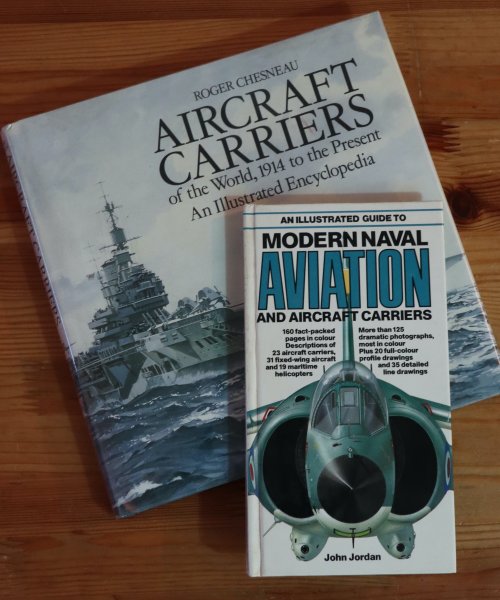
Maybe successful author James Jackson (this forum's Hood), or John Jordan (who wrote a similar book in the slim yet excellent Arco/Salamander series of the 1980s: see attached photo), or Norman Friedman, or other suitable person will consider writing a new comprehensive technical & operational history to replace the classic but dated Aircraft Carriers of the World by the late Roger Chesneau. Like Blackstar and Archdude, I would jump at the chance to buy a copy.
 

Attachments

  • title.jpg
    title.jpg
    1.8 MB · Views: 64
While there are not as many aircraft carriers in service as there were during their 1944/45 peak (result of the unparalleled US building effort), these distinctive-looking ships are operated more widely today than ever before. The defunct carrier operations

Just to be clear, for about 20 years after WWII, a bunch of nations besides the US and UK operated aircraft carriers. That number dropped a lot in the 1970s and 1980s. In the past decade, a bunch of nations have started building carriers again, or helicopter carriers that have wider use such as disaster response.
 
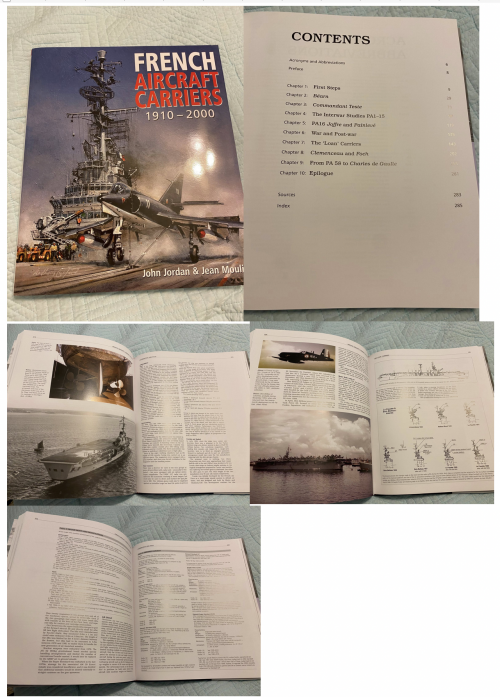
So my copy of the French Aircraft Carriers 1910-2000 arrived in the mail today and I had a little bit of time to spend with it. At first glance, it's an extremely solid book on a visual level. Like previous Jordan/Moulin books, the diagrams and maps are very sharp and easy to follow, the layouts aren't excessively crowded, and most of the photographs look to be of excellent quality. There's also quite a few beautiful full-page color photos, and excellent shots of ships under construction, which I wasn't expecting. I noticed quite a few traverse views, plans of lower hull and island decks, profile views of appearance changes and electronic fits over time, and so forth. It seems like Jordan didn't skip on describing unbuilt designs and proposals, some of which receive full page schematics. Rather than the segregated approach used by earlier books in the series, the operational histories of individual ships are including in the chapter describing the class.

Over the next week, I'll actually start to dig into this book and see if it was worth the six year wait since French Armoured Cruisers. If anyone has any questions about the contents of the book, feel free to ask.

Received my copy last Saturday too.

I agree with your comments: a beautiful book with big, nice, interesting drawings and photos. Excellent text. Most unbuilt projects are covered in different degrees of detail.
Some flaws found that aren't dramatic because of the superb coverage we already have here in the forum and here:
Also some impressive photos could be find from internet: from CdG onwards.
I've spent the weekend collecting it all to a folder in my disk drive.

1. PA-58 has a minimal reference with neither photos of the model nor drawings. I would have seen a full chapter! I feel disappointed.

2. Coverage of early CdG development is also absent. I remember a preliminary model, at least, which differed to the definitive design as built. I should check my contemporary Jane's and magazine sources.


3. There's a big photo of already known PAX model but I hoped to see a detailed drawing...

Recommended anyway.
 
Last edited:
Not a future publication but rather one that was released a couple of weeks ago:

71vS6K7BXxL._SL1500_.jpg


There is no more iconic military helicopter than the Bell UH-1 Iroquois.

That truth is etched in stone – literally – in the Vietnam Memorial on Anzac Parade, Canberra, where the image of three Iroquois helicopters landing to extract troops in Phước Tuy Province in August 1967 captures their enduring legacy.

Flown by Australians of all three Services between 1962 and 2007, the Iroquois served the nation in peace and war ― from Malaysia and Vietnam to the Middle East and the South Pacific. It saved lives in search-and-rescue missions – from those stranded on rooftops during devastating floods to those plucked from stormy seas. It was the Iroquois’ job to deliver water, food, fodder, and fuel to stranded outposts. It became the Iroquois’ job to help keep the peace.

It was also the ubiquitous training helicopter for pilots, loadmasters and crewmen destined for more advanced types like the Chinook, Seahawk and Black Hawk.

Sixty-six were purchased over an 11-year period. Today, 33 remain ― displayed in museums, RSL clubs, or standing guard as gate guardians at bases around the country ― a lasting tribute to the Iroquois, an Australian aviation legend.

This stunning full-colour hardback celebrates its enduring legacy.
  • Publisher ‏ : ‎ Big Sky Publishing
  • Publication date ‏ : ‎ 25 November 2025
  • Language ‏ : ‎ English
  • Print length ‏ : ‎ 238 pages
  • ISBN-10 ‏ : ‎ 1923514075
  • ISBN-13 ‏ : ‎ 978-1923514072
  • Item weight ‏ : ‎ 1.17 kg
 
Hopefully the new prose and new pages aren’t 90% about airplanes that were out of service by 1960.

Same thoughts here Bruno Anthony, I am holding back before I can see the contents before I order.

Tommy has already confirmed the additional content on his blog, it sounds like probably three or four additional chapters over the original?
 
Just an update FYI: as I noted up-thread, USNI Press has extended their 50% off sale until the end of the year. But they are not a smooth-running operation. You'll note that some of the things listed on their website have publication dates that don't make sense, like books that are supposedly available now that have a 2026 publication date. They don't communicate well when they're about to fulfill your order (but they will send you an update). I received half of my order relatively quickly, but no information on about 6 other books that I ordered, including the French, British, and Japanese carriers books I posted above, as well as the Yorktown and F-8 books. I assume that they don't have these in their local warehouse and maybe they're shipping from overseas. The website had wording about ordering by noon Dec 3 (too late now) to ensure a December 25 delivery. But it would be nice if they had sent me an update on when the rest of my books will be sent. So my suggestion is you have to be patient.

Still, they have some interesting publications.


Quoting myself again--just an update, but USNI is confirming my earlier suspicions that they are not the smoothest-running operation. I ordered about 10 books from them a month ago. They shipped half of them within about 10 days. Last week they shipped me one of the remaining books (the F-8 Crusader book). Yesterday they announced they were shipping the French carriers book. So they don't have everything they list on their catalog sitting in a warehouse, and the more they ship individually probably costs them.

The F-8 book is interesting. It's not a heavy photo-filled book. But the author does seems to have gone into interesting areas about the aircraft. It includes a few photos of the mockup of the photo version of the plane, for instance. I always like it when ship and aircraft books show us photos of the design and construction phase.
 
USNI Press shipped me the F-8 Crusader book last week, and this one arrived this week. This is a thick and impressive book. It covers a lot of territory. I cannot speak to the accuracy, but just thumbing through it I can see that they dug deeply into the subject. This one is still on sale at USNI Press until the end of the year.

Screenshot 2025-12-17 at 6.05.24 PM.png
 
I'm on page 116 of French Aircraft Carriers, and while it's an extremely solid reference book, it's not quite on the same level as Jordan's French Destroyers 1922-1956 and French Battleships of World War One. The technical detail isn't quite as good as those books, though to be fair, most of the ships in this book were either converted capital ships, never left the drawing board, never finished building, or don't have extensively preserved documentation, so I'll have to give Roberts and Moulin some leeway in that regard.
 
Received my copy last Saturday too. I agree with your comments: a beautiful book with big, nice, interesting drawings and photos. Excellent text. Most unbuilt projects are covered in different degrees of detail.
Some flaws found that aren't dramatic because of the superb coverage we already have here in the forum and here:
Also some impressive photos could be find from internet: from CdG onwards.
I've spent the weekend collecting it all to a folder in my disk drive.
1. PA-58 has a minimal reference with neither photos of the model nor drawings. I would have seen a full chapter! I feel disappointed.
2. Coverage of early CdG development is also absent. I remember a preliminary model, at least, which differed to the definitive design as built. I should check my contemporary Jane's and magazine sources.
3. There's a big photo of already known PAX model but I hoped to see a detailed drawing... Recommended anyway.
USNI Press shipped me the F-8 Crusader book last week, and this one arrived this week. This is a thick and impressive book. It covers a lot of territory. I cannot speak to the accuracy, but just thumbing through it I can see that they dug deeply into the subject. This one is still on sale at USNI Press until the end of the year.
I'm on page 116 of French Aircraft Carriers, and while it's an extremely solid reference book, it's not quite on the same level as Jordan's French Destroyers 1922-1956 and French Battleships of World War One. The technical detail isn't quite as good as those books, though to be fair, most of the ships in this book were either converted capital ships, never left the drawing board, never finished building, or don't have extensively preserved documentation, so I'll have to give Roberts and Moulin some leeway in that regard.

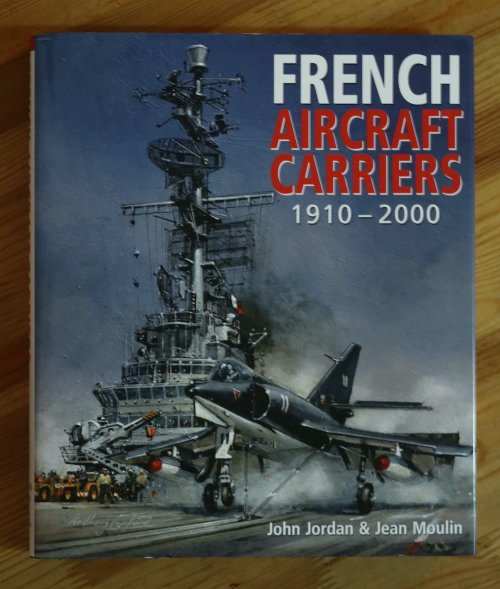
I too have received my purchased copy of French Aircraft Carriers, which happily was well-packed by Naval Institute Press and so arrived pristine. I would have bought it anyway because I'm a big fan of John Jordan's books going back decades, but I thank Antonio, Blackstar, and BigD for their comments. Now to start reading.
 

Attachments

  • Jordan_book.jpg
    Jordan_book.jpg
    1,017.5 KB · Views: 42
I too have received my purchased copy of French Aircraft Carriers, which happily was well-packed by Naval Institute Press and so arrived pristine. I would have bought it anyway because I'm a big fan of John Jordan's books going back decades, but I thank Antonio, Blackstar, and BigD for their comments. Now to start reading.

Mine arrived undamaged, but it was not the best packing for books. David Doyle, of DavidDoylebooks.com does a great job with packing. He knows what works. USNI Press was nowhere near as bad as Amazon (I return at least a third of the books I order from Amazon), but could have been better.

This is the conclusion of my boring overview of book shipping practices.

I'm still waiting for three more books from USNI Press. Also, their sale goes to the end of the year, so if you are on the fence about any of their pricey books, you should act soon.
 
Mine arrived undamaged, but it was not the best packing for books. David Doyle, of DavidDoylebooks.com does a great job with packing. He knows what works. USNI Press was nowhere near as bad as Amazon (I return at least a third of the books I order from Amazon), but could have been better.
Not to go too far off topic, but sometimes I think I must be the luckiest SOB on the planet, because the only book I've ever had to return to Amazon due to damage was my copy of Jake Melampy's book on the A-10, which my dumbass mailman had folded in half to fit into the mailbox.
 
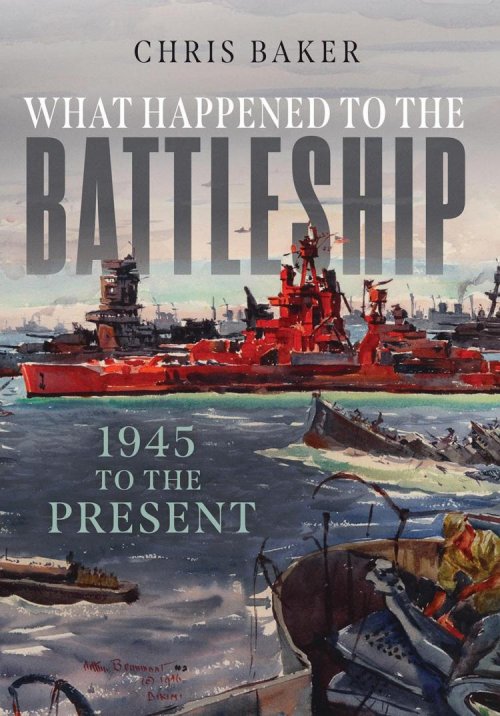
If your a fan of battleships What Happened to the Battleship is a must read. It's pretty Britain-centric, by that I mean it focuses alot on the Vanguard, but overall its a good overview of battleships in the postwar period. My only complaint would be that three-fifths of the book is focused between 1945-1955 and it does skim over speculative conversion projects. Of course, that may just be meta commentary in it of itself.
 

Attachments

  • what happened to the battleship.jpg
    what happened to the battleship.jpg
    130 KB · Views: 40
Die deutsche Luftfahrt series published by Bernard & Graefe does not have a Dornier book, but coverage of
post WWII developments in the German (East and West) aerospace industry
... is rather good. Thirty-five titles. The books about Kurt Tank, Willy Messerschmitt and Ernst Heinkel all have chapters that deal with their post-war activities.
 

Attachments

  • 1000016874.jpg
    1000016874.jpg
    260.2 KB · Views: 51
  • 1000016873.jpg
    1000016873.jpg
    184.6 KB · Views: 38
  • 1000016872.jpg
    1000016872.jpg
    145.1 KB · Views: 35
  • 1000016871.jpg
    1000016871.jpg
    32.2 KB · Views: 33
  • 1000016870.jpg
    1000016870.jpg
    71.5 KB · Views: 37
  • 1000016869.jpg
    1000016869.jpg
    47.6 KB · Views: 41
Last edited:
Die deutsche Luftfahrt series published by Bernard & Graefe does not have a Dornier book, but coverage of

... is rather good. Thirty-five titles. The books about Kurt Tank, Willy Messerschmitt and Ernst Heinkel all have chapters that deal with their post-war activities.

Of course I have them all,but I meant a specified book about Dornier
only.
 
Die deutsche Luftfahrt series published by Bernard & Graefe does not have a Dornier book, but coverage of

... is rather good. Thirty-five titles. The books about Kurt Tank, Willy Messerschmitt and Ernst Heinkel all have chapters that deal with their post-war activities.
Thank you
 
Die deutsche Luftfahrt series published by Bernard & Graefe does not have a Dornier book, but coverage of
... is rather good. Thirty-five titles. The books about Kurt Tank, Willy Messerschmitt and Ernst Heinkel all have chapters that deal with their post-war activities.

Thanks, Arjen and Oluen. My German, unfortunately, is too limited to make a purchase of this volume worthwhile (about the fascinating rocket plane designs of Eugen Sänger, and the Sänger II TSTO project of the 1980s), and I don't see an English edition of it among Schiffer Publishing's titles. Maybe someday.
 

Attachments

  • cover.jpg
    cover.jpg
    260.2 KB · Views: 35
A book by Becky Aikman dedicated to the extraordinary story of American women in the Air Transport Auxiliary service in Great Britain during WWII:

81JoJX+SioL._SY466_.jpg


And the Author presentation at the San Diego Air and Space Museum:

View: https://youtu.be/FCehNuo3khU

Haven't read it yet but thought it would be of some interest to know that an entire book would told the story.
 
Last edited:
A book by Becky Aikman dedicated to the extraordinary story of the American women in the Air Transport Auxiliary service in Great Britain during WWII:
I hadn't heard of the US participation, that's interesting:

By 1945, female pilots accounted for 20% of all pilots in the organization, which had 166 women, including 25 American women, and 1,152 men.

Of the male total, only about 20 pilots were American men.
 
If your a fan of battleships What Happened to the Battleship is a must read. It's pretty Britain-centric, by that I mean it focuses alot on the Vanguard, but overall its a good overview of battleships in the postwar period. My only complaint would be that three-fifths of the book is focused between 1945-1955 and it does skim over speculative conversion projects. Of course, that may just be meta commentary in it of itself.

How many battleships were still operational after 1955? They had less to write about.
 
I too have received my purchased copy of French Aircraft Carriers, which happily was well-packed by Naval Institute Press and so arrived pristine. I would have bought it anyway because I'm a big fan of John Jordan's books going back decades, but I thank Antonio, Blackstar, and BigD for their comments. Now to start reading.

Revisiting this--I still have not received the Yorktown, British Carriers, and Japanese Carriers books from USNI Press. Their website said that books would arrive before Christmas if ordered by a specific date, but that proved not to be true. I won't bash USNI Press too hard, but they you cannot trust everything you see on their website. At the very least, they should have communicated to me that certain books would not be arriving when they promised. I'm not crying about this, but just beware.

Also, their sale continues to Dec 31, so you're running out of time. But of course you're going to have to wait on shipment...
 

I think I'll be cautiously optimistic about this. When their editorial staff is actually on the ball, Schiffer can deliver absolute dynamite on the same level as Crecy or Specialty Press (RIP). Unfortunately, when they're not, their output can be extremely...iffy. I know it's been almost 20 years, but I still can't believe they actually left in notes to the editor and file names in a few of William Wolf's earlier books. Sure, they've gotten a lot better since then, and the preview shots look gorgeous, but I might actually wait for reviews to start coming in before buying it.
 
I think I'll be cautiously optimistic about this. When their editorial staff is actually on the ball, Schiffer can deliver absolute dynamite on the same level as Crecy or Specialty Press (RIP). Unfortunately, when they're not, their output can be extremely...iffy. I know it's been almost 20 years, but I still can't believe they actually left in notes to the editor and file names in a few of William Wolf's earlier books. Sure, they've gotten a lot better since then, and the preview shots look gorgeous, but I might actually wait for reviews to start coming in before buying it.
Remember that Dornseif's earlier Schiffer books on the 727 and 737 were really nice books. I'm looking forward to this one.
 
I think I'll be cautiously optimistic about this. When their editorial staff is actually on the ball, Schiffer can deliver absolute dynamite on the same level as Crecy or Specialty Press (RIP). Unfortunately, when they're not, their output can be extremely...iffy.

I know somebody who had to deal with them in the recent past and he described them as a mess. It wasn't just that they did not provide editorial support, they provided bad editorial support.
 
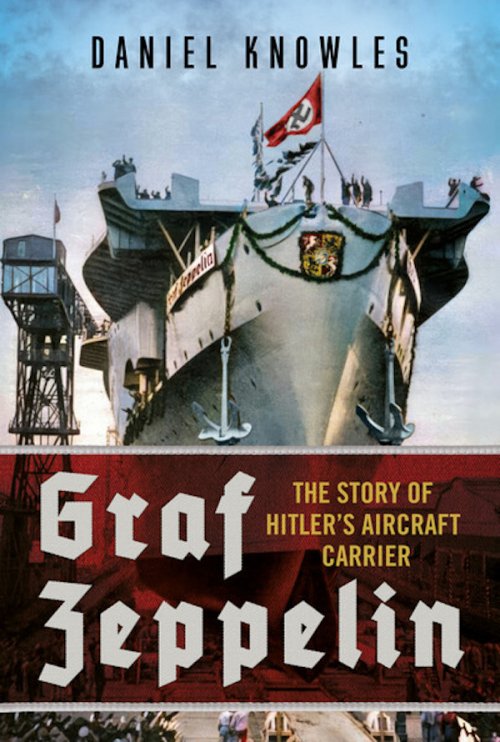
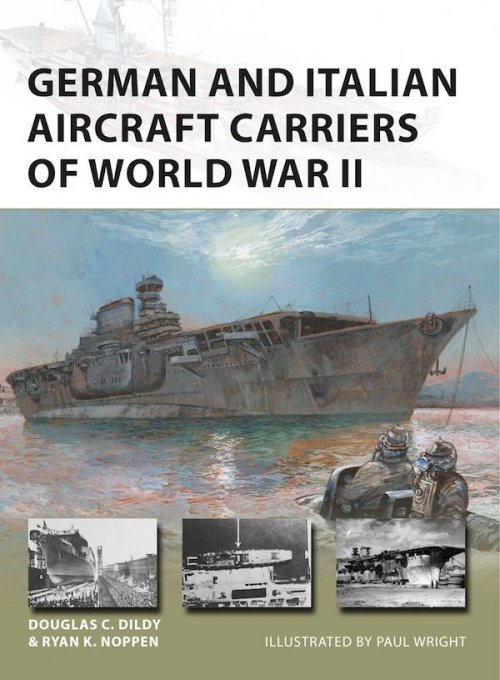
I notice that Pen & Sword has a 224-page book entitled Graf Zeppelin: The Story of Hitler's Aircraft Carrier by Daniel Knowles to be published in another month or so; see < https://www.pen-and-sword.co.uk/Graf-Zeppelin-Hardback/p/57384 >. Two carriers were laid down of a tentative plan for four, and because it was possible (with effort) for the first ship to have been in service with a handful of planes in time to accompany the fateful Operation Rheinübung, the never-finished carrier has attracted much interest since WW2 (not least from the Soviets who towed her away), including alternate history speculations. I am basically happy with my copy of the 2022 Osprey paperback about the Graf Zeppelin class, but if this forthcoming book proves to be well written with rich technical detail (from serious research into primary sources), then it would be worthwhile to purchase. I will keep an eye out for reviews.
 

Attachments

  • cover.jpg
    cover.jpg
    181 KB · Views: 26
  • osprey.jpg
    osprey.jpg
    88.3 KB · Views: 30
battleship yamato.jpg
This seems like an interesting one coming out. Not only does putting the term "anime" into the naval institute press return a result, but it seems like an interesting way to see how Japan interprets both its wartime and postwar self and how the two relate to one another. Does anyone else have recommendations for books that cover this topic? Or even the post war Japanese navy in general? There seems to be a paucity of work done on the Japanese navy 1946-2026.
 
This seems like an interesting one coming out. Not only does putting the term "anime" into the naval institute press return a result, but it seems like an interesting way to see how Japan interprets both its wartime and postwar self and how the two relate to one another. Does anyone else have recommendations for books that cover this topic? Or even the post war Japanese navy in general? There seems to be a paucity of work done on the Japanese navy 1946-2026.

That could be an interesting topic if done well. There was a Yamato movie done in the past decade, and of course there's Space Battleship Yamato. Clearly the ship is symbolic of something for the Japanese, but symbolic of what? Was it their lost cause during the war, or an honorable sacrifice, or the folly of sending 3055 men to their deaths?
 
Thanks, Arjen and Oluen. My German, unfortunately, is too limited to make a purchase of this volume worthwhile (about the fascinating rocket plane designs of Eugen Sänger, and the Sänger II TSTO project of the 1980s), and I don't see an English edition of it among Schiffer Publishing's titles. Maybe someday.
A lovely volume.

Can’t one of the tech-bro billionaires give some love to publishing houses?
 

Similar threads

Back
Top Bottom