That will add a lot of cost. Seems much more likely to have a single joint test team.
It is a classic scope schedule cost issue. If the jet will IOC just with a single set of A2A and then expand the envelope to wider munitions then one jet might be enough. If each nation wants a specific set of different national weapons, and could easily see this with the Japanese, then either something has to give in schedule or someone will have to pay.
 
I mean that each country would have their own set of flight-test aircraft. UK has one set up for stores separation, Italy has one, Japan has one.
I don't think that that is feasible, as far as I remember, the Eurofighter program used DA7 for most of the weapons trials during the test phase, with previous aircraft carrying the basic armaments only (AMRAAM + Sidewinder). Loading trials do seem to have been conducted on previous test aircraft but the actual drop tests seem to have been done by DA7. Now each nation seems to be doing trials on their respective aircraft, but nowadays it seems more of a case of integration and weapons clearance. I expect that the GCAP demonstrator will be less EAP and more YF-22/23 in the sense that they can be used for weapons trials rather than just simply for proof-of-concept, in order to speed up integration on the final product.
 
I don't think that that is feasible, as far as I remember, the Eurofighter program used DA7 for most of the weapons trials during the test phase, with previous aircraft carrying the basic armaments only (AMRAAM + Sidewinder). Loading trials do seem to have been conducted on previous test aircraft but the actual drop tests seem to have been done by DA7. Now each nation seems to be doing trials on their respective aircraft, but nowadays it seems more of a case of integration and weapons clearance. I expect that the GCAP demonstrator will be less EAP and more YF-22/23 in the sense that they can be used for weapons trials rather than just simply for proof-of-concept, in order to speed up integration on the final product.
It still means that the partners could each get 1 plane to use for stores tests. It would mean 3 planes for testing instead of 1 like with Typhoon, but it also would mean that you'd have all 3 country's weapons cleared at about the same time.
 
Same thoughts here, I would rather have Germany as a Tier 2 partner country than Tier 1 for GCAP/Tempest. If the main partners allow Germany to join as a full Tier 1 partner that would be asking for trouble.
It could also be an easy ride tho then again rn FCAS is still runing and we have no Idea what proposals there are for GCAP
 
As far as I know FCAS is very slowly dying kqcke for you and it looks like it will be dead by this time next year, Dasault will be looking to design and build it's own fighter at it's own expense as a result as well as upgrading the Rafale to the mk.5 variant.
 
As far as I know FCAS is very slowly dying kqcke for you and it looks like it will be dead by this time next year,
Yeah but lets all not forget politicians allways find a way to make it worse and rn im still Not seeing the end while i do believe its likely to die with around 2,2 billion euros wasted on the german side alone (based on its current worth). Makes me wonder what with MGCS happens but more importantly spain...
 
2.2 billion euros? That is an enormous amount of money kqcke for you. It certainly opens your eyes at how much it costs to design and build modern next generation fighters. :eek:
 
2.2 billion euros? That is an enormous amount of money kqcke for you. It certainly opens your eyes at how much it costs to design and build modern next generation fighters. :eek:
More or less yes thats around the combined value of money under contract for Phase 1a and 1b while it was expected to cost another 2,5 billion euros for phase 2. Tho i don't know whats left or if we may even gone other it trought inflation for example.
 
And do not forget FCAS prime, the Franco-British initiative that preceded both GCAP and today FCAS, where quite the same sums were already invested (exact number escape me today but should be around in the forum).
 
Last edited:
Much of that money won't be lost, as a lot of important R&D work had to be done to lay the groundwork before building a prototype - configuration studies, new materials research, new systems architectures and sensors, weapons bay development, radar cross section reduction efforts etc. Not to mention just training a generation of engineers so that they are ready to build an advanced 6th gen aircraft.

It would be interesting to know how much of the IP generated by FCAS has been pooled and will be shared with the other countries in the event of cancellation. Will Airbus get access to Dassault's studies and vice versa? MTU and Safran? Indra, Thales and Hensoldt? The more IP sharing occurs, the better the overall outcome for European defense industry, and the more useful FCAS will have been even if it stops here and each partner goes its own way.
 
Much of that money won't be lost, as a lot of important R&D work had to be done to lay the groundwork before building a prototype - configuration studies, new materials research, new systems architectures and sensors, weapons bay development, radar cross section reduction efforts etc. Not to mention just training a generation of engineers so that they are ready to build an advanced 6th gen aircraft.
Yes thats one benefit that definitely stays.
It would be interesting to know how much of the IP generated by FCAS has been pooled and will be shared with the other countries in the event of cancellation. Will Airbus get access to Dassault's studies and vice versa? MTU and Safran? Indra, Thales and Hensoldt? The more IP sharing occurs, the better the overall outcome for European defense industry, and the more useful FCAS will have been even if it stops here and each partner goes its own way.
Thats the bigger problem that im seeing considering how well it was going with the eurofighter IP...
 
https://www.politico.eu/article/can...rney-ambitious-new-partnership-trump-turmoil/
" As part of the package, Canada “is interested” in the sixth-generation fighter jet Global Combat Air Programme the U.K. is building with Italy and Japan to take flight by 2035, Goodale said. “Obviously, no decisions have been taken at this stage,” he added. “But this is something that we are actively engaged in examining in terms of Canada's future acquisitions.”

Canada wants to explore how “we can not just participate, but contribute” to the GCAP project, Goodale said, adding it wouldn’t be a replacement for the U.S.-led fifth-generation F-35 but a “progression.” "


View: https://x.com/f3futarigoto/status/2002239922246463685?s=20
 
Very sensible remark here:

(extracted from link above from @Mk_IX_Hawk :
Canada wants to explore how “we can not just participate, but contribute” to the GCAP project, Goodale said, adding it wouldn’t be a replacement for the U.S.-led fifth-generation F-35 but a “progression.”

I am pretty sure that, in term of operations, the expansion of Canada defense responsibility with the extension of our economies toward the Arctic, makes a large aircraft designed to be the defensive line far out at sea over large maritime area, as required by the GCAP alliance, quite relevant.

Wouldn´t be surprised to see Norway and Denmark interested as soon as flying demonstrators start to replace renders and other marketing placards.
 
I am pretty sure that, in term of operations, the expansion of Canada defense responsibility with the extension of our economies toward the Arctic, makes a large aircraft designed to be the defensive line far out at sea over large maritime area, as required by the GCAP alliance, quite relevant.

Wouldn´t be surprised to see Norway and Denmark interested as soon as flying demonstrators start to replace renders and other marketing placards.
100% agree here.

GCAP makes sense for Canada's needs. Arguably, F-47 would as well.
 
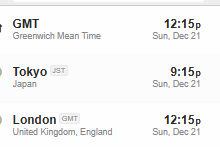
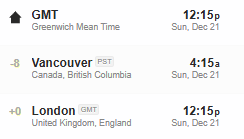
In term of contribution, as specifically stated in the quote above, beyond just trying to push their way in the design ecosystem as a Tier-1, Canada could be a great asset for testing, not just the demonstrators, but prototypes with its vast empty spaces, existing training infrastructures and ideal geolocation (the east coast of Canada, with its major industrial city, Vancouver, being half-way b/w Japan and Europe when traveling with the timeline zones). No problem either for a meeting in person or the shipping of test items. Both ways, same distance.
For example, you could direct a test for a designed modification just released in Japan, Test it in British Columbia, have plenty of time to analyze the data in Rome and London before suggesting a modification to an adjunct product designed by a second team downtown Tokyo. All that in 24hr!*

Think about that when comes the time to refine the RCS, manage Radio Emissions, introduce sensors, tasks that all ask for minute, time consuming, infinitesimal increments in the design process and etc...

Screenshot 2025-12-21 131532.png Screenshot 2025-12-21 131601.png

*I use to call this process permanent Design engineering.
 
Last edited:
Some news is better than no news, even if the news doesn't really say anything much :)

View: https://x.com/ModJapan_jp/status/2004474711674368403


> On December 26, 2025, State Minister of Defense Masahisa Miyazaki held the 11th meeting of the Next-Generation Fighter System Development Promotion Committee, where he received reports on the FY2026 budget proposal and development progress for the next-generation fighter, as well as the FY2026 budget proposal and review status for the development of unmanned aircraft to be linked to the next-generation fighter.
Japan, the UK, and Italy will work closely together to promote the development of the next-generation fighter system, with the aim of deploying the first aircraft in FY2035.
 
Last edited:
More information here
https://news.yahoo.co.jp/expert/articles/f6d73586a4a356c1d87c44537dc4c145e74aca36 (might need a VPN to access from EU/UK)

Some snippets.

- Development status of the next fighter

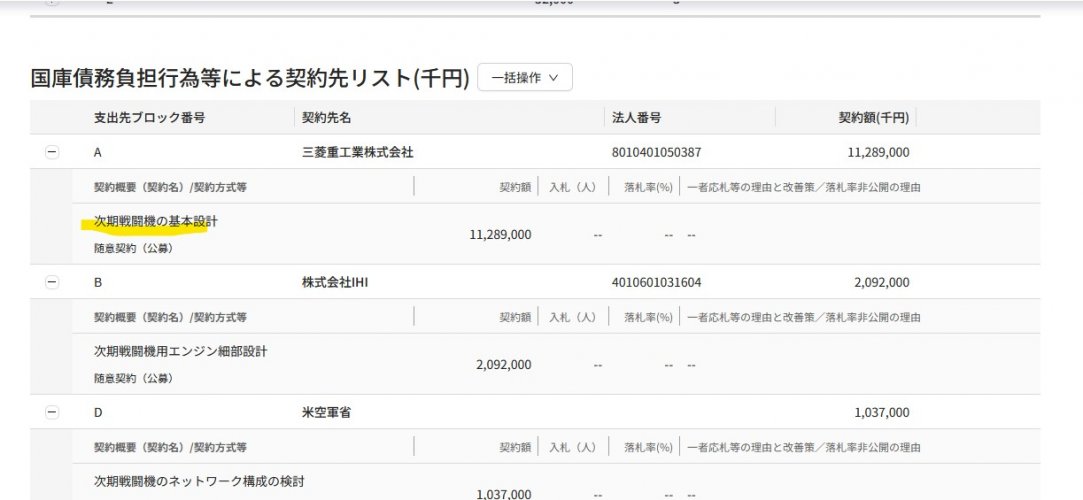
According to the Defense Equipment Agency, regarding the development status of the next fighter jet, Japan, Britain and Italy are currently studying the trade-offs between the shape and weight of the aircraft and the engine thrust, and are working to reflect them in the conceptual design of the aircraft.

As for the engine, which is a major part of the aircraft, the three countries of Japan, Britain and Italy are designing the detailed engine for the demonstration as a joint demonstration project.

Regarding the efforts so far, the Defense Equipment Agency explained that the initial costs related to the conceptual design have been recorded from the fiscal 2020 budget, and the development of the next fighter aircraft (GCAP) has begun in earnest.

In the FY2021 budget, the concept design of the aircraft and the basic design of the engine were implemented. In FY2022, we will carry out detailed engine design and basic design of the aircraft. In fiscal 2023, we proceeded with the production of the demo engine and refined the basic design of the aircraft.

In FY2024, we also designed the detailed engine for the airframe, acquired data necessary to refine the basic design of the aircraft, and recorded expenses related to testing for this purpose.

In FY2025, in response to the establishment of GIGO, an intergovernmental organization of GCAP, GIGO was included in contributions to GIGO to promote the design of airframes and engines in preparation for the transition to a consortium of companies (JV).

Areas of responsibility in Japan at GCAP

Regarding Japan's areas of responsibility at GCAP, the Defense Equipment Agency explained, "I will be in charge of developing parts that should contribute with Japan's technical strengths, such as structural systems and communication systems of the aircraft."

Regarding the engine, he said that he will be in charge of parts that require particularly high technology, such as compressors and turbines, using his experience in manufacturing the high-thrust turbofan demonstrator engine "XF9" for the next fighter.

On top of that, he predicted that the specific content of the workshare would be gradually decided based on the progress of the overall design.
 
...Japan, Britain and Italy are currently studying the trade-offs between the shape and weight of the aircraft and the engine thrust, and are working to reflect them in the conceptual design of the aircraft.

Seems rather fundamental stuff, I'm rather surprised this was not completed some time ago.
 
Seems rather fundamental stuff, I'm rather surprised this was not completed some time ago.
I imagine it's less fundamental but more looking for the final configuration. What sort of DEW integration, especially if the discussions are still delta, lambda, cranked kite, tailless.

Which brings you to delta, lambda, cranked kite, tailless body, has it been finalised. They all have pros and cons, I imagine a lambda style is the better option but with increased complexity.
Engine intakes and nozzles will depend on the shape, as will integral bays etc. What power will be needed for internals.

It sounds like we're at the final configuration before it is set in stone, which is possibly down to what size the DEW(s)/EW will it have be capable of having and what space will be left for missiles.
These things are based around energy if the rumours of 1MW per engine ring true, that means DEWs/EQ are the future for this bird.
 
That is what I would like to know kqcke for you. Whether Japan is going to follow the Wests example and reduce the number of fighters in their fleet or start to design a new fighter or another thing would be is to buy more GCAP/Tempest's or to replace the F-15Js which are getting rather old.
2nd Air Wing (Chitose)
201SQ (F-15J)
203SQ (F-15J)

3rd Air Wing (Misawa)
301SQ (F-4EJ→F-35A)
302SQ (F-4EJ→F-35A)

6th Air Wing (Komatsu)
303SQ (F-15J→F-35A)
306SQ (F-15J)

7th Air Wing (Hyakuri)
3SQ (F-2A)

8th Air Wing (Tsuiki)
6SQ (F-2A)
8SQ (F-2A)

5th Air Wing (Nyutabaru)
305SQ (F-15J)
202SQ (F-35B)

9th Air Wing (Naha)
204SQ (F-15J)
304SQ (F-15J)

As of March 2025, the JASDF fighter fleet looks roughly like this.

Japan’s planned F-35 procurement consists of 105 F-35A and 42 F-35B.
With a standard F-35 squadron strength of 21 aircraft (4x flights, CO, XO, and 3x reserve), this allows for the formation of 5 F-35A squadrons and 2 F-35B squadrons.

The F-35A is being introduced now to the 303rd Squadron, while the F-35B is being introduced to the newly established 202nd Squadron.
It has been reported that the F-35A will soon be deployed to the 306th Squadron at Komatsu Air Base, and that from 2031 onward, one of the F-15J squadrons at Chitose Air Base is planned to become the fifth F-35A squadron.
Because aircraft of the same type are often stationed at the same base for maintenance and logistical efficiency, the 305th Squadron at Nyutabaru will most likely become the second F-35B squadron.

The JSI upgrade will be applied to 68 F-15J belonging to the remaining three F-15J squadrons. The originally cited figure of 98 aircraft included 30 F-15DJ, but it was probably judged too costly to assign such upgraded aircraft to aggressor units (which operate around ten or more F-15DJ) and other roles.

The F-2A squadrons will, of course, be replaced by GCAP from 2035 onward.

To answer the question directly: yes. The F-15J is expected to begin retiring from service next year, with the airframes slated to be used for spare parts or scrapped.
However, the number of JASDF fighter aircraft is set to increase. According to a plan announced in 2022, the fighter fleet is scheduled to grow from the current 290 aircraft to 320 “by around ten years from now.” Details of how this increase will be achieved have not yet been made public.

Flight Global reported back in July that the number of F-15Js slated for upgrade has been cut to 54. Unfortunately, this figure has kept shrinking over time: the original plan called for 98, then it dropped to 68, and now it stands at only 54. It seems that just two (?) JASDF squadrons will operate the F-15JSI. :confused:

https://www.flightglobal.com/fixed-...umber-of-f-15js-to-be-upgraded/163789.article
What is the source of that number?
At least within Japan, the commonly accepted understanding remains that 68 aircraft will undergo the upgrade.

 
In term of contribution, as specifically stated in the quote above, beyond just trying to push their way in the design ecosystem as a Tier-1, Canada could be a great asset for testing, not just the demonstrators, but prototypes with its vast empty spaces, existing training infrastructures and ideal geolocation (the east coast of Canada, with its major industrial city, Vancouver, being half-way b/w Japan and Europe when traveling with the timeline zones). No problem either for a meeting in person or the shipping of test items. Both ways, same distance.
For example, you could direct a test for a designed modification just released in Japan, Test it in British Columbia, have plenty of time to analyze the data in Rome and London before suggesting a modification to an adjunct product designed by a second team downtown Tokyo. All that in 24hr!*
We did run a 24 hour cycle between the UK and Seattle for 777 PFCS testing. Boeing would prototype a change on their rigs, sling the specs over to the UK, where we'd implement it during their night, I'd kick the build off before going home for the night and my partner at our Seattle office would pick it up in the morning, burn it onto a set of PFCS boxes and run them over to Boeing for testing.
 
Seems rather fundamental stuff, I'm rather surprised this was not completed some time ago.

Expect to see the national demonstrators having different designs featuring alternate high risk features and some different equipment options and they will pool the experience of what aspects worked and didn't in the final unified design. Also while first flight isn't planned until 2027 there is a good chance we will see a factory rollout and some ground testing towards the end of 2026.
 
Expect to see the national demonstrators having different designs featuring alternate high risk features and some different equipment options and they will pool the experience of what aspects worked and didn't in the final unified design. Also while first flight isn't planned until 2027 there is a good chance we will see a factory rollout and some ground testing towards the end of 2026.
I imagine we'll still have changes up to around 2029 on design and thrust.
Will it have TVC 2d/3d, LERX and crooked delta/lambda affairs.
I can't imagine the UK will go with a large Delta, while having no means to increase manoeuvrability. Harder to keep LO adding extras like TVC and LERX but a small longish range mini bomber isn't, I expect, what the UK/Italy signed up for.

It will be interesting to see how it pans out.
 
Last edited:
Canada eyes an ‘ambitious’ new partnership with Britain amid Trump turmoil

As part of the package, Canada “is interested” in the sixth-generation fighter jet Global Combat Air Programme the U.K. is building with Italy and Japan to take flight by 2035, Goodale said. “Obviously, no decisions have been taken at this stage,” he added. “But this is something that we are actively engaged in examining in terms of Canada's future acquisitions.”

Canada wants to explore how “we can not just participate, but contribute” to the GCAP project, Goodale said, adding it wouldn’t be a replacement for the U.S.-led fifth-generation F-35 but a “progression.”

Looks like interest in GCAP is increasing beyond the original 3 countries, especially as Canada is touting it's AI capabilities as valuable for GCAP.
 
Canada eyes an ‘ambitious’ new partnership with Britain amid Trump turmoil


Looks like interest in GCAP is increasing beyond the original 3 countries, especially as Canada is touting it's AI capabilities as valuable for GCAP.
I don't think that Canada can bring much to GCAP but dollars. Edit: I take that back, it seems Canada has a lot of rare earths etc that could also be useful. But still not a lot of design or construction expertise.

But GCAP would be a good match for what Canada actually needs as an interceptor.
 
Last edited:
Last edited:
It's been a long time since there have been so many wishful thinking in a few paragraphs from an author who is clearly not a fan of the king of Boeing salesmen.
 
I can never tell if this is paywalled, seems like the full text is there.
https://www.janes.com/osint-insight...ise-gcap-full-design-and-development-contract
The governmental and industrial partners behind the trilateral Global Combat Air Programme (GCAP) are progressing towards the launch of full design and development work.

BAE Systems told Janes on 9 January that the GCAP Agency that is part of the GCAP International Government Organisation (GIGO) co-ordinating body is close to finalising with the Edgewing industrial body the transition from the current concept and assessment phase of the future fighter programme that comprises Italy, Japan, and the United Kingdom.

“The Global Combat Air Programme is progressing, with the GCAP Agency and Edgewing working collaboratively to conclude the ongoing final negotiations for the first international contract,” a BAE Systems spokesperson said. “Both parties have a clear, shared view of the scope of work and are focused on ensuring the right contract is awarded.”

News of the impending development came after the three governmental and industrial pillars needed to progress to full design and development were put in place throughout 2024 and 2025; namely ratification of the GCAP Treaty by the three national parliaments, as well as the establishment of the GIGO and Edgewing.

An official speaking under the Chatham House Rule at the IQPC International Fighter Conference (IFC) 2025 in Rome noted the unprecedented speed at which the GIGO and Edgewing were stood up, and how this had allowed detailed design and development work to be launched ahead of a formal contract.
 

Similar threads

Back
Top Bottom