F414-EPE/EDE

Alfa_Particle

ACCESS: Confidential
Joined
15 April 2024
Messages
54
Reaction score
296
Came across this photo a few days ago:
1764688114780.jpg

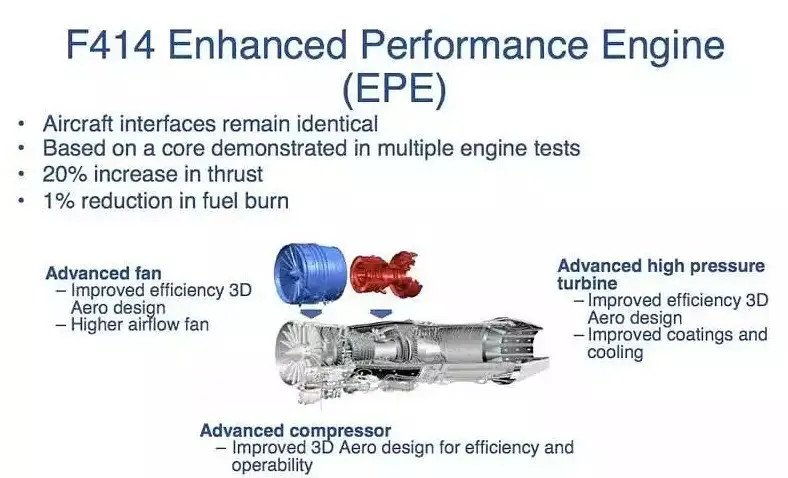
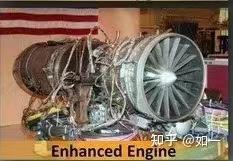
It kinda reawakened my curiosity regarding the F414's potential. Anyone got any materials on these two F414 enhanced proposals? Wikipedia claims that the EDE has one less HPC stage (3-6-1-1 instead of 3-7-1-1) but I can't seem to find a good source on this (honestly, looking at all the parts that the EDE would've overhauled it kinda just gave the vibe that GE designed a whole new engine under the F414 label lol). Credibility aside, I wonder if that's true for the EPE too.

I remember reading about them in the F110-EPE thread but it looks like there really isn't much information about these two...
 
Bigger inlet area by smaller shaft nosecone like on the IHI-XF9, better designed fan, compressor and turbine blades, e.g. forward swept blade tips and all blisk design.

The F414-400 fan has one non-blisk stage and 4 non-blisk HPC stages. Also better generation(s) of SX alloys for the turbine blades. Lots of room for improvement.
 
Last edited:
Bigger inlet area by smaller shaft nosecone like on the IHI-XF9, Better designed fan, compressor and turbine blades, e.g. forward swept fan+compressor blades and all blisk design.

The F414-400 fan has one non-blisk stage and 4 non-blisk HPC stages. Also better generation(s) of SX alloys for the turbine blades. Lots of room for improvement.
Of course, but what I'm wonder here are the *specifics* in how GE improved it. I've heard that blings are one of them much like the EJ270.

For a forward-swept fan... I'm still not convinced that it can hit a balance between costs and benefits. The materials required to cope with the aeroelastic instability can't be inexpensive and last thing you want in an aeroengine is another source for flutters. For it it work you'll need thicker airfoils and/or composites, etc. etc.

And as for the XF9-1... Let's not mention that poorly designed "thing."
 
I've always thought it a shame the USN did not pursue this development. Seems like it should have been a no-brainer considering how the Super Hornet is, for better or worse, the backbone of naval aviation and will continue to be for the immediate future.
 
I'm pretty sure the F414 has set the all-time record for the longest time in service US fighter engine without an in-service thrust upgrade. What's worse is the Super Hornet's major drag issues demand that extra 20% thrust bump. There's really no legitimate excuse for the Navy's for refusal to incorporate the EPE. But one could also say the same about the F401.
 
I'm pretty sure the F414 has set the all-time record for the longest time in service US fighter engine without an in-service thrust upgrade. What's worse is the Super Hornet's major drag issues demand that extra 20% thrust bump. There's really no legitimate excuse for the Navy's for refusal to incorporate the EPE. But one could also say the same about the F401.
The Navy decided they'd rather have the improved durability than the improved thrust.

I don't think they made the correct choice, but they did have a reason for the decision.
 

Similar threads

Back
Top Bottom