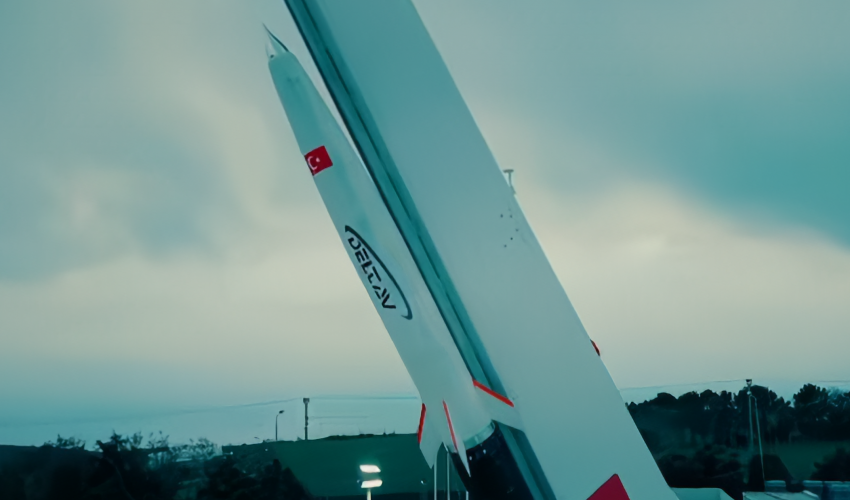
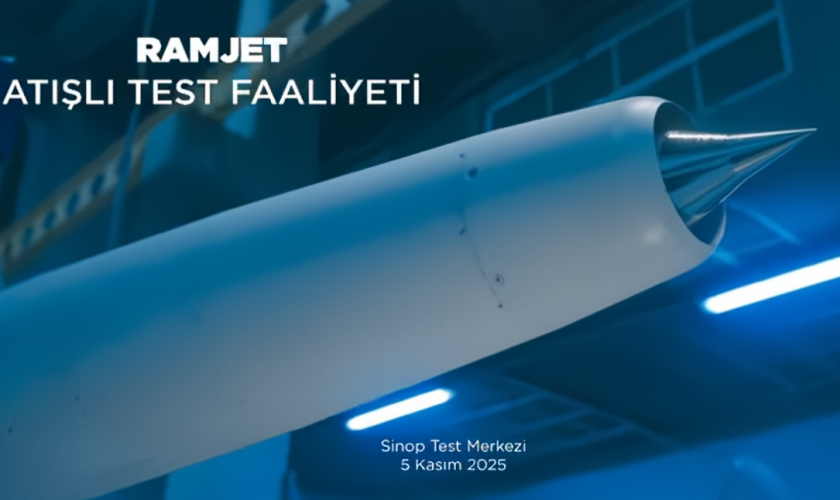
DELTA-V RAMJET firing test, 5th November;
"
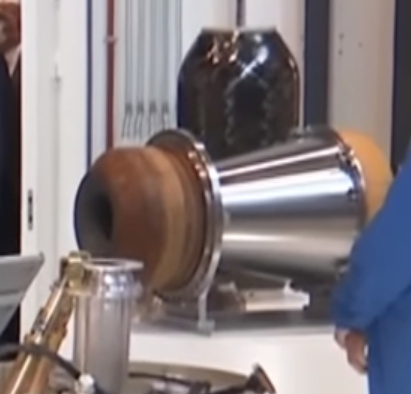
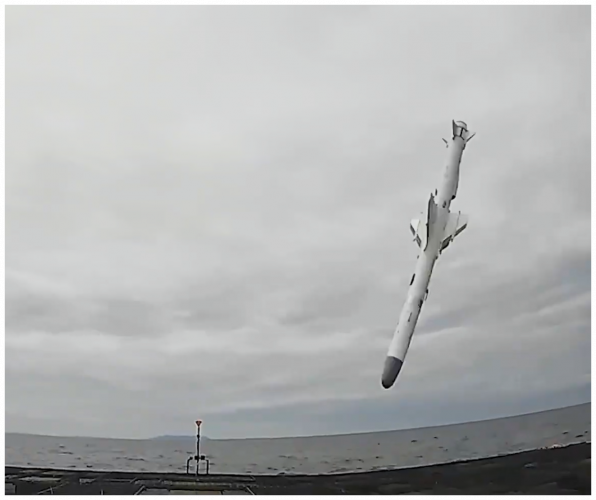
DeltaV has successfully performed the in-flight ignition test of its indigenously designed ramjet engine at the Sinop Test Center on November 5, 2025, as part of the propulsion system development efforts it is conducting.

During the test, the ramjet-powered air vehicle, integrated with a booster rocket system based on a hybrid rocket architecture, was launched from the ground. After the system reached the designated altitude and speed, stage separation was performed. Following the stage separation, the ramjet engine executed the planned ignition sequence, was successfully ignited in flight, and continued its flight operating as an air-breathing engine.

"

View: https://www.youtube.com/watch?v=5l8SZPLKmDk


Looks like the spiked inlet retracts after separation from rocket motor

1763896180784.png
1763896220128.png

So; Turkey has three companies that are developing ramjet motors;

Roketsan - Solid Fuel Ramjet Motor
SAGE - Liquid/Gel Fuel Ramjet Motor
DeltaV - Unknown Fuel Ramjet Motor (possibly hybrid solid+liquid/gel?)
 
Last edited:
I'm assuming airborne tests, since it's already been disclosed that some ground-based launch tests have been completed.

According to the original schedule, airborne tests were set to be conducted by 2025, with delivery by 2027.

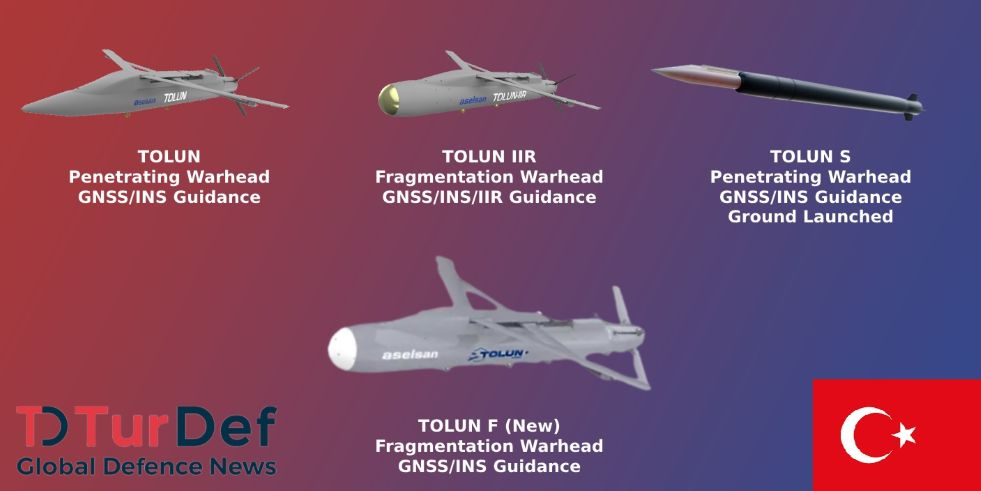
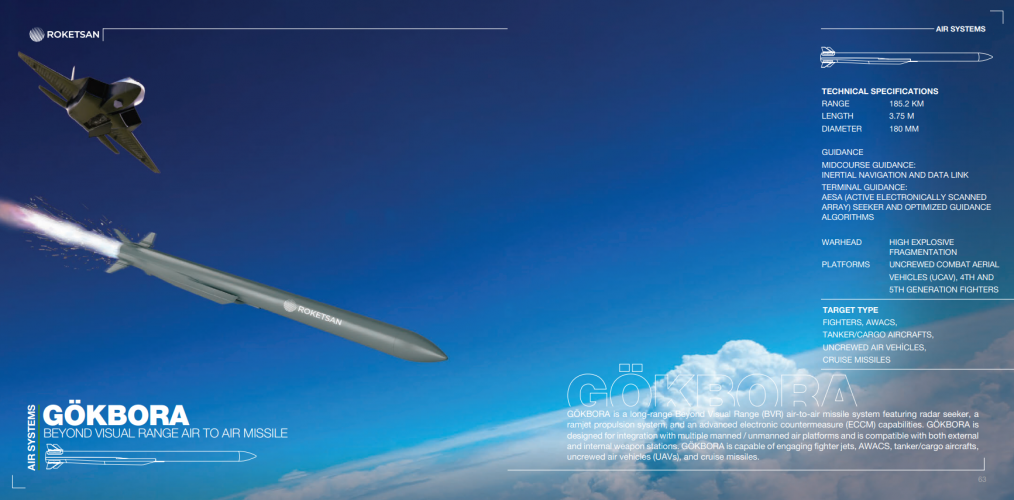
This missile is quite a bit longer than Roketsan's Gökbora and is liquid-fueled. I wonder what its CONOPS will be...

View attachment 779107

I wish that, instead of two different ramjets, we'd at least gotten a dual-pulse equivalent.

The PL-15, for example, has a higher top speed than the Meteor and also a longer maximum range. Apparently, Ramjets also bleed energy much faster once they burn out. The Meteor barely outranges the latest AMRAAMs despite being considerably bigger.

The existence of VLO aircraft means time-to-target and agility at shorter distances are more important.

So, I wish we'd also developed something for this, instead of two different ramjets that do the same job.

Roketsan CEO:

Engine development for the Gökbora project is completed.

Gökbora will be an air-to-air missile family.

The project is moving at a record pace.

View: View: https://x.com/savunma_trhaber/status/1996578101313110332?s=20


Last edited:
Interesting that these air defence projects are on the go, although the silhouettes for the 3/4/5 are clearly copied from the SM-3IB/SM-3IIA/Arrow 3.

View: https://x.com/T_Nblty/status/1999579468093153403?s=20

Apart from the silhouettes which are purely representative, it's accurate; GM of Roketsan has said in recent talk he gave that they are developing technologies all the way up to countering hypersonic missiles.

Translation captions available;
View: https://youtu.be/WcxqL_e-gKI?t=2955
 
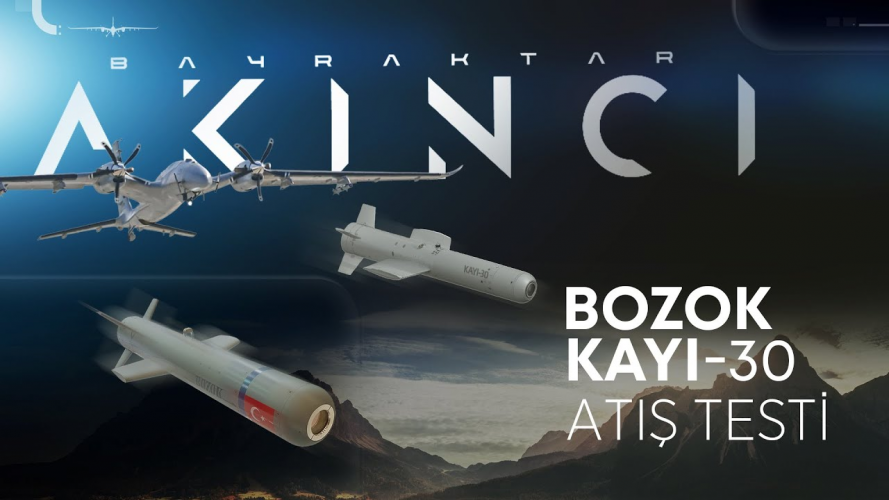
Tubitak SAGE developed; BOZOK and KAYI-30 were test launched from Akinci UCAV

View: https://www.youtube.com/watch?v=o5K2Zip2r90


BOZOK & KAYI-30
(TÜBİTAK SAGE Laser-Guided Glide Munitions for UAVs)​

SpecificationBOZOKKAYI-30
DeveloperTÜBİTAK SAGETÜBİTAK SAGE
TypeLaser-guided miniature glide munitionLaser-guided glide munition
Weight16 kg30 kg
Length80 cm100 cm
Diameter120 mm140 mm
GuidanceINS/GNSS + Semi-active laser seekerINS/GNSS + Semi-active laser seeker
RangeUp to 15 kmUp to 25 km
Warhead OptionsAnti-Personnel Warhead
Hybrid Warhead (Armor Piercing + Particle Effect)
Anti-personnel, armor-piercing, or thermobaric
Primary RoleLight/soft targets, anti-personnel with area effectVersatile (soft, armored, or hardened targets)
PlatformsUAVsUAVs


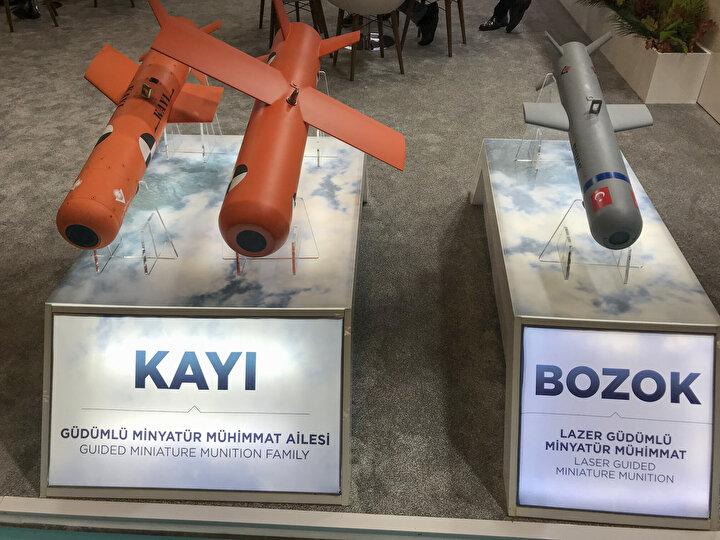
d6a9ec0c5996abb42e0065d4dacb9d8e.jpeg

KAYI family showcase
 

Attachments

  • 1765708355435.png
    1765708355435.png
    677.2 KB · Views: 25
New test of the ROKETSAN Tayfun rocket, which block is this model? When will the test of block 4 be available?

The launcher for block 4 should be considerably larger than the previous ones.

View: https://youtu.be/bPI3I8gB9kA?si=9qGJC6lD3KlzXfRm

Must be block 3 with the new launcher vehicle, from what I can gather they are testing additional electronics packages in these tests to fine tune accuracy and flight profile increasing the range up to 1,000km without sacrificing warhead size or increasing size of the missile itself.

Block 4 will be much larger indeed, we've seen the rocket motor tests already, and pictures of TVC type nozzle - tests were said to happen within the year, so perhaps we may see it before the month is out..

Solid rocket motor TVC Nozzle (Image from 2020)
1765979929383.png
 
Last edited:
Roketsan Gökbora is powered by a solid fuel ducted rocket ramjet while the ramjet that powers the TÜBİTAK SAGE Gökhan is a liquid gel fuelled ramjet. Roketsan Gökbora has folding wide fins, TÜBİTAK SAGE Gökhan has non folding cropped narrow fins.
 
Last edited:
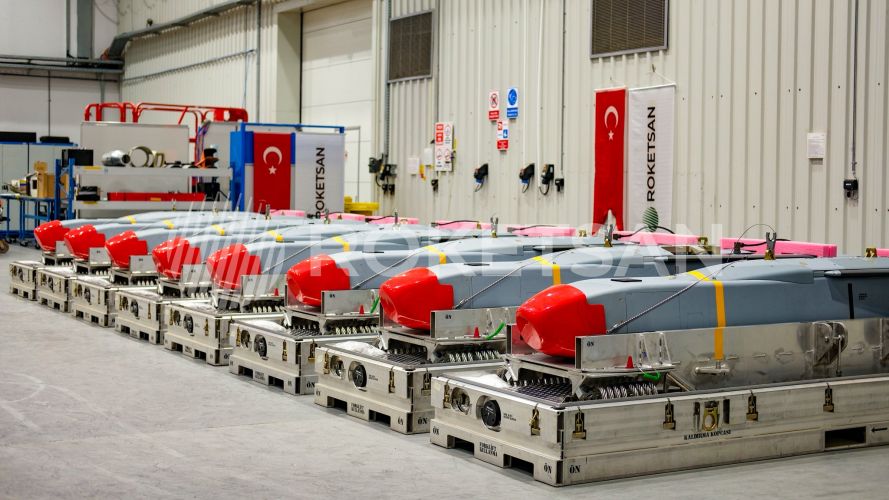
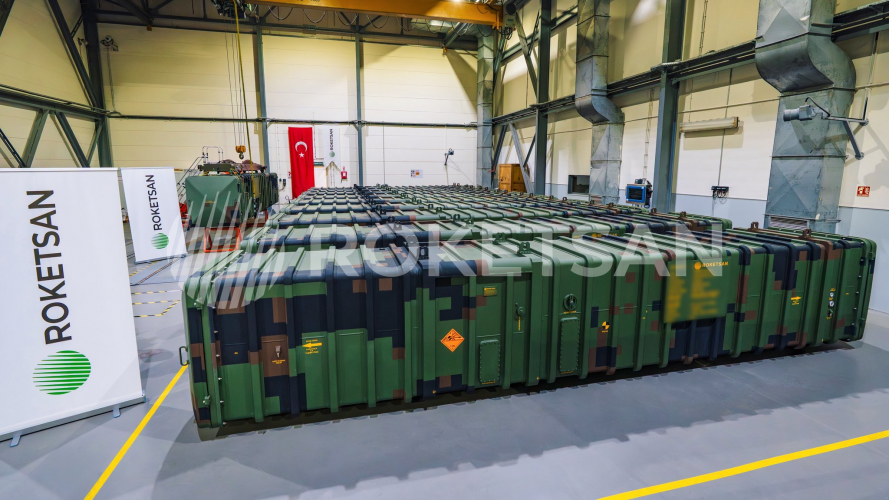
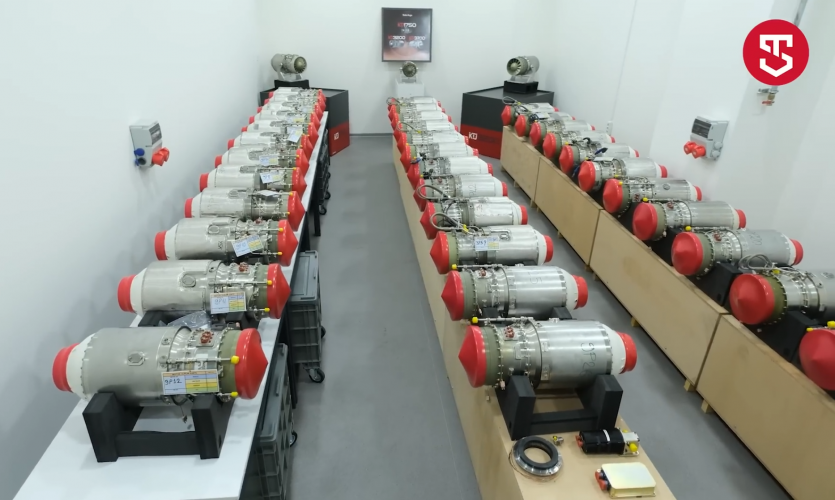
Where else does the 500+ KTJ-3200 engines that KALE produces in a year go to, me wonders

View attachment 806829
Exaggerate much? You really believe the TuAF inducts that many SOMs/ATMACAs each year?

Even with all the recent increases in production and investments in new facilities; cruise and ballistic missile production in Turkey still remains fairly boutique.
 
Exaggerate much? You really believe the TuAF inducts that many SOMs/ATMACAs each year?

Even with all the recent increases in production and investments in new facilities; cruise and ballistic missile production in Turkey still remains fairly boutique.

The numbers Kale Engines produce each year is confirmed by their GM, are you going to do what you did with TAI and oppose what the GM is saying ? Also, your presumption that these engines are all going towards SOM/ATMACA, thought you'd have more common sense then that.. tsk tsk
 
Where else does the 500+ KTJ-3200 engines that KALE produces in a year go to, me wonders

View attachment 806829
Atmaca being exported in large numbers+Cakir.

500-96 SOM=400.

There are/have been 400 Harpoons in Turkish service. Atmaca comes currently in 4 forms (ship-ship, sub-ship, ground-ship, ground-ground) soon te be 5 (air-ship).
 
I would like to add that engines contain little chemical components which limits their lifespan like in missile systems which have a typical shelf life of 5-15 years. These engines, if correctly maintained and stored, can last longer than the systems they propel.

E.g. produce lots of subcomponents (engines in this case) for future integration.

Also Kale exports these engines as well, most recently to Brazil.
 

Similar threads

Back
Top Bottom