The Future of the MBT

Foo Fighter

Cum adolescunt hominem verum esse volo.
Senior Member
Joined
19 July 2016
Messages
4,672
Reaction score
4,090
It has been done in a lot of places but, is not the best use for the asset. I really would prefer a specialised FSV that does the job right.

Abbot was very good for the role but it seems that extending range will lead to greater use of MLRS type systems.
 
It has been done in a lot of places but, is not the best use for the asset. I really would prefer a specialised FSV that does the job right.

Abbot was very good for the role but it seems that extending range will lead to greater use of MLRS type systems.
FSV vehicles are not designed for deep raids especially MRLS vehicles which are vulnerable to all sorts of low calibre direct fire. FSVs have even a higher profile than a contemporary tank. . Yes, a CATTB based form factor would have a higher profile, but as others pointed out, in this age of transparent battlefields low profiles accomplishes nothing. The reason for no revolution is, of course not about the technology it is about the cost & associated politics. Contractors want twice the $ and half the work, as usual.
 
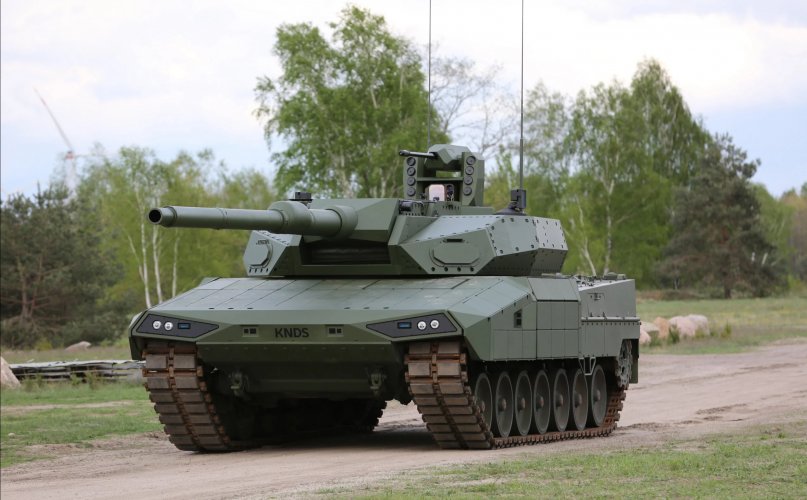
Our guys are also testing a similar idea with the Leopard 2 A-RC 3.0

The low profile, unmanned, APS riddled and anti-drone autocannon topped turret seems to be an emerging trend in western tank design, although T-14 and ZTZ-100 also have similar features.
I'm under the impression they just wanted to show off the double trunnion, which is really nice.
Agreed. Third-generation tanks were expected to fight in areas where foot infantry could not survive after tactical nuclear bombings, so their ability to resist armor-piercing projectiles was over-emphasized. Tanks after the Cold War need smaller guns to strengthen firepower, and thinner armor to strengthen survivability. Firepower and survivability should be improved through aspects other than advances in armor–projectile confrontation, but post–Cold War budget cuts caused almost all countries to lack the ambition to completely bid farewell to outdated ways of thinking.
Smaller guns and thinner armor? The 120mm already peaked. You can't squeeze more penetration out of it.
Sure we need to de-emphasize frontal engagements and kinetic AP as a threat, but the main gun still needs to be able to reliably defeat a modern MBT. Otherwise it's missing a core aspect of its concept.

Thinner armor just doesn't work. Even with APS and C-UAS capabilities a tank and APC are proving day after day that they need every bit of armor they can get.
 
Tanks after the Cold War need smaller guns to strengthen firepower, and thinner armor to strengthen survivability
When you mean with "smaller" shorter than yes. The high velocity anti-tank guns are optimized for the exception, not the rule, which is engaging enemy armor. If you mean going down in caliber, I see little benefit in that. Because where a tank shines is in being versatile, like engaging dismounted infantry, lightly armored mechanized assaults consisting of APCs, IFVs and all sorts of below MBT sized AFVs, buildings, fortifications, entrenched positions.

This makes high explosive and canister rounds the best choices, with modern high explosive anti tank rounds or gun launched (or even external) ATGMs suitable to engage other tanks if the need would ever arise (although I'm going to assume that 120/125mm HE to the turret will knock out most critical systems anyway). These rounds deal significant amount of damage against troops, lightly armored targets and structures, aka 90% of what you'll encounter. And the performance of these rounds scale with caliber, furthermore they don't require tremendous muzzle velocity to be effective. On top of that shortened barrels safe plenty of weight as well, alongside reducing the footprint of the tank.

The Shturm concept is directly based on this observation, on top of reinforcing the barrel to make it less susceptible to drone damage. Admittedly the latter point is something that could be disregarded in my opinion, as reinforcing the barrel would reintroduce weight. On a modern MBT sized vehicles, a shorter and thus lighter gun in a sizeable caliber that sacrifices muzzle velocity for being more compact seems more appealing than downgrading to 105mm, which brings less explosives down range. Although 105mm isn't the worst of the worst caliber because the balance between increased ammo volume thanks to the smaller caliber and the performance isn't terrible. I personally just think that for what's required on the 21st century battlefield as we've seen it the larger caliber "assault" approach is more suitable. As ultimately the chance of meeting a large, heavily armored formation is getting increasingly unlikely due to advances in battlefield ISR, indirect fire, drones obviously but also due to the evolution of conventional air power that's capable of picking apart such formations well before it meets your heavy armor at the line of contact.
 
When you mean with "smaller" shorter than yes. The high velocity anti-tank guns are optimized for the exception, not the rule, which is engaging enemy armor. If you mean going down in caliber, I see little benefit in that. Because where a tank shines is in being versatile, like engaging dismounted infantry, lightly armored mechanized assaults consisting of APCs, IFVs and all sorts of below MBT sized AFVs, buildings, fortifications, entrenched positions.

This makes high explosive and canister rounds the best choices, with modern high explosive anti tank rounds or gun launched (or even external) ATGMs suitable to engage other tanks if the need would ever arise (although I'm going to assume that 120/125mm HE to the turret will knock out most critical systems anyway). These rounds deal significant amount of damage against troops, lightly armored targets and structures, aka 90% of what you'll encounter. And the performance of these rounds scale with caliber, furthermore they don't require tremendous muzzle velocity to be effective. On top of that shortened barrels safe plenty of weight as well, alongside reducing the footprint of the tank.

The Shturm concept is directly based on this observation, on top of reinforcing the barrel to make it less susceptible to drone damage. Admittedly the latter point is something that could be disregarded in my opinion, as reinforcing the barrel would reintroduce weight. On a modern MBT sized vehicles, a shorter and thus lighter gun in a sizeable caliber that sacrifices muzzle velocity for being more compact seems more appealing than downgrading to 105mm, which brings less explosives down range. Although 105mm isn't the worst of the worst caliber because the balance between increased ammo volume thanks to the smaller caliber and the performance isn't terrible. I personally just think that for what's required on the 21st century battlefield as we've seen it the larger caliber "assault" approach is more suitable. As ultimately the chance of meeting a large, heavily armored formation is getting increasingly unlikely due to advances in battlefield ISR, indirect fire, drones obviously but also due to the evolution of conventional air power that's capable of picking apart such formations well before it meets your heavy armor at the line of contact.
You do actually need the long barrel for that mission, because you still need that high velocity. Not necessarily an L55 but still.
Firing an HE shell out to 5km or above is still very common, and you're not doing that with an L20-ish barrel.
And just because armor on armor battles are rare, doesn't mean the capability must be removed. Just maybe not progressed on the same level as other more important capabilities.
Because what usually happens when you intentionally create a capability gap - is an opponent tries to capitalize on that.
Remove a tank's anti armor capability and you made a stand-in force that would be helpless against some parallel elements of an adversary's stand-in force, which will naturally meet at some point.

A solid middle ground is to retain the current 120mm or accept the shift to some 130-140mm gun but deploy HE munitions with a weaker charge to wear the barrel less and perhaps even allow a less robust and thus lighter construction that accounts for more lower pressure shells and fewer high pressure ones (AP).
But that's not an idea I endorse.
 
Thank you for the correction. Appears interesting, but what is it for?
It's a technological demonstrator presented by KNDS, showcasing various technologies they're looking into (unmanned turret, APS, larger caliber RCWS, weight reduction, hull modifications, novel mounting mechanism for the main gun).

Think of it a bit like a German Abrams X for the Leopard 2.
 
Last edited:
You do actually need the long barrel for that mission, because you still need that high velocity. Not necessarily an L55 but still.
Firing an HE shell out to 5km or above is still very common, and you're not doing that with an L20-ish barrel.
And just because armor on armor battles are rare, doesn't mean the capability must be removed. Just maybe not progressed on the same level as other more important capabilities.
Because what usually happens when you intentionally create a capability gap - is an opponent tries to capitalize on that.
Remove a tank's anti armor capability and you made a stand-in force that would be helpless against some parallel elements of an adversary's stand-in force, which will naturally meet at some point.

A solid middle ground is to retain the current 120mm or accept the shift to some 130-140mm gun but deploy HE munitions with a weaker charge to wear the barrel less and perhaps even allow a less robust and thus lighter construction that accounts for more lower pressure shells and fewer high pressure ones (AP).
But that's not an idea I endorse.
I wasn't advocating for the removal of anti-armor capabilities, as I clearly stated. I simply opined that rather than relying on extremely large, heavy, expensive high velocity and high caliber guns, the anti-armor aspect can be mostly addressed through the usage of high explosive anti tank rounds as well as gun launched or externally mounted ATGMs. That would still provide the necessary means to destroy enemy heavy armor, especially given how potent modern ATGMs are and that HEAT rounds are no joke either. Although both are arguably more susceptible to APS than kinetic penetrators (which could still be carried, they'd just be less effective than used by guns which achieve higher muzzle velocity). L/20 maybe too short, but L/44 and slightly below that more than adequate. I just don't see much reasoning in mounting ever larger and heavier, larger caliber behemoths on new MBTs when the main benefit is armor penetration, something that simply isn't the highest priority for a tank these days. And smaller calibers sacrifice performance, be it with regards to kinetic rounds or being able to launch explosive mass down range, compared to larger calibers.

Not to mention that 120/125mm HE rounds to the turret will most likely disable many mission critical systems anyway. So the tank is a mission kill, if not outright destroyed (assuming one ran out of ATGMs or anti-tank shells). Monstrosities like the FV4002 or T58 155mm Heavy Gun Tank back in the cold war were meant to fire exclusively large caliber chemical rounds to deal with soviet heavy armor. These would never punch through an IS-3 or T-10 frontally, but they would have disabled the vehicle. And given all the sensitive equipment on a modern MBT, I doubt range finder, fire control system, optics etc. would appreciate getting blasted with an appropriate sized high explosive shell, even if it has no hope of penetration with regards to modern composite armor.

Ultimately optimizing modern tank main armaments for maximum anti-armor performance seems rather outdated in terms of thinking to me. It's feasible and is being done, but it's not the most optimal option.
 
IMO, larger caliber RCWS are sufficient for dealing w/ other than armor targets.

The MBT main gun should put at risk 'any' adversary "mass" or high value asset within the 20km it not up to 50km. The current front has very 'target rich environment' of these service & service support including artillery & MRLS targets, and yes, drone launch sites. If these targets are rapidly addressed in waves of raids it could well enact adversary culmination...The goal of Blitzkrieg as I understand it.
 
PS: ....larger caliber RCWS are easily up to 30mm, (viewed testing of such on the m1) and could be looked at up 50mm Chain gun thus rendering it an anti-armor weapon out to 2k, thus freeing up the main gun for primarily indirect work. This is especially true as EmoBirb states there woudn't be any surprises from opposing tanks. Mission effort focused on behind the lines.

Advanced APS, tactics, trained crews etc would be necessary to protect these expensive beasts.
 
I personally just think that for what's required on the 21st century battlefield as we've seen it the larger caliber "assault" approach is more suitable.
I agree, except for this sentence. I still prefer the smaller ones.
On the one hand, I suspect that the firepower of tanks is already sufficient, but I doubt that their breakthrough capability is strong enough for them to shoulder the task of breaching enemy lines in the 21st century. They may even struggle to serve as follow-on echelons that expand a breach and push deeper into enemy territory once a breakthrough has been achieved.
This is especially true when facing a peer adversary. The enemy is fully capable of deploying large numbers of sensors along the front line and directing rear-area firepower to halt any attempted breakthrough. In essence, breakthrough capability is a form of survivability during offensive operations, so allocating vehicle weight, internal space, and other resources to electronic warfare, stealth, and situational awareness rather than raw firepower may be more valuable. There are also many trendy terms, such as intelligentization, informatization, and multi‑domain operations.
I simply opined that rather than relying on extremely large, heavy, expensive high velocity and high caliber guns, the anti-armor aspect can be mostly addressed through the usage of high explosive anti tank rounds as well as gun launched or externally mounted ATGMs.
As for how to optimize firepower with limited resources, your answer was already very thorough. I’d like to take the idea a step further: perhaps it would even be possible to integrate systems that are normally found not on tanks but on destroyers or armed helicopters, such as vertically launched missiles and loitering munitions, and medium-range drones.

On the other hand, not every modern battlefield is as easy to supply or as suitable for tank operations as the plains of Eastern Europe. Unfortunately, some unfortunate tanks may have to operate at altitudes above 5,000 meters in high mountains, or on isolated islands more than 1,000 kilometers from the nearest supply point.
IMO, larger caliber RCWS are sufficient for dealing w/ other than armor targets.

The MBT main gun should put at risk 'any' adversary "mass" or high value asset within the 20km it not up to 50km. The current front has very 'target rich environment' of these service & service support including artillery & MRLS targets, and yes, drone launch sites. If these targets are rapidly addressed in waves of raids it could well enact adversary culmination...The goal of Blitzkrieg as I understand it.

Advanced APS, tactics, trained crews etc would be necessary to protect these expensive beasts.
I understand the goal you’re striving for, but I personally doubt that, when facing an adversary of comparable strength, tanks as a technological equipment can still support such ambitions,at least not as the most important piece of equipment for achieving them.
Tanks are powerful, but they are also vulnerable and difficult to replace, which reminds me somewhat of cavalry in the 19th century.
 
I understand the goal you’re striving for, but I personally doubt that, when facing an adversary of comparable strength, tanks as a technological equipment can still support such ambitions,at least not as the most important piece of equipment for achieving them.
Tanks are powerful, but they are also vulnerable and difficult to replace, which reminds me somewhat of cavalry in the 19th century.
The point is overmatch as doctrine, fighting at "comparable strength" might well deter conflict altogether..if one is well w/ their own capitulation.

There is no such thing as "most important". The most cost efficient means to prevail currently is w/ a certain amount F-16s..also the cheapest as well as least risk.

Advancing APS technology may well define the new "Shield" so capable as to become the "Sword" itself ending the ancient balancing act just long enough to change history. An comparison w/ the 19th century invites the question how much homework occurs prior to....
 
I wasn't advocating for the removal of anti-armor capabilities, as I clearly stated. I simply opined that rather than relying on extremely large, heavy, expensive high velocity and high caliber guns, the anti-armor aspect can be mostly addressed through the usage of high explosive anti tank rounds as well as gun launched or externally mounted ATGMs. That would still provide the necessary means to destroy enemy heavy armor, especially given how potent modern ATGMs are and that HEAT rounds are no joke either.
HEAT is to the APFSDS what the drone is to the ATGM.
Yes it has AT in its name but it is so incredibly easier to defeat a HEAT munition compared to an APFSDS, not to mention you're hard capped in terms of penetration by the diameter of the barrel. Even the top attacking (hence lower penetration needed) ATGMs exceed 120mm diameter. And the direct attacking Kornet for example is at 152mm.
That's even before addressing the fact that HEAT is easy meal for any APS.

An ATGM is a nice idea and all but it has a long time to target and at the shorter half of its engagement range it won't be able to climb sufficiently.

I hate giving historical examples but last time someone tried relying on gun-launched ATGMs it went horribly. And that even with a good starting point using a short barrel 152mm. The reasons are relevant today.

I just don't see much reasoning in mounting ever larger and heavier, larger caliber behemoths on new MBTs when the main benefit is armor penetration, something that simply isn't the highest priority for a tank these days. And smaller calibers sacrifice performance, be it with regards to kinetic rounds or being able to launch explosive mass down range, compared to larger calibers.
Because you need it just in case. We build a lot of things just in case. Less attention is given to them than the more important stuff, but still.

Not to mention that 120/125mm HE rounds to the turret will most likely disable many mission critical systems anyway. So the tank is a mission kill, if not outright destroyed (assuming one ran out of ATGMs or anti-tank shells). Monstrosities like the FV4002 or T58 155mm Heavy Gun Tank back in the cold war were meant to fire exclusively large caliber chemical rounds to deal with soviet heavy armor. These would never punch through an IS-3 or T-10 frontally, but they would have disabled the vehicle. And given all the sensitive equipment on a modern MBT, I doubt range finder, fire control system, optics etc. would appreciate getting blasted with an appropriate sized high explosive shell, even if it has no hope of penetration with regards to modern composite armor.
If you're talking about HESH and HEAT then these are simply irrelevant against composite armor. They were great against homogenous cast steel armor.
A modern 120mm HE cannot guarantee a mission kill, and that's not even the goal. The goal is to kill. Double tapping is obviously a thing but a single round is designed in a manner that it can alone defeat its target. And I think that's a good design approach.

The MBT main gun should put at risk 'any' adversary "mass" or high value asset within the 20km it not up to 50km. The current front has very 'target rich environment' of these service & service support including artillery & MRLS targets, and yes, drone launch sites. If these targets are rapidly addressed in waves of raids it could well enact adversary culmination...The goal of Blitzkrieg as I understand it.
Mechanically the standard 120mm to 140mm are ill suited for long range fire. You'd need a guidance system, and accept that you're regularly firing a full charge.
If you're doing that, how do you justify the existence of mortars, howitzers, and MLRS?
If your tanks are artillery, then at least have the SPH do the stand-in job.
 
Did "ze Germans" kidnap a Polish armor designer again? That very strongly reminds me of the PL-01.
Nah, because the ARC is actually a genuine piece of kit, the "PL-01" was a CV90 dressed up in plywood.

I find the turret design rather unique, but again, I find commonality with the Abrams X in terms of design decisions. Makes sense as both are low profile turrets, although the Leopard has a more in depth modification on how the gun is mounted as well as depression and elevation of the main armament. IIRC mounting the gun like that on manned turrets was deemed unacceptable as it would compromise NBC protection, but as it's unmanned that's not an issue. Or maybe I'm mixing it up with oscillating turrets...
 
Unfortunately, some unfortunate tanks may have to operate at altitudes above 5,000 meters in high mountains, or on isolated islands more than 1,000 kilometers from the nearest supply point.
Indeed, but that's where lighter, logistically more sustainable vehicles come in, think the current breed of 105mm armed AFVs like the ZTQ-15, as well as various lighter IFVs equipped with autocannons.

It not ideal for any MBT, so it's best left to specialized vehicles.
 
I hate giving historical examples but last time someone tried relying on gun-launched ATGMs it went horribly. And that even with a good starting point using a short barrel 152mm. The reasons are relevant today.
I'm familiar with the MGM-51 Shillelagh, but I also think it's not useful to judge the potential of a modern implementation of the idea based on a failed 1960s design.
Even the top attacking (hence lower penetration needed) ATGMs exceed 120mm diameter. And the direct attacking Kornet for example is at 152mm.
That brings external "hard points" into play though.
A modern 120mm HE cannot guarantee a mission kill, and that's not even the goal. The goal is to kill. Double tapping is obviously a thing but a single round is designed in a manner that it can alone defeat its target. And I think that's a good design approach.
There are also APFSDS rounds that don't guarantee a straight up kill. Especially against modern MBTs that are stuff to the brim with composites, ERA, add-on armor packages and in some case hard-kill APS. But a tank that cannot sustain effective combat operations after a direct hit is essentially a non-factor until recovery and repair. The well known footage of a Bradley blasting a T-90 at close range is well known, the tank suffered only superficial damage as well as damage to subsystems like it's optics. That IFV had no hope of even coming close to penetrating the MBT from the position it engaged it, but the tank was effectively taken out of combat. Large caliber HE can achieve similar outcomes with a single shot rather than a salvo. Again, I'm not calling for stubby guns with zero penetrating power for kinetic rounds. I just don't look at the larger, faster, heavier direction favorably because it doesn't seem reflective of actual battlefield needs but rather spreadsheets and analysis of heavy armor that won't be met head on on the battlefield in 90% of cases.
 
I'm familiar with the MGM-51 Shillelagh, but I also think it's not useful to judge the potential of a modern implementation of the idea based on a failed 1960s design.
That is why I specified the points of failure in regards to modern systems.
Mainly being diameter, vulnerability and low lethality of HEAT, inability to guarantee top attack at short to medium ranges, and the proliferation of APS.

There are also APFSDS rounds that don't guarantee a straight up kill.
Especially against modern MBTs that are stuff to the brim with composites, ERA, add-on armor packages and in some case hard-kill APS.

They have high post-penetration effect but most importantly they are the best available technology to pierce armor.

Modern APS still cannot reliably defeat APFSDS, and armor suitable for defeating APFSDS must be specialized - more dense and thus heavier. While APFSDS for 120mm has already peaked, so has armor (more or less). By de-focusing KE protection, one might save a good amount of weight. No need to further neuter a tank by removing its armor piercing capability as well.

But a tank that cannot sustain effective combat operations after a direct hit is essentially a non-factor until recovery and repair. The well known footage of a Bradley blasting a T-90 at close range is well known, the tank suffered only superficial damage as well as damage to subsystems like it's optics. That IFV had no hope of even coming close to penetrating the MBT from the position it engaged it, but the tank was effectively taken out of combat. Large caliber HE can achieve similar outcomes with a single shot rather than a salvo.
HE shells may sometimes do that. You get a lucky shot that blinds the crew or disables some drive mechanism. And sometimes they won't, because tanks are resilient like that. These are again more vulnerable shells (including to APS), lower velocity, no post-pen effect, and will require more shots per target.

That Bradley also had the luck of the T-90's turret drives being disabled. I'm not sure if by technical fault of the tank, or through a lucky shot. It seemed as though it couldn't move its turret, or the turret crew was already dead or injured somehow. But that was a huge risk.

Firing an APFSDS puts the barrel under immense pressure. I think they exceed EFC but I'm not sure. Tungsten and Uranium also aren't nice materials to extract and machine. If HE was a viable alternative to APFSDS, everyone would be going that route.

I just don't look at the larger, faster, heavier direction favorably because it doesn't seem reflective of actual battlefield needs but rather spreadsheets and analysis of heavy armor that won't be met head on on the battlefield in 90% of cases.
130 - 140mm aren't assured. Evolved 120mm designs are also being looked at, and even without the Franco-German feud none's rushing to replace them. Certainly not on current gen tanks that cannot afford this extra space and weight with their current construction.
 
Because what usually happens when you intentionally create a capability gap - is an opponent tries to capitalize on that.
Remove a tank's anti armor capability and you made a stand-in force that would be helpless against some parallel elements of an adversary's stand-in force, which will naturally meet at some point.
Remove a ship's belt armor and you've created a weakness where enemy can send a battleship to shoot at your AEGIS with guns, and it naturally will happen at some point.

Remove plate armor and you've created a weakness where the enemy can cut you with a sword, and it will naturally happen at some point.

the proliferation of APS....

Modern APS still cannot reliably defeat APFSDS, and armor suitable for defeating APFSDS must be specialized
The proliferation of anti-aircraft guns means you always need heavy artillery. Aircraft can be shot down by guns easily, but hitting a shell, oh that is difficult~ And we might not propose 20" next gen, maybe stay at 16". High velocity APHE have a lot more kinetic energy than aircraft ordinance and can penetrate more armor, nothing like aerial bombs that generally just damage the superstructure against ships with deck armor.

If HE was a viable alternative to APFSDS, everyone would be going that route.
If breechloader guns was a viable alternative to sabre, everyone wouldn't be maintaining cavalry sword training. Experience between weak powers like Russia and Japan is not illustrative of what would happen when properly trained and equipped forces are used. Thousands of years since the bow and it is known that fires alone can not be decisive, cold steel is what determines who holds the field at the end.

If aircraft was a viable alternative to artillery, the nations wouldn't be building the Yamato, King George V, Iowa, Bismark and likes.
 
Last edited:
I mean... Battleships eventually got replaced by unarmored cruisers and the heavily armored knights eventually went to curiassers and then unarmored cavalry.

If t also are getting too expensive and heavy to carry APFSDS defeating armor... There will have to be a fundamental change to their design. And dropping that level of armor may be it, as well as dropping guns that can beat that armor, just like battleships went away.
 
I mean... Battleships eventually got replaced by unarmored cruisers and the heavily armored knights eventually went to curiassers and then unarmored cavalry.

If t also are getting too expensive and heavy to carry APFSDS defeating armor... There will have to be a fundamental change to their design. And dropping that level of armor may be it, as well as dropping guns that can beat that armor, just like battleships went away.
The problem is, if you introduce a new tank that is not capable of taking hits from the existing stockpiles of 120/125mm, then Questions Will Be Asked In Parliament/Congress.

There's still all these old tanks out there. Thousands upon thousands of them.

And you could be facing them, not the new top line tanks that don't have enough armor to take a hit from those guns, nor do they have guns with enough firepower to take out said old tanks.

If Congress is on the ball, they will be asking pointed questions in procurement about why we are buying a new tank that cannot take out our existing tanks.
 
Remove a ship's belt armor and you've created a weakness where enemy can send a battleship to shoot at your AEGIS with guns, and it naturally will happen at some point.

Remove plate armor and you've created a weakness where the enemy can cut you with a sword, and it will naturally happen at some point.
Tanks aren't some singular piece of weaponry that comes and goes and can be easily substituted.
They come in different shapes and forms, conforming to different technological limitations, operational needs, and doctrines. Removing a tank isn't like removing the sword. It's like also removing the spear and the hammer and poleram and every melee weapon, and cavalry as well.
An army of only bows will find itself losing every 1:1 engagement. By the era of the musket and field artillery there were still swords as forces gradually approached one another. And today we avoid giving the rifleman a sniper rifle because we emphasize his need to fight the CQB.

The MBT represents the peak technological and operational capability of a stand-in weapon.
It is however inherently flawed - particularly in situational awareness and reaction speed, so infantry-tanks pairing is still the foundation for every maneuvering force.
When it comes to combat, the stand-in force will exploit or fight another stand-in force. That is why "medium" tanks and MBTs were always designed with the ability to engage other tanks.

The proliferation of anti-aircraft guns means you always need heavy artillery. Aircraft can be shot down by guns easily, but hitting a shell, oh that is difficult~ And we might not propose 20" next gen, maybe stay at 16". High velocity APHE have a lot more kinetic energy than aircraft ordinance and can penetrate more armor, nothing like aerial bombs that generally just damage the superstructure against ships with deck armor
I don't think any ship in existence will handle a 2,000lbs GP bomb well, let alone half a dozen of these.


If breechloader guns was a viable alternative to sabre, everyone wouldn't be maintaining cavalry sword training. Experience between weak powers like Russia and Japan is not illustrative of what would happen when properly trained and equipped forces are used. Thousands of years since the bow and it is known that fires alone can not be decisive, cold steel is what determines who holds the field at the end.

If aircraft was a viable alternative to artillery, the nations wouldn't be building the Yamato, King George V, Iowa, Bismark and likes.
Ok admittedly I lost you on the last one. I really have no idea what point you're making.

If t also are getting too expensive and heavy to carry APFSDS defeating armor... There will have to be a fundamental change to their design. And dropping that level of armor may be it, as well as dropping guns that can beat that armor, just like battleships went away.
Exactly. This process isn't happening, so it's premature to talk about some radical changes to munition tech, which is stangant at the moment.
 
As for "the dart". The ignition of the rd's primer emits a detectable & geolocateable signal traveling at the speed.of light. There may well be enough time to focus as many cheap KE projectiles into the projected path of very atmospherically susceptible dart. The "dart" doesn't have to be destroyed it has to slightly deflected.

As for abandoning the tank. That is like depending a new Maginot Line.
 
As for "the dart". The ignition of the rd's primer emits a detectable & geolocateable signal traveling at the speed.of light. There may well be enough time to focus as many cheap KE projectiles into the projected path of very atmospherically susceptible dart. The "dart" doesn't have to be destroyed it has to slightly deflected.

As for abandoning the tank. That is like depending a new Maginot Line.
Iron Fist demonstrated an APFSDS defeat by tilting the rod, over 20 years ago.
Trophy had an anti-KE variant for the competition (around the same time) which seemed to have a similar approach but was abandoned to focus on HEAT.
StrikeShield and its predecessors utilize some form of kinetic impact with so called "energetic blades".

But in 2009 Trophy entered service without anti-KE capability. And Iron Fist evolved into smaller and lighter variants that also abandon that mission.
We know StrikeShield also comes in a variant without anti-KE capability, and it is likely what's sold to Hungary.

Since 2014 there was a low burning process to put Iron Fist interceptors on Trophy. And the Barak MBT was envisioned with an anti-KE APS.

In 2021 Rafael unveiled a line of anti-KE multi-hit ERA, claiming it to be the only viable solution to this threat.

So the defeat mechanism existed for a very long time. Interest and thus commercial potential also existed in abundance.
But it was never acquired or progressed into a working solution.

The only conclusion I can reach is that it is not deemed feasible. Rafael actually explained at IAV2021 that the biggest issue is detection and confidence of ID.
The very low RCS and fast travel time make detection very difficult, in turn requiring lowering of confidence standards, which in turn means more false positives - which is probably the main parameter for the qualification of any APS.
 
Last edited:
Iron Fist demonstrated an APFSDS defeat by tilting the rod, over 20 years ago.
Trophy had an anti-KE variant for the competition (around the same time) which seemed to have a similar approach but was abandoned to focus on HEAT.
StrikeShield and its predecessors utilize some form of kinetic impact with so called "energetic blades".

But in 2009 Trophy entered service without anti-KE capability. And Iron Fist evolved into smaller and lighter variants that also abandon that mission.
We know StrikeShield also comes in a variant without anti-KE capability, and it is likely what's sold to Hungary.

Since 2014 there was a low burning process to put Iron Fist interceptors on Trophy. And the Barak MBT was envisioned with an anti-KE APS.

In 2021 Rafael unveiled a line of anti-KE multi-hit ERA, claiming it to be the only viable solution to this threat.

So the defeat mechanism existed for a very long time. Interest and thus commercial potential also existed in abundance.
But it was never acquired or progressed into a working solution.

The only conclusion I can reach is that it is not deemed viable. Rafael actually explained at IAV2021 that the biggest issue is detection and confidence of ID.
The very low RCS and fast travel time make detection very difficult, in turn requiring lowering of confidence standards, which in turn means more false positives - which is probably the main parameter for the qualification of any APS.
Thank you BZ. Nothing worth pursuing is COTS.

One forgets the importance of the dart at ones peril. Antenna sensitivity & processing might capture particular primer ignition's signature to cross referenced w/ all other sensing. .
 
Stand-in weapons becomes less valuable when standoff kill chain is completed.

At start of ww2, a carrier could barely manage 2 hits on a battleship sized target in a day, and with sub 1k hp engines, 250kg class bombs with lowish velocity and near suicide level flat-and-slow torpedo attacks. But they get to be the decisive arm because doing damage while not taking in wins.

Artillery before computers have reaction times in the tens of minutes, can't track infantry let alone motor vehicles. This is a far cry from modern kill chain. Modern standoff attack expect multiple kills in a single reload on a cheap and lighter platform.

There's still all these old tanks out there. Thousands upon thousands of them. And you could be facing them, not the new top line tanks that don't have enough armor to take a hit from those guns, nor do they have guns with enough firepower to take out said old tanks.
If congress is not insane, you can tell him that old tanks can killed by hobbyshop drones as they have shown to die to in huge numbers.

Frankly, every combat vehicle without strong anti-drone/missile defenses can just be destroyed easily. One can just mount missiles on the roof like Cheonma or backpack some drones or something if the force structure haven't been worked out.

The idea that you save mass to fit 120~140mm guns while cutting APS to something with 5 rounds per sector and can't outrange EFP is the real insanity. The turtle tanks are soaking up 40~50 drones, a low range, low shot count active defense isn't even working better than a T-72A with the scrapheap upgrade. And don't think 40~50 drones is a difficulty for the opponent. Drones are cheaper than artillery and built in the millions, expended in sheer spam like artillery.

There is a 100% chance that you send the tank against any opponent more powerful than a drug gang would be under attack by drones, and a very high chance it'd be shot at by missiles by the huge number of platforms that carries them, from infantry to all combat vehicles bigger than an quadbike to aircraft and so on.

A vehicle with 100% resistance to drone and missiles is utterly decisive, would roll over all lighter formations quickly. If it is facing a heavy force, unless the opponent also have amazing drone and missile resistance, you can just attach your own drone and missile force to defeat them, at extended range before your stand-in vehicles ever get shot at.

A vehicle upgrade with 100% KE resistance is near worthless since KE engagement is so unlikely since you need both sides to resist standoff fires for that to happen. A vehicle with 100% kill KE gun is also near useless before most fights are decided at range until both sides resists standoff fires. Note long range weapons also work at short range, and minimum range isn't a issue when networks and indirect means one can just have another shooter make the engagement.
Exactly. This process isn't happening, so it's premature to talk about some radical changes to munition tech, which is stangant at the moment.
In the world of munitions tech, missiles have superior performance to guns. Missiles have more warhead payload, higher maximum velocity, higher rate of fire (if needed), longer range, greater accuracy and more capability to fit complex systems for a given platform size.

The only advantage of guns is that you save on propellent at works at very short range (also guidance package, but it is almost cheaper than the warhead now). This is only useful if both sides are blind as to stumble into short range or that you need a lot of ammo to shoot at a lot of low value, low threat targets, which another 40ton+ tank isn't.
 
Last edited:
If congress is not insane, you can tell him that old tanks can killed by hobbyshop drones as they have shown to die to in huge numbers.
So install APS on the old tanks, duh.

Multiple, actually. Long range (akin to Quick Kill), short range (Trophy), and last ditch (Iron Curtain).


The idea that you save mass to fit 120~140mm guns while cutting APS to something with 5 rounds per sector and can't outrange EFP is the real insanity.
Agreed.


A vehicle with 100% resistance to drone and missiles is utterly decisive, would roll over all lighter formations quickly. If it is facing a heavy force, unless the opponent also have amazing drone and missile resistance, you can just attach your own drone and missile force to defeat them, at extended range before your stand-in vehicles ever get shot at.

A vehicle upgrade with 100% KE resistance is near worthless since KE engagement is so unlikely since you need both sides to resist standoff fires for that to happen. A vehicle with 100% kill KE gun is also near useless before most fights are decided at range until both sides resists standoff fires. Note long range weapons also work at short range, and minimum range isn't a issue when networks and indirect means one can just have another shooter make the engagement.
A vehicle with 100% resistance to drones and missiles and 100% KE resistance is going to roll over even heavier formations.
 
Stand-in weapons becomes less valuable when standoff kill chain is completed.
Just make stand-in faster and more effective then. It's that simple.
At start of ww2, a carrier could barely manage 2 hits on a battleship sized target in a day, and with sub 1k hp engines, 250kg class bombs with lowish velocity and near suicide level flat-and-slow torpedo attacks. But they get to be the decisive arm because doing damage while not taking in wins.
You really think the stand-off is immune to the stand-in?
More importantly, you really think the stand-off can operate at even half efficiency without the stand-in?

Artillery before computers have reaction times in the tens of minutes, can't track infantry let alone motor vehicles. This is a far cry from modern kill chain. Modern standoff attack expect multiple kills in a single reload on a cheap and lighter platform.
I don't know what artillery formation you're familiar with, but I'm familiar with various UAS types organic to the artillery battalion.
You may scratch about half a minute from the initial response time compared to a drone, but you're getting way more firepower in, at a fraction of the manpower.
Then you also have strike drones, LMs, manned aircraft for heavy ordnance, multiple forms of artillery and missiles, etc.
All of which may be individually more expensive than a drone, but they deliver much larger and more lethal warheads, with motors capable of bringing them faster to target, and with much higher reliability. As in, you can't just sneeze them away.

That is why armies that do use FPV drones for strike, still use other things 95% of the time.

The idea that you save mass to fit 120~140mm guns while cutting APS to something with 5 rounds per sector and can't outrange EFP is the real insanity. The turtle tanks are soaking up 40~50 drones, a low range, low shot count active defense isn't even working better than a T-72A with the scrapheap upgrade. And don't think 40~50 drones is a difficulty for the opponent. Drones are cheaper than artillery and built in the millions, expended in sheer spam like artillery.
The barntank sacrafices its entire combat mechanism to do that. It can't spot, it can't shoot. It can just drive forward knowing it's sheer luck from then on.
An MBT with proper APS and C-UAS that can do 40-50 drones individually (and much more since it's on every MBT, IFV/APC, CEV) can actually engage in combat. And that's important.

The reason why the MBT can persist in the drone-infested battlefield is similar to why it managed to do so for over a century in an artillery infested one. And yeah we have C-RAM stuff for decades but none's really rushing to deploy them to cover maneuvering forces.
It's simple - you don't use MBTs everywhere. They're a tool in a toolbox. Same with infantry and APCs and IFVs and all.
You use them where you believe they are useful.
Russia is a bad example because the way it does assaults has a benefit that's specific to Russian goals and would otherwise just be considered massively stupid. Although we can see that Russia is conserving, rather than deploying newly manufactured AFVs.

We are in agreement that AFVs need APS and C-UAS equipment as the bare minimum. But with that, they're really resilient.

A vehicle upgrade with 100% KE resistance is near worthless since KE engagement is so unlikely since you need both sides to resist standoff fires for that to happen. A vehicle with 100% kill KE gun is also near useless before most fights are decided at range until both sides resists standoff fires. Note long range weapons also work at short range, and minimum range isn't a issue when networks and indirect means one can just have another shooter make the engagement.
Then just deploy the tank with mostly HE rounds. Problem solved, no harm done.

In the world of munitions tech, missiles have superior performance to guns. Missiles have more warhead payload, higher maximum velocity, higher rate of fire (if needed), longer range, greater accuracy and more capability to fit complex systems for a given platform size.

The only advantage of guns is that you save on propellent at works at very short range (also guidance package, but it is almost cheaper than the warhead now). This is only useful if both sides are blind as to stumble into short range or that you need a lot of ammo to shoot at a lot of low value, low threat targets, which another 40ton+ tank isn't.
So when are we replacing every grunt's rifle with a Javelin?
I'd love to see MOUT with that setup.
 
A vehicle with BLOS capability, nearly 100% resistance to drones and missiles and nearly100% KE resistance is going to roll over even heavier formations plus their combat support & combat service formations thus compelling adversary cascading collapse and eventually culmination.
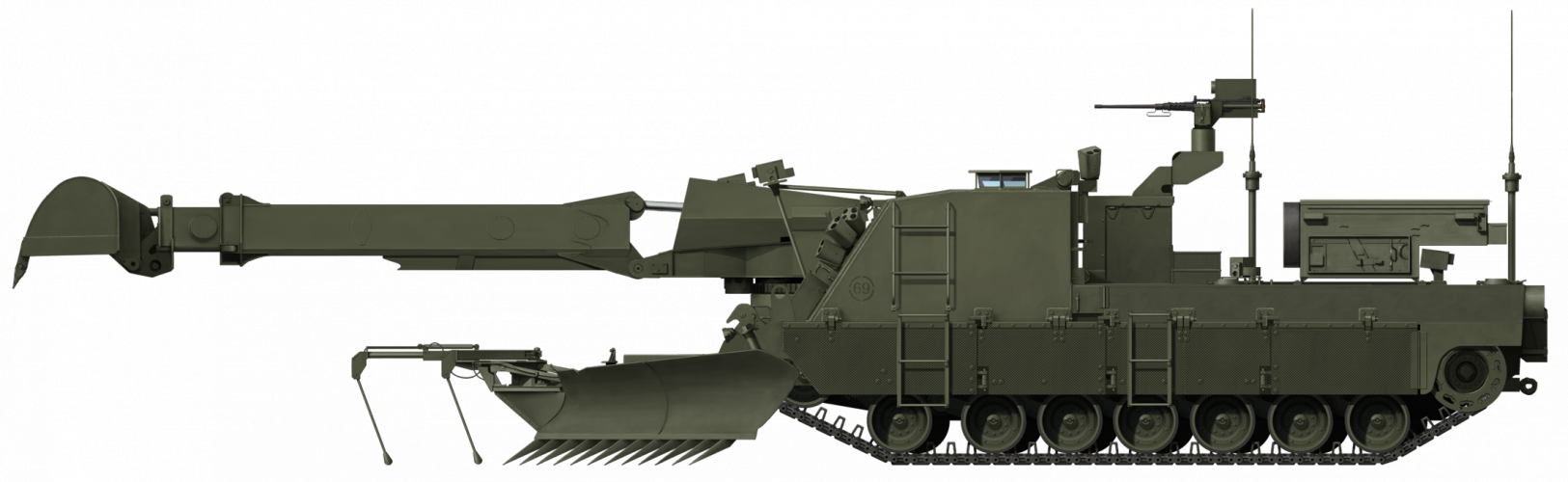
unfortunately some other vehicles might need to b re-introduced like Grizzly.
1764518753628.png
The M1 Grizzly was tested against a 656-yard (600 m) ‘complex obstacle’. A ‘complex obstacle’ may include wire, anti-tank/personnel mines, anti-tank ditches, anti-tank blockades, and other hardware. As it stood, relying on the “Orchestrated Ballet of Farm Implements” of troops on the ground and the menagerie of vehicles, breaching such an obstacle could take up to 9 hours. This was because each element had its own job. Engineering personnel would use Bangalore torpedoes to blow away wire, a MICLIC would blast away mines or large obstacles, and the M9 ACE would fill ditches or demolish berms. The benefit of the M1 Grizzly was that it could simply barge through all of these while under fire and keep going, whereas the “ballet” had to meticulously break down each element, thus a breaching action could take hours. In testing, it was found that the M1 Grizzly could successfully breach such an obstacle in just 21 minutes and neutralize an anti tank ditch in 5 minutes.
1764518970612.png
Thank you Mr. Kenney
 
Just make stand-in faster and more effective then. It's that simple.
So, an airplane, not a tank which isn't moving any faster without a different locomotion mechanism.
You really think the stand-off is immune to the stand-in?
More importantly, you really think the stand-off can operate at even half efficiency without the stand-in?
Fleets operate without ship rams and boarding bridges for stand-in combat. Airplanes don't ram each other and many don't even have guns now. Tanks also use guns and are not designed to ram each other, unlike the cavalry that it replaces that function at sword cut range.

Results of battles also show the relative value of assets. The battle of midway involved a pure stand-off force fighting an opponent that brought the cruisers and battleships, and the battle is decided between the stand-off force as the stand-in force can not survive independently. Even given FUBAR tactical error which lets a stand-in force close in on the stand-off in the Battle off Samar with vast force advantage and speed advantage, the stand-in force couldn't exploit it enough to win a decisive victory.

Other examples had things like the Toyota war and BVR aircraft combat. It is unknown if gun-only light fighter can get into range against modern missile spam at all.

You may scratch about half a minute from the initial response time compared to a drone, but you're getting way more firepower in, at a fraction of the manpower....

That is why armies that do use FPV drones for strike, still use other things 95% of the time.
The artillery involves a large number of systems and they deliver more fire power than tanks faster. The warheads are bigger, the rate of fire is comparable to faster.

The barntank sacrafices its entire combat mechanism to do that. It can't spot, it can't shoot. It can just drive forward knowing it's sheer luck from then on.
An MBT with proper APS and C-UAS that can do 40-50 drones individually (and much more since it's on every MBT, IFV/APC, CEV) can actually engage in combat. And that's important.
Proper C-UAS and C-RAM isn't 5 shot APS without mutually supporting area coverage. One wants to dedicate most if not all the resources at it until the threat is utterly saturated and overwhelmed since that is what most enemy formations have in excess, which means large amounts of both long and short range interceptors for layered defense and mutual support.

The navies count the missiles on battleforce ships which is about the number of intercepts and attacks it can make, and a strong formation needs to intercept hundreds of projectiles almost at the same time.

If a powerful defensive firepower has been built, it is also good enough for most offensive roles. The sheer volume of fire needed to intercept large number of attacks and also destroy all other unarmored parts of opponents, and the powerful sensors needed to direct such fire against fast and stealthy targets means it is likely to get first shot in.

A vehicle with main weapon dedicated not against hyper-common threats of drones and missiles and infantry/robots but against uncommon very heavy tanks? It is a tank destroyer, not a general purpose vehicle.

The reason why the MBT can persist in the drone-infested battlefield is similar to why it managed to do so for over a century in an artillery infested one.
Artillery has been too slow reacting to hit tanks, until recently with computerized network fires.

It's simple - you don't use MBTs everywhere. They're a tool in a toolbox. Same with infantry and APCs and IFVs and all.
You use them where you believe they are useful.
If a tool is too rarely useful, it can't decide wars and don't need to exist.

The battleship is still optimal for some NGFS missions, but since opposed amphib isn't on the list of things that nations are planning to do anymore, no one bothers keeping them in service.

Then just deploy the tank with mostly HE rounds. Problem solved, no harm done.
When you move up in gun size, the HE is overkill against normal targets and ammo count goes down to nothing.

Also large gun do not contribute to air defense, while such threats can wreck a formation quickly.
So when are we replacing every grunt's rifle with a Javelin?
I'd love to see MOUT with that setup.
The infantry long range kill chain is not completed with Javelin since they can only spot each other at sub 150m under normal conditions.

Drones however, drones can spot infantry at range and nowadays there are entire frontlines maintained without sufficient forward infantry to do anything but occupy hard cover (which drones have hard time accessing) with drone firepower covering all the gaps.

If you can reliably detect, obtain fire control solution and apply effective ranged fire, than you can replace stand in forces.
 
The Javelin Lightweight Command Launch Unit (LWCLU) is an updated version of the Command Launch Unit for the Javelin anti-tank missile system, making the system lighter and more compact, which allows for easier transport and deployment. It features improved optics with longer range and clarity, faster target acquisition, and increased engagement range. The LWCLU can also be used for stand-alone surveillance and has improved ergonomics and battery life.

Key features

  • Lighter and more compact: About 30-35% smaller and 40-50% lighter than the previous Block 1 version, improving maneuverability and deployment speed.
  • Improved optics and sensors: Features a high-definition day/night camera, increased visual range, and improved target detection and recognition capabilities.
  • Enhanced performance: Provides a longer engagement range (up to 4,000 meters or 2.5 miles) and faster target acquisition.
  • Increased battery life: Offers a 50% increase in battery life compared to previous models.
    • Network connectivity: Allows for target handoff to other platforms and real-time operation in mounted or dismounted roles.
    • Versatile use: Can be used as the launcher for the Javelin missile or as a separate surveillance and reconnaissance tool.

    ATGMS stop breakthroughs (up to 5km w/ the latest J) while tanks execute breakthroughs.
 
So, an airplane, not a tank which isn't moving any faster without a different locomotion mechanism
A tank can move faster with more effective envelope (C2, CAS, artillery) and more effective maneuver support elements (CEV, ARV, MED).
You don't have to make it able to drive faster. Just make it stop less.

Fleets operate without ship rams and boarding bridges for stand-in combat. Airplanes don't ram each other and many don't even have guns now. Tanks also use guns and are not designed to ram each other, unlike the cavalry that it replaces that function at sword cut range.
If you imagined that stand-in doesn't exist anymore, what's your problem with stand-in?
A ship's stand-in is when it uses its AShMs. A ground maneuvering unit's stand-in is where its munitions can start hitting the enemy, from rifles to mortars.

Results of battles also show the relative value of assets. The battle of midway involved a pure stand-off force fighting an opponent that brought the cruisers and battleships, and the battle is decided between the stand-off force as the stand-in force can not survive independently. Even given FUBAR tactical error which lets a stand-in force close in on the stand-off in the Battle off Samar with vast force advantage and speed advantage, the stand-in force couldn't exploit it enough to win a decisive victory.

Other examples had things like the Toyota war and BVR aircraft combat. It is unknown if gun-only light fighter can get into range against modern missile spam at all.
Your naval examples are negated by the reality that every carrier is part of a carrier strike group involving multiple escorting vessels each capable of only a stand-in battle.
AIrcraft do stand-off by using PGMs with longer range than the air defenses they're targeting, or by firing AAMs with longer range than the opponent's.
A shorter range BVRAAM or a WVRAAM are definitely stand-in.
You need both components. You keep saying you can do with only a force that has 0 presence, but really every military force in history mixes the capabilities.

The artillery involves a large number of systems and they deliver more fire power than tanks faster. The warheads are bigger, the rate of fire is comparable to faster.
You're kinda proving my point there.

Proper C-UAS and C-RAM isn't 5 shot APS without mutually supporting area coverage. One wants to dedicate most if not all the resources at it until the threat is utterly saturated and overwhelmed since that is what most enemy formations have in excess, which means large amounts of both long and short range interceptors for layered defense and mutual support.
Then why do you treat it like it is just the APS?
Have you not noticed I consistently say "APS + C-UAS" and not "APS"?

How many drones do you think each can shoot down?
And that's just the basic vehicles without the dedicated VSHORAD vehicles - a vehicle type the US already deploys.
View: https://youtu.be/nctFdDJVfc4?si=kT3UOv-2bDe9GFnV


A vehicle with main weapon dedicated not against hyper-common threats of drones and missiles and infantry/robots but against uncommon very heavy tanks? It is a tank destroyer, not a general purpose vehicle.
A 120mm gun is not optimized against infantry and fortifications? Ok buddy.

Not even going into the fact that a C-UAS AGL or light 30mm cannon is seriously considered for future MBTs.

Artillery has been too slow reacting to hit tanks, until recently with computerized network fires.
What's the issue with it being recent? FPV drones built in a shed are less than a decade old.

If a tool is too rarely useful, it can't decide wars and don't need to exist.
Wrong.

When you move up in gun size, the HE is overkill against normal targets and ammo count goes down to nothing.

Also large gun do not contribute to air defense, while such threats can wreck a formation quickly.
I've never heard of 120mm being overkill. To the contrary - I've heard complaints from soldiers who had to switch from more expensive HE-MP to HEAT due to shortages, that they often have to fire 2-3 shots at the same target.

The infantry long range kill chain is not completed with Javelin since they can only spot each other at sub 150m under normal conditions.

Drones however, drones can spot infantry at range and nowadays there are entire frontlines maintained without sufficient forward infantry to do anything but occupy hard cover (which drones have hard time accessing) with drone firepower covering all the gaps.

If you can reliably detect, obtain fire control solution and apply effective ranged fire, than you can replace stand in forces.
Why do infantry get to keep their guns but longer range things don't?
Where do we draw the line?
 
If you imagined that stand-in doesn't exist anymore, what's your problem with stand-in?
A ship's stand-in is when it uses its AShMs. A ground maneuvering unit's stand-in is where its munitions can start hitting the enemy, from rifles to mortars....
A shorter range BVRAAM or a WVRAAM are definitely stand-in.
You need both components. You keep saying you can do with only a force that has 0 presence, but really every military force in history mixes the capabilities.

There is 3 range bands for different category of weapons and platforms:
1. Short range No-man's land: distance where attack overwhelms defense and first to attack is critical
2. Medium typical combat range: Attack and defense is well matched, situation and resources decides outcome
3. Long extended range: defense generally is more efficient, and there is only harassment fire or the targeting the rare high vulnerability, high value targets.

When offensive weapon technology improves as to extend the effective range, one natural adaption is to increase in standoff.

So you can look different era of warfare:
Spear - bow - ballista
grenade - rifle - tank - artillery

and we are now apparently at:
FPV - artillery - tactical ballistic missile

Note that the tank itself was a standoff-ish weapon, in that tanks do not attempt to close into grenade range since the development of shaped charges, and instead shoots threats at range and let infantry clear the final stretch.

It is not like armored cannon armed vehicles don't naturally translate into greater standoff, but tank proponents demands that THE SABOT as the the most important part of warfare and demands vehicle designs to revolve around using and defending it. This is not unlike thinking battleship torpedo tubes as the most important weapon because it have the most destructive potential on the best armored platform. I mean, shell fire might not even sink the enemy ship with belt armor just look at bismark tanking the Royal Navy battleline, one need heavy underwater damage and it needs to go on the most armored thing!

And the real stand in force of the navy is the airplane, submarines and various boats including the mine warfare types. These assets have mobility, stealth and low cost to manage the issue of opponent firepower.

Then why do you treat it like it is just the APS?
Have you not noticed I consistently say "APS + C-UAS" and not "APS"?

How many drones do you think each can shoot down?
And that's just the basic vehicles without the dedicated VSHORAD vehicles - a vehicle type the US already deploys.
If a VSHORAD vehicle is survivable enough to be within support range from a MBT, it is survivable enough to be deployed independently as a general purpose front line combat vehicle. It'd have all the features needed to defeat light forces if it is survivable enough to be in the front as light forces don't have heavy armor as to demand specialized offensive weapons.

And if it does come up against heavy armor where low velocity weapons somehow don't work, one can attach conventional tanks, or one can attach hypervelocity missile carrying tank destroyers or just fit HVM on the roof.

Conversely, conventional tanks without SHORAD support just dies to standoff spam that just about everyone have at all times, so it is not a general purpose weapon, and there is no cheap upgrade to greatly increase CRAM capability as APS is expensive and not that much capability relative to HVM tubes on the roof.

A 120mm gun is not optimized against infantry and fortifications? Ok buddy.
A RPO is the same explosive filler but at far greater efficiency, and in a far smaller launcher package that you can hand out to infantry or load onto a very cheap ground drone (or a relatively expensive aerial one, or just make a bomb instead).

A high velocity gun have too much propellent for ammo weight efficiency when accuracy can be ensured in other ways today, and worst of all the gun itself is very large and heavy as to demand a large and heavy vehicle to carry it. There is a reason why Panzer4 started with low velocity 75mm and why the field asked for Sherman with 75mm instead of 76 (until they have to fight a lot of panthers), and how the 105mm Sherman was also a low velocity design.

I've never heard of 120mm being overkill. To the contrary - I've heard complaints from soldiers who had to switch from more expensive HE-MP to HEAT due to shortages, that they often have to fire 2-3 shots at the same target.
For targets that 120mm is overkill, people don't talk about it because there is no ammo and logistics shortage, however you do see that in vehicles with very tight ammo volume constraints like IFVs, they choose small autocannons instead of large guns while "light tanks" commonly choose 105mm. If most targets needs 120mm than most vehicles would fit them even if in low velocity form, instead of only the SABOT shooters getting them. The large ammo volumes and sheer propellent energy is what makes Russian tanks so vulnerable and tank protection in general a difficult problem.

And having to make multiple shots is just a whatever, especially when talking about weapons with far higher rate of fire, for example a Centauro with 76mm naval autocannon or the HSTVL.

The best case against 120mm is that the only mobile target it engages effectively is another tank. Structures and fortifications can demand weapons on all kinds of different scales all the way up to 80cm Schwerer Gustav to 12ton GBU-57 and so on and some will fit the 120mm scale fine. However structures are static and one can just use artillery and other support fires comfortably on them, and one has time shoot many shots at it, where as mobile (like all flying threats) and stealthy threats needs to be destroyed quickly and support fires is too slow.

If you run out of ammo shooting structures, you can just wait for a reload as it isn't going anywhere. If you run out of ammo shooting at a drone swarm, you are already dead.

Of course, there is the scenario where you run out of AT ammo shooting at tanks, but tanks are slow, large and easy to detect so no one should get regularly surprised by large number of enemy tanks and with scatterable mines and smoke one can disengage just fine, not like a drone or missile swarm that you can't run away from because it is faster. The relative slowness of tanks means support fires have more time dealing with the situation. Even without all that, many weapons can mission kill tanks and there is setting up cross fire kill zones on side armor, the medium tanks formations of the old generally manage to contain the heavy tanks even if it can't pen the front armor.

 
Note that the tank itself was a standoff-ish weapon, in that tanks do not attempt to close into grenade range since the development of shaped charges, and instead shoots threats at range and let infantry clear the final stretch.
Tanks can shoot farther out but they do in fact close in with the infantry and fight cooperatively. Because the job of tanks and infantry is to arrive at the objective, and fight at the objective.
It is not like armored cannon armed vehicles don't naturally translate into greater standoff, but tank proponents demands that THE SABOT as the the most important part of warfare and demands vehicle designs to revolve around using and defending it.
Are they in the room with us?
If they're not part of this specific discussion, why are you bringing them up?
And the real stand in force of the navy is the airplane, submarines and various boats including the mine warfare types. These assets have mobility, stealth and low cost to manage the issue of opponent firepower.
You can be pedantic if you wish, but to your own detriment.
If a VSHORAD vehicle is survivable enough to be within support range from a MBT, it is survivable enough to be deployed independently as a general purpose front line combat vehicle. It'd have all the features needed to defeat light forces if it is survivable enough to be in the front as light forces don't have heavy armor as to demand specialized offensive weapons.
Yeah but why would anyone do that? That'd be stupid.
And if it does come up against heavy armor where low velocity weapons somehow don't work, one can attach conventional tanks, or one can attach hypervelocity missile carrying tank destroyers or just fit HVM on the roof.
I assume you're referring to video games here, because IRL you cannot really "attach" a unit mid-combat. As in, teleport a unit into a combat zone the instant someone spooky appears. You have to send that unit in beforehand, to accompany the maneuvering unit along the way. And of course you scope out the area you assault to get a grasp of what you're going to face.

Look I'm gonna be real honest here: I have absolutely no idea what kind of goofy assault force a single VSHORAD vehicle is. What's it trying to do? Force recon?
Conversely, conventional tanks without SHORAD support just dies to standoff spam that just about everyone have at all times, so it is not a general purpose weapon, and there is no cheap upgrade to greatly increase CRAM capability as APS is expensive and not that much capability relative to HVM tubes on the roof.
APS is actually dirt cheap. You should familiarize with the topic. Tanks without SHORAD can actually survive quite well, and we have recent wars to demonstrate that.
C-RAM can be deployed by simply putting C-RAM on an offroad truck with a smaller independent radar.
Starstreak is also a large system, while an APS is a very compact system with streamlined integration.
For targets that 120mm is overkill, people don't talk about it because there is no ammo and logistics shortage, however you do see that in vehicles with very tight ammo volume constraints like IFVs, they choose small autocannons instead of large guns while "light tanks" commonly choose 105mm.
105mm is a popular choice for some light tanks because they're not meant to be used against mechanized forces, i.e. they won't see armor. And because there's a lot of 105mm ammo out there that's cheaper to leverage than opting for new production 120mm, even if it means giving up on a bit of lethality.
The choice of 105mm for the M10 was controversial, but a logical one given the weight constraints. A 105mm is undoubtedly lighter than a 120mm when built with the same technology.
A RPO is the same explosive filler but at far greater efficiency, and in a far smaller launcher package that you can hand out to infantry or load onto a very cheap ground drone (or a relatively expensive aerial one, or just make a bomb instead).
Ok on this one I agree. It's totally ok to hand out 40 Shmellies to a single platoon.
A high velocity gun have too much propellent for ammo weight efficiency when accuracy can be ensured in other ways today, and worst of all the gun itself is very large and heavy as to demand a large and heavy vehicle to carry it. There is a reason why Panzer4 started with low velocity 75mm and why the field asked for Sherman with 75mm instead of 76 (until they have to fight a lot of panthers), and how the 105mm Sherman was also a low velocity design.
You do know that different shells have different amounts of propellant, right?
Like, if you're using a HE or HEAT shell, you're using less powerful propellant and the barrel gets overall less pressure.
If most targets needs 120mm than most vehicles would fit them even if in low velocity form
Not enough space. Not feasible.
instead of only the SABOT shooters getting them.
You know 105mm APFSDS is still a thing, right?
The large ammo volumes and sheer propellent energy is what makes Russian tanks so vulnerable and tank protection in general a difficult problem.
Soviet design philosophy is what makes them vulnerable, not the volume or propellant energy.
If even 1 shell deflagrates inside a tank, it's a kill.
But it doesn't really happen if you do that to an American or German or French or Israeli or Korean tank. Because these have at least some of their ammo in protected compartments that divert the blast away from the crew and allow for safe evacuation. The Abrams takes it one step further and puts all of the ammo in such a compartment (excluding a small optional compartment in the hull).

Another thing modern tanks have that Russians don't, is insensitive munitions and protective covers. It basically means modern shells are made in a way that vastly reduces their chances of reaction if they're hit, and can reduce the reaction from an explosion to a deflagration. Which together with protective cases means a crew has a chance to evacuate in some cases of hits to the ammo compartment.
And having to make multiple shots is just a whatever, especially when talking about weapons with far higher rate of fire, for example a Centauro with 76mm naval autocannon or the HSTVL.
Not very ideal when you're only carrying so much ammunition.
The best case against 120mm is that the only mobile target it engages effectively is another tank.
And soft targets, and light armored vehicles, and helicopters, and whatever else dares move in its LoS.
It's funny that you criticize people who over-focus on APFSDS and then you do the exact same thing.
However structures are static and one can just use artillery and other support fires comfortably on them, and one has time shoot many shots at it, where as mobile (like all flying threats) and stealthy threats needs to be destroyed quickly and support fires is too slow.
Trajectory is different between artillery and tanks. In fact, trajectory limitations are exactly why the workshare of artillery is decreasing.

Here's the effect of HE-MP shells in MOUT. You can selectively target just one specific area. An artillery shell would not have the required accuracy to hit that specific wall on that specific floor. But even if by luck it did, it would easily pierce through the floor and affect 2 floors instead of just 1. And have lower effect on the selected floor because it would not detonate at its center.
1764583210431.png

More munitions are inserted to the portfolio as time goes on to give the local commander more options of trajectory, warheads, effect types (e.g. penetration). Removing the premier precise direct fire option does not go well with that.

If you run out of ammo shooting structures, you can just wait for a reload as it isn't going anywhere.
Said literally none who has done combat ever.
 
A vehicle with BLOS capability, nearly 100% resistance to drones and missiles and nearly100% KE resistance is going to roll over even heavier formations plus their combat support & combat service formations thus compelling adversary cascading collapse and eventually culmination.
unfortunately some other vehicles might need to b re-introduced like Grizzly.
Oh, absolutely.

I have no clue why the US doesn't field the full set of combat engineering vehicles like UK and Germany do.
 
CMV of the Heavy Force Modernization plan and then Grizzly with the M1 chassis. Both passed on. Now it’s the M1150 I guess.
As you are aware Bruno the Marine's ABV which the Army adopted is quite less a capability than Grizzly.
 

Similar threads

Back
Top Bottom