If you imagined that stand-in doesn't exist anymore, what's your problem with stand-in?
A ship's stand-in is when it uses its AShMs. A ground maneuvering unit's stand-in is where its munitions can start hitting the enemy, from rifles to mortars....
A shorter range BVRAAM or a WVRAAM are definitely stand-in.
You need both components. You keep saying you can do with only a force that has 0 presence, but really every military force in history mixes the capabilities.
There is 3 range bands for different category of weapons and platforms:
1. Short range No-man's land: distance where attack overwhelms defense and first to attack is critical
2. Medium typical combat range: Attack and defense is well matched, situation and resources decides outcome
3. Long extended range: defense generally is more efficient, and there is only harassment fire or the targeting the rare high vulnerability, high value targets.
When offensive weapon technology improves as to extend the effective range, one natural adaption is to increase in standoff.
So you can look different era of warfare:
Spear - bow - ballista
grenade - rifle - tank - artillery
and we are now apparently at:
FPV - artillery - tactical ballistic missile
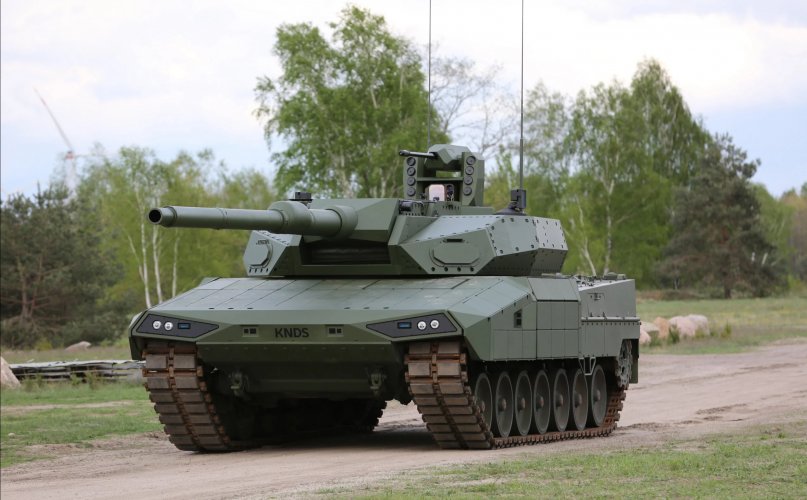
Note that the tank itself was a standoff-ish weapon, in that tanks do not attempt to close into grenade range since the development of shaped charges, and instead shoots threats at range and let infantry clear the final stretch.
It is not like armored cannon armed vehicles don't naturally translate into greater standoff, but tank proponents demands that
THE SABOT as the the most important part of warfare and demands vehicle designs to revolve around using and defending it. This is not unlike thinking battleship torpedo tubes as the most important weapon because it have the most destructive potential on the best armored platform. I mean, shell fire might not even sink the enemy ship with belt armor just look at bismark tanking the Royal Navy battleline, one need heavy underwater damage and it needs to go on the most armored thing!
And the real stand in force of the navy is the airplane, submarines and various boats including the mine warfare types. These assets have mobility, stealth and low cost to manage the issue of opponent firepower.
Then why do you treat it like it is just the APS?
Have you not noticed I consistently say "APS + C-UAS" and not "APS"?
How many drones do you think each can shoot down?
And that's just the basic vehicles without the dedicated VSHORAD vehicles - a vehicle type the US already deploys.
If a VSHORAD vehicle is survivable enough to be within support range from a MBT, it is survivable enough to be deployed independently as a general purpose front line combat vehicle. It'd have all the features needed to defeat light forces if it is survivable enough to be in the front as light forces don't have heavy armor as to demand specialized offensive weapons.
And if it does come up against heavy armor where low velocity weapons somehow don't work, one can attach conventional tanks, or one can attach hypervelocity missile carrying tank destroyers or just fit HVM on the roof.
Conversely, conventional tanks without SHORAD support just dies to standoff spam that just about everyone have at all times, so it is not a general purpose weapon, and there is no cheap upgrade to greatly increase CRAM capability as APS is expensive and not that much capability relative to HVM tubes on the roof.
A 120mm gun is not optimized against infantry and fortifications? Ok buddy.
A RPO is the same explosive filler but at far greater efficiency, and in a far smaller launcher package that you can hand out to infantry or load onto a very cheap ground drone (or a relatively expensive aerial one, or just make a bomb instead).
A high velocity gun have too much propellent for ammo weight efficiency when accuracy can be ensured in other ways today, and worst of all the gun itself is very large and heavy as to demand a large and heavy vehicle to carry it. There is a reason why Panzer4 started with low velocity 75mm and why the field asked for Sherman with 75mm instead of 76 (until they have to fight a lot of panthers), and how the 105mm Sherman was also a low velocity design.
I've never heard of 120mm being overkill. To the contrary - I've heard complaints from soldiers who had to switch from more expensive HE-MP to HEAT due to shortages, that they often have to fire 2-3 shots at the same target.
For targets that 120mm is overkill, people don't talk about it because there is no ammo and logistics shortage, however you do see that in vehicles with very tight ammo volume constraints like IFVs, they choose small autocannons instead of large guns while "light tanks" commonly choose 105mm. If most targets needs 120mm than most vehicles would fit them even if in low velocity form, instead of only the SABOT shooters getting them. The large ammo volumes and sheer propellent energy is what makes Russian tanks so vulnerable and tank protection in general a difficult problem.
And having to make multiple shots is just a whatever, especially when talking about weapons with far higher rate of fire, for example a Centauro with 76mm naval autocannon or the HSTVL.
The best case against 120mm is that the only mobile target it engages effectively is another tank. Structures and fortifications can demand weapons on all kinds of different scales all the way up to 80cm Schwerer Gustav to 12ton GBU-57 and so on and some will fit the 120mm scale fine. However structures are static and one can just use artillery and other support fires comfortably on them, and one has time shoot many shots at it, where as mobile (like all flying threats) and stealthy threats needs to be destroyed quickly and support fires is too slow.
If you run out of ammo shooting structures, you can just wait for a reload as it isn't going anywhere. If you run out of ammo shooting at a drone swarm, you are already dead.
Of course, there is the scenario where you run out of AT ammo shooting at tanks, but tanks are slow, large and easy to detect so no one should get regularly surprised by large number of enemy tanks and with scatterable mines and smoke one can disengage just fine, not like a drone or missile swarm that you can't run away from because it is faster. The relative slowness of tanks means support fires have more time dealing with the situation. Even without all that, many weapons can mission kill tanks and there is setting up cross fire kill zones on side armor, the medium tanks formations of the old generally manage to contain the heavy tanks even if it can't pen the front armor.