Future Heavyweight Torpedo Development

USS Aspro took 17 minutes to sink after being struck by a single torpedo amidships by USS Pompodon, the sinking time suggests it was a surface sinking. Apart from USS Bleny sinking of USS Guardfish in 1961 being part of the qualification of the Mk45 nuclear torpedo (rather than those old Mark 14 she reported firing in he screenshotted logs) I couldnt find any other details on the Sinkex.
 
Last edited:
USS Aspro took 17 minutes to sink after being struck by a single torpedo amidships by USS Pompodon, the sinking time suggests it was a surface sinking. Apart from USS Bleny sinking of USS Guardfish in 1961 being part of the qualification of the Mk45 nuclear torpedo (rather than those old Mark 14 she reported firing in her logs) I couldnt find any other details on the Sinkex.
According to the Deck Logs of Bleny, Guardfish was sunk by a Mk 14

https://s3.amazonaws.com/NARAprodst..._192883108P001036608_00_00_00_0801036608B.jpg
 
As long as your initial solution was half-decent it really doesn't need the host platform anymore. Hell the weapon is likely smarter than the operator sitting at BYG.
I mean, I'm always in favor of taking cheap shots at the "Shower Techs", but that is still a pretty impressive bar to clear.
 
It seems that new sub launched heavyweight torpedo development is fairly static. USN is up to the seemingly 9th mod of the Mk 48. Also looks like they picked the wrong motor for the Mk 48 but that could be another topic.

Most certainly not static. Just because the name doesn't change doesn't mean it's still 1960's tech.

Not sure how much of the original Mk48 is left, to be honest.


How so? The otto fueled weirdness works pretty well. (It's basically a hydraulic motor but running on external combustion)

The UK Spearfish runs on otto fuel as well, it's just a small gas turbine instead.


Disagree, the electric torpedoes are slower and shorter ranged. And that's usually running silver-zinc batteries which have equal or better energy density to Lithium batteries! The only advantage lithium has over AgZn in batteries is rechargability, which only matters for exercise torpedoes. On the other hand, having rechargeable ExTorps is not a bad thing.


About the only way you could pull more performance out of the torpedo is to shift to the same stored-chemical propulsion as on the Mk50 LWT, sulfur hexafluoride and a block of lithium driving a steam turbine. The advantage being that sulfur and lithium fluoride take less volume than SF6 and Li, so there's no exhaust to have to pump overboard.

Pretty much nothing but outside dimensions is the same between mod 7 (current production variant) and the mod 1.

Aren’t these boats equipped with powered torpedo reload systems?

SSNs are all power reload systems. Seawolf is really fancy about it, LA & VA require more manual operation, but most functions are powered.

Then what is RAPTOR?

It a proposed "cheaper" torpedo less capable than an ADCAP. I guess I should have clarified that we don't really need a clean-sheet design to continue with torpedo improvement. The forebody and afterbody can be completely decoupled and worked separately without having to be too concerned with overall weapon design.

I haven't heard much about RAPTOR so I'm not sure how it's progressing. Honestly, sounds like someone's grift. We don't really have the magazine depth to be carrying around less-capable weapons.

(edit, thanks to @FlameCxbra -- TMD is actually "tail mounted dispenser!" Either the torpedomen lied to me or it's been too long, there was nothing but trouble down in that room anyway...)

As I understand it, the theory of raptor is that there are targets that don't really need a high end weapon, and there's lots of things limiting the number of high end torpedoes that can be produced, so it just plain makes sense to have the ability to supply a cheaper easier to produce weapon for the places it makes sense, and save the high end weapon for targets that need that capability. Admittedly, magazine depth is a valid concern, but at the same time the stock of ADCAPs is limited, and can only be increased so fast, so in a near term peer conflict there's an equally valid concern of using up the ADCAP inventory because that's the only weapon available.

Are they tested against a submerged target? Have they been detonated against a submerged target?

“Sinking a stationary surfaced bulk with a noise-emitting source to attract a torpedo (a typical SINKEX scenario) is fine. It exercises the explosive train and one not particularly important acoustic mode. But it is far from a realistic test. The target is not underway, not evading, not using countermeasures, and most particularly, not submerged. The exclusively ASW torpedo Mk 46 can’t be tested realistically against a surface target at all.“

https://archive.navalsubleague.org/1997/the-trouble-with-torpedoes

US torpedoes are very very rigorously tested. The lessons of the Mk 14 are clearly remembered.
 
How so? The otto fueled weirdness works pretty well. (It's basically a hydraulic motor but running on external combustion)

The UK Spearfish runs on otto fuel as well, it's just a small gas turbine instead.
There have been/are attempts to quiet the Mk 48 and the proposed Mod 9 seeks to replace the propulsion system.

The Spearfish generates (I read somewhere but don’t have a link) about 2x the horsepower of the 48 at around 1000. It’s gas turbine was the one used in the Mk 48 Mod 0 that competed with the swashplate powered Mod 1.
 
The article I linked was from the Mk 48 program mgr. Was he misinformed about testing improvements since his time on the Mk 48?
Considering his time with the Navy was at best closer to 40 years ago? From what I can find he retire not long after his stint as the Program Manager.

I doubt the dude will even recognize a modern one. Not that he can due to dieing in 2011 at 81.


Remember the in the US military once you are out of a program?

You are out of the loop.

Doesn't matter if you still have clearance. Once you are out get drop to the bottom level of need to know. Any change made you are going to find long afterwards. With you getting even lower every year following you leaving til you are out as people transfer and leave. Especially for a program like the Mk48 at that time where people are naturally tight lip and communication was far harder.

Once you retire?

May as well be here say unless you get back in it somehow.

Basically by 1984 he will not know much more bout what the Mk48 is doing compare to what he did 5 years ago in 79.
 
Considering his time with the Navy was at best closer to 40 years ago? From what I can find he retire not long after his stint as the Program Manager.
Truth be told, the Program Manager rarely has much technical expertise regarding the program under their purview anyway. They aren't involved in any meaningful technical way in the development of the product as the actual engineering isn't part of their job. They are administrators and honestly only know what their own chief engineer and subordinates are telling them. (And frankly those personnel generally aren't any better, they're just closer to the deckplate.)

Doesn't matter if you still have clearance. Once you are out get drop to the bottom level of need to know. Any change made you are going to find long afterwards. With you getting even lower every year following you leaving til you are out as people transfer and leave. Especially for a program like the Mk48 at that time where people are naturally tight lip and communication was far harder.
As someone who left the fleet and went into engineering, I can indeed confirm that this is a problem. You'll often run into people who haven't seen a boat in decades and no longer have any connection to the industry claiming expertise they don't really have. It'd be fine if they prefaced their comments with "in my experience" or "as I understand it" when they made confident assertions but unfortunately they rarely do.

As an engineer, I make it abundantly clear when I'm out of my wheelhouse--because I've seen the bad things that can happen when someone doesn't.
 
Can you elaborate on the differences on Seawolf vs the others?
A Seawolf's has a very big torpedo room, you can push a button and it will automatically move things around so that Stow #44 lines up to go into tube #1.

A 688, Ohio, or Virginia needs the torpedomen to plan the weapons moves around by hand, to move Stow #13 into Tube #1.
 
A Seawolf's has a very big torpedo room, you can push a button and it will automatically move things around so that Stow #44 lines up to go into tube #1.

A 688, Ohio, or Virginia needs the torpedomen to plan the weapons moves around by hand, to move Stow #13 into Tube #1.
Virginia’s are still moving by hand? How does this compare with foreign submarines?
 
I'd echo tychosis at #94 above. I had a second career as a government scientist & analyst. I didn't use my Naval Retired rank on correspondence - I had an established rep, based on my civilian work. The only time I used my retired rank, was to facilitate visits by my Allied partners to UK establishments or ships, where the RN Rtd handle gave the request more heft and traction.
 
Last edited:
Virginia’s are still moving by hand? How does this compare with foreign submarines?
Hydraulic powered, but the move needs to be planned by hand.

Here, this is an example of an Ohio class torpedo room's stow positions. 13 weapons stowable, including one on the shipping tray. This is looking forward from the entry ladder. (exact position numbers may not be right) The 688/774 layout is similar, but only has 2 stows on the top level and 2-3 on the lower, and is doubled in length. 8 stows outboard per side, 9ish stows in the center.

#1 Stow​
#3 Stow​
Loading​
#5 Stow​
#6 Stow​
Shipping Tray​
#12 Stow​
#11 Stow​
Loading​
#9 Stow​
#7 Stow​
#2 Stow​
#4 Stow​
Tray​
blocked​
blocked​
blocked​
blocked​
blocked​
Tray​
#10 Stow​
#8 Stow​
(There's only one Loading tray per side, it elevates to load either the upper or lower tube in that bank, and the loading tray is in the access forward to the control panel)

In order to put the weapon on the #6 spot into a tube, you first have to stuff #5 into a tube.
 
Hydraulic powered, but the move needs to be planned by hand.

Here, this is an example of an Ohio class torpedo room's stow positions. 13 weapons stowable, including one on the shipping tray. This is looking forward from the entry ladder. (exact position numbers may not be right) The 688/774 layout is similar, but only has 2 stows on the top level and 2-3 on the lower, and is doubled in length. 8 stows outboard per side, 9ish stows in the center.

#1 Stow​
#3 Stow​
Loading​
#5 Stow​
#6 Stow​
Shipping Tray​
#12 Stow​
#11 Stow​
Loading​
#9 Stow​
#7 Stow​
#2 Stow​
#4 Stow​
Tray​
blocked​
blocked​
blocked​
blocked​
blocked​
Tray​
#10 Stow​
#8 Stow​
(There's only one Loading tray per side, it elevates to load either the upper or lower tube in that bank, and the loading tray is in the access forward to the control panel)

In order to put the weapon on the #6 spot into a tube, you first have to stuff #5 into a tube.
1.So the Shipping Tray loads to the Loading Tray?
2. Seawolves have the machinery figuring out what moves where?
3. The above diagram assumes the 4 tubes are already loaded?
4. “Blocked” in the diagram is moving space for the Shipping Tray?
5. So are more tubes like the 8 in Seawolves more effective for opening salvoes or for continuous loading/firing?

Thanks for the diagram.
 
1) The shipping tray is where torpedoes are loaded into the torpedo room. There are stows next to the shipping tray on a "table" at the level of the upper torpedo tubes.

2) Yes, the Seawolf has a system set up so that you can press a button to move a weapon in any stow into any tube.

3) You could in theory have all 4 tubes loaded as well as the whole torpedo room full. But my movement example was assuming that the torpedo tubes were empty.

4) No, those are blocked on an Ohio to support the massively overbuilt stows and shipping tray. On a 688 the center stow tray is designed very differently so that the upper tray can hold a full load of torpedoes and not need any center posts that would block the lower tray.

5) I think the Seawolves are better for opening salvoes, as it can kick out 6 weapons at once and keep 2 in reserve for snapshots. That said, the automated reload system does enable pretty quick reloads.
 
The article I linked was from the Mk 48 program mgr. Was he misinformed about testing improvements since his time on the Mk 48?

Said article was from 1997. Additionally, if you read in detail, he never says that the Mk 48 is inadequately tested. Rather, he recites at some length the issues that have occurred as a result of poor testing in the past, notes that realistic testing is difficult, and cautions that the community must be diligent in ensuring that weapons are adequately tested.

Noting the timing and what was going on in the larger political and defense funding sphere at the time, it seems clear to me that his point is less that he feels Mk48 was not properly tested, but rather he is concerned that post cold war changes are/will impact weapon reliability. I haven't done the research to say with certainly, but given the pressure on budgets and discussion about things like canceling SSN-23 (early-mid 90's), mk48 production shutdown (1996), etc. it seems likely that the budget for torpedo testing would also be under severe pressure at the time. I cannot say what happened subsequently, but can say that current testing is highly rigorous.

Virginia’s are still moving by hand? How does this compare with foreign submarines?

VA and LA are hydraulically operated in most ways, but controlled manually by individual control valves. So every movement (shifting l/r, pivoting tray, elevator going up/down, etc.) requires a Sailor moving the specific control valve in the right order. They also require manually cranking various cranks to loosen/tighten the straps that secure weapons in stows, lift rollers to allow them to move into tube, etc. SWCL you push a button and all the hydraulic valves/movements are all automatically sequenced. Can't recall if the roller/restraining straps are automatic or not.

On the flip side, the torpedo room on a SWCL has more hydraulic valves than about 10 688's put together, and every one of them leaks sooner or later. Also lots of things to go wrong in the automated control system.
 
Last edited:
I'd echo tychosis at #94 above. I had a second career as a government scientist & analyst. I didn't use my Naval Retired rank on correspondence - I had an established rep, based on my civilian work. The only time I used my retired rank, was to facilitate visits by my Allied partners to UK establishments or ships, where the RN Rtd handle gave the request more heft and traction.
"If you ever wonder if someone was a Navy Chief, don't worry... they'll tell you."

I left as a lowly STS2 but I've spent the past 20 years in sonar and have led integration on a number of projects. You'd never guess I was in the Navy--I look like a longhaired hippie scrub, usually sporting jeans and some grubby metal tee. I've had numerous people come into my lab throwing their weight around... and while I don't enjoy recalibrating people who get ahead of their skis, I'm not averse to doing it.

(And may god help you if you are disrespectful to my junior team members and interns.)
 
On the flip side, the torpedo room on a SWCL has more hydraulic valves than about 10 688 put together, and every one of them leaks sooner or later. Also lots of things to go wrong in the automated control system.
I have no experience handling on Seawolf, I've only handled on VA--but I'm not surprised there are issues.

We see the same thing in sonar... BSY2 may have seemed like the future at the time--but it was an abomination and it feels like no one was there to say "hey is this sustainable?" Just went in a completely different direction and abandoned almost all commonality with BSY1, and ultimately paid the price for it.
 
Overbuilt for quieting purposes? No rattling?
Maybe. Way over my paygrade as to why, I just learned the how.


So how do the loads get to the presumably powered loading trays?
There are rails that the weapons tiedowns move on.


The Seawolf system isn't as dense, it's got 2 levels. Huge room because the tubes are 4 in a vertical row on each side.
 
The Spearfish generates (I read somewhere but don’t have a link) about 2x the horsepower of the 48 at around 1000. It’s gas turbine was the one used in the Mk 48 Mod 0 that competed with the swashplate powered Mod 1.
The key diference between the Spearfish turbine and the Mk 48 swashplate is how they handle backpressure. Spearfish has a lot of power at shallow depths and goes like stink, but drops off as it gets deeper. Mk 48 isn't quite so fast, but maintains that speed better at depth.
VA and LA are hydraulically operated
Not a submarine guy... but hydraulics? I'd have thought the Virginia class would have moved over to electrics at least.
"If you ever wonder if someone was a Navy Chief, don't worry... they'll tell you."
One of my (former) colleagues liked to throw around his father's rank. Which is bad enough if that rank is 'Admiral', but when it's 'Sergeant' it's just sad.
 
Last edited:
It a proposed "cheaper" torpedo less capable than an ADCAP. I guess I should have clarified that we don't really need a clean-sheet design to continue with torpedo improvement. The forebody and afterbody can be completely decoupled and worked separately without having to be too concerned with overall weapon design.

I haven't heard much about RAPTOR so I'm not sure how it's progressing. Honestly, sounds like someone's grift. We don't really have the magazine depth to be carrying around less-capable weapons.

Could it have some utility as a mk.67 replacement? Having a longer ranged ability to emplace mines could be useful to have.
 
Could it have some utility as a mk.67 replacement? Having a longer ranged ability to emplace mines could be useful to have.

I think the current interest is mainly in using an XLUUV like Orca to emplace traditional bottom mines, rather than having the mines swim in themselves.

We might also see long-endurance medium UUVs adapted as loitering mines that can swim in, drop to the bottom, listen for a target, and then restart their motors and move to attack rather than just becoming static after emplacement like SLMM.
 
Last edited:
Said article was from 1997. Additionally, if you read in detail, he never says that the Mk 48 is inadequately tested. Rather, he recites at some length the issues that have occurred as a result of poor testing in the past, notes that realistic testing is difficult, and cautions that the community must be diligent in ensuring that weapons are adequately tested.
“The legacy of our WWII torpedo troubles has been a generation of mistrust between submariners and BuOrd and a proclivity for massive testing of torpedoes at all stages of development and production.

This massive testing became extraordinarily complicated when acoustic-homing torpedoes appeared late in wwn. Shallow, basically two-dimensional, test ranges-adequate (with a reliable depth recorder) for testing straight running, anti-surface torpedoes-don’t work for homing torpedoes. These torpedoes home in three dimensions, demanding much deeper water for testing and complicating recovery of heavy units. Their post-launch trajectories, even when the torpedo is functioning normally, are unpredictable. In the mid 1950s, the torpedo community began to build three-dimensional underwater test ranges, using torpedo and target transponder sound signals tracked by hydrophones in fixed bottom-mounted arrays. The first such range was installed in 1955 at Dabob Bay in the Hood Canal, near the torpedo test station at Keyport, Washington. In time, the need for greater operational area and depth, fleet training, and varied water conditions stimulated building additional underwater tracking ranges elsewhere.

An acoustic tracking range tests the homing performance of a torpedo fairly well-provided the dynamic behavior of the exercise weapon matches that of the warshot. But this test-as done in the overwhelming majority of peacetime torpedo firings-merely determines that an exercise-configured torpedo is able to acquire and home to a certain stand-off distance from a mobile torpedo-like target that acoustically and dynamically emulates a submarine. The torpedo is oot tested as to whether it homes close enough to actuate its warhead detonator, nor whether that would set off the warhead charge, nor whether a warhead so detonated would destroy the target. This is where the pre-WWII German and American torpedo communities singularly failed to do their jobs. We have done better since WWII-influenced in no small way by that failure-and SINKEXs are regularly held that evaluate the condition of our torpedo weapon inventory. Is this enough?

Sinking a stationary surfaced bulk with a noise-emitting source to attract a torpedo (a typical SINKEX scenario) is fine. It exercises the explosive train and one not particularly important acoustic mode. But it is far from a realistic test. The target is not underway, not evading, not using countermeasures, and most particularly, not submerged. The exclusively ASW torpedo Mk 46 can’t be tested realistically against a surface target at all. So bow do we test an ASW torpedo 11 realistically 11 as Admiral Blandy decreed so long ago?

The short answer is that we can’t test it in a way that simulates actual operational conditions that its users would encounter in battle. We must test the weapon system piecemeal. The best we can do is test those aspects of a weapon’s performance that we can observe directly and simulate those aspects where we cannot economically observe performance directly, being very careful to validate these simulations wherever we can.

We must rigorously and skeptically evaluate the results of these tests and simulations. We must continually ask “What if?” We must set conditions where our simulation can be extended to other situations-which the German torpedo designers did not do with their magnetic pistol. We must not assume one success validates a design-which the Americans did do with their magnetic exploder.

We should not be afraid of failure. No weapon design team is going to produce a perfect weapon straight off the drawing board. A weapon has to be shaken down in fleet operations for some time before its little flaws are revealed. The German depth-keeping balance chamber design was flawed because its seal permitted build up of pressure over time as the boat cycled its internal air pressure, biasing torpedoes so exposed to run deep. This defect was discovered accidently in January 1942, nearly two and a half years after the torpedo design first went to war.

In the U.S., post-war Navy, there is a tendency-driven by politics and funding issues-to bias test and evaluation for success. Failures are unwelcome. Any technical program manager knows how to rig tests to be successful, but do we learn anything that way? It is a truism, but we really learn through failure. If a weapon performs as predicted, we’ve learned nothing new. Only if it does the unexpected do we break new ground.

All this rigor, skepticism, simulation, validation, and testing increasingly sophisticated weapons against realistic targets on elaborate underwater ranges costs a great deal. The cost of building and maintaining test and evaluation ranges and testing torpedoes on them is large and some budget analysts question whether we can afford it, especially in an era when military downsizing is rampant and undersea warfare is in decline.

This was the situation in the 1930s when German and American torpedo designers were getting ready for WWII-on a shoestring. They scrimped on expending torpedoes on destructive tests; they extrapolated equivocal results in the most favorable way; they were not skeptical about their own testing gear; the same people who designed the torpedoes tested them and later proclaimed them fit for issue.

The early WWII torpedo troubles of the German and American navies is a cautionary tale of the problems that can arise when a navy takes its combat weapons for granted during peacetime. I suggest that the conditions for a repeat or this experience are growing in our undersea magazines. (Editor’s Note: Emphasis added.) We haven’t used torpedoes in combat in more than 50 years; virtually every other kind of non-nuclear ordnance has been combat tested during that time. I don’t think we can afford to make these mistakes again.“

I re-read the article and to me it appears he’s saying that ASW homing torps are difficult to truly judge the results of testing because of the 3D submerged environment. He may be concerned that late 90s budget cuts may lead to even less rigorous testing as well. But my takeaway is his concern that the nature of these weapons and their operating environment along with the organizational desire to not want to hear bad news makes their effectiveness in combat still up for doubt. But keep testing absolutely.

No one can argue these weapons have any kind of successful combat record so far. They might be stellar, but nothing yet.

 
I re-read the article and to me it appears he’s saying that ASW homing torps are difficult to truly judge the results of testing because of the 3D submerged environment. He may be concerned that late 90s budget cuts may lead to even less rigorous testing as well. But my takeaway is his concern that the nature of these weapons and their operating environment along with the organizational desire to not want to hear bad news makes their effectiveness in combat still up for doubt. But keep testing absolutely.

No one can argue these weapons have any kind of successful combat record so far. They might be stellar, but nothing yet.
I'll point out that the Argentine Navy torpedoed at least one whale in 1982, which is fairly impressive given whales are not made of metal.

Guided torpedoes have been used in combat several times against surface ships, including by PNS Hangor against INS Khukri, thrice by Argentina during the Falklands War (resulting in a miss, a hangfire, and hitting a towed decoy), and finally most recently by the North Koreans to torpedo ROKS Cheonan (which was AFAIK hit with a homing torpedo).

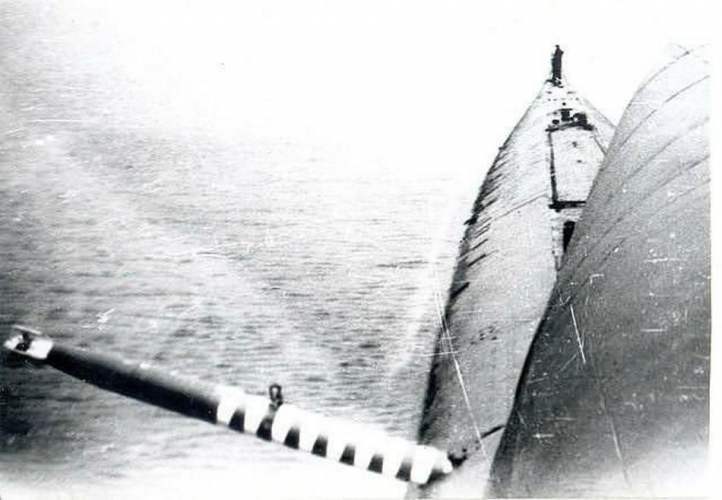
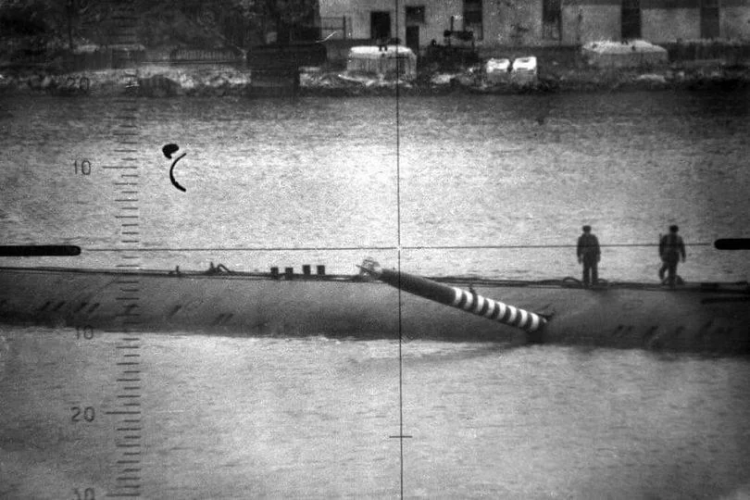
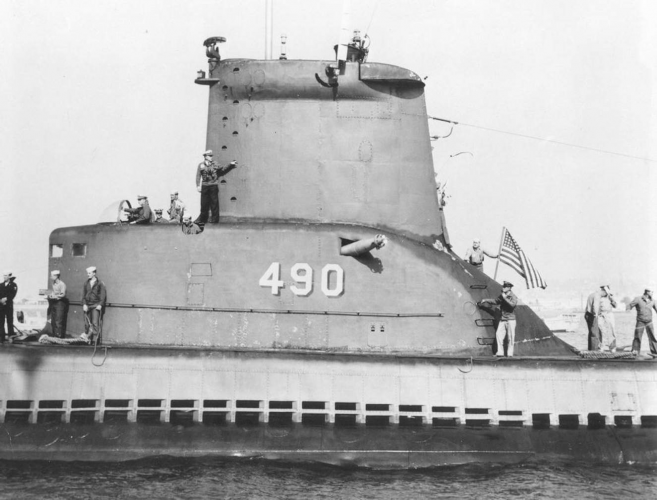
Finally, and I can't believe I forgot to mention this, the Soviets tested ASW torpedos and trained with them by shooting them with inert warheads at other submarines. This led to the occasional accident, these photos are from 1989 when a Victor shot a Hotel. The two photos of K-178 wasn't the only time such an event occurred, the USN skewered SS-490 in 1960 (albeit with a Mk.44).

1763497384112.png
1763497340776.png 1763497433584.png
 
Not a submarine guy... but hydraulics? I'd have thought the Virginia class would have moved over to electrics at least.
Subs have rather enormous hydraulic accumulators due to the rudders and diving planes, and even the Virginia-class does not have a whole lot of extra electrical power to shove heavy objects around.


What class of submarine was the SS-490?
WW2 fleet boat, Tench class now that I've looked it up.
 
I'll point out that the Argentine Navy torpedoed at least one whale in 1982, which is fairly impressive given whales are not made of metal.
Good stuff on the pics. The RN likely wiped out a pod of whales since they dropped about 30 Mk 44/46.

Any links worth sharing?
 
Not a submarine guy... but hydraulics? I'd have thought the Virginia class would have moved over to electrics at least.

Why not? Hydraulics are simple, compact and reliable. Prone to leakage granted, and they react poorly to water contamination (which is not as uncommon as one would hope), but conversely they rarely completely fail. Electric systems are far more complex, especially the controls, and there's lots of ways they can fail. Pretty much everything power operated on the submarine (control surfaces, numerous valves, weapons handling, masts, etc.) is hydraulically operated. Virginia has a couple of things that are electrically operated vs hydraulics in earlier boats. They have far more reliability problems than the old hydraulic systems, and add in obsolesces electronics issues to boot.

One of my (former) colleagues liked to throw around his father's rank. Which is bad enough if that rank is 'Admiral', but when it's 'Sergeant' it's just sad.

That guy is just plain dumb. Wow.
 
Why not? Hydraulics are simple, compact and reliable. Prone to leakage granted, and they react poorly to water contamination (which is not as uncommon as one would hope), but conversely they rarely completely fail. Electric systems are far more complex, especially the controls, and there's lots of ways they can fail.
In the surface ship world we tend to avoid hydraulics where possible. They're seen as requiring more maintenance, heavier, and pose a fire risk. Still around for some stuff, particularly where there are heavy loads, but the preference is electric where possible.
 
Can you check the details of #110. The torpedo buried in the SSK casing looks a lot longer than the air dropped Mk 44 that I've served with in the RN. It might well be a Mk 37 .... ?
 
Can you check the details of #110. The torpedo buried in the SSK casing looks a lot longer than the air dropped Mk 44 that I've served with in the RN. It might well be a Mk 37 .... ?
Sorry, misread the photos. The top two are russian submarine targets, and long torpedoes. The final picture of the USN SSK might well be the shorter Mk 44. Mea Culpa ......... XRNWEO
 
In the surface ship world we tend to avoid hydraulics where possible. They're seen as requiring more maintenance, heavier, and pose a fire risk. Still around for some stuff, particularly where there are heavy loads, but the preference is electric where possible.
Remember that a torpedo is sliding on bronze rails, and we're talking 3500-4000lbs of load sliding.
 
Beg to differ on hydraulics v electrics for magazine handling. I've owned two different RN systems, which used hydraulics for power motions within the magazine. Electrics inside the magazine limited to low voltage for micro switches. Rationale was to limit stray EM fields, when missiles contained a number of RFI sensitive circuits and initiators. This may change with rare earth DC motors able to work on lower voltages, but I'd still prefer hydraulics for the main motions, albeit with a smart electric controller, rather than lots of small bore pipes and joints. In the UK, all the more recent ships magazines are silo's, so submarine torpedo tubes are the only area requiring power movement of weapons.
 

Similar threads

Back
Top Bottom