FighterJock
ACCESS: Above Top Secret
- Joined
- 29 October 2007
- Messages
- 7,228
- Reaction score
- 8,538
Will that be a sign that some form of supercruise will be used in the engines without GCAP ever needing to use reheat SailorBoy? I would think so.


China can't bet on any scenario in which it engages Japan not including South Korea (and the US forces there) as well. That wrecks any hope of penetrating over the North, and forces the Russian route well inland if they want to avoid observation/interdiction.Chinese aircraft and missiles could certainly fly over the DPRK and Russia with consent and refuel there as well, it is a very uncomfortable scenario for the Japanese I think.

Maybe, though they also mention airflow management a lot so there might be some sort of bypass mixing thingamabob going on?Will that be a sign that some form of supercruise will be used in the engines without GCAP ever needing to use reheat SailorBoy? I would think so.

Given the very significant advantage they hold in numbers that are available to deploy in the region and the simple fact that the PLARF can be leveraged as well to cripple infrastructure and other military assets, I doubt that's much of a factor. I.e. they have multiple means to clean up before even opening large scale offensive aerial operations.China can't bet on any scenario in which it engages Japan not including South Korea (and the US forces there) as well. That wrecks any hope of penetrating over the North, and forces the Russian route well inland if they want to avoid observation/interdiction.
Exactly.If Germany wants to save its aircraft industry, they either stomach a lower work share in FCAS, look for a new partners (Sweden?) or change their focus - perhaps looking at large combat drones.
IMGUR sucks. That is all.

If they have so much money - i don't know, just desing aircraft yourself ffs.I'd be interested to know what others think Germany would actually bring to the programme, beyond money. I can't think of any major technology that couldn't already be designed and fielded by the current partners.
If Germany wants to save its aircraft industry, they either stomach a lower work share in FCAS, look for a new partners (Sweden?) or change their focus - perhaps looking at large combat drones.


18K tonnes would put it between the F-111 at 21K tonnes and the F-15EX at 16K tonnes. Just about comparable to a Su-35.For what it's worth the Chief of Staff of the French Air Force today quoted GCAP's empty weight as "18 tonnes or more".
He also said he hoped that the GCAP and FCAS countries make their combat clouds interoperable and implied that there were ongoing discussions on this topic.


“Having a platform that can carry any NATO weapon, any U.S. weapon, any of the three nations’ weapons immediately gives the commanders in the theater flexibility,” added Sanders, who leads the UK’s Future Combat Air System (FCAS) Requirements and Concepting team which includes the GCAP program.
Sanders said another reason for weapons bay flexibility was the need to start carrying high-cost armaments at the start of a conflict to overcome enemy defenses - before needing to scale down to “dumb,” unguided bombs as those defenses became weaker.
Just as the GCAP needs to be able to use all weapons, it must be able to work with all drones known as Collaborative Combat Aircraft (CCA), Sanders said.
“You have to be in a situation where, just like the weapons, the GCAP can work with what it finds. It’s no mean feat,” he said.
“I would expect the UK, Japan and Italy all have CCAs they ‘own’ which are sovereign capabilities they will use with GCAP. Whether they eventually coalesce around a shared platform is an interesting question but at the moment they seem to be going independently because it gives you more choice, more flexibility,” said Barrie, a senior fellow for military aerospace at the IISS think tank.


I've had these same tin-foil hat feelings for a while now, through at least two iterations of Tempest/GCAP mock-ups and CGI. Particularly as the tail fins don't appear to have evolved at all in that time.Whenever I look at these latest images all I think is that it looks like the vertical surfaces don't belong. Like they've been tacked on for misdirection.
https://ukdefencejournal.org.uk/britains-new-jet-must-prepare-for-russia-china-threat/
Summary:
Testimonies before the UK House of Lords emphasized that Britain’s Global Combat Air Programme (GCAP) must be fully funded and strategically implemented to counter growing security challenges from Russia–China military cooperation.
Dr. Sophy Antrobus argued that without international fighter programs like the F-35, the UK would lack fifth- and sixth-generation aircraft development experience, weakening its NATO standing.
Dr. Justin Bronk warned that the next decade poses serious risks as Russia rebuilds its forces and Europe must reduce reliance on the US. He stressed that GCAP’s success depends on continuous investment of £80–100 billion by 2030 and that Japan will likely lead in advanced capabilities due to its proximity to China.
Bronk concluded that the threats from Russia and China are interconnected, and GCAP should be treated as a strategic priority to strengthen European defense and deter aggression.

This has been explained previously on this site; the need for size is necessary for the GIUK gap, and it also allows the UK and Italy to operate over Poland from their home basesIt's europe where i somewhat struggle to see the logic underneath this uralbomber.
Make that Air Vice Marshal James Beck, the translation from English to Japanese and back appears to have changed his service!https://aviationweek.com/japanese/raf-leader-range-lo-needs-will-challenge-gcap-fighter-design
"Rear Admiral James Beck, head of the Royal Air Force's Forces and Programmes Department ..." [snip]
Translated from Japanises to English,
No no no, it's actually an early hint that the QE-class are getting cats, traps and the Sea Tempest! Let's go!Make that Air Vice Marshal James Beck, the translation from English to Japanese and back appears to have changed his service!
Yes I did think the rank was totally off from the translationMake that Air Vice Marshal James Beck, the translation from English to Japanese and back appears to have changed his service!
 .
.
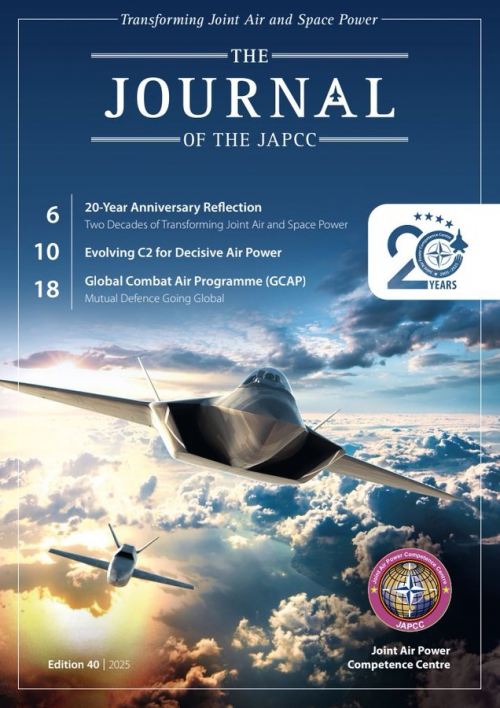
Well, this is just a fan-made magazine that compiles and analyzes information currently available from official sources or the media, so while it might offer some interesting perspectives, you can’t really expect any new information from it.
It's been a bit lonely in terms of most defence news in the UK especially. The usual news sites were really pulling out the filler articles this week and the week before.It’s been a bit quiet lately, with few official announcements — kind of lonely, isn’t it?
Budget's incoming, no one wants to make a move before that, whether government or industry.It's been a bit lonely in terms of most defence news in the UK especially. The usual news sites were really pulling out the filler articles this week and the week before.
Delta wing is highly likely, IMO. The other option is whatever you call a trapezoidal wing that's been modified to have outer wing panels that have leading and trailing edges parallel, so the total wing length is shorter than a YF-23 style trapezoidal wing.Crossing fingers that this is an indication that GCAP would not be a huge delta wing plane (see front fuselage and center body depiction).
At least the UK gov is writing a budget... [6.4tb of expletives deleted]Budget's incoming, no one wants to make a move before that, whether government or industry.
Somewhere in this thread it was stated that it was expected to be around 18 tons.I'm expecting at least 80,000lbs take-off weight with full fuel and internal weapons.
Empty, maybe.Somewhere in this thread it was stated that it was expected to be around 18 tons.
I’ve heard some worrying things about GCAP from multiple sources, and it seems the Japanese side’s misunderstanding is at a pretty serious level.
What exactly does this “gap in understanding” refer to?View: https://x.com/japanesepatrio6/status/1987765484985659553
According to Yoshihiro Inaba, he has heard several concerning reports about the GCAP program. While the details are unclear, it seems that there is a significant gap in understanding on the Japanese side.
tho i doubt there would be a big interest in the GCAP light if it range is significantly smaller from germany. Tho lets wait and see how SCAF will end firstCould we see the previously mentioned 'GCAP-Lite' idea come to fruit with Germany and Sweden? Perhaps even Spain as well?
Things aren't looking good for SCAF if Reuters are reporting this...
All we need is BAE Systems to invite Saab and Airbus to develop a smaller, single engined, airframe using GCAP components, CCA's, Combat Cloud etc....it would actually make an awful lot of sense....
Customers could then pick from a variety of gear from heavyweight fighter-bomber, lightweight fighter-bomber, CCA's, weapons...all integrated in a single combat cloud (possibly across even SCAF as well)...all ITAR free...
https://www.reuters.com/business/ae...jointly-build-fighter-jet-ft-says-2025-11-17/
tho i doubt there would be a big interest in the GCAP light if it range is significantly smaller from germany. Tho lets wait and see how SCAF will end first
Dunno. That means Germany taking either a very small share (15-25%?) of GCAP spread across every GCAP pillar, or a large share of specific items like CCAs or the GCAP combat cloud.For Germany it could be an 'industrial sop' to their industry. They could buy a mix of GCAP and GCAP lite, but also stay in the combat aircraft game...and have a share of any production/exports of GCAP-lite, avoid the areas they're not strong in (engines and sensors) and find a potential market for CCA's, weapons etc.
Well there talks about the Combat Cloud and under CFNS we also know some of the current next steps. At the same time any light version could be excluded from the current agreement.Dunno. That means Germany taking either a very small share (15-25%?) of GCAP spread across every GCAP pillar, or a large share of specific items like CCAs or the GCAP combat cloud.
Again your assuming that this is even in the table for the current GCAP. And again GCAP is only the fighter so a more binational solution could be foundWould Germany be happy walking away from 33% of FCAS to get a smaller share and junior partner status in GCAP? Would the current GCAP partners be willing to give up leadership or a significant % of any of the key pillars? Are they ready to waste another 3-5 years negotiating to accommodate Germany, finding a place for each Germany industrial player (Airbus DS, Hensoldt, MTU etc) without doing too much damage to the final product? How do they feel about the Bunderstag's export veto?
Lots of questions... IMHO the current GCAP partners should walk away double quick from this potential nightmare.
Dunno. That means Germany taking either a very small share (15-25%?) of GCAP spread across every GCAP pillar, or a large share of specific items like CCAs or the GCAP combat cloud.
Would Germany be happy walking away from 33% of FCAS to get a smaller share and junior partner status in GCAP? Would the current GCAP partners be willing to give up leadership or a significant % of any of the key pillars? Are they ready to waste another 3-5 years negotiating to accommodate Germany, finding a place for each industrial player (Airbus DS, Hensoldt, MTU etc) without doing too much damage to the timeline or the final product? How do they feel about the Bunderstag's export veto?
Lots of questions... IMHO the current GCAP partners should walk away double quick from this potential nightmare.
What exactly does this “gap in understanding” refer to?
- Japan allows limited exports of defense equipment only to specific countries, but the nations that the UK and Italy are targeting for GCAP exports are not included on Japan’s approved export list — or possibly the other way around.
- There may be disagreements over which country’s companies will take the lead in developing the key technologies at the core of the fighter program. Just as the UK and Italy originally had the Tempest concept, Japan also had its own independent development project. Both sides seem to be trying to push forward with their original visions.
I believe it’s one of these two possibilities.
Also, I suspect that Mr. Inaba’s information sources are likely from Leonardo or Rolls-Royce.