Developments and News in clean energy: Wind, solar and batteries grow despite economic challenges

Wind farms 'spray' micro-plastics down wind of their location almost continuously in operation. The fiberglass turbine blades are scrubbed by dust in the air and even just the wind giving off small amounts of plastics as a result. You aren't getting that out of the soil and such it is deposited on. It's too fine and the area is simply too large to deal with that issue.
Enough of this rubbish. Educate yourself with the attached.
 

Attachments

  • ACP_MicroplasticsFactSheet_March-2023.pdf
    231.4 KB · Views: 13
Enough of this rubbish. Educate yourself with the attached.
Rubbish, educate yourself.


In [20], it is written that the estimated amount released each year per blade is less than 50 g for a large onshore turbine and less than 100 g for a large wind turbine blade. This estimation is similar to the above calculation.
In [21], the following estimates are presented. The estimate by the company Key Wind Energy GmbH, Berlin, Germany, gives the erosion-related material loss to be around 67.5 kg per wind turbine over its entire twenty-year service life in the worst-case scenario (heavily stressed locations and without regular repairs of small damage). This would correspond to an annual material loss of around 3.38 kg per wind turbine.
The estimate of the company Deutsche Windtechnik, Bremen, Germany (also presented in [21]) gives similar results. They state that the blade is eroded approximately six to ten meters along the leading edge, which corresponds to around 500 g of polyurethane (PU) coating per blade, plus an additional 200 g per blade in additional layers. With three rotor blades per year, this would result in a material loss of 2.1 kg per wind turbine. Both estimations are also relatively close to the numbers presented in Section 3.

In [22], a team from the Norwegian Water Resources and Energy Directorate (NVE) sought to quantify the mass (volume) of erosion from turbine blades in Norway and came to an estimate of 200 g/blade per year. The methodology was that one windfarm which had experienced leading-edge erosion took exact measurement of all the repair material they used when they repaired their blades. Since the density of the repair material was about the same as the leading-edge erosion material, they could give a reasonable measured result of the amount of erosion the blade had experienced over seven years of operation. This was carried out for all the turbines in the wind farm.

That's on a per blade basis. Take the volume of an entire wind farm into account. That isn't insignificant. 100 turbines means 200 to 300 kg of microplastics per year coming off that wind farm. That's 4 to 6 metric tons of plastic over a 20 year period.


Germany had to knock wind farms out for coal --and that can be nasty too. Now they contend with both forms of pollution.

Sea water uranium for the win? Clean water a biproduct?

Odd atomics
View: https://m.youtube.com/watch?v=gY6Jr7tB2fU

Hydrogen

Greener gold

Fuel

Medicine

Companies pushing green products

Nature's way

Power projection of the nice kind

China ahead

More power

Climate and evolution

Bringing it home

CO2 to fuel

odd electrical effect?

The need for journalism

Heat pumps
 
Last edited:
The coating of windblates contains often PAFS which are extremly longlived and do not decompose. This makes them much more dangerous than the wear of tires which behaves justvas natural humus.

Here PAFS in wind turbine blades are even praised to be enveromently friendly because of low production energy:

 
Last edited:
Germany had to knock wind farms out for coal --and that can be nasty too. Now they contend with both forms of pollution.

Sea water uranium for the win? Clean water a biproduct?
Germany is finally implementing the “Morgenthau plan“ so the future need for energy will be much lower.
 
Last edited:
Any thoughts on this?
The heat island effect is actually helpful here.


Other stories

Good news

Carbon against carbon

On coal
 
Last edited:
Some relevant information from experts:


One of the key points raised in the report is that for advanced economies, following a pathway to net zero emissions by 2050 is the best way to deliver lower household bills.

Although the net zero scenario requires "higher up-front spending", it leads to "a clear decline in total household energy bills in advanced economies". Indeed, the IEA believes significant savings will be felt within 10 years for advanced economies that stick to the net zero pathway. By 2050, household bills will have roughly halved, exceeding the benefits of any other scenario.

 

Attachments

  • WorldEnergyOutlook2025.pdf
    14.4 MB · Views: 17
Some relevant information from experts:


One of the key points raised in the report is that for advanced economies, following a pathway to net zero emissions by 2050 is the best way to deliver lower household bills.

Although the net zero scenario requires "higher up-front spending", it leads to "a clear decline in total household energy bills in advanced economies". Indeed, the IEA believes significant savings will be felt within 10 years for advanced economies that stick to the net zero pathway. By 2050, household bills will have roughly halved, exceeding the benefits of any other scenario.
Then why is it that every nation that has pushed "net zero" seen a massive--double to triple or more--rise in energy costs followed by a general rise in the cost of everything else?
 
pngtree-3d-yellow-emoji-or-emoticon-yawning-tired-png-image_3593982.jpg


Ignore...move on
 
pngtree-3d-yellow-emoji-or-emoticon-yawning-tired-png-image_3593982.jpg


Ignore...move on

Would getting all our electricity from wind and solar power raise the price of electricity?

Yes—wind and solar are cheap and getting cheaper, but they do make the grid more complicated in ways that, today, would make electricity more expensive if we relied on them exclusively.


Cluster

New energy storage

LED

Green tech

Show

Yikes
 
Last edited:

Well this one is largely 'pie in the sky' thinking. "Urban" and "rooftop" gardens feeding the population? I don't think so... There are several obvious issues with this.

Who tends these all these disparate gardens in dispersed locations, workers that already are putting in an 8+ hour day? Stay at home moms and dads? Older children? I doubt that you could entice a population to willingly adopt this sort of thing.

Next, who decides what should be planted? Diversity of crops is necessary. Truck farm items (ie., vegetables) might be possible, but staple grains are another thing entirely. Wheat, corn, barley, etc., are best grown in mass and processed the same way. That is as true today as it was 1000 years ago.

Then there's the problem of specialized knowledge to make such gardens operate on a sustained basis. Soils and fertilizers need to be available to keep the soil productive. Seeds along with planting methods and things like watering schedules are necessary. Automation of these on a micro scale as argued here would be economically infeasible.

Then there's reliance on solar. What happens in poor weather, night? Storage isn't cheap and you'd need a virtual 'ton' of it to make solar viable on its own.

This is about capacitor storage. Capacitors make poor long-term storage devices, particularly on a massive scale.
 
Some other selections

Solar power finds

Superconductivity
View: https://m.youtube.com/shorts/BleqPwltVZ4


Acid rain detector

Chemistry advances

phytosequestration

Motion

Vertical Farms

Steam

CO conversion

H2O2

Low carbon concrete
 
Last edited:
It seems to be the case that the cause behind electric vehicle battery degradation has been isolated:

a quandry

Solar

Supercapacitor boost

Hydrogen and clean water from one process

Other green technologies

Windows

Solar's sad secret

What Greens should not do:

CO2 to Formic acid

Light destroys PFAS

on economics

For the holidays
www.physicsforums.com/threads/what-thermal-cycle-would-describe-the-action-of-a-candle-carousel.1083223/
 
Last edited:
The biggie-
A joint research team has developed a highly efficient photocatalyst that can convert carbon dioxide into the high-value-added fuel, methane, using sunlight, while explaining its operating principles. The work is published in the journal ACS Catalysis.

From:

The photocatalyst technology that caught the interest of the research team is a type of artificial photosynthesis technology that uses solar energy to convert carbon dioxide into fuel. It has garnered significant attention for its potential to contribute to carbon neutrality and eco-friendly energy production.

A ray of hope

No catalyst needed--just light!
I am starting to envision nuclear lightbulb tech for Starship
 
Last edited:
Ammonia

Cement already Green

On solar

Unfortunate

Pleasant surprises

Cleaner

Hydrocarbons

The Grid

Thermal drying for food

Don't buy it

Gas conversion

Water cleaning

Cobalt from wastewater

Do it yourself green tech

These stories turn people off

Do more with less?
 
Last edited:
Solar just got more durable
NUS researchers have developed a vapor-deposition method that dramatically improves the long-term and high-temperature stability of perovskite-silicon (Si) tandem solar cells. The findings were published in Science.

Coating
Recent fabrication techniques (such as spin coating, blade coating, and slot-die coating) have boosted perovskite solar cell power conversion efficiency (PCE) to record levels but face limitations in large-area manufacturing, deposition on complex or curved surfaces, and in-situ fabrication. Specifically, the team established a localized high-concentration (LHC) precursor system within individual spray droplets, enabling precise control over nucleation behavior during film formation. This study was published in the journal Joule on Dec. 16.

Less silver
A research team led by Prof. Ye Jichun from the Ningbo Institute of Materials Technology and Engineering (NIMTE) of the Chinese Academy of Sciences, in collaboration with partners, has proposed a synergistic technical solution enabling industrial tunnel oxide passivating contact (TOPCon) solar cells to simultaneously achieve high efficiency, low cost, and excellent bifacial power generation performance. The study is published in the journal Joule.

Hot stuff

Chemistry and CO2 conversion

Busy-bodies

Yuck

Cleaner washing machine

Now you are cooking with gas--and making nanotubes
 
Last edited:

The US is immediately pausing leases for offshore wind energy projects currently being built near the Atlantic coastline, citing security concerns.

In a statement, the Department of the Interior said it was pausing five large-sale projects to look into how windmills could interfere with radar and create other risks to east coast cities.

President Donald Trump has long opposed wind energy, saying it is unreliable and drives up costs, and attempted to stop all projects when he returned to office. Interior Secretary Doug Burgum has said wind farms have no future in the US energy grid.

Renewable energy companies, as well as state leaders, have expressed alarm over the administration's stance.

[snip]
 
The U.S. administration has halted construction of the Vineyard Wind I offshore wind facilities in Massachusetts for national security reasons. According to information published today in the ABC newspaper, the blades of the wind turbines installed by the Spanish company Iberdrola affect the operation of radars and generate distortions in the operation of some communication systems.

Last summer, the New England Wind I and New England Wind II facilities, also owned by the company Iberdrola, were also closed.
 
Well, there is hydrogen

Better thermoelectric modules

One not so friendly CO2 water

Tough little thing--useful for Mars and exhaust modification one day perhaps

This too

Cotton

Oil
View: https://m.youtube.com/shorts/_pWMosx93lw


Methane surprise

Wind event
 
Last edited:
The U.S. administration has halted construction of the Vineyard Wind I offshore wind facilities in Massachusetts for national security reasons. According to information published today in the ABC newspaper, the blades of the wind turbines installed by the Spanish company Iberdrola affect the operation of radars and generate distortions in the operation of some communication systems.
As a known, fixed location reflector it would be easy to use software to eliminate the effect of said wind turbines on the radar. Such bans are more ideological and vested economic interests driven.
 
This year it already lasts 24 months... And a lot has happened since then that changes the perspective of the thread...I think it would be more appropriate to change the title to "Martian Year"
 

Attachments

  • año-viejo_1293604300_img.gif
    año-viejo_1293604300_img.gif
    22.1 KB · Views: 12
It is sad when dreams die. Net Zero was itself unsustainable. Things like Green Energy...and spaceflight...need to grow more gradually.

The evil zeal libertarians have to just murder all things Old Space...Greens wanting to kill that last petrol engine....that was always going to come home to bite folks in the behind.


Stories like these hurt the environmental movement:

Humans will go to space, and we will see more widespread adoption of electrics. But Greens overseas, like some in power in the US, are going to face the wrath of poor people. Bill Gates at least saw that much coming. The number one issue--stagnant wages.

Ammonia production at room temperature?

Knowing where to tap...
 
Last edited:
It is sad when dreams die. Net Zero was itself unsustainable. Things like Green Energy...and spaceflight...need to grow more gradually.

The evil zeal libertarians have to just murder all things Old Space...Greens wanting to kill that last petrol engine....that was always going to come home to bite folks in the behind.


Humans will go to space, and we will see more widespread adoption of electrics. But Greens overseas, like some in power in the US, are going to face the wrath of poor people. Bill Gates at least saw that much coming. The number one issue--stagnant wages.
It is sad when dreams die.
 

Attachments

  • Discovery_STS120_2007_View_From_ISS.jpg
    Discovery_STS120_2007_View_From_ISS.jpg
    300.5 KB · Views: 13
  • NASM-NASM2016-03147.jpg
    NASM-NASM2016-03147.jpg
    263.5 KB · Views: 14
  • de-que-murio-brigitte-bardot.jpg
    de-que-murio-brigitte-bardot.jpg
    133.7 KB · Views: 15
  • les-dernieres-photos-de-marilyn-monroe-en-vente-a-195-000-dollars.jpg
    les-dernieres-photos-de-marilyn-monroe-en-vente-a-195-000-dollars.jpg
    147.5 KB · Views: 16
More on hydrogen

Stone paper

Solar

Wind

Nasty

Fuel cell

Storage

Mariculture

Substitute

Aviation

Heat transfer
 
Last edited:
Cleaner aviation?

Hydrogen production with no palladium

Fuel cells

Tree bark microbes

Rare Earths from coal

3D print solar see-thru

Solar breakthrough

On atmospherics

Sugar to plastic

Crops

Thinking reset
 
Last edited:
PV boost

Green freezer

Maybe

Farm

Oceanic benefits

Less lightning

Toxins


Waste heat into power

Efficient display tech
 
Last edited:
Living walls

Solar

Chemistry improves

Other finds

Seawater
View: https://m.youtube.com/watch?v=TB4wALx3KU8


I guess they want us to freeze?

Odd

EV

Green refrigerator

In the news
 
Last edited:
Solar tech

Transparent electronics

Clean sheet

The tyranny of energy density
View: https://m.youtube.com/watch?v=uryvOKRWKLg


Other thoughts

figures

Jet-A

Clouds

Geothermal

Calls for action

Be careful with zealotry
In the Sahel, misconceived environmental security policymaking can have adverse impacts and even fuel the very insecurity it aims to prevent. Top-down approach objectives can be at odds with local social and ecological realities.

Newsome rolls over

Water cleaner

So, burning is good now?

Tesla turbine

You'll float too
 
Last edited:
Problems don't go away by censoring awkward answers or burying evidence.:)

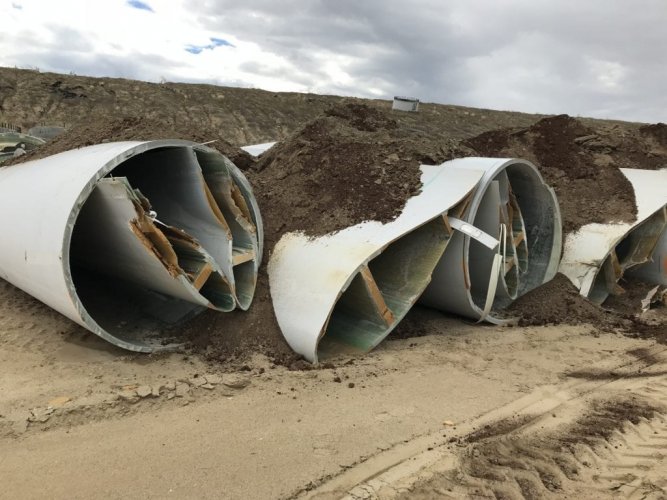
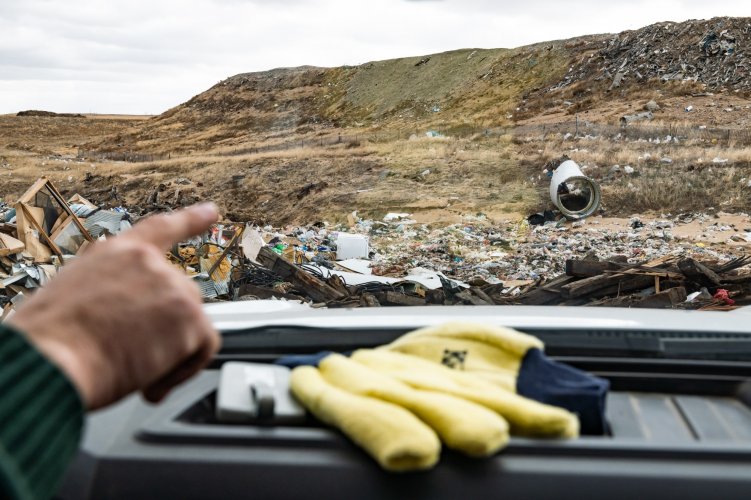
Wind turbine waste primarily consists of non-biodegradable fiberglass blades that are difficult to recycle, leading many to landfills. While 85-90% of a turbine (steel, copper, concrete) is recyclable, blades pose a significant challenge. By 2050, over 40 million tons of blade waste could accumulate globally.


Key Aspects of Wind Turbine Waste:

  • Blade Composition & Recycling Challenges: Blades are made of composite materials (fiberglass, resin, wood) designed to be durable, making them difficult to recycle. They cannot be melted like metal, requiring complex chemical, thermal, or mechanical processing.
  • Disposal Methods: While many older blades end up in landfills or specialized, non-toxic, safe-for-landfill storage yards, some are incinerated for energy or ground up for concrete aggregate.
  • Volume & Impact: Despite the "green energy" narrative, blade disposal has generated controversy, such as the large-scale graveyard in Wyoming. However, this waste represents a small percentage of total landfill waste, estimated at about 0.05% annually.
  • Future Solutions: The industry is moving toward a circular economy with projects like the 2021 commitment by European and Spanish industries to recycle 100% of decommissioned blades by 2025. Innovative companies are developing 100% recyclable blades and exploring reuse in construction, such as pedestrian bridges or playground equipment.
  • Regulations: Countries like France are introducing legislation to force higher rates of recycling (55% by 2024).
 

Attachments

  • IMG_7116.jpeg
    IMG_7116.jpeg
    121.5 KB · Views: 10
  • 20200212-Colwell-CoSun-Sterling-Turbines-A8C0469.jpg
    20200212-Colwell-CoSun-Sterling-Turbines-A8C0469.jpg
    618.7 KB · Views: 8
Last edited:

Similar threads

Back
Top Bottom