GK. Dundas
ACCESS: Confidential
- Joined
- 22 July 2025
- Messages
- 122
- Reaction score
- 210
Ironically we probably could have run Hermes with a little creative thinking and tweaking manpower requirements.

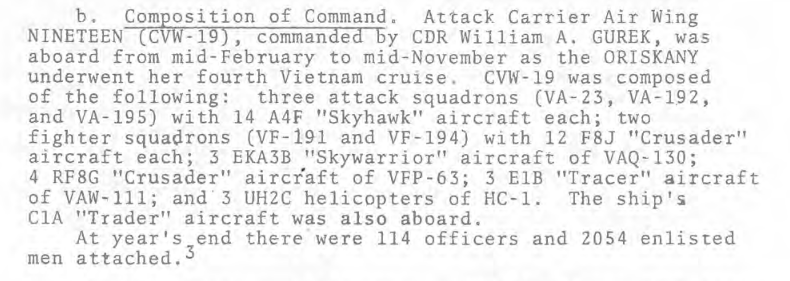
I'd be careful with those air group numbers. There simply isn't enough space on an Essex to operate that kind of huge air wing effectively.In 1972-73 Oriskany was operating an attack carrier air wing of 86 aircraft. It consisted of 28 F-8J, 42 A-7A/E, 4 RF-8G, 4 EKA-3B, 4 E-1B, 1 C-1A and 3 SH-3G. That's 83 fixed-wing plus 3 helicopters for SAR and Vertrep. She had a crew of 3,500 men, which IIRC was about 2,000 for the ship and 1,500 for the air wing.
You know Dilandu, in the last couple of years, I've been thinking along similar lines. In essence, it's a similar issue that the British/RN has never been willing to come to terms with IMO.The main question seems to always be "why did Australia need a strike-capable carrier at all"? It make sence while there was hostile Indonesia to worry aboout. But after collapse of Sukarno regime, the value of the carrier diminished greatly. Its main value was basically "the alliance value", i.e. making Australia more valuable ally for USA through the capability to project power.
For the defense of Australia, strike-capable carrier was a dubious proposal. It waxn't exactly likely that Soviet armada would venture down under to protect indigenious population of Australia from capitalistic oppression (and in case THIS would happens and USN would NOT be able to stop it, the lone Australin carrier would hardly be anything more than a target for MRA). Australia wasn't important target in Cold War terms; it was too far away from major theaters for anyone to care much about it.
So buying Essex with Phantoms without any clear understanding what exactly they are supposed to do - besides "sailing with USN to fight American wars somewhere far away" - doesn't looks particularly good proposal. A variation of "Invincible"-class, equipped with helicopters & some Harriers would be much more reasonable.
Thanks GK. Dundas. In truth, I was oblivious to Canada's offer of Hermes!Canada looked at Hermes at least twice once while we were in discussion with the British over replacing Magnificent. It was favored over Bonaventure because of her larger size and growth potential.
And secondly just before Bonnie's refit in 64.
And if the reports are true An Essex two or three times .
The deal killer with both carriers was quite simple manpower. We couldn't manage to provide enough personal in both cases of Hermes and an Essex to man them .
Bonaventure required 1200-1300 men and officers.

Fully agree, it would be significantly better as cost-efficient solution.Standard production -
8 x Vought F-8 Crusader (fighter-interceptor),
12 x Douglas A-4E Skyhawk (strike),
6 x Grumman S-2 Tracker (ASW/MP),
3 x Grumman E-1B Tracer (AEW),
4 x Westland Wessex (ASW/Plane Guard).
The most cost effective, but short terminism.
Or
More pragmatically
Tailored production -
8 x Avon-powered Vought F-8 Crusader (fighter-interceptor),
12 x Avon-powered Douglas A-4E Skyhawk (strike),
6 x turboprop-powered Grumman S-2 Tracker (ASW/MP) (S2T Turbo Tracker),
3 x turboprop-powered Grumman E-1B Tracer (AEW) (E-1T Turbo Tracer);
4 x Westland Wessex (ASW/Plane Guard).
i thought the wessex entered service in 63?In the 60s the RAN spent (in AUD converted from Aus pounds)
$16m for 27 Wessex ASW helicopters
$16m for 14 S2E Trackers (& 2 S2As for training)
$18m for 8 A4G and 2 TA4G
$8m for Melbourne refit that added 9' to the catapult
The position of the RAN in 1959 was the current aircraft would be at end if life in 1963, and the Melbourne would need a major refit. The RAN also believed the Melbourne couldn't operate the next generation of aircraft. On these assumptions, the RAN ordered the Wessex in 1963.
Which may or may not be true, but is definitely missing the point, which is that she had a crew of 3,500 and I had remembered correctly because my copy of Jane's 1968-69 says the complement of a CVA Essex was.I'd be careful with those air group numbers. There simply isn't enough space on an Essex to operate that kind of huge air wing effectively.
There are other sources that quote slightly smaller numbers for Essex carriers, e.g. 18-22 F-8J, 30-39 A-4/A-7, 2-3 RF-8, 3 EKA-3B, 3 E-1B... typically 50-60 fighters plus 6 big support aircraft and 3 small helos... never more than 70 aircraft total.
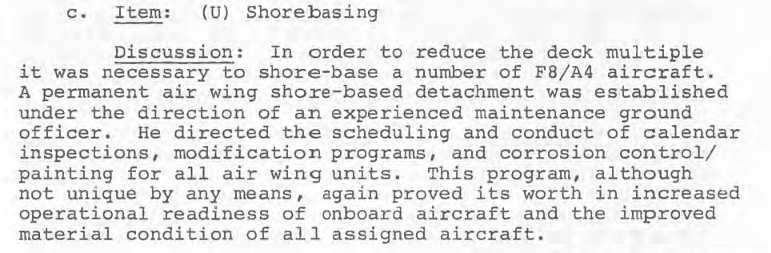
So I suspect the larger #s represent the number of aircraft assigned to the air wing, while the smaller #s represent the number of aircraft actually embarked on deployment, with each squadron or detachment leaving at least 1 aircraft at home (and sometimes 2-3 aircraft for the larger fighter/attack squadrons). There's a similar practice in place with the large CVN airwings.
Finally, IIRC there was also a practice during Vietnam to drop off a few aircraft in the Philippines were they would act as a reserve, so we don't know what was the actual # embarked was during operational periods.
Furthermore, I put the Essex CVA in for completeness.2,000 (100 officers, approx 1,900 enlisted men) plus approx 1,500 assigned to the attack air wing for a total of 3,500 per ship.
That was less than the 45 aircraft carried by a 1960s Essex CVS and if I'd remembered correctly the crew was about 1,600 for the ship itself and 800 for the air group for a total of 2,400 per ship. Therefore, an Essex in RAN service with air group of the size that he'd proposed would require a crew of at least 2,400.I can't remember what the crew numbers where in the document but I think they believed in peace time the could operate a crew of around 2,000 maybe 2,100 I believe.
It also said that the air group of 40 to 47 aircraft including 16 to 18 helicopters. The 45 aircraft that I wrote included 16 helicopters, so my guess is that the difference of 2 helicopters is a pair of machines for SAR and Vetrep.1,517 (87 officers, approx 1,430 enlisted men) plus approx 800 assigned to ASW air group for a total of 2,300 per ship.
In Message 28, my reply in Message 33 was.I can't remember what the crew numbers where in the document but I think they believed in peace time the could operate a crew of around 2,000 maybe 2,100 I believe.
According to Jane's 1968-69.I don't recall what they said when I read them on-line, but it's about the same as Melbourne plus Sydney in the 1960s so one Essex could replace the two of them without having to increase the personnel establishment of the RAN.
FWIW Albion could operate Gannets, Sea Hawks and Sea Venoms in her existing condition which included BH.V hydraulic catapults.I've read that Albion before she sailed home from the far east to be converted to a commando carrier she was offered to Australia to replace Melbourne.
FWIW I think it would be along the lines of Centaur's 1956-58 refit when a pair of BS.4 steam catapults replaced the BH.V hydraulic catapults.Obviously she would need a modernization something along the lines off Hermes.
i thought the wessex entered service in 63?
FWIW according to Jane's 1962-63.Albion and Bulwark were converted to Commando carriers somewhere around 1960.
And Jane's 1967-68.Albion entered H.M. Dockyard, Portsmouth, in Dec., 1960, and was taken in hand in Feb. 1961 for conversion which was completed in July 1962. She commissioned on 1 Aug. 1962 for sea trials and work-up preparatory for leaving for the Far East in Nov. to relieve Bulwark.
Converted into commando carriers at Portsmouth Dockyard, Feb 61 to 1 Aug 62 (Albion) and Jan 1959 to 19 Jan 1960 (Bulwark).
According to Marriott's "Royal Navy Aircraft Carriers 1945-1990" and her Wikipedia entry.Centaur was used as a small 'strike' carrier until 1965 when she was retired and used as an accommodation ship. She was the only one of the 4 ships finished with an axial deck and then converted to steam cats and angled deck.
@orlovsky , how common is the practice of having less aircraft than a carrier can handle because it's beneficial from an operational standpoint? It has come up in discussion about refitting HMAS Melbourne to Karel Doorman/Minas Gerais standard and came up in my 70 British fleet carrier thread, how CVA01 could carry 42 jets but 36 was 'normal'.
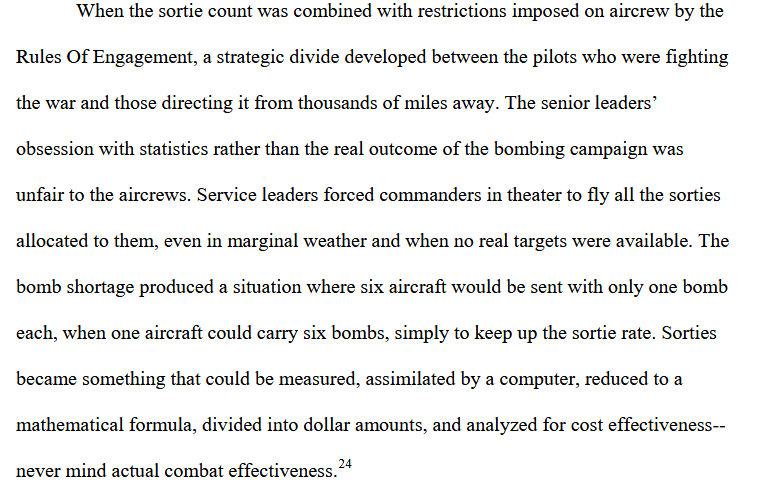
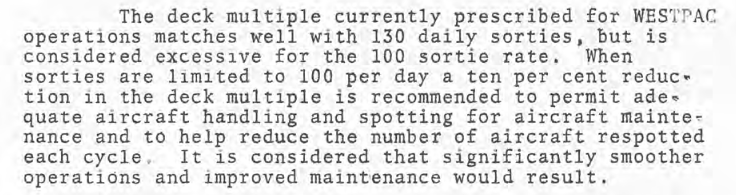
People love these numbers, but back in the day I was taught 'airpower' is a 'product' and that product is measured by sorties flown, not on aircraft owned. If a carrier has a couple less aircraft but flies more sorties, it's producing more airpower.
The talk of crewing issues misses one point, having a strike carrier with state-of-the-art aircraft would make naval service very exciting and aid recruitment. Also, having a carrier with a reasonable strike capability would permit Australia to wind back conscription and reduce the size of the army as the deployment of the carrier in support of the US would support our alliances without the need for a full ground deployment.
A dramatically reduced involvement in Vietnam would also reduce pressure on the defence budget, as well as de-escalate the social issues inspired by that conflict and maybe remove the use of conscripted personnel in deployments.
I can only rely on sources, too, so what I make of those:
About 75% allows for the best operating conditions. In a war setting, this can go to 90%. Implied is probably a loss factor; Oriskany lost half its attributed airwing, 39 aircraft, in 1967/68: https://apps.dtic.mil/sti/pdfs/ADA451820.pdf p 130. Not as bad but somewhat similar RN in the Falklands. So a ~15% loss if you plan to attack the Kola peninsula in the cold war gone hot will happen pretty fast. So it makes sense to load your carrier to the max if you can. Whether and how you can reinforce your carrier will depend on the overall situation.
Seems this was no issue for the french navy which would employ its carriers more as sea control ships in WW3.
As for sorties, that also features in the thesis I linked: make it the yardstick, and you ill get a lot of sorties. Many of them useless. Sortie generation capacity may be a good measurement, but they still need to be translated into effective missions.
Call it Human Factors and it will fit perfectlyYou're going down a very interesting rabbit hole that I've given thought to in the past, and I believe that is possible for Australia to both contribute to the Vietnam War in a significant way and avoid conscription and its attendant problems. However, it does involve significant mental gymnastics that would likely be frowned upon in a technical forum and not provide enough men to crew a large attack carrier.

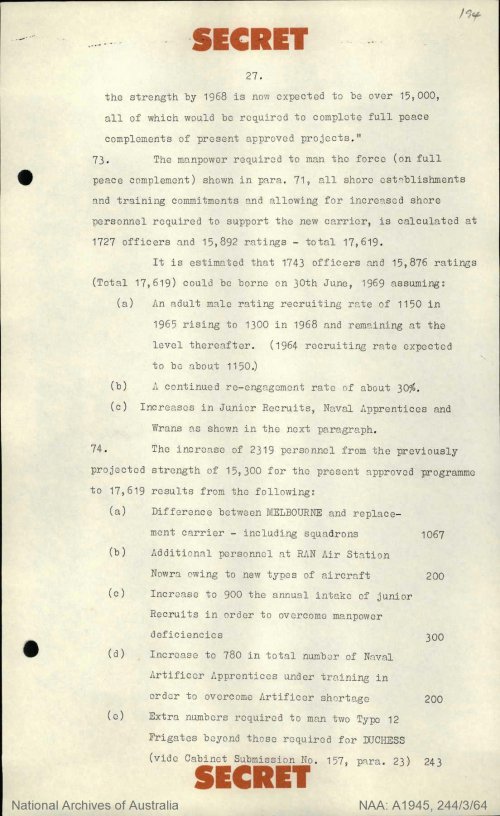
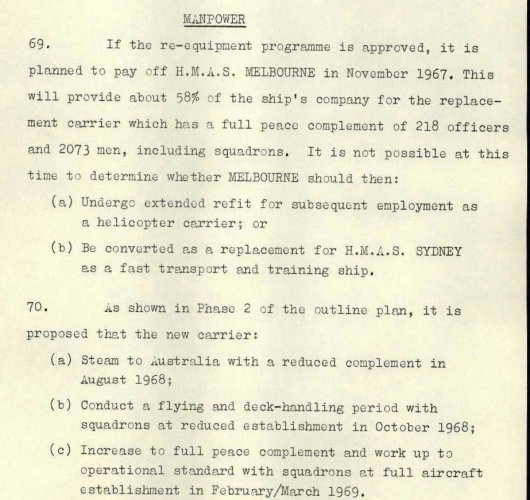
This is what the RAN thought on manning the Essex Carrier
Agreed there coast is huge, but that is the case in a gestational buys such as aircraft carriers.Even if the RAN could cover the manpower in theory, that still leaves that 150m pound cost compared to the actual spend on Melbourne, Wessex, S2s and A4s of less than 30m pounds 1961-69.
Then there's the CN's inability to justify the requirement to his colleagues, CA, CAF and C-COSC let alone Cabinet.
The irony being just over a decade later one of the key reasons given for not replacing the carrier was it was not worth having a carrier if it couldn't operate supersonic fighters and fixed-wing ASW aircraft.Even if the RAN could cover the manpower in theory, that still leaves that 150m pound cost compared to the actual spend on Melbourne, Wessex, S2s and A4s of less than 30m pounds 1961-69.
Then there's the CN's inability to justify the requirement to his colleagues, CA, CAF and C-COSC let alone Cabinet.
The berthing in Essex-class would make mixed crews challenging, to say the least. It's all large open bays!I've been deliberately using man, men and manning instead of crew and crewing, because the decision on what ship to buy would be taken shortly before the start of Women's Lib which would be in full swing when the ship entered service, so supplement the inadequate supply of men with women and allow them to serve at sea decades earlier than IOTL.
What else is available with BVR AAMs?At the end of the day, it's my opinion that the F-4 Phantom II was overly ambitious for the RAN - period. The F-4 Phantom II almost being the tail wagging the dog, if you know what I mean.
What else is available with BVR AAMs?
Crusader doesn't have them, but might be able to be fitted for Sparrows.
Scott Kenny, you are correct in what you insinuate - there isn't really anything in the size/weight catagory of carrier-based supersonic air superiority, after the F-8 Crusader.What else is available with BVR AAMs?
Crusader doesn't have them, but might be able to be fitted for Sparrows.
THe only problem i see with that is, dont think the RAN would be very keen on being the only operator of the Crusader III. It is much better to jump on the F-4 with the USN for spares and logisticsScott Kenny, you are correct in what you insinuate - there isn't really anything in the size/weight catagory of carrier-based supersonic air superiority, after the F-8 Crusader.
The fact is, Vought did study and propose to the USN an all-weather derivative of the F-8, armed with Aim-7 Sparrow III missiles (I think at the cost of two of it's 20mm cannons?). Unfortunatly, I can't recall it's designation....(It's in Bill Spidle's excellent book Vought F-8 Crusader: Development of the Navy's first supersonic jet fighter)
So, if the RAN was both serious and smart about continuing to keep itself equipped with a proven supersonic air superiority carrier-based fighter/interceptor, it could be done via Vought.
Regards
Pioneer
Not Crusader III. A version of the F-8.THe only problem i see with that is, dont think the RAN would be very keen on being the only operator of the Crusader III. It is much better to jump on the F-4 with the USN for spares and logistics
I was wrong still, during this time period you really need a Weapons Systems Officer to not overload the pilot with the AIM-7.Not Crusader III. A version of the F-8.
https://www.secretprojects.co.uk/threads/vought-f-8-projects.548/page-2#post-810369
This may be easier to read.This is what the RAN thought on manning the Essex Carrier
. . . the strength by 1968 is now expected to be over 15,000, all of which would be required to complete full peace compliments of the present approved projects."
73. The manpower required to man the force (on full peace compliment) shown in para. 71, all shore establishments and training commitments and allowing for increased shore personnel required to support for the new carriers, is calculated at 1,727 officers and 15,892 ratings – total 17,619.
It is estimated that 1,743 officers and 15,876 ratings (Total 17,619) could be borne on 30th June, 1969 assuming:
(a) An adult male rating recruiting rate of 1,150 in 1965 rising to 1,300 in 1968 and remaining there thereafter. (1964 recruiting rate to be about 1,150.)
(b) A continued re-engagement rate of about 30%.
(c) Increases in Junior Recruits, Naval Apprentices and WRANs as shown in the next paragraph.
74. The increase of 2,319 personnel from the previously projected strength of 15,300 for the present approved programme to 17,619 results from the following:
(a) Difference between MELBOURNE and replacement carrier – including squadrons. 1,067
(b) Additional personnel at RAN Air Station Nowra owing to new types of aircraft. 200
(c) Increase to 900 the annual intake of Junior Recruits in order to overcome manpower deficiencies. 300
(d) Increase to 780 in total number of Naval Artificer Apprentices under training in order to overcome Artificer shortage. 200
(e) Extra numbers required to man two Type 12 Frigates beyond those required for DUCHESS (vide Cabinet Submission No. 157, para. 23). 243
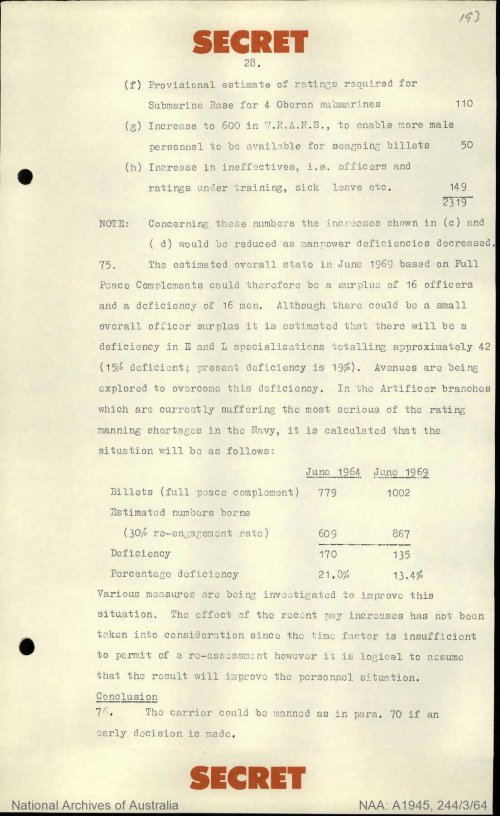
(f) Provisional estimate of ratings required for Submarine Base for 4 Oberon submarines. 110
(g) Increase to 600 in W.R.A.N.S., to enable more personnel to be available for seagoing billets. 50
(h) Increase in ineffectives, i.e. sick leave etc. 149
NOTE: Concerning these numbers the increase shown in (c) and (d) would be reduced as manpower deficiencies decreased.
75. The estimated overall state in June 1969 based on Full Peace Compliments could therefore be a surplus of 16 officers and a deficiency of 16 men. Although there could be a small overall officer surplus it is estimated that there will be a deficiency in E and L specialisations totalling approximately 42 (15% deficient; present deficiency 19%). Avenues are being explored to overcome this deficiency. In the artificer branches which are currently suffering the most serious rating manning shortages in the Navy, it is calculated that the situation will be as follows:
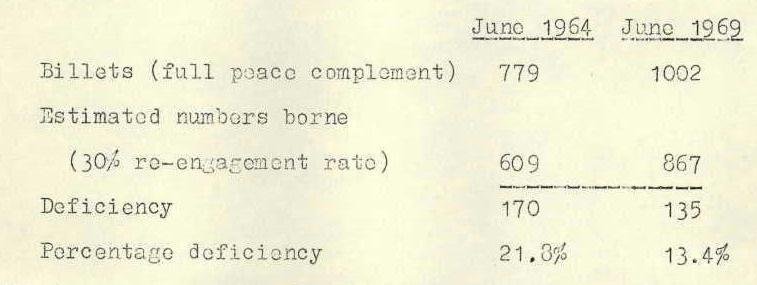
Various measures are being investigated to improve this situation. The effect of the recent pay increases had not been taken into consideration since the time factor is insufficient to permit of a re-assessment, however, it is logical to assume that the result will improve the personnel situation.
Conclusion
Do you have the page that includes Paragraph 70?76. The carrier could be manned as in para. 70 if an early decision is made.
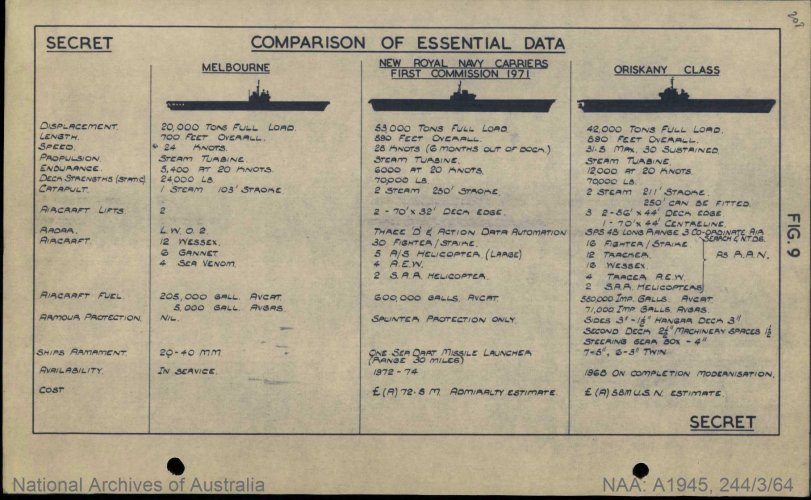
According to that report from 1964, an Essex was expected to require 1,067 more persons than Melbourne, Unfortunately, it didn't say what the crews of the two ships were. The nearest Jane's that I have the figures for is 1965-66 which said Melbourne's complement was 1,209 to 1,250 in peace and 1,450 in war. Based on that the peacetime complement of an Essex would have been 2,276 to 2,317 which is nearly the same as the 2,300 for an Essex CVA in the USN according to Jane's 1968-69.Link to Message 72.
This is the actual personnel strength (officers and sailors) of the RAN at 1st January from 1964 to 1973 according to various editions of Jane's.It is estimated that 1,743 officers and 15,876 ratings (Total 17,619) could be borne on 30th June, 1969 assuming:
If you insist on a twoseater, the only OTS aircraft is the F-4, yes.I was wrong still, during this time period you really need a Weapons Systems Officer to not overload the pilot with the AIM-7.
Really anyway you look at in 1964 there is only one option for the RAN for a supersonic jet with BVRM capability and its the F-4
I agree with you on the cost grounds unless there is a massive increase in the budget the RAN cant afford her and the amount of aircraft stated is to low. Really you probably need numbers like the original sea venom and Gannet order. Along the Lines of 46 F4s & 40 S2s.The following is what the Navy spent on Aircraft, armament, ships, electronics, electrical stores, in AUD, and what the total defence spend was.
1961-69 the RAN spent a total of about $58m on 27 Wessex, 14+2 S2, 8+2 A4 and a refit on Melbourne that lengthened the catapult from 103' to 112'. It also bought 3 DDGs are a cost of about $50m each.
- 1960-61 - 30.6m of 401.3m
- 1961-62 - 30.8m of 409.4m
- 1962-63 - 34.8m of 423.3m
- 1963-64 - 42.0m of 518.7m
- 1964-65 - 52.4m of 598.1m
- 1965-66 - 73.0m of 741.9m
- 1966-67 - 93.4m of 950.1m
- 1967-68 - 105.5m of 1,109.5m
- 1968-69 - 95.1m of 1,164.7m
The cost of a rebuilt Essex, ~24 F4Bs, ~16 S2Es and 8 E1Bs was estimated to be about 150m Australian pounds which equates to AUD $300m after Feb 1966.
Even if the Essex could operate Phantoms (which it couldn't) and the RAN could find the manpower (which it couldn't) and he Chief of Army, Chief of Air Force and the Chairman-Chief Of Staffs Committee agreed the requirement was valid (which they didn't) $300m equates to the entire RAN procurement budget 1964-68. Then of course is the fact that 24 F4Bs and 16 S2Es is way too few aircraft to maintain a CAG of 16 F4s and 12 S2s, the RAN will need 32 F4s and 24 S2s, bumping that unaffordable price up even more.