Hi Hesham
The X-28 is better known as the Williams X-28 (Motorfly) and I do not know whether this it true but possibly Wiliams was a pseudoniem for a Mr. Mourlot who may have been the (co)designer. Reportedly the first X-28 (Arbogast) already appeared in 1937, but only after WW2 further examples were built in France under various names/designations.
I am sure that fellow-members have more accurate info on the X-28 familly.
Hi Hesham
The X-28 is better known as the Williams X-28 (Motorfly) and I do not know whether this it true but possibly Wiliams was a pseudoniem for a Mr. Mourlot who may have been the (co)designer. Reportedly the first X-28 (Arbogast) already appeared in 1937, but only after WW2 further examples were built in France under various names/designations.
I am sure that fellow-members have more accurate info on the X-28 familly.
Yes, Max Williams was the pseudonym of Max Mourlot (q.v. https://www.facebook.com/Musee.Aviation.Angers/posts/le-max-williams-mw-25-n-36-construit-en-1953-par-la%C3%A9roclub-de-moulins-a-%C3%A9t%C3%A9-conf/1107860992616466/ - the author of which, I suspect, is Christian Ravel)
There's a lot of confusion out there about the homebuild designer Mourlot. Some say Mourlot hid behind the pseudonym 'Max Williams'. There was a Max Williams-Mourlot whose firm - Mourlot et Cie of Billancourt/Seine - manufactured the Max cyclecar between 1927 and 1929. Did M Mourlot take his pseudonym from there? Or was this aircraft designer the selfsame Max Williams-Mourlot?
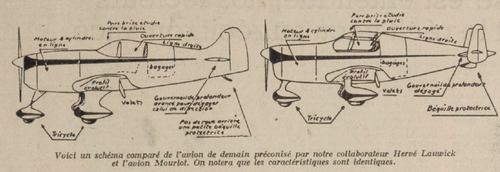
Max Williams-Mourlot was also an author of technical books for homebuilders (mainly of cyclecars, etc). The article also mentions a Hervé Lauwick. Since Hervé Lauwick was the name of a well-known humorist author of the day, I'd make a guess that another pseudonym is involved here and that this article's collaborateur, 'Hervé Lauwick', is none other than Mourlot (or Williams-Mourlot) himself.
Hervé Lauwick is mostly known as humorist, but he also was aviation enthusiast - French wiki mentions he owned a Santos-Dumont Demoiselle, and also he wrote a book called Heroines of the Sky: Women in Aviation.
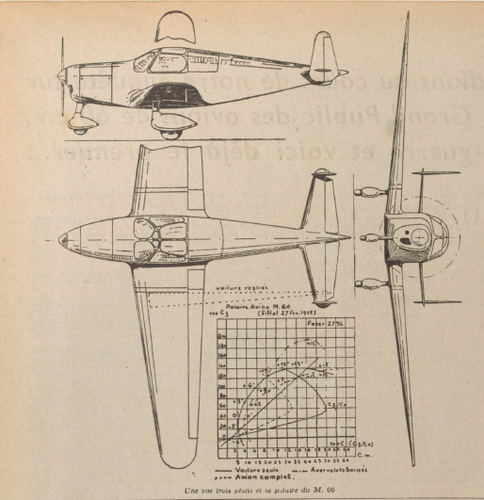
The article mentions Hervé only as fervent supporter of popular aviation (and also as 'old flyer') who wrote many articles about the subject, and then the article transitions into description of Mourlot's F.M.60 aircraft as an example.
In short - not a pseudonym.
You'll find a lot of confusion of this type ... mainly because generic names and designations keep popping up. At the heart of it is whole muddle of the Williams/Mourlot 28-X (hence the '28.X' reference in your clipping) which we've discussed before. So, how to untangle it?
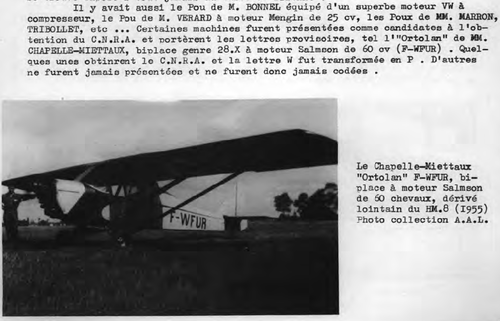
First, that Ortolan 'name'. Sounds like an intentional naming ... after all it is the French name for the Ortolan Bunting (imfamous for its appeal to immoral gourmands). But this little airplane was not named after a bird. It was named after its builders: the brothers François and Joseph Ortolan. Some sources say that F-WFUR was also built by the Ortolan brothers.
For some reason unknown to me, many homebuilders constructing Williams 28-Xs gave them fresh designations with 23, 24, or 25 - eg: T-23 (1950) and M-23 (1951) Trinité, Ortolan T-24 (1951), and various MW-25s. F-WFUR was the T-23 Trinité homebuild first flown on 27 September 1950.
So, who were MM. Chapelle-Miettaux? The only mention of the former that I've found says that M. Chapelle was a member of the Aéro-club de Lyon. So too was Lucien Miettaux (who, back in 1936, had built the 'Sablier' - another homebuilt aircraft - with his brother).
An obituary notice for Lucien Miettaux mentions that it took five years to complete the 'Ortolan'. So, one possibility is that what François and Joseph Ortolan actually built was a semi-completed kit aircraft which was then slowly completed by Messers. Chapelle and Miettaux. But there is another possibility in which MM. Chapelle-Miettaux modified an already-completed airframe.
The Miettaux C-1 pops up as a Williams 28-X type completed around 1950. But, whereas the other Williams 28-X variants are open parasols, the Miettaux C-1 is described as a high-winged cabin monoplane. So, was the C-1 ('Cabine un?) the T-23 Trinité F-WFUR retrofitted with an enclosed cockpit? Or did Chapelle-Miettaux build their very own Williams/Mourlot type which just happened to inherit the T-23 Trinité's registration?
Few answers there but hopefully some food for though ...[/U]
Mourlot (better known as Max Williams) frequently wrote in aviation magazines of the 1930s and 1940s, and frequently proposed designs that rarely passed the drawing board stage. The character himself was mysterious, and his productions are equally difficult to document... Here are several of his known designs and prototypes:
The M.-3 glider, also called the Type Ω (Omega):
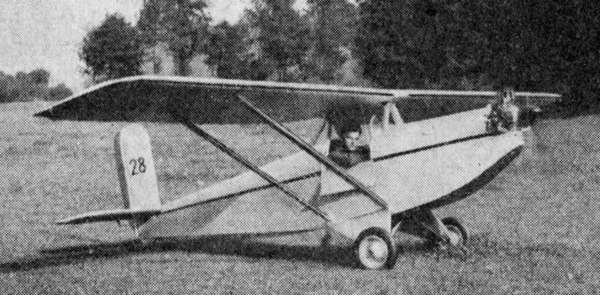
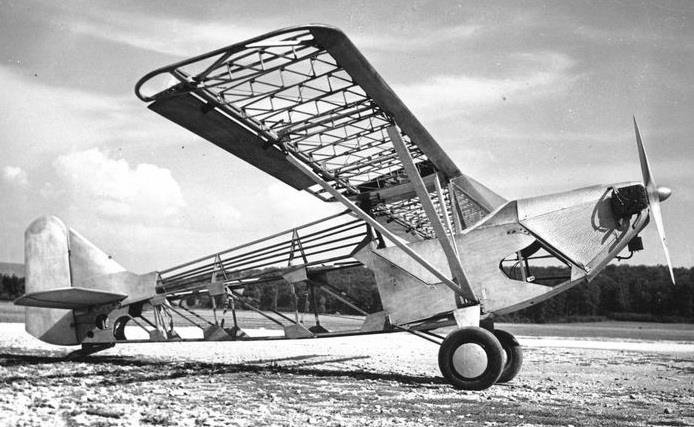
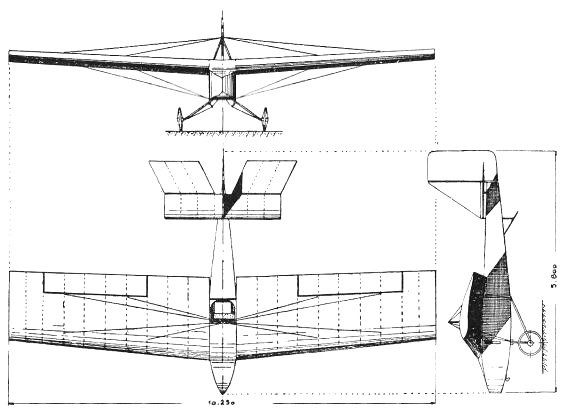
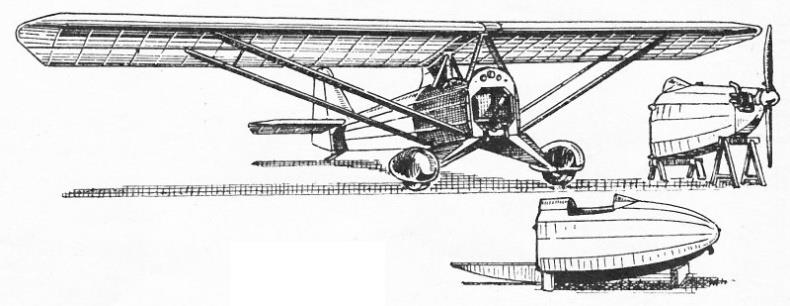
The Max Williams 28-X in its original form:
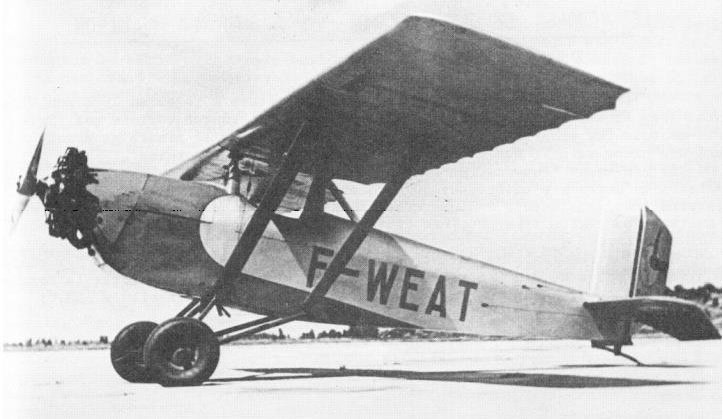
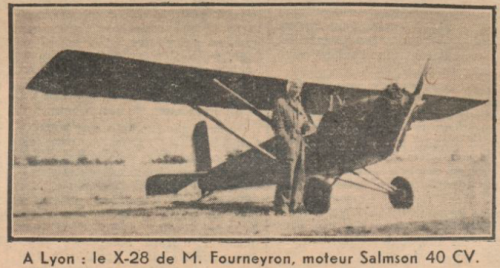
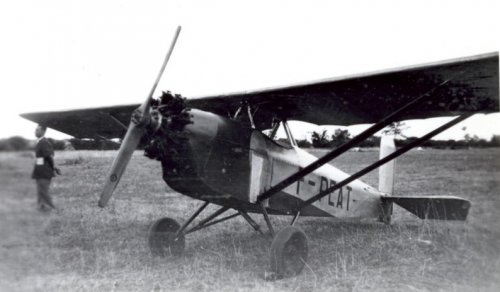
The same type, as the Max Williams X-28 (N° 01), in redesigned form with a 40 hp Salmson engine, certificated and registered in 1948 [F-WEAT, then F-PEAT], flying until 1957:
The second Max Williams X-28 [F-PFOC] (N° 02) had an enclosed cockpit:
The Williams-Ortolan 23-T Trinité [F-WFUR, then F-PFUR], a development from the X-28 design with a 60 hp Salmson engine, also known as the Chapelle-Miettaux. The Ortolan brothers built several examples, and Chapelle & Miettaux, too. At least a second one appears on registers, as [F-WGGL], designated the Williams-Ortolan M-23 Trinité. Registers also show a Gavras-Ortolan T-24 [F-WFUS] which was likely a derivative of the Trinité.
The Max Williams Motorfly, possibly the most advanced of Max Williams's built types. Three were registered as the MW-25 Motorfly [F-WEAZ, still extant at the GPPA in Angers], the Motorfly "Donald" [F-WFEC], and the Motorfly AH-1 [F-WGYJ].
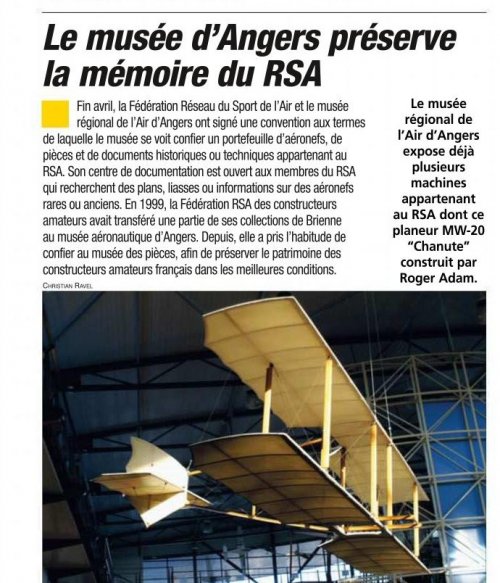
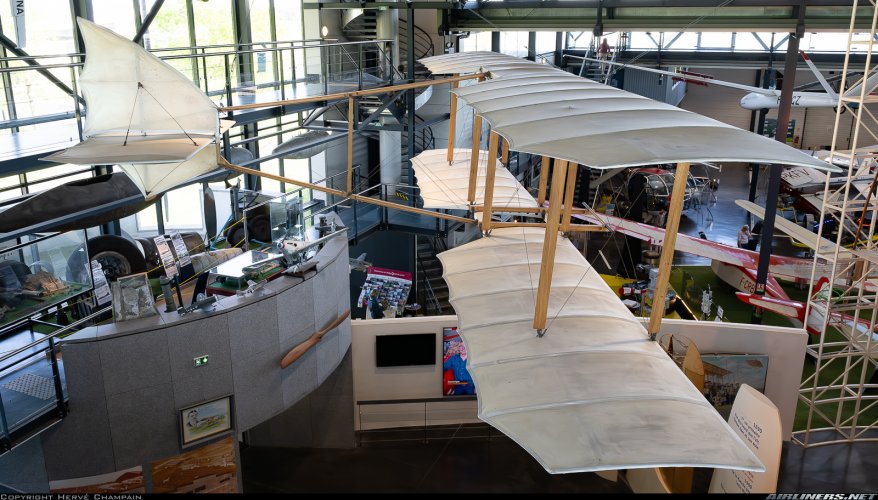
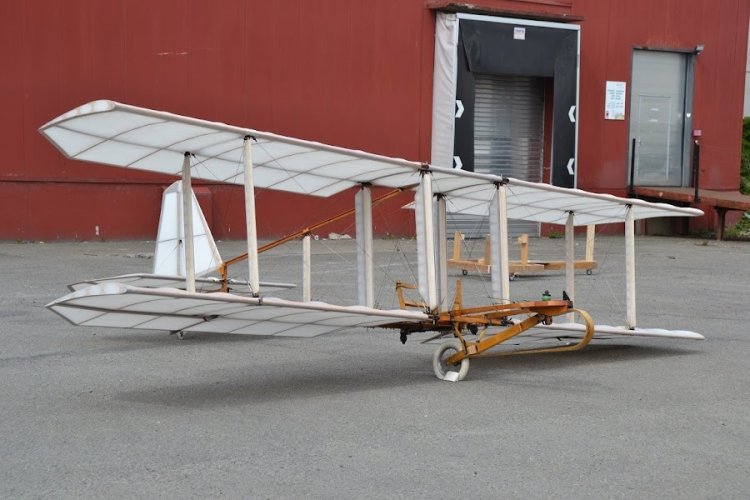
As for the MW-33, it is said to have been a Chanute glider replica, although the example built by Roger Adam for the R.S.A. Museum in 1979 (from a 1941 plan), and now located at the Espace Air Passion Museum in Angers, is designated the MW-29 Jeunesse by its photographer.
Also, a web page shows a Jeunesse being restored nowadays, and it looks a bit different from the museum piece...
So, as you can see, quite a few gaps and mysteries.
Many more designs and projects by Mourlot existed, and as I said earlier on, are very scarcely documented. Here are a few:
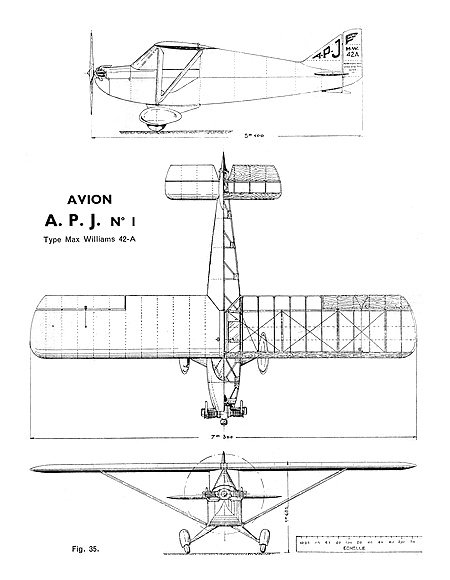
The Max Williams 42-A of 1940, also known as the AP.J. N° 1 or A.P.J.1. A second 1940 design, the Max Williams 43, was likely similar since it was also designated A.P.J.1, but neither of these two types was built because of the war.
And another Max Williams glider with an unknown designation:
A design for an airplane that could be turned into a glider...
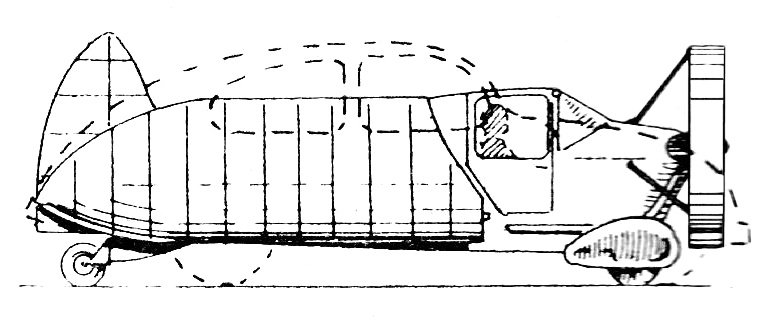
... and even a roadable aircraft!
NOTE: Most of the images were found in Les Cahiers du C.E.R.V.I.A., some of them being enhanced by me.
Some years ago I had e-mail correspondence with, I think, someone at the GPPA - possibly Christian Ravel or Roger Gaborieau - about the X-28, its offspring and the Max Williams/Mourlot enigma - who provided me with information but asked me to be circumspect in its use because he was about to embark on writing an article on the subject. Does anyone know of such an article? I suspect that it will be difficult for me to trace that correspondence because it is likely to be on an old PC which, now, is nigh on impossible to access and search!
This site uses cookies to help personalise content, tailor your experience and to keep you logged in if you register.
By continuing to use this site, you are consenting to our use of cookies.





![Max Williams X-28 N° 02 [F-PFOC].jpg](https://www.secretprojects.co.uk/data/attachments/323/323413-03a2f212363309927fe763b3200d09ca.jpg "Max Williams X-28 N° 02 [F-PFOC].jpg")
![Max Williams T-23 Trinité [F-WFUR].jpg](https://www.secretprojects.co.uk/data/attachments/323/323411-2c7c738e851efbf1aaa00b8d8babacde.jpg "Max Williams T-23 Trinité [F-WFUR].jpg")
![Max Williams Motorfly 'Donald' [F-WFEC].jpg](https://www.secretprojects.co.uk/data/attachments/323/323416-dd40ab280d142573a606d92d80adb00c.jpg "Max Williams Motorfly 'Donald' [F-WFEC].jpg")


![Les_Ailes___journal_hebdomadaire_[...]_bpt6k9795863t_12.jpeg](/data/attachments/147/147441-d605f4f59b5977bc74d9c8e8044545ec.jpg)
![L'Air___revue_mensuelle___[...]Ligue_nationale_bpt6k97964660_7.jpeg](/data/attachments/160/160585-a26637f27909ad6bcf213b6682632e49.jpg)
![L'Air___revue_mensuelle___[...]Ligue_nationale_bpt6k97964660_8.jpeg](/data/attachments/160/160586-05f64c8774195f54633a185c4d77d803.jpg)