Grey Havoc

ACCESS: USAP
Joined
9 October 2009
Messages
24,511
Reaction score
18,192
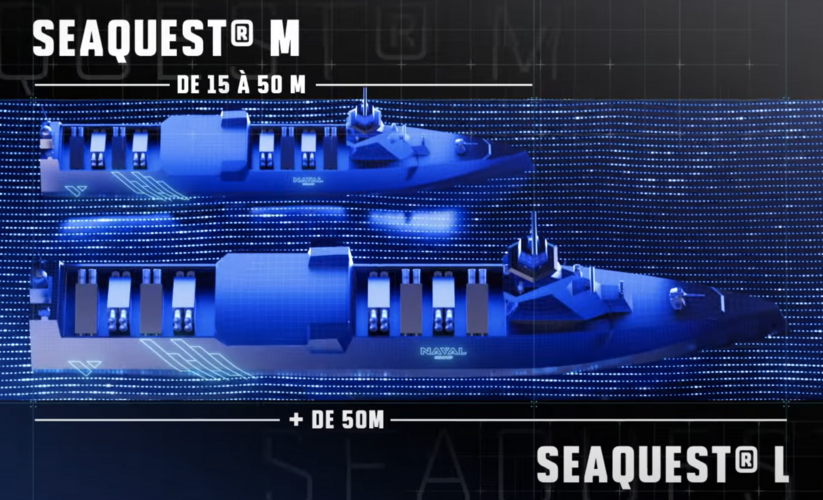
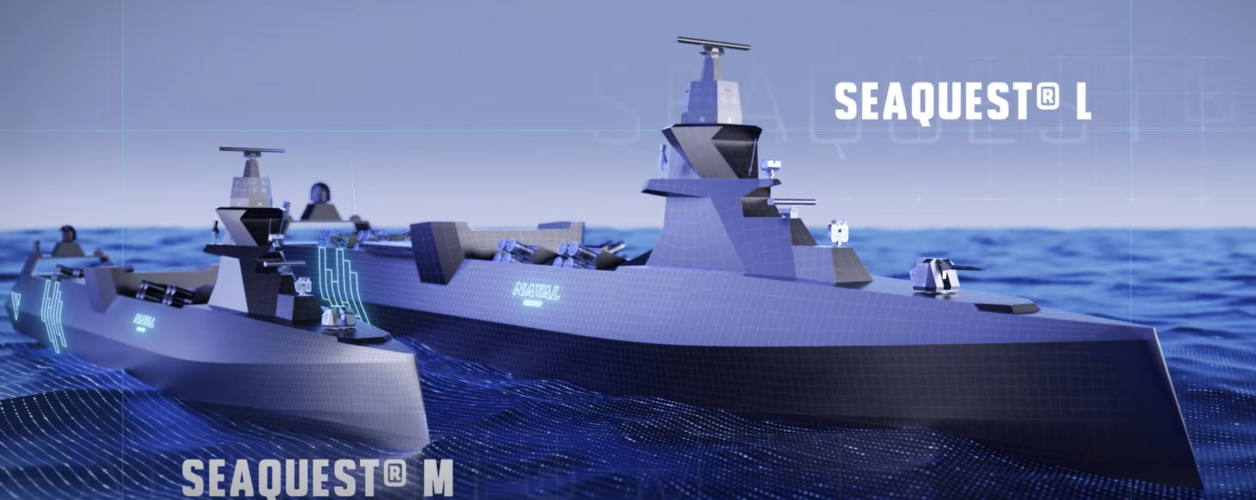
Naval Group just released a teaser of their latest drone products, ahead of Euronaval 2024. There are 4 product lines including small/medium/large USVs.

The « Seaquest M » (15-50m length) is basically an MUSV and the « Seaquest L » (50m+) is an LUSV with what looks like 32x anti-ship missiles… pics and video below.

- Steeris (Mission and Decision Making System)
- Sealken (On board handling, launch & recovery - solutions)
- Seagent (UUVs)
- Seaquest (USVs)
View: https://youtu.be/z6NaWl8DiyM?si=FN_Cifyr95Azf-nI
 

Attachments

  • seaquest usv 3 naval group.png
    seaquest usv 3 naval group.png
    2.9 MB · Views: 98
  • seaquest usv 2 - naval group.png
    seaquest usv 2 - naval group.png
    3.2 MB · Views: 99
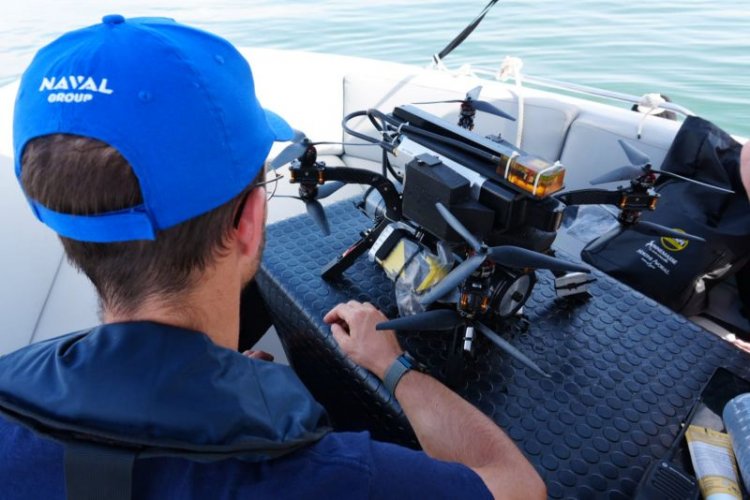
A Naval Group UAV capable of transitioning between underwater and airborne operations multiple times... quite impressive
Some pictures --> https://www.linkedin.com/posts/naval-group_repmus2025-activity-7383529406943612928-yDHu

In the field of drones, Naval Group has also developed the Cormoran in just 18 months as part of a Franco-Belgian R&D program in cooperation with the Belgian Naval Component and a local ecosystem. The drone can transition between air and water using a ballast system (the black module visible on top), which allows it to fly, float (with a reduced signature) in sea states up to Sea State 4, and drift underwater to depths of up to 40 meters (for enhanced stealth over roughly 20 hours with lower energy consumption).

Several use cases are being considered, including intelligence missions, carrying and releasing an explosive payload(sufficient to disable certain sensors or systems of first-rank naval units), among others. It was initially designed for acoustic signature measurement of ships. Sea trials have already been conducted, and its shipboard compatibility was tested during the recent REPMUS 25 exercise in Portugal.

image.jpeg
image.jpeg
 
In the field of drones, Naval Group has also developed the Cormoran in just 18 months as part of a Franco-Belgian R&D program in cooperation with the Belgian Naval Component and a local ecosystem. The drone can transition between air and water using a ballast system (the black module visible on top), which allows it to fly, float (with a reduced signature) in sea states up to Sea State 4, and drift underwater to depths of up to 40 meters (for enhanced stealth over roughly 20 hours with lower energy consumption).
Hrm. That means it is foam-filled and otherwise pressurized to deal with the pressures, like the LockMart Cormorant.

Also, it also suggests that the drone airframe will have to be primarily Titanium and composites, to resist corrosion.
 

Similar threads

Back
Top Bottom