Don't think 'US Navy PWR but smaller' when considering SMRs (whether marine or on land). Different reactor types, different control and safety systems, different operating models.
There are plenty of shortcomings to the concept - the key ones being 'but NUCULAR', unproven reactor types, and economics - but the SMR people are very aware of the safety issue.
Don't think 'US Navy PWR but smaller' when considering SMRs (whether marine or on land). Different reactor types, different control and safety systems, different operating models.
Depends, some of them use hot gas (helium, IIRC) in a secondary loop which has a whole different set of fun safety issues. But the safety stuff is an engineering problem, which are generally solvable. The political problems and the physics problems that come with simply being a nuclear reactor cannot generally be solved by any amount of labour hours.
Depends, some of them use hot gas (helium, IIRC) in a secondary loop which has a whole different set of fun safety issues. But the safety stuff is an engineering problem, which are generally solvable. The political problems and the physics problems that come with simply being a nuclear reactor cannot generally be solved by any amount of labour hours.
To 1):
If a French ''enviromental'' protests against modern nuclear reactors, this doesn't mean their is a global outcry. Please explain how the Triso particle could be used for proliferation...
To 2)
It's a bit fishy, that there is not a single example or witness mentioned in the 2. article. It is also said, that employer's are so afraid, that they will only tell the unions about the security concerns and no one else, which is quite odd.
I have the suspicion, that this could be a fight between the union and the management, in which the union uses dirty tricks like this....
Other than that, nuclear powered Yachts are a quite stupid idea, most of the time they are just lying around. The high investment costs would never pay of and synfuels made by nuclear power would be a much cheaper solution.
If a French ''enviromental'' protests against modern nuclear reactors, this doesn't mean their is a global outcry. Please explain how the Triso particle could be used for proliferation...
From the dailygalaxy article:
"The outlet [Enviro2B] questions whether efforts to fast-track TRISO-based reactors will sideline necessary oversight or risk stoking geopolitical tensions."
Lack of oversight worries me.
Proliferation: that cat is out of the bag.
After interviewing more than 75 workers, federal inspectors concluded that a pervasive fear of retaliation has silenced employees and put public safety in jeopardy.
'Senior management's reactions to individuals raising nuclear safety concerns could be perceived as retaliation,' the report states.
At the heart of the crisis is a breakdown in trust between workers and leadership.
According to the inspection, employees were so spooked by prior incidents of retaliation that they avoided even anonymous reporting systems, fearing their IP addresses might be traced.
Instead, many turned to union representatives - or just stayed silent.
Whistleblower complaints have exploded. In 2024, the St. Lucie plant logged 20 anonymous allegations, the most of any of the nation's 54 nuclear facilities, and five times the number it received just a year prior.
'Without [a healthy safety culture], it's a toxic environment that contributes to potential for a more serious event to occur,' warned Edwin Lyman, director of nuclear power safety at the Union of Concerned Scientists.
Federal regulators confirmed they launched the inspection specifically because of the spike in these complaints.
After two other instances that year of falsifying information at Turkey Point came to light — including technicians performing maintenance on the wrong charging pump, and then “deliberately” failing to notify a manager that they’d “inadvertently manipulated a pressure switch” — the plant got slapped with a $150,000 fine, inspection records show.
Federal regulators said the three 2019 issues “did not cause any actual consequences to the plant” but that the potential ramifications were “significant and concerning.”
“Because the violations are interrelated to a common cause involving integrity issues among multiple FPL staff and inadequate management oversight, these violations have been categorized as a Severity Level III problem,” a federal report reads, referencing a medium-level safety risk.
By 2020, Florida Power & Light had formed an internal task force to “determine the extent of the wide-spread operational performance decline” at both of its nuclear plants, according to a Public Service Commission audit of the utility’s nuclear operations.
Utility leaders became highly critical of their own employees.
Commission staffers wrote that their review of the minutes from the management meetings revealed “unvarnished and often harsh observations and conclusions of FPL’s most senior managers.”
At one point, management concluded that St. Lucie had “the worst operational focus in the [U.S. nuclear] industry.” The state audit further found that some of the plant’s issues included “management being inadequately engaged, allowing erosion of high standards, failing to model appropriate leadership behavior, and failing to deliver acceptable operational results.”
Plant shutdowns are also happening almost twice as often as the national average at St. Lucie and Turkey Point, an analysis of federal records shows. Those shutdowns were the subject of an audit by state regulators last year.
They concluded that Florida Power & Light had addressed the problems enough to start to see a downward trend.
The company’s internal review had helped right the ship. and “no similar issues regarding FPL’s safety culture appear to have arisen since 2019,” regulatory staff wrote.
Then, shutdowns spiked again throughout last year, in tandem with the rise in employees’ safety concerns at St. Lucie.
Now, the same state regulatory staff are noting that the problems identified by the audit have returned.
Thanks, but this information wasn't given in the original posting. I didn't need to prove my suspicion, because I called it a suspicion.
Triso particles are a hard nut to crack, that's what makes them very safe, but also unsuited for any recycling of waste fuel, which surly makes it also hard to use them for nuclear bombs...
No matter what kind of reactor you are going to built, someone will always complain...
Triiso particels are a hard nut to crack, thats what makes them very safe, but also unsuited for any recycling of waste fuel, which surly makes it also hard to use them for nuclear bombs...
Which is great for anti-proliferation, but terrible for waste reduction.
The ideal is to reprocess fuel until it's all been burned and the only thing left in the fuel rods are fission products. Fission products have about a 30 year half life, which means that in 300 years they'll be safe to touch directly.
The fission products are relatively short lived, but uranium reactors with thermal neutrons also breed transuranic stuff, which is very toxic and long lived. This happens mainly with the U238 which can (except a small fraction) not be used as fuel but tends to adsorb neutrons.
Thorium reactors have the big advantage, that more or less the whole Thorium serves as fuel and not just an enriched tiny amount of it. It is transformed to U235 and usually gets split before it has a chance to catch more neutrons...
The fission products are relatively short lived, but uranium reactors with thermal neutrons also breed transuranic stuff, which is very toxic and long lived. This happens mainly with the U238 which can (except a small fraction) not be used as fuel but tends to adsorb neutrons.
Thorium reactors have the big advantage, that more or less the whole Thorium serves as fuel and not just an enriched tiny amount of it. It is transformed to U235 and usually gets split before it has a chance to catch more neutrons...
Indeed PU239 can contribute some power to a conventional power plant, but the fuel elements are replaced to early to use it all. With reprocessing, you can indeed use more of it. However, transuranic waste does exist and is the most difficult type to get rid off.
I don't see the starter as such a big problem, you need it only once and never again. In case of Molten salt reactors, the filling from an old reactor can even be reused for a new one and than no starter would be needed.
Thorium reactors have the big advantage, that more or less the whole Thorium serves as fuel and not just an enriched tiny amount of it. It is transformed to U235 and usually gets split before it has a chance to catch more neutrons...
A 'thorium reactor' is just a breeder reactor. But for some reason people think they're an exciting technology full of potential, while the uranium-plutonium breeder cycle is technically risky and risks nuclear proliferation.
In fact, they use the same technologies, and the U233 from thorium breeding is a perfectly good bomb material.
The U233 in the Thorium reactor is not safety critical because it is poised with another Uranium isotope (don't know which) which makes it unsuitable for building a bomb. However, there is a theoretical way of extracting Proactinium233 out of the (highly radioactive) salt by separating it chemically. This isothope will later decay into U233 which can be used for a nuclear bomb (has never been done).
I don't think any breeder reactor is ''just a breeder'' because there are only three of them operating (the BN600, BN 800 and the Chinese Thorium reactor).
Breeding technically allows unlimited fuel supply and no more long lived radioactive waste, that's quite an achievement!
It has been done - the Teapot Met nuclear test demonstrated a U-233 bomb. The US concluded that it was a perfectly viable weapons material – while Pu-239 was better, there wasn't much in it.
Nothing of note has been done using a molten salt reactor. Precisely one has ever been built, and it was run for long enough to establish that they actually work.
The anti-proliferation features of that reactor type are largely a consequence of the molten salt, rather than the fuel cycle used. Likewise, the claimed anti-proliferation features of the thorium fuel cycle are specific to its use in a light water reactor.
Edit to add:
In reality, the big proliferation risk isn't reactor grade Pu-239 or U-233. It isn't even either of those isotopes made in a production reactor (i.e. thermal breeders) any more. It's U-235 from gas centrifuges, which are actually scarily cheap. You just need to stop the IAEA from knocking at the door, or the USAF coming in through the roof.
You dont need gas centrifuges for breeder reactors, so this point of profilaration risk is eliminated.
As said, the specific profilaration risk is not the U233 in the fuel. You would have to go through all the isothop seperation to make use of it. You could as well use natural uranium as a starting point. Intstead it might be (not an easy job either) the purly chemical seperation (I guess somehow galvanic) of Proactinium.
You dont need gas centrifuges for breeder reactors, so this point of profilaration risk is eliminated.
As said, the specific profilaration risk is not the U233 in the fuel. You would have to go through all the isothop seperation to make use of it. You could as well use natural uranium as a starting point. Intstead it might be (not an easy job either) the purly chemical seperation (I guess somehow galvanic) of Proactinium.
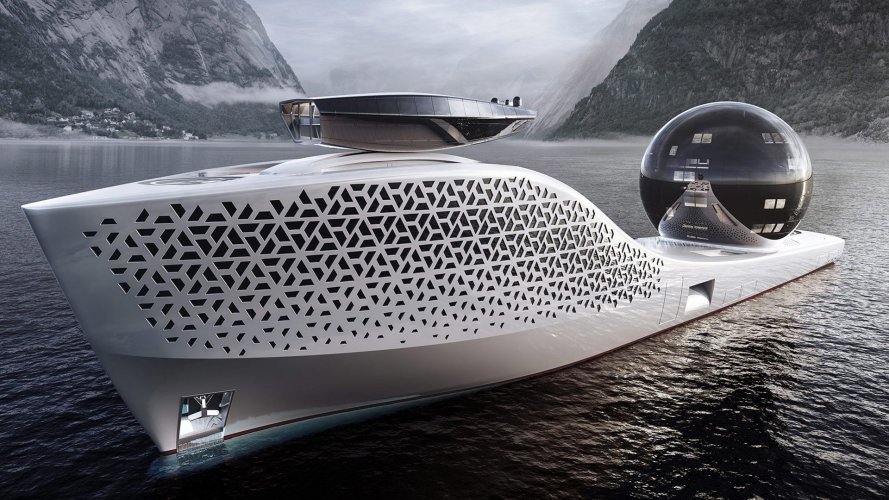
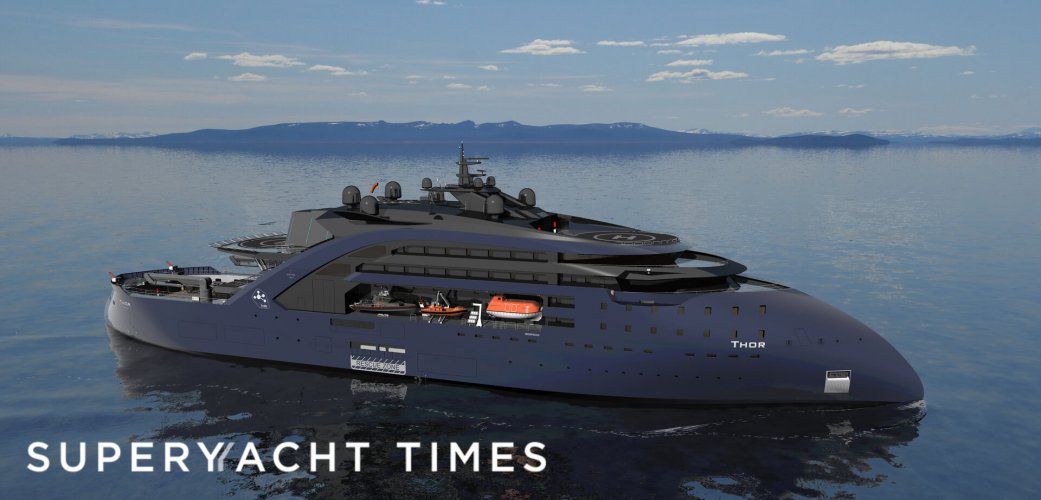
Every couple years, they put out stories about maritime firms pit out idea nuclear powered yachts for billionaire class sail around world without fuel amd carbon guilt course they could just stop yachting.
There's lots reasons Nuclear yacht won't exist in foreseeable future.
1: No currently available civilian friendly reactor exists or is currently on the drawing board for maritime application least not same size/power.
2: only application for power core densities is available via the Navy, whose technology is classified and will not share. Meaning designing a new reactor from scratch, AND.. having to got thru the licensing and safety regulations, not just in the nation that builds ot but nation that houses it and nations it expects to visit.
3: P&I insurance for vessel size is more issue liability, insurance company would be reluctant insure such a vessel because investigators reasons would have to hire or become nuclear experts to ascertain of accident of any kind is fault of user, third party or act of God.
4: Labor costs would be static investment for the life the vessel, with monitoring the vessel must be maintained whether vessel in use or not, whether owner there or not, in use or not. It doesn't matter.
5: Reactor type namely pressurized water reactor is not ideal candidate for vessels as they get smaller. Think this way, scale diminished returns means you can only put one on vessel above 350 feet.
6: Decommissioning major vessels done major scrapyards, for nuclear vessel this is impossible. Google images NS Savannah during construction and fueling, you have guys surgical scrubs and everything wrapped plastic, maintaining hospital grade sterility amd cleanliness. And cost decommissionimg is on par sizeable portion vessel.
7: Yachts are depreciable assets like most cars. As such their value declines over time, when first built and outfitted is peak their value so nuclear ship with same upfront maintenance costs is terrible prospect as a hand me down.
8: Liability: if vessel sinks or runs aground, whom is responsible party for environmental mitigation if any, should something bad occur. Maritime vessel law is international convention so nation to which the vessel is registered is basically on the hook civil sense. Rich jerks register vessels overseas for tax purpose, whose regions do not have much in way nuclear engineering or expertise, or emergency response plan/personnel.
This site uses cookies to help personalise content, tailor your experience and to keep you logged in if you register.
By continuing to use this site, you are consenting to our use of cookies.