NATF-23 was specifically mentioned as being hideous.
25+ years ago, is there anyone today working in the USN on F/A-XX involved in that process? Given the time between then and now, and the proliferation of canards on designs, one would hope that the F/A-XX selection wouldn't be centered on the appearance or absence of canards...
 
25+ years ago, is there anyone today working in the USN on F/A-XX involved in that process? Given the time between then and now, and the proliferation of canards on designs, one would hope that the F/A-XX selection wouldn't be centered on the appearance or absence of canards...
Yes, one would hope so.

Unfortunately, [politics]
 
Assuming Boeing did win, Boeing built the navy's aerospace innovation initiative (AII) demonstrator so maybe you can argue that both designs came in part from whatever technology was verified on that demonstrator, but that's about it. If we are specifically talking about the post-demonstrator design, why would the air force be looking at someone else's design when realistically, none of those options actually brought any solutions to the questions the air force was investigating during the pause?
The obvious key link is Boeing made the Navy demonstrator and the USAF selected the Boeing F-47. It is unlikely that Boeing has multiple unique designs to choose from. The USAF would not have selected a unique Boeing F-47 design that is completely unrelated to the demonstrator.
So much design and simulation work can be done digitally. The MQ-25 and T-7 first flight prototypes were very close to production ready. The Navy demonstrator built by Boeing would be very close to the planned post-demonstrator design for the Navy. The required changes I expect to be much smaller than the changed from YF-22 to F-22.

The future threat and requirements are always evolving. During the NGAD pause the USAF obviously evaluated the Boeing demonstrator and the post-demonstrator design under development for the Navy. It most likely had the required performance to be an ideal F-22 replacement.

The air force's envisioned "lighter" option was an F-35 sized light fighter, which is not F/A-XX.
The lighter option is F/A-XX. Or more correctly it is a design based off the Boeing built Navy demonstrator. No quotes said F-35 sized. The USAF said they wanted "lighter" and "cheaper". The Navy demonstrator was much lighter than the USAF demonstrator. The Navy needs 500+ F/A-XX fighters to replace the Super Hornets and it has to be able to land on an aircraft carrier. It has to be cheaper and lighter as a requirement. This is why the US Navy said that wanted non-adaptive engines to keep the costs down. The post-demonstrator Navy design would have cost as a strong driver.

Regarding the decisions being left to Trump. This is a standard strategy. A major project announced at the end of one presidency has a higher chance of getting cancelled by the next president. It made perfect sense for the military to wait until the next president arrives and they make the announcement.


Boeing's demonstrator showcasing technology that the air force wanted to see would imply that Boeing would love to have both contracts.
Boeing would invest in facilities, infrastructure and staff based on the most likely outcome. Boeing might have projected they had a 75% chance of winning one, a 20% chance of winning none and only a 5% chance of winning both. It would then be foolish to invest the companies money based on that 5%.
 
But then how will such a dart like jet slow down to land on deck? :rolleyes:
A very very large american football player will catch the plane in the end zone.
The obvious key link is Boeing made the Navy demonstrator and the USAF selected the Boeing F-47. It is unlikely that Boeing has multiple unique designs to choose from. The USAF would not have selected a unique Boeing F-47 design that is completely unrelated to the demonstrator.
So much design and simulation work can be done digitally. The MQ-25 and T-7 first flight prototypes were very close to production ready. The Navy demonstrator built by Boeing would be very close to the planned post-demonstrator design for the Navy. The required changes I expect to be much smaller than the changed from YF-22 to F-22.
What you described are prototypes or EMD prototypes. They are not demonstrators. DARPA flew HAWC as a demonstrator. Thats not the same thing as the HACM and, while related, its definitely not close to production ready. AII was a DARPA demonstrators program and if they really were that close to production, we'd have a first flight by now. NGAD demonstrators flew in 2019-20.

The rest.... man I've got so many questions I dont even know where to begin, so Ill ask them tomorrow when I wake up.
 
The obvious key link is Boeing made the Navy demonstrator and the USAF selected the Boeing F-47. It is unlikely that Boeing has multiple unique designs to choose from. The USAF would not have selected a unique Boeing F-47 design that is completely unrelated to the demonstrator.
To (re) state the obvious, Boeing's work on AII was to demonstrate technologies for future combat aircraft, not future combat aircraft designs and prototypes. The program was not for Boeing and Lockheed to develop prototypes and each service to pick the prototype they liked the best. Boeing is believed to have built the Navy demonstrator.,while LM build the other one. Both these likely had overlapping technologies that were relevant to both services. With those technologies demonstrated, the program achieved what it sought to - develop and demonstrate technologies applicable for future combat aircraft. It was most certainly not tasked wit building prototypes for each service 10-20 years ahead of formal induction.

Boeing's bid on F/A-XX, and NGAD/F-47 would have been in keeping with what each service had asked for in their respective RFP. For the USAF, the RFP did not read "build the demonstrator you flew as part of AII". It was formalized and released to industry just a couple of years ahead of the source selection decision and was open to even those who did not build demonstrator as part of AII.

Unique service needs (including completely different focus areas and missions) and technologies needed to acheive requirements would have meant quite different designs for each of the two programs. This made sense. The AF was looking for a follow on capability to the F-22, while the Navy wanted a Super Hornet replacement. The AF has for about 200 high end PCA platforms, while the Navy needs hundreds of next gen strike fighters to replace 3x as many Super Hornet and Growler aircraft.

These are two different and unrelated programs each with a RDT&E bill in the $10-$20+ Billion range and each with an overall program value exceeding $100 Bn. Of course Boeing, Lockheed and NG would have had two designs and proposals tightly aligned with the requirements it received from the each of the two services as part of the RFP.
 
Last edited:
To (re) state the obvious, Boeing's work on AII was to demonstrate technologies for future combat aircraft, not future combat aircraft designs and prototypes. The program was not for Boeing and Lockheed to develop prototypes and each service to pick the prototype they liked the best. Boeing is believed to have built the Navy demonstrator.,while LM build the other one. Both these likely had overlapping technologies that were relevant to both services. With those technologies demonstrated, the program achieved what it sought to - develop and demonstrate technologies applicable for future combat aircraft. It was most certainly not tasked wit building prototypes for each service 10-20 years ahead of formal induction.

Boeing's bid on F/A-XX, and NGAD/F-47 would have been in keeping with what each service had asked for in their respective RFP. For the USAF, the RFP did not read "build the demonstrator you flew as part of AII". It was formalized and released to industry just a couple of years ahead of the formal source selection decision and was open to even those who did not build demonstrator as part of AII.

Unique service needs (including completely different focus areas and missions) and technologies needed to acheive requirements would have meant quite different designs for each of the two programs. This made sense. The AF was looking for a follow on capability to the F-22, while the Navy wanted a Super Hornet replacement. The AF has for about 200 high end PCA platforms, while the Navy needs hundreds of next gen strike fighters to replace 3x as many Super Hornet and Growler aircraft.
Thx for bringing sanity back to this thread
 
A Joint Stealth Fighter Could be a good idea though thinking about it, just as long as the Marines don't get involved and demand a future STOVL fighter aas well. They could always develop their own 6th gen fighter if they need to but I doubt it as the F-35B still has many years left in flying time.
 
During the pause, the Air Force actually reached out to the Marines to see what sort of aircraft they were thinking about in their future.
They could always develop their own 6th gen fighter if they need to but I doubt it as the F-35B still has many years left in flying time.
Your joke got me thinking though...

I don't know much about what marine aviation looks like and how they are going to fit the overall picture if they are looking to fight as the stand in force in the Pacific. Having F-35Bs popping up in southern Japan may or may not even be a sustainable option in an actual shooting war so...would they just be relegated to flying off of carriers? Would they fly F/A-XX in any capacity? or would they just be launching Valkyrie drones and sticking to their F-35Bs?

It would be interesting to speculate on a hypothetical marine NGAD too. I wonder if anyone has done studies on a twin engine VTOL jet aircraft.
 
Last edited:
Well, there's the Yak-38 for a start, but that's probably not what you're thinking of.
I wonder if anyone has done studies on a twin engine VTOL jet aircraft.
Come to think of it, maybe I think too much about the air to air aspect of things. Marine aviation is supposed to support troops on the ground and air superiority would be a "would-like-to-have" rather than the main focus of any hypothetical 6th gen fighter for the marines.

So having said that, maybe a single engine design is good enough. IMO LM's F-35 upgrade options might actually be a good fit for a next USMC fighter. Something VTOL, better stealth, higher payload and kinematics wise good enough to constantly harass and be a thorn in the side for enemy CAP. Couple that with more X-58s then I think it should be good enough for supporting marines on the ground.
 
TBH I’m increasingly thinking as much about the potential role of the USMC F-35s in the Baltics, Central Europe and Scandinavia as in the Pacific.
 
The NATF-23 was a compromise to get an aircraft which fit the F-14 envelope (no longer than the F-14, similar spotting factor, etc), hence the larger diamond wing (extra100 sqft of area), canards and all-moving, canted verticals. NATF-23 also had three very large elevons per wing, lots of control authority along with the canards and huge weapons bay. The large bay could have been an issue though the YF-23 seemed not to have a problem with it's large bay from a performance stand point from what I remember. The F-23 was way too long and would have had a higher landing speed for a carrier aircraft.

In my opinion I think the NG F/A-XX is going to be a highly blended, evolved F-23 design, may not require canards since the entire aircraft body/fuselage may be flat an efficient lifting body, the dorsal inlets, NG may have some magic up their sleeve. The F-23 is just screaming to be reborn just like the B-2 evolved into the more organic B-21. I'm sure NG may keep a distributed hydro system (may 4000 or 5000 psig) and standard electrohydraulic servoactuators vs. EHAs like the F-35. The X-47B as an example used distributed hydro with Moog actuation. EHAs like to be moved, electric motors with pumps are not designed to hold static load/hinge moments.
That is an interesting thought indeed.
If Northrop's NATF-23 design fulfills the basic payload, performance and stealth requirements of the F/A-XX (I am not saying it does), is there any fundamental reason for not reusing it as a basic for the new design?
I would imagine that they would have to redo everything on the new design software they are using these says but wouldn't that provide substantial development cost savings and reduce risk at the same time?
 
If they had something that met design requirements just sitting in a shelf, so to speak, I’m sure it would be a no-brainer to dust it off. But, spacious f-23 weapons bay notwithstanding, I’m guessing an early 90s modification of a mid 80s design for an air superiority fighter probably doesn’t tick as many boxes on the list of requirements for a new, more-strike-than-fighter aircraft as we might hope.
 
But then how will such a dart like jet slow down to land on deck? :rolleyes:
TVC and PFM.

Thrust Vector Control and Pure F*ing Magic.


A Joint Stealth Fighter Could be a good idea though thinking about it, just as long as the Marines don't get involved and demand a future STOVL fighter aas well. They could always develop their own 6th gen fighter if they need to but I doubt it as the F-35B still has many years left in flying time.
The USMC will almost always demand 100% STOVL. I mean, they were pushing for 100% F-35Bs back in the day but Navy insisted on keeping a few Marine -C squadrons on carriers.

Now, I could see the USAF possibly wanting a Strike NGAD or FAXX, or at least having insisted on making sure that NGAD's bays are deep enough for 2000lb class weapons. If the USAF was smart.


Your joke got me thinking though...

I don't know much about what marine aviation looks like and how they are going to fit the overall picture if they are looking to fight as the stand in force in the Pacific. Having F-35Bs popping up in southern Japan may or may not even be a sustainable option in an actual shooting war so...would they just be relegated to flying off of carriers? Would they fly F/A-XX in any capacity? or would they just be launching Valkyrie drones and sticking to their F-35Bs?

It would be interesting to speculate on a hypothetical marine NGAD too. I wonder if anyone has done studies on a twin engine VTOL jet aircraft.
I mean, F-35s popping up off of all the WW2 concrete airstrips would be an option. Plus, it's possible to pour a runway and have it usable in a week or less, Seabees gonna Seabee.

I'd honestly expect the Marines to use a lot of Valkyries (or whatever the next runway-independent AAM spear-carrier CCA is).

While it's theoretically possible the Marines would want FAXX, it'd cost a chunk of extra maintenance&operations to have two different airframes under the Marines budget control. Back in the day, the Marines planned on IIRC 4x F-14 squadrons (one per Marine Air Wing) to replace their F-4s, after all. But today, the budgets are a lot tighter. LOTS tighter.
 
Now, I could see the USAF possibly wanting a Strike NGAD or FAXX, or at least having insisted on making sure that NGAD's bays are deep enough for 2000lb class weapons. If the USAF was smart.
Yes, any smart person would see that F/A-XX would fit nicely inside the USAF. We can all agree that F/A-XX will have good strike capability based on it having attack in the name. We have also been told F/A-XX will have more range than the F-35C/Super Hornet used by the Navy. This means F/A-XX also has more range than the F-22/F-35A used by the USAF. The air-to-air capability of F/A-XX should also be sufficient to beat all adversaries for the next couple decades. F/A-XX would then be a great overall upgrade for the USAF.

If a smart president had a super smart advisor they would instruct the USAF to buy F/A-XX and announce it within months of taking office. If they both had a sense of humour they would name it F-47 just for fun.
 
The one on top has four times the loiter time of the one on the bottom. And a bigger radar. And even longer ranged missiles. It's supposed to sit out at 200nm or more from the carrier on BARCAP, fire off it's missiles at incoming bombers, and make for home while the one on the bottom, or something like it*, zooms past to kill anything trying to get away. That's why there were only meant to be 12 of them per carrier.

*In the mid-60s it would have been the F-4, but I would have preferred the Crusader III.
NATF-23 was specifically mentioned as being hideous.
I've always liked it.
 
The NATF-23 was not a bad looking bird. The NATF-23 could have easily flown without the vertical tails since you have six elevons, thrust vectoring and the canards so you have plenty of baseline control authority. Also in NG fashion, upper in-laid surfaces probably would have been incorporated and used as well (e.g. X-47B). An NATF-23 in this configuration sans verticals, probably pretty close to an F-47 for a configuration of this type, we'll have to see more images of the F-47 of course.
 

"The reason the Navy has given for the F/A-XX is that it has very different mission requirements from the Air Force. Aside from carrier operations, instead of concentrating on air superiority, the Navy prefers to deal in surface warfare, attacking ships and ground targets. In addition, the rising ambitions of China make longer-range fighters more suitable to operating in the Pacific Ocean."

and the scary part, the last statement "If the program continues to be funded, a decision is expected by 2028." as hopes are 9/30 funding may be released to keep both companies able to maintain current development staffs, but that is all rumors from non-read-in people.
 
"The reason the Navy has given for the F/A-XX is that it has very different mission requirements from the Air Force. Aside from carrier operations, instead of concentrating on air superiority, the Navy prefers to deal in surface warfare, attacking ships and ground targets. In addition, the rising ambitions of China make longer-range fighters more suitable to operating in the Pacific Ocean."
yeah yeah, that's what the Navy has said or written for the consumption of the public and the Congress.

But something has to give when you're size/weight limited, which the Air Force NGAD is not.

An F/A-XX that can do it all means, like the SH, it does nothing particularly well. Reminds me of a 1970s TV commercial played in NYC -- The AnyCar. It can do anything your heart may desire ...

The Anycar from 1970s commercial.png

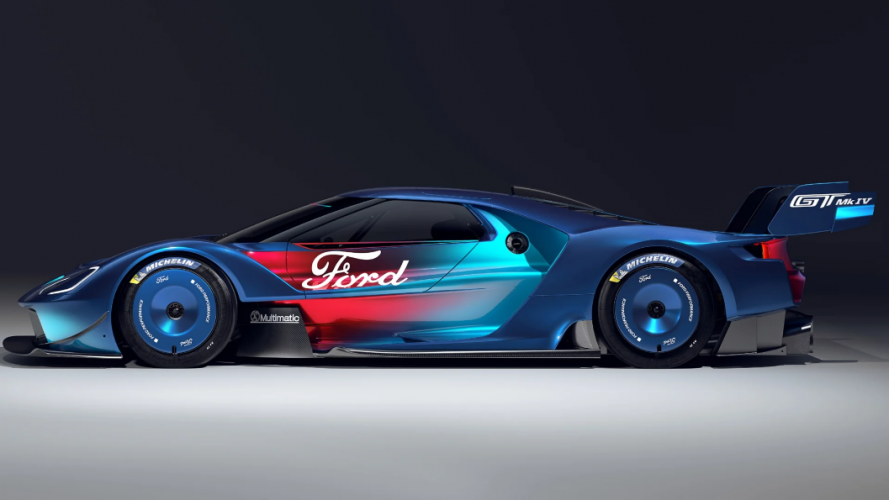
What the Navy asked for in the F/A-XX RFP is more like a long-legged sports car - one that can decisively win the 24-hours of Le Mans, and otherwise dominate the Hypercar-class Ferraris and Toyotas. More like this ...

Ford will fight Ferrari at Le Mans once again in 2027.png
 
I don't think the difference is that dramatic as in the past. Now a days the pressure of getting it right has shifted to "smarter" or more capable weapons and much better sensor for both ends. And it's also a larger shift toward software. Other than computer/sensor/engine hardware the rest doesn't have to be that much more sophisticated.
 
I think the USN also is reprioritizing anti surface warfare over land strike, and embracing cheap subsonic long range missiles to extend range and lower risk to the launch platform. There will be no shortage of naval targets for the USNs aircraft to attack, so leaving land strike to the USAFs bombers makes sense. The USN will still keep its airwings busy for as long as they can survive and service/rearm their aircraft. The adoption of a 500-1000 lb light, cheap cruise missile allows for large payloads (F-18E/F could carry ten) and long stand off ranges, at the expense of warhead size. But against most anything the USN wants to disable, that’s acceptable, particularly as there already are heavy 1000# warhead SOWs in inventory for targets that require them. More over if strikes against land are needed, almost all of the most important anti access targets are soft, mobile assets for which a 100# warhead is overkill.

All this is to say that the USNs performance specs probably are much lower than the USAFs, because the goal is likely more for a stealthy bomb truck with extensive external stores options and a secondary defensive BVR capability rather than A2A inside the PRCs IADS.
 
yeah yeah, that's what the Navy has said or written for the consumption of the public and the Congress.

An F/A-XX that can do it all means, like the SH, it does nothing particularly well.
The Navy's description differs significantly from the RFP. This is bizarre, unless the Navy has revised the RFP. According to the Navy's description, the F/A-XX should be designated A-X or A/F-X (or, even more extreme, a resurrection of the ATA), given its focus on attack missions rather than air superiority as described in the RFP.
 
The Navy's description differs significantly from the RFP. This is bizarre, unless the Navy has revised the RFP. According to the Navy's description, the F/A-XX should be designated A-X or A/F-X (or, even more extreme, a resurrection of the ATA), given its focus on attack missions rather than air superiority as described in the RFP.
You've seen the RFP?
 
yeah yeah, that's what the Navy has said or written for the consumption of the public and the Congress.

But something has to give when you're size/weight limited, which the Air Force NGAD is not.
You keep saying "size/weight limited" but I'm going to remind you that the carrier limits aren't that bad. Elevator limits are 85x52 or so, and you could hang nearly half the length of an aircraft over the water if you needed to. The real limiting factors are the arresting gear and catapults, ~90klbs max MTOW and ~55klbs max landing weight. That landing limit comes from the discussions about whether a Tomcat could recover on a carrier with 6x Phoenix missiles.

Reverse-engineering from the max landing weight I assumed 12klbs of ordnance** (4x JASSM + 2-4x AMRAAM) to bring back plus 3000lbs of fuel, which brings us to an aircraft empty weight of 40,000lbs. That's ~4000lbs lighter than an F-14D's empty weight.

Fighters tend to have an MTOW of about double their empty weight, and that's been pretty consistent from clear back in F-4s. So MTOW of 80,000lbs. Guess what? That's a little lighter than an F-22 and ~6000lbs heavier than an F-14D!

80k MTOW - 40k Empty - 12k payload = 28klbs of fuel. That's about 2000lbs more fuel than an F-22 with drop tanks, and about 10,000lbs more than an F-35 or F-22 internal capacity.

** Why so much ordnance? I started with the ATA main bay requirements, which was "bay(s) sized around 2x AGM-84 and 2x GBU-15," then updated to current weapons. AGM-84s have basically been replaced by AGM-158s, and GBU-15s have been replaced by JDAMs. As a side note, AGM-158s are about as wide as AARGM-ERs, both ~22" wide. So a weapons bay that could hold two of either with 5" of clearance is very nearly wide enough to hold 3x 2000lb JDAM.

End result of Scott's FAXX prediction
Empty Weight: 40,000lbs​
Max Takeoff: 80,000lbs​
Payload: ~12,000lbs in 2 tandem main bays and 2 side bays​
Fuel load: 28,000lbs internal​

So it's not an F-111. In fact, it's closer to an F-14, but one that was optimized around strike loads instead of LRAAMs. Not that you couldn't pack 4x AIM-174Bs into the main bays dimensionally, but the bay width was determined by AGM-158s and AARGM-ERs. AIM-174Bs determined the bay length, ~16.5ft.

Critical dimension for that prediction is empty weight. If empty weight starts creeping up, you lose fuel at recovery, and you don't want to get less than about 2000lbs of fuel at recovery or you're going to have to drop some ordnance.

 
End result of Scott's FAXX prediction
Empty Weight: 40,000lbs​
Max Takeoff: 80,000lbs​
Payload: ~12,000lbs in 2 tandem main bays and 2 side bays​
Fuel load: 28,000lbs internal​
When compared to the F-35C this is 150-200% more internal weapon bay volume, 41.8% more internal fuel capacity yet the empty weight is only 15.7% heavier.

When compared to the F-22 this is 150-200% more internal weapon bay volume, 55.6% more internal fuel capacity yet the empty weight is 8.3% lighter despite needing a heavier landing gear and hook.

Your numbers are off by a very large margin.

Your numbers could only be achieved with a subsonic flying wing. Effectively like a slightly larger A-12 Avenger. Subsonic allows for a lower thrust to weight ratio and lighter engines. A much lower G limit allows for a lighter structure.

For a supersonic aircraft you would need to either need to halve your payload, halve your fuel or add 10,000-20,000lb to your empty and takeoff weights. My money is on halving the payload.

My F/A-XX prediction.
Empty Weight: 45,000lbs
Max Takeoff: 84,000lbs
Internal payload: 6,000lbs (2x JASSM + 2x AMRAAM)
External payload: 8,000lb (two 600 gallon tanks)
Internal fuel: 25,000lbs
Engines: 2x 35,000lb class.

When compared to the F-35C my numbers have ~30% more internal weapon bay volume, 26.6% more internal fuel capacity and a 30.1% heavier empty weight. A 62.8% increase in engine thrust allows for the design to supercruise.

When compared to the F-22 my numbers have ~30% more internal weapon bay volume, 38.9% more internal fuel capacity and a 3.8% heavier empty weight. Identical engine thrust.

The F-22 can do 595nm combat radius clean and subsonic. The 25,000lb internal fuel capacity increase plus more fuel efficient engines should see this comfortably hit 900nm. The F-22 can do 750nm combat radius with two 600 gallon drop tanks. The F/A-XX will get well above 1,000nm.
 
The Navy’s Secret Jet – Could the FA-XX Already Exist?

Appears to be the Boeing concept plane in the AI video.
 

Similar threads

Back
Top Bottom