

Exclusive: Future U.S. Air Force T-7A Red Hawk Trainer Jet Passes Milestone Ejection Seat Test
Exclusive: Future U.S. Air Force T-7A Red Hawk Trainer Jet Passes Milestone Ejection Seat Test
 www.armyrecognition.com
 www.armyrecognition.com
I'm sure it's been mentioned before, but who makes the ejection seat? Martin-Baker?Exclusive: Future U.S. Air Force T-7A Red Hawk Trainer Jet Passes Milestone Ejection Seat Test
Exclusive: Future U.S. Air Force T-7A Red Hawk Trainer Jet Passes Milestone Ejection Seat Test
It a Collins seat, the ACES5, https://www.collinsaerospace.com/-/...a6cf2d46b8ebceb6&trk=public_post_comment-textI'm sure it's been mentioned before, but who makes the ejection seat? Martin-Baker?
Thank you!It a Collins seat, the ACES5, https://www.collinsaerospace.com/-/...a6cf2d46b8ebceb6&trk=public_post_comment-text
It a Collins seat, the ACES5, https://www.collinsaerospace.com/-/...a6cf2d46b8ebceb6&trk=public_post_comment-text
USAF selected the seat, not Boeing. The USAF prefers Collins seats while the USN prefers MB. F-35 ended up with the MB and the USAF is now potentially opening up competition on some future seat replacement programs.I don't know why Boeing didn't select the same MB seat as the one already in use in the F-35 as it's being produced in large numbers already.
 www.armyrecognition.com
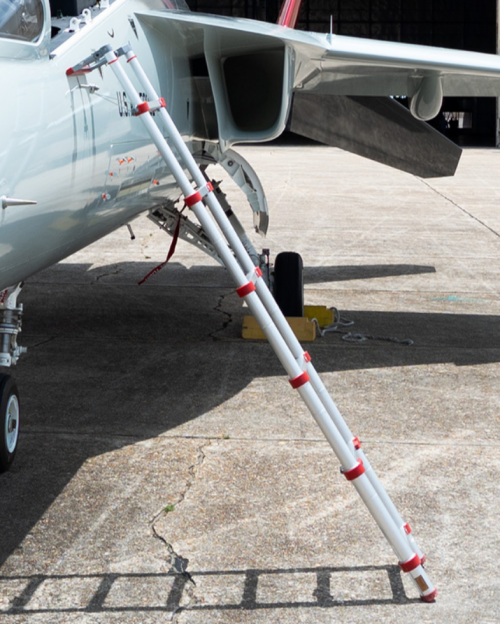
That is almost comical... Clear evidence of a lowest bid contract award.And once again, notice the ridiculous access ladder, cheap like dirt, non integrated, non-fixed, unsafe for an usage 365/24 under every weather, when IP are an investment that you don´t want to see wasted in accident unrelated to flights.
Improvised flight transportable access ladder (I am not even sure that it fits safety access norms for a military airplane, where for example, a ground crew has to stand on top to help and check for the pilot preflight)
Honestly, this is ridiculous. There is plenty of available volume in this mammoth of a trainer to add a recessed ladder.
That is almost comical... Clear evidence of a lowest bid contract award.
 .
.
It looks like something they purchased from the nearest convenient hardware store to the base


I find this lack as a clear example of unjustifiable design sloppiness....Honestly, this is ridiculous. There is plenty of available volume in this mammoth of a trainer to add a recessed ladder.
Just needs a customer review now from a current T-7 pilot...XTEND+CLIMB 10.5 ft. Aluminum Telescoping Extension Ladder (14.5 Reach Height), 250 lbs. Load Capacity ANSI Type 1 Duty Rating 760P+ - The Home Depot
Accomplish a modernized and opulent addition to your home with this XTEND + CLIMB Aluminum Telescoping Extension Ladder with Load Capacity Type 1 Duty Rating.www.homedepot.com
Here it is: "ooops I'm slipped....."Just needs a customer review now from a current T-7 pilot...

Reminds one of the F-117 modified COTS ladder.It looks like something they purchased from the nearest convenient hardware store to the base
Bet 5 Internet credit that ladder is Chinese, but ITAR list includes the exact same stuff.XTEND+CLIMB 10.5 ft. Aluminum Telescoping Extension Ladder (14.5 Reach Height), 250 lbs. Load Capacity ANSI Type 1 Duty Rating 760P+ - The Home Depot
Accomplish a modernized and opulent addition to your home with this XTEND + CLIMB Aluminum Telescoping Extension Ladder with Load Capacity Type 1 Duty Rating.www.homedepot.com

Just done a quick google search and the initial deliveries are not due until early 2026. Wonder what is taking them so long?

a current T-7 pilot...

Wonder what games were behind the selection of T-7 vs more capable practicaly off the shelf KA-50T
No games. Just standard procurement. Stop trying to spin conspiracy theory bullshit into things!Wonder what games were behind the selection of T-7 vs more capable practicaly off the shelf KA-50T
I would imagine LM monopoly had a play ,as otherwise T50 is beyond what T-7 can grow into, except maybe a naval variant with carrier landing capability, although as we have seen that is not required any more by the Navy.Considering that the T-50 is essentially a 1990's design, the USAF probably felt that a clean sheet modern trainer with plenty of growth potential was the best option for preparing pilots for the F-35 as well as the sixth generation jets that are not that far away. It's also possible that the Pentagon did not want Lockheed Martin to end up with a total monopoly on USAF aircraft procurement and wanted to get Boeing back in the game. The fact that Boeing seems to have offered a low bid to get the contract probably also played a big role.
No games. Just standard procurement. Stop trying to spin conspiracy theory bullshit into things!

This is clear from the reporting at the time with Boeing bidding about half the estimated cost. Not that surprising that they won.The fact that Boeing seems to have offered a low bid to get the contract probably also played a big role.
Its a fixed price contract for a clean sheet design trainer. The Boeing bid was too good to pass up. The CBO estimated that a clean sheet design would be billions more than what Boeing was contracted for.This is clear from the reporting at the time with Boeing bidding about half the estimated cost. Not that surprising that they won.
As per other posts in this thread, Boeing have subsequently lost a lot of money on this firm price contract. I think the latest total I got to was about $1.4bn, but that's from 1-2 years ago now.


Military procurement is essentially 70% political games, 15% financially motivated and 15% comes down to actual capabilities.No games. Just standard procurement. Stop trying to spin conspiracy theory bullshit into things!
Yes actually still am , Mil&LE contracts are my bread and butter at the moment.Question to those making comments re military procurement: have you ever actually been involved with such because I have?
And not just money but acerbating the pilot shortage as the T-38s are, even with the additional sustainment funding, not available as much as required to conduct their role.The problem is that even though Boeing is eating the direct cost overruns, it's also costing the USAF indirectly. In March they awarded a $100 million contract to Yulista just to run the T-38's depots.

The answer is simple: Boeing underbid everyone. T-X was originally a $20 billion dollar program that was cut to $16.3 billion dollars at the end of 2016. Northrop Grumman left the competition in early 2017 after realizing the impossibility of designing and manufacturing a clean-sheet design on schedule after the $3.7 billion dollar cut. Raytheon also ended their partnership with Leonardo around this time after discovering that it was impossible to lower the unit price for each M-346. Boeing won the competition with a $9.2 billion dollar contract signed in 2018.Wonder what games were behind the selection of T-7 vs more capable practicaly off the shelf KA-50T
And the T-7 seems to be heavily based on the research Saab did for the cancelled Eurotrainer from the 1990s. The only thing supposedly innovative about the T-7 is related to reducing manufacturing costs. Throughout the entire program, there was a huge emphasis on saving money and "bending the cost curve." Boeing was especially proud of Black Diamond that Jim McNerney heavily promoted as a system to reduce costs.Considering that the T-50 is essentially a 1990's design, the USAF probably felt that a clean sheet modern trainer with plenty of growth potential was the best option for preparing pilots for the F-35 as well as the sixth generation jets that are not that far away. It's also possible that the Pentagon did not want Lockheed Martin to end up with a total monopoly on USAF aircraft procurement and wanted to get Boeing back in the game. The fact that Boeing seems to have offered a low bid to get the contract probably also played a big role.
And once again, notice the ridiculous access ladder, cheap like dirt, non integrated, non-fixed, unsafe for an usage 365/24 under every weather, when IP are an investment that you don´t want to see wasted in accident unrelated to flights.
Under Harry Stonecipher, Boeing embraced MRP II (Manufacturing Resource Planning) which is consultant speak for outsourcing and using software to micromanage the suppliers and contractors. "Black Diamond" seems to be a rebranding of MRP II but with an emphasis on CAD/CAM. Boeing, a company that built its reputation on first-rate engineering, lost its ability to design and manufacture important components in-house. I guess that now includes access ladders.Just done a quick google search and the initial deliveries are not due until early 2026. Wonder what is taking them so long?
The problem is that even though Boeing is eating the direct cost overruns, it's also costing the USAF indirectly. In March they awarded a $100 million contract to Yulista just to run the T-38's depots.
Next up is a contract for T-38 avionics sustainment until 2031, with possible extension to 2036 ( 75 years in service! ).
I don't know how much it will cost overall to keep the T-38 flying until the T-7 is fully in service, but it won't be pocket change.
 www.airandspaceforces.com


 aviationweek.com
Boeing later this summer will start assembling the first of four production-representative test vehicles (PRTV) of the T-7A Red Hawk advanced jet trainer for the U.S. Air Force, the company said July 24.
A video release showed the delivery of the first forward fuselage of the first PRTV version of the T-7A arriving at Boeing’s final assembly site in St. Louis.
The PRTV plan emerged earlier this year as a stopgap solution for ongoing delays to the start of the low-rate initial production (LRIP) phase.
The Air Force planned last year to order the first seven LRIP aircraft in fiscal 2025, but Boeing was not ready. So the service changed the plan to order four PRTVs instead. The approach is intended to help bridge the gap between the five T-7As assembled for the engineering and manufacturing development phase beginning in 2018 and the delayed start of LRIP in fiscal 2026. Boeing also built two self-funded T-7A prototypes during the competition more than seven years ago.
Dallas-based Qarbon Aerospace delivered the forward fuselage section. It will be mated to the aft fuselage made by Saab in West Lafayette, Indiana, along with the wings, tails, landing gear and the GE Aerospace F404 turbofan.
 www.armyrecognition.com


