A bit of background ...
Nuri Demirağ was a Turkish industrialist and businessman. [1] Mehmet Nuri Bey was given the name Demirağ (
demir ağ = iron web) by Atatürk to recognise the work of Bey and his brother, Abdurrahman Naci, as railway contractors. (Bey was also the principal behind Karabük Demir Çelik iron and steel works.)
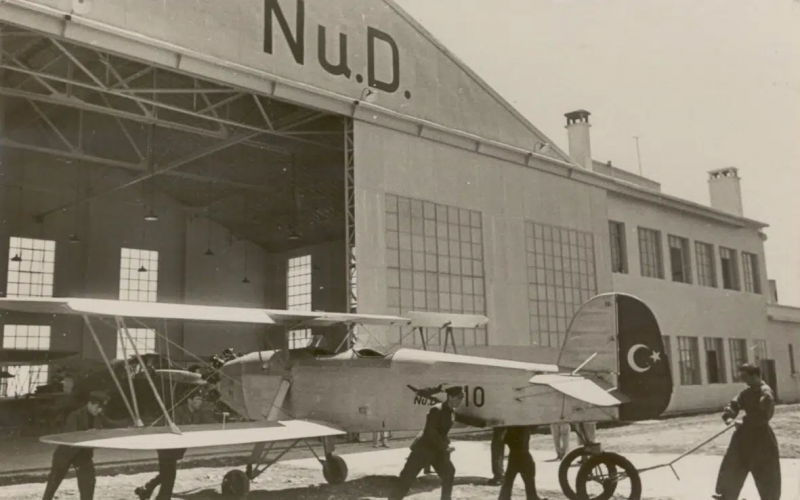
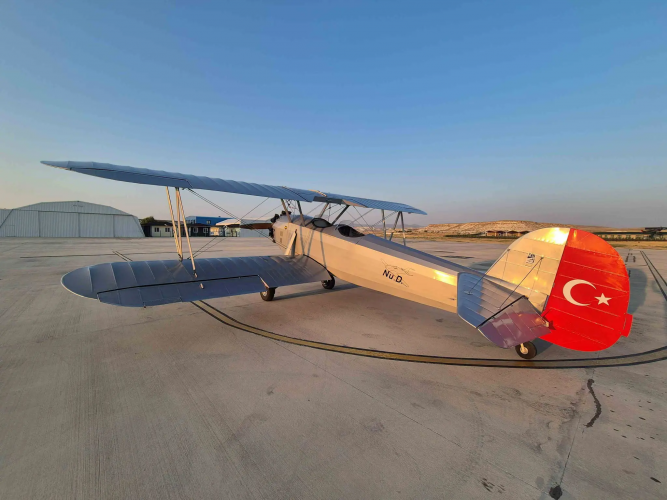
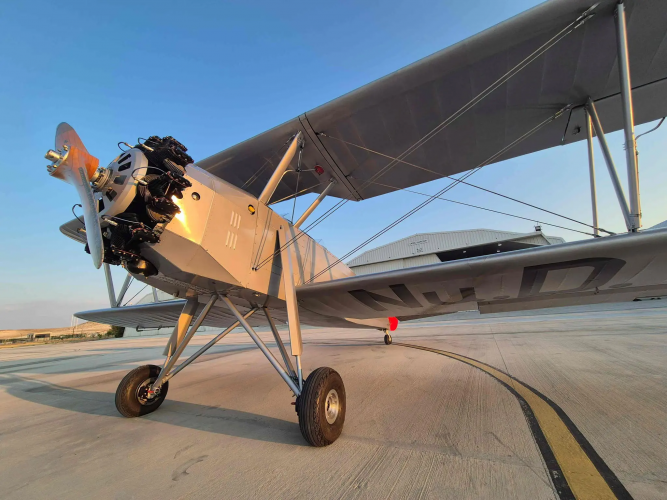
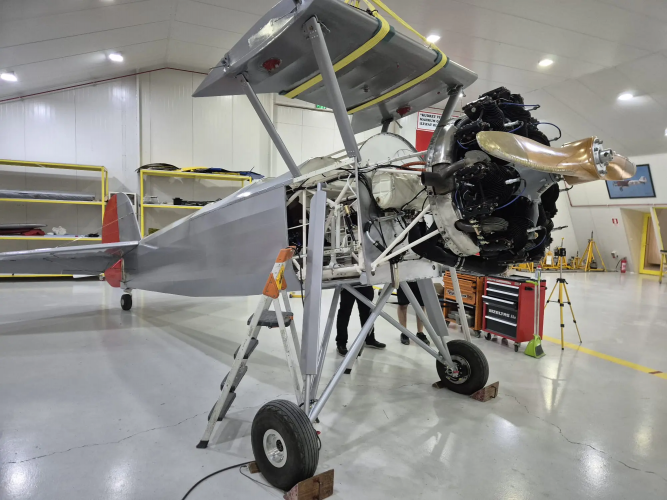
In Feb 1937, the Nuri Demirağ Tayyare Atölyesi, (Nuri Demirağ Aircraft Production Plant) [2] was formed at Beşiktaş, Istanbul, to mass produce the Nu.D.36 biplane trainer. I find Turkish sources more than a little confusing but gliders seem to have been the first products of the Nu.D. plant. The Nu.D.36's designer was Selahattin Reşit Alan - among Turkey's first aeronautical engineers (being one of five students sent to France to study at the École Supérieure d'Aéronautique).
In 1938,
Müh. Alan - as Nu.D.'s chief engineer - finished design work on the Nu.D.38 light transport project - the first Turkish air transport aircraft. However, Alan also acted as Nu.D.'s test pilot. On 13 July 1938, a Nu.D.36 he was piloting on an acceptance flight hit a perimeter ditch on İnönü airfield. Alan was killed on the spot and Nu.D. lost its chief engineer and designer. Nu.D.'s problems continued when, in the aftermath of this crash, THK (the Turkish Aeronautical Association) cancelled the Nu.D.36 order (claiming flight safety issues). [3]
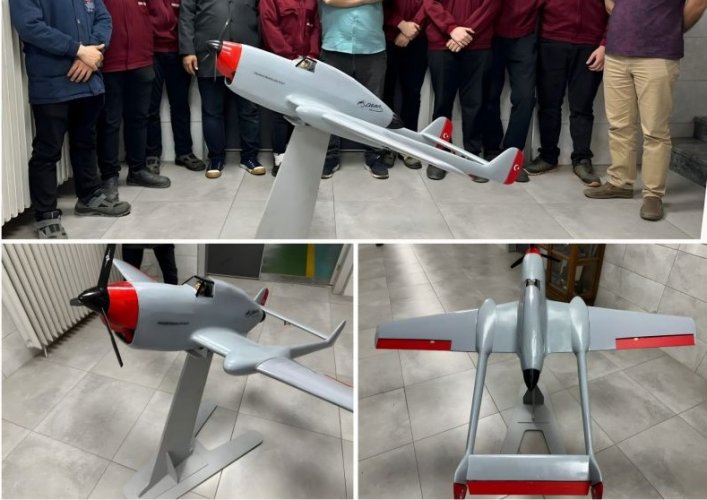
Construction of the all-metal Nu.D.38 light transport continued and seems to have been more or less competed in 1939. However, the prototype was not flown until early 1944. In the meantime design work had begun on a twin-boomed, push-pull fighter design - the Nu.D.40. The fighter never got beyond the wind-tunnel model stage.
These models were tested in the wind tunnel of AVA (
Aerodynamische Versuchsanstalt) at the University of Göttingen. Reportedly, Nu.D. had difficulty finding funds to pay for these tests and the project stalled. The wind tunnel models survived the war only to be destroyed by occupying British troops.
___________________________________________
[1] Some Turkish sources also list Nuri Demirağ as an engineer but I haven't been able to confirm that.
[2] Nuri Demirağ Tayyare Atölyesi is sometimes abbreviated as NuDTA but more usually just as NuD.
[3] If Alan's fatal crash was a prompt, this THK claim seems incongruous - hitting a ditch having little to do with flying qualities. The completed Nu.D.36s would be withdrawn from Turkish service in 1942 but Ankara blocked export offers from Iran, Iraq, and Spain. As a result, the surviving Nu.D.36 airframes were scrapped.
___________________________________________
Nuri Demirağ Aircraft Designations
Nu.D.36 - 1936 tandem 2-seat biplane military trainer; x ?
- Nu.D.36: Served with Türk Hava Kuvvetleri 1936-1942
- Nu.D.36: 1 x 150 hp Walter
Gemma I; span 9.74 m
-- First aircraft completely designed and built in Turkey
Nu.D.38 - 1939 twin-engine, high-winged feederliner; x 1
- Nu.D.38: Civil transport; cantilever wings; spatted u/c
- Nu.D.38: 2 x 160 hp Bramo Sh 14 A4z; span 13.56 m
- Nu.D.38: All-metal constr'n; not flown until Feb 1944
- Nu.D.38: 2 x crew + 4 x pax; luggage/cargo in nose
Nu.D.40 - (Project) 1939 twin-boom, push-pull fighter
- Nu.D.40: Similar to Moskalyev & Fokker* concepts
- Nu.D.40: 2 x (??) hp (??) V-12s;** span (??) m
-- * Many Turkish sources use Fokker D.XXIII images
-- ** From cowling shape, perhaps Avia 12Y/1000s?
___________________________________________
https://www.linkedin.com/posts/oguz...storic-wind-activity-7181616784024748033-3K3p
https://web.archive.org/web/2012031...aerospace.com/presentations/3_BANU_ONARAL.pdf