The Israelis have shown that western level air forces can deal with Russia's 'world class' ADS when needed.
When? And how it's related to ability to lob VLRAAM/SAMs against simple targets?

Also, i'd rather avoid this "western level airforces". Or one may question if UK, Denmark or Romania are even western countries by this criteria.
There are exactly two western nations with full SEAD/DEAD capability - that's US and indeed Israel. With ability of the latter limited to its size (i.e. even without losses Israel can maintain high intensity air operations only on american support).
 
Last edited:
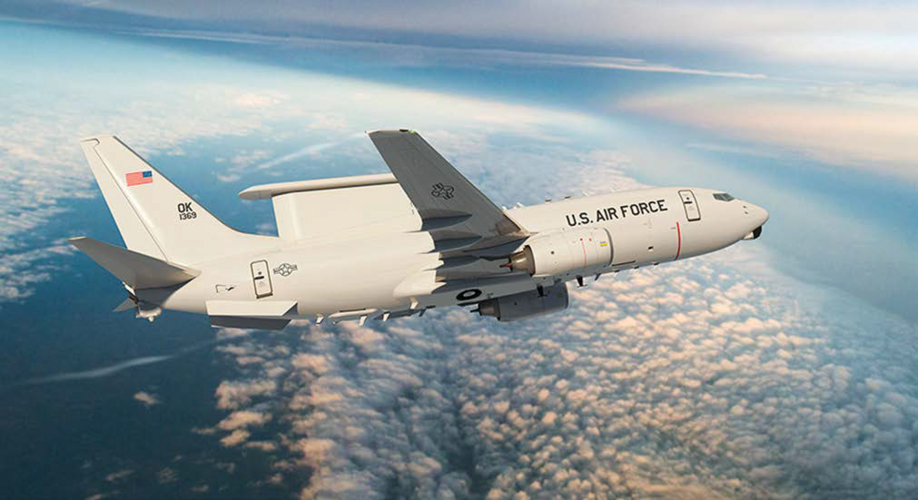
An artistic rendering of a U.S. Air Force E-7A Wedgetail, which is set to replace the aging E-3 Sentry AWACS and become the Air
Force's next-generation early warning and control aircraft.
Source: Air & Space Forces, Sept.-Oct. 2024

1738064039974.png
Photo: Boeing illustration
 
Last edited:
What's the particular influence of generation in defca? It isn't about fair fight.
Toolset against AWACS is extreme range AAMs and SAMs.
VKS is tied with PLAAF as world leader in those.

I do not think Russia would have very many opportunities to use either long range AAMs or SAMs without the launching platform being engaged. Flight times at these ranges approach or exceed ten minutes - guidance updates are necessary if the target can detect the incoming and reverse course. I think that in practice, the VkS would be severely challenged to actually complete an end to end long ranged engagement given its huge technical and numerical inferiority in most any imaginable conflict with the U.S. / NATO.

But more broadly there’s plenty of uses for AWACs platforms outside management of peer conflicts in forward areas. Neither US or PRC AEW likely has a long lifespan in the face of the other, if they are going to place them near the FEBA.
 
I do not think Russia would have very many opportunities to use either long range AAMs or SAMs without the launching platform being engaged.
I personally think that unless Russian AA is completely suppresed (which is unlikely - per Ukraine experience - for a rather modern force larger than entire land AA of the combined west, including beyond NATO), neither Russian fighters nor VLR SAMs will face significant problems doing that.
Much the same way as Ukrainian S-200s or SS carriers did the same job.

As much as Russia is behind in numbers, average western fighter is a mid-block F-16, followed(after long gap) by F-35A and F/A-18E/F.
None are worth much as fast reaction aircraft, and F-16 in particular(majority of the force by the way) have as of yet proven unable to even interfere with VKS operations.

Neither for current fleets(i.e. rather dated centry), neither +5 years from now(Wedgetail against updated VKS threat).

As a matter of fact, bigger AWACS and AEW aircraft will have to carefully adjust safe enough stand off, acceptable attrition and effectiveness.
 
Last edited:
I personally think that unless Russian AA is completely suppresed (which is unlikely for a rather modern force larger than entire land AA of the combined west, including beyond NATO), neither Russian fighters nor VLR SAMs will face significant problems doing that.
Much the same way as Ukrainian S-200s or SS carriers did the same job.

As much as Russia is behind in numbers, average western fighter is a mid-block F-16, followed(after long gap) by F-35A and F/A-18E/F.
None are worth much as fast reaction aircraft, and F-16 in particular(majority of the force by the way) have as of yet proven unable to even interfere with VKS operations.

I think fifth generation fighters would force the VKS to operate rather far from the front even without a significant suppression effort. If F-35s can be lurking a few dozen miles back from the FEBA, or worse F-22s, it seems to me they can reach out and engage any Russian fighter as soon as it makes itself a threat rather easily. They may have to immediately maneuver and not be able to guide their missiles all the way to target, but it seems like they would be in a position to drive opposition away with little risk to themselves.

Suppression efforts need not handle the entirety of Russian AD to make a little more wiggle room for support aircraft to operate in.

As for aging NATO aircraft, the legacy aircraft are older but well updated, with USAF F-16s getting AESA. And there is no shortage of F-35s, even if they do not yet outnumber the VKS on the continent yet. The USAF has about 500 fifth gen aircraft by itself; any Russian effort would have to be complimentary to a Sino-American war for the disparity of air arms to not be overwhelming.
 
I think fifth generation fighters would force the VKS to operate rather far from the front even without a significant suppression effort. If F-35s can be lurking a few dozen miles back from the FEBA, or worse F-22s, it seems to me they can reach out and engage any Russian fighter as soon as it makes itself a threat rather easily. They may have to immediately maneuver and not be able to guide their missiles all the way to target, but it seems like they would be in a position to drive opposition away with little risk to themselves.
(1)can they?
I am kinda doubtful that anything modern, big and manned will lurk(high) nearby on more or less same conditions(lo/no regardless), especially if it isn't even broadband 360 VLO. Attrition will kick in fast. Even Ukrainian AD network(Fulda wargame collection) has proven itself formidable - Soviet legacy battlefield SAMs in cover-heavy ETO environment are just a menace.
Russian AD threat is generations ahead in quality, in numbers, and it is backed by relevant airforce and strike capability.

(2)For AWACS(loitering aircraft by mission) engagement isn't "operation"(meaning continuous presense), it's darting in into launch position. Midcourse updates can be provided by others. Russian modern aircraft selection is such that there's plethora of options. Near future options(if they're even future yet?) provide more still.

(3)AWACS are rewarding targets. Given relative weakness of E7, pushing them out of effective envelope doesn't appear too difficult to outside observer.
Suppression efforts need not handle the entirety of Russian AD to make a little more wiggle room for support aircraft to operate in.
As Ukraine amply shown, they not just need suppresion, the need is full DEAD, to full threat depth. You can suppress enough semi-stationary AD networks for tactical aircraft(that can break ambushes). It doesn't apply to 707 or 737 the same way it doesn't apply to Il-76 or Il-18.

Otherwise, SAMs just emerge from cover, already hot and primed for launch. "Even" Ukrainian vanilla Buks proven themselves deadly in this role. Much(most) Russian ones aren't old; threat from such pop-ups can go extremely deep into blue rear.
If something like wedgetail is engaged at altitude, it will die.
As for aging NATO aircraft, the legacy aircraft are older but well updated, with USAF F-16s getting AESA. And there is no shortage of F-35s, even if they do not yet outnumber the VKS on the continent yet. The USAF has about 500 fifth gen aircraft by itself; any Russian effort would have to be complimentary to a Sino-American war for the disparity of air arms to not be overwhelming.
Yes, that very well updated F-16s which we see in Ukraine. Better AESA(especially one that doesn't even provide more range for fighter fire control) doesn't change anything substantial here in my opinion - it's a mission where defensive aircraft can launch by external queing. The problem is getting weapon in time into range, reliably, every attempt, and doing it in such manner that outweights attractiveness of a very juicy expensive target full of operators(who, as practice sadly shows, won't even get chances to out).

F-35 are, for all their modernity, are arguably the single worst modern interceptor aircraft out there. More so because there is no even LO fuel tanks for them.
Yet it's interceptor qualities that are needed for the mission - loiter qualities on one hand, speed of reaction and reach on another.

Especially since attacker holds initiative by default(i.e. can easily have local numbers and chose opportune moments), and opfor(VKS; PVO SV) contains arguably single most annoying VL BVR setup out there - other than Su-30 family maybe, everything else is pain in its own personal way.
Yes, chinese aircraft are far more numerous and their electronics are arguably better - but they're all far more conventional, direct threats.

 
Last edited:
This discussion is well off topic now. If you would like to open a new thread, I will join you there. Otherwise we will agree to disagree.
 
When it comes to Aussie Wedgetails I wonder if they are still pursuing the integration of CEC to the Wedgetail. First time I remember of it beinf officially touted was in 2018 :

https://www.minister.defence.gov.au...emonstrates-cooperative-engagement-capability
I'd expect that this would mean something like an integration of USG-3 variant to the Wedgetail alongside C-band antennas for full integration, though that sounds like a pretty daunting (and costly) task for existing airframes, even if the B737 itself has still a lot of compartments to spare.
 
Totally agree Josh_TN, relying on just space based systems for that role is just a stupid idea that will never work. What would happen if the satellites get jammed by enemy forces or even shot down by anti-satellite missiles, in that situation I would rather have AWACs as back up should that scenario ever occur.
 
The USA seems to have an innate inability to do anything positive. Time after time its a cycle of:
1. spend 10 years dreaming up specs
2. choose Design B
3. spend 5 years in legal fights defending why you didn't buy pork-barrel Design A
4. think about building a prototype
5. rejig the specs
6. announce the order as the most bodacious platform/weapon/sensor ever devised by human hands at a really reasonable price given how bodacious it is
7. start to build a prototype
8. everyone on internet forums complains how crap Design B is compared to Design C and that EvilBadGuyistania has got an even more bodacious platform/weapon/sensor that makes Design B look like it was designed by a schoolkid or meets a need of 30 years ago
9. launch a teaser pic of the wing mirror/tail pipe/CPO's toilet compartment with blurred out bits and funky 1990s-era 3D graphics, everyone on internet forums spends 3 years figuring out every other detail before DoD announces some intern just made up some clipart
10. finish the prototype, lay on a dry ice 'n' lazer show, end result sadly looks like the intern's 1990s clipart but has cool go faster stripes on it
11. test the prototype at a remote secret location everyone knows about
12. suddenly cancel the whole programme as outdated and pointless in favour of new technology the DoD just read about in New Scientist and write off the $600 billion R&D cost
13. go back to step 1
 
The USA seems to have an innate inability to do anything positive. Time after time its a cycle of:
1. spend 10 years dreaming up specs
2. choose Design B
3. spend 5 years in legal fights defending why you didn't buy pork-barrel Design A
4. think about building a prototype
5. rejig the specs
6. announce the order as the most bodacious platform/weapon/sensor ever devised by human hands at a really reasonable price given how bodacious it is
7. start to build a prototype
8. everyone on internet forums complains how crap Design B is compared to Design C and that EvilBadGuyistania has got an even more bodacious platform/weapon/sensor that makes Design B look like it was designed by a schoolkid or meets a need of 30 years ago
9. launch a teaser pic of the wing mirror/tail pipe/CPO's toilet compartment with blurred out bits and funky 1990s-era 3D graphics, everyone on internet forums spends 3 years figuring out every other detail before DoD announces some intern just made up some clipart
10. finish the prototype, lay on a dry ice 'n' lazer show, end result sadly looks like the intern's 1990s clipart but has cool go faster stripes on it
11. test the prototype at a remote secret location everyone knows about
12. suddenly cancel the whole programme as outdated and pointless in favour of new technology the DoD just read about in New Scientist and write off the $600 billion R&D cost
13. go back to step 1

Feels like Great Britain aerospace in the 1960's and beyond (Nimrod AEW 3, aaaaaargh)
 
Whats with the weird obsession the US military recently has where they try to neuter themselves so incredibly hard for no apparent reason?
Setting aside the possible explanations that are some flavor of lamentable/nefarious (maybe the DoD under Hegseth is too chaotic to function properly, maybe Musk still has a hand in government decision making and SpaceX would get more money out of a space based program than they would out of an airframe program, maybe there’s alien mind control, whatever), with this and the pre-f-47 selection drama you can say that there is a genuine question of whether or not we’ve hit an honest to god revolution in military affairs, and the powers that be aren’t sure which side they should be coming down on.

Obviously, this doesn’t wash away all the failures that have come from trying to get too few prime contractors to deliver on time frames and at budgets set by an ossified procurement process (looking at Zumwalt, LCS, army’s constant quest for longer ranged artillery, etc.), but NGAD/FA-XX vs drones, and AWACS vs Space based Radar could at least be viewed as issues with reasonable arguments in favor of either side.

Although for my money, the answer to, “should we stop our order of E-7s in favor of a more advanced and defensible space based array?” would be, “Obviously not, those planes are flying right now, if anything you should order more, and I would say see if you can get them to put a rush on the orders but it’s Boeing and I think there’s a real concern the planes would fall apart as soon as they hit the end of the assembly line like the cars at the end of Gung Ho,” but that’s just me.
 
A chief advisor with a hard-on for all things AI and space and a perpetually drunk SecDef with piss poor security.
A new administration that thinks it is smarter than everyone else.
Was the 9 month delay and near cancellation of NGAD for no good reason also the current admins fault? How about the constellation class fuckup? Or the worst recruiting crisis since Vietnam?
I swear you people were so quiet about these things for the last 4 years, now every discussion is all about politics. Wonder what changed.
 
Whats with the weird obsession the US military recently has where they try to neuter themselves so incredibly hard for no apparent reason?
Moving sensors to orbit predates Trump. So not really "recent" if we're counting in administration terms. It's more "spurs of affordable heavy lift rockets that can fullfill NRO's wet dream of thousand-fleet constellations".
 
Was the 9 month delay and near cancellation of NGAD for no good reason also the current admins fault? How about the constellation class fuckup? Or the worst recruiting crisis since Vietnam?
I swear you people were so quiet about these things for the last 4 years, now every discussion is all about politics. Wonder what changed.

I suspect there are entire threads dedicated to those problems. If the E-7 specifically gets cancelled, it is reasonable to assume the current administration is solely responsible for it.
 
Last edited:
Moving sensors to orbit predates Trump. So not really "recent" if we're counting in administration terms. It's more "spurs of affordable heavy lift rockets that can fullfill NRO's wet dream of thousand-fleet constellations".

To orbit capacity is not the question - has anyone demonstrated a satellite capable of tracking aircraft via radar? Because if the answer is no, an E-3 replacement is necessary, and if the answer is yes, we need to quantify how long a persistent capability will take to establish and whether that capability needs any fallback method or otherwise does not address existing AWACS capabilities.

AFAIK, airborne MTI is something the USAF hypothesizes will happen in the early to mid 2030s, unless others can cite sources.
 
Plus low earth orbits are a plague for local, repeated coverage, GEO is not but is too far away. AWACS can do 8 and 8 in the sky as long as the crew is alive to pilot and aerial refuel the plane.
It takes a crap ton of LEO satellites to get decent coverage. Well much less an issue today than, say, ten years ago.
 
Fact is that we do not know what is the status of such tech. Also the idea is not new and the language and reports predate this administration. We can only agree that there is some continuity with the concept around which we have not much of an idea to what TRL it can be identified.

Also the E-7 is not dead. The E-7 being mostly a foreign concept that matured with foreign investment.
 
Last edited:
....., now every discussion is all about politics. Wonder what changed.

Quite right ! And not only in this thread. So, please, leave polititcs at the door, and if you're feeling, as if you simply have to scream and curse ... on the terrace, in the woods, or out of the window, please, but not here ! ;)
 
To orbit capacity is not the question - has anyone demonstrated a satellite capable of tracking aircraft via radar?

Not in the public domain as far as I know. STARLITE / Discoverer II LEO-based MTI two-satellite demonstrator was defunded in 2000 before flying. DARPA was working on SPEAR UX ( Space Electrically Agile Radar something-something ) in the noughties but again went quiet. Maybe went into black budget?

Conjecture that the new massive Chinese geosync radar sat Ludi Tance 4-01 is capable of tracking surface targets, would it have the resolution for aircraft too?

Edit: SPEAR UX was combined UHF and X-band radar
 
Last edited:
I would rather rely on a flight of distributed arrays on CCAs than a single E-7 in a contested environment. This is a no brainer. This is a great way of flipping the missile exchange economics on what is currently a single high value asset.
 
Maybe this will help clarify:

(MESA image)

Now the question arises as to why the Tophat emits through small arrays in the fore / aft Bullnoses instead of using arrays in the much larger volume of the Forward / Aft vertical fairings. Cooling, waveguides, structural loads? I don't know.
@bring_it_on once uploaded a NG video featuring the footages of the internal array manifold of the MESA radar. One could clearly see how the Tophat looks in those videos. There is a longer version of this video on Dailymotion with other interesting bits. Uploaded screenshots are that of side- (2 shots) and Tophat manifold.

The key thing is that you have to understand that the Tophat array is an endifre array, not a broadside array. So no, the Tophat array ain't just the "small arrays in the fore/aft bullnose". If you think that you completely misunderstood what a Tophat array is.
 

Attachments

  • Screenshot (3).png
    Screenshot (3).png
    4.2 MB · Views: 51
  • Screenshot (4).png
    Screenshot (4).png
    3.8 MB · Views: 43
  • Screenshot (5).png
    Screenshot (5).png
    3.2 MB · Views: 45
Last edited:
这是我找到的关于 E-7 飞机的信息。
 

Attachments

  • MESA.jpg
    MESA.jpg
    503.7 KB · Views: 325
  • 737_AEW&C_MESA_Radar_Media_Kit 6.jpg
    737_AEW&C_MESA_Radar_Media_Kit 6.jpg
    103.2 KB · Views: 330
  • Project_Wedgetail_Backgrounder.pdf
    169 KB · Views: 42
  • API-5077-Jun-04.pdf
    590.2 KB · Views: 39
  • AEW-C_Product_Card.pdf
    1.5 MB · Views: 36
  • E-7-Airborne-Early-Warning-and-Control.pdf
    1.2 MB · Views: 34
  • A30– Boeing Wedgetail – pp522-527.pdf
    182.1 KB · Views: 28
  • 20100310164322.pdf
    1.6 MB · Views: 37
  • MESA-Radar.pdf
    2.4 MB · Views: 48
Last edited by a moderator:
the sheer number of antennae on Wedgetail is mind bogging. Surely constellations of wideband multifunction apertures for SDRs is a much better solution (where the EM physics allow)?

Several well placed high TRM count conformal ESAs plus EMRIS and MFA-SDRs seems like a very compelling direction to me.
 
agreed with both Arch that a thread already exists
and with GTX, that we should only discuss public information, so closing this thread
 
https://aviationweek.com/defense/aircraft-propulsion/australian-demo-pairs-e-7a-mq-28-engage-target
LE BOURGET—With the Boeing E-7A Wedgetail facing a cancellation threat in the U.S., the airborne early warning and control aircraft (AEW&C) has demonstrated a new ability to control multiple uncrewed aircraft systems in flight to simulate the destruction of an airborne target, the company said June 16.

The event, a part of the Capability Demonstration 2025, from Woomera, South Australia, showed how the MQ-28A Ghost Bat can collaborate with the E-7A in aerial combat, rather than directly with crewed fighters.

“It not only validated a key element of the MQ-28 concept of operations, but also how collaborative combat aircraft can expand and enhance the role of the E-7A to meet future force requirements,” said Glen Ferguson, Boeing’s director of MQ-28 global programs.

The Royal Australian Air Force (RAAF) funded the development of the E-7A and the MQ-28A, with the latter produced and tested in Australia.


The RAAF and Boeing also plan to demonstrate the MQ-28A in collaborative operations with the two-seat Boeing F/A-18F and single-seat Lockheed Martin F-35A.

The demonstration was announced a week after U.S. Defense Secretary Pete Hegseth confirmed to lawmakers that he intends to cancel the Air Force’s E-7A program, saying that the platform is no longer survivable on a modern battlefield and that the airborne early warning function is moving to satellites in orbit. The decision would see development of two prototype E-7As awarded in 2023 completed by Boeing, but would cancel plans to buy another 24 aircraft.
 
@bring_it_on once uploaded a NG video featuring the footages of the internal array manifold of the MESA radar. One could clearly see how the Tophat looks in those videos. There is a longer version of this video on Dailymotion with other interesting bits. Uploaded screenshots are that of side- (2 shots) and Tophat manifold.

The key thing is that you have to understand that the Tophat array is an endifre array, not a broadside array. So no, the Tophat array ain't just the "small arrays in the fore/aft bullnose". If you think that you completely misunderstood what a Tophat array is.
I've just realised that my explanation might be a bit hard to grasp if one's not that interested in EE or antennae. So here are some diagrams which gives easy intuition about how endfire array works. A small caveat here is that the array element depicted in the diagram is that of dipole antenna, whereas thay of MESA Tophat is not.

If you are interested a bit further, take a look at these two lecture videos, although you'll need some underlying knowledge to grasp the matter.

View: https://youtu.be/b_7CieqW9tI?si=L3gDSCKUWpMmE3GJ

View: https://youtu.be/l7_uRINfIog?si=qGdmCjVCxyx8dO8C


Anyways, it's a very clever solution in solving the fore and aft coverage problem for APA AEW&C radars. It is best of both worlds as it provides adequate front and aft array size compared to the likes of CAEW or Global Eye which are results of compromise (you could only make the front and aft fairings as big as aerodynamics allows), and enables relatively bigger port and starboard array size compared to 3-sided array solutions for the given radar parameters (port and starboard coverage are obviously much more important for AEW&C radar). Though there is also a very notable problem, and that is that the Tophat cannot discern altitude through beam stearing.
 

Attachments

  • End-Fire-Array-Diagram.jpg
    End-Fire-Array-Diagram.jpg
    29.5 KB · Views: 20
  • end_fire_array.png
    end_fire_array.png
    21.1 KB · Views: 17
  • end_fire_broad_side.png
    end_fire_broad_side.png
    22 KB · Views: 18
Last edited:

Similar threads

Back
Top Bottom