I think we shouldn't forget that a large portion of the US economy is service based and other "useless" stuff (useless in the context of war fighting capability). While the Industrial sector accounts for a higher percentage of the Chinese economy.
I mean during war time, that's absolutely true, but during peace time, it's hard for me to believe that the IRS hasn't picked up enough taxes from the world largest economy - service based or not - in order to pay for military hardware even if that military hardware does cost more to produce due to lesser manufacture ability. Although I will say I am basically illiterate when it comes to economics.
But the Navy, much more than the AF arguably, has to think very well about their investments right now. Because when things go south, they're the ones taking on the PLAN, PLAAF and PLARF virtually alone with the USAF playing a secondary role.
At the risk of having another ignorant hot take, I think given how far PLA aircraft can reach from their own shores, I see the air force as having a critical role in rolling back the CAP umbrella before you can meaningfully attrite their IAD network. So if by secondary role, you mean that the air force would be providing most of the air superiority / air cover for the navy, then yeah I'd agree.

The way I've always thought about it was that in the north and south pacific areas, operating from old WWII air strips, building mobile road bases (unless the Seabees ain't a thing anymore) and using existing airports are problems of diplomacy rather than feasibility. Sure, they are all within range of PLA missiles, but that's why we have the ACE doctrine. If having dispersed operations isn't going to save us then the west pacific is a lost cause.

The central pacific would primarily be the navy's responsibility but CSGs and strategic air force assets can work to provide cover and situational awareness for each other. It could help provide greater defense and awareness from hypersonic threats and attacks from enemy aircraft. It could also providing safer air space for refueling aircraft. I'm expect the F/A-XX to survive/hold its own against Chinese air superiority assets and adaquately drive off most enemy aerial threats, but I don't expect it to be doing the major lifting during offensive counter air ops.

If you can sufficiently attrit PLA aerial assets and start to get within stand in weapon range of IAD ground units, then I can see the Navy taking a more central role, but even then I don't consider F/A-XX and F-35s to be sufficient in maintaining temporary air superiority to allow for strikes to happen. That is unless I'm sorely underestimating how capable F/A-XX might actually be.

IMO whether the air force is a player there or not depends on whether politicians and diplomats can do their jobs correctly and whether or not we have a sound western pacific strategy that can enable the air force to deploy in a distributed manner. If the diplomacy progresses as it currently is going with this administration, then the air force will be useless. With the air force out of the picture in that theater, I highly doubt the navy can stand its own against the combined strength of land and naval based assets there.
 
Last edited:
If the F/A-XX does get cancllled they can build a navalised variant of the F-47.

The USAF wants an uncompromising air superiority fighter that likely only needs ~6 AAMs and the USN wants a strike platform with much more internal payload than F-35C. They may eventually look similar externally but they are filling vastly different roles.
 
I mean during war time, that's absolutely true, but during peace time, it's hard for me to believe that the IRS hasn't picked up enough taxes from the world largest economy - service based or not - in order to pay for military hardware even if that military hardware does cost more to produce due to lesser manufacture ability. Although I will say I am basically illiterate when it comes to economics.

Worth noting that the U.S. is projected to lose a half a trillion in tax revenue due to DOGE “savings”.
 
Last edited:
I mean during war time, that's absolutely true, but during peace time, it's hard for me to believe that the IRS hasn't picked up enough taxes from the world largest economy - service based or not - in order to pay for military hardware even if that military hardware does cost more to produce due to lesser manufacture ability

The IRS certainly should but if you really want to get all the money the US government needs then not only cancel the totally unwarranted and undeserved tax-cuts the super-rich and mega-corporations have been receiving but restore their rates to that they were under under president Carter.
 
Why do people struggle with this concept. No ATA/A-12 is also not an example. The issue is not teaming together, the issue is using a rival bidder as a partner/subcontractor while bidding on the same tender.
These companies were and also rivals and there are also the work splits/shares like with every program and competition, don't you get it?
 
The USAF wants an uncompromising air superiority fighter that likely only needs ~6 AAMs and the USN wants a strike platform with much more internal payload than F-35C. They may eventually look similar externally but they are filling vastly different roles.

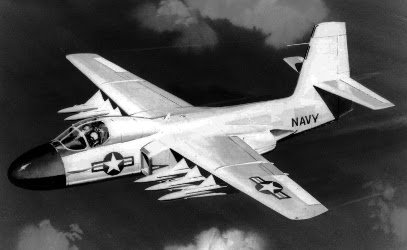
Sounds like McNamara all-successfull TFX recipe (except reversed, the irony !) - that resulted in the Sea Pig F-111B. Even today, better not to go down that path again...
 
Not just DoD. Everybody wants to be an influencer. Nobody wants to "work in a factory". Not enough anyway.
Plenty of people wanted to work for DoD, until January of this year. Morale at DoD has been absolutely shattered and they are forbidden from hiring until they drop another 5% of the workforce...
 
What if the Navy just sticks with the F-35?
The F-35 as is? I'd say it's still generally viable until when Chinese 6th gens actually start showing up in numbers and as long as LM can unfuck itself. Long term, the navy absolutely needs F/A-XX if it still wants to contest the Chinese anywhere. The F-35 would be best used as complements/supports for F/A-XX.

With whatever upgrades LM is envisioning for F-35, it'll just be a bare minimum against a fully 6th gen enemy backed by IADS. They might fight a good defense, but I don't expect it to be able to penetrate terribly far into a CAP zone enforced by 6th gen fighters.

Sticking with the current engine and planform, you still won't have nearly the amount of capability a 6th gen platform can offer. If you want the extra power generation and broadband stealth, then you'd have to give the F-35 a new planform and ideally another engine to conduct the mission set that F/A-XX can. At that point, it's essentially a new plane with some shared commonality with the original form to facilitate its production on an existing production line. Shared commonality may or may not mean compromises made that a clean sheet design wouldn't have. If neither the navy nor the air force wants to spare any money to even give F-35s the AETP engine, why would the navy alone want to spend the money to give it a facelift let alone a facelift that may or may not be the cost of a new fighter?

Just today, more delays were announced for the F-35's APG-85. Apparently LM says the front fuselage may need to be redesigned to fit the APG-85 in there. If I were the navy, I wouldn't bet on LM being able to put out a good product by redesigning the F-35. I'd take a navalized F-47 before I'd take a ferrari F-35 because at the very minimum you aren't stuck with a vendor that struggles to deliver upgrades and with ownership of IP, you can actually recompete equipment.
 
Last edited:
The F-35 as is? I'd say it's still generally viable until when Chinese 6th gens actually start showing up in numbers and as long as LM can unfuck itself. Long term, the navy absolutely needs F/A-XX if it still wants to contest the Chinese anywhere. The F-35 would be best used as complements/supports for F/A-XX.

With whatever upgrades LM is envisioning for F-35, it'll just be a bare minimum against a fully 6th gen enemy backed by IADS. They might fight a good defense, but I don't expect it to be able to penetrate terribly far into a CAP zone enforced by 6th gen fighters.

Sticking with the current engine and planform, you still won't have nearly the amount of capability a 6th gen platform can offer. If you want the extra power generation and broadband stealth, then you'd have to give the F-35 a new planform and ideally another engine to conduct the mission set that F/A-XX can. At that point, it's essentially a new plane with some shared commonality with the original form to facilitate its production on an existing production line. Shared commonality may or may not mean compromises made that a clean sheet design wouldn't have. If neither the navy nor the air force wants to spare any money to even give F-35s the AETP engine, why would the navy alone want to spend the money to give it a facelift let alone a facelift that may or may not be the cost of a new fighter?

If I were the navy, I wouldn't bet on LM being able to put out a good product by redesigning the F-35. Just today, more delays were announced for the F-35's APG-85. Apparently LM says the front fuselage may need to be redesigned to fit the APG-85 in there.

Do you believe there is a critical mission set that the current USN F-35 wouldn't be able fulfill due to threats that China is posing?

If not now, what about 5-10 years out? That's what I am curious about given the potential stand-off range that the USN would have to work with.
 
Do you believe there is a critical mission set that the current USN F-35 wouldn't be able fulfill due to threats that China is posing?

If not now, what about 5-10 years out? That's what I am curious about given the potential stand-off range that the USN would have to work with.
I am admittedly much less qualified to speak than most people on this site, but ...

Currently, the US would have to start fighting from the 2nd Island Chain before it can do anything about an invasion in Taiwan. Even assuming diplomacy isn't a problem and we are allowed to fight from Japan and the Philippines, I struggle to see how the U.S will supply those bases when they are well within the combat range of most Chinese aircraft and missiles. At the second island chain, where we are well outside of IADS range, I expect the F-35 to hold up decently. Even with J20s and J35s, I don't think we are over matched by the Chinese in the air. However, as you try to roll back the CAP zone, F-35s will have to increasingly rely on tankers in the rear. They'll also fly into an increasingly dense net of shipborne IADS first, then ground based fires/early warning radars all the while continue fighting their air assets. As it stands the F-35 neither has the range to allow tankers to stay far back enough, nor the deep weapon bays to carry enough munitions. So currently the F-35 would do well attacking and defending outside of the Chinese joint air defense zones, and it'll hold its own against enemy fighters but it won't be sustainable trying to attack into range of Taiwan.

In the future... well every passing year looks a little bleaker for the "only F-35" option and probably the struggling navy as a whole. Against 6th gen platforms the F-35 as it stands would be at a significant disadvantage. Even with upgraded radars and greater power generation, you aren't going to match a two engine 6th gen (let alone a 3 engine whateverthefuck) in anything. You'll generally be seen first, shot at first, and held outside of range of the targets you want to hit with little you can do about it. F-35's will still be able to protect the fleet from aerial assets and probably do somewhat okay against hypersonic threats, but beyond that its increasingly risky. At least with F/A-XX, you can have a level playing ground and be able to reach operation areas, achieve some modest level of surprise against early warning systems, have more powerful sensors, and be equipped with more options to attrite the enemy. Combined with F-47s doing air superiority, you have a solid chance to force the Chinese back so that you can supply your FOBs in southern Japan and northern Phillipines. With those platforms for protection, the upgraded F-35 with TR4+ upgrades would do well prosecuting targets in support of 6th gens, pushing CCAs around, or protecting tankers and CSGs.
 
Last edited:
I am admittedly much less qualified to speak than most people on this site, but ...

Currently, the US would have to start fighting from the 2nd Island Chain before it can do anything about an invasion in Taiwan. Even assuming diplomacy isn't a problem and we are allowed to fight from Japan and the Philippines, I struggle to see how the U.S will supply those bases when they are well within the combat range of most Chinese aircraft and missiles. At the second island chain, where we are well outside of IADS range, I expect the F-35 to hold up decently. Even with J20s and J35s, I don't think we are over matched by the Chinese in the air. However, as you try to roll back the CAP zone, F-35s will have to increasingly rely on tankers in the rear. They'll also fly into an increasingly dense net of shipborne IADS first, then ground based fires/early warning radars all the while continue fighting their air assets. As it stands the F-35 neither has the range to allow tankers to stay far back enough, nor the deep weapon bays to carry enough munitions. So currently the F-35 would do well attacking and defending outside of the Chinese joint air defense zones, and it'll hold its own against enemy fighters but it won't be sustainable trying to attack into range of Taiwan.

In the future... well every passing year looks a little bleaker for the "only F-35" option and probably the struggling navy as a whole. Against 6th gen platforms the F-35 as it stands would be at a significant disadvantage. Even with upgraded radars and greater power generation, you aren't going to match a two engine 6th gen (let alone a 3 engine whateverthefuck) in anything. You'll generally be seen first, shot at first, and held outside of range of the targets you want to hit with little you can do about it. F-35's will still be able to protect the fleet from aerial assets and probably do somewhat okay against hypersonic threats, but beyond that its increasingly risky. At least with F/A-XX, you can have a level playing ground and be able to reach operation areas, achieve some modest level of surprise against early warning systems, have more powerful sensors, and be equipped with more options to attrite the enemy. Combined with F-47s doing air superiority, you have a solid chance to force the Chinese back so that you can supply your FOBs in southern Japan and northern Phillipines. With those platforms for protection, the upgraded F-35 with TR4+ upgrades would do well prosecuting targets in support of 6th gens, pushing CCAs around, or protecting tankers and CSGs.

Do you think Taiwan is a significant enough issue for the USN to plan airpower around? I believe the F-35 would do well for everything outside of that, mainly in the form of protecting the fleet.

That's kind of what I'm looking at when it comes to urgency and need for a "6th gen" air platform for the US Navy. Is it really reasonable to prioritize the USN flying cutting edge airpower within the SCS when China has been building up the region to keep the USN as far away as possible and make any engagement very costly?

To me it would make more sense for the USN to invest those funds into mass producing long range fires to allow for ships (and F-35) to be able to operate closer to the fight. Maybe use a flotilla of smaller unmanned ships to be missile ferries that go with the fleet to augment their firepower.
 
Do you think Taiwan is a significant enough issue for the USN to plan airpower around? I believe the F-35 would do well for everything outside of that, mainly in the form of protecting the fleet.
It's exactly in terms of protecting the fleet where F-35 is at it's worst.
Almost everything else it does at least alright.
 
It's exactly in terms of protecting the fleet where F-35 is at it's worst.
Almost everything else it does at least alright.

What major threats can the F-35 not defend the fleet against, but a FA-X/X theoretically could?
 
What major threats can the F-35 not defend the fleet against, but a FA-X/X theoretically could?
It's the ability to rush to a spot to intercept a threat or chase down a threat, lacking in both operational altitude and speed. USN has been content with using standard missiles given how capable they have become and spend more time worrying about maneuverable ballistic missile threats but what's comin out of china in recent months might be changing that.
 
What major threats can the F-35 not defend the fleet against, but a FA-X/X theoretically could?
We're talking about essentially a transsonic aircraft even with (limited) internal stores, as well as limited loiter@range (range itself is reasonable). As of now, it seems that those internal stores for foreseeble future won't take high altitude threats (i.e. hypersonics).
With external carriage of AIM-174s(shall it happen) and/or drop tanks, we're forfeiting even hope of crossing over mach.

I.e. H-6K, Tu-22M3? WZ-8, J-36, Mig-31K. All the plethora of supersonic and hypersonic missiles, subsonic missiles (those are only usable at mass, and thus require ammo depth from the interceptor), drones (even more ammo depth, gun as a last resort - i.e. APKWS) ...
At this point I frankly wonder what F-35 is even good against(for CSG). No nation aiming at US carriers (China, Russia, Iran&co, DPRK) will even employ threats it can effectively counter, given the power of modern US escorts.

I.e. what we expect and/or heard about FA-XX: more range(especially patrol time at range), internal big missiles, more capable radar. Straightforward, but necessary.
 
Do you think Taiwan is a significant enough issue for the USN to plan airpower around? I believe the F-35 would do well for everything outside of that, mainly in the form of protecting the fleet.
Taiwan is strategically important but the reason we should plan around it is not necessarily because its a strategic enough to risk direct confrontation but because its the upper bound of intensity in a fight against China. China will be our primary competitor in the future all around the world. If we can have a force that can contest China in Taiwan, we can contest them anywhere else short of a direct invasion of China.
That's kind of what I'm looking at when it comes to urgency and need for a "6th gen" air platform for the US Navy. Is it really reasonable to prioritize the USN flying cutting edge airpower within the SCS when China has been building up the region to keep the USN as far away as possible and make any engagement very costly?
To me, its not a matter of choice - again not because Taiwan absolutely needs to be defended at the cost of our entire military strength, but because we have allies and bases in the region, some of which are well within the Chinese joint engagement zone. Not planning around a capability to enable their defense is just giving up. The air force and army needs someone to supply them. The navy needs the air force to keep air cover when needed and both need the army for base defense. No single branch can protect our allies alone.
To me it would make more sense for the USN to invest those funds into mass producing long range fires to allow for ships (and F-35) to be able to operate closer to the fight. Maybe use a flotilla of smaller unmanned ships to be missile ferries that go with the fleet to augment their firepower.
I don't disagree but shooters need sensors and sensors need to get closer to target anything. Without stand in ISR, you're limited to static targets and whatever LEO satellites pick up. Now sure - you can have a bunch of marines flying some ISR drones like V-bat, but eventually you'll have to resupply them with more. You can't resupply them without getting any closer either.

It's exactly in terms of protecting the fleet where F-35 is at it's worst.

At this point I frankly wonder what F-35 is even good against(for CSG).
You are thinking about this in a vacuum. Not everything needs to have "kinetic" capability to be useful. There's the whole EW spectrum and there's sensing that the F-35 is useful for. There are other platforms that can carry the ammo be it F/A-XX, CCAs, Ships or USVs and of those, there are options that will allow for greater kinematic ability to kinetically disable threats. It'll do fine in the short term in protecting the fleet from anything except maybe repositioning to actually down HGVs. Even in the long term, it'll be useful as a second line of defense for tankers and AWACS. Obviously though, having a twin engined fighter with better kinematics is whats really needed for better fleet defense.
 
Last edited:
What if the Navy just sticks with the F-35?
It lacks a big radar, even if we handwave the range/loiter and ammo capacity (After all, 6x AIM-120Ds or AIM-260s is broadly comparable to 6x Phoenix)


Do you think Taiwan is a significant enough issue for the USN to plan airpower around?
Aside from the defense of Taiwan as as the last remnant of the Republic of China and as such a matter of National Honor for the US, a fight over Taiwan is the largest possible conflict with PRC short of invading the mainland.


I believe the F-35 would do well for everything outside of that, mainly in the form of protecting the fleet.
No, the F-35 is distinctly marginal for defending the fleet. Radar is too small, and arguably the AAM capacity is too small even with Sidekick allowing 6x AMRAAMs.

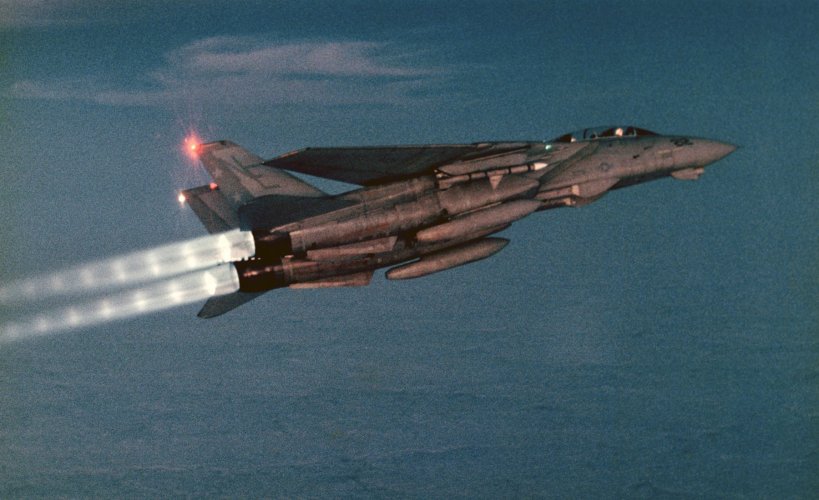
Remember, the USN used Super Bugs to take over the Fleet Air Defense role, not F-35s.


That's kind of what I'm looking at when it comes to urgency and need for a "6th gen" air platform for the US Navy. Is it really reasonable to prioritize the USN flying cutting edge airpower within the SCS when China has been building up the region to keep the USN as far away as possible and make any engagement very costly?
The last Super Bugs ever produced are going to be out of airframe hours by ~2045. In order for their replacement to be ready in time, you need to start the development and fielding of their replacement now. Regardless of the upcoming fight with China.


To me it would make more sense for the USN to invest those funds into mass producing long range fires to allow for ships (and F-35) to be able to operate closer to the fight. Maybe use a flotilla of smaller unmanned ships to be missile ferries that go with the fleet to augment their firepower.
That might make sense for the fight with China.

Too bad the Super Bugs must be replaced as well.
 
The IRS certainly should but if you really want to get all the money the US government needs then not only cancel the totally unwarranted and undeserved tax-cuts the super-rich and mega-corporations have been receiving but restore their rates to that they were under under president Carter.
This is not a tax issue. The US's annual defense budget is still the largest in the world, but the US military is still short of money. Why? Because of the lack of industrial capacity. This leads to insufficient utilization of funds. Without sufficient industrial capacity, even if the USN received the same annual budget as in the 1970s, it would not be able to support as many programs as it did in the 1970s.
 
It lacks a big radar, even if we handwave the range/loiter and ammo capacity (After all, 6x AIM-120Ds or AIM-260s is broadly comparable to 6x Phoenix)

Aside from the defense of Taiwan as as the last remnant of the Republic of China and as such a matter of National Honor for the US, a fight over Taiwan is the largest possible conflict with PRC short of invading the mainland.

No, the F-35 is distinctly marginal for defending the fleet. Radar is too small, and arguably the AAM capacity is too small even with Sidekick allowing 6x AMRAAMs.

Remember, the USN used Super Bugs to take over the Fleet Air Defense role, not F-35s.

The last Super Bugs ever produced are going to be out of airframe hours by ~2045. In order for their replacement to be ready in time, you need to start the development and fielding of their replacement now. Regardless of the upcoming fight with China.

That might make sense for the fight with China.

Too bad the Super Bugs must be replaced as well.

Do you believe what you stated really disadvantages the F-35 vs modern threats for the foreseeable future though?

The F-35 has been able to handle its own in Red Flag & Black Flag. I don't believe it has any problem scanning, targeting, and engaging, let alone staying low observable while doing so.

Without getting too far off topic, the USN has a big problem to figure out, and that's developing its shipyard industrial base. If maintained properly, it can be a sizeable deterrent, but it's going to take significant investment to get it back. In terms of priorities, I think they should focus on being able to produce and sustain ships than worrying about throwing a huge chunk of change at rapid producing the FA-X/X. Maybe the program can mature a little bit while the USN figures things out and maybe the F-47 will absorb some development costs that can assist the USN.
 
These companies were and also rivals and there are also the work splits/shares like with every program and competition, don't you get it?
Yes companies are rivals but two companies cannot be subs for each other for a tender where they are competing against each other, it is a clear conflict of interest. You cannot point to an example in the last 40 years where that has happened.
 
Do you believe what you stated really disadvantages the F-35 vs modern threats for the foreseeable future though?
Yes. The F-35 radar does not have the sheer range like the Tomcat did. This means that for purposes of Outer Air Battle, the F-35 needs to fly the BARCAP farther out from the carrier in order to have the same standoff to detect Tu22Ms etc before they drop their AShMs.

Then, we're talking AIM-120Ds instead of Phoenix, so there's another 20nmi farther from the carrier to have the same standoff to engage incoming bombers before they can launch their AShMs. (Note that AIM-260 JATMs address this issue)

Both of those combine to really mess with the loiter time on station due to the (relatively) short range of the F-35.


Without getting too far off topic, the USN has a big problem to figure out, and that's developing its shipyard industrial base. If maintained properly, it can be a sizeable deterrent, but it's going to take significant investment to get it back. In terms of priorities, I think they should focus on being able to produce and sustain ships than worrying about throwing a huge chunk of change at rapid producing the FA-X/X. Maybe the program can mature a little bit while the USN figures things out and maybe the F-47 will absorb some development costs that can assist the USN.
While the USN doesn't seem to be talking about adopting MOSA yet, I do expect that the sensors and defenses of the F-47 to be shared with the FAXX.


Yes companies are rivals but two companies cannot be subs for each other for a tender where they are competing against each other, it is a clear conflict of interest. You cannot point to an example in the last 40 years where that has happened.
A-12 ATA. Lockheed was subcontracted to MDD for some of the stealth bits. There's been another time since the 1990s or so, but I'm not remembering which program or which primes. Maybe F-35?
 
You are thinking about this in a vacuum. Not everything needs to have "kinetic" capability to be useful. There's the whole EW spectrum and there's sensing that the F-35 is useful for.
If you can't make it in time, sensing in a whole ew spectrum will not prevent that 80 year badger from launching and getting away. Without even being aware F-35 was there (they're trucks). WZ-8 (assuming space wasn't enough) is beyond reach, too.

CCA can't substitute the node in this case. CCAs'll have to do the same trick (carry larger radar, bigger missiles, be faster and fly for longer), at which point:

-they'll turn into F/A-XX in all but name, and they'll be large enough to not terribly suffer from having a cockpit;
-there will be no need for F-35;
-unless those CCAs will carry humans, the scheme will be weighted down by the F-35 (single human interface/decision overload, major failure point).
It'll do fine in the short term in protecting the fleet from anything except maybe repositioning to actually down HGVs. Even in the long term, it'll be useful as a second line of defense for tankers and AWACS.
Given how slow it is, I don't believe it can reliably reach to threats of today. Speaking about future (H-20s for example) is just ... optimistic.

It's just that much slower than either phantom and tomcat, and both needed high supersonic dash to react to incoming attack vectors. Both also had access to way more refuel capabilities than even future USN, and threats of that day were easier.

Your either present where the events happening, or you aren't. For carrier warfare that means a burning deck behind you, loss of your airframe, and many thousands dead and wounded.
 
A-12 ATA. Lockheed was subcontracted to MDD for some of the stealth bits. There's been another time since the 1990s or so, but I'm not remembering which program or which primes. Maybe F-35?
Scott can you tell me who bid on the A-12 please, the two teams?

Let me help you, McDonnell Douglas/General Dynamics, and Northrop/Grumman/Vought in November 1984. per wiki A-12 Avenger page.

Do you see Lockheed as part of that opposing bid to MDD?
 
During ATF, Lockheed, Boeing and GD had an agreement that if any one of them won ATF, the others would consider being subs, Lockheed won, Boeing and GD became subs for the F-22 but early on before DemVal, they were all competitors.
 
During ATF, Lockheed, Boeing and GD had an agreement that if any one of them won ATF, the others would consider being subs, Lockheed won, Boeing and GD became subs for the F-22 but early on before DemVal, they were all competitors.
Sure but not subcontractors on their respective bids until the down select to Dem/Val was made.
 
Why? Because of the lack of industrial capacity.

That hadn't occurred to me but you raise a good point, this is another reason why "Off-shoring" was an extremely shortsighted idea (You can largely blame the Republicans for that).
 
For the record I dont disagree that we need something better kinematically than the F35. But its certainly not useless now or into the future.
If you can't make it in time, sensing in a whole ew spectrum will not prevent that 80 year badger from launching and getting away.
I dont think you read beyond the part you quoted. It doesnt need to if something else is either in position or is fast enough to get into position. That something can be a USV launching good enough interceptors. That something can be ships launching interceptors that could benefit from external guidance. It could be CCA pickets.
CCA can't substitute the node in this case. CCAs'll have to do the same trick (carry larger radar, bigger missiles, be faster and fly for longer), at which point:

-they'll turn into F/A-XX in all but name, and they'll be large enough to not terribly suffer from having a cockpit;
-there will be no need for F-35;
-unless those CCAs will carry humans, the scheme will be weighted down by the F-35 (single human interface/decision overload, major failure point).
Again - you are taking on paper capabilities without considering how they are used.

You arent going to use a CCA or an F35 for that matter the same way you would a tomcat or phantom. There's not a single CCA fielded right now anywhere in the world that's going to match a manned fighter speed or a manned aircrafts sensing range. Not even chinese CCAs are terribly fast nor do they have terribly advanced sensors. If they are to be amassable, they necessarily will be built this way. But because they are amassable, they have high loitering times to be kept on station longer like a pre-positioned asset. They are already there when you need them and they rely on networked sensors and guidance from larger sensors in the rear for targeting while providing a small extension of detection range on their own. If something as important as prosecuting intercepts of enemy aircraft wasn't possible with networked CCAs, theres absolutely zero reason to design them the way they are being designed (and even less reason to opt for cheaper and more amassable CCAs).

IMO the missing piece here is less "F35s and CCAs cant catch fast targets" and more that we need the longer ranged and or faster missiles to allow less kinematically endowed assets to engage those threats. With new missiles coming, being a sensing and EW node is absolutely important. Without these missiles even your 6th gens are going to have trouble catching extremely fast targets.
Your either present where the events happening, or you aaren't.
Don't have to be present if something else is already there and just needs a lock to guide missiles in.
 
That hadn't occurred to me but you raise a good point, this is another reason why "Off-shoring" was an extremely shortsighted idea (You can largely blame the Republicans for that).
Both the Democratic Party and the Republican Party are responsible. Starting from the middle and late stages of the Cold War, they did not pay attention to industrial capacity and plunged into the tertiary industry. This was a very, very serious mistake! Now, while the entire Chinese society is discussing how to develop technology and enhance advanced industrial capabilities, the entire American society is focusing on "political correctness" and is filled with drugs. How ridiculous!

Looking back at history, Robert McNamara closed the shipbuilding capacity of the Navy shipyard during his tenure as Secretary of Defense and required private shipyards to start participating in warship design and the winner-takes-all policy. From him, the Navy's shipbuilding industry began to decline, and now it is difficult to reverse. I have always believed that the Navy must have its own warship building capabilities, and the Philadelphia Navy Yard and Brooklyn Navy Yard should not be closed. And all warships must be designed by the Navy itself. In this way, at least for now, the Navy is unlikely to face serious delays in warship projects.

Back to the F-47 and F/A-XX. Personally, I think the F-47 should be cancelled. Because the USAF has the F-22 and F-35A. The improved F-22 and F-35A can fully support the USAF's needs in the next 10 years. However, the Navy's CSG is now very vulnerable, and the aircraft models are outdated. If necessary, the USAF can also use the F/A-XX, just like its history of using the F-4 and A-7.
 
I dont think you read beyond the part you quoted. It doesnt need to if something else is either in position or is fast enough to get into position. That something can be a USV launching good enough interceptors. That something can be ships launching interceptors that could benefit from external guidance. It could be CCA pickets.
B/c covering millions of square miles with armed and sensored USVs and especially CCAs is Sci-Fi.
You can make a picket line with those (fate of those during WW2 is well known, but let's assume it was done), but expecting it to be a reliable interceptor line is outright unrealistic.
Trigger line, maybe, but someone has to act upon that.
But because they are amassable, they have high loitering times to be kept on station longer like a pre-positioned asset. They are already there when you need them and they rely on networked sensors and guidance from larger sensors in the rear for targeting while providing a small extension of detection range on their own. If something as important as prosecuting intercepts of enemy aircraft wasn't possible with networked CCAs, theres absolutely zero reason to design them the way they are being designed (and even less reason to opt for cheaper and more amassable CCAs).
Erm, no, I think you're confusing two things.
CCAs unable to execute interceptions are totally viable. The question is what do you want. One thing is prearrange them for planned action, and/or extend ammo depth for working CAP station on the most dangerous axis, to let maneuverable component more freedom to react (though CCAs would probably need to be stealthy, and fighters will still need all the same f/a-xx traits).

But conops you're proposing(say, a resilent semi-rim of happily loitering cheap interceptors a thousand miles out, providing survivable sensors and weapons for forward area denial) is very... expensive and hardly achievable way to avoid a straightforward one.

Basically, you're treating 2030s China as easier problem than 2000s Iran(time when decision to divest from Tomcats was made).

I am very much for finding new ways to conduct warfare more affordably, it's very much agreeable that current one is dead end. The way you propose is very fine for individual surface ships, escorted traffic, or for aerial operations.

But with defending CSGs this doesn't seem to offer much - only risks and uncertainties in an unaffordable situation. Losing a single CSG is more loss than savings achieved on not procuring a proper heavy naval aircraft (which by a virtue of being heavy 2030s aircraft will almost by default be a better forward node as well).
And there's 9 more of them to consider.
 
In the UK, the operational analysis around Sea Harrier was quite clear that high air vehicle performance had limited value for CSG protection because the threats are coming towards you, or if they aren't then you care much less.

But then today the threats are different, and it's unclear that any aircraft will be effective against the most demanding types such as BMs.
 
I think I should make clear that I'm not at all in disagreement about needing F/A-XX. I absolutely think its necessary and mandatory for the future fight.
B/c covering millions of square miles with armed and sensored USVs and especially CCAs is Sci-Fi.
You can make a picket line with those (fate of those during WW2 is well known, but let's assume it was done), but expecting it to be a reliable interceptor line is outright unrealistic.
I agree that relying only on them is unrealistic, but I did say in the quoted text that we have other assets - ships, manned fighters and whatever else a whole CSG brings to bear.

No one is asking just CCAs and USVs to cover that 1 million square miles by themselves - nor are we gunning everything down the old fashioned way either. Even F/A-XX won't be able to cover that real estate by themselves. We have SM-6s and AIM-174s and if we're strictly talking about defending from anti-ship missiles, throwing stealth out the window and strapping AIM-174s on a CCA externally isn't impossible either. Not to mention that everything else may well include air force assets if we are fighting the outer air battle in the second island chain. The better missiles we carry, the more leeway we have in terms of individual kinematics. That's my whole point here - everything works together and you can't just take things out of its operational context and reduce it to "this is useless" - especially when they are becoming the backbone of your fleet of three services for the foreseeable future.

I don't think the F-35 alone can fulfill the fleet protection role (even in concert with everything else) with a sufficient margin of success - which is the current situation. Every passing year, this option becomes an order of magnitude less sufficient. I think with unmanned platforms and better missiles, it has a good chance of swatting away some cruise and non hypersonic missiles (in concert with everything else). Without deeper magazine and better kinematics though, I think the F-35 would be increasingly inadequate in the future fight to provide the air portion of the defense (in concert with everything else). With F/A-XX, your F-35s would be good enough for adding weapon and sensor mass in the air, which itself is still valuable (and therefore not useless) considering how much said 6th gen may cost.

When we are talking about super/hypersonic/BM defenses, I think the limiting factor is still your missile's speed and magazine depth rather than how kinematically inclined your launch platform is. Even if the F/A-XX comes into service, you still aren't in a terribly comfortable position to intercept hypersonic weapons - that is unless you have the right missiles for that. If you have the right missiles for that, a mach 1.4 fighter isn't going to be that much worse off than a mach 2 fighter.
Erm, no, I think you're confusing two things.
CCAs unable to execute interceptions are totally viable. The question is what do you want. One thing is prearrange them for planned action, and/or extend ammo depth for working CAP station on the most dangerous axis, to let maneuverable component more freedom to react (though CCAs would probably need to be stealthy, and fighters will still need all the same f/a-xx traits).
Discussion aside, good ideas for using CCAs that I didn't think of, but CCAs being unable to carry out intercept is hard to believe for reasons I've already discussed above especially when its working with everything else.
Basically, you're treating 2030s China as easier problem than 2000s Iran(time when decision to divest from Tomcats was made).
I don't think I am. I think saying the F-35 is a valuable asset in carrier defense and that CCAs can cover that hypothetical 560nm radius by augmenting the range and density of everything else isn't treating China as an easy problem. An easy problem like 2000s Iran would require none of the joint and mutually supportive warfare I'm speaking of. Against China, the navy isn't fighting alone. The navy could very well provide the safer airspace needed for air force fighters to refuel coming in and out of the fight. That in turn provides further assets for fleet defense too. In that context, the F-35 may not be your ideal fighter, but its still indespensible.
 
Last edited:
I guess the logical conclusion is a large UAV and hypersonic missile carrying submarine that is also fast on the surface and submerged, and designed to be rapidly and flexibly rearmed while deployed. Did I mention it could launch and recover strike and HALO a/c? Ideally, the US would, over time, stand up six or so shipyards that can produce or repair them, a dozen or more sites for soup to nuts missile production and many dozens of UAV producers.

In the intervening decades, F/A-XX may be a good option if the USN can buy them in a similar way USAF intends to produce and buy F-47 and its iterations.
 
Last edited:
You arent going to use a CCA or an F35 for that matter the same way you would a tomcat or phantom. There's not a single CCA fielded right now anywhere in the world that's going to match a manned fighter speed or a manned aircrafts sensing range. Not even chinese CCAs are terribly fast nor do they have terribly advanced sensors. If they are to be amassable, they necessarily will be built this way. But because they are amassable, they have high loitering times to be kept on station longer like a pre-positioned asset. They are already there when you need them and they rely on networked sensors and guidance from larger sensors in the rear for targeting while providing a small extension of detection range on their own. If something as important as prosecuting intercepts of enemy aircraft wasn't possible with networked CCAs, theres absolutely zero reason to design them the way they are being designed (and even less reason to opt for cheaper and more amassable CCAs).
You still need something with those big sensors.

Which is FAXX, because F-35 doesn't have a big enough antenna even if it is GaN. E-2D can detect, but uses the wrong wavelength to guide weapons. Plus, E-2s are expensive and are likely to be 100nmi behind where the BARCAP picket racetrack is.


IMO the missing piece here is less "F35s and CCAs cant catch fast targets" and more that we need the longer ranged and or faster missiles to allow less kinematically endowed assets to engage those threats. With new missiles coming, being a sensing and EW node is absolutely important. Without these missiles even your 6th gens are going to have trouble catching extremely fast targets.

Don't have to be present if something else is already there and just needs a lock to guide missiles in.
You're missing my point.

It's not that the F-35 has kinematic issues that is causing the problem (although the F-35 does have kinematic issues). The problem is that the F-35 does not have enough sensor range.
 
E-2D can detect, but uses the wrong wavelength to guide weapons.
How does Chinese AWACS guide PL-15s then? Is it using a different wavelength that can guide munitions? According to wikipedia (I know I know), the E-2 guided an SM-6 onto a target all the way back in '09.

You're missing my point.

It's not that the F-35 has kinematic issues that is causing the problem (although the F-35 does have kinematic issues). The problem is that the F-35 does not have enough sensor range.
What kind of detection range would, in your opinion, be enough? If the F-35 doesn't have enough range, we might as well stay out of the west pacific because F18's certainly don't have F-35 sensor range and there's nothing left that can defend a CSG until the F/A-XX is ready.
 
This is not a tax issue. The US's annual defense budget is still the largest in the world, but the US military is still short of money. Why? Because of the lack of industrial capacity. This leads to insufficient utilization of funds. Without sufficient industrial capacity, even if the USN received the same annual budget as in the 1970s, it would not be able to support as many programs as it did in the 1970s.

Not only that, but the adversary that they are up against has far greater industrial capacity and just as much money and talent (likely more) to throw at these problems. I really have to wonder if eventually the US just realizes attempting to compete with China militarily is just not financially or industrial feasible.
 

Similar threads

Back
Top Bottom