Adler

Die Wunderwaffe
Joined
27 February 2025
Messages
223
Reaction score
453
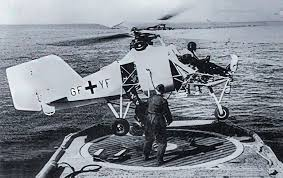
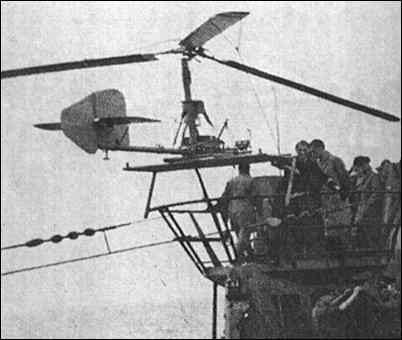
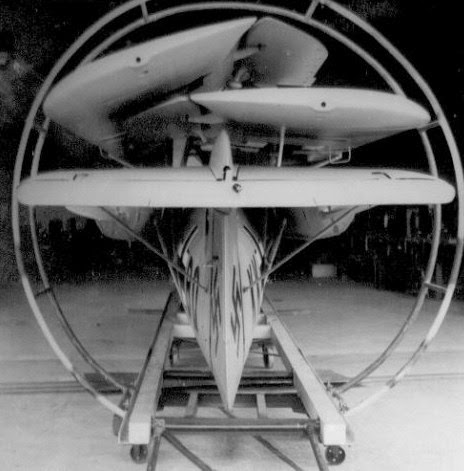
I found that a few type IX U-Boats were equipped with Focke-Achgelis Fa 330 autogyro kites that were towed behind the vessel at an altitude of roughly 150 meters to aid the submarine in detecting targets and threats from a greater distance. They built about 200, yet very few of them were actually used in combat, and only one successful sinking is attributed to have resulted from a rotor kite.

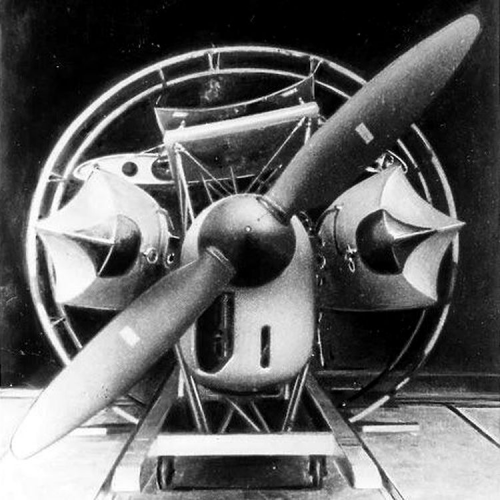
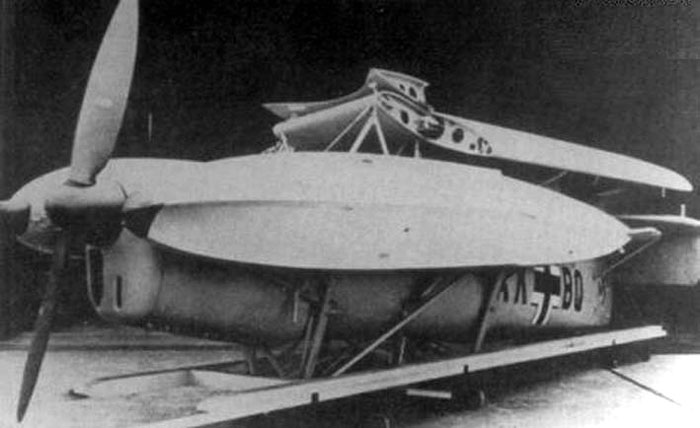
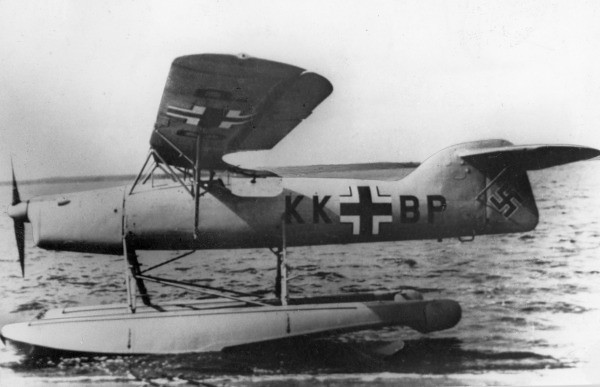
Furthermore, there existed unrealized plans for using Flettner Fl 282, which had their own engines, and thus were "true helicopters" for long range/high altitude reconnaissance. Another proposal which was scrapped rather quickly was the Arado Ar 231 folding-wing float plane (similar to what the Japanese did with arguable success). 6 Arados got built, but they proved to be difficult to fly and U-Boats were not too keen on surfacing for long enough to assemble the aircraft.

Looking for information, and diagrams/drawings of Flettner Fl 282 and Arado Ar 231 carrying U-Boats, or insights on other German submarine aircraft carrier projects.
 

Attachments

  • 1748131192238.png
    1748131192238.png
    313.4 KB · Views: 67
  • 1748131199462.png
    1748131199462.png
    877.5 KB · Views: 34
  • 1748131210514.png
    1748131210514.png
    403 KB · Views: 37
  • 1748131220760.png
    1748131220760.png
    308.8 KB · Views: 37
  • 1748131235360.png
    1748131235360.png
    113.6 KB · Views: 42
  • 1748131258965.png
    1748131258965.png
    193.6 KB · Views: 49
I haven't seen anything for the U-boats, just the Japanese sub-carriers.

IIRC, the I-400 class were surfaced for about 15-20 minutes to launch planes, even with a system to pre-warm the engines. Same issue the US Regulus boats had.

And I don't think there was any place the U-boats could operate where it was safe for them to be on the surface for half an hour.
 
Starting point for your search could be Terry Treadwell "Strike From Beneath The Sea", though the German efforts only are mentioned on a handful of pages. But the Fa 330 was the only type actually ever used by the Kriegsmarine, and IIRC there only were a handful of real missions because neither the crews (which certainly all had another job, too), nor the captains were too keen to try it ...
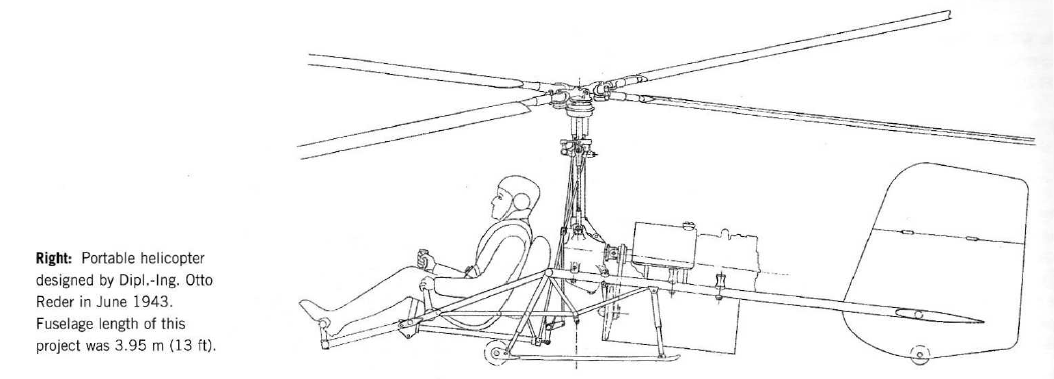
Another source would be Steve Coates "Helicopters of the third Reich", there even is a mentione and a sketch of a "portable helicopter" with intermeshing rotors, bearing some similarities withe the FA 330 and maybe suitable for stowage on a U-Boat. The standard Fl 282 certainly wasn't !
 
I found that a few type IX U-Boats were equipped with Focke-Achgelis Fa 330 autogyro kites that were towed behind the vessel at an altitude of roughly 150 meters to aid the submarine in detecting targets and threats from a greater distance. They built about 200, yet very few of them were actually used in combat, and only one successful sinking is attributed to have resulted from a rotor kite.
Those autogyro kites were developed too late to be of any use in Atlantic - the increasing Allied patrols and appearance of radar made their use essentially suicide, since U-boat with Fa 330 on tow could not dive fast to avoid attack. So they were used only in areas, where anti-submarine defense was rather weak - like Indian Ocean.
 
And I don't think there was any place the U-boats could operate where it was safe for them to be on the surface for half an hour.
Well, the remote areas like South Atlantic, Indian Ocean or Pacific actually were perfectly suitable. But German U-boats were too short-legged to operate efficiently here, and Japanese submarines weren't much interested in hunting merchants.
 
Well, the remote areas like South Atlantic, Indian Ocean or Pacific actually were perfectly suitable. But German U-boats were too short-legged to operate efficiently here, and Japanese submarines weren't much interested in hunting merchants.

The IJN ran a little known but moderately successful submarine campaign against merchant shipping in the IO from March 1942, in conjunction with a couple of their Armed Merchant Cruisers, which also acted as tankers for them.

"In late Mar 1942, the German naval staff had requested the Japanese Navy to raid Allied shipping in the Indian Ocean, and by the first week of Apr several Japanese submarines were operating as far west as waters south of South Africa. Japanese operations in the Indian Ocean disrupted the important Allied shipping route along the eastern coast of the African continent and caused some concerns when the Allies invaded Madagascar. By Jun, Japanese submarines in the region were focusing on the Mozambique Channel between continental Africa and Madagascar, sinking 120,000 tons worth of shipping by mid-Jul 1942. Although this Japanese foray into the Indian Ocean was fruitful, the main focus of the war for Japan was the South Pacific, thus when the submarines were withdrawn for replenishment in the fall of 1942, they never returned in significant strength."

While convoying was instituted in these waters, a shortage of escorts saw destroyers being taken from the Eastern Fleet to help out. The consequence of that was that the fleet was forced into virtual immobility at Kilindini for a period after Operation Ironclad.

https://www.sixtant.net/2011/artigo...ca-sea&tag=21)the-japs-off-mozambique-channel


The Type IX U-boats, especially the IXD2, boats had the legs to operate around South Africa and did so from late 1942. From mid-1943 U-boats were dispatched to the IO with the intent of them operating out of Penang. From there they were able to operate against traffic in the Arabian Sea.
https://uboat.net/ops/monsun.htm
 
The IJN ran a little known but moderately successful submarine campaign against merchant shipping in the IO from March 1942, in conjunction with a couple of their Armed Merchant Cruisers, which also acted as tankers for them.
Ironically, Japanese submarines with their long range & recon planes were perfectly suited for merchant hunting in Indian Ocean or Pacific)
 
As I understand it, those big IJN subs with their 'origami' aircraft were intended to attack the Panama Canal locks. Would have been a one-way mission, given need to get eye-ball close to 'hurt' with their limited bomb-loads.

But, unbeknownst, the US had added 'emergency' secondary lock-gates to prevent sabotage or an air-raid emptying the system...
--

The German subs' auto-gyros ? I've lost reference but, IIRC, one report warned such were 'unpopular' as, 'in extremis', sub must drop kite-line to allow crash-dive. Even with a life-jacket, the hapless pilot had scant chance of survival...
 
Ironically, Japanese submarines with their long range & recon planes were perfectly suited for merchant hunting in Indian Ocean or Pacific)
There were very few IJN submarines capable of carrying aircraft at the start of the Pacific War, with more completing after that.

Completed pre-war and still carrying aircraft on 7 Dec 1941 -Type J2 (I6), Type J3 (I7 & 8), Type A1 (I9, 10), Type B1 (15, 17, 19, 21, 23 25, & 26).
These were designed to carry the Yokosuka E14Y1 "Glen" floatplane. They had a very limited bomb load.
https://en.wikipedia.org/wiki/Yokosuka_E14Y
At least I10 & I30 (another Type B1) were deployed to the IO during 1942, using their floatplanes to reconnoitre various harbours from Aden to Diego Suarez.

As I understand it, those big IJN subs with their 'origami' aircraft were intended to attack the Panama Canal locks. Would have been a one-way mission, given need to get eye-ball close to 'hurt' with their limited bomb-loads.

It was the I-400 class of submarine designed in 1942 that was intended to carry aircraft to bomb the Panama Canal. A special aircraft, the Aichi M6A Seiran, was designed to operate from them. It was mid-1945 before everything was ready, and Ulithi Atoll became the target rather than the Panama Canal.

https://en.wikipedia.org/wiki/I-400-class_submarinehttps://en.wikipedia.org/wiki/Aichi_M6Ahttps://www.historynet.com/japans-panama-canal-buster/
 
There were very few IJN submarines capable of carrying aircraft at the start of the Pacific War, with more completing after that.
And most of them have rather little use. As fleet scouts they weren't exactly spectacular or efficient. They could be really efficient as attached scouts to merchant-hunting wolf packs, but Japanese did not use submarines for such purpose much.
 
As I understand it, those big IJN subs with their 'origami' aircraft were intended to attack the Panama Canal locks. Would have been a one-way mission, given need to get eye-ball close to 'hurt' with their limited bomb-loads.
No-no, the original aircraft-carrying submarines were fleet scouts. They were supposed to be forward-deployed in ocean & use their planes to scout for advancing American fleet, so Japanese forces could be warned early & set to intercept Americans. The idea of using submarine carriers for strike purposes was born only much later, and the existing submarines weren't exactly suitable for the job; they could carry at most one small plane. The I-400 series of very large submarines was build during WW2 specifically for strike missions; they could carry three dedicated seaplane bombers and initially were intended for Panama Channel strike operation. But by the time the I-400 boats were ready, the situation for Japan was already hopeless, so they were instead re-purposed to attack American fleet on anchorage in kamikaze-style attacks. The boats sailed just before Japan surrendered.

There were apparently some plans to use modified Ohka kamikaze planes from those submarines - either the turbojet-powered Ohka Model 43A Ko, or the pulsejet-powered Kawanishi Baika - but neither of those planes was produced before the war ended.
 
Starting point for your search could be Terry Treadwell "Strike From Beneath The Sea", though the German efforts only are mentioned on a handful of pages. But the Fa 330 was the only type actually ever used by the Kriegsmarine, and IIRC there only were a handful of real missions because neither the crews (which certainly all had another job, too), nor the captains were too keen to try it ...
Another source would be Steve Coates "Helicopters of the third Reich", there even is a mentione and a sketch of a "portable helicopter" with intermeshing rotors, bearing some similarities withe the FA 330 and maybe suitable for stowage on a U-Boat. The standard Fl 282 certainly wasn't !
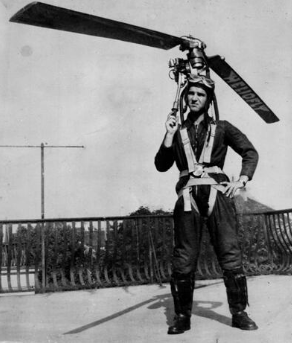
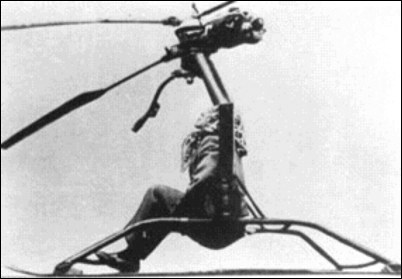
Was the portable helicopter by chance a Heliofly proposal? They made 3 machines in the early 1940s; a rotor "parachute" (Heliofly I), a backpack helicopter (Heliofly III/57) and something very similar to the FA 330, but powered (Heliofly III/59)

I made a thread for the Helioflys a few months foregoing, it has some more information: https://www.secretprojects.co.uk/threads/heliofly-i-and-iii.45820/

1748186497792.png 1748186504672.png
 
Nope, it was this one (Steve Coates "Helicopters of the third Reich", page 92), actually somehoe reminiscent of the
Fa 330, though no further details are given.

1748232069342.png
 
@Adler I am publishing a book on aircraft-carrying submarines, which will be out in December, so I think I can answer your question.

The Ar 231 came first; it was to be carried by the Type XI cruiser submarine. This drawing shows more-or-less final design, with a vertical cylindrical hangar forward of the bridge fairwater for the Ar 231.
Type XI 1939-04-13.png
In October 1939, the Seekriegsleitung was shown a film of the Flettner Fl 265 helicopter, and proposed a development of this design for service on board surface ships and the Type XI submarine. This resulted in the Fl 282, which was trialed on board several surface ships. For submarine use, the Fl 282 U variant was envisioned, which would have the tail section removed so it was more compact for storage on board the submarine. The Fl 282 V9 prototype was built without a tail to test its flight characteristics.

Four Type XI submarines were ordered, but they were cancelled shortly after the start of the war in favor of building Type VII and IX submarines. By late 1941, the Luftwaffe had determined that the Fl 282 was unsuitable for use on board submarines (I am not aware of any specific designs that would carry the Fl 282 beyond the cancelled Type XI).

When Carl Bode, Focke-Achgelis' chief test pilot, heard about the failure of the Fl 282 for submarine use, he suggested to designers at Focke-Achgelis' that they build a smaller helicopter that could be more easily stored on board existing submarines. Eventually the company decided on the unpowered autogyro that became the Fa 330 Bachstelze. The Fa 330 was only carried by Type IXD2 submarines.
 
U-Boot Typ IX C with Helicopter / Rotor Kite
- AEG Hubschrauber ?
- FA 330 Rotor Kite

BUNDESARCHIV FILES
[CLICK "DIGITALISAT ANZEIGEN" TO VIEW THE FILES]

Signatur: RM 25/10647
Brücke mit Hubschrauberbehälter - 1941
https://invenio.bundesarchiv.de/invenio/direktlink/f10cfc5e-35fb-4f9e-b1aa-0b5bbee75e29/[Helicopter housed in a watertight container behind the conning tower.]

Signatur: RM 25/10645
Tragschrauberdrachen.- Ankertischversuchsanordnung
https://invenio.bundesarchiv.de/invenio/direktlink/2d94a072-d158-47a4-bd31-c13a187ee783/
Signatur: RM 25/10646
Tragschrauberdrachen und MG - Druckfeste Staubehälteranordnung
https://invenio.bundesarchiv.de/invenio/direktlink/0990f2d4-dbac-4260-b5a3-818802c5a0a5/
Signatur: RM 25/10648
Tragschrauberdrachen - Landetischversuchsanordnung
https://invenio.bundesarchiv.de/invenio/direktlink/9d738541-d0fe-455b-a34a-93fa8f951183/
 
U-Boot Typ IX C with Helicopter / Rotor Kite
- AEG Hubschrauber ?
- FA 330 Rotor Kite

BUNDESARCHIV FILES
[CLICK "DIGITALISAT ANZEIGEN" TO VIEW THE FILES]

Signatur: RM 25/10647
Brücke mit Hubschrauberbehälter - 1941
https://invenio.bundesarchiv.de/invenio/direktlink/f10cfc5e-35fb-4f9e-b1aa-0b5bbee75e29/[Helicopter housed in a watertight container behind the conning tower.]

Signatur: RM 25/10645
Tragschrauberdrachen.- Ankertischversuchsanordnung
https://invenio.bundesarchiv.de/invenio/direktlink/2d94a072-d158-47a4-bd31-c13a187ee783/
Signatur: RM 25/10646
Tragschrauberdrachen und MG - Druckfeste Staubehälteranordnung
https://invenio.bundesarchiv.de/invenio/direktlink/0990f2d4-dbac-4260-b5a3-818802c5a0a5/
Signatur: RM 25/10648
Tragschrauberdrachen - Landetischversuchsanordnung
https://invenio.bundesarchiv.de/invenio/direktlink/9d738541-d0fe-455b-a34a-93fa8f951183/
RM 25/10647 possibly shows the Fl 282 U, the cut-down variant of the Fl 282 for submarines. Although I find the depiction of the helicopter a bit hard to interpret. The late 1941 date would put it just at the beginning of the Fa 330's development.

RM 25/10646 shows something broadly similar to the ultimate Fa 330 installation on the Type IXD2s.

RM 25/10645 and RM 25/10648 show something similar to the test installation on the U-523 as it appears there are no stowage tubes.
 

Similar threads

Back
Top Bottom