Grey Havoc

ACCESS: USAP
Joined
9 October 2009
Messages
24,420
Reaction score
17,877

Mitsubishi Heavy Industries (MHI), Japan’s leading submarine builder, has unveiled provisional designs for what is tentatively being designated as the 29SS submarine design, with the first submarine scheduled to be introduced in service in the late-2020s. The R&D phase will take place from 2025 to 2028, and the first ship of this class will probably be launched around 2031.

It is expected that while the 29SS submarine will retain the general hull form of the earlier Soryu-class vessels, the new vessels will incorporate a range of important design changes, including a substantially reduced sail, which is expected to be blended into the hull with the aim of reducing hydrodynamic drag, helping to lower the noise signature of the submarines, while the dive planes will be moved from the sail to the hull.

Additionally, it is expected that the 29SS will include a pumpjet as opposed to the traditional propeller for propulsion, in a similar fashion to what is expected to be introduced on Australia’s future Attack Class submarines.

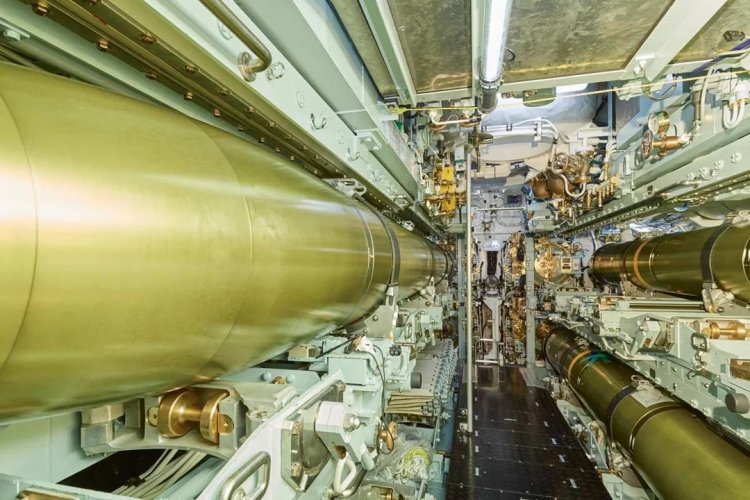
29SS will likely retain the same armament as the Soryu boats, which consist of six bow-mounted 533-millimetre torpedo tubes. The submarine can carry up to 30 torpedo-launched weapons, a mixture of Type 89 heavyweight torpedo and the Sub Harpoon anti-ship missile. Although there is a general trend towards installing vertical launch silos behind a submarine’s sail, Japan does not have the missiles to fill them.
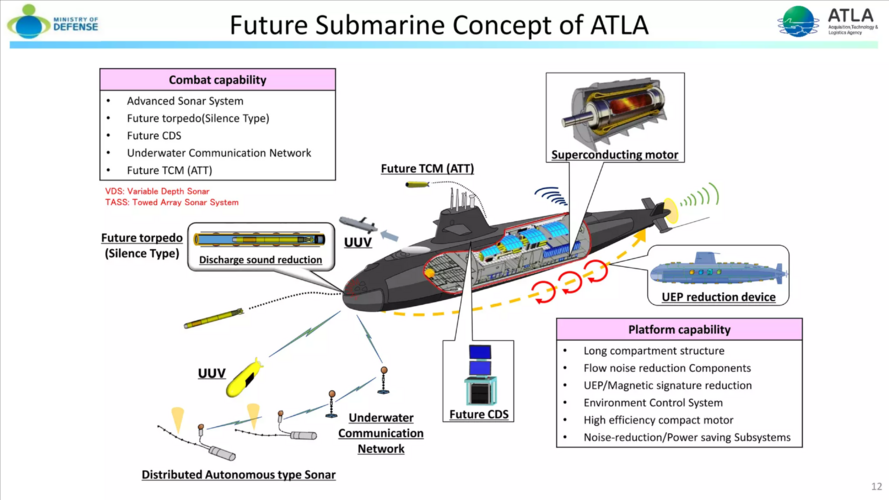
 
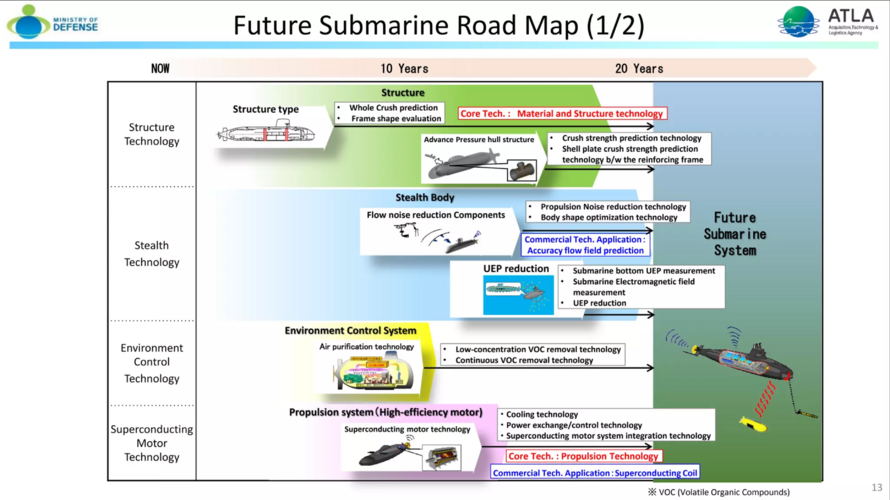
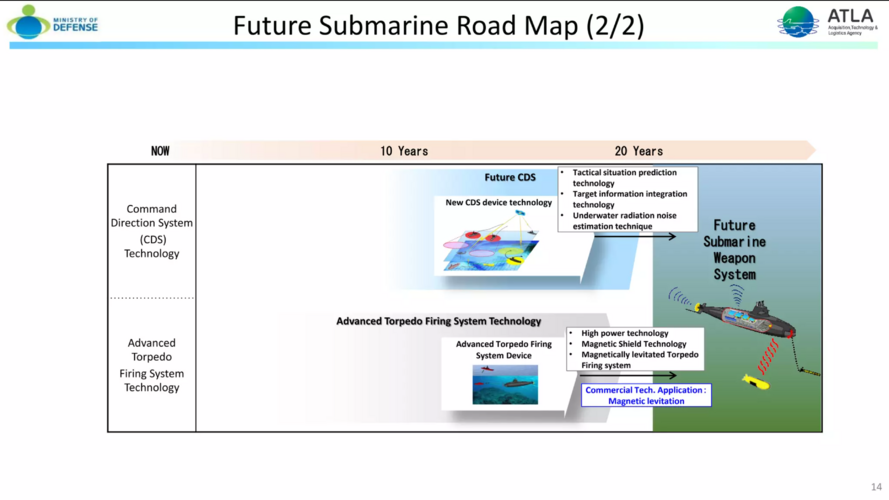
Future Submarine Concept by ATLA from 2016. Some of the technologies are already implemented to the 29SS/Taigei class SSKs, others are still under research. There are other new technologies not depicted in the diagram which are implemented to the 29SS. Generally speaking, not much is known about 29SS overall.

29ss tech.png 29ss tech 2.png 29ss follow up tech.png
From above, "discharge sound reduction" is a maglev-based discharge system.
 
Last edited:
I still think the Japanese should have kept the AIP Stirling engines, simply replacing the existing lead-acid batteries with lithium batteries. Last time I checked the standards, lithium batteries could reliably hold 5x the capacity of lead-acid, whether by weight or by volume. Plus are able to recharge a lot faster. I'd rather have enough AIP to maintain a slow pace with all the standard electrical draws than use battery capacity for that.

Gotta admit, my mind still boggles at how quickly Japan iterates designs. 7 boats planned instead of the 12 of the Soryu-class, but MHI was awarded a contract for the Taigei-class successor at the end of 2023(!). This suggests a planned production/in service date of 2029 to me, since Japan does not like leaving shipyards idle.

Takes Japan 4 years to build these boats, which is actually LONGER than the US making Virginia-classes... All the Flight 2 and newer boats are only taking the US about 2 years from laid down till commissioned.
 
Defense equipment Agency Technical Symposium 2024
1731459599302[1].jpg
High-efficiency power storage and supply system for submarines
Prevention of hull enlargement and improvement of mobility
Batteries are Lithium-rich type
Miniaturization and higher efficiency of power conversion devices
Miniaturization and densification of battery racks

JMSDF likes Alfa-class submarine
 
Last edited:
Takes Japan 4 years to build these boats, which is actually LONGER than the US making Virginia-classes... All the Flight 2 and newer boats are only taking the US about 2 years from laid down till commissioned.
There are some interesting comparisons of UK and US WWII-era shipbuilding in (IIRC) DKB's Nelson to Vanguard, where it's noted the US was producing ships significantly quicker, but the UK was producing them with significantly less man-hours. This could be a similar situation.
 
Summary of FY2024 Policy Evaluation Report (Preliminary Project Evaluation)
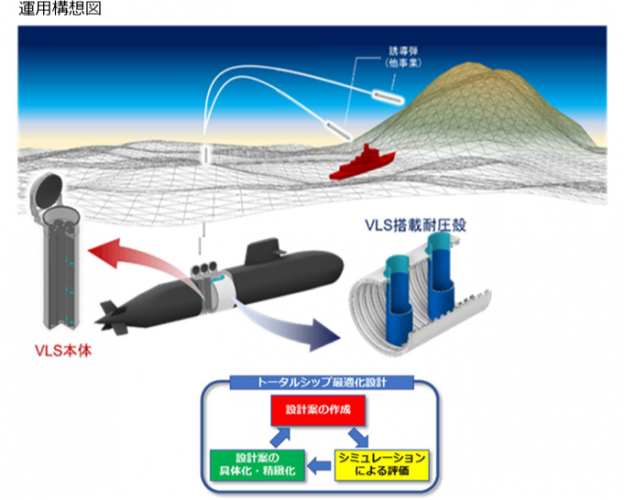
Project Title Research on Underwater Launching Vertical Launching System

Project Summary
In order to further diversify launching platforms and acquire underwater superiority as a means of strengthening standoff defense capabilities, this project aims to develop an underwater launching system that can be mounted on submarines.
To further diversify launching platforms and acquire underwater superiority, we will develop a vertical guided missile that can be mounted on submarines and can launch longer-range guided munitions.
Vertical Launcher System (VLS) that can be mounted on submarines and can launch longer-range guided munitions, as well as a pressure-resistant shell for mounting the VLS.
The project will research the Vertical Launch System (VLS), which can be mounted on submarines and can launch longer-range guided missiles, and a pressure-resistant shell for mounting the VLS.

Total project cost (planned)
Approx. 30 billion yen (total cost of research and prototype production)
Total project cost (planned): approx. 30 billion yen (total cost of research and prototyping)

Implementation period
Research and prototype production will be conducted from FY 2007 to FY 2029. In addition, the project results will be combined with the results of the
In addition, the in-house test will be conducted from FY2027 to FY2029, and the results of the test will be verified.
The results will be verified through in-house testing from FY2027 to FY2029. (The cost of the trials and research will be allocated separately.)

Objectives to be achieved
(a) Establishment of technology for VLS launch function
(b) Establishment of technology for VLS hull control function
(c) Establishment of technologies related to the water pressure resistance performance of the VLS main body and the pressure hull onboard the VLS
Establishment
 
I have never seen a take on the Taigei class ditching AIP entirely as because Sterling engines suck that bad.
In that case, I have to be blunt and tell you that you had more research to do, Scott.

JMSDF first started research concerning Stirling AIP implementation in their next generation submarines in 1986. This was following numerous other research programmes concerning possible AIP propulsion systems. They eventually licensed Kockums' design in the 90s. The rest is as you would probably know already. A decade long research and evaluation parallel to designing of next generation submarine, the 16SS, which eventually became Souryuu.

Souryuu has been built starting from 2005, but what you probably don't know is that Japan has started a next generation AIP system development starting from 2006, while they were still building the name ship of 16SS programme. And this "Next Generation AIP System for Submarine" was again a H2-O2 FC system, not a more advanced Stirling engine design continuing from the research they've funded for more than a decade. Clearly, just as they were starting to build Stirling engine AIP equipped submarine, Japan was already planning to ditch it. And to clarify, the research for next-generation Li-ion based battery system for future submarine has commenced before the new FC AIP system, so it's not like they needed an FC AIP because they were not anticipating more advanced battery types.

The reasons stated in the official documents for transitioning from Stirling engine design to a FC solution for the next generation AIP system were as follows; compared to Stirling engine, hydrogen FCs are:
  • much more compact and much less heavy
  • much higher output capacity for given size
  • uses less oxygen per output
I'm telling you again, Stirling engine is always a far less capable option than FC when used as a submarine AIP. The only reason they have not implemented a FC-based AIP system on 28SS was due to lack of metal hydride maturity and costs.

Going further, although there is no official document confirming this as the ground for ditching the Stirling engine for very obvious security reasons, it is a very fair assumption that the operational limitation as imposed while using the 4V-275R in depth, which could only operate till around 250m of depth unless fitted with an additional exhaust gas compression system, was another major reason for them to look elsewhere. Not a problem for the Swedes when they use it in the Baltics, a big operational hurdle for the Japanese who operates in the Pacific.

Although we don't know the exact operational and maximum depths of the JMSDF submarines, their operational doctrine points to a regular dive to a much deeper depth beyond what the V4-275R is capable of, especially when they are playing the interdiction role around the first island chain, an anti-access force against PLAN access to pacific (which is pretty ironic by itself, but that's another topic). This means when submerged beyond 250~300m, Souryuus are no different than any other diesel-electric boats sans AIP. They have to regularly ascend to the operational depth of V4-275R in order to recharge its batteries before diving deeper again. Major limitation. At that point, might as well ditch the AIP all together and use that space and weight to fit even more Li-ion batteries, which is exactly what they did from Ouryuu onwards.

This operational limitation is probably a bigger reason as to why they ditched the Stirling AIP, but for now it's merely an assumption, albeit a very probable one. Anyhow, from the existence of the aforementioned programme of record alone, it is very apparent that Stirling AIP was never a long-term solution for the JMSDF.
 
Last edited:
In that case, I have to be blunt and tell you that you had more research to do, Scott.

[...]
Thank you for the overview/review.

Operating below 200m is tricky, you need extra watchstanders to watch depth gauges that are otherwise not monitored (at least on an Ohio).

So I'm not really seeing the issue with not being able to run the Stirling engines below 250m. Cruise around at 200m all day long when you need to be deep.
 
Thank you for the overview/review.

Operating below 200m is tricky, you need extra watchstanders to watch depth gauges that are otherwise not monitored (at least on an Ohio).

So I'm not really seeing the issue with not being able to run the Stirling engines below 250m. Cruise around at 200m all day long when you need to be deep.
Except that is a perspective formed by serving on USN SSNs. Japanese doctrine of submarine operation is largely different. They focus on denying access to several key choke points around the key area of interest. Those were 3 important straits around Sea of Japan during the Cold War, and now 2 more in the South China Sea along the Ryukyu Island archipelago. They don't patrol, but lurk very deep down, which you'll know is also important in utilizing low frequency convergence zone. I know USN submarine does so too, but the difference is that for JMSDF submarines, that is the main CONOPS in the ECS. Fast deployment followed by an extended low speed lurk very deep down.

US boats are known to have been built with HY-100 since for a very long time. Japanese boats since the 90s on the other hand were built with a roughly HY-160 equivalent steel on double hull construction at least from Souryuu, and possibly since Oyashio. They are not the same. USN SSNs might occasionally dip down below 200m, but below 200 is the nominal operational depth for JSMDF subs. Just because Stirling engine maximum operational depth wouldn't have been much of a problem in USN doesn't mean it is the same for the JMSDF.
 

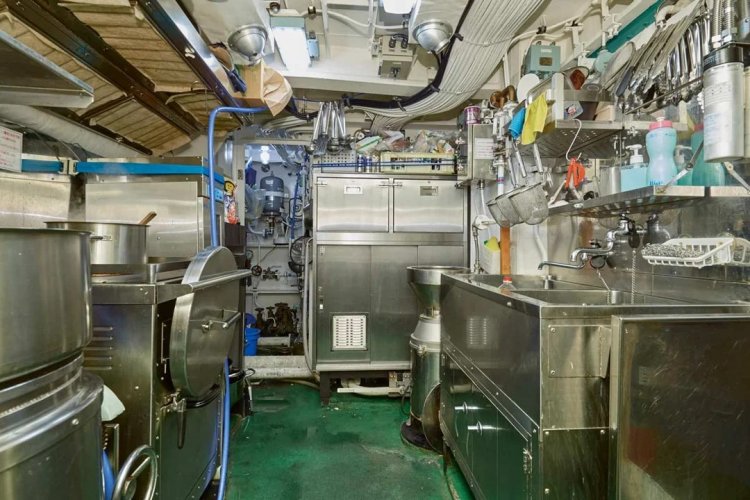
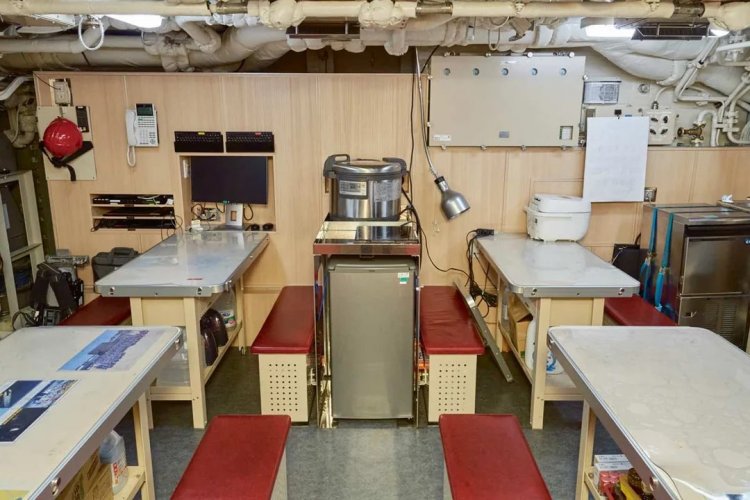
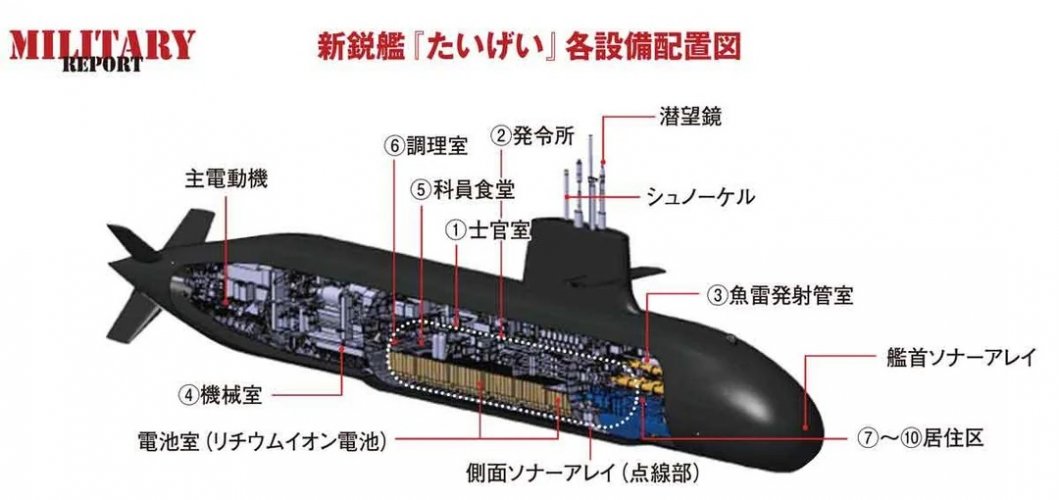
Named JS Chogei (with pennant number SS 517), the new Taigei-class boat was inducted into the Submarine Division 2 of Submarine Flotilla 2, which is homeported at the Yokosuka naval base in Kanagawa Prefecture, shortly after being handed over by shipbuilder Mitsubishi Heavy Industries (MHI) at its facility in Kobe City on March 10.


According to the JMSDF, the new submarine has a crew of about 70, an overall length of 84 m, a beam of 9.1 m, a draft of 10.4 m, and a standard displacement of about 3,000 tonnes. It is therefore slightly larger than the earlier Soryu-class submarines, which measure 84 m in length, 9.1 m in beam, have a draft of 10.3 m, and a standard displacement of 2,950 tonnes.


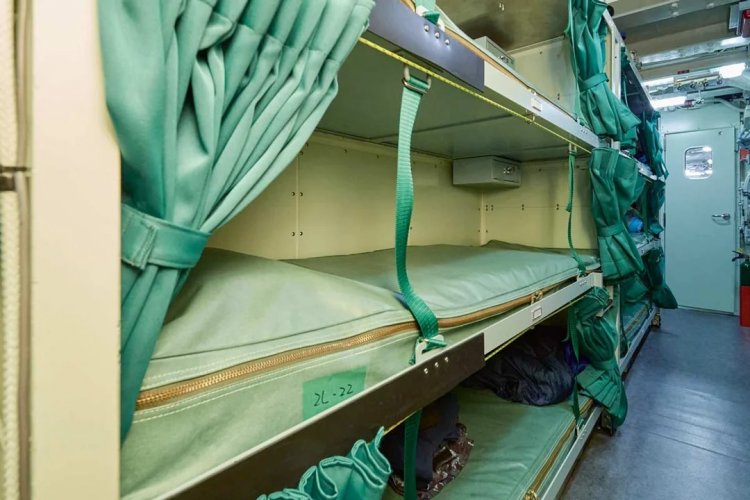
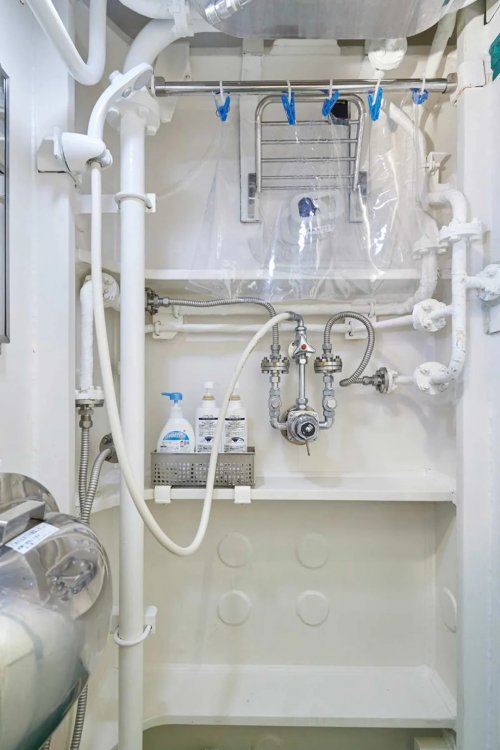
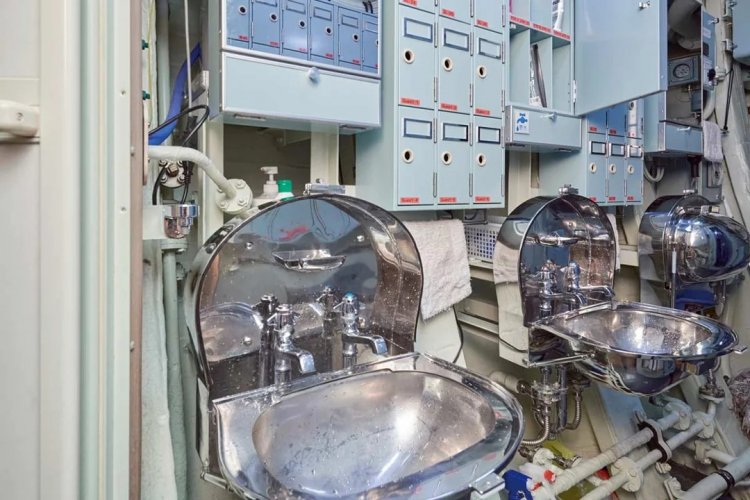
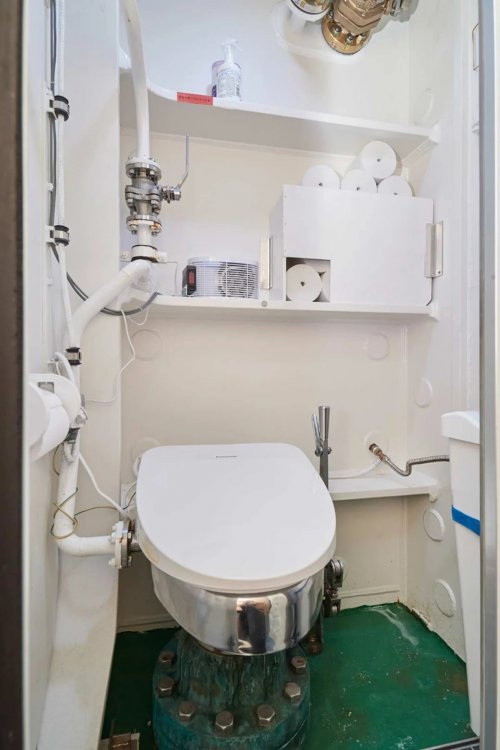
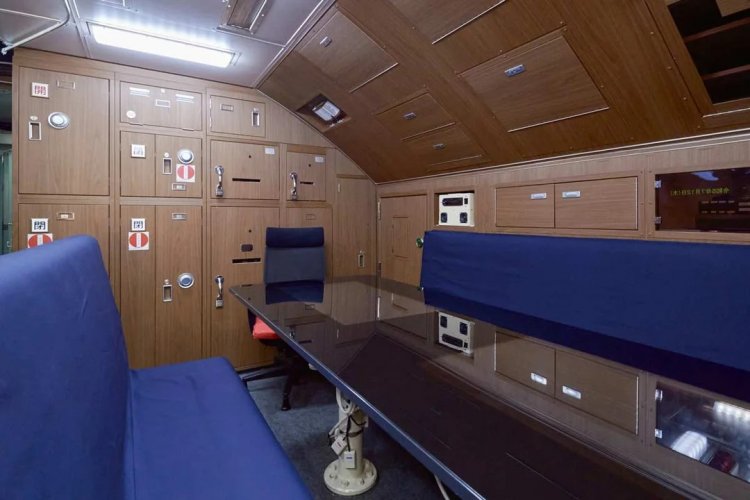
The Taigei-class for the first time has female-only accommodation areas, including living space for up to six women, according to the service.


Chogei means “long whale” in Japanese. The Taigei-class submarines all incorporate “Gei” (whale) into their names, following the “Shio” (tide) and “Ryu” (dragon) series seen in previous JMSDF submarines. “Taigei” itself means “big whale.”


The new submarine, which cost about 68.4 billion yen ($434 million) to build, is powered by a diesel-electric propulsion system generating about 6,000 hp. It has a maximum speed underwater of 20 knots.

[snip]
 
Yes. For instance, the N.S. Mutsu was late in development made to double as a covert testbed for a submarine reactor. A bit of background on that can be found in an old post of mine.
Interesting! So there were reactor designs for maritime use. So it is possible there were early concepts for SSNs?
 

Similar threads

Back
Top Bottom