jsport
what do you know about surfing Major? you're from-
- Joined
- 27 July 2011
- Messages
- 8,596
- Reaction score
- 6,898



https://www.nytimes.com/2021/04/13/business/irs-tax-gap.htmlSo, that would be a trillion more. There are some 130 million households in US. That's 7700 USD per household. How many households would be willing to part with that kind of money in the current economy, for the given purpose?
Sure, not only households pay taxes, but they do pay absolute majority. https://taxfoundation.org/data/all/federal/us-tax-revenue-by-tax-type-2024/
Anyway, that sort of increase is simply unrealistic, unless there is perhaps a clear and imminent danger to US sovereignty. Short of a next world war actually starting ( not just being awaited) i don't think that sort of increase can happen.

https://www.nytimes.com/2021/04/13/business/irs-tax-gap.htmlTax cheats cost the U.S. $1 trillion per year, I.R.S. chief says.
My comment was tongue in cheek. It was to highlight the size of the US economy for one and two our Cold War average was about 6.5%.So, that would be a trillion more. There are some 130 million households in US. That's 7700 USD per household. How many households would be willing to part with that kind of money in the current economy, for the given purpose?
Sure, not only households pay taxes, but they do pay absolute majority. https://taxfoundation.org/data/all/federal/us-tax-revenue-by-tax-type-2024/
Anyway, that sort of increase is simply unrealistic, unless there is perhaps a clear and imminent danger to US sovereignty. Short of a next world war actually starting ( not just being awaited) i don't think that sort of increase can happen.
Thanks to the banks in 2008 the US national debt is 50% of GDP higher than it otherwise would be. They pay 5% interest on debt, so the US is wasting an extra 2.5% GDP just on interest payments, which is >$700bn.My comment was tongue in cheek. It was to highlight the size of the US economy for one and two our Cold War average was about 6.5%.
Interest on debt exploded with Covid spending resulting in inflation resulting in fed tightening with interest rate increases.Thanks to the banks in 2008 the US national debt is 50% of GDP higher than it otherwise would be. They pay 5% interest on debt, so the US is wasting an extra 2.5% GDP just on interest payments, which is >$700bn.
It was at ~60% in 2007 and rose to 107% by 2019 before COVID. Surprisingly COVID only accounted for ~10-15% of it.Interest on debt exploded with Covid spending resulting in inflation resulting in fed tightening with interest rate increases.
Expected to surpass $1 Trillion per annum

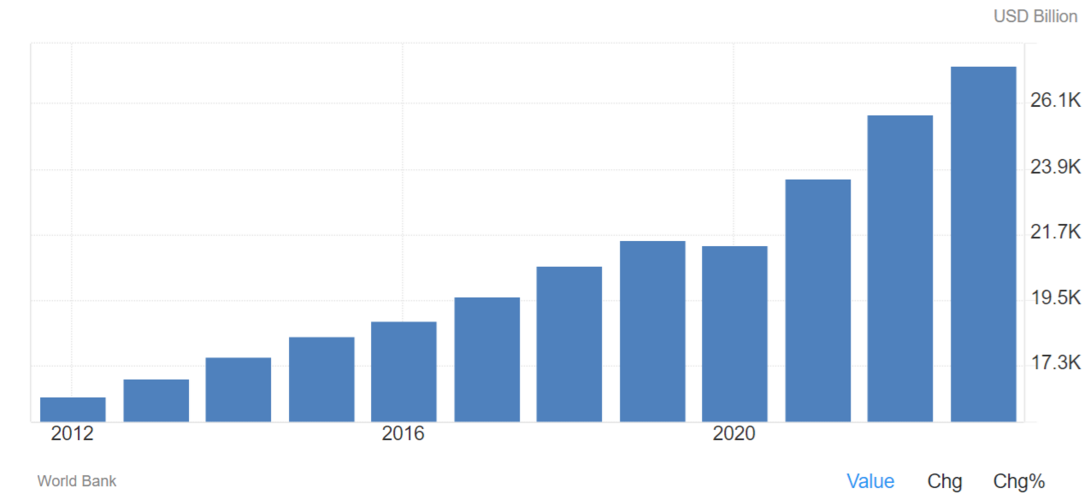
This is debt to GDP the impact from Covid was inflation then massive jump in interest cost.It was at ~60% in 2007 and rose to 107% by 2019 before COVID. Surprisingly COVID only accounted for ~10-15% of it.
View attachment 742574
The inflation started after COVID in Apr/May 2021, that's more a reflection of the debt-to-GDP impacting the exchange rate IMO rather than anything COVID specific. Interest rates changed only after the Ukraine War started.This is debt to GDP the impact from Covid was inflation then massive jump in interest cost.
Like a person shifts his debt from a mortgage to a credit card and says “my debt only went up X%” ya but interest costs went through the roof.
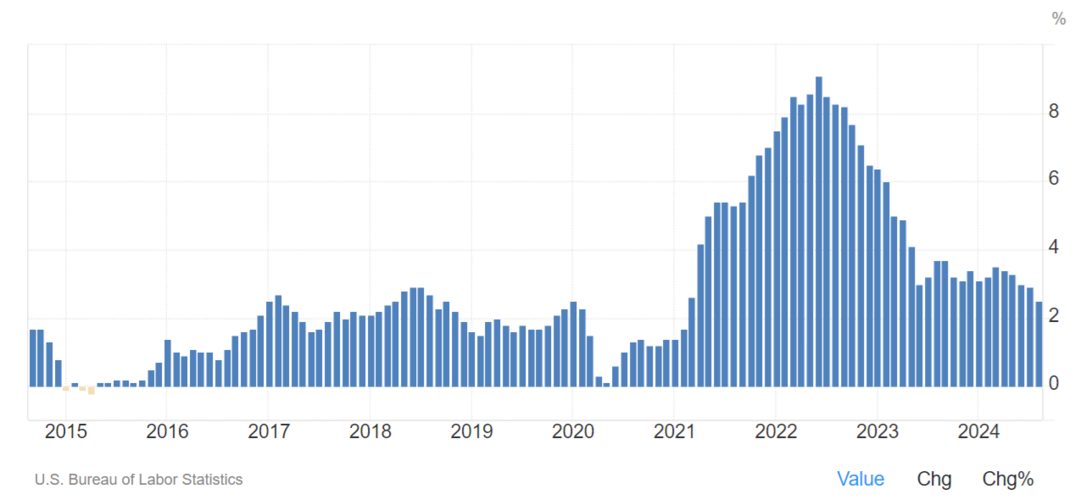
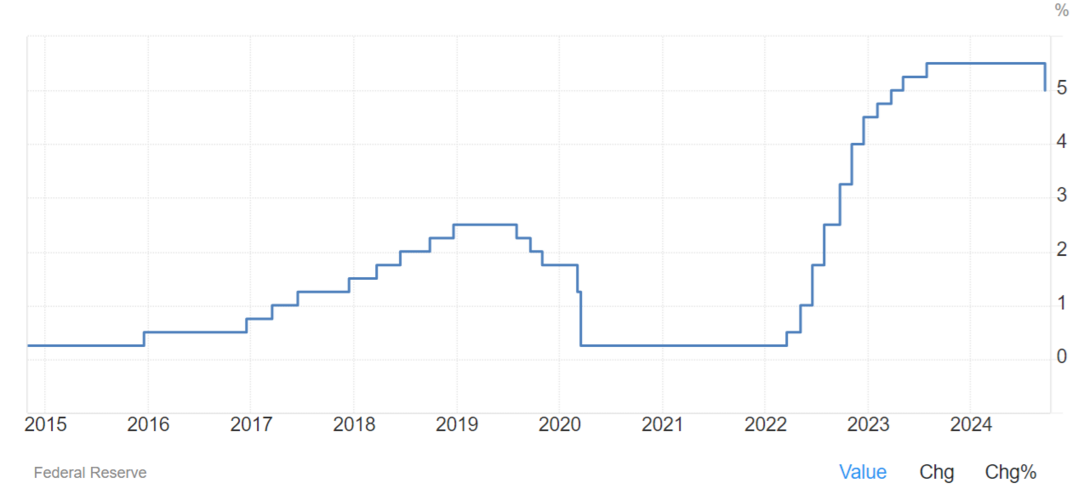
Huge majority of economists blame post 2020 election spending for inflation forcing the fed to raise rates. But notwithstanding proportioning different policies and their specific impact it’s interest rates that’s driving the massive increase in the cost of debt.The inflation started after COVID in Apr/May 2021, that's more a reflection of the debt-to-GDP impacting the exchange rate IMO rather than anything COVID specific. Interest rates changed only after the Ukraine War started.
https://tradingeconomics.com/united-states/inflation-cpiView attachment 742586
https://tradingeconomics.com/united-states/interest-rateView attachment 742587
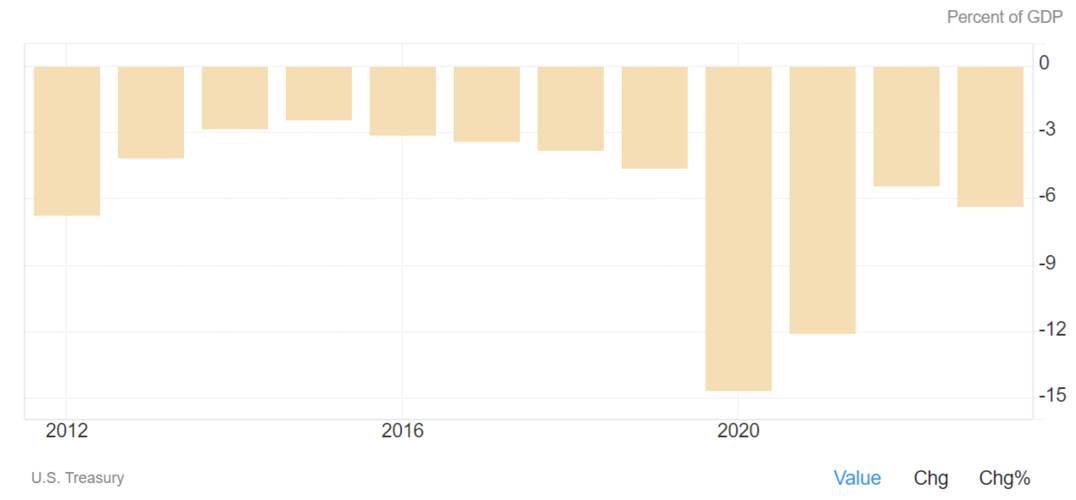
Hmmm... the deficit was higher in 2020 than any year following but 2020-2021 was down to COVID, it has since fallen to pre-2020 levels. The problem is that the debt is a lot higher than it should be, that affects exchange rate, which then causes inflation, which needs interest rate increases to counter it.Huge majority of economists blame post 2020 election spending for inflation forcing the fed to raise rates. But notwithstanding proportioning different policies and their specific impact it’s interest rates that’s driving the massive increase in the cost of debt.
Have you renewed your mortgage lately? There you’ve had a massive increase in your cost of borrowing even though the loan amount [debt] didn’t change.
| 2023: | -1,693,725 |
|---|---|
| 2022: | -1,375,920 |
| 2021: | -2,775,350 |
| 2020: | -3,132,456 |
| 2019: | -983,588 |
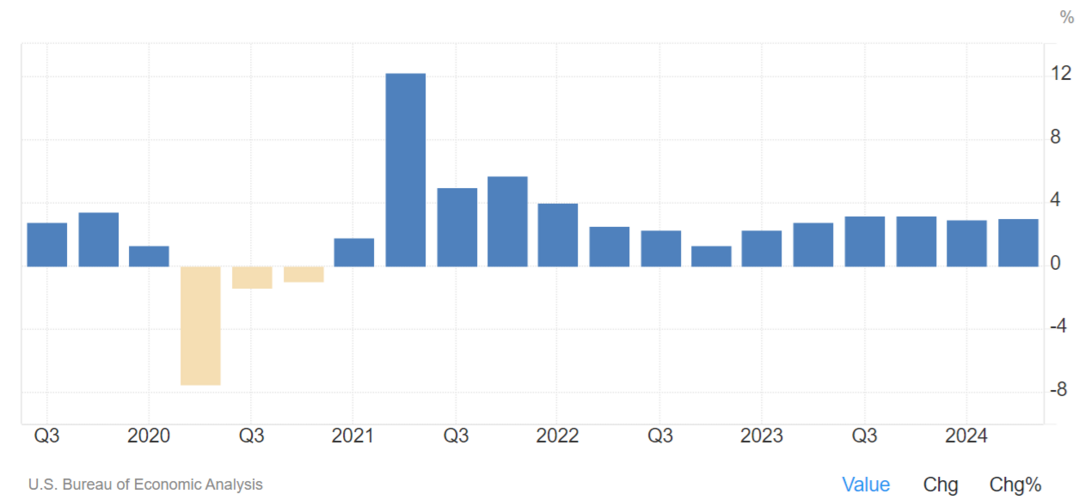
Not that different to 2019 considering there's a war or several going on, but this is all irrelevant since if the national debt was 50% of GDP lower because the banks hadn't f'ed up, then the amount being paid out on interest would be much lower and hence the deficit would be lower and let's face it, having a debt figure 50% lower would do far more for the strength of the currency then any slight spending alterations at this stage.It’s the timing of spending. If you are replacing lost demand because the government sent everyone home than total aggregate demand is similar but when you have largely recovered from the Covid recession you are massively increasing aggregate demand against what is a weaker supply side of goods and services. Too much money chasing too few goods the definition of what causes inflation. US dollar index was strengthening as inflation rose
https://www.tradingview.com/symbols...current value of U.S.,24, 1985 — 164.720 USD.Federal Surplus or Deficit (FYFSD)
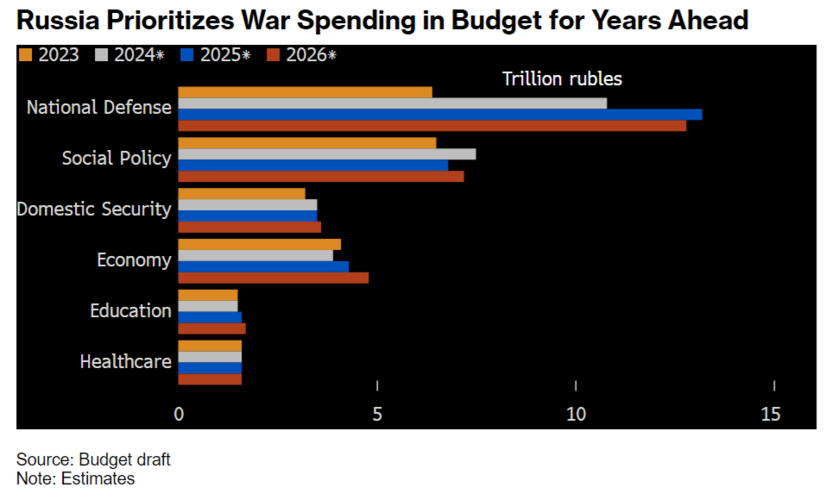
Anyway going round and round ultimately there’s very little room to increase defense spending unfortunately.
2023: -1,693,725 2022: -1,375,920 2021: -2,775,350 2020: -3,132,456 2019: -983,588