Secret sub - USS Halibut

covert_shores

Research + illustration
Senior Member
Joined
31 October 2014
Messages
719
Reaction score
398
Website
www.hisutton.com
USS HALIBUT

Not a *secret project* in the site sense but possibly interesting all the same, and jam-packed with what was at the time ground-breaking secret gizmos. http://www.hisutton.com/Secret%20Sub%20-%20USS%20Halibut.html <<-more info/pics etc

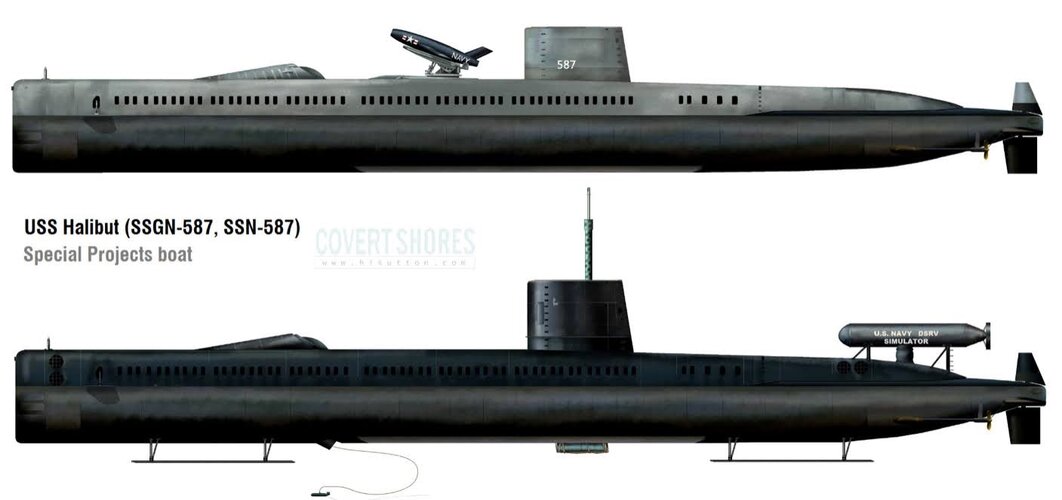
Illustration showing the secret bits.... (corrections welcome)
halibut_1700.jpg
 
Thank you!

Interesting! And probably around 30 years in the future we maybe know how the current spy-subs work. :)
(Or more probably not...)
 
Cifu said:
Thank you!

Interesting! And probably around 30 years in the future we maybe know how the current spy-subs work. :)
(Or more probably not...)
Oh you mean like Carter?
tech0805carter_485x237.jpg
 
"Sea of Oshkosh"? :eek:

I think the website means the "sea of Okhotsk".
 
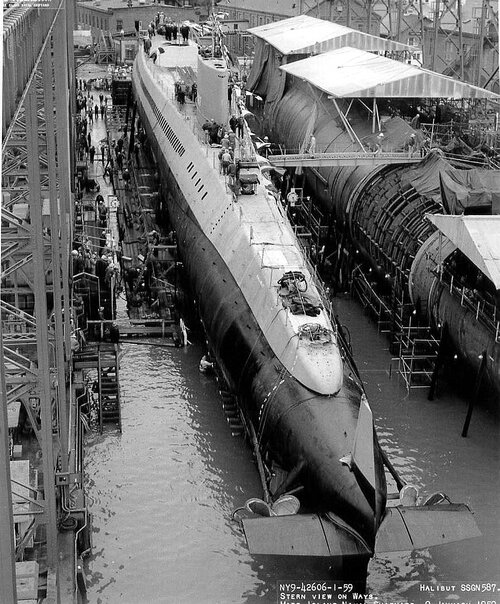
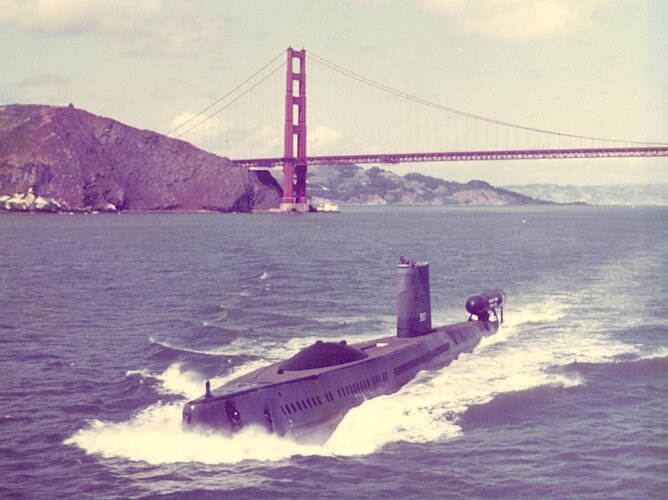
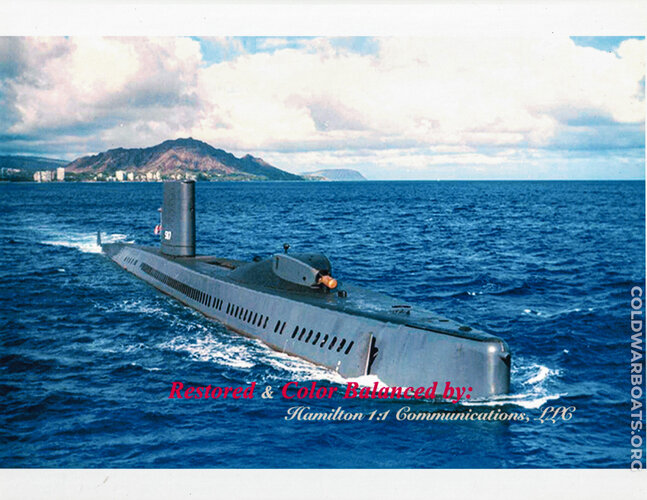
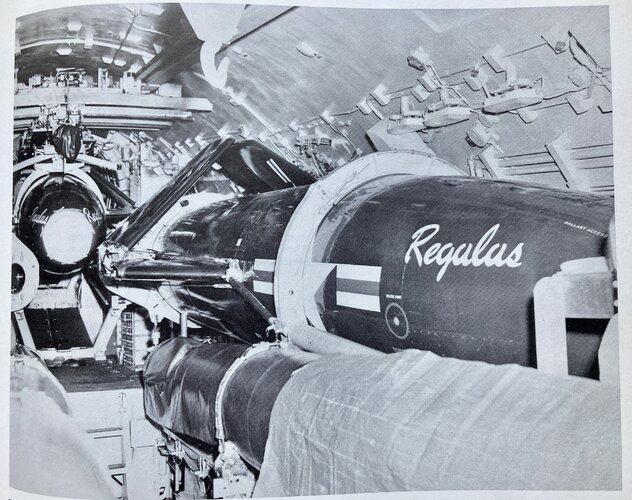
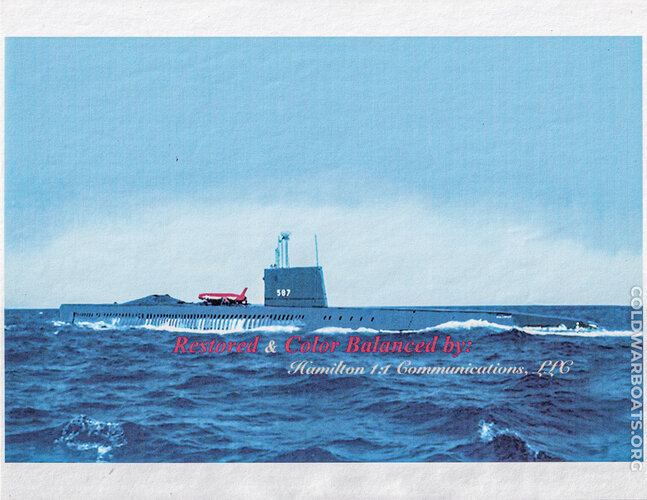
Some details about Halibut. Early photos in the Regulus SSGN configuration. At that point, the original sail was low. The hanger section could store multiple Regulus I missiles, and was sized to also take lower numbers of the larger Regulus II. Halibut was a derivative of the Skate class design and had a Skate SW3 reactor of lower power (roughly 1/2) compared to the Nautilus S2W plant. Halibut was always viewed as a one off conversion of a Skate class plan. Even if the Regulus missile program had continued, a very different new design for subsequent SSGNs was developed. The low sail was later replaced with a higher sail, as Regulus launches generated excess exhaust. Cancellation of Regulus II limited the lifetime of the Regulus I missile deterrence patrols as the much more capable Polaris program advanced.

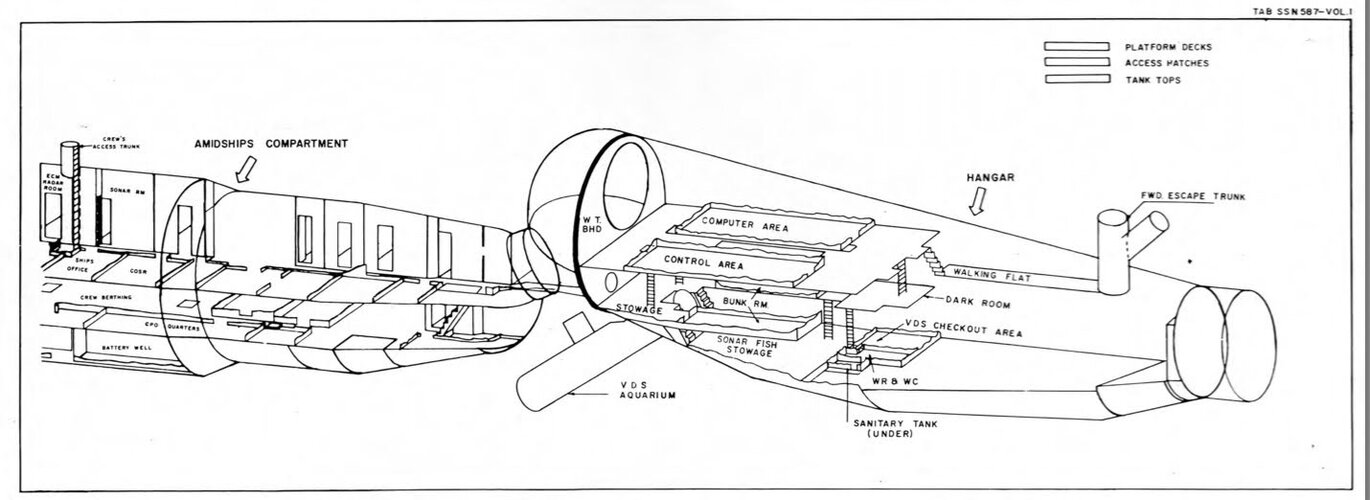
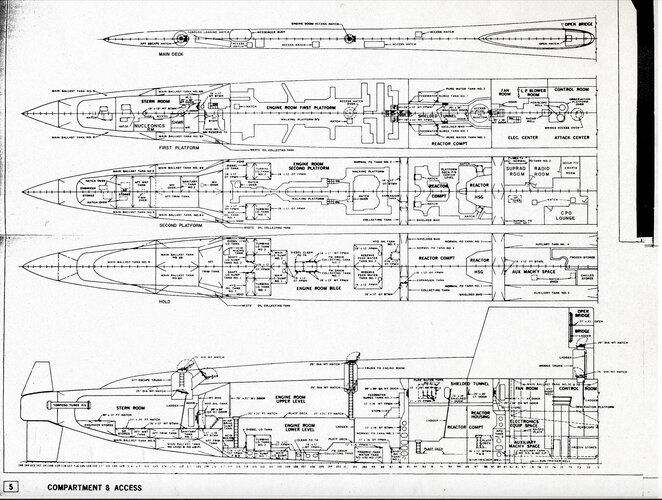
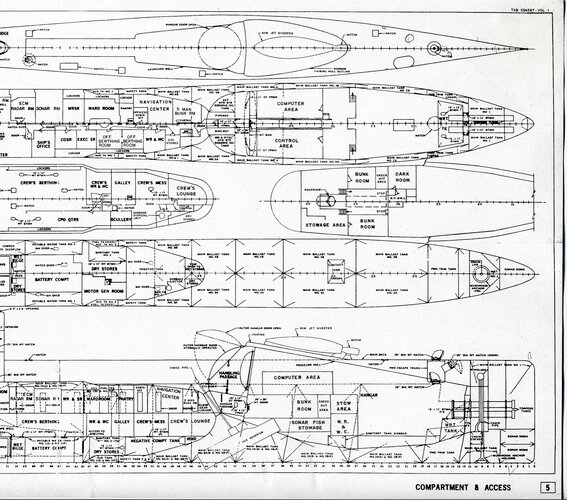
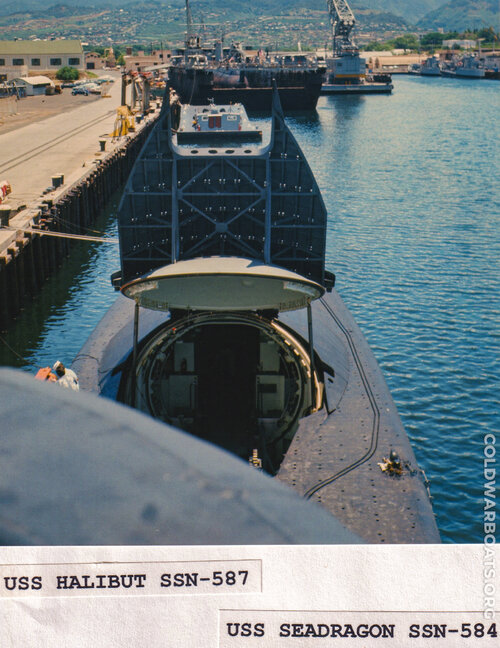
In the initial Special Projects (Ocean Engineering) version, the hanger was modified and divided into decks. The lower deck housed the camera and sonar "Fish" tow bodies. Also in the lower section was the deployment tube and the towing cable reel. The Covert Shores drawing erroneously shows the cable reel outside this area, under the upper deck. But in order for the cable to provide power and transmit and receive signals from the Fish, the reel had a series of commutators and slip rings similar to an electric motor) and hence the reel had to be in a dry area. A Univac 1224 computer was in the upper deck, most probably to help with navigation calculations during a search. Halibut would deploy a grid of transponders on the ocean floor bracketing he search area. The time of arrival of the different transponder signals were used to calculate the location of Halibut in the grid. The converted hanger also had a darkroom and bunk area.

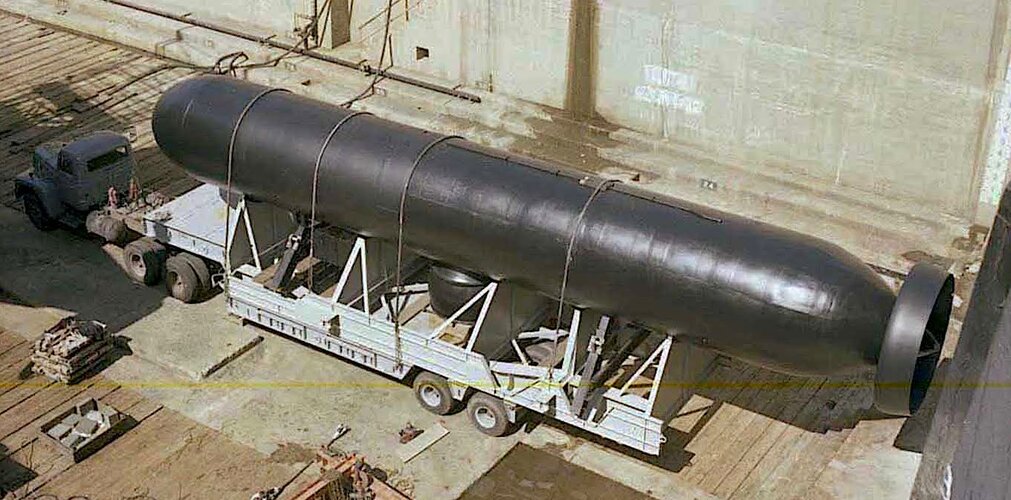
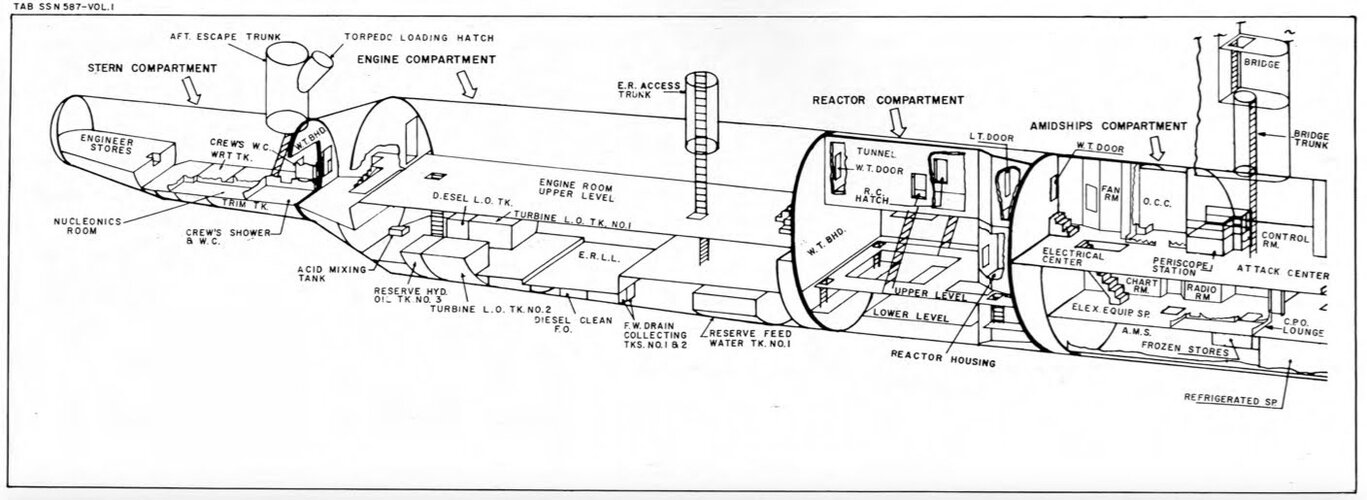
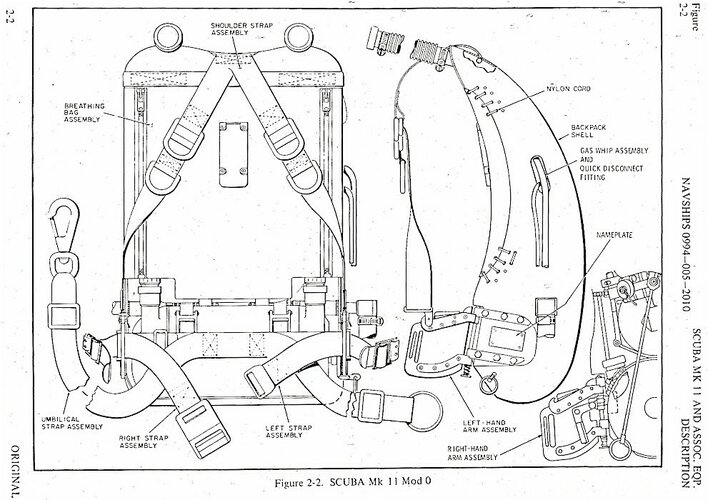
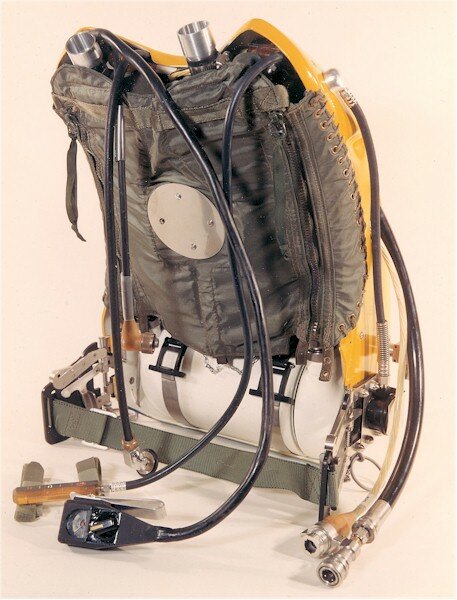
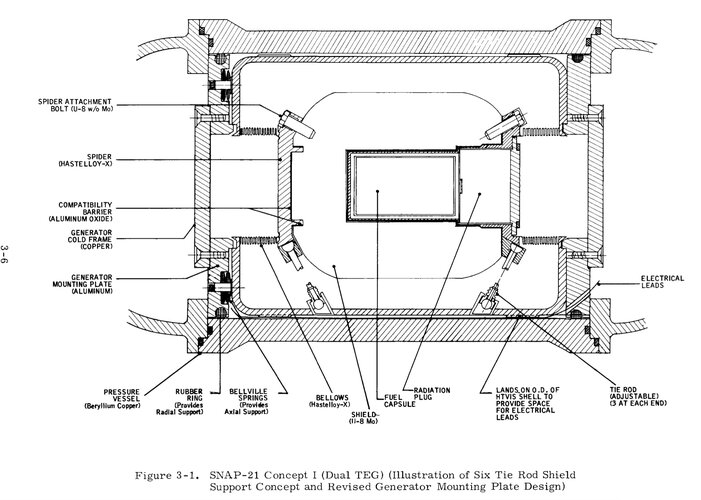
Later, (~1972) in its Ocean Engineering (Special Projects) role, Halibut also received a cylindrical chamber on its aft hatch. Misleadingly labelled "DSRV Simulator", it was actually a saturation diving chamber. Specially trained divers would enter the chamber and the atmosphere slowly changed to helium and oxygen, as well as the pressure raised to the projected working depth pressure. Breathing helium and oxygen, the divers would work at depths of at least 400-600 feet. The most famous mission was to install and service taps on Soviet Navy undersea cables and collecting missile fragments from test flights. The saturation chamber had internal compartments with living quarters at the front end. The center section had a hatch connecting to the Halibut aft hatch. Directly below the chamber in Halibut was a monitoring panel for the chamber atmosphere conditions. Divers would suit up and there was an exit at the lower aft end. Because the chamber was at a pressure equal to the surrounding sea, the bottom exit hatch could be opened without water entering the chamber. The divers also had hot water circulated for warmth, as well as the helium oxygen mix and communications lines through umbilicals. The divers wore a Mark 11 Saturation Diving system, which regulated pressure and had back up gas supplies. Also, a diagram of the SNAP-21 (System for Nuclear Auxiliary Power) deep sea radioisotope power system, that employed the heat from plutonium decay to generate electrical power by thermionics. This powered the pod cable tap for 6 month intervals between submarine "visits" to swap out the pods to retrieve the tapes of cable communications.

Halibut was decommissioned in 1976, and the saturation diving chamber transferred onto USS Parche SSN 683. Later in the mid-1980's, Parche was revamped and extended, with a new internal saturation diving chamber.

 

Attachments

  • Halibut Launch.jpg
    Halibut Launch.jpg
    877.9 KB · Views: 55
  • Halibut Saturation Diving Chamber.jpg
    Halibut Saturation Diving Chamber.jpg
    549 KB · Views: 52
  • Halibut Aft_Original 2.jpg
    Halibut Aft_Original 2.jpg
    156.1 KB · Views: 59
  • Halibut Forward_Original 2.jpg
    Halibut Forward_Original 2.jpg
    132.9 KB · Views: 65
  • Halibut Drawings AFT.jpg
    Halibut Drawings AFT.jpg
    3.9 MB · Views: 69
  • Halibut Drawings-Forward.jpg
    Halibut Drawings-Forward.jpg
    3.3 MB · Views: 68
  • Halibut 1972 Special Projects.jpg
    Halibut 1972 Special Projects.jpg
    1,018.9 KB · Views: 66
  • As Built and Final Special Projects Version.jpg
    As Built and Final Special Projects Version.jpg
    164.9 KB · Views: 62
  • Halibut Spec Ops original thruster.jpg
    Halibut Spec Ops original thruster.jpg
    1 MB · Views: 58
  • Special Projects Version 1968.jpeg
    Special Projects Version 1968.jpeg
    1.4 MB · Views: 51
  • Halibut Hanger Open.jpg
    Halibut Hanger Open.jpg
    2 MB · Views: 49
  • Elvis on Halibut (Elvis is Everywhere).jpg
    Elvis on Halibut (Elvis is Everywhere).jpg
    1.5 MB · Views: 46
  • Regulus Missiles in Halibut Hangar.JPG
    Regulus Missiles in Halibut Hangar.JPG
    5.5 MB · Views: 45
  • As Built SSGN.jpg
    As Built SSGN.jpg
    2 MB · Views: 45
  • Mk 11 saturation system -2.jpg
    Mk 11 saturation system -2.jpg
    185.9 KB · Views: 43
  • Mk 11-1.jpg
    Mk 11-1.jpg
    76.8 KB · Views: 43
  • Halibut moored off Maui.jpg
    Halibut moored off Maui.jpg
    162.5 KB · Views: 42
  • SNAP-21 DEEP SEA RADIOISOTOPE-FUELED THERMOELECTRIC GENERATOR POWER SUPPLY SYSTEM.jpg
    SNAP-21 DEEP SEA RADIOISOTOPE-FUELED THERMOELECTRIC GENERATOR POWER SUPPLY SYSTEM.jpg
    1,015.2 KB · Views: 51
Last edited:
Tommy Cox was a cryptology specialist and worked in the Special Projects group in the extended hull, modified version of Seawolf. He also served on a number of other submarines, including Lapon and Parche. In the book "Watertight" Karl Heckman describes life on board Seawolf in that era. Karl was in the reactor division, and as he describes, outside of the senior officers and the Projects team, the rest of the crew had no idea where they were on what went on in the Projects area. When Projects operations were started, an announcement was made that the area would be closed and anyone who needed to move compartments should do so immediately. Any conversations between Project personnel and crew members in the mess were kept to sports and other topics outside of what happened in the Projects area. A very few Projects personnel were civilian with specialties relevant to the mission.

Karl's book is a very worthwhile read with tales of his training and some of the funnier stories about life on Seawolf. His time on board was very near the end of Seawolf's career and the crew was dealing with 29 year old and largely obsolete equipment issues. There is one section however that describes a massive power failure while in an area that "They couldn't be found in". He describes the frantic efforts to trace the problem and restart the reactor before the battery was depleted. The book is very well written, edited, and organized.
 
Last edited:
Tommy Cox was a cryptology specialist and worked in the Special Projects group in the extended hull, modified version of Seawolf. He also served on a number of other submarines, including Lapon and Parche. In the book "Watertight" Karl Heckman describes life on board Seawolf in that era. Karl was in the reactor division, and as he describes, outside of the senior officers and the Projects team, the rest of the crew had no idea where they were on what went on in the Projects area. When Projects operations were started, an announcement was made that the area would be closed and anyone who needed to move compartments should do so immediately. Any conversations between Project personnel and crew members in the mess were kept to sports and other topics outside of what happened in the Projects area. A very few Projects personnel were civilian with specialties relevant to the mission.

Karl's book is a very worthwhile read with tales of his training and some of the funnier stories about life on Seawolf. His time on board was very near the end of Seawolf's career and the crew os dealing with old and largely obsolete equipment issues. There is one section however that describes a massive power failure while in an area that "They couldn't be found in". The frantic efforts to trace the problem and restart the reactor before the battery was depleted. The book is very well written, edited and organized.
"The submarine fleet goes places we never were, does things that never happened, and then comes home to figuratively sink the navy's newest cruiser."
 
Some details about Halibut. Early photos in the Regulus SSGN configuration. At that point, the original sail was low. The hanger section could store multiple Regulus I missiles, and was sized to also take lower numbers of the larger Regulus II. Halibut was a derivative of the Skate class design and had a Skate SW3 reactor of lower power (roughly 1/2) compared to the Nautilus S2W plant. Halibut was always viewed as a one off conversion of a Skate class plan. Even if the Regulus missile program had continued, a very different new design for subsequent SSGNs was developed. The low sail was later replaced with a higher sail, as Regulus launches generated excess exhaust. Cancellation of Regulus II limited the lifetime of the Regulus I missile deterrence patrols as the much more capable Polaris program advanced.

In the initial Special Projects (Ocean Engineering) version, the hanger was modified and divided into decks. The lower deck housed the camera and sonar "Fish" tow bodies. Also in the lower section was the deployment tube and the towing cable reel. The Covert Shores drawing erroneously shows the cable reel outside this area, under the upper deck. But in order for the cable to provide power and transmit and receive signals from the Fish, the reel had a series of commutators and slip rings similar to an electric motor) and hence the reel had to be in a dry area. A Univac 1224 computer was in the upper deck, most probably to help with navigation calculations during a search. Halibut would deploy a grid of transponders on the ocean floor bracketing he search area. The time of arrival of the different transponder signals were used to calculate the location of Halibut in the grid. The converted hanger also had a darkroom and bunk area.

Later, (~1972) in its Ocean Engineering (Special Projects) role, Halibut also received a cylindrical chamber on its aft hatch. Misleadingly labelled "DSRV Simulator", it was actually a saturation diving chamber. Specially trained divers would enter the chamber and the atmosphere slowly changed to helium and oxygen, as well as the pressure raised to the projected working depth pressure. Breathing helium and oxygen, the divers would work at depths of at least 400-600 feet. The most famous mission was to install and service taps on Soviet Navy undersea cables and collecting missile fragments from test flights. The saturation chamber had internal compartments with living quarters at the front end. The center section had a hatch connecting to the Halibut aft hatch. Directly below the chamber in Halibut was a monitoring panel for the chamber atmosphere conditions. Divers would suit up and there was an exit at the lower aft end. Because the chamber was at a pressure equal to the surrounding sea, the bottom exit hatch could be opened without water entering the chamber. The divers also had hot water circulated for warmth, as well as the helium oxygen mix and communications lines through umbilicals. The divers wore a Mark 11 Saturation Diving system, which regulated pressure and had back up gas supplies. Also, a diagram of the SNAP-21 (System for Nuclear Auxiliary Power) deep sea radioisotope power system, that employed the heat from plutonium decay to generate electrical power by thermionics. This powered the pod cable tap for 6 month intervals between submarine "visits" to swap out the pods to retrieve the tapes of cable communications.

Halibut was decommissioned in 1976, and the saturation diving chamber transferred onto USS Parche SSN 683. Later in the mid-1980's, Parche was revamped and extended, with a new internal saturation diving chamber.
Pretty good data except the cable reel was outside the pressure hull up in the free flooding superstructure. If the reel was inboard it would be very difficult to keep it sealed from out side sea pressure while the cable was feeding in and out. It was a twisted wire cable with coax at it core.
 
Pretty good data except the cable reel was outside the pressure hull up in the free flooding superstructure. If the reel was inboard it would be very difficult to keep it sealed from out side sea pressure while the cable was feeding in and out. It was a twisted wire cable with coax at it core.
No, the reel was inside the pressure hull in the hanger, and a special seal system allowed the cable to pass through the seal and outside the launch tube and to the Fish. This information from an engineer who worked on the system and went out on sea trials for the original systems on both Halibut and Seawolf. The reel had a system of commutators on the reel axle that provided the electrical power, control commands, and sonar and television signals. The commutator system obviously would not work in salt water. Also at one point they noticed fraying in the end of the cable near the Fish. They pulled all of the cable off the reel and swapped ends. That took days to accomplish. This required laying out the cable in a giant, figure 8 loop.

The original Fish was an open protective frame work structure with the various parts such as cameras and side scan sonar accessible for maintenance. They were very finicky and required constant attention. The #6 Fish was the one that found the K-129 wreckage.

If you stop to visualize it, the coax cable at the reel end that was then connected to the system controls in the submarine would have been twisted around hundreds of times as the reel rotated. It would not have withstood those torsional forces,
 
Last edited:
The cable was attached to the fish, routed into the aquarium over the launch and retrieve mechanism up through the hawse pipe past two set of inflatable seal into the superstructure on to the reel that looked like a giant fishing rod spool. Any time underway when you had to pull cable into the boat you had to act fast as they would release the seals and spool cable into the boat while a small amount of flooding took place in the aquarium. Look at the piping tab pics and you can see the hawse pipe
 
So how do you feed power and data to/from the coax cable attached to the Fish if the reel is in the free flood area? The stationary end of the cable is attached to the reel. As the reel turns, how do you keep the coax cable from twisting and breaking as the feed enters the submarine?
 
Just like you said , rings but under some heavy duty seals. At the time those cables were the longest un spiced cables ever made
 
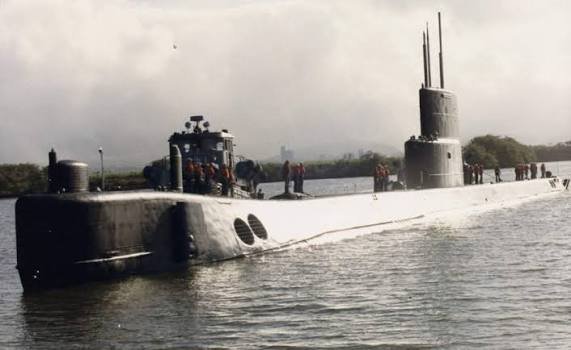
That's me on the hump just after of the tug.
View attachment 824954
That's Seawolf, not Halibut, correct? Seawolf had the saturation diving chamber internally in the bow extension added in the early 1970's. Different from the external chamber on the stern and converted hanger area on Halibut.
 
Yes , Seawolf in Hawaii after a mission. Halibut and Seawolf had some similar equipment...Seawolf equipment was a little better organized
 
You have done a great job on your research. Even after all these years it is still hard to get real accurate information on these boats. I was lucky enough to see this stuff in action. As for the old dsrv simulator, it was in storage up to a few years ago. At our last reunion I learned they had cut it up and scraped it. What a shame.
 
Thanks, I can't take all the credit; it was part of the research I was involved in for the documentary film Azorian: The Raising of the K-129. Several others made major contributions. I wrote a 4 part article recently on the mission and what we have learned subsequent to the 2009 film release. That was published in American Submariner magazine. I don't know if you are a member and receive the magazine.

As far as Seawolf, a very good book was written by Karl Heckman called "Watertight: How I Survived the Submarine Service Without Losing My Mind". Karl was on Seawolf during her last deployments in the mid 1980's before she was decommissioned.

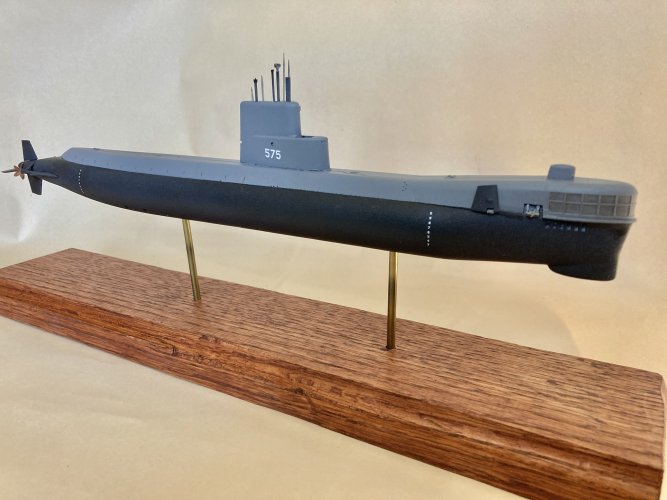
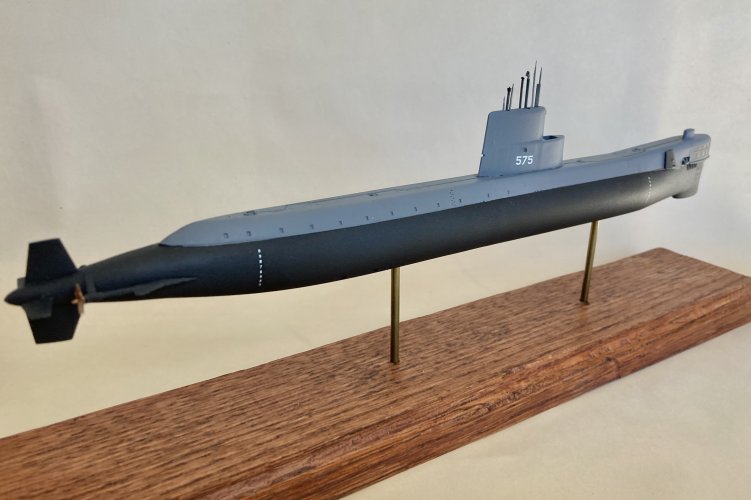
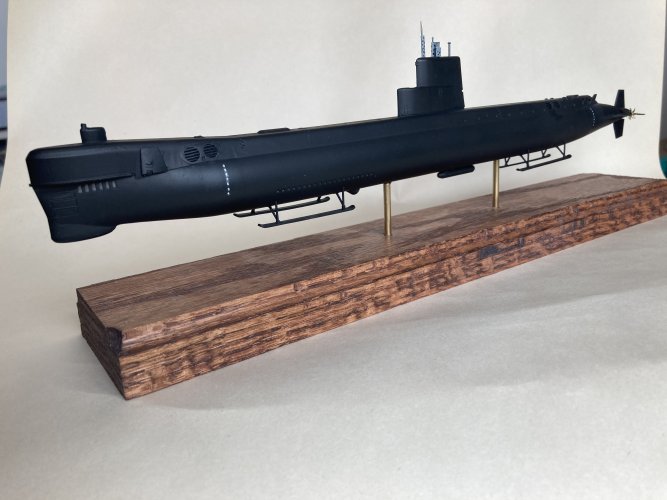
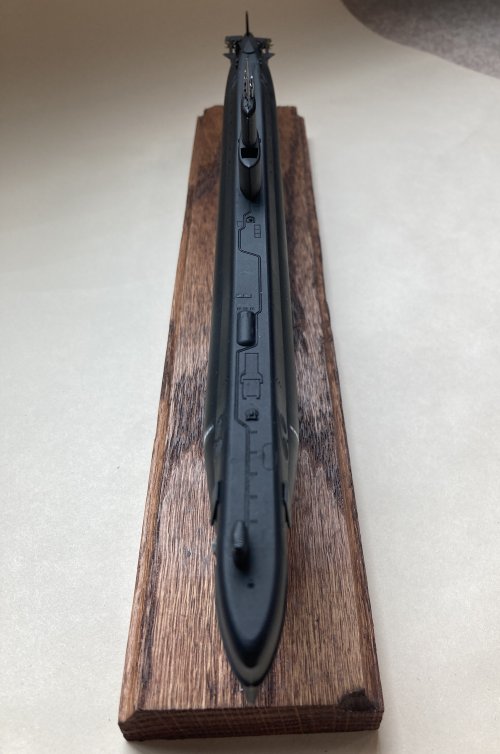
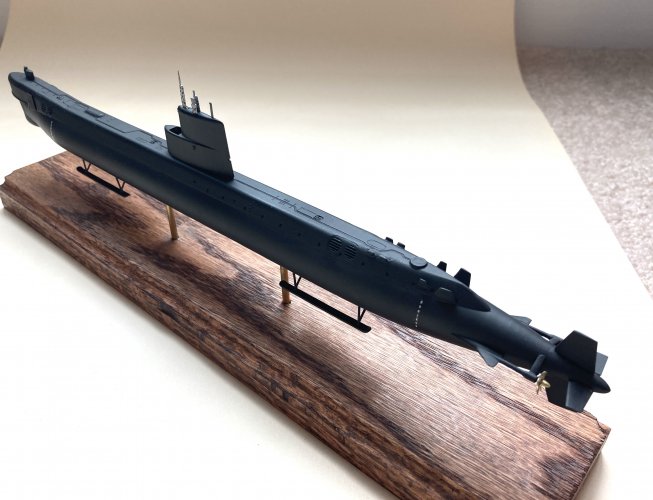
Also, here are resin prototype models I built of Seawolf as both the original construction (which had the liquid sodium cooled reactor and the converted version with the various modifications and additions.
 

Attachments

  • Fig. 10.JPG
    Fig. 10.JPG
    3 MB · Views: 2
  • IMG_2488.JPG
    IMG_2488.JPG
    1.7 MB · Views: 3
  • IMG_5117.JPG
    IMG_5117.JPG
    1.3 MB · Views: 3
  • IMG_5121.jpg
    IMG_5121.jpg
    2.5 MB · Views: 3
  • IMG_5127.jpg
    IMG_5127.jpg
    2.4 MB · Views: 3

Similar threads

Back
Top Bottom