
You are using an out of date browser. It may not display this or other websites correctly.
You should upgrade or use an alternative browser.
You should upgrade or use an alternative browser.
Convair B-58 Hustler
- Thread starter Steve Pace
- Start date

- Joined
- 3 June 2011
- Messages
- 20,920
- Reaction score
- 19,119
Any electronic help to improve the flight characeteristics would be very welcome. surely enough that bird had plenty of room for improvement - B-58B anybody ?
Had never heard that it was a poor flyer.

- Joined
- 16 April 2008
- Messages
- 10,588
- Reaction score
- 18,127
Any electronic help to improve the flight characeteristics would be very welcome. surely enough that bird had plenty of room for improvement - B-58B anybody ?
Had never heard that it was a poor flyer.
It was definitely a handful.
https://www.airspacemag.com/history-of-flight/speed-freak-11315229/
The B-58’s complex flight control system was a cause for continual anguish; designers, pilots, and mechanics all struggled with it. Because of the delta wing configuration, the bomber had no horizontal elevators or wing-mounted ailerons. Instead, it had a very complex system of linkages that connected the wing’s elevons (a combination of ailerons and elevators) to the large rudder.
“You would sit there on the end of the runway doing all kinds of checks on the flight controls,” Cotton says. “It was an extremely complex arrangement, centered around the power control linkage assembly. When I preflighted the airplane, I made sure the crew chief had it opened up so I could look up in there to see if there were any hydraulic leaks and that the rods were all connected—the system was a hydro-mechanical-electrical maze.” Most pilots and crew members referred to it as the “three-bicycle wreck” since it looked like the engineers had run three bikes together.
“I think the flight control system led to the loss of a few people and aircraft,” Cotton says. “It took a tremendous amount of understanding. A lot of pilots would tell you that they flew the airplane a long time before they understood what they were doing when they mixed the stick around.”
Flying Sorcerer
ACCESS: Confidential
- Joined
- 18 June 2008
- Messages
- 136
- Reaction score
- 109
Thank you al. I recall that a large number of accidents occurred during flight testing and that once the -58 became operational it's loss rate was somewhere around 12% during its decade of service life. There was a tactical bomber version (and I think even an air defence variant) proposed but its high cost made that a non-starter. Apparently Curtis LeMay resented it because it cost several times as much as a B-52
apparition13
I really should change my personal text
- Joined
- 27 January 2017
- Messages
- 758
- Reaction score
- 1,396
If I recall correctly, it had a really narrow angle of attack envelope it which it could be flown. Like 9-17 degrees or some such. It was a bit of a handful. What it really needed was fly by wire.
They had an order for 190+ B-58Bs cancelled at the last minute. The design had canards, so maybe it wouldn't have been as difficult to fly. Presumably any future versions would have addressed handling problems. The B-58 thread also talks about the C (bomber), D (interceptor) and E (tactical bomber) proposals. It had a lot of potential that was never realized.Good point. On the other hand, if they'd intended to keep them that long, maybe they'd have made more. They'd be perfect carriers of hypersonic weapons.


- Joined
- 13 August 2007
- Messages
- 10,405
- Reaction score
- 18,054
Even if stay longer in service
with chance in doctrine from High altitude supersonic (specialty of B-58)
towards low-level flight toward target (B-1 and B-52)
it would reduce drastic the lifetime of B-58 Airframe, next to that B-58 crashes during low level flight.
i think the B-58 had be pull out service in begin of 1980s, to be replaced by B-1
with chance in doctrine from High altitude supersonic (specialty of B-58)
towards low-level flight toward target (B-1 and B-52)
it would reduce drastic the lifetime of B-58 Airframe, next to that B-58 crashes during low level flight.
i think the B-58 had be pull out service in begin of 1980s, to be replaced by B-1

RetiredAFGuy
20 years of Phantom Phun
- Joined
- 10 January 2019
- Messages
- 28
- Reaction score
- 57
The older guys I served with who had been B-58 maintainers hated that aircraft with a red-hot passion. Very little in the design had any "design for maintainability" forethought given.
Equipment like rate gyros were installed in the wings, behind non-removable panels. Replacing those items required working by feel through an access panel located a full arm's length away from the equipment. Much of the avionics were installed that way, leading to lots of dropped hardware by technicians working by feel, which lead to many man hours expended to recover the hardware and tools.
Not a maintainable aircraft that drove per flight hour maintenance costs higher than the B-52.
Equipment like rate gyros were installed in the wings, behind non-removable panels. Replacing those items required working by feel through an access panel located a full arm's length away from the equipment. Much of the avionics were installed that way, leading to lots of dropped hardware by technicians working by feel, which lead to many man hours expended to recover the hardware and tools.
Not a maintainable aircraft that drove per flight hour maintenance costs higher than the B-52.
A good link to understand the design evolution (structural) of the Hustler and understand why it regained most of its potential only after exiting active service:
http://sftentx.org/North_Texas_Chapter_SFTE/Event_Photos/Pages/Jay_Miller_Paper.html#4
http://sftentx.org/North_Texas_Chapter_SFTE/Event_Photos/Pages/Jay_Miller_Paper.html#4
While the Hustler was still in service, two major changes to all B-58s were integrated as a result of ‘5664’s loss. The first was a fix to the flight control system resulting in reduced activity gain of the aileron control input in response to yaw heading. Additionally, small trim surfaces found inboard of the elevons of several early B-58s, were deactivated and replaced by fixed trailing edge fairings.
The second change was a physical strengthening of the vertical fin and associated fuselage structure just forward of the tail. New aircraft were built with these modifications integral to the flight control system and structure, respectfully.
A second B-58 was eventually pulled from the production line and modified to the new standard. Just short of a month after ‘5664 and its crew evaporated in the skies over Oklahoma, Beryl Erickson climbed into this modified aircraft, taxied to the end of the main Carswell AFB runway, and headed skyward to complete the test that Fitzgerald and Siedhof had died attempting. Once at altitude and speed, Erickson shut down the right outboard engine. The airplane yawed, quickly stabilized, and moments later, recovered without incident. No ancillary problems were encountered. Within a week of the test the B-58 was officially cleared for Mach 2.0 flight in a high-q, far aft c.g. condition [ending a M1.6 restriction]

taildragger
You can count on me - I won a contest
- Joined
- 2 November 2008
- Messages
- 404
- Reaction score
- 521
As drawn, it looks to me like the external pod wouldn't clear the top of the ramp. I haven't checked the dimensions but the drawing seems to be to scale and there's a guide rail where a clearance trench would have to be. Go figure.Apologies if this is the wrong thread and/or old news, and apologies too that I cannot currently (for the life of me) find my original online source for this. It's credited to the Roger Cripliver collection and I am pretty sure I found it on a 'Combat Reform' site on protecting aircraft against attack, but more specific I can't currently be. Anyway, here is a diagram of a proposed hardened shelter specially for a Convair B58.
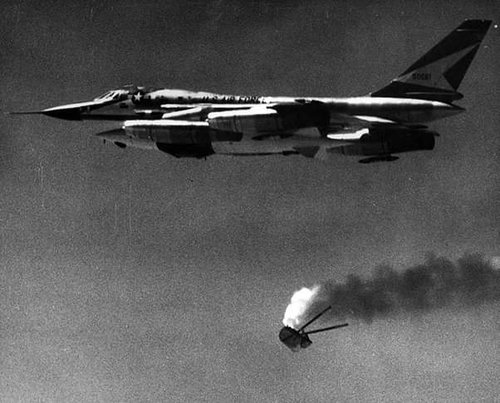
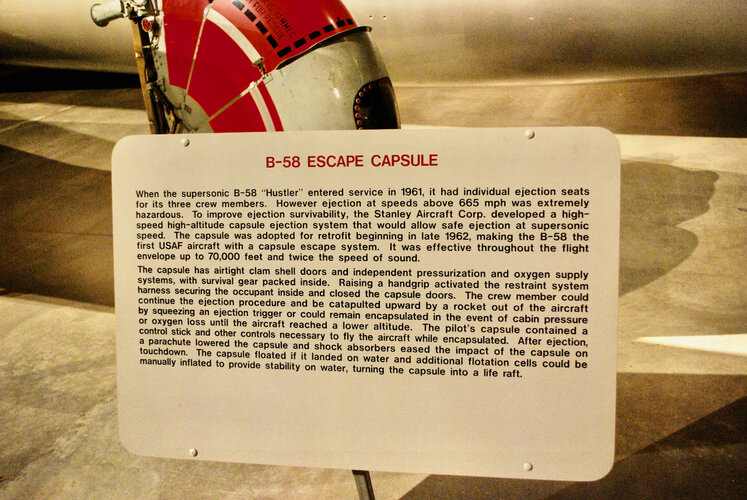
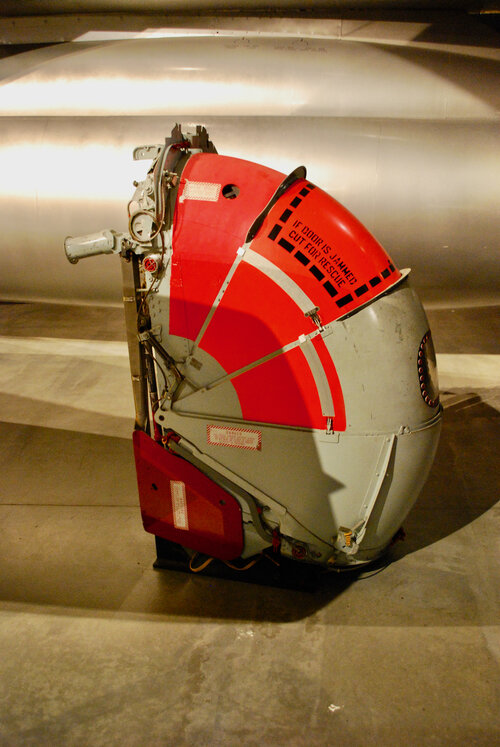
June 26, 1962: The RS-70 crew escape capsule for the XB-70 was successfully ejected from a modified pod carried by a B-58 at 20,000 feet. This marked the first time an escape capsule was flight tested before the plane for which it was intended was flown. The rocket-powered capsule was ejected downward from an inverted position.
Cost of B-58 Vs B-52 (Hijacked (without preliminary approval) from the B-21 thread) :
No, not at all. A Hustler was slightly cheaper to operate, but some "creative accounting" made a powerful talking point that survives to this day.Didn't a B-58 cost three times as much as a B-52 to operate
I don't recall the exact numbers off the top of my head, but the talking point was created by saying the two Hustler wings were as expensive as six BUFF-equipped SAC wings. This ignored the fact that the Hustler wings had three times as many aircraft.
A BUFF wing was typically one bombardment squadron (BS) of 12-15 aircraft, frequently, but not always with an aerial refueling squadron. All 100+ Hustlers produced (minus operational losses) belonged to just two wings. The 63rd, 64th, 65th BS all belonged to one wing (43rd) in Little Rock, for example, as did the KC-135 squadron there.
Acquisition costs for the Hustler were roughly three times as much as a Buff, but that was sunk cost by the time the decision to retire them came about. SAC wanted to keep them, but the decision came down from on high.
Sorry for the delay on this and for a couple of other things I may post on this topic. I've got some numbers on the topic of B-52 vs. B-58.
Each B-52 wing had 15 "Unit Equipped" (Air Force jargon, I don't know what it means), while each B-58 wing had 39 UE aircraft. One time acquisition cost of a B-58 was 2.46 times that of a B-52 in constant dollars. If you threw in planned tanker support for both but didn't count the four GAM-72 decoys usually acquired with each B-52, the ratio was still 2.28 in the B-52's favor. However, the the Annual O&M and personnel costs for each B-52 was 17% higher than the B-58 and those were recurring costs. Put another way, for the cost of operating 66 B-52s you could operate 78 B-58s.
Regarding why the B-58 went away, originally Robert McNamara wanted it gone by mid 1970 (extended by him in 1966 to mid 1971) partly to crate a need to be filled by his beleoved F-111 (the FB-111 variant). Once, he was gone, though, for operational reasons in early 1969 the date moved out to at least 1974 by DoD. However, in the latter part of 1969 the head of SAC, apparently without input from B-58 experts, briefed the Air Force Chief of Staff that 78 B-58s should be phased out in order to preserve about 60 older B-52s. General Ryan took the recommendation of his SAC Chief to SECDEF. Having earlier in the year extended the B-58 in service per AF input, OSD was now being told it wasn't wanted after all. SECDEF Laird then directed that the B-58 was to be gone by Jan 31, 1970

Maury Markowitz
From the Great White North!
- Joined
- 27 February 2014
- Messages
- 211
- Reaction score
- 172
With a crew of three vs. four in the buff, the B-58 is more expensive on a per-person basis. That is interesting.Cost of B-58 Vs B-52 (Hijacked (without preliminary approval) from the B-21 thread) :
Each B-52 wing had 15 "Unit Equipped" (Air Force jargon, I don't know what it means), while each B-58 wing had 39 UE aircraft. One time acquisition cost of a B-58 was 2.46 times that of a B-52 in constant dollars. If you threw in planned tanker support for both but didn't count the four GAM-72 decoys usually acquired with each B-52, the ratio was still 2.28 in the B-52's favor. However, the the Annual O&M and personnel costs for each B-52 was 17% higher than the B-58 and those were recurring costs. Put another way, for the cost of operating 66 B-52s you could operate 78 B-58s.
Oh, come on.Regarding why the B-58 went away, originally Robert McNamara wanted it gone by mid 1970 (extended by him in 1966 to mid 1971) partly to crate a need to be filled by his beleoved F-111 (the FB-111 variant).
The B-58 was only supersonic at high altitude, which by the mid-1960s was already suicidal. That left it flying penetration missions at speeds only slightly faster than the buff and with much shorter range when doing so. McNamara didn't kill it because he "loved" the F-111, he killed it because it no longer had a credible mission - a buff blasting its way into the SU with SRAM at M0.85 was far more survivable than a B-58 with a pod doing so at M0.95.
The FB-111 had a significantly higher performance at low altitude, did so from a twin-jet airframe that cost much less to maintain and operate, and could be easily forward deployed. Of course, that is not a direct replacement for a US-based fleet, which is why the B-1 was developed - it was literally defined as an aircraft with the performance of the B-58 at high altitude, the F-111 at low altitude, and the same range as the B-52 at any altitude.
It's not that the mission didn't exist, it was that the B-58 couldn't credibly fulfill it.
The FB-111A was also much, much less a crew-killer than the B-58.
It dawned on me the other day that the production run of FB-111A (76) was smaller than the Hustler itself (116) !
Both FB-111A and B-1A initial orders (263 and 240 respectively) were sized to replace all the B-52s "not -G" and "not -H" - that is around 400 C-D-E-F left by 1965 before Vietnam attrited them even further.
Yet the few FB-111A (76) and the none B-1A (0) procured finally left the old BUFFs not replaced by 1970 nor 1975 nor 1980.
How did SAC took that massive loss ? Was it really a major issue ?
I also wonder - did anybody tried to bring back a "min-mod" B-58B in 1962, with only the two basic modifications - stretched fuselage and different J79s found on F-104G or F-4J ?
It dawned on me the other day that the production run of FB-111A (76) was smaller than the Hustler itself (116) !
Both FB-111A and B-1A initial orders (263 and 240 respectively) were sized to replace all the B-52s "not -G" and "not -H" - that is around 400 C-D-E-F left by 1965 before Vietnam attrited them even further.
Yet the few FB-111A (76) and the none B-1A (0) procured finally left the old BUFFs not replaced by 1970 nor 1975 nor 1980.
How did SAC took that massive loss ? Was it really a major issue ?
I also wonder - did anybody tried to bring back a "min-mod" B-58B in 1962, with only the two basic modifications - stretched fuselage and different J79s found on F-104G or F-4J ?
Last edited:

- Joined
- 3 October 2007
- Messages
- 1,960
- Reaction score
- 1,286
The FB-111A was also much, much less a crew-killer than the B-58.
It dawned on me the other day that the production run of FB-111A (76) was smaller than the Hustler itself (116) !
Both FB-111A and B-1A initial orders (263 and 240 respectively) were sized to replace all the B-52s
1st point: (stealing from myself elsewhere)
After the B-58 became operational, there were 17 lost over 10 years. One was destroyed in a taxiing incident and two were lost at Paris airshows. Of those, one was while it was performing aerobatic maneuvers at low altitudes and one was lost on approach when the pilot got behind the power curve at low altitude, something critical for all pure deltas. Even including those unique accidents, that works out to a loss rate of 1.7 per year over 10 years (1.4 if we don't count those three). The B-47, for comparison, had 28 fatal accidents in just one operational year.
2nd point: There was a reason for that. Once the decision was made to proceed with the B-1, there was no reason for the FB-111 to remain in production, the former could easily handle the latter's missions. It's no accident that the production program was curtailed the same year the decision to move out on B-1 was made.
No one, even McNamara, considered the FB-111 a B-52 replacement. He saw it serving alongside a fleet of upgraded B-52s as a medium range bomber. That was one of the reasons he wanted the B-58 killed, to create an additional need for the FB-111 to fill.
- Joined
- 3 October 2007
- Messages
- 1,960
- Reaction score
- 1,286
During the time period we're talking about, which is not today, the BUFF had a crew of six, not four. Even today I believe there are still five crew stations. Crew size wasn't the only determinant of the relative cost differential, however. Anyway, we don't pay for bombers on a per person basis, but on a per plane basis. If we stuffed five more people in a B-52 that wouldn't reduce its operational cost by half.With a crew of three vs. four in the buff, the B-58 is more expensive on a per-person basis. That is interesting.Cost of B-58 Vs B-52 (Hijacked (without preliminary approval) from the B-21 thread) :
Each B-52 wing had 15 "Unit Equipped" (Air Force jargon, I don't know what it means), while each B-58 wing had 39 UE aircraft. One time acquisition cost of a B-58 was 2.46 times that of a B-52 in constant dollars. If you threw in planned tanker support for both but didn't count the four GAM-72 decoys usually acquired with each B-52, the ratio was still 2.28 in the B-52's favor. However, the the Annual O&M and personnel costs for each B-52 was 17% higher than the B-58 and those were recurring costs. Put another way, for the cost of operating 66 B-52s you could operate 78 B-58s.
Oh, come on.Regarding why the B-58 went away, originally Robert McNamara wanted it gone by mid 1970 (extended by him in 1966 to mid 1971) partly to crate a need to be filled by his beleoved F-111 (the FB-111 variant).
The B-58 was only supersonic at high altitude, which by the mid-1960s was already suicidal. That left it flying penetration missions at speeds only slightly faster than the buff and with much shorter range when doing so. McNamara didn't kill it because he "loved" the F-111, he killed it because it no longer had a credible mission - a buff blasting its way into the SU with SRAM at M0.85 was far more survivable than a B-58 with a pod doing so at M0.95.
The FB-111 had a significantly higher performance at low altitude, did so from a twin-jet airframe that cost much less to maintain and operate, and could be easily forward deployed. Of course, that is not a direct replacement for a US-based fleet, which is why the B-1 was developed - it was literally defined as an aircraft with the performance of the B-58 at high altitude, the F-111 at low altitude, and the same range as the B-52 at any altitude.
It's not that the mission didn't exist, it was that the B-58 couldn't credibly fulfill it.
Granted the B-58 was supersonic at high altitudes, but an aircraft that can sustain M2 at altitude is going to less vulnerable than one that peaks @ M .84. The contract for the development of SRAM was not awarded until the year after McNamara announced he was killing the B-58.
But then everyone transitioned to low level operations for some missions. Although I can't find hard numbers for both, most of what I've read was that the B-58 was much faster at low altitude, not slightly. On one particular exercise, a B-58 flew a mission that included two hours of M .92 flight at or below 500 feet. Also, the B-58 handled low altitude turbulence better than the BUFF due to its lower drag and rigid rather than flexible wing. Did the FB-111 have better performance than the B-58 at low altitude? Probably, when just carrying weapons internally. But the question remains was that improvement enough for the nuclear mission to justify the costs of development and procurement relative to an asset in being? One thing learned over the years was that once you hit M .85-.9 on the deck increasing speed to M 1.2 doesn't buy that much more survivability, which is why later operations with the F-111 (and the B-1B for that matter) didn't normally do supersonic on the deck.
Regarding McNamara, he made no bones about wanting more F-111s (remember he even tried to get USAF to buy it as their F-106 replacement) and in 1965 he directed the B-58 be retired in the 2nd half of 1970, the need to fill that gap would be handled by the FB-111 he wanted developed. His vision of the bomber force was hundreds of FB-111s and updated B-52s. He limited AMSA work to studies and component development. He wasn't going to let AMSA (which would eliminate the need for the FB-111) come to fruition. One of his last acts as SECDEF was to block AMSA program funding in 1968. Once the B-1A was authorized, the orders for FB-111 were cut off as the B-1A could fill that role (B-1A would have also retired the B-58, had it remained in service).
Last edited:
Sec defs come and go and the usaf wanted the amsa and not the fb111. The usaf was able to keep amsa alive despite the sec def. Eventually the fb111 was bought as an interim until the b1 was ready... A paltry 76. But of course we all know Jimmy Carter. But the usaf still managed to keep the amsa now the b1 going with additional test flights. I find it interesting that to be an aviation enthusiast means also needing to be a political expert!

- Joined
- 18 October 2006
- Messages
- 4,776
- Reaction score
- 6,837
Where there is money, there is politics.I find it interesting that to be an aviation enthusiast means also needing to be a political expert!
- Joined
- 3 October 2007
- Messages
- 1,960
- Reaction score
- 1,286
Sec defs come and go and the usaf wanted the amsa and not the fb111. The usaf was able to keep amsa alive despite the sec def. Eventually the fb111 was bought as an interim until the b1 was ready... A paltry 76. But of course we all know Jimmy Carter. But the usaf still managed to keep the amsa now the b1 going with additional test flights. I find it interesting that to be an aviation enthusiast means also needing to be a political expert!
Basically, once the B-1A program was a go, the need for the FB-111 evaporated. So orders beyond those that were already contacted for were canceled,; that's why the FB-111 total was so low. If Humphrey had won the election, I'd wager you'd see no B-1s, but possibly more FB-111s
Last edited:
Or one can make the argument that a mid rang supersonic is a lot more cost effective then a long range one.
Regarding McNamara, he made no bones about wanting more F-111s (remember he even tried to get USAF to buy it as their F-106 replacement) and in 1965 he directed the B-58 be retired in the 2nd half of 1970, the need to fill that gap would be handled by the FB-111 he wanted developed. His vision of the bomber force was hundreds of FB-111s and updated B-52s. He limited AMSA work to studies and component development. He wasn't going to let AMSA (which would eliminate the need for the FB-111) come to fruition. One of his last acts as SECDEF was to block AMSA program funding in 1968. Once the B-1A was authorized, the orders for FB-111 were cut off as the B-1A could fill that role (B-1A would have also retired the B-58, had it remained in service).
Considering the meaning of the word "Hustler" I'm often surprised Ike's America of the 1950's tolerated such a name. I mean, doesn't Hustler means "prostitute" ? and yes, political corecteness was already a thing back then. Different, but already there.
Firefinder
ACCESS: Top Secret
- Joined
- 5 October 2019
- Messages
- 1,260
- Reaction score
- 2,387
Hustler didn't get that meaning till the late 80s.Considering the meaning of the word "Hustler" I'm often surprised Ike's America of the 1950's tolerated such a name. I mean, doesn't Hustler means "prostitute" ? and yes, political corecteness was already a thing back then. Different, but already there.
Before that and it still does mean, someone who is an aggressively enterprising person who is a go getting, as an noun with the Verb being move something along aggressively.
You can see how that fits the B58.
Terms and words meaning do change overtime.
Like remember a missile is an unguided thrown weapon.

It does *now.* It probably didn't *then,* or at least didn't mean it nearly as much as it meant "someone who goes fast." Meanings change over time, as with "gay" and "queer" and "bad" and so on.doesn't Hustler means "prostitute" ?

klem
I really should change my personal text
- Joined
- 7 March 2015
- Messages
- 741
- Reaction score
- 1,765
I believe this to be the first take-off of the premier B-58A (55-0660).

1635yankee
Recovering aeronautical engineer
- Joined
- 18 August 2020
- Messages
- 674
- Reaction score
- 1,030
Hustler didn't get that meaning till the late 80s.Considering the meaning of the word "Hustler" I'm often surprised Ike's America of the 1950's tolerated such a name. I mean, doesn't Hustler means "prostitute" ? and yes, political corecteness was already a thing back then. Different, but already there.
Before that and it still does mean, someone who is an aggressively enterprising person who is a go getting, as an noun with the Verb being move something along aggressively.
You can see how that fits the B58.
Terms and words meaning do change overtime.
Like remember a missile is an unguided thrown weapon.
At least in my lifetime (I'm 69) and region (New England), "hustler" always had a somewhat negative connotation; not someone who was criminal but somebody who skirted the edges of what's legal and ethical. Of course, this may have been different for the region where the marketing reps who picked the name for the B-58.

- Joined
- 1 May 2007
- Messages
- 2,815
- Reaction score
- 2,657
Regarding the naming of the B-58 Hustler, this from' Aerofax Convair B-58', page 39 :-
" The name Hustler also was officially applied to the aircraft at this time, though somewhat surprisingly, it had been in use in-house at Convair and the AF since 1952. The name could, in fact, trace its origins back to a need by Convair engineers for a program codename.
Robert Widmer, one of the chief project engineers in 1952, had discussed the problem with fellow engineer Stanton Brown. When Widmer described the new aircraft to Brown as having a bomber mission and supersonic speed, Brown's retort was, "Sounds like it'll really be a hustler .... why don't we call it Hustler."
The AF later adopted Hustler as the program code word, and in later years, it became the aircraft's official name."
cheers,
Robin.
" The name Hustler also was officially applied to the aircraft at this time, though somewhat surprisingly, it had been in use in-house at Convair and the AF since 1952. The name could, in fact, trace its origins back to a need by Convair engineers for a program codename.
Robert Widmer, one of the chief project engineers in 1952, had discussed the problem with fellow engineer Stanton Brown. When Widmer described the new aircraft to Brown as having a bomber mission and supersonic speed, Brown's retort was, "Sounds like it'll really be a hustler .... why don't we call it Hustler."
The AF later adopted Hustler as the program code word, and in later years, it became the aircraft's official name."
cheers,
Robin.
- Joined
- 3 June 2011
- Messages
- 20,920
- Reaction score
- 19,119
Hate to say it, but outside the B-58, about the only place I'd heard the word used was for the magazine.Hustler didn't get that meaning till the late 80s.Considering the meaning of the word "Hustler" I'm often surprised Ike's America of the 1950's tolerated such a name. I mean, doesn't Hustler means "prostitute" ? and yes, political corecteness was already a thing back then. Different, but already there.
Before that and it still does mean, someone who is an aggressively enterprising person who is a go getting, as an noun with the Verb being move something along aggressively.
You can see how that fits the B58.
Terms and words meaning do change overtime.
Like remember a missile is an unguided thrown weapon.
At least in my lifetime (I'm 69) and region (New England), "hustler" always had a somewhat negative connotation; not someone who was criminal but somebody who skirted the edges of what's legal and ethical. Of course, this may have been different for the region where the marketing reps who picked the name for the B-58.
1635yankee
Recovering aeronautical engineer
- Joined
- 18 August 2020
- Messages
- 674
- Reaction score
- 1,030
There was a great movie, The Hustler, with Paul Newman and Jackie Gleason. Neither Newman nor Gleason played prostitutes; they were professional pool players who would hustle the naive.Hate to say it, but outside the B-58, about the only place I'd heard the word used was for the magazine.Hustler didn't get that meaning till the late 80s.Considering the meaning of the word "Hustler" I'm often surprised Ike's America of the 1950's tolerated such a name. I mean, doesn't Hustler means "prostitute" ? and yes, political corecteness was already a thing back then. Different, but already there.
Before that and it still does mean, someone who is an aggressively enterprising person who is a go getting, as an noun with the Verb being move something along aggressively.
You can see how that fits the B58.
Terms and words meaning do change overtime.
Like remember a missile is an unguided thrown weapon.
At least in my lifetime (I'm 69) and region (New England), "hustler" always had a somewhat negative connotation; not someone who was criminal but somebody who skirted the edges of what's legal and ethical. Of course, this may have been different for the region where the marketing reps who picked the name for the B-58.
Good thing they didn't name it the "B-58 Set."
"Set set the set, then set the set on the set."
"Set set the set, then set the set on the set."

BlackBat242
OK, I changed my personal text ;)
- Joined
- 10 April 2013
- Messages
- 1,620
- Reaction score
- 5,022
Replying to an 11-year-old post, but...A little bit on Project Bullseye
http://www.tboverse.us/HPCAFORUM/phpBB3/viewtopic.php?f=11&t=63
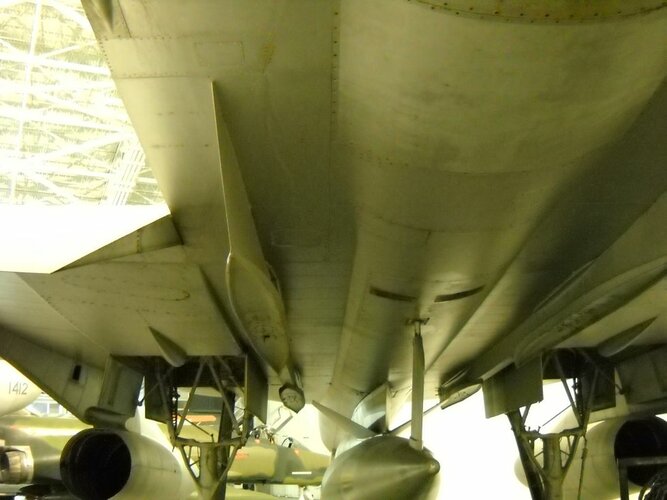
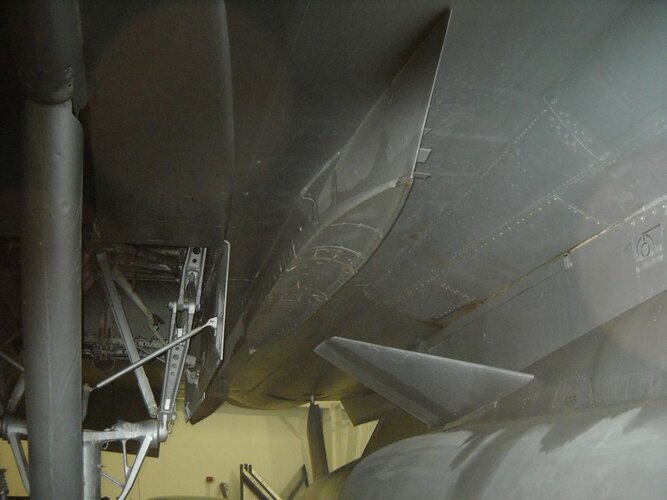
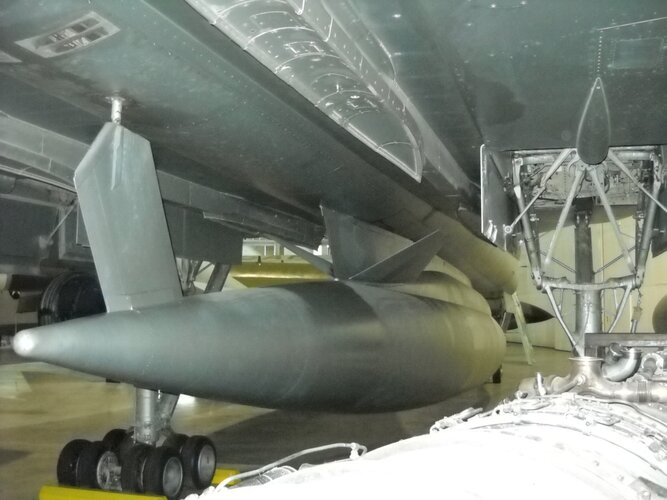
"The B-58 had four 'hard' points (two on each wing) where bombs could be slung.
Not really on the wing... more the wing root.
They were designed for standard tactical nuclear gravity bombs - but conventional ones could be carried.
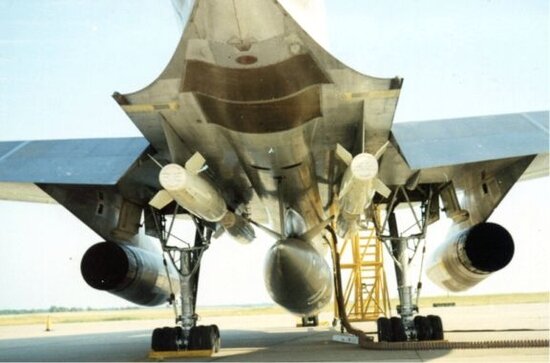
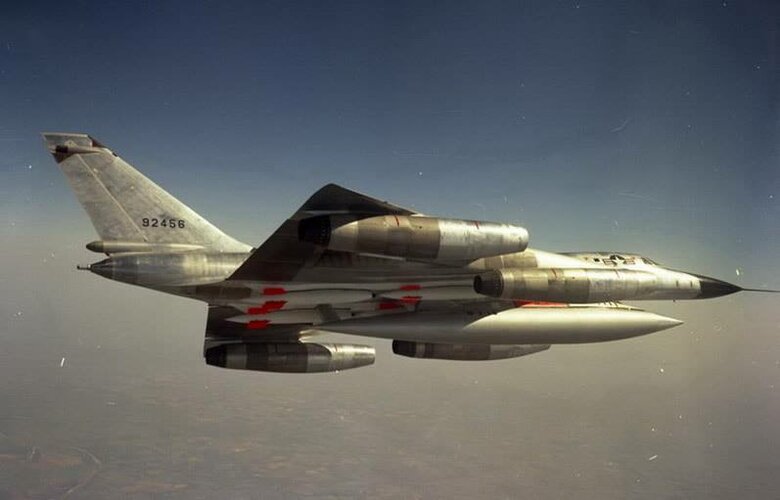
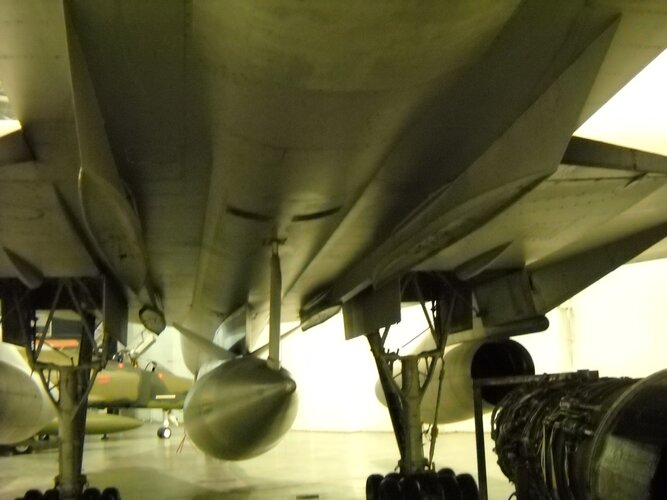
A couple of photos of the one at the SAC museum in Nebraska:
RetiredAFGuy
20 years of Phantom Phun
- Joined
- 10 January 2019
- Messages
- 28
- Reaction score
- 57
I have to wonder were there ever considerations to carry AGM-69 SRAMs in place of the B-61s? Years after the B-58's retirement there was a concept to use A-12s or SR-71s carrying SRAMs as "nuclear Wild Weasels" to knock holes in the Soviet long range radar network for following B-52s.Replying to an 11-year-old post, but...A little bit on Project Bullseye
http://www.tboverse.us/HPCAFORUM/phpBB3/viewtopic.php?f=11&t=63
"The B-58 had four 'hard' points (two on each wing) where bombs could be slung.
Not really on the wing... more the wing root.
They were designed for standard tactical nuclear gravity bombs - but conventional ones could be carried.
View attachment 696008
View attachment 696009
A couple of photos of the one at the SAC museum in Nebraska:
View attachment 696011
View attachment 696012
View attachment 696013
View attachment 696014
If the B-58s had SRAM capability they certainly could have filled that roll owing their far greater numbers than the limited numbers of Blackbird airframes SAC was loath to release from recon duty.
BlackBat242
OK, I changed my personal text ;)
- Joined
- 10 April 2013
- Messages
- 1,620
- Reaction score
- 5,022
That would be an interesting possibility.
I like it!
Of course, in that case it would likely be B-70s they were blasting holes in the air-defense net for, rather than B-52s!
I like it!
Of course, in that case it would likely be B-70s they were blasting holes in the air-defense net for, rather than B-52s!
Seems there is something of an airframe that survived the times:
View: https://youtube.com/shorts/pIIr3Q-AxMc?si=Ow0l233IbglSKovz
Wonder where that was filmed
Wonder where that was filmed
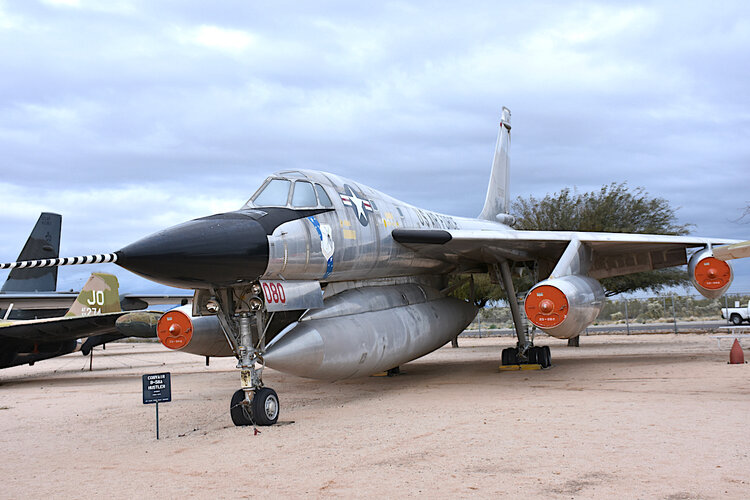
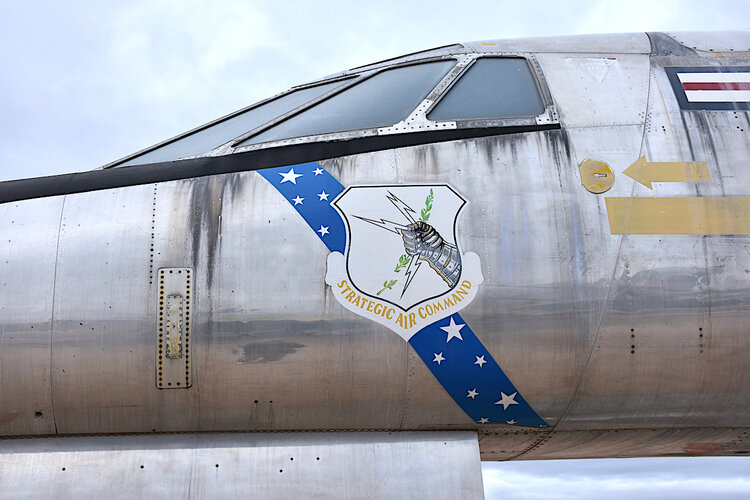
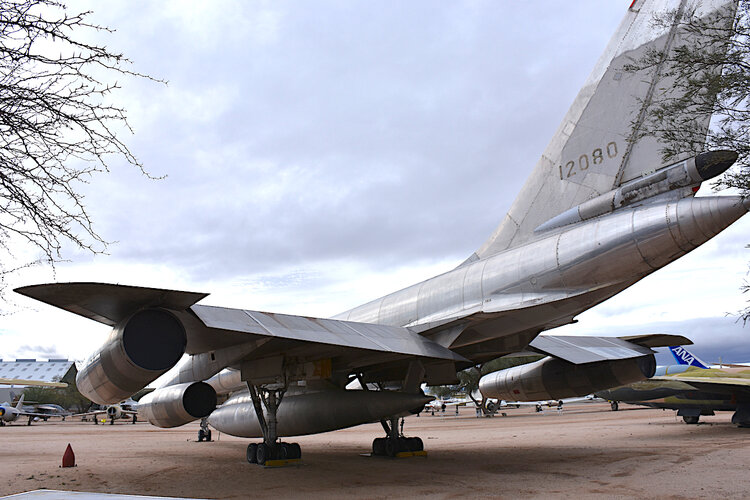
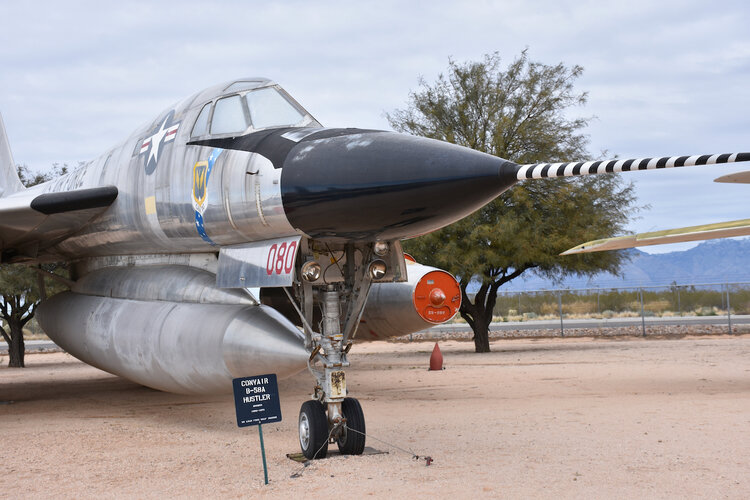
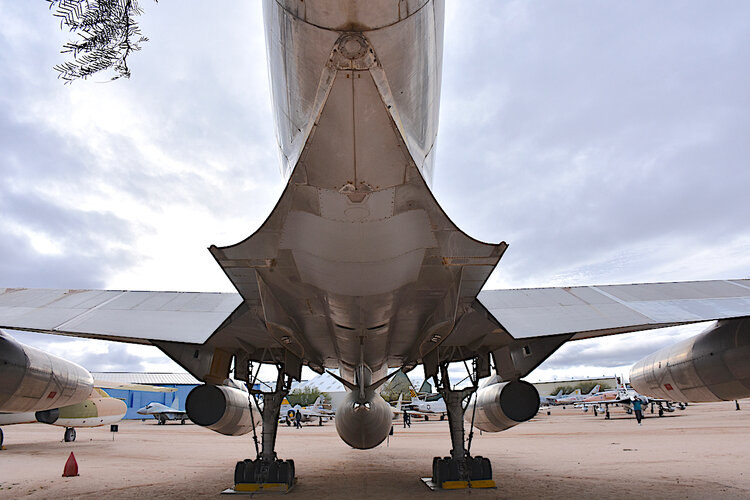
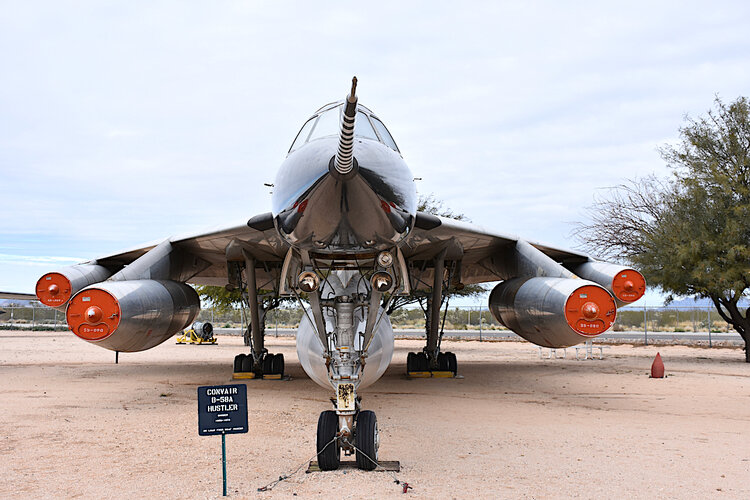
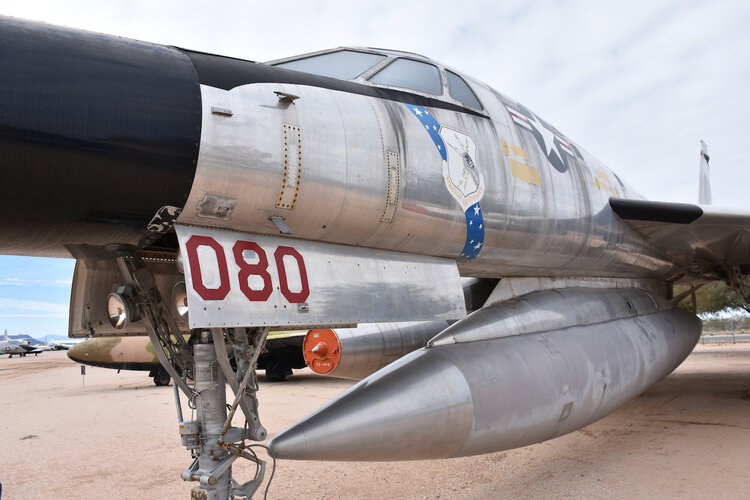
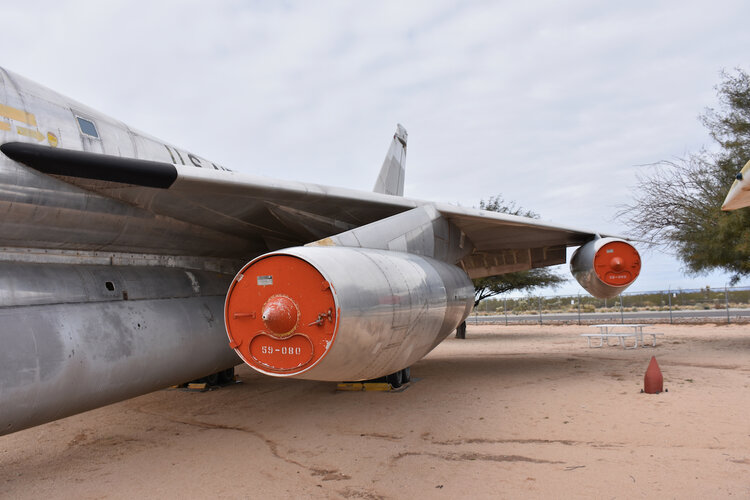
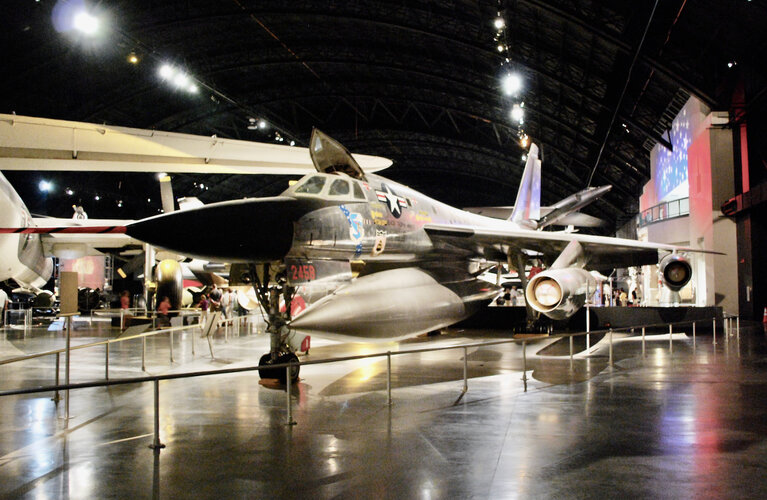
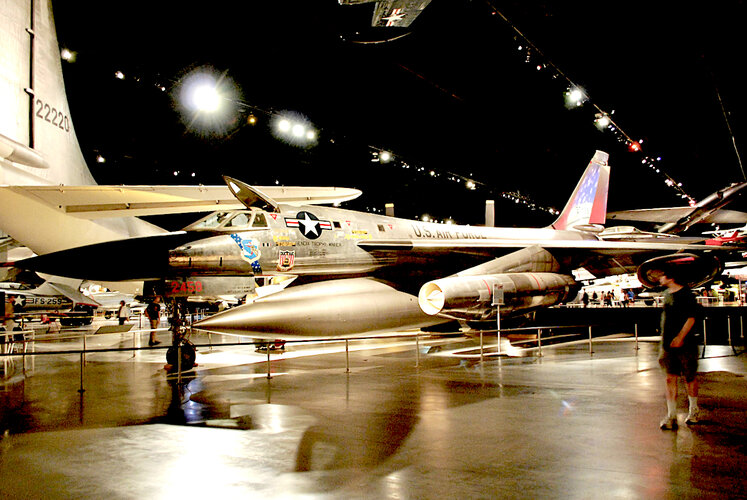
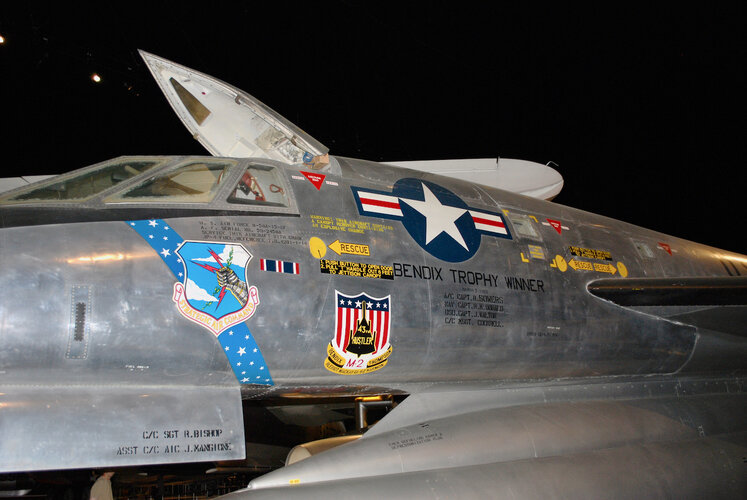
For you B-58 fans; the B-58's at Pima Air Museum in Arizona and at the Air Force Museum, Dayton, Ohio:
Attachments
-
 DSC_1144.jpeg1.4 MB · Views: 32
 -
 DSC_1145.jpeg1.4 MB · Views: 31
 -
 DSC_1146.jpeg1.5 MB · Views: 25
 -
 DSC_2254.jpeg1.1 MB · Views: 23
 -
 DSC_1147.jpeg1.4 MB · Views: 24
 -
 DSC_2255.jpeg1.5 MB · Views: 21
 -
 DSC_2256.jpeg963.1 KB · Views: 16
 -
 DSC_2258.jpeg936.5 KB · Views: 20
 -
 DSC_0552.jpeg1.1 MB · Views: 21
 -
 DSC_0554.jpeg1.3 MB · Views: 24
 -
 DSC_0555.jpeg1.1 MB · Views: 20
 -
 DSC_0560.jpeg1.7 MB · Views: 19
 -
 DSC_0561.jpeg1.3 MB · Views: 30
There is no logic that support that claim.Good point. On the other hand, if they'd intended to keep them that long, maybe they'd have made more. They'd be perfect carriers of hypersonic weapons.
- Joined
- 3 June 2011
- Messages
- 20,920
- Reaction score
- 19,119

Similar threads
-
 Los Angeles Times early Convair XB-58 with eight engines
- Started by hesham
- Replies: 0
-
 "B-58 Hustler In Action" from Squadron Signal
- Started by XP67_Moonbat
- Replies: 9
-

-

-
Convair Super Hustler, Fish and Kingfish
- Started by styx
- Replies: 239