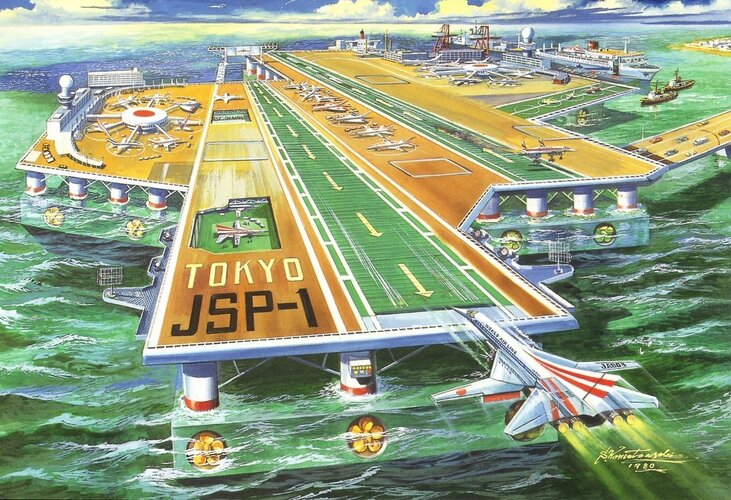
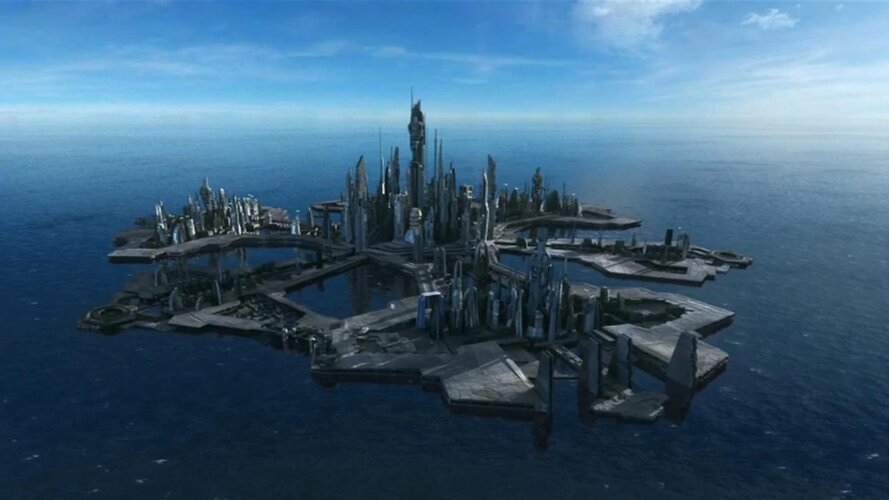
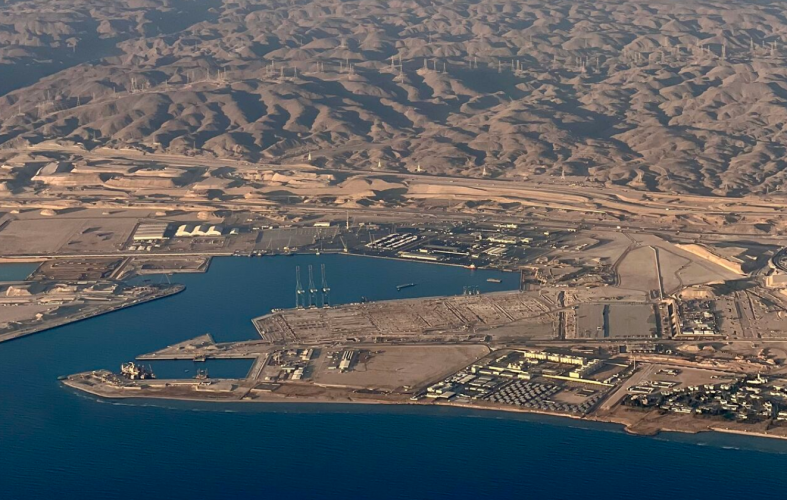
This is an idea that seems to be coming back into fashion. I have a bit of a suspicion that with the concept below, someone may have looked up the old hard engineering data from the production of Waterworld as part of their background research.
So I went to the Oceanics and BIG websites to look for additional info; thus far the project seems really thin on specifics. I've cursorily acquainted myself with some floating house designs, even visited some built examples. Mostly the basic idea seems to consist of building a rather conventional house on a - for the lack of a better description - bespoke barge. Where the contemporary market is perhaps the strongest is in the Middle East luxury segment, hardly World changing (or saving) stuff.
There are some aquaculture pioneers with exciting and quite novel pilot projects around. Perhaps an economy and an architecture can be built around that though I'm really unclear at this point how even those could be scaled to accommodate globally significant amounts of people (range tens to hundreds of millions. let alone billions) if the extent of the ambition is to truly adapt to our rapid environmental change and demographic challenges. I don't think that mere "modularity" cuts it. This is not to say that floating habitats couldn't be part of a solution. Just that in practice mass sustainable oceanic living will probably take a group of very hardy, capable and dedicated people roughing a lot of trial and error to get to any level of wider popular accessibility towards a truly easily adoptable, livable and comparably attractive environment. In a way it's telling that the creators of the proposal think their design would be preferable to a contemporary city slum in a developing country, not a high bar by any measure.
The artificiality (in terms of truly self-conscious action) of human construction, of our culture is generally vastly overestimated. There are very natural reasons why at any given moment such a small fraction of human population (even if in many ways we do dominate "wild" animal life by numbers and mass) floats on any kind of a structure or contraption. I don't disagree that we should look toward the seas to alleviate the immediate and coming ravages of the anthropocene on the land. It's just that in these fledgling proposals to do so even the lack of applicable vocabulary seems to betray our current (and quite severe) limitations of imagination and capability.
There has been some pretty serious work done on building and running floating cities or more commonly, (within the last couple of decades at least) "Sea-steading" though that name itself has become more associated with the Libertarian/Micro-Nation movements. (https://en.wikipedia.org/wiki/Seasteading)
The main ‘gist’ of the requirements for such a facility is really an economic driver, (aquaculture has been suggested and studied, Ocean Thermal Energy Conversion is another suggestion, algae culture for bio-fuel production, etc) along with a robust, expandable, and modular means of construction and support. Pneumatic Stabilized Platforms, Spar Floats, Semi-submersible and pontoon float systems have been extensively studied and even prototyped such as the US military “Mobile Offshore Base” concept. Russia is building and deploying floating nuclear power plants and we are well aware of floating alternate energy platforms.
It seems the main difference here is, (given the ‘sheltered waters’ location suggestion) not that these would be in open water but near continental and islands that are slowly being submerged arguably giving the floating cities some ‘links’ to the rest of the world that most open ocean colonization suggestions actively avoid. (Plug into traffic, trade, and communications but not actually ‘tied’ to any land mass) The idea I suppose that it would be less ‘jarring’ an experience which frankly I find doubtful at best.
The proposal and articles lack the applicable vocabulary and limited imagination I suspect is a direct effort by someone who is avoiding the “known” research and data base for the main reason that it is too connected to adverse ideas, concepts and ideologies. After all, who would expect Libertarians to support refugees, or the military to build self-sustaining floating cities instead of military bases. The thing is by ignoring these sources of information and research that explicitly sets back and marginalizes any suggested effort because you’re either repeating work or worse missing critical information.
It being UN sponsored I’m guessing that any association with or research done involving “Ocean Colonization” or “Sea-steading” would be frowned on due to the historical context and frankly in some cases current politics of those efforts. Still that’s where the work has been and Is being done so that’s where you need to go to get the current information and effort.
Randy
(I was in the Millennial Project, {https://en.wikipedia.org/wiki/The_Millennial_Project} and since one of our "Eight Easy Steps" is Ocean Colonization we of course did and do a lot of work on this aspect of the "plan" )
Floating cities would also be valuable in low-lying parts of the world that experience seasonal flooding: St. Lawrence River Valley, Fraser River Valley, Bangladesh, etc. Start with gov’t subsidies to build concrete foundations as concrete barges and you vastly reduce damages during flooding. Heck! You might even get home insurance companies to offer reduced premiums to floatable houses that are likely to survive seasonal flooding.
Before I moved to Canada, I lived in Poole Dorset in the UK. An area near where I worked there was called Hamworthy which was on the west side of Holes Bay, part of Poole Harbour. A developer built a whole neighbourhood around there close to the water on marshland, the houses were all built on concreter rafts as the ground was very susceptible to tides movements and was constantly rising and lowering. This was back in the 70's ---
Knut Kloster's dream might be re-born in the wake of COVID 19.
Select groups of wealthy families want to tour the world, but not risk contracting diseases from locals, so they charter a cruise ship and live onboard semi-permanently. Shore excursions are only done in sanitized, sealed buses with HEPA filters. Perhaps those buses are carried on the cruise ship. Shore-side museums are sanitized before tourists go ashore. All meals and booze are consumed onboard to minimize chances of deadly contamination.
Kelp to help with climate change. For such a rapidly growing protist I wonder whether its fibers would also be useful in macro engineering, structures and like.
With regards as to cities floating in planetary atmospheres, in particular that of Venus: https://www.secretprojects.co.uk/threads/manned-cloudbase-in-venus-atmosphere.14334/
(Note that the 'floating city' tag should be used for such threads, leaving the 'floating arcologies' tag for threads like this one regarding sea based projects on Earth or elsewhere.)
With regards as to cities floating in planetary atmospheres, in particular that of Venus: https://www.secretprojects.co.uk/threads/manned-cloudbase-in-venus-atmosphere.14334/
(Note that the 'floating city' tag should be used for such threads, leaving the 'floating arcologies' tag for threads like this one regarding sea based projects on Earth or elsewhere.)
Book on Knut Utstein Kloster; True North: A Flickering Soul in No Man's Land. Published in 2009. Several chapters of the book speak to Phoenix World City and other derivatives of that project are in the book.
Great idea for existing harbors.
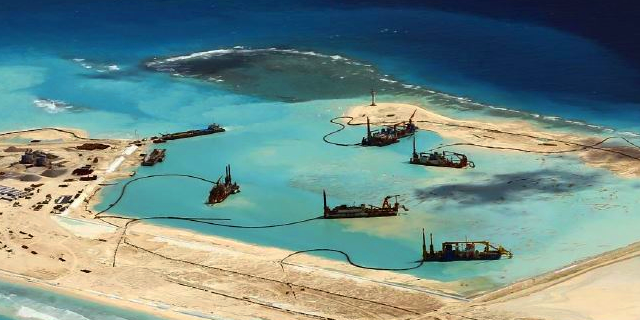
One advantage is minimal disturbance of the sea bed. This allows local fish to continue breeding in their traditional spawning grounds. ... huge improvement over the sea bed messes being created where Dubai and Communist China are dredging the sea bed to build artificial islands.
The seasteading approach has one of its main problems solved; there's a place to go now. Tuvalu will become submarine in years AND it's becoming international law that even after loss of all landmass the country Tuvalu does not cease to exist and won't lost its rights.
So a seasteading project could strike a deal with the government of Tuvalu and anchor its seasteading project on one of the soon-sunken islands. There would be legal protection from other countries and the tiny Tuvalu nation (about 10,000 people) can be bribed into giving autonomy. They have a couple uninhabited islets to spare.
It's a bit far from economically interesting places, though.
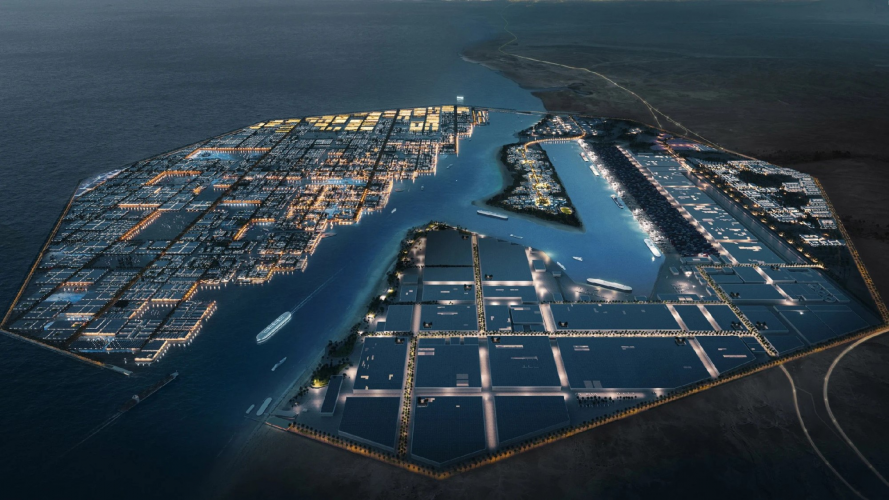
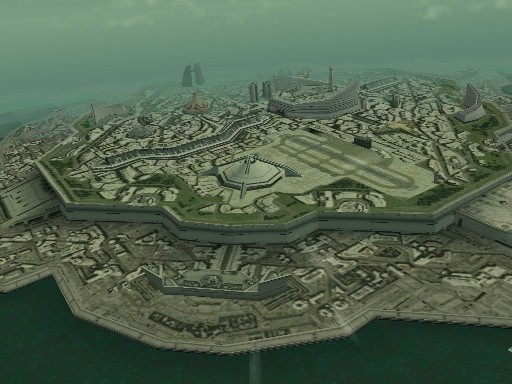
Currently, the biggest planned implementation of the floating city, for better or worse, is the Oxagon in Neom.
Oxagon consists of a landside port city with a basin dock structure, a seaward giant breakwater (the seaward edge of the octagon shape), and the proposed floating city itself.
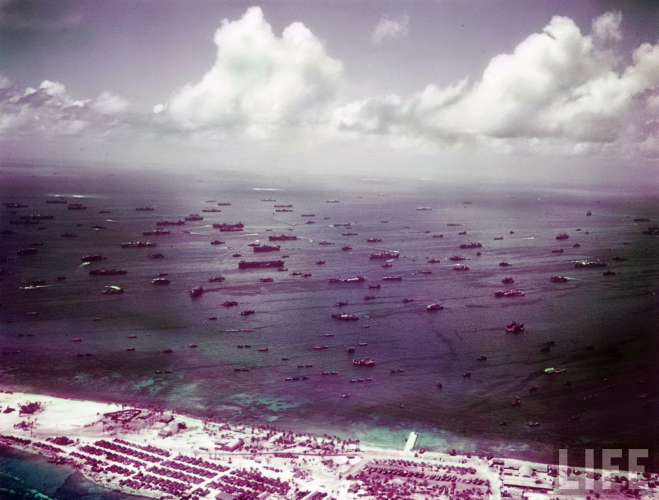
All oceanic or littoral floating city proposals need adequate protection from the elements, either with a natural or man-made storm barrier. In the deep sea, the ideal setup is probably some sort of coral atoll or reef structure, in the vein of the US Navy's giant bases during WW2. There are many desert islands and atolls that are uninhabitable conventionally for lack of fresh water - but modern desalination solves that limitation.
Archipelagic land reclamation is a well understood problem with a variety of solutions.
Another benefit of floating cities, whether built on reclaimed land or afloat, is easy access to the great oceanic highway.
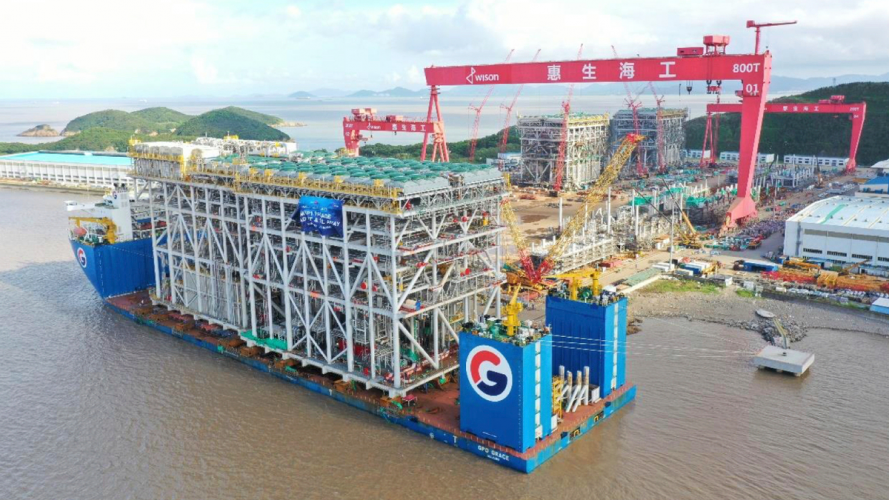
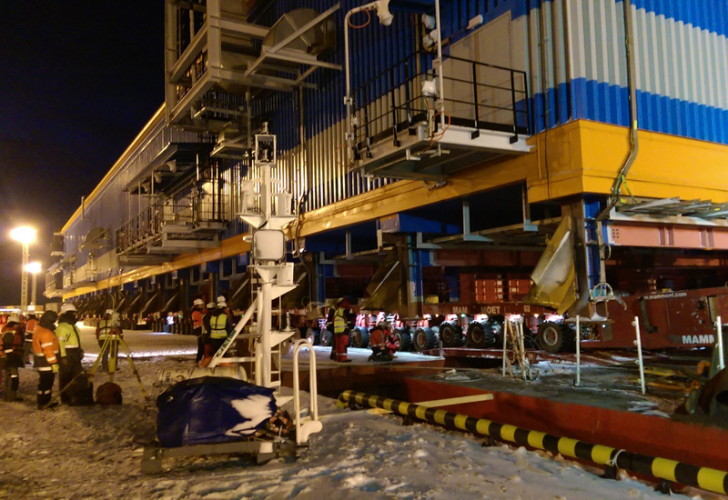
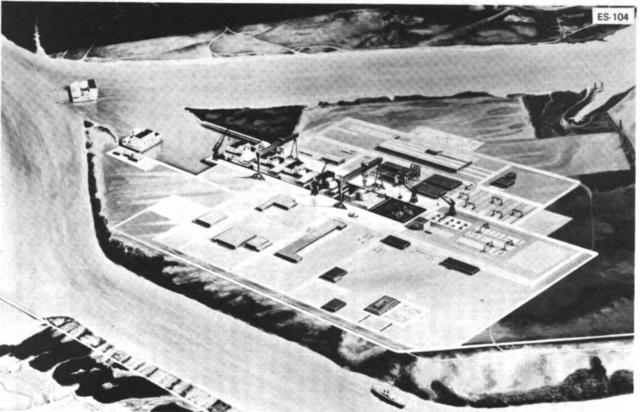
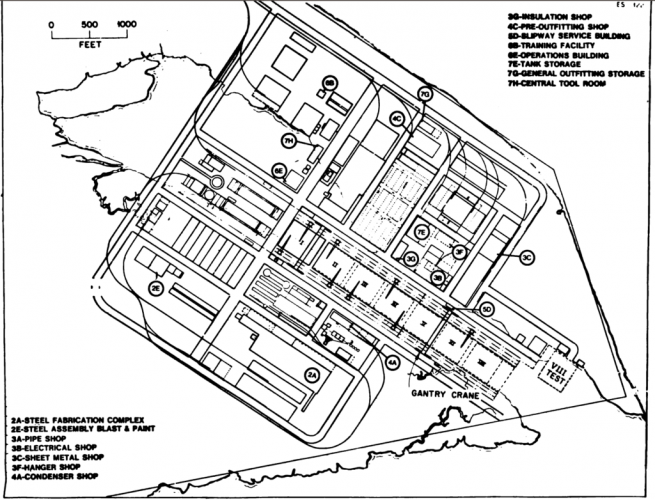
Floating building modules, or modules designed to be rolled onto the shore with giant bogies, can be mass produced in China, Japan and Korea (or anywhere labor is cheap and industry plentiful) for pennies on the dollar and transported anywhere in the world within four to eight weeks, enabling superb economies of scale to be achieved. A purpose built "floating city factory" would be able to achieve incredible economies of scale, pumping out whole buildings on vast assembly lines, while the very large size of the modules - possibly even standalone buildings - would potentially resolve many issues of tolerances and finishing issues encountered in modularization (presumably you would have other problems with hooking them up to water and sewerage systems and suchlike, but there are always tradeoffs).
(pictured above, the Yamal LNG plant, built in China and Korea and shipped to Siberia; below is the OIPS assembly line)
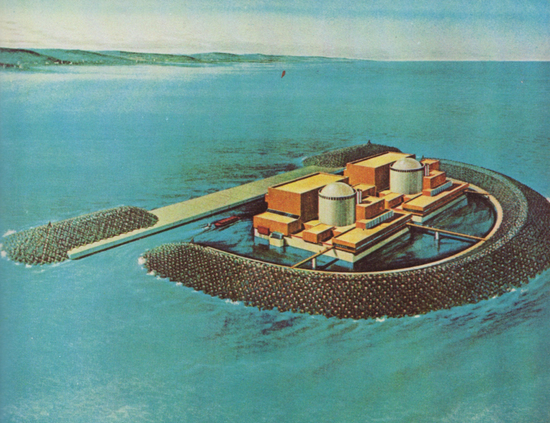
Residential buildings, commercial buildings, and industrial plants can all be broken down into modules and shipped around the world. Below is the proposal for 160,000 tonne 1-1.5GWe nuclear reactors, to be built on an assembly line in Jacksonville and barged to their offshore installation sites, which were to be surrounded by breakwaters. While there are no heavy lift ships capable of transporting modules of that magnitude yet (the world record is ~120,000 tonnes), somewhat larger heavy lift ships are certainly technically possible.
Incidentally, 160,000 tonnes is a third of a Burj Khalifa, and quite adequate for a wide range of habitable structures.
Absolutely not my dream lifestyle - I'd get island fever real quick. I continue to prefer living in a Mediterranean Climate on the leading edge of the northern American continent...
Videos and articles on the first and as far as I know the only floating hotel (As opposed to a cruise liner.) ever built. It was built in the the late 1980s to serve the Great Barrier Reef tourist trade and was ultimately scrapped in North Korea in the 2020s.
The history of travel is rich with failed dreams. But few have a back story as vibrant as the world’s first “floating hotel” – known at different points during its 30-year existence as the Four Seasons Barrier Reef, the Saigon Floating Hotel and then as North Korea’s infamous Hotel Haegumgang.
Like a lot of madcap schemes, it all began with a visionary: in this case, an ambitious property developer and hobbyist diver called Doug Tarca. Born in Italy, Tarca had relocated to the eastern coast of Australia as an adult, driven in part by his obsession with the Great Barrier Reef.
It was once an exclusive five-star resort floating directly over Australia’s Great Barrier Reef. For years, it sat dilapidated in a North Korean port, a 20-minute drive from the Demilitarized Zone, the restricted area that separates the two Koreas.
For the world’s first floating hotel, that’s the last stop in a bizarre 10,000-mile journey that began over 30 years ago with glamorous helicopter rides and fine dining, but ended with a tragedy.
The problem with a floating city is protecting the separate floats from storms and tsunami.
If you go into a shallow, sheltered atoll or whatever for protection from storms, you raise vulnerability to tsunami.
If you go into fairly deep water, 600+ft, for safety from tsunami, you raise vulnerability to storms.
That said, in most of the Pacific, 600ft deep water is only ~1 mile off the shore of an island. So placing your floating city in the lee of an island and in 600ft deep water may be an option.
The seasteading approach has one of its main problems solved; there's a place to go now. Tuvalu will become submarine in years AND it's becoming international law that even after loss of all landmass the country Tuvalu does not cease to exist and won't lost its rights.
So a seasteading project could strike a deal with the government of Tuvalu and anchor its seasteading project on one of the soon-sunken islands. There would be legal protection from other countries and the tiny Tuvalu nation (about 10,000 people) can be bribed into giving autonomy. They have a couple uninhabited islets to spare.
It's a bit far from economically interesting places, though.
Just try out for once any cruise ship trip in any of the roughly two thirds of ocean waters covering this planet's surface to sample the life aquatic and result at an informed opinion. As for me, I'm fully on board.
I've found on YouTube what appears to be the full 1980s news article on the 'Four Stars Barrier Reef' hotel, that some of the footage I posted earlier about that project came from. The name of the channel that's hosting it is that of the hotels designer.
Almost 30 years on from the idea first being floated, it looks like the world's first 'city at sea' could finally soon set sail. Measuring up at over a mile long and 800ft wide, the Freedom Ship is set to be bigger than any vessel ever built, with capacity for 80,000 passengers across 30 decks.
The history of colonization is that society finds useful niche. But it must also have resources to sustain a human presence or access to economically prosperous reason for being. Oceanic long term living or as they call it, "Seasteading" has been trend for century but lacks critical thought and is fraught technical challenges the biggest being the ocean is harsh mistress.
Rust, corrosion, degradation, fouling by marine life all plague industry that works at sea. US Navy spends 2 billion a year on rust detail. So any city you plan to build if it's steel, you're SOL long term because maintenance. You cannot dry dock a city. So artificial islands, cellular wetlands, sunken barges filled with dredge spoil/sand are all methods. All have issues and expenses.
2nd issue is water. Or lack thereof. Ocean is not drinkable, there fore fresh water for drinking, bathing, agriculture and industrial use, etc must be acquired. Desalination is useful for land because the water is now fresh it's set reintroduce waste water system or recycled municipality reducing need for additional desalination. Water/rainfall catchment at sea such as water supply of Venice entirely maintained by Venetian wells, scuppers til they connected mainland. Desalination is all energy and resource intensive, where as water cycle and gravity is essentially free energy. That's why sea communities often have expensive water, small natural or artificial islands do not possess an aquifer, and even ones that do are risk depletion if large communities built on them. So every gallon water has embodied energy cost.
3rd is food. Agriculture like greenhouses and hydroponic gardens is applicable but they are Not suitable feeding cities. They are Not crops in classic sense you're talking about salad and vegetables Many these are high water crops like lettuce, tomatoes, peppers, etc. These contain hardly what's needed to feed a city. Populations require protein (meat, fish, poultry), CARBS usually form grains or rice, fats (oils). NONE of which are being grown on these establishments.
4th is what economy model. Fishing, mining or exotic agriculture (kelp, algae, seaweed). Not to mention business, data centers, energy extraction (oil, gas), shipyards,/repair. Tourism. A city needs about just shy half it's population gainfully employed in whatever goes on in sea-tropoilis.
Last issue, most prevalent is Environment. If you engage in any industry or heavy construction at sea the sea shepherds and every environmental group will be on your ass. Namely a high density city produces alot of waste.
Septic waste from use water. So city 15,000 will produce about 2-5 million gallons of waste water every day.
Trash/packaging from disposeable goods..food waste. That means contract to waste disposal daily basis and any disruption you end up trash in the streets.
This site uses cookies to help personalise content, tailor your experience and to keep you logged in if you register.
By continuing to use this site, you are consenting to our use of cookies.


 )
)