Antonio

Moderator
Staff member
Senior Member
Joined
22 January 2006
Messages
4,436
Reaction score
2,801
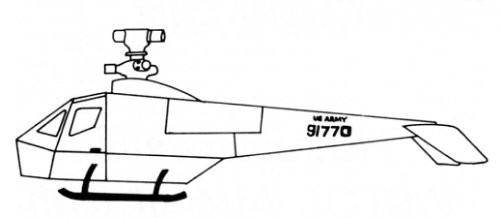
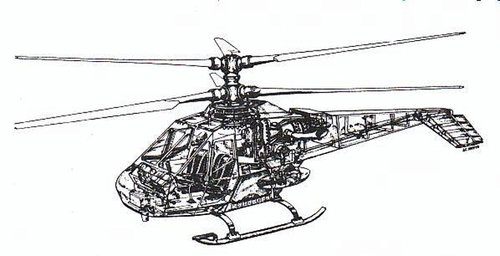
Some years ago, my friend Thomas from Germany and me, managed to identify this helo as the Sikorsky S-68.
Source is:
Stealth Technology. The art of black magic by J Jones. 1989. ISBN 0-8306-8381-X

"Early 1970s proposal by Sikosrsky for Army's armored aerial reconnaissance vehicle program"

Anybody knows more about that program?
 

Attachments

  • Sikorsky S-58.jpg
    Sikorsky S-58.jpg
    29.3 KB · Views: 615
Looks like the Sikorsky AARV dating back to 1968 designed to fly 2 pilots for 3 hours. It was armoured and could with stand .50 calibre strikes. try an article in Military Technology MILTECH 8/84 Flying Tanks by Richard Simpkin.
 

Attachments

  • US- Sikorsky AARV 1968_1a.jpg
    US- Sikorsky AARV 1968_1a.jpg
    16.2 KB · Views: 723
Dear gentlemen,

please note a mistake on my post.

The design number for this helicopter it is not S-58, it's S-68. I have corrected in the Subject title but it still remains on the filename of the pic I uploaded!

I'm sorry for the mistake
 
JAZZ,

thanks a lot for your reply. Unfortunately I have no access to Miltech but can you ask me one additional question?

What is the meaning of AARV?

I guess this helo role was targeting for anti-armour helicopters, this could be the reason for to be heavy protected against light infantry fire while flying low near enemy lines...is it right?


Thanks again,
Antonio
 
Thanks a lot Orionblamblam
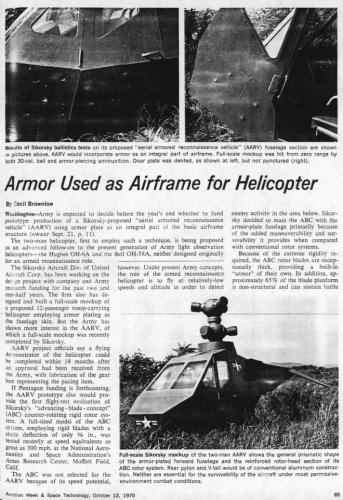
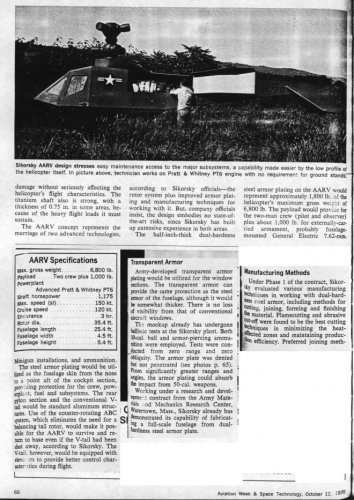
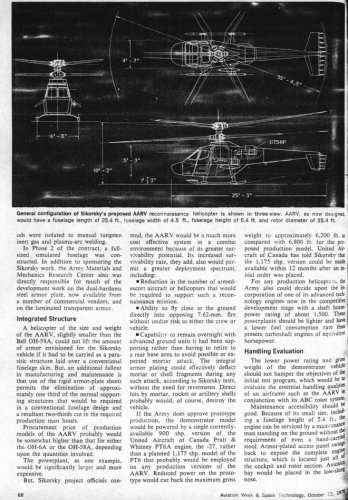
The AW&ST article is fantastic.

My friend Thomas (the same who wrote "Soviet Seaplane Jet Bombers" for APR V5N4) sent me these additional pics.
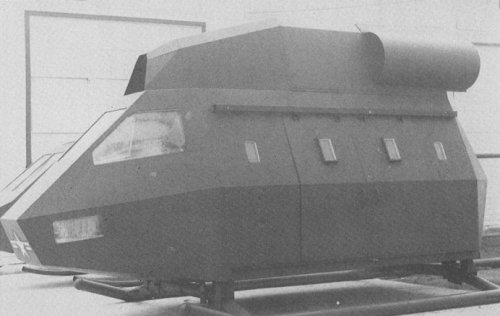
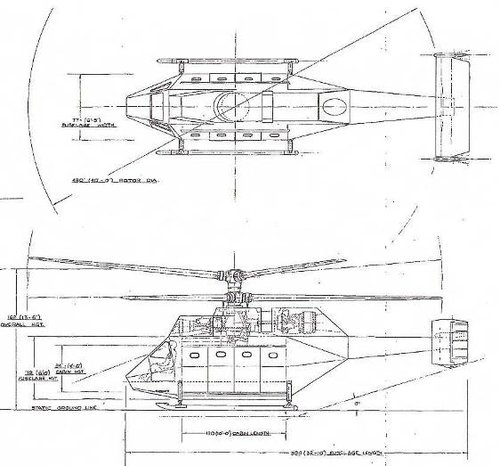
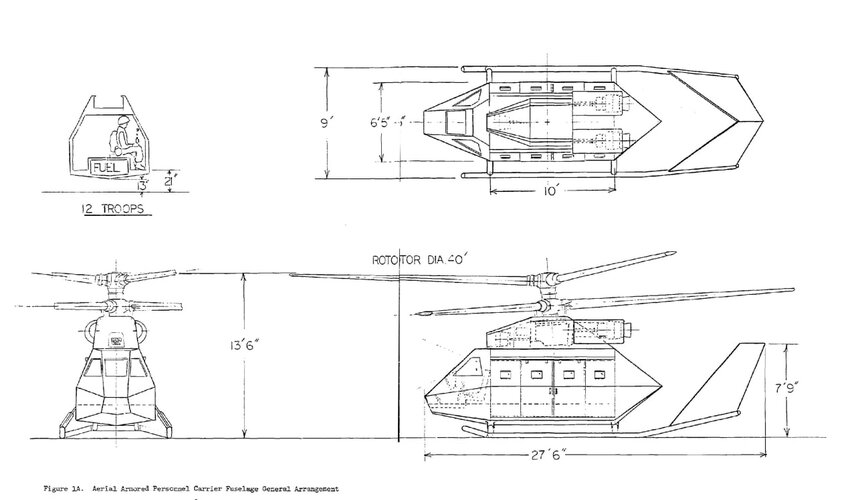
The 12 passenger troop-carrying helicopter mock-up described in the article you posted (page number one) is here.


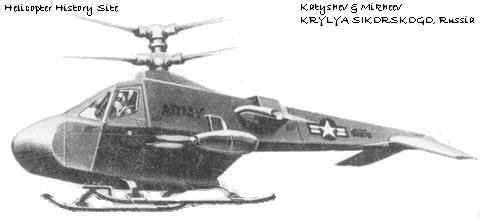
Sikorsky AARV.jpg -> CAPTION: Projekt bronirowannogo S-68 / SOURCE: Katyshev/Mikheyev: Krylya Sikorskogo, ISBN 5203014688, Voyenizdat, Moscow 1992

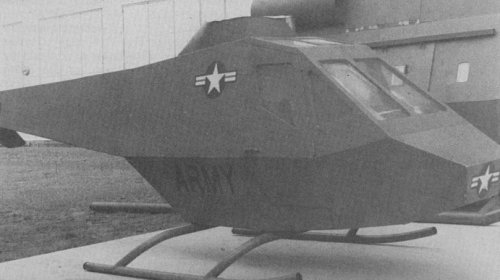
The next images seem to be photographed in Fort Rucker (Texas?):

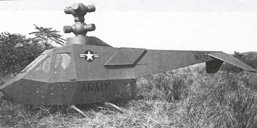
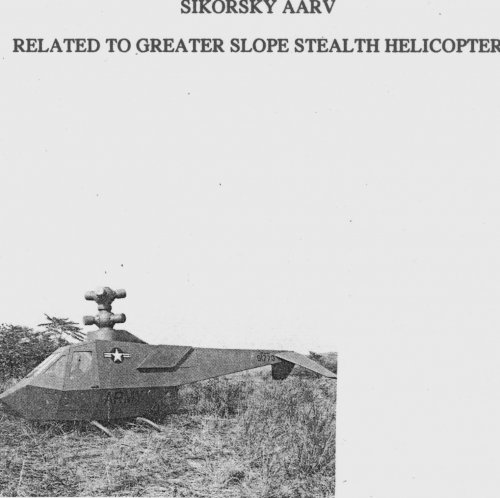
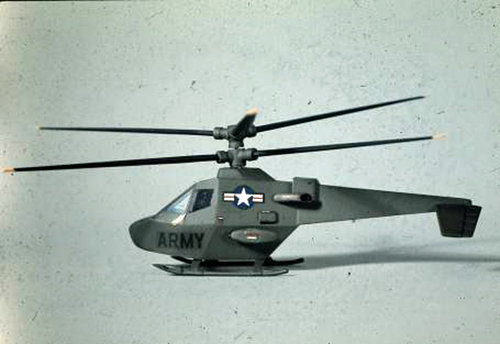
Sikorsky AARV mockup.jpg -> CAPTION: Wooden mock-up of the proposed scout helicopter to find targets for attack helicopters if it ever reaches production. / SOURCE: [magazine] "Air Classics Quarterly Review" Fall 1979 (page 22)

Sikorsky AARV troop-carrier mock-up.jpg -> CAPTION: Wood mock-up of the Utility Tactical Transport Aircraft System. / SOURCE: [magazine] Air Classics Quarterly Review Fall 1979 (page 27)
 

Attachments

  • Sikorsky AARV.jpg
    Sikorsky AARV.jpg
    65 KB · Views: 423
  • Sikorsky AARV mockup.jpg
    Sikorsky AARV mockup.jpg
    49.9 KB · Views: 363
  • Sikorsky AARV troop carrier mockup.jpg
    Sikorsky AARV troop carrier mockup.jpg
    51.7 KB · Views: 354
Orionblamblam said:
The troop carrier design was patented, so there are halfway-decent drawings of it available.

Unless you have the patent number, how do you find patents before 1976?
 
Orionblamblam said:
TinWing said:
Unless you have the patent number, how do you find patents before 1976?

By manually searching through the patents in the Denver public library.

That was fun... :-[

That sounds painful!

All of my pre-1976 patent finds have been from the references of post-1976 patents.
 
"Twas painful, but ti was the only way. The US patent office puts out a monthly digest of all cleared patents, organized by classification; simply grab an issue, find the classification and see what patents look good, write down the numbers and look them up on the microfilm and copy/print. While the latter part of that has now been replaced with "download from USPTO website," the first part, so far as I'm aware, remains.

Bleah.
 
Stealth Technology. The art of black magic by J Jones. 1989

Pardon me for going off-topic, but this must be one of the worst books ever. Practically everything in it is wrong...
 
You are right Paul. Some interesting pics (for instance the UH companion design to LHX combat scouts from Sikorsky and McDD entries) but totally wrong text.

This Sikorsky AARH is described as an Stealthy helicopter because of the faceted skin...when faceted skin was a consequence of the armour plates configuration.
 
Here's one Sikorsky project for the U.S. Army in the early 1970s - called the Advanced Aerial Reconnaissance Vehicle or AARV. The airframe was sloped not for RCS-reduction but for ballistic protection - though the sloping is similar to that of faceting on stealth vehicles. Another Sikorsky project was a black-program called Greater Slope for a stealthy helicopter under contract to DARPA for the U.S. Army. It was listed in the Fiscal Year Defense budget request for 1984.

Vulture
 

Attachments

  • Sikorsky AARV mockup.jpg
    Sikorsky AARV mockup.jpg
    483 KB · Views: 267
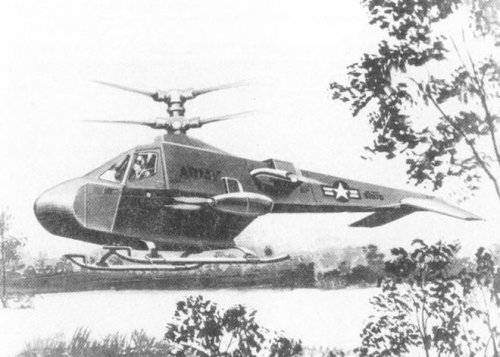
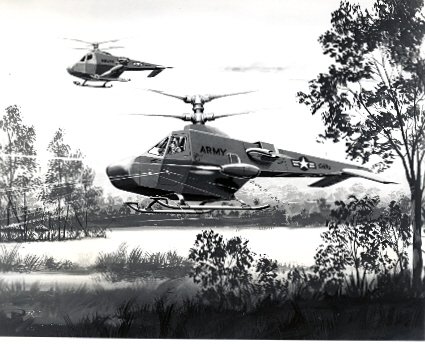
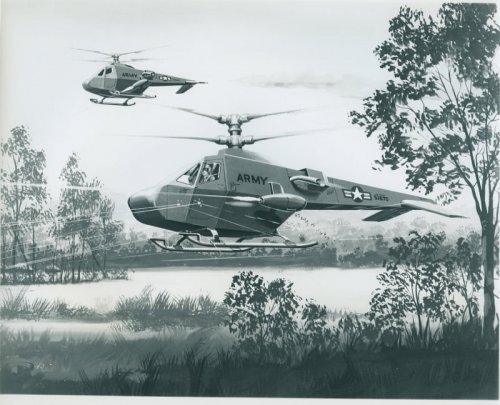
The model pictured above reminds one of this artist's concept, described elsewhere as the S-68 project. They are probably one and the same program.
 

Attachments

  • s68.jpg
    s68.jpg
    14.8 KB · Views: 334
I remember the mockup of the AARV sitting outside the student company headquarters at Ft. Rucker many, er, many years ago.
 
vulture said:
Here's one Sikorsky project for the U.S. Army in the early 1970s - called the Advanced Aerial Reconnaissance Vehicle or AARV. The airframe was sloped not for RCS-reduction but for ballistic protection - though the sloping is similar to that of faceting on stealth vehicles. Another Sikorsky project was a black-program called Greater Slope for a stealthy helicopter under contract to DARPA for the U.S. Army. It was listed in the Fiscal Year Defense budget request for 1984.

Vulture

GREATER SLOPE was PE code 0603217A , which translates to:
R&D, Advanced Development, Unknown R&D Category Aircraft & Related, Serial 17, Army
 
During the Vietnam War, helicopters played a crucial role, but their vulnerability was a major issue. Sikorsky, an American aircraft manufacturer, sought to address this problem by developing heavily armored helicopters. One such project was the Aerial Armored Reconnaissance Vehicle (AARV), designed to be a survivable scout helicopter with advanced armor and an innovative rotor system known as the Advancing Blade Concept (ABC). The AARV featured a dual-hardness steel airframe to withstand ballistic threats and was compact yet heavily protected.

Another concept, the Aerial Armored Personnel Carrier (AAPC), was intended to transport troops safely in combat zones. Although both designs showed promise, they were ultimately not adopted by the U.S. Army. Despite this, Sikorsky's ABC technology evolved over the years, influencing modern high-speed helicopter designs such as the X2, S-97 Raider, and RaiderX.
Source:
https://www.twz.com/air/these-heavi...-were-pitched-to-the-army-during-the-cold-war
 
Background

In 1967 Sikorsky investigated new light-weight dual-hardness aircraft armor. This promised to be much lighter than the armor then available and more effective at defeating ballistic threats. In an unconventional approach, a concept was proposed to build a helicopter fuselage with this armor, rather that simply adding the armor parasitically around sensitive areas of the vehicle.

Concurrently, Sikorsky was in the early stages of developing the Advancing Blade Concept (ABC) for extending the speed range of helicopters. This used two very rigid counter-rotating rotors, allowing rotor lift at high speeds to migrate off the rotor centerline to the advancing sides of the rotor discs, thus eliminating retreating blade stall which limits the speed of conventional helicopters.
Although the proposed armor fuselage vehicles would not need the speed capability of the ABC, it was quickly recognized that the rugged ABC rotor head had benefits for ballistic tolerance. And ABC promised improved maneuverability over conventional helicopters. These two ideas were combined into an aircraft with an armor fuselage and an ABC rotor system.

The ABC had the additional advantages of not requiring a tail rotor, and a design where the control swashplates for the two rotors were buried below the rotors, both further reducing the vulnerable area of the aircraft against ballistic threats.

Two designs were considered. The first was a two place reconnaissance vehicle, the AARV – Aerial Armored Reconnaissance Vehicle – proposed as a follow-on to the Army’s light observation helicopters then in production, the Hughes OH-6A and the Bell OH-58A.

This project involved both Army and company funds over a two and a half year period. Army funding came from the Army Materials and Mechanics Research Center in Watertown, Mass, which was responsible for much of the development of the dual-hardness armor. In phase 1 of the contract manufacturing techniques, including methods for cutting, joining, forming and finishing the material, were evaluated. In phase 2, a simulated fuselage was fabricated and subjected to ballistics testing.

In these tests the armor plate was dented but not penetrated from shots of 30-cal ball at zero range and 50-cal weapons at longer ranges.

The program did not progress beyond these conceptual efforts. The testing of the full-scale ABC rotor system in the NASA Ames wind tunnel in 1970 was very successful, and the Army and the company decided that a high-speed research aircraft, evaluating the ABC’s speed potential, was more productive. This became the XH-59A, the subject of another chapter in this Sikorsky Product History section.

Configuration Features

The main fuselage of the AARV was to be constructed from half-inch thick dual hardness armor. The latest technology in transparent armor would be used for the aircraft windows. The tailcone and empennage would be conventional aluminum structure. The empennage was an inverted “V” to keep it under the rotor and minimize aircraft size. Elevators were included in the tail.

The armor would represent approximately 1,800 pounds of the aircraft’s 6,800 pounds gross weight.

By using armor plate as the primary fuselage structure one-third of the helicopter’s normal support structure was eliminated and it was projected that there would be a two-thirds reduction in production labor.

AARV Characteristics and Performance

Gross Weight 6,800 lbs.
Payload 1,000 lbs.
Rotor Diameter 35.4 ft.
Powerplant P&WA PT6
Power 1,175 hp
Maximum Speed 150 kts.
Cruise Speed 120 kts.
Endurance 3 hrs.
Fuselage Length 25.4 ft.
Fuselage Width 4.5 ft.
Fuselage Height 5.4 ft.

Related Models
The same design approach was also considered for a larger AAPC, Aerial Armored Personnel Carrier, carrying twelve troops within the armored fuselage. The rotor diameter would grow to 40 feet, the same size as the ABC rotor being tested at the time in the NASA Ames wind tunnel.


Note on Nomenclature
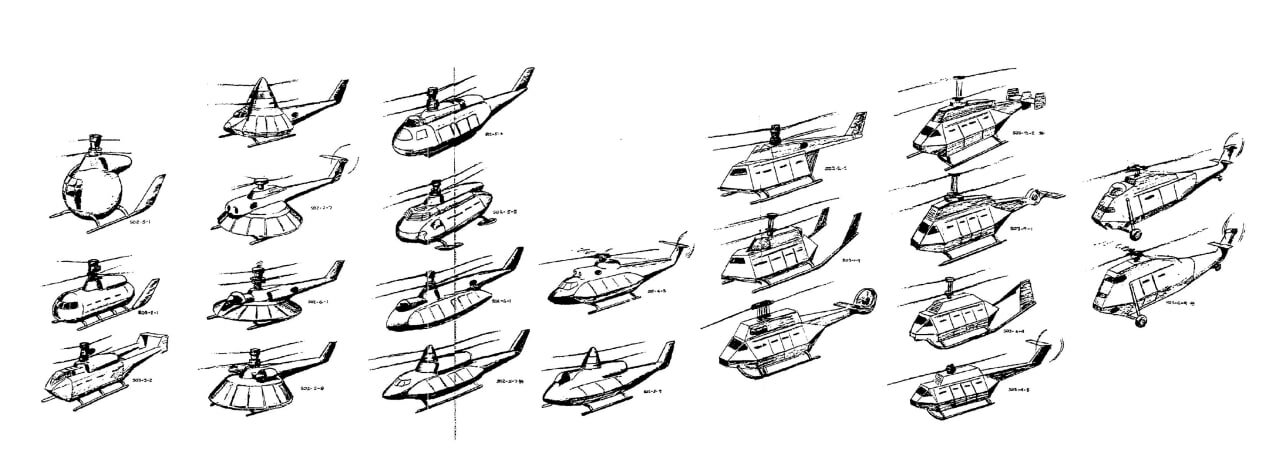
Some non-Sikorsky references refer to the AARV as the Sikorsky S-68. This is not correct. The S-68 was a conceptual design for a small commercial aircraft using S-58T components. It never went beyond the concept stage.

Reference
Aviation Week & Space Technology, October 12, 1970, page 65, “Armor Used as Airframe for Helicopter”.

https://sikorskyarchives.com/home/sikorsky-product-history/helicopter-innovation-era/aarv/
 
Note on Nomenclature
Some non-Sikorsky references refer to the AARV as the Sikorsky S-68. This is not correct. The S-68 was a conceptual design for a small commercial aircraft using S-58T components. It never went beyond the concept stage.
Just about every reference published until that page said different? :rolleyes: There are quite a few previously well-established designations that the Sikorsky Archives have contradicted. I really hope the guys there know what they are doing... It wouldn't be the first time that a company in general, and Sikorsky in particular, would reuse a designation. Although a mistake can be very easily repeated nowadays, it was not so in the days of these projects; when a journalist posted a designation (and although it didn't necessarily appear in company-issued documents) there were chances he had obtained it from a valuable source; they wouldn't risk their reputation spreading unverified data or guesswork. And I've known "S-68" since waaaay before the internet.
 
Making a helicopter fuselage out of 1/2" face-hardened steel plate?

And using a PT6 for power? Crud, why not go with a T53 like the Huey used?
 
I don't see anything outside of the Joseph Jones source for S-68 = AARV.

The only references are along the lines of "S-68, proposed modification of the S-58T".

It would be on point for Joseph Jones to have taken this reference and incorrectly applied it to the AARV.

Alternatively, it could be a reused designation.
 
Making a helicopter fuselage out of 1/2" face-hardened steel plate?

And using a PT6 for power? Crud, why not go with a T53 like the Huey used?
The PT-6 was/is even cheaper that the T-53. A total guess is that the there might have been a consideration for fuel consumption as well. Scouts have always been cheap, because they are lost at a much higher rate than other types. Witness UKR/RUS conflict. Most of the bigger UAS have now been replaced with more expendable UAS. Since most of the scout aircraft in Vietnam were lost to small arms, trying to come up with a platform less susceptible to these types of weapons does make some sense. However as someone pointed out the rotors were still unarmored.
 
The PT-6 was/is even cheaper that the T-53. A total guess is that the there might have been a consideration for fuel consumption as well. Scouts have always been cheap, because they are lost at a much higher rate than other types. Witness UKR/RUS conflict. Most of the bigger UAS have now been replaced with more expendable UAS. Since most of the scout aircraft in Vietnam were lost to small arms, trying to come up with a platform less susceptible to these types of weapons does make some sense. However as someone pointed out the rotors were still unarmored.
They're still talking about an aircraft ~1500lbs heavier than an OH-58.

Despite the anticipated loss rate, I'd rather have the scout overpowered for speed and just buy another ~2500 "UH1 engines."
 
Scott - a fair point. Perhaps the decision was due to the T-53 production being maxed out with all of the varied H-1 production, and the government did not want to open a new production facility. OF course politics could have played a role in the decision as well.
 

Similar threads

Back
Top Bottom