I think hydrogen for vehicles has a future.
https://ngtnews.com/hyundai-motor-preps-xcient-fuel-cell-truck-for-global-production
https://ngtnews.com/hyundai-motor-preps-xcient-fuel-cell-truck-for-global-production


They have some big drawbacks: engines that develop less power than the same engine running on petrol (in the H7: 50% less power),
Typically hydrogen engines are designed to use about twice as much air as theoretically required for complete combustion. At this air/fuel ratio, the formation of NOx is reduced to near zero. Unfortunately, this also reduces the power output to about half that of a similarly sized gasoline engine.


I fully agree with Elon Musk.
Hydrogen economy is a hoax. It has become a sort of religion with a lot of fanatic followers.
Even at universities there are people who believe in it, some are even allowed to call themselves professors.
They fell in the trap when they were young, and years later when they realize that it is nonsense they can't go back on it as part of their funds (from industrie with commercial interests), all their publications, their whole career hangs on it.
They are trapped and have to keep propagating the lie until their retirement.
Hydrogen is merely an energy carrier, not an energy source as the believers claim.
They tell us that there is a huge amount of hydrogen in the sea water so what are we waiting for?
No, the hydrogen in the sea water is there in the form of H2O , not as H2.
To turn H2O into H2 takes a huge amount of energy, but they don't mention that inconvenient truth.
There are some niche applications for hydrogen and fuel cells, for example in space travel, but that is peanuts on the total world energy consumption.
It takes three times as much energy to make hydrogen out of water than that hydrogen will then deliver in a fuel cell.
Therefor hydrogen is not a solution to anything; it does not yield energy but in reality wastes energy.
It merely acts like a battery, but a very lousy one: for every 100 kWh of electricity you put into it you only get 35 kWh out of it.
It can therefor not replace fossil fuels (which are an energy source), but it can only replace other batteries (which are an energy carrier), but only a fool would do that because all batteries are much more efficient than hydrogen.
For comparison: a lithium-ion battery delivers 85 kWh for every 100 kWh that was put into it. That's still a loss of 15 % but that is minor compared to the 65 % loss when using hydrogen.
In the mean time there is a whole industry that hopes to make a lot of money selling useless gadgets to stupid people. Thanks to the enormous amount of nonsense on the internet people become more stupid by the day and therefor the hydrogen economy hoax could go on for years to come.
Now mr. Frans Timmermans from the EU in Brussels also propagates hydrogen. That does not surprise me because already for years mr. Diederik Samsom is his left hand. They are both Dutch and so am I, so I know those two clowns already for many years from Dutch politics. Samsom has always been a hydrogen economy believer and now he seems to have infected his boss too. If there only were a vaccin against hydrogen economy, although that probably would not make a much difference as religious persons usually refuse vaccines.
Timmermans leads the European Commission’s work on the European Green Deal and its first European Climate Law to enshrine the 2050 climate-neutrality target into EU law.
There you have another lie that is propagated by the believers: the lie that hydrogen is green.
How can an energy carrier that loses two-thirds of the original energy be called green?
Hydrogen is not green and neither is any other form of energy carrier or battery; they are just "storage vessels" for energy that already existed before.
It is important to understand the difference between an energy source (fossil fuels, wind, solar, nuclear) and an energy carrier (hydrogen, batteries). To charge the carrier always requires energy from a source.
Before some believer(s) claim that I don't know what I am talking about: I am a chemical engineer with 30 years of experience in design of various petroleum and petrochemical plants, also hydrogen plants, and I have a thorough knowledge of thermodynamics.
The big problem with using ammonia in a combustion engine is that the combustion products are Nitrogen oxides; okay, not greenhouse gases, but bad pollutors instead.
cheers,
Robin.
The big problem with using ammonia in a combustion engine is that the combustion products are Nitrogen oxides; okay, not greenhouse gases, but bad pollutors instead.
cheers,
Robin.
NOX is a greenhouse gas about thirty times worse than CO2. NOX will be produced only if Ammonia is burnt in an unsuitable combustor, typically of the type used for other fuel types such as methane.
Now consider that “AddBlue”, the additive used to suppress NOX in diesels, uses Ammonia from decomposed Urea as it’s active ingredient. The urea is introduced into the catalyst where the temperature decomposes it into ammonia which in turn reacts with the NOX to convert it into water and nitrogen.
So to burn Ammonia with an ultra low NOX emission it requires a two stage combustion system, a so called “rich to lean” cycle . This has been demonstrated in a few places now with NOX levels below those of conventional Carbon fuels.
I can't help wondering... back in '63 the US Army "Mobile energy depot" studied ammonia for aircraft and helicopters. Not cracked, no hydrogen: just plain ammonia. It cut energy in half compared to kerosene; and performance accordingly.
And thus the idea went nowhere. I suppose land and sea vehicles can afford the lower energy, but flying machines... not so much.
Now, that smart trick of "cracking ammonia into hydrogen" - how hard it is to make it happen inside an aircraft ?
In a few words: did anybody ever thought about it before ? 1963, 1973 or 1979 oil shocks ?
Or is it a matter of very recent technological breakthroughs ?

Even then, they're not that good compared to their ICE counterparts. They're heavier, use up more hydrogen for a similar power, and there is still the hydrogen leakage problem to deal with. People will have to use ICE engines until micro-fusion engines are available. Unless they want to use LNG-powered fuel cells.Fuel cells are a better match to hydrogen than an ICE: total efficiency of the propulsion system is higher.
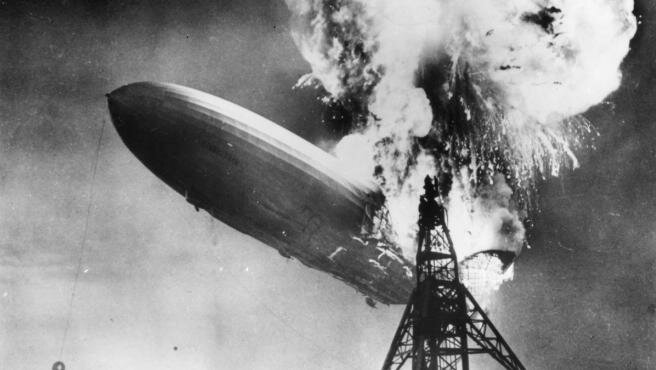
If you've got nuclear lightbulb engines, water ends up being the best propellant. LNG has a major carbon fouling problem.Hydrogen would be a perfect fuel for airships, that’s the only application (no longer in use) where low density isn’t an issue…
Space x will use LNG as rocket fuel, I think this is the best compromise between volumetric/gravimetric density, specific impulse and storing effort. The fuel cost might not be of main concern, but LNG is also much cheaper than hydrogene or any other special rocket fuel.
Ammonia has only halve the gravimetric density of Jet-fuel which is a serious disadvantage for airplanes, but its still way higher than batteries.

The thermodynamic efficiency of fuel cells is usually forty to sixty percent (https://www.linquip.com/blog/efficiency-of-fuel-cell/). The best ICEs -- low-speed diesels -- are the only ICE to break 50% (and are better than steam plants); most small ICE are under 40%.Even then, they're not that good compared to their ICE counterparts. They're heavier, use up more hydrogen for a similar power, and there is still the hydrogen leakage problem to deal with. People will have to use ICE engines until micro-fusion engines are available. Unless they want to use LNG-powered fuel cells.Fuel cells are a better match to hydrogen than an ICE: total efficiency of the propulsion system is higher.
If you've got nuclear lightbulb engines, water ends up being the best propellant. LNG has a major carbon fouling problem.Hydrogen would be a perfect fuel for airships, that’s the only application (no longer in use) where low density isn’t an issue…
Space x will use LNG as rocket fuel, I think this is the best compromise between volumetric/gravimetric density, specific impulse and storing effort. The fuel cost might not be of main concern, but LNG is also much cheaper than hydrogene or any other special rocket fuel.
Ammonia has only halve the gravimetric density of Jet-fuel which is a serious disadvantage for airplanes, but its still way higher than batteries.
My understanding of fuel cells is that they continue the 'hydrogen is horrible for anything less than fusion or antimatter (i.e., atomic reactions)' trend. Also, last I've heard, fossil fuel-powered fuel cells are better than hydrogen ones (the best equivalence I've heard is 'our fossil fuel-powered fuel cells are a (GURPS) tech level higher than their hydrogen-powered counterparts).The thermodynamic efficiency of fuel cells is usually forty to sixty percent (https://www.linquip.com/blog/efficiency-of-fuel-cell/). The best ICEs -- low-speed diesels -- are the only ICE to break 50% (and are better than steam plants); most small ICE are under 40%.Even then, they're not that good compared to their ICE counterparts. They're heavier, use up more hydrogen for a similar power, and there is still the hydrogen leakage problem to deal with. People will have to use ICE engines until micro-fusion engines are available. Unless they want to use LNG-powered fuel cells.Fuel cells are a better match to hydrogen than an ICE: total efficiency of the propulsion system is higher.
If you've got nuclear lightbulb engines, water ends up being the best propellant. LNG has a major carbon fouling problem.Hydrogen would be a perfect fuel for airships, that’s the only application (no longer in use) where low density isn’t an issue…
Space x will use LNG as rocket fuel, I think this is the best compromise between volumetric/gravimetric density, specific impulse and storing effort. The fuel cost might not be of main concern, but LNG is also much cheaper than hydrogene or any other special rocket fuel.
Ammonia has only halve the gravimetric density of Jet-fuel which is a serious disadvantage for airplanes, but its still way higher than batteries.
Of course, production of hydrogen is quite energy-intensive, and, while there are extensive industrial uses for it, the sort of network needed for its use in aviation does not exist. There are wires everywhere there's civilization, so batteries don't require that sort of infrastructure be made.