Grey Havoc
ACCESS: USAP
- Joined
- 9 October 2009
- Messages
- 24,500
- Reaction score
- 18,175
http://www.nuclearpowerdaily.com/reports/US_Nuclear_Lab_Building_Micro_Reactor_That_Can_Power_an_Army_Brigade_999.html
The US' top nuclear lab is touting a new nuclear micro-reactor than can provide electricity quickly in remote places. While the driving force behind the research is battlefield utility, the technology's potential applications are boundless, from space missions to islands to disaster areas. And they say it's safer than conventional reactors, too.
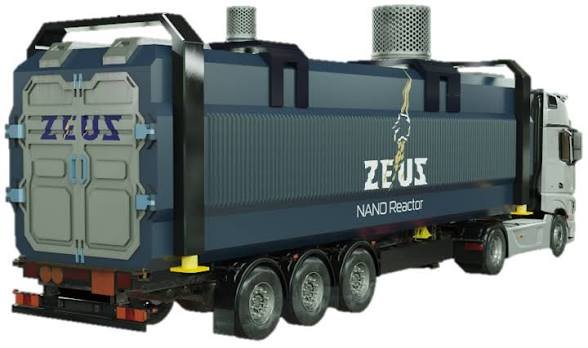
Los Alamos National Laboratory has teamed up with power giant Westinghouse to design a safe, portable nuclear power plant the size of a shipping container that can be disassembled and moved on the back of a semi truck.
Andy Erickson, the lab's deputy principal associate director of global security, wrote in an article for Defense One on Thursday that the reactor is "inherently safe," having no cooling pumps that can fail (like at Fukushima Daiichi in Japan) and using passive regulation systems that can't melt down (as in the Chernobyl disaster in what is now Ukraine). The plant can provide 1 megawatt (MW) of power for 10 years - that's enough for an entire military brigade, 1,500 to 4,000 troops, he notes.
Instead of water, the reactor uses heat pipes: a heat transfer device that uses vaporization and condensation to efficiently move heat away from the reactor. It's the same principle used to keep the base of your laptop computer from burning your legs, except now it's being used to channel excess heat safely away from a nuclear reactor, something most gigantic power stations have traditionally relied upon flowing water to accomplish.
At present, the smallest functioning nuclear reactor ever built is the EGP-6, a Soviet invention scaled down from the much larger RBMK reactor - the same type that failed in Chernobyl during a mishandled test in 1986. The EGP-6 produces 12 MW of electricity, and the only place on Earth left that uses them is the remote Bilibino Nuclear Power Plant in Bilibino, Chukotka Autonomous Okrug, Russia's northeastern-most province and home of the Chukchi people. The plant is the smallest and the northernmost operating nuclear power plant in the world, using four of the devices. It is scheduled to shut down next year.
However, Los Alamos got the idea for its design not from the Soviet reactor but from a similar joint project being pursued by the US' National Aeronautics and Space Administration (NASA) in conjunction with other Department of Energy partners, including Los Alamos and Laboratory Directed Research and Development, dubbed the Kilopower project.
NASA has experience creating nuclear power in novel ways: many of its deep space probes have used radioactive thermoelectric generators, relying on the natural heat released by radioactive decay, to power the systems of probes like Voyager, Galileo and most recently the New Horizons craft that visited Pluto in 2015.
The goal of Kilopower, as the name implies, is actually to produce an even lower-yield reactor than Los Alamos seeks. The reactor's goal is 10 kW, enough to power a small house - or a Martian outpost. Tests earlier this year proved that a 6-inch chunk of Uranium-235 could produce 4 kW of power using the same method Los Alamos is using to control it: passive systems that Erickson says can't melt down and aren't dangerous.
Kilopower is the first new reactor design in 40 years, David Poston, the chief reactor designer at Los Alamos, told Gizmodo in May, and NASA produced it for only $20 million.
Poston told the news outlet that the reactor is simple and safe: the radiation emitted by the core while not in use is too low to be harmful, and when running it's self-regulating.
Westinghouse has helped scale this concept up to what the military wants, creating a system that can be set up in 72 hours and shut down, cooled, disconnected and moved in less than a week. The team hopes the microreactors will be ready for deployment in the next five years.
Erickson noted to Defense One that the technology contains many useful applications in the civilian sphere as well. He noted the potential for the technology to have supplied electrical power on Puerto Rico after Hurricane Maria devastated the island last year, knocking out power to all of its 3.5 million inhabitants, with most not getting it back for months afterward. Remote areas such as islands could make use of the portable generators, too.
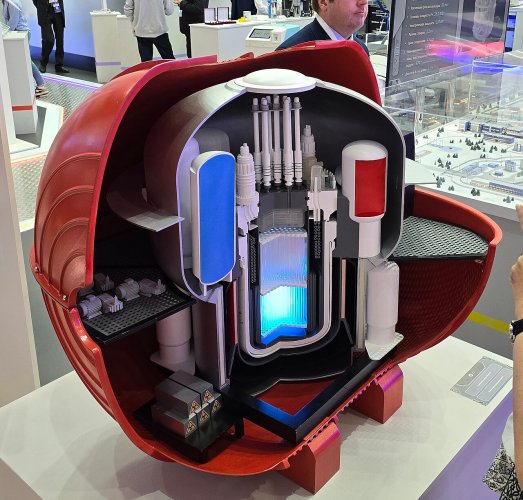
The private sector is pursuing micro-reactors too, but of a more conventional stripe. In January 2017, NuScale Power in Portland, Oregon, submitted a design to the Nuclear Regulatory Commission for a self-contained modular 50 MW nuclear reactor that can be transported on a flatbed truck. While NuScale's reactor uses water and still must be manned by professional nuclear engineers, it uses less uranium fuel than a conventional nuclear reactor would to produce the same amount of power and it comes housed in a special containment vessel submerged in water.
Wary of the disaster that befell the Fukushima Daiichi nuclear plant in 2011 when the Japanese plant itself survived both a massive earthquake and devastating tsunami, but suffered nuclear meltdown when water pumps that kept its spent fuel rods cool shut down, causing the water to dry up and the rods to overheat, NuScale's design uses natural convection to circulate water and keep the system cool.
By way of comparison, the Chernobyl Nuclear Power Station in Ukraine produced roughly 3,500 MW of electricity when fully functioning, and the Yangjiang nuclear power station in southwestern China provides over 5,000 MW to Guangdong province.