- Joined
- 21 April 2009
- Messages
- 14,367
- Reaction score
- 9,481


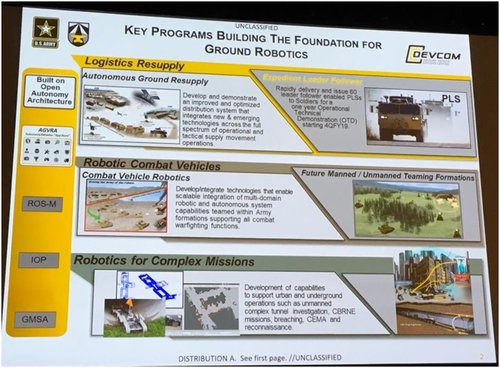
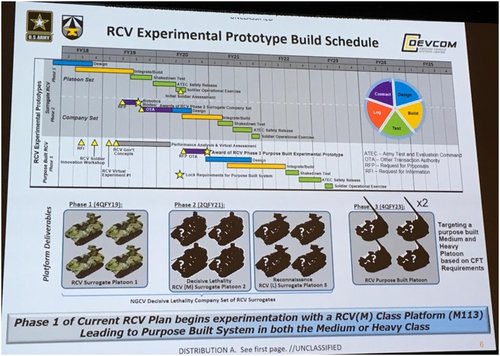
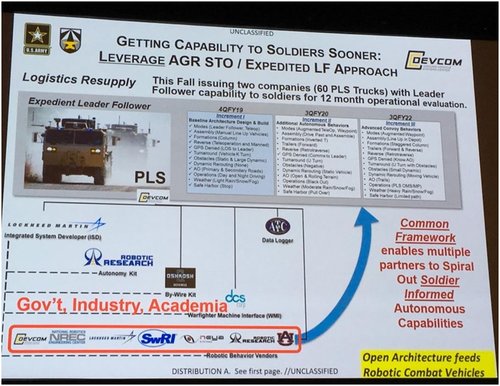
A much more realistic schedule, and general program construction. Though it is amusing to see "Manning" second from the bottom of the priority characteristics, given the name of the program. The emphasis on survivability definitely runs the risk of producing GCV-style unafforable giants, but at least now there are options like Lynx out there "in the flesh" for Army to reference when setting their firm requirements.
- A formal Request For Proposals based on these discussions won’t come out until April 2021.
- In October 2021, the Army will kick off the first round of competition, picking up to five of those proposals it will pay industry to develop into “initial digital designs.” The Army will then evaluate those virtual vehicles in computer models and simulations.
- In April 2023, the Army will narrow the field further, to at most three competitors, which will get government funding to refine their designs and build actual working prototypes by July 2025.
- The Army will test those prototypes through 2026 and pick one winner in January 2027. The winning vehicle will Low-Rate Initial Production (LRIP) later that year, and a full battalion of OMFVs should be operational by September 2028.
And in the meantime implementing interim solution that will stay with them for decades.US army is the best when it comes to acquiring things at a conceptual level
...Yes? You posted that at the top of the page already?
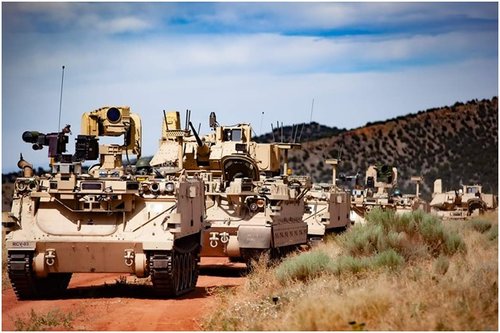
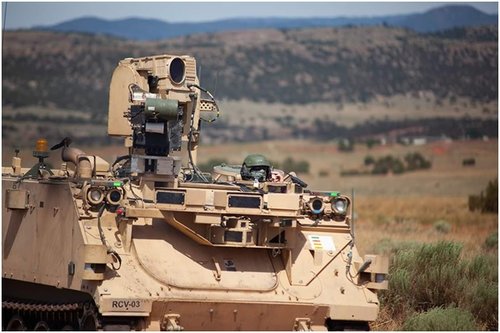
the USG DOD and USArmy needs to decide what unmanned is going to do and not do. If there is a commitment to unmanned then refurbished M-113s w/ APS may be baseline vehicle as the Israelis and RSV surrogate seem to allude to. Infantry may only be needed in the low intensity portion of Hybrid warfare and not in the High Intensity portion.
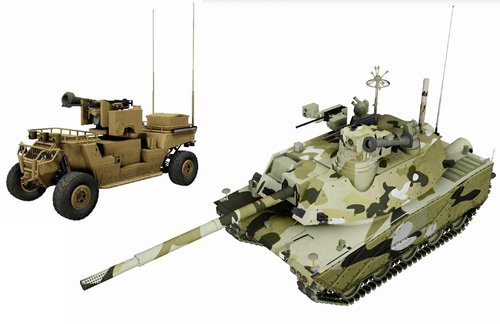
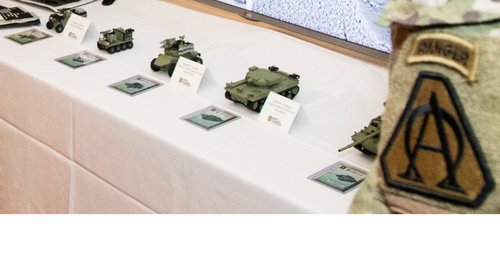
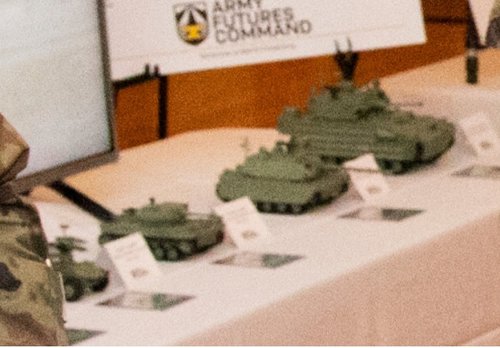
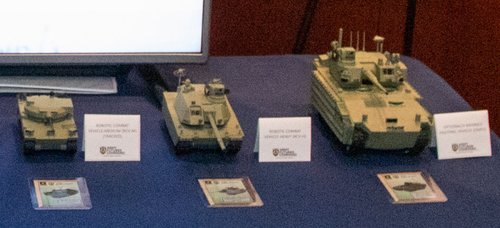
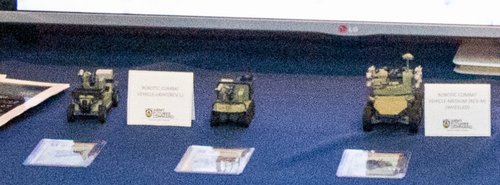
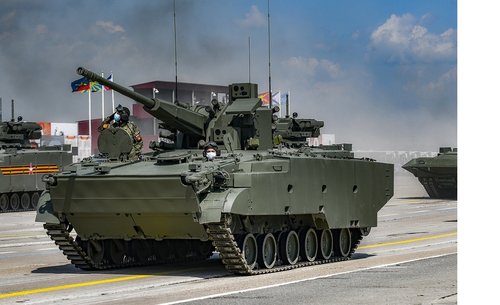
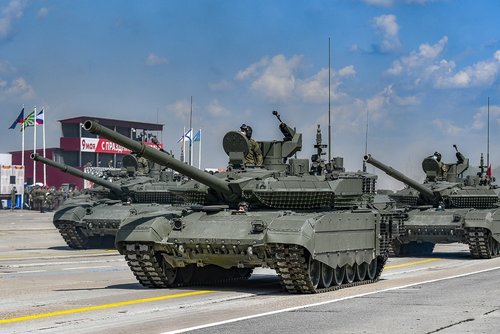
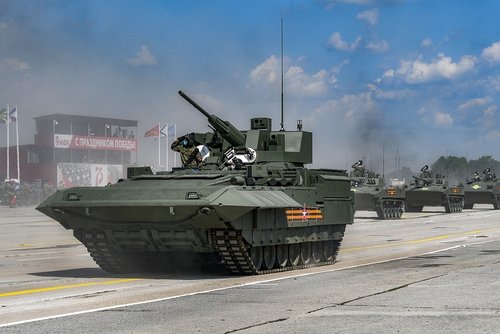
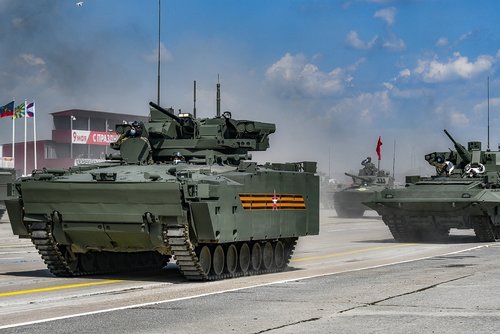
How are those related?Some subjective commentary.

Russian real, US notI think the message was "models vs real hardware"...
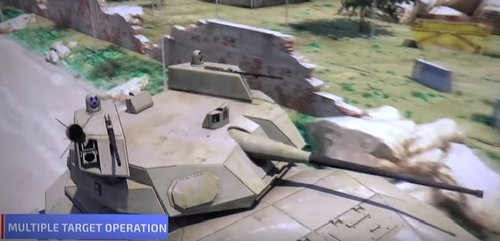
Because tracked vehicles can't clear houses. or secure the environment around themselves. And then you brought out the M113...It is increasingly difficult to see why dismounts are needed in high speed, high intensity conflict. A few optionally manned Howe and Howes/Textron M5s RCVs and a bunch optionally manned M113 based RCVs w the above turret Why do you even need Bradleys let alone an expensive OMFV.
Developing multi-shot, armed, reuseable VTOL UAS launched from RCVs which could reach out furthest to gain intiative would seem like the logical choice.
Project Carmel has suicide mini-helio UAVs clearing rooms and launched from M-113s as shown in this thread already. A multi-shot VTOL can do the same even better. There is plenty of research on micro-UAvs traversing the inside of buildings.Because tracked vehicles can't clear houses. or secure the environment around themselves. And then you brought out the M113...It is increasingly difficult to see why dismounts are needed in high speed, high intensity conflict. A few optionally manned Howe and Howes/Textron M5s RCVs and a bunch optionally manned M113 based RCVs w the above turret Why do you even need Bradleys let alone an expensive OMFV.
Developing multi-shot, armed, reuseable VTOL UAS launched from RCVs which could reach out furthest to gain intiative would seem like the logical choice.
In September, ALAS-MC completed turret checkout testing to demonstrate turret system functionality. The turret for ALAS-MC was developed by General Dynamics Land Systems (GDLS) via a Cooperative Research and Development Agreement (CRADA) based on ALAS-MC program requirements. Fire control integration and tuning has been completed with performance testing scheduled for the end of fiscal year 2020.
In fiscal year 2021, GDLS is providing a surrogate vehicle platform via CRADA in order to continue system level testing in move on move and move on stationary engagements. In-house partners for the ALAS-MC effort include Aberdeen Test Center, CCDC’s Army Research Laboratory and the Ground Vehicle Systems Center.

The US Army is pretty much never the shield that blocks the point of the spear, outside of the force blocking the Soviets. The enemy must have been slowed down/stopped first before the US army joints the fight, or the war would have been over before the army gets there. If we are talking about heavy formations, doubly so.It is increasingly difficult to see why dismounts are needed in high speed, high intensity conflict.
Huh?BAE Systems has been awarded a $32 million prototype agreement by the U.S. Army’s Rapid Capabilities and Critical Technologies Office (RCCTO) to integrate a Hybrid Electric Drive (HED) system onto a Bradley Fighting Vehicle.

It is increasingly difficult to see why dismounts are needed in high speed, high intensity conflict.
Huh?BAE Systems has been awarded a $32 million prototype agreement by the U.S. Army’s Rapid Capabilities and Critical Technologies Office (RCCTO) to integrate a Hybrid Electric Drive (HED) system onto a Bradley Fighting Vehicle.
I see it now, BFV serving to 2050s~ as OMFV gets canned for insufficient advantage over upgrading the BFV
In high intensity grd combt is too fast and covering too much territory for dismounts to make sense. Follow on formations w/ wheeled vehicles can carry infantry as was refered to an earlier post. The Israeli's recent Project Carmel tracked vehicles utilizing UAVs to replace dismounts for assaults while simultaneously pursuing 8x8 wheeled APC development, likely for follow on forces.It is increasingly difficult to see why dismounts are needed in high speed, high intensity conflict.
Because, beyond building and bunker clearance, the likelihood is the same unit fighting the high intensity conflict is going to be dealing with POWs, searching for intel, evacuating civilians and carrying out other constabulary-type duties, because high speed conflict means civilians don't get the chance to evacuate before the front line is on top of them. The faster and higher intensity the conflict, the more it becomes Krulak's 'Three Block War'. Aid to non-combatants caught on the battlefield isn't optional, it's a mandatory obligation under the Fourth Geneva Convention.
And on top of everything else, those same high speed forces still need to stop somewhere and laager up to get some rest, which means deploying and manning a perimeter, which has been repeatedly cited as an issue in reduced manning going back to at least the '80s. Dismounts give you a chance to let the vehicle crews catch some sleep without having to spend half the night watching the perimeter.
Assuming an adversary wont have temporary Air Superiority and the US Army wont be left holding the shield is a pretty risky bet, I nor the US Army should take.The US Army is pretty much never the shield that blocks the point of the spear, outside of the force blocking the Soviets. The enemy must have been slowed down/stopped first before the US army joints the fight, or the war would have been over before the army gets there. If we are talking about heavy formations, doubly so.It is increasingly difficult to see why dismounts are needed in high speed, high intensity conflict.
Not the right force fighting the right war~
I would suggest this oversimplifies ground combat. Its not going to take place in a vacuum, or as a set piece.In high intensity grd combt is too fast and covering too much territory for dismounts to make sense. Follow on formations w/ wheeled vehicles can carry infantry as was refered to an earlier post. The Israeli's recent Project Carmel tracked vehicles utilizing UAVs to replace dismounts for assaults while simultaneously pursuing 8x8 wheeled APC development, likely for follow on forces.It is increasingly difficult to see why dismounts are needed in high speed, high intensity conflict.
Because, beyond building and bunker clearance, the likelihood is the same unit fighting the high intensity conflict is going to be dealing with POWs, searching for intel, evacuating civilians and carrying out other constabulary-type duties, because high speed conflict means civilians don't get the chance to evacuate before the front line is on top of them. The faster and higher intensity the conflict, the more it becomes Krulak's 'Three Block War'. Aid to non-combatants caught on the battlefield isn't optional, it's a mandatory obligation under the Fourth Geneva Convention.
And on top of everything else, those same high speed forces still need to stop somewhere and laager up to get some rest, which means deploying and manning a perimeter, which has been repeatedly cited as an issue in reduced manning going back to at least the '80s. Dismounts give you a chance to let the vehicle crews catch some sleep without having to spend half the night watching the perimeter.
In high intensity grd combt is too fast and covering too much territory for dismounts to make sense. Follow on formations w/ wheeled vehicles can carry infantry as was refered to an earlier post. The Israeli's recent Project Carmel tracked vehicles utilizing UAVs to replace dismounts for assaults while simultaneously pursuing 8x8 wheeled APC development, likely for follow on forces.
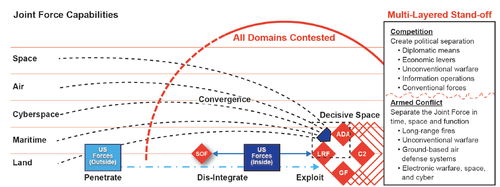
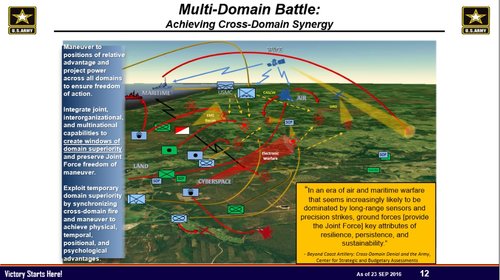
A vehicle will need to operate in future US Army Multi-Domain Ops where high speed opportunitistic, penetration, and local temporary superiority count most. On the distributed battlefield the least amount of personnel and logistics overhead counts also. Motivation for the DARPA GXT, for instance, one-two person crew used to primarily designate targets for CAS and Artillery os the primary goal. The problem w direct fire is the adversary gets to shoot back. Exploiting the penetration, after the fact, could include wheeled agile Mech infantry in 8x8s.In high intensity grd combt is too fast and covering too much territory for dismounts to make sense. Follow on formations w/ wheeled vehicles can carry infantry as was refered to an earlier post. The Israeli's recent Project Carmel tracked vehicles utilizing UAVs to replace dismounts for assaults while simultaneously pursuing 8x8 wheeled APC development, likely for follow on forces.
The higher the intensity, the less ground covered. It's when you have a disparity of forces that one force is potentially able to move over large distances, and even in that case it's anchored to its supply echelons. The area combat can cover hasn't really changed since 1980, because we're still using the same vehicles with the same size of fuel tanks. In fact given the growth in armour and the resultant drop in power to weight ratios, it may well have contracted. Rate of advance for a US reconnaissance platoon, WWII? 35mph. Tactical march rate for an M1A2 platoon on the open road, 2015? 25mph. (Note that that's a combat move for the recce platoon, semi-administrative for the M1A2).
And forget Israel. Israel is a special case. Half or more of their technological and operational drivers don't exist for other nations. Room clearing with micro-UAVs? Great against Hamas in Gaza or Iranian proxies in Syria, try to deploy it against a first line opponent and they'll wheel out the countermeasures. Starting with heavy jamming of your datalinks, counter-fire on your C3I nodes, backtracked via the datalinks, and just plain not cooperating, like stringing a camo net over every entrance so the drone can't get in. And if they go underground, into the sewers, or mouseholing between cellars if it's a country where cellars are a thing, then you face the nightmare of bypassed enemy forces popping up behind you and laying waste to your second echelon (or your laagered first echelon). You need infantry with you to clean the opposition out while you're in contact. Anything else just gives them time to regroup.
one-two person crew

A vehicle will need to operate in future US Army Multi-Domain Ops where high speed opportunitistic, penetration, and local temporary superiority count most. On the distributed battlefield the least amount of personnel and logistics overhead counts also. Motivation for the DARPA GXT, for instance, one-two person crew used to primarily designate targets for CAS and Artillery os the primary goal. The problem w direct fire is the adversary gets to shoot back. Exploiting the penetration, after the fact, could include wheeled agile Mech infantry in 8x8s.In high intensity grd combt is too fast and covering too much territory for dismounts to make sense. Follow on formations w/ wheeled vehicles can carry infantry as was refered to an earlier post. The Israeli's recent Project Carmel tracked vehicles utilizing UAVs to replace dismounts for assaults while simultaneously pursuing 8x8 wheeled APC development, likely for follow on forces.
The higher the intensity, the less ground covered. It's when you have a disparity of forces that one force is potentially able to move over large distances, and even in that case it's anchored to its supply echelons. The area combat can cover hasn't really changed since 1980, because we're still using the same vehicles with the same size of fuel tanks. In fact given the growth in armour and the resultant drop in power to weight ratios, it may well have contracted. Rate of advance for a US reconnaissance platoon, WWII? 35mph. Tactical march rate for an M1A2 platoon on the open road, 2015? 25mph. (Note that that's a combat move for the recce platoon, semi-administrative for the M1A2).
And forget Israel. Israel is a special case. Half or more of their technological and operational drivers don't exist for other nations. Room clearing with micro-UAVs? Great against Hamas in Gaza or Iranian proxies in Syria, try to deploy it against a first line opponent and they'll wheel out the countermeasures. Starting with heavy jamming of your datalinks, counter-fire on your C3I nodes, backtracked via the datalinks, and just plain not cooperating, like stringing a camo net over every entrance so the drone can't get in. And if they go underground, into the sewers, or mouseholing between cellars if it's a country where cellars are a thing, then you face the nightmare of bypassed enemy forces popping up behind you and laying waste to your second echelon (or your laagered first echelon). You need infantry with you to clean the opposition out while you're in contact. Anything else just gives them time to regroup.
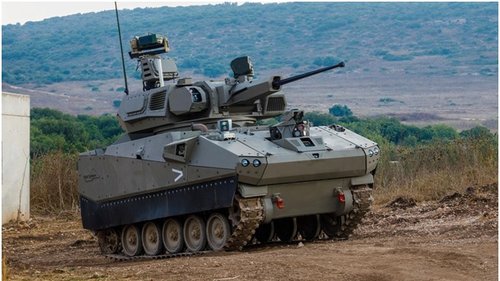
The Israeli Carmel is ironically, not inward deployment focused, but an expeditionary full high intensity conflict capabilty w faster tracked systems (lighweight rollers, rubbers tracks, hybrid-electric, so less fuel dependance, no large guns etc) Carmel's light weight multi-shot APS handles urban combat overtime and agasint indirect fire.
Sufficently speedy, the OFMV would be wasting time clearing rooms w/ single shot suicide UAVs. Simply surpressing the street w/ an armed multi-shot VTOL woild be better.
https://defensesystems.com/Articles...ficial-compound-eye-targeting.aspx?Page=1&m=1
Since you are forcing a repeat posting about the vehicle being protected for distributed dominance:
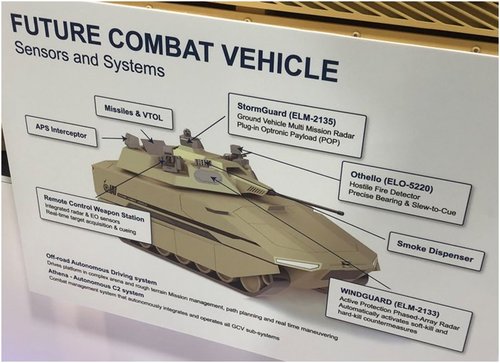
If survivablity is so important than vehicle development itself might need be secondary to protection systems. If systems including EM armor, moveable armor, an entire family of various hard/soft kill, and threat based APS systems are to be properly integrated then an APS strategy needs to be made clear.
The development of what Tardec calls "revenge shots" ie the ability to engage the threat munition and then immediately engage the threat launcher, plus long range (potentially indirect fire counter shot capability) APS could well be more important than the vehicle design itself.
The need to advance a APS family even before the vehicle is designed could be a consideration.
The APS infrasture might well characterize the vehicle design, writ large, if the distributed battlefield is the focus.
I tried saying this when two and three man tanks were being promoted and got nowhere. Apparently it is always going to be possible to bring up reinforcements and replacements AND grunts for repair/maintenance yada yada.........