There's a difference between putting existing equipment into storage and building new $70m ICBMs just to put them in a warehouse.
There is, but you keep ignoring WHY it was done and I'm only pointing out we used what happened to our advantage.
How does having 70 missiles in storage, rather than having 114 deployed improve your ability to fire back. If I have 114 missiles in silos and one fails, I still have 113 missiles ready to go wile replacement parts are made. If I have 44 in silos, then I only have 43 missiles ready while parts are salvaged.
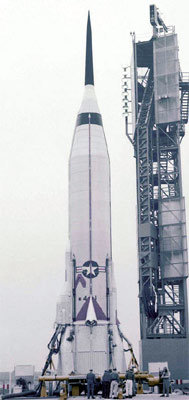
Bottom line: No more than 48 silos were ever converted to base Peacekeeper's in so no more than 48 COULD ever be deployed. That hadn't been the original plan but the plan was changed.
100 Peacekeeper missiles were ordered initially while efforts were on-going to get them deployed. Congress has only authorized 100 'active' (in silo) missiles and the conversion of the first 50 silos was underway. The COST of that conversion, and the delays in finishing JUST those first 50 silos caused Congress to reduce the deployment number from 100 to only 50. Meanwhile the next 50 would go into storage until the issues with silo conversion could be resolved or new basing was agreed on. These would mean that the planned 'follow-on' build of another 100 missiles as replacements and backups was initially delayed, then canceled when no further authorizations were made.
Congress was never satisfied with planning to continue conversions of existing silos and frankly neither was the military. Not only had costs been greatly under-estimated but actual data from deployments was worrying that the conversions were less survivable than the original systems. And upkeep and maintenance costs were higher as well and none of these looked to be solvable without even MORE investment which Congress was unwilling to do. So Peacekeeper was offered up for trading in the next arms control talks.
It's a terrible comparison because the task is much harder and the designs didn't exist. And guess what, the US is going to the moon again so.
The task was not so much "harder' as what was needed was understood. No the exact designs didn't exist but we knew what we needed and only needed the money and will to get to the end point. Unfortunately that was ALL we did and ALL we designed the system to do. And then we scrapped it and most of the infrastructure and have had to rebuild a lot of it to get where we are now. Going back to the Moon? Maybe, considering Congress still hasn't authorized actual Lander development it remains to be seen. Worse we're likely going 'back' in a very similar manner to Apollo which means it won't last either. We know HOW this should be done if we want to make this sustainable but the political will to do so does not exist.
Remanufactured 50-year-old stuff.
No the basic design, (and frankly these are modern designs so not really) may be 50 years old but the stuff is brand new. Most of the stuff you use every day is "old" designs built using modern technology and techniques. Your stretching to try and make this point but it’s not working.
At least 100 upgraded silos already exist though and I was thinking more like 200.
Never had more than 48 that had been converted for use and those were destroyed. Building new ones will be more expensive than converting old ones was. Keep in mind it's NOT just the silo but a complete launch complex if new and a complete rebuild to convert. The US has been looking at new basing operations, (including building new silos and the bases to support them) for decades and there’s a good reason why we haven’t done it.
Similarly, ‘mobile’ ICBMs tend to have more disadvantages than advantages unless you’ve already heavily invested in them. I know people like to bring up Desert Storm for an example of why mobile platforms are supposed to be good but ask how they would have fared if the coalition was carpet bombing with tactical nuclear weapons instead of trying to limit the damage? Contrary to what one might have been given the impression, (looking at you “Spies Like Us” yes RIGHT at you) a mobile nuclear weapons NEVER goes ‘off-the-grid’ and it’s never ‘alone’ in the middle of nowhere. The USSR used to get away with some of that due to having some areas with low population but that’s not the case in the US nor the USSR, (even China) today.
And how come Minotaur IVs can be made easily enough?
Note it's not exactly 'easy' nor are they common since their performance is terrible. Part of the reason GD developed the Castor 120 was to 'fix' as many issues with the converted Peacekeeper stages as possible to try and get better performance out of the stage. Doing so means it can't in any way be used as a missile stage though.
The problem here is that the R-29RMU2 is nothing like the 70s R-29... at all... the end.
Except it's the same basic design and mission and evolved from the original R-29 with improvements for time and technology. But we're not going to agree so may as well leave it.
But the MM3 is ancient and limited to 3 warheads.
Yes but don't assume that a missile that is designed to use the existing MM3 infrastructure would have the same limitations.
China's economy is still heavily state-controlled, they restrict the trade of imports internally and there is little in the way of freedoms. It's the Soviet Union with some neon lights and the WTO and an opponent stupid enough to manufacture high tech electronic goods in their country.
China is still heavily government controlled yes, but it actually has opened up a lot. Call it a work in progress. Russia is no the Soviet Union despite how much Putin might pine for the old days. It's not an open democracy, (semi-democratic oligarchy maybe) but it's not the USSR. The US always ends up trading with its "enemy's" at some point, it's what our economy is based on. High tech manufacturing was going to be a thing so the US companies decided to jump in first and get a slice of the pie. Government restrictions would have hindered the process so none were instigated. Short term profits over long term security, it's not like this isn't a well-known issue with US business and barring turning into a "state-controlled" economy and such is going to always be. Fix what you can and move on.
The larger missile can be built in the same number and retain a larger warhead capacity, whilst carrying more decoys in the meantime.
It assumes we need a larger missile at this time. Yes at this time because our number one priority AT THE MOMENT is to replace the MM3 missiles in the silos with a modern, more effective missile without breaking the bank. Building a bigger missile that we already know is not compatible with that goal is not going to work.
And so what page is the bus diameter on? It would frankly be easy to adjust that if the missile diameter is wide enough anyway.
Bus diameter is the same as the third stage diameter. They got rid of the original 'neck-down' reducer and built the new mountings directly on the Bus. This allowed more room for decoys and penetration aids. The second and third stage diameter is still less than the first stage so there's room to expand the diameter and frankly as long as your main missile core diameter remains somewhere around or below 7ft the modifications to the silo are minimal. Once you go over 7ft you have to tear the silo apart and rebuild it.
Well there's your problem with the MM3, the final stage isn't much wider than the Midgetman.
Which is why you'd expand the diameter in a new missile to match the first stage. Frankly if we hadn't gotten permission to start a new missile development program that is probably what would have been done in an 'upgrade' plan. Expanding the second and third stage would have increased performance for little cost/effort but we need to replace it.
You do go on about the complications of making what amounts to new climbing frames for the a new missile.
Climbing frames? You have pretty much admitted you have no idea what it takes to support the missiles let alone deploy them or keep them maintained yet you go on about how 'easy' it would be to just build bigger new ones and rebuild from scratch that entire support system and infrastructure. I'll admit in a way I agree that would be the ideal outcome but reality does not lend itself to idealism over realism.
The situation is that the US needs to update its deterrent and one specific of that is the ICBM leg of the triad. Over time we've reduced out capability to a single missile system and its support system because it was cheaper and more efficient. We tried fielding a Titan replacement using that missile infrastructure and it didn't work. Worse the key driver behind any such effort went away and we lost all political and public support for a new system. Recently we've swung enough support to push a replacement for our current GBSD but with the caveat that funding and support are limited. So we have constraints to work in that have to be considered. We need this replacement in a few years, not decades. We need better and more effective capability but it can't be hugely expensive or require major disruptions in the current system because they will, for a while, need to operate together.
In essence the need to have something NOW within a budget we can afford so we can deploy over 400 of these missile into existing silo's along with the rest of the support and logistics train as soon as possible is the driver behind using the existing infrastructure and that's not going to change. So it' limits our response options somewhat but that's what innovation and hard work are for in the first place. If you can't understand why I go on about "new climbing frames" in dealing with these issues then all I can say is there's a REALLY good reason why the actual 'missile' itself is less important to me that the logistics of its maintenance, transport and support

Umm... A 20m long D-5 is more of an interesting prospect and I believe it falls within your 7ft diameter limit (just) but it would be a new missile design. Maybe the extra length would make it capable of a LEO route to target.
Interesting and yes it barely meets that limit though I hadn't included the launcher or capsule which may be an issue. (Though IIRC I've been told by people who worked on the MX that "those extra 7inches" were fine when the idea was to build new silos, use the racetrack or put them in converted Titan silos but they were a HUGE issue with putting them into the Minuteman silos. Part of the problem they are trying to avoid this time around is starting out with a diameter restriction so we don't run into the same problem. Peacekeeper suffered from being designed and built without a firm plan for basing and an overdependence on 'compatibility' with the existing infrastructure which was actually false. (Amusingly I've pointed out more than once it actually WAS very compatible with an existing infrastructure.. Just not the Air Force one
)
Randy