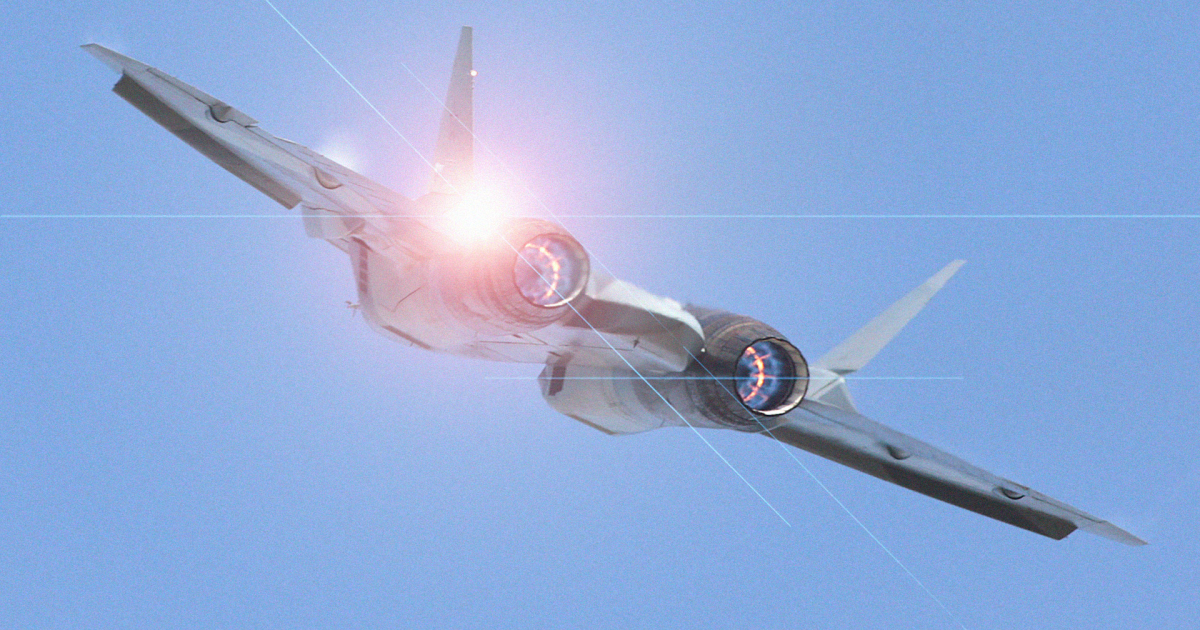
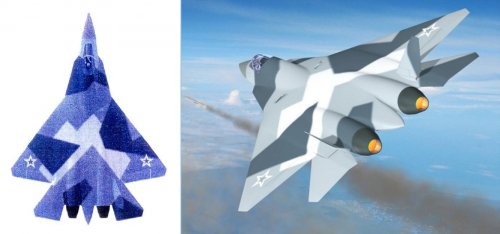
In early 2010, for the first time, a prototype of the T-50 aircraft took off. The Russian fifth-generation multifunctional fighter, developed by the P.O. Sukhoi in the framework of the project "PAK FA" (Perspective Aviation Complex of Frontal Aviation), now bears the name of Su-57.
In the Central Aero-Hydrodynamic Institute named after professor N.Е. Zhukovsky new aircraft began to be developed in the framework of research work in 1999.
The specialists of the leading center of aviation science, together with the Sukhoi Design Bureau, were to create a fighter with a number of unique features that have properties whose implementation is mutually contradictory. It was necessary to develop an aviation complex with the functions of a fighter, interceptor and strike aircraft. High combat effectiveness of the PAK FA should be provided by technical solutions in the field of aerodynamic layout, stability and controllability, control systems, power plant, radar and infrared visibility, avionics and armament.
Together with the staff of the Sukhoi Design Bureau, the TsAGI scientists developed an aerodynamic shape of the aircraft that meets the requirements of the fifth generation fighter. An unobtrusive air intake, which has no world analogues, was created, which ensures stable engine operation in all flight modes. The specialists of the institute have worked out control systems for a maneuverable aircraft that is statically unstable in the lateral and longitudinal control channels. Ensuring the durability of the airframe design with the extensive use of new and composite materials is another challenging task that TsAGI scientists have successfully solved. As a result, the requirements were met for the weight parameters of the design of the aviation complex, the weight perfection of the aircraft. In a short time, work was carried out in the areas of security from flutter,
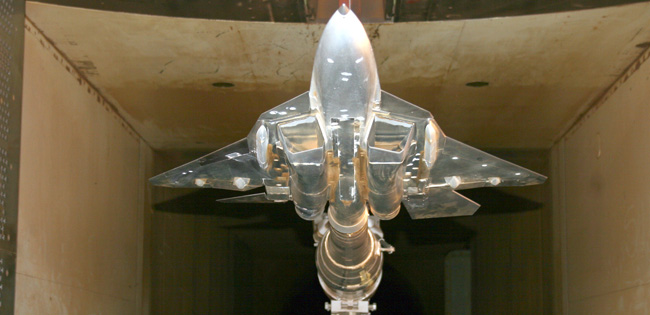
Specialists of the Institute conducted a unique design calculation of the layout of the fighter. In the wind tunnels of TsAGI, 28 different aircraft models were investigated; The total number of tests exceeded 32 thousand. Successfully performed tests of new materials and structural elements.
After the first flight of the prototype, studies on the finalization of the flight vehicle continued. So, over the next nine years, the TsAGI refined the aerodynamic characteristics of the complex, compared it with the results of flight tests, practiced the safety of using new aircraft weapons. In the process of preparing and conducting flight tests, frequency tests of all the aircraft designed for this purpose were conducted.
Press service of FSUE TsAGI
(495) 556-40-32
(495) 556-40-38
[email protected]