exclaimedleech8
ACCESS: Top Secret
- Joined
- 30 September 2024
- Messages
- 823
- Reaction score
- 999
The aircraft industry is a highly cyclical business and airplane makers frequently find themselves with idle manufacturing capacity and so, historically, aircraft makers have looked for ways to diversify. This was especially the case after World War II. But just what kind of plowshares could they get from their swords? Then they realized; housing. Homes were in short supply and many airplanes had a footprint comparable to a house (A DC-3 example has a wing area alone of 983 square feet, making it larger than the Levittown Houses), so they had the factory floor space and their workers could rivet together aluminum houses just as they riveted together aluminum bombers.


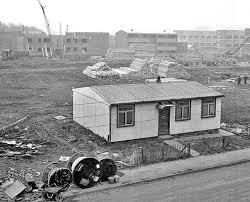
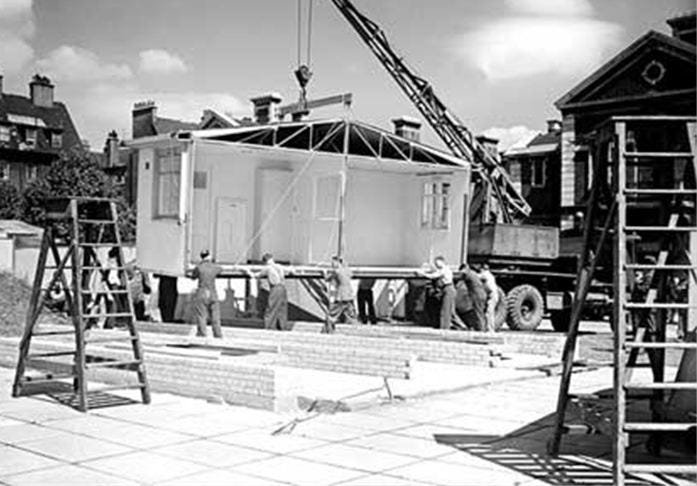
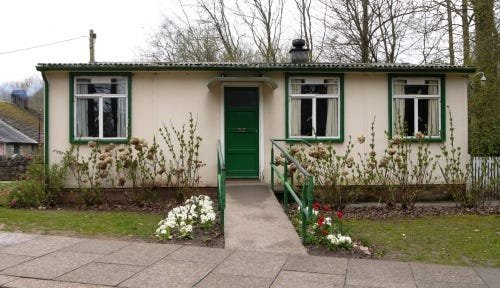
In England, this produced the AIROH (Aircraft Industries Research Organisation on Housing) Bungalow. It was made up of 2,000 different components and offered 675 square feet of floor space. To allow transportation by truck, it was split into 4 units that would be bolted together on site. 54,000 of them were built between 1946 and 1949 in factories owned by Bristol, Hawker, Vickers, and Jicwood, each using 2 tons of aluminum from airplanes that were totaled in the war. But there were problems: to allow them to be shipped without falling apart, they had to have small windows and walls that couldn't be changed. Worse was the high cost. Few of them are still standing.


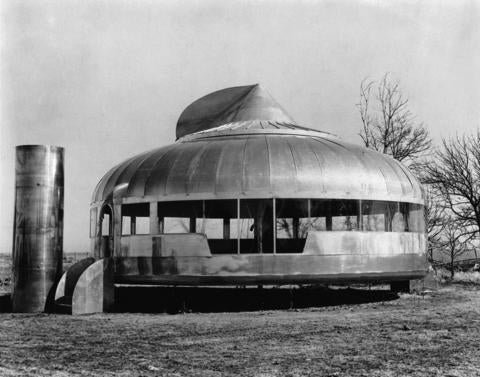
America may not have lost any homes to bombers, but the war led to major shifts in population from rural areas to cities and from East to West, leaving it with its own shortage of housing. Aircraft factories were once again looked at as a solution. The most famous attempt was Buckminster Fuller's Dymaxion House, dome shaped to use the smallest amount of material to enclose a given amount of space. The plan was to produce it at the Beech Aircraft factory in Wichita, KS, but it came to nothing.
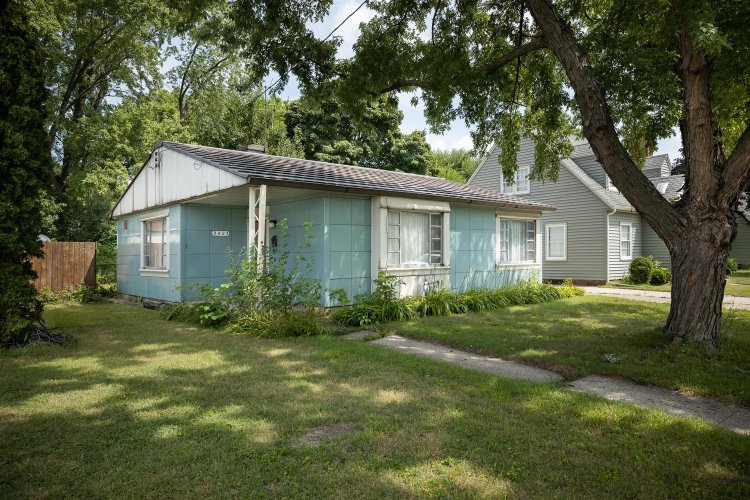
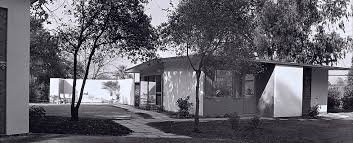
Convair had similar plans, even erecting a house made from honeycomb panels of aluminum with a paper core in South Pasadena. But they also ultimately decided against, presumably because they couldn't compete with wood for cost.

In the early 1970s, Boeing, struggling from a triple whammy of the end of the Apollo Missions, the cancellation of the SST project, and the winding down of the Vietnam War, decided to participate in the Federal Government's "Operation Breakthrough", which was an attempt to make assembly line homes a reality. All that came from it was a public housing complex in Seattle called Bryant Manor.
In England, this produced the AIROH (Aircraft Industries Research Organisation on Housing) Bungalow. It was made up of 2,000 different components and offered 675 square feet of floor space. To allow transportation by truck, it was split into 4 units that would be bolted together on site. 54,000 of them were built between 1946 and 1949 in factories owned by Bristol, Hawker, Vickers, and Jicwood, each using 2 tons of aluminum from airplanes that were totaled in the war. But there were problems: to allow them to be shipped without falling apart, they had to have small windows and walls that couldn't be changed. Worse was the high cost. Few of them are still standing.
America may not have lost any homes to bombers, but the war led to major shifts in population from rural areas to cities and from East to West, leaving it with its own shortage of housing. Aircraft factories were once again looked at as a solution. The most famous attempt was Buckminster Fuller's Dymaxion House, dome shaped to use the smallest amount of material to enclose a given amount of space. The plan was to produce it at the Beech Aircraft factory in Wichita, KS, but it came to nothing.
Convair had similar plans, even erecting a house made from honeycomb panels of aluminum with a paper core in South Pasadena. But they also ultimately decided against, presumably because they couldn't compete with wood for cost.
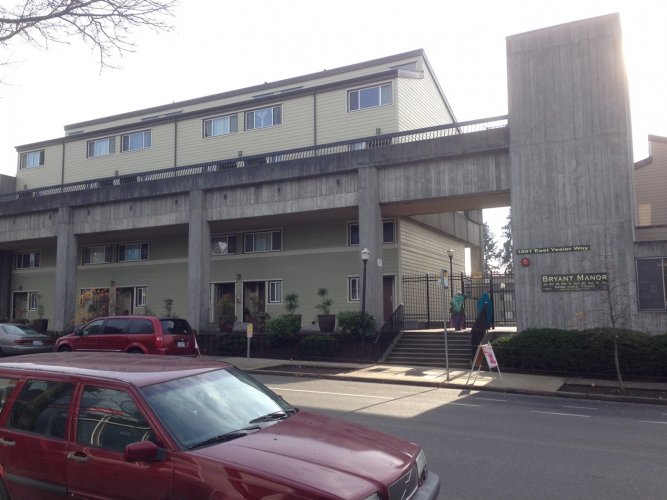
In the early 1970s, Boeing, struggling from a triple whammy of the end of the Apollo Missions, the cancellation of the SST project, and the winding down of the Vietnam War, decided to participate in the Federal Government's "Operation Breakthrough", which was an attempt to make assembly line homes a reality. All that came from it was a public housing complex in Seattle called Bryant Manor.