The AS.30L Laser is a weapon with no equivalent in the current US or RAF inventory, best approximating the defunct TI AGM-83A Bulldog, a laser guided derivative of the AGM-12 Bullpup. A derivative of the command link guided AS.30, it employs a semi-active laser homing seeker and hardened penetrating warhead, to provide a potent capability against hardened targets.
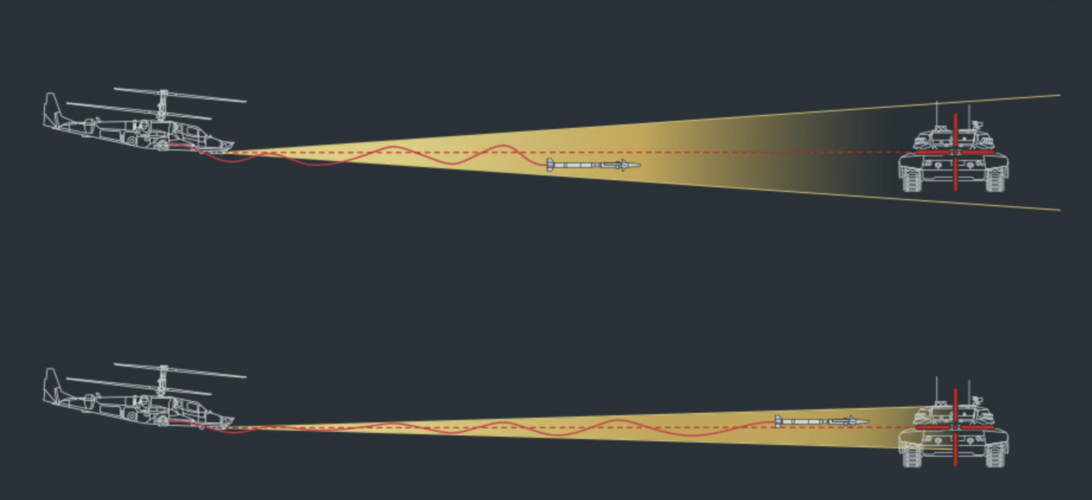
The AS.30L is a much bigger and more sophisticated weapon than its nearest competitor, the AGM-65. Structurally the weapon is divided into a seeker, warhead and propulsion and control subsystem. The Thomson-CSF ARIEL laser seeker has a gyro stabilised platform mounting a concave mirror which focusses incoming 1 micron band energy on to a detector assembly, which generates electrical signals to feed the guidance electronics. A separate gyro unit provides midcourse steering commands to keep the missile along its initial launch flightpath, a gravity bias signal is injected to ensure that the round maintains altitude.
Once the seeker has acquired the laser spot on the target, the AS.30L commences terminal homing using a proportional nav algorithm to provide CEPs claimed to be better than 5 feet.
The warhead is a large 530 lb hardened case penetrator, equipped with a delayed fuse to ensure detonation inside the target. The fusing mechanism ensures the round will not detonate until at least 5,000 ft from the launch aircraft. The combination of the missile's supersonic velocity and hardened warhead allows penetration of reinforced concrete with thickness in excess of 6 ft.
The AS.30L has a set of highly swept cruciform wings, slightly canted so the round revolves at 2.5 RPM during its flight. An additional set of tail mounted stabilisers are fitted to improve weapon stability at launch, these are retracted by springs one second after booster firing.
The propulsion used is not conventional, as two separate solid rocket motors are employed. The aftmost section of the cylindrical rear fuselage contains the guidance computer/autopilot, a thermal battery and control actuators for the exhaust vanes. The central section of the rear fuselage is occupied by two wraparound solid rocket boosters, with individual exhausts venting through a pair of symmetrically placed nozzles faired into the tail section. These high impulse rockets are fired at launch for 2 seconds and accelerate the missile rapidly to supersonic speed.
The forward section of the rear fuselage contains the sustainer rocket motor with a 21 sec burn, which exhausts through a central tailpipe running through the axis of the aft section. The exhaust nozzle contains a set of steering vanes, which are actuated by the guidance system to steer the airframe by deflecting the exhaust efflux.
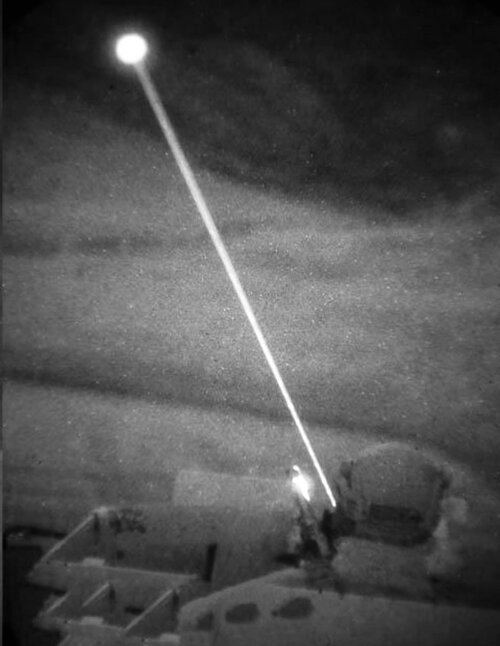
French Jaguars fired about 60 AS.30L rounds against hardened shelters in Kuwait and Southern Iraq, with impressive results. Laser designation was provided by the Atlis pod, and the complete weapon system allowed standoff ranges typically around 6 NM for low level launches. The typical engagement will see the Jaguar execute a hard 4G turn after launch, designating the target with the aft looking Atlis pod.