Wasserfall antiaircraft rocket

The British and US ignored it almost entirely.
Not quite.

1776699428460.png


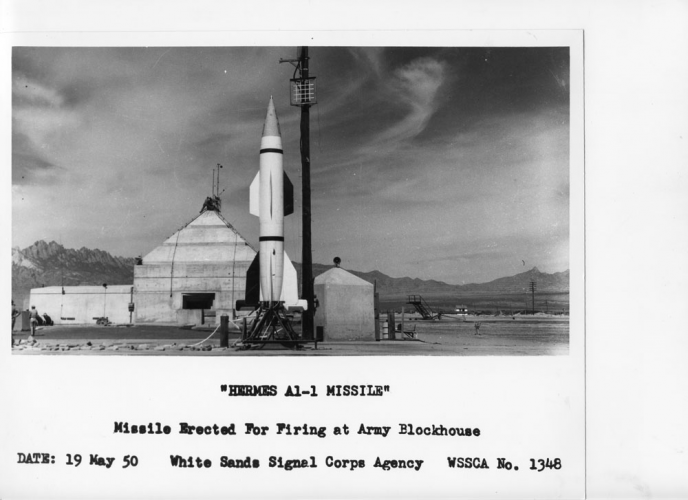
US army tried to make Wasserfall work as Hermes A-1 project, but the results were as poor as in USSR. None of test flights were sucsessfull. In 1950 (the same year as USSR), US army give up on Hermes as surface-to-air missile, but still hoped to use it as surface-to-surface missile. Several Hermes A-3 prototypes were build and tested from 1951 till 1954, but the conclusion was, that it simply didn't worth the efforts.
 
Not quite.

View attachment 809722


US army tried to make Wasserfall work as Hermes A-1 project, but the results were as poor as in USSR. None of test flights were sucsessfull. In 1950 (the same year as USSR), US army give up on Hermes as surface-to-air missile, but still hoped to use it as surface-to-surface missile. Several Hermes A-3 prototypes were build and tested from 1951 till 1954, but the conclusion was, that it simply didn't worth the efforts.
Almost entirely. GE was assigned the Hermes as a SAM as part of that program. GE immediately replaced the German P IX engine with one of GE's own design running on alcohol and LOX or RFNA. GE launched exactly 6 missiles of this type through 1950 before the program was dropped. None of the GE missiles had some external guidance system in use. The results of those 6 launches were so poor, and Nike was at that point looking very promising, that the US Army didn't want to waste more time and resources with the A-1 series.

Other designs, of all-US origin, replaced it in the program.

hermes-line1.gif
 
I’ve continued to dig on the question of whether the C2 Wasserfall jettisoned its thrust vector control vanes once its velocity was sufficient to depend on aerodynamic control.

Sources vary. A few say its was planned to improve efficiency but the vanes burned off anyway so wasn’t needed. A few others say the vanes burned unevenly, causing asymmetric thrust, making jettison critical.

Ive found a very good technical article on Wasserfall in a 1951 Interavia magazine by Rudolf Reichel. I think Reichel was at Peenemunde so can be regarded as a primary source ? His article stated that it was set up for vane jettison, each vane and backplate assembly being held in a slide rail by a squib operated bolt.

I have yet not found a wartime German language technical report that confirms this, so would say squib jettison on C2 is 80 percent but not certain.

I think a fair number of early missiles that followed the war also used graphite TVC vanes. Does anyone know if any of those had a scheme to jettison vanes once up to speed ?
From what I can find, the vanes had to be jettisoned. They were used in conjunction with Rüse, a telemetry set used for guidance during the vertical stage of flight to keep the missile stable. The controls on the fins were locked during this period. At the cant over point where the missile turned to start heading towards the target, Rüse was discontinued and the fire control guidance system took over using the control surfaces on the fins. Having the graphite veins remain in place would just fight those controls and they were no longer needed. Worse, if they stayed in place and one or more moved since there was no longer positive control of them, they could send the missile badly off course.

Rüse was necessary because the minimum range for any of the radar guidance systems--the optical ones just were not going to work at all, PERIOD!--was so large that you couldn't gather the missile into the tracking beam in the early stage of the flight. Rüse was already in use with the A4 / V-2 for this purpose so that made it convenient to use. This is what the Swedes gave the British as the so-called guidance system for Wasserfall BTW.

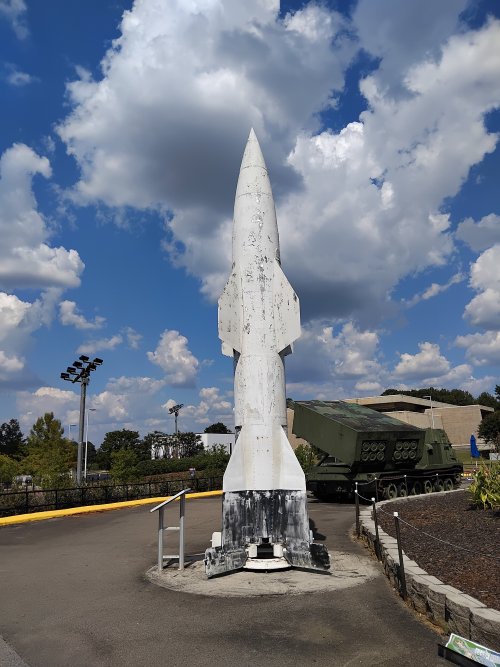
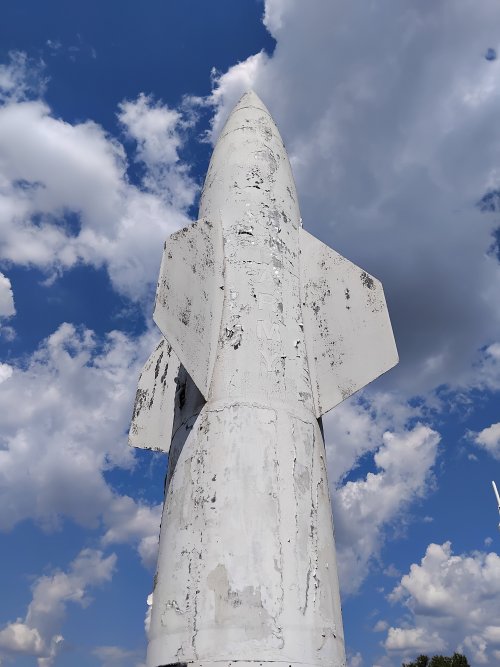
I looked at the Wasserfalls and their clones at White Sands and this appears to be accurate. The museum staff couldn't tell me for sure about that feature as they didn't know. GE who operated the few shots made, has never returned my inquiries on this and likely doesn't know today either. So, I did try to verify my observations. The missiles there are all missing their graphite veins.
 
C2 Wasserfall jettisoned its thrust vector control vanes

Report EW 2142, December 1944
5. Strahlruder
The trials with silicon carbide jet vanes for the material changeover have been successful so far. The state porcelain factory now intends to produce vanes made of corundum. The test stand has been converted for trials of jettisoning the jet vanes.

January 11, 1945
Jettisoning of the Jet Vanes
Following a meeting on January 10, 1945, it was decided, in agreement with EW 214 and Herr Patt, that the jet vanes will now be jettisoned after 12 seconds of flight.

Source: Bundesarchiv
Signature: RH 8/1302 Pages: 12, 42, 114
Direct link:


June 5, 1944
Aggregat C 2/E 2
Various antenna designs are available for the onboard equipment of the Wasserfall.

Source: Bundesarchiv
Signature: RH 8/1298; Page: 11 (Drawings)

Direct link:
 
Report EW 2142, December 1944
5. Strahlruder
The trials with silicon carbide jet vanes for the material changeover have been successful so far. The state porcelain factory now intends to produce vanes made of corundum. The test stand has been converted for trials of jettisoning the jet vanes.

January 11, 1945
Jettisoning of the Jet Vanes
Following a meeting on January 10, 1945, it was decided, in agreement with EW 214 and Herr Patt, that the jet vanes will now be jettisoned after 12 seconds of flight.

Source: Bundesarchiv
Signature: RH 8/1302 Pages: 12, 42, 114
Direct link:


June 5, 1944
Aggregat C 2/E 2
Various antenna designs are available for the onboard equipment of the Wasserfall.

Source: Bundesarchiv
Signature: RH 8/1298; Page: 11 (Drawings)

Direct link:
These are amazing documents. Thanks again Moin for making these fantastic documents available to the forum !


Excellent proof that the idea of jet vane jettison wasn't a post war invention, but survived as a planned feature all the way through the truncated flight test programme.
 
Calling the Wasserfall engine the P IX is an error, possibly introduced by Roland Pocock in his 1960s book on German missiles. According the German wartime documents, P IX is the static test stand for both the Wasserfall engine prior to installation and the all up missile, with facilities to measure and adjust thrust, fuel flows etc. None of the german documents that I have translated ever refer to the Wasserfall engine as P IX, only the test stand.

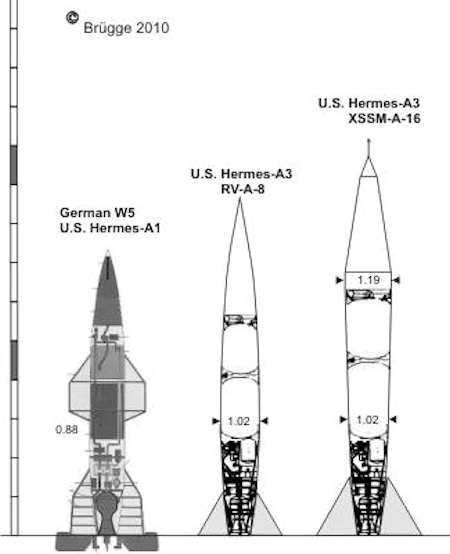
The Brugge 2010 diagram above is misleading in that it shows a single internal layout for both Wasserfall and Hermes A1. It wrong for Wasserfall as, for instance, the big spherical pressurised nitrogen tank is missing. All Wasserfall variants build or conceived had this. I cant really say if its a good fit for Hermes A1 as the Americans did a much better job of archiving the German design drawings than they did for their own. Calling the Wasserfall the "German W5" is also an error. Wasserfall was usually called Wasserfall, occassionally (usually by outside agencies) its older Roth design office C2 designation was used. The W3, W4, W5 etc. were batch built variant used (or intended for) the uncompleted flight test programme. W5 was just a glimmer in the meeting minutes when Peenemunde was evacuated. The error of calling the Wasserfall W5 (so beloved of model kit manufacturers) and confusing it with the never built operational variant was introduced in the post war allied intelligence documents.

I think its also a gross oversimplication to consider the Hermes A1 as a "US Wasserfall". It has virtually the same (but not identical) aerodynamic form and control fin/jet vane layout. But different engine, different fuel, different oxidiser, different fuel regulator, different materials, different internal layout, different gyros, different flight control computer, different servo actuators, different guidance link transmitter & receiver and different guidance system. I don't know if changed to use Imperial threads and fixings but would love to know. So while the Hermes team struggled to get Hermes A1 off the ground, its not as simple as they were struggling to "make Wasserfall work". They were struggling to make a pretty much wholly new but Wasserfall shaped missile work, shortcutting the amount of wind tunnel time needed by re-using the aerodynamic form.
 
Calling the Wasserfall engine the P IX is an error, possibly introduced by Roland Pocock in his 1960s book on German missiles. According the German wartime documents, P IX is the static test stand for both the Wasserfall engine prior to installation and the all up missile, with facilities to measure and adjust thrust, fuel flows etc. None of the german documents that I have translated ever refer to the Wasserfall engine as P IX, only the test stand.

The Brugge 2010 diagram above is misleading in that it shows a single internal layout for both Wasserfall and Hermes A1. It wrong for Wasserfall as, for instance, the big spherical pressurised nitrogen tank is missing. All Wasserfall variants build or conceived had this. I cant really say if its a good fit for Hermes A1 as the Americans did a much better job of archiving the German design drawings than they did for their own. Calling the Wasserfall the "German W5" is also an error. Wasserfall was usually called Wasserfall, occassionally (usually by outside agencies) its older Roth design office C2 designation was used. The W3, W4, W5 etc. were batch built variant used (or intended for) the uncompleted flight test programme. W5 was just a glimmer in the meeting minutes when Peenemunde was evacuated. The error of calling the Wasserfall W5 (so beloved of model kit manufacturers) and confusing it with the never built operational variant was introduced in the post war allied intelligence documents.

I think its also a gross oversimplication to consider the Hermes A1 as a "US Wasserfall". It has virtually the same (but not identical) aerodynamic form and control fin/jet vane layout. But different engine, different fuel, different oxidiser, different fuel regulator, different materials, different internal layout, different gyros, different flight control computer, different servo actuators, different guidance link transmitter & receiver and different guidance system. I don't know if changed to use Imperial threads and fixings but would love to know. So while the Hermes team struggled to get Hermes A1 off the ground, its not as simple as they were struggling to "make Wasserfall work". They were struggling to make a pretty much wholly new but Wasserfall shaped missile work, shortcutting the amount of wind tunnel time needed by re-using the aerodynamic form.
I wish I had thought of it before but confusing Wasserfall and Hermes A1 is like confusing a Dolphin with an Ichthyosaur. The external shape is very similar, as they both operate in a similar way in the same medium, but the insides .... different. Any cutaway diagram labelled "Ichthyosaur / Dolphin" should be viewed with equal suspicion.
 
Calling the Wasserfall engine the P IX is an error, possibly introduced by Roland Pocock in his 1960s book on German missiles. According the German wartime documents, P IX is the static test stand for both the Wasserfall engine prior to installation and the all up missile, with facilities to measure and adjust thrust, fuel flows etc. None of the german documents that I have translated ever refer to the Wasserfall engine as P IX, only the test stand.

I haven't found any other official designation for the engine, so I've usually gone with P IX.
The Brugge 2010 diagram above is misleading in that it shows a single internal layout for both Wasserfall and Hermes A1. It wrong for Wasserfall as, for instance, the big spherical pressurised nitrogen tank is missing. All Wasserfall variants build or conceived had this. I cant really say if its a good fit for Hermes A1 as the Americans did a much better job of archiving the German design drawings than they did for their own. Calling the Wasserfall the "German W5" is also an error. Wasserfall was usually called Wasserfall, occassionally (usually by outside agencies) its older Roth design office C2 designation was used. The W3, W4, W5 etc. were batch built variant used (or intended for) the uncompleted flight test programme. W5 was just a glimmer in the meeting minutes when Peenemunde was evacuated. The error of calling the Wasserfall W5 (so beloved of model kit manufacturers) and confusing it with the never built operational variant was introduced in the post war allied intelligence documents.

I tossed that drawing up just as a general reference to show that the Hermes program rapidly advanced beyond the Wasserfall design. I really didn't intend it as one using many details of those missiles. So, it is the C2, not W5. Good to know. Does that apply to the whole Wasserfall test series?
I think its also a gross oversimplication to consider the Hermes A1 as a "US Wasserfall". It has virtually the same (but not identical) aerodynamic form and control fin/jet vane layout. But different engine, different fuel, different oxidiser, different fuel regulator, different materials, different internal layout, different gyros, different flight control computer, different servo actuators, different guidance link transmitter & receiver and different guidance system. I don't know if changed to use Imperial threads and fixings but would love to know. So while the Hermes team struggled to get Hermes A1 off the ground, its not as simple as they were struggling to "make Wasserfall work". They were struggling to make a pretty much wholly new but Wasserfall shaped missile work, shortcutting the amount of wind tunnel time needed by re-using the aerodynamic form.

Again, I wasn't getting into the weeds here. You're correct. GE put in an engine and fuel system they designed at their Malta NY facility right from the start and used LOX and methanol as fuel. All of the electronics are US designed as happened gradually with captured A4 / V2 rockets. Hermes pretty quickly steered away from being a SAM program once it was clear that Nike was going to succeed as a design. It instead became almost totally an R&D program into general ballistic missile design instead.

I doubt that White Sands would be happy with me taking things apart on one of the surviving Wasserfall clones they have on display so I can't really tell you what screw threads were in use on it.
 
April 20, 1943
Design of a guided liquid-fueled rocket for engaging aerial targets.
Parts: A - E

Part: A
Entwurf einer gesteuerten Flüssigkeitsrakete zur Bekämpfung von Flugzielen (Projekt „Wasserfall“)

Also includes:
Statische Untersuchungen W1

Source: Bundesarchiv
Signatur: RH 8/3641; Page: 99 - 207, 237 - 302

Direct Link:


Part: B
Entwurf einer gesteuerten Flüssigkeitsrakete zur Bekämpfung von Flugzielen (Projekt „Wasserfall“)
- Control of the flak missile

Source: Bundesarchiv
Signatur: RH 8/3647; Page: Page: 73 - 167

Direct Link:


Part: E
Entwurf einer gesteuerten Flüssigkeitsrakete zur Bekämpfung von Flugzielen (Projekt „Wasserfall“)
- Manufacturing, raw material and fuel requirements for anti-aircraft missiles

Source: Bundesarchiv
Signatur: RH 8/3655; Page: Page: 20 - 99

Direct Link:
 
September - October 1942
Tactical and technical requirements for the development of anti-aircraft missiles, October 22, 1942. Discussion in the HAP on September 26, 1942. Development program of anti-aircraft artillery (guided anti-aircraft missile).
HAP will investigate three propulsion systems:
- Pure "Salbei" rocket
- "Salbei" rocket with powder rocket booster
- Pure powder rocket

Source: Bundesarchiv
Signatur: RH 8/1258

Direct Link:


November 1942
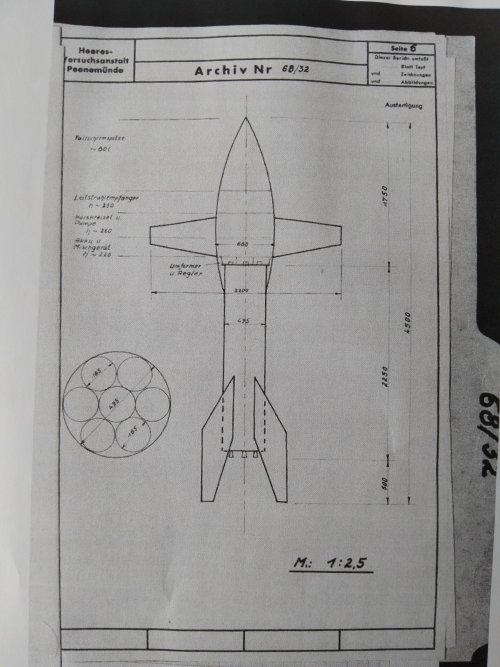
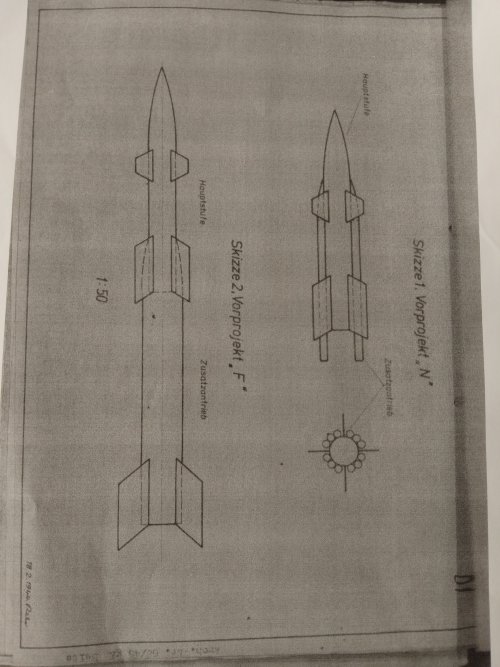
In the report dated November 2, 1942 ("Die Entwicklung einer gesteuerten Flakrakete," HAP Archive Number 58/3), Wernher von Braun proposes three different solutions for a guided anti-aircraft rocket:
- Solid propellant C1
- Liquid-propellant C2
- Two-stage C3
Unfortunately, I do not have this report.

Perhaps someone knows more about the C1 and C3 designs?

C3 Wasserfall "Rheinmetall"

Source:
Bundesarchiv Files
Signatur: RH 8/3641; Page: 243
 
Last edited:
Back
Top Bottom