That's incorrect.
SE CHARZ doesn't perform armored vehicle upgrade or overhaul.
There is an armored vehicle repair plant in Chirchiq though, named, rather uninspiredly, Zirhli Texnikalarani Taʼmirlash Zavodi (zTTz, simply Armored Vehicle Repair Plant). zTTz developed the T-64MV (which first appeared in 2019 btw).
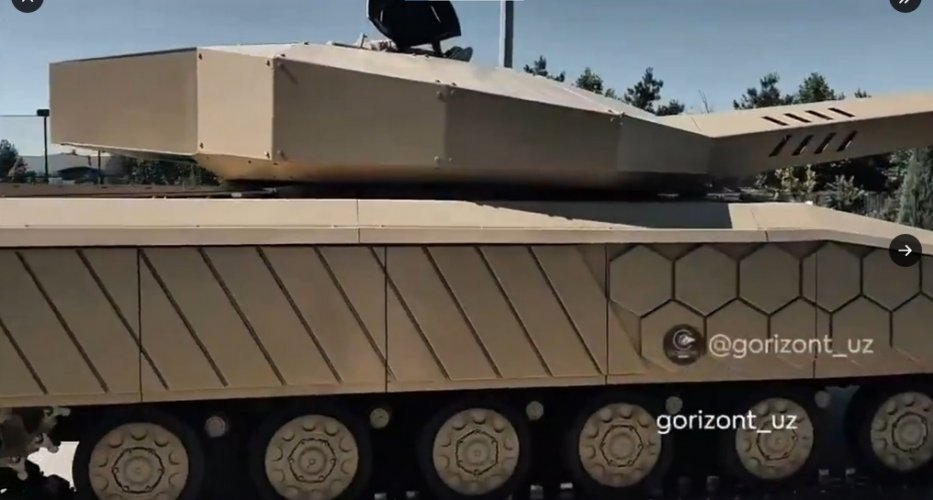
However, this new T-64 upgrade wasn't developed by zTTz, but rather by LLC Havztez Defense, which seems to be some kind of joint venture between the Defense Industry Agency under the Ministry of Defense of the Republic of Uzbekistan and Krantas Group.
On a second thought, Havztez Defense is more likely to be a joint venture between the Uzbek MoD (via the very cumbersomely named Defense Industry Agency under the Ministry of Defense of the Republic of Uzbekistan) and Krantas Group; similar to MS-Barer Textile LLC (which produces uniforms, shoes and other textiles for Uzbekistan's armed and security forces). MS-Barer Textile LLC is a joint venture between the Turkish Barer Holding (60%), the Defense Industry Agency (35%) and the Rebuplic of Uzbekistan Textile and Garment Industry Association (5%). The reason I find this to be more likely is that Havztez Defense is listed amongst the Defense Industry Agency's enterprises (as is MS-Barer Textile), while Krantas is certainly involved in the firm.
However, Havztez Defense apparently doesn't own any production facilities and merely serves as a marketing, distribution and import entity.
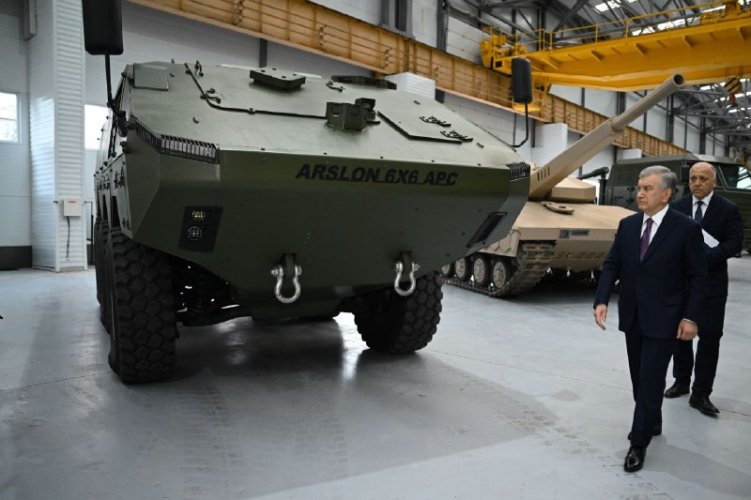
Instead, the T-64 upgrade was most probably carried out by Nurafshon Makhsus Tekhnika, a plant operated by Krantas which already manufactured the Arslon 8x8 (which, in turn, is also part of Havztez's portfolio).
In the attached photo, taken at Uzbekistan's President Mirziyoyev's visit in June this year, you see the upgraded T-64 in Nurafshon Makhsus Tekhnika's factory hall.
Also, I don't think Semey Engineering had anything to do with this project. While there were some (indirect) contacts between the firms in the past - back in 2017, Kazakhstan Engineering, parent company of Semey Engineering, and Krantas Group signed a memorandum on cooperation in the "production of special equipment for defense industry enterprises" - there is zero evidence for Semey Engineering's involvement. I also doubt that South Korean participation, which was reported on by several news outlets, reaches beyond the mere provision of components, most importantly the Doosan DP222LC engine. Krantas should be capable of performing this upgrade herself, given the companies overall engineering activities, while the South Korean defense industry has little experience with Soviet equipment.
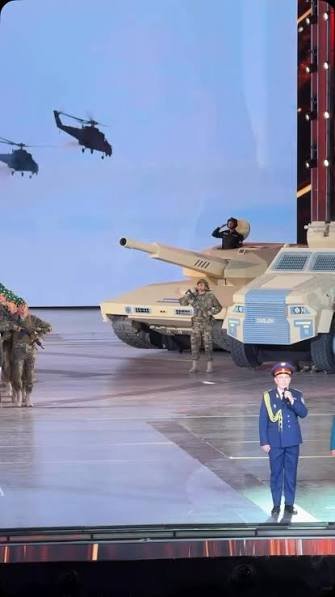
Regarding the new armor: I totally agree, it's most probably only for show. I seriously doubt this upgrade will enter mass production or Uzbekistan army service anyway. They "fielded" two mockups of the upgraded vehicle at this year's independence day festivities, so it's probably just a propaganda effort.
The T-64MV appears to be a much more sensible upgrade - a more powerful and simple engine than the 5TDF, easily sourceable abroad and already in Uzbek army service (though Uzbekistan's T-72B fleet is small), some additional protection via Kontakt-1 and slat armor (better than what most likely is sheet metal on the new T-64 upgrade) and digital radios.
Nontheless, I find the question why they engage in this kind of upgrades quite interesting. The core of both this recent upgrade as well as the T-64MV is the replacement of the engine, a rather extensive endeavor, as it requires one to enlarge the engine compartment, add an intermediate power transfer gearbox etc. Either they find the T-64B's power/weight ratio to be seriously lacking - which it definitely is, but not enough for Ukraine to make upgrading the engine a priority in their recent T-64 variants (T-64BV zr.2017 and 2022 both retain the 5TDF engine). Or they ran out of 5TDF engines and are looking for a replacement. This would seem more logical, but, as Uzbekistan obtained a quite large T-64 fleet and even offered some for sale, they should have enough engines lying around for their rather small T-64 fleet (Military balance puts its size at a 100 but I find this to be too optimistic). Alternatively, they could obtain 5TDFs from neighbouring Kazakhstan (Argun still lists 113 of them for sale).
So in theory at least, Uzbekistan should be able to keep their T-64 fleet running with 5TDFs.