Grey Havoc
ACCESS: USAP
- Joined
- 9 October 2009
- Messages
- 24,500
- Reaction score
- 18,176


Back in 2022, the Marine Corps called up Leidos looking for a discrete, unmanned surface vessel that could transport thousands of pounds of supplies without being seen.
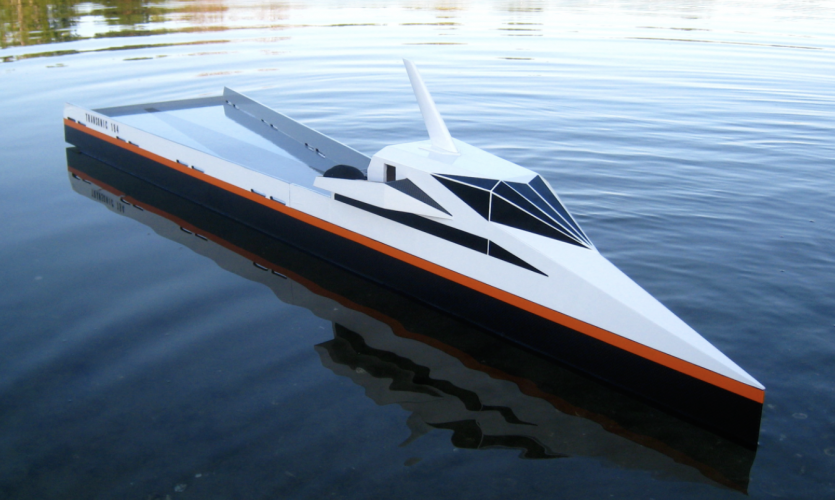
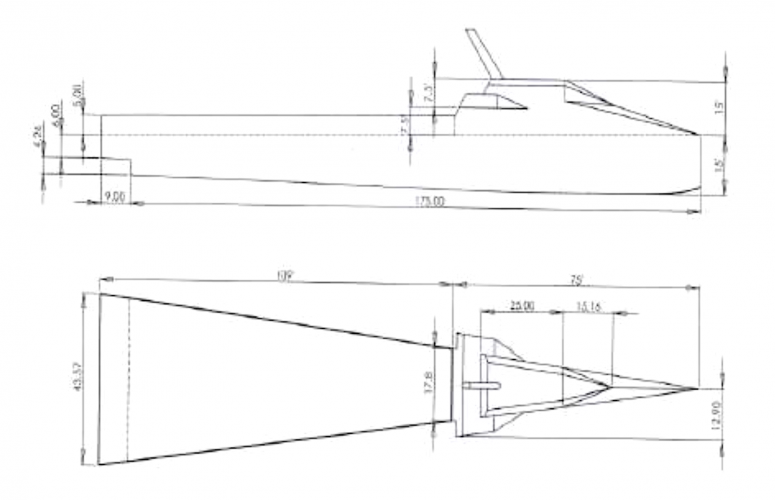
Nine months later, II Marine Expeditionary Force had Sea Specter in hand for testing as part of the Corps’ Autonomous Low-Profile Vessel program. At 65 feet long and with a profile from inches to just a couple feet above the water, it’s reminiscent of the self-propelled semi-submersible boats drug traffickers have used to cross oceans in recent years.
“I think that it's OK to say that those narco subs inspired the concept, but that's where the similarities end,” Jeff Bowles, chief engineering officer at Gibbs & Cox, a Leidos company, told Defense One. “Narco subs are dirty. They're dangerous. They're not engineered. But in principle, their mission is the same—move a large volume of cargo with the minimal chance of being observed by anyone else, right?”
In the Defense Department’s shift from counterinsurgency in the Middle East to near-peer conflict in the Indo-Pacific, the concern that enemies will be able to shoot down planes or blow up supply ships is very real.
“So you might not be able to take something that's a big, high-value target, or something that's slow moving or highly observable, to deliver re-supplies to the troops, because it might give away their position,” Bowles said.
The Marines, who are training to fight from Pacific islands, are looking for a fleet of floating logistics drones that can fan out to multiple outposts at the same time.
Originally remote-controlled, the Marine Corps requested an autonomous feature, Bowles said, which is done with waypoints, or route markers the boat’s sensors can seek until it gets to its destination.
“And it'll try not to hit anything,” Bowles added. “If it's going to have a collision with another vessel or some other fixed object, it will stop and notify for help or do some basic maneuvers to avoid potential collision.”
The Marine Corps has three of them now, the third a second-generation prototype being tested by the 12th Marine Littoral Regiment in Japan.
With a sensor mounted 8 feet above the deck, the ALPV can see about 5 to 7 miles in front of it, and can carry 5 tons for 2,300 nautical miles, traveling at 8 knots. Tie-downs inside the boat are designed to hold pallets, so the vessels can be loaded down with ammunition, food, fuel, water, or anything else.
For example, from Guam to the Philippines is about 1,500 miles. Ideally, Bowles said, they’d send a couple dozen ALPVs loaded with gear, so if they lost half of them, there would still be adequate supplies to deliver.
With a different sensor package, they can also be used for communications.
“This thing could loiter in a prescribed area for a very extended duration,” he said. “It could also form a picket line to look for intruders. You could line these up, you know, and look for human trafficking, or any type of people encroaching on U.S. territory. These things have the endurance to sit there.”
It also has open architecture for navigation, so a customer can add whichever autonomy software they choose.
The company is anticipating more military interest if Congress passes the reconciliation bill, which includes over $1 billion for small unmanned vehicles. The Army and Special Operations Command have both reached out, Bowles said, but haven’t placed an order.
“So the ability to turn out individual variants very quickly, from an operational testing and evaluation perspective, we believe, is something that we're going to find our customers asking of us,” Bowles said.
Leidos is also exploring new materials for the Sea Specter, which is currently made of wood.
“And that's not the solution that we believe is right for the long-term, and we're looking to move into preparing for high-volume production out of a different material,” Bowles said.
Something like fiberglass would be lightweight and resistant to corrosion, but a metal like aluminum or steel are also options—though they add to the overall weight of the boats, which means it takes more effort to transport them.
For now, Leidos expects the Corps to make ALPV a program of record in 2027, “and we certainly hope that they select Sea Specter to work with,” Bowles said.

The Marine Corps’ Force Design update released in October adds a new capability to the service’s light armored reconnaissance battalions: a “maritime reconnaissance company” equipped with new tactical boats, to aid the battalions’ planned transformation into agile mobile reconnaissance battalions.
With that new unit and new boat — the multi-mission reconnaissance craft — will likely come a new slate of training and even a tailor-made job specialty, said Brig. Gen. Christopher Haar, assistant deputy commandant for Marine Corps Combat Development and Integration.
The addition of boat-borne maritime reconnaissance companies further supported the goal of small Marine Corps units operating in coastal regions, as the Force Design strategy envisions, Haar said in a recent interview.
“Because we operate primarily in the littoral regions, having additional small craft that we can move around in is pretty important.”
The small craft are part of an evolution that began when light armored infantry battalions were converted to more agile recon battalions in the mid-1990s, he said.
Meanwhile, “how do we employ the Marines and the skill sets that they’ve gained using these combat vehicles ashore to be able to do similar actions in the littorals?” he said. “We’re going through and trying to figure out what exactly are all the requirements that we need in these crafts.”
The boats themselves will be based on those made by Australia-based company The Whiskey Project Group. The 30 or 40-foot open-water boat models boast a rugged hull, integrated ballistic protection, shock-mitigating seats, low-profile fenders and a side cutout for ease of ingress and egress. They’re intended to operate in open-ocean conditions as well as coastal shallows, according to the Marine Corps.
Officials have previously said they want up to 18 of the boats, largely fielded to the three active-duty reconnaissance battalions.
The full set of features and specifications is still to be determined, Haar added.
“We’re going through and trying to figure out what exactly are all the requirements that we need in these crafts. And then once we’ve settled on that, it will be over to our Marine Corps Systems Command, or [Program Executive Officer] Land Systems, to acquire the specific crafts,” he said.
With the acquisition process will come the development of new doctrine for how to employ the boats, Haar said.
While the Marine Corps has long maintained some small boats for special operations and reconnaissance — including the rigid-hull inflatable boat and the combat rubber raiding craft, typically called Zodiacs — the multi-mission reconnaissance craft will be larger and have different operating parameters.
“There will be, obviously, new training, which means that there will probably be a new [military occupational specialty] at the minimum — an additional MOS that someone will have to go to school to get trained in,” Haar said.
Some training may be repurposed. The coxswain’s course currently used for Zodiac operators may, he suggested, be adapted for the new maritime reconnaissance companies.
“There will be maintainers that have to be trained on how to maintain the boats. There will be some facility impacts, because we’ll have to build additional boat lockers and boat maintenance facilities, boat storage facilities,” he said.
Changes to regulations around training ranges will also be evaluated to ensure the Marines can use the boats as they’re intended.
“If I’m going to start operating boats off of Southern California, making sure that both those areas in the water that are designated for training now — do they have to be expanded, or are they good enough?” Haar said. “That’s the full … analysis that we go through to make sure that we’re ready for those craft.”
He did not immediately have information to share on when acquisition of the boats is formally expected to begin, or when the evolution of the new battalions to mobile reconnaissance battalions is expected to be complete.
The plan to convert the battalions was announced in a 2022 Force Design update that built on a 2021 briefing that “identified the likely utility of multi-domain Mobile Reconnaissance units possessing [organic precision fires for infantry], light-weight vehicles, unmanned air and surface systems, boats and other capabilities necessary to succeed in a contested information environment,” according to the 2021 update.

Why the US Marine Corps wants a new anti-tank loitering munition
https://www.defensenews.com/news/yo...rps-wants-a-new-anti-tank-loitering-munition/
The U.S. Marine Corps is looking for a new anti-tank loitering munition to field for the Fleet Marine Force.
The service wants the kamikaze drone, called the Organic Precision Fires–Medium, or OPF-M, to have a range of at least around 15 miles and be light enough to be carried by two dismounted Marines.
“Marines will employ OPF-M at the tactical level to enable engagement of armored targets beyond the range of direct fire weapons while minimizing collateral damage and exposure to enemy direct and indirect fires during distributed operations,” a Request for White Paper from Marine Corps Systems Command states.
The RFW deadline is May 26.
Under the requested specifications, the drone would have a loiter time of at least 20 minutes, while the warhead must be powerful enough to destroy armored vehicles or at least achieve a mobility kill.
The munition itself should weigh less than 35 pounds, and less than 20 pounds for the ground control station, the request states.
The Marine Corps wants the drone to feature automatic target tracking, which enables it to follow a moving target autonomously without human intervention. Nonetheless, OPF-M “shall be a Man in the Loop system,” the RFW specified.
Navigational waypoints could be set before launch and in mid-flight, according to the document. The Marine Corps also envisions a distributed system in which control of a drone could be handed from one ground control station to the next.
Interestingly, the RFW also lists several potential future capabilities for OPF-M that include targeting more than enemy tanks.
For example, drones could be equipped for “maritime targets, drones, personnel formations, advanced sensor packages, electromagnetic effects, and other types of payloads,” the document states.
Other future enhancements include automatic target recognition, functionality in GPS-denied environments, frequency hopping to avoid jamming of command links and enabling a single ground station to control multiple drones.
The RFW suggests the Marine Corps wants to move fairly fast on the project.
It asks respondents to estimate how long it will take to produce 50 all-up-round munitions and 10 ground control station kits.
Respondents should also specify their potential OPF-M production capacity for FY2027-28 as well as FY2029-2031.
Meanwhile, the U.S. Army awarded AeroVironment a $186 million contract in February for Switchblade loitering munitions, including some armed with explosively formed penetrator warheads to destroy armored vehicles.
AeroVironment this month also announced the debut of a new drone, known as MAYHEM 10, with the capacity to carry out reconnaissance, electronic warfare and strike missions, expanding upon its Switchblade family that is already being fielded by the Army.
Marines Realize They Can’t Depend On Army For Ballistic Missile Defense
https://www.twz.com/land/marines-re...d-on-army-alone-for-ballistic-missile-defense
Hey folks, Sikorsky and Robinson Unmanned have landed a $15.5 million U.S. Marine Corps contract to deliver the R66 TURBINETRUCK, an autonomous medium‑lift logistics helicopter. Built on the tough Robinson R66 airframe and powered by Sikorsky’s MATRIX™ autonomy system, it’s designed for fast, uncrewed resupply in contested areas. This “middleweight” workhorse bridges a key logistics gap, hauling 1,300–2,500 lbs over 100 nautical miles and operating from remote, rugged locations.
Source / Link:
https://news.lockheedmartin.com/202...tract-for-Autonomous-Aerial-Logistics-ProgramEdit:
The U.S. Marine Corps is testing two autonomous cargo helicopters based on the Robinson R66 and Bell 505 to support resupply missions in contested environments.
Both designs integrate advanced autonomy systems to deliver 1,300–2,500 pounds over long ranges without exposing crews to risk.
The program aims to fill a “middleweight” logistics gap for future Indo‑Pacific operations and could expand into ISR, EW, and other mission roles. Another competitor for MARV-EL was the SeaOnyx from Leidos.
Source / Link:
https://www.twz.com/air/light-uncre...binson-r66-and-bell-505-compete-usmc-contract
Light Uncrewed Cargo Helicopters Based On Robinson R66 And Bell 505 Compete For USMC Contract
https://www.twz.com/air/light-uncre...binson-r66-and-bell-505-compete-usmc-contract
have a MARVEL Hero here
https://news.bellflight.com/en-US/2...irframe-for-u-s-marine-corps-marv-el-program/
View attachment 810647
'Fort Worth, Texas (April 30, 2026) - Bell Textron Inc., a Textron Inc. (NYSE: TXT) company, announced that it was selected by Near Earth Autonomy (Near Earth) as a partner on the prototyping of an autonomous Bell 505 for the U.S. Marine Corps’ Aerial Resupply Vehicle - Expeditionary Logistics (MARV-EL) Increment 2 program. The goal of the program is to prototype an uncrewed logistics aircraft ready for tactical-edge resupply in contested environments and serve as a middle-weight uncrewed logistics asset.
cheers
I suspect that this is yet another initiative that won't end well.The Marine Corps is updating its Marine Reconnaissance training curriculum through the launch of a new Ground Reconnaissance Course, according to Training and Education Command.
As the new initial course in the recon training pipeline, GRC is one of two programs, alongside the Amphibious Reconnaissance Course, replacing the service’s Basic Reconnaissance Course.
The new curriculum, which was launched April 27 at the Camp Pendleton-based Reconnaissance Training Company, was developed following analysis of how recon training can best support the service’s Force Design initiatives.
The Reconnaissance Training Company, or RTC, trains Marines who will fight as part of scout or reconnaissance teams within the Corps’ Ground Combat Element of the Marine Air-Ground Task Force.
[snip]
Didn't the Corps havehave a MARVEL Hero here
https://news.bellflight.com/en-US/2...irframe-for-u-s-marine-corps-marv-el-program/
View attachment 810647
'Fort Worth, Texas (April 30, 2026) - Bell Textron Inc., a Textron Inc. (NYSE: TXT) company, announced that it was selected by Near Earth Autonomy (Near Earth) as a partner on the prototyping of an autonomous Bell 505 for the U.S. Marine Corps’ Aerial Resupply Vehicle - Expeditionary Logistics (MARV-EL) Increment 2 program. The goal of the program is to prototype an uncrewed logistics aircraft ready for tactical-edge resupply in contested environments and serve as a middle-weight uncrewed logistics asset.
cheers

So are the Marine LAR units like an Army Rangers counterpart?
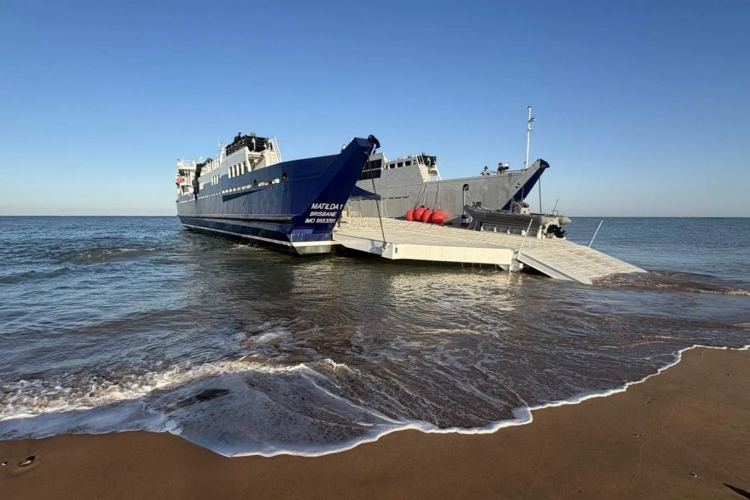
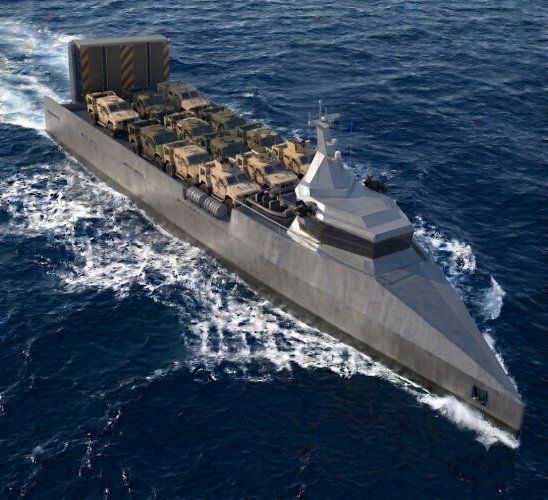
The Australian-designed stern landing vessel Matilda 1 completed a successful stern-first beach landing and rapid powered withdrawal at Dundee Beach near Darwin on July 8, 2026, ahead of entering a three-year logistics lease with the U.S. Marine Corps. The tactical evaluation demonstrated the vessel's ability to lower its 12.7-meter-wide stern ramp, maintain positioning on the shoreline, and return to deeper water in less than 60 seconds without tug assistance. This test campaign directly supports the U.S. Marine Littoral Regiments by verifying a logistical transport solution capable of moving heavy vehicles and containerized supplies between dispersed coastal sites without relying on deep-water ports.
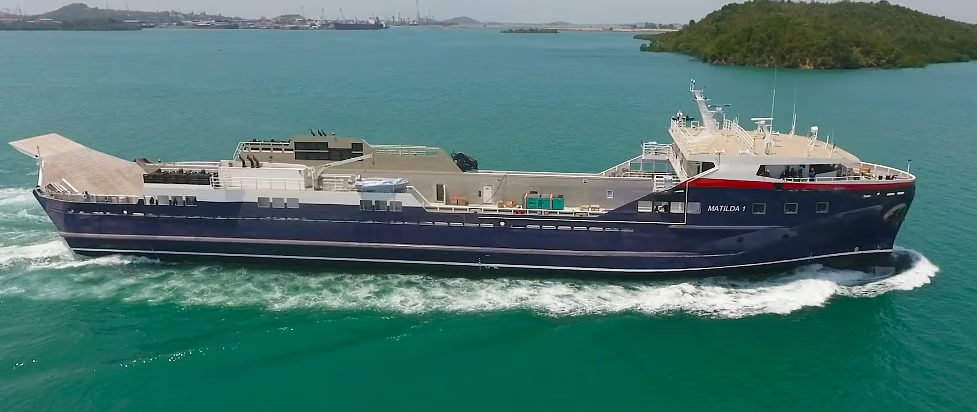
The 73-meter Matilda 1 features a 1,500-tonne deadweight capacity, a 550-tonne beaching payload, and a 4,000-nautical-mile operational range driven by a quad-screw diesel-electric propulsion system. Recent trials at Hudson Creek and Dundee Beach successfully validated the vessel's tri-hull stern geometry, which prevents seabed hull suction and protects steering gear during active dry-out and rapid beaching cycles.
U.S. Marine Corps personnel participated in both trials, while Australian Defence Force personnel observed the vessel’s beach interface, hull behavior, propulsion protection and recovery sequence. The test campaign addresses a specific operational problem for U.S. Marine Littoral Regiments: transporting vehicles, ammunition, fuel, engineering equipment and containerized supplies between dispersed coastal positions without requiring a deep-water port, a large amphibious warship or a separate landing craft for the final movement ashore. During the Dundee Beach trial, the Matilda 1 approached the coast stern-first rather than grounding its bow, allowing the ship-shaped forward hull and bridge to remain oriented toward open water. The crew used four independently driven propellers and the bow-thruster arrangement to control alignment during the reverse approach, then placed the stern ramp directly onto the beach. The ramp’s 12.7 m width is more than twice the 5 m to 6 m width found on many similarly sized bow-loading landing craft, while the absence of bow doors removes the overhead clearance restriction that can prevent tall vehicles, loaded container handlers or engineering machinery from passing through a conventional forward opening. After holding position for the simulated discharge, the vessel powered away from the shoreline in under one minute, a relevant measure because tide, wave action and sediment movement can rapidly change the grounding load acting on a ship. The trial therefore examined not only beach access, but also the ability to repeat the landing cycle without tug assistance, mooring infrastructure or a rising tide to free the hull.
The Matilda 1 (IMO 9553701) has an overall length of 73 m, a deadweight of 1,500 tonnes and an actual beaching payload of 550 tonnes. Its operational range is 4,000 nautical miles, equivalent to 7,408 km, which permits independent movement from northern Australia to much of Southeast Asia, Melanesia and the central approaches to the western Pacific without transport aboard another ship. The 670 m² cargo deck provides 42 TEU ground positions and can carry 84 twenty-foot ISO containers when double stacked, with longitudinal or transverse stowage depending on weight distribution and unloading order.
The deck can instead be configured for 20 JLTVs, 18 M142 HIMARS launchers, 16 MTVR trucks or 12 Amphibious Combat Vehicles. These are maximum single-type configurations rather than complete operational packages, since a deployable HIMARS detachment would also require rocket resupply vehicles, command-and-control equipment, maintenance assets, fuel and personnel. Permanent accommodation is provided for eight crew members, while up to 36 additional personnel can embark, giving the vessel capacity for vehicle operators, US Marines, communications teams, engineers and cargo-handling personnel. The hull architecture of this stern landing vessel (SLV) combines a conventional high bow for open-water transit with a tri-hull stern optimized for beaching.
Two side pods, off-center shafts and protective aft skegs surround the propulsion and steering equipment, limiting the risk of propeller, rudder or shaft damage when the stern enters shallow water or contacts an uneven seabed. Four fixed-pitch propellers are driven by four electric motors in a quad-screw diesel-electric arrangement, while six 450 kW diesel generators provide a total installed generating capacity of 2,700 kW. The electric motors incorporate thrust blocks and drive the shafts without conventional mechanical reduction gearboxes, reducing the number of transmission components exposed to shock, alignment changes and maintenance demands. Independent propulsion lines allow the crew to vary thrust across the stern during reversing, correct an angled approach and retain partial mobility after a single generator, motor or shaft failure.
The ship can achieve 85 percent of its designed speed in head seas at Sea State 5, a performance criterion directly related to its ability to maintain regional schedules in weather conditions that would significantly reduce the speed of flat-bottomed landing craft. The stern landing arrangement addresses the hydrodynamic disadvantages of conventional bow-ramp craft, which normally combine a shallow draft, broad bow and flat bottom to maximize beach access. Those characteristics increase resistance in open water, worsen pitching in head seas and can generate a strong suction effect when a large flat hull settles onto sand or mud. The Matilda 1 reduces the continuous bottom area exposed to the seabed by using two side pods and a central stern geometry that preserves water channels around the hull during withdrawal.
Its propellers remain inside protected areas behind the pods and skegs, including during an angled approach, rather than becoming the lowest exposed components near the shoreline. The vessel also trims primarily through fuel distribution instead of relying on large quantities of seawater ballast to maintain propeller immersion, reducing ballast system complexity and the volume of seawater transferred during beach operations. These features are intended to shorten the time between cargo discharge and withdrawal while limiting the risk that unloading changes the ship’s trim enough to trap the stern on the seabed. The Hudson Creek and Dundee Beach trials tested different phases of the same littoral logistics cycle.
At Hudson Creek, the vessel dried out in mangrove mudflats as the tide receded, placing the hull, side pods and protective stern structures under static bottom loads on soft sediment. This allowed assessment of settling angle, local hull loading, watertight integrity, machinery alignment and the ability to refloat without external assistance after the tide returned. At Dundee Beach, the test shifted to a powered stern approach, active station keeping, ramp deployment and rapid de-beaching from an exposed shoreline. Together, the trials covered conditions common across northern Australia and parts of the Indo-Pacific, including shallow coastal gradients, tidal variation, river mouths, soft mud, sand movement and limited hydrographic certainty close to shore.
The sequence also provided information on whether the vessel can use landing sites outside the narrow range of gradients and seabed conditions normally required by bow-ramp landing craft. The U.S. Marine Corps intends to use the Matilda 1 for expeditionary logistics and distributed sustainment during the three-year lease, with initial activity centered on northern Australia before wider regional employment. The service requires vessels able to move heavy equipment between shore positions supporting US Marine Littoral Regiments, including anti-ship missile batteries, sensors, communications equipment, aviation-support teams and mobile logistics nodes.
Before the Matilda 1, the US Marine Corps tested the concept with the HOS Resolution, an offshore support vessel converted with a large stern ramp, reinforced cargo deck, landing legs and protection for its propellers and rudders. The HOS Resolution supported evaluations of ramp gradients, beach interaction, vehicle compatibility and shore-to-shore movement during events including Project Convergence Capstone 4. The Matilda 1 provides a different test case because its hull, propulsion protection, deck arrangement and stern geometry were developed for repeated beaching rather than added to an existing offshore vessel.
The lease will allow direct measurement of cargo throughput, fuel consumption, crew requirements, loading time, maintenance burden, beach availability and mission completion rates against the converted-vessel approach. The Matilda 1 was designed by Queensland-based SeaTransport and built by Karimun Anugrah Sejati in Batam, Indonesia, before completing contractor sea trials, end-user acceptance trials, transit to Darwin, dry-out berthing and live beaching. The design evolved from Australian commercial stern landing vessels used for nearly three decades to deliver passengers, vehicles, livestock, containers and bulk cargo to remote communities, mining sites and coastal areas without developed ports, with more than 20 related vessels entering commercial operation.
The military configuration adds reinforced beaching structure, protected propulsion equipment, distributed machinery, multiple watertight compartments, a collision bulkhead and a military communications room adjacent to the bridge. The cargo deck is separated from the bow by watertight subdivision intended to limit free surface flooding after hull damage, while fuel is stored in isolated units with redundant pumps and self-contained fire suppression. The three-year evaluation will determine whether the vessel can sustain repeated logistics missions rather than merely complete individual demonstrations, with the decisive metrics including days available at sea, cargo delivered per operating day, fuel burned per tonne-nautical mile, ramp cycle time, maintenance hours per sailing hour, number of accessible beaches under representative tidal conditions, and the frequency with which weather or seabed conditions prevent planned landings.
hopefully this will lead down the road to a program-of-record for intra-theatre sealift with beaching capability. (But it will have to be much faster than Matilda's reported 15-16 knot top speed)
An LCM is not landing 550+ tons across the beach.There is already a contract for LCM; hard to see another type adopted.
He meant LSM, which is designed for more permissive logistical operations and is not intended to go anywhere where it might get shot at (per USN statements).An LCM is not landing 550+ tons across the beach.