USAF/USN 6th Gen Fighters - F/A-XX, F-X, NGAD, PCA, ASFS News & Analysis [2008- 2025]

Status
Not open for further replies.

Attachments

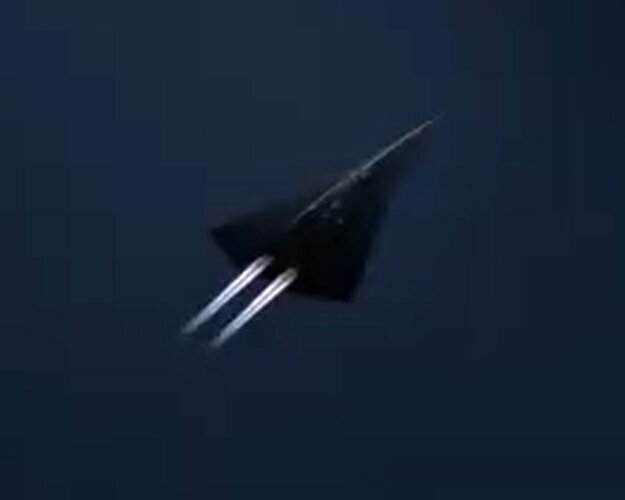
  • 157603130-secure-m3u8.mpg_snapshot_16.54_[2017.06.18_19.01.13].jpg
    157603130-secure-m3u8.mpg_snapshot_16.54_[2017.06.18_19.01.13].jpg
    276.5 KB · Views: 199
  • 1649910033245.jpeg
    1649910033245.jpeg
    2.8 KB · Views: 107
  • Screen-Shot-2024-01-19-at-5.32.39-PM-1024x506.jpg
    Screen-Shot-2024-01-19-at-5.32.39-PM-1024x506.jpg
    26.3 KB · Views: 104
  • Skunk-Works-NGAD (1).jpg
    Skunk-Works-NGAD (1).jpg
    61.2 KB · Views: 88
  • Screenshot-2023-11-20-at-1.43.35 PM.png
    Screenshot-2023-11-20-at-1.43.35 PM.png
    347.7 KB · Views: 92
  • 243381-43d1f6de667333268b40c491449770f6.jpg
    243381-43d1f6de667333268b40c491449770f6.jpg
    41 KB · Views: 87
  • Screenshot_20230703_104943_ImageMeter.jpg
    Screenshot_20230703_104943_ImageMeter.jpg
    141.7 KB · Views: 109
  • 243382-ddbbcd522b7cc11fd287050272afc25f.jpg
    243382-ddbbcd522b7cc11fd287050272afc25f.jpg
    7.4 KB · Views: 113
  • 243380-9d5a0f76c3a8506a5a5bf63c6bead007.jpg
    243380-9d5a0f76c3a8506a5a5bf63c6bead007.jpg
    19.9 KB · Views: 114
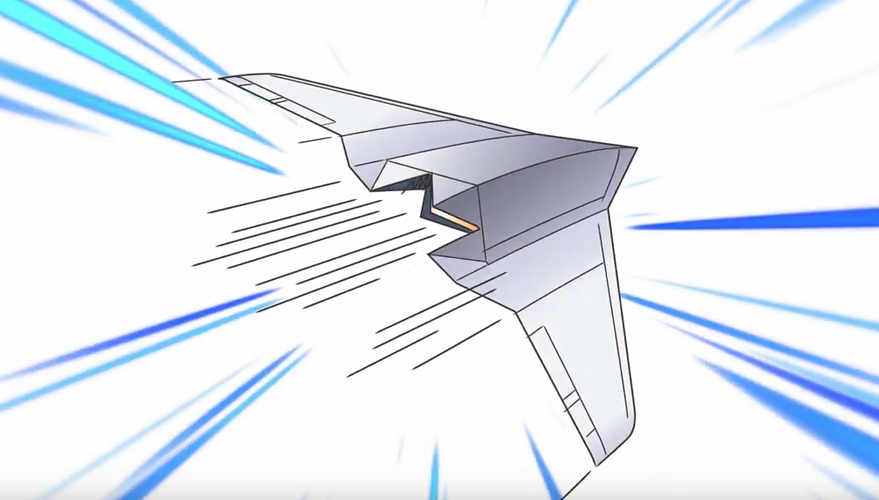
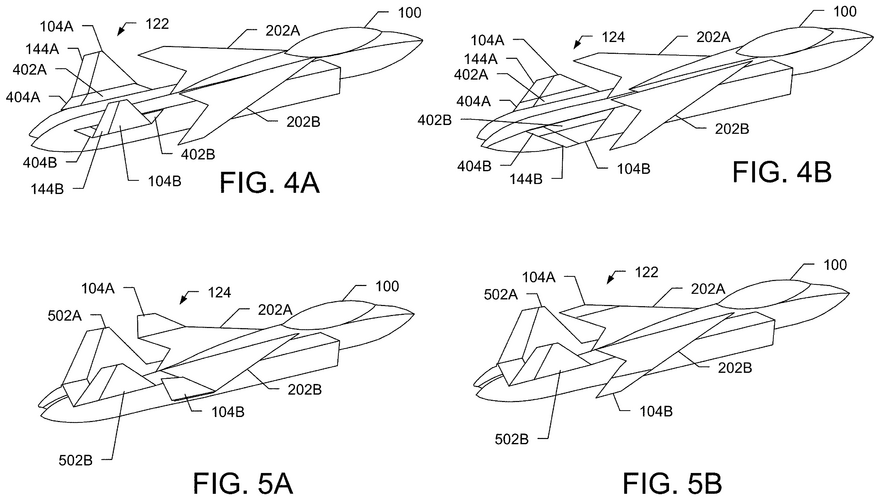
Also in relation to folding V tails similar to this aircraft, here's a recent boeing patent on such a mechanism. Notable mentions is how lateral stability is maintained when folded down, i.e. yaw thrust vectoring and split surface.


Attachments

  • 269344-5957f14c9acb9ac12b2f5236f2c8c85b.jpg
    269344-5957f14c9acb9ac12b2f5236f2c8c85b.jpg
    61.1 KB · Views: 120
Last edited:
Something is going on with Boeing, we knew a lot of month before in 2015 that it was Northrop the winner of B-21, well before the official contract in my opinion it is the same with Boeing. And Lockheed is doing Zero communication about the NGAD, no promo video nothing..
There has been plenty of investments that LM has made supporting its adv. mfg capabilities for aeronautics. They too have expanded sites in Palmdale and elsewhere. Of course its more difficult to throw a media tour for 6th gen fighter like Boeing when you've had to pause delivering your current fifth gen fighter.
 
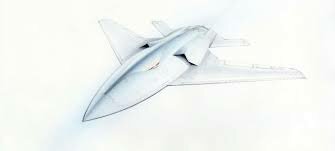
Get the impression two pitches in one..sizing appears at least two sizes either a smaller one engine F-35 replacement or a two engine NGAD.
It could make sense if USAF want to reduce the cost of NGAD , one engine make cheaper plane than a big two engines one, it seem Lockheed have 2 concepts 243382-ddbbcd522b7cc11fd287050272afc25f.jpg
 
It could make sense if USAF want to reduce the cost of NGAD , one engine make cheaper plane than a big two engines one, it seem Lockheed have 2 concepts
The way I had seen the two was that one was an "Air Dominance Demonstrator" with the other being the actual NGAD proposal.
 
The way I had seen the two was that one was an "Air Dominance Demonstrator" with the other being the actual NGAD proposal.
Yes it could be that.. What kind of engines if the variable cycle is not for now ?
 
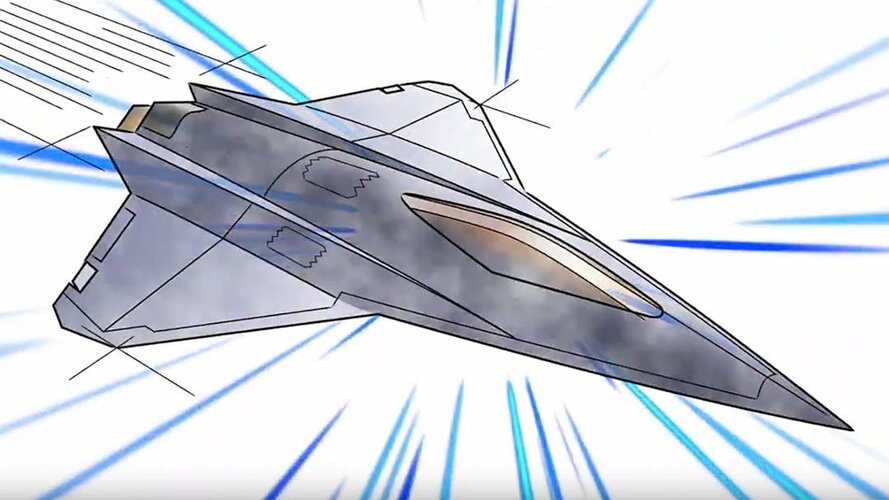
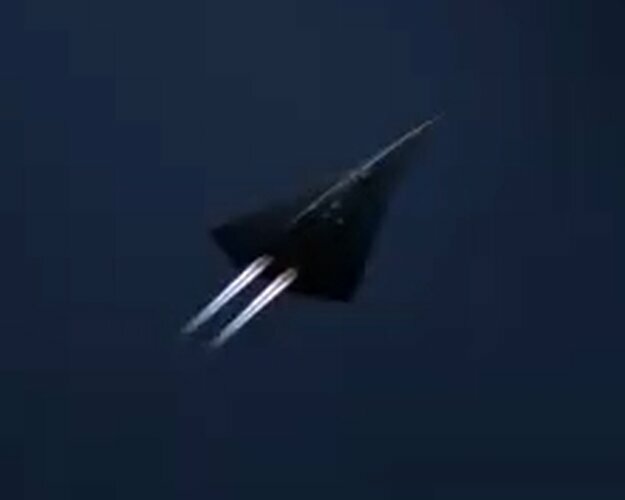
That 21deg angle between nose and wingtip. What's that work out to in terms of mach number?
So I did a whole entire paper for my degree on the NGAD program and did a planform analysis on what was available. So using Sine^-1(1/M), we can get 21 degrees for that. So I plugged in values and got around Mach 2.79. Other things to keep in mind however , is that the actual profile of the nose can create some oblique shock relations , which also may affect the final angle.
 
Last edited:
So I did a whole entire paper for my degree on the NGAD program and did a planform analysis on what was available. So using Sine^-1(1/M), we can get 21 degrees for that. So I plugged in values and got around Mach 2.79.
Whoa! that's moving right along!


Other things to keep in mind however , is that the actual profile of the nose can create some oblique shock relations , which also may affect the final angle.
Would those tend to reduce the final angle or increase it? or is that particular answer "yes"?
 
Whoa! that's moving right along!


Would those tend to reduce the final angle or increase it? or is that particular answer "yes"?
It would increase the angle much to the same way a diverterless inlet works. I imagine most of you here have been in the game much longer than I have and know more than I could regarding these things. But yes, increase it.
 
The way I had seen the two was that one was an "Air Dominance Demonstrator" with the other being the actual NGAD proposal.
Maybe an off the shelf engine that would represent a combined power to weight ratio proportional to a full scale vehicle.
Excellent FlyGuy! Very possible -- I'm buying it.

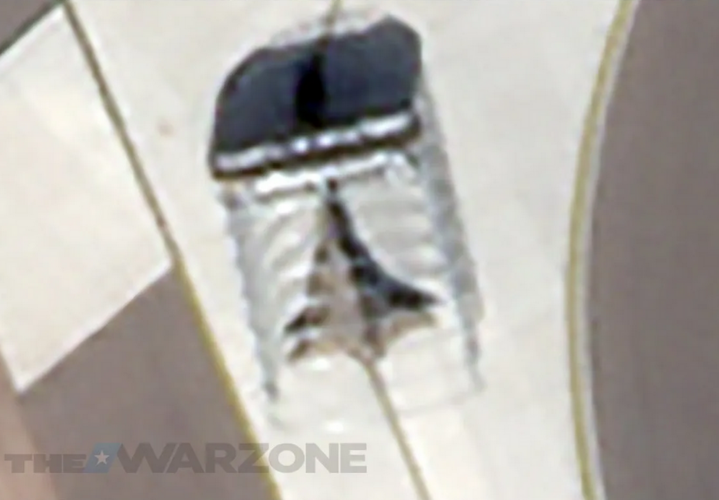
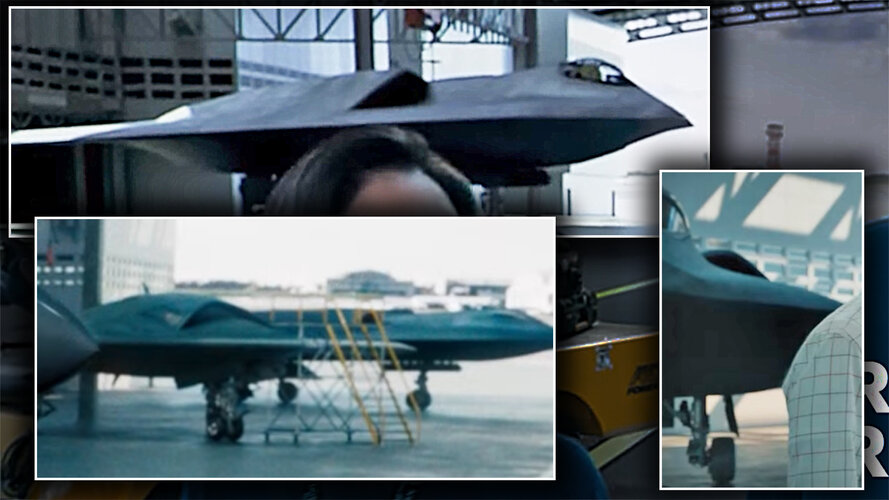
Also may explain this photo...
 

Attachments

  • Screenshot 2024-07-13 at 14-45-16 Mysterious Aircraft Spotted At Area 51 In Unprecedented Sate...png
    Screenshot 2024-07-13 at 14-45-16 Mysterious Aircraft Spotted At Area 51 In Unprecedented Sate...png
    791.5 KB · Views: 130

Attachments

  • 157603130-secure-m3u8.mpg_snapshot_16.54_[2017.06.18_19.01.13].jpg
    157603130-secure-m3u8.mpg_snapshot_16.54_[2017.06.18_19.01.13].jpg
    276.5 KB · Views: 139
As best as my eyes can tell, the TWZ photo looks like a single-engine design.
I see that too, my eyes focused on the upturned tips and the two small dark spots near the very back with the lighter segment in the middle.
 
Could have been three (3) air dominance demonstrators flown, one from each prime.

- NG. Demonstrated/flew an air vehicle with substantial performance and capabilities but directed to F/A-XX as the favorite.
- NG addendum. Has so-called RQ-180, B-21 and others. Will get F/A-XX.
- Boeing. Demonstrated/flew an air vehicle, probably already has the USAF NGAD due to new facilities construction.
- Boeing addendum. Needs USAF NGAD. Will not get F/A-XX.
- LM. Demonstrated/flew an air vehicle. Needs to keep F-35 on track. I assume new SR-type series vehicle and other programs.
- LM addendum. Will not get F/A-XX. LM will not have all three USAF fighters (F-22, F-35, USAF NGAD).

I think NG and LM have the brunt of other classified programs in the categories of medium to large vehicles/programs.

I could be way off with this but these are my predictions. Comments and insights always appreciated.
 
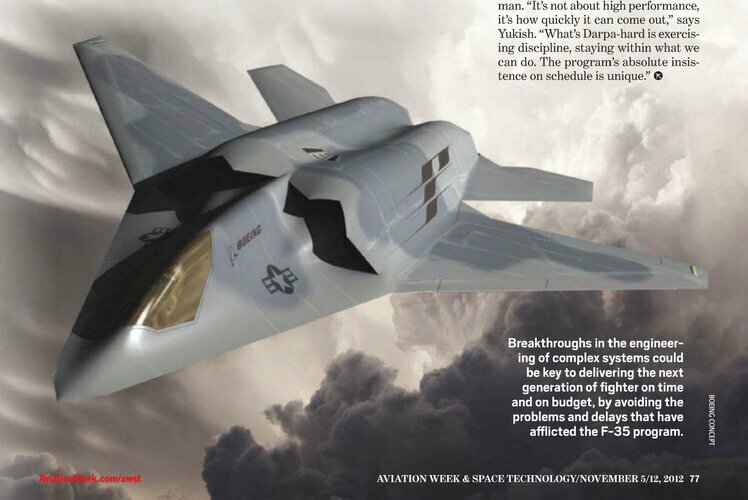
Hello! Perhaps we are looking here in a very very schematic way at Boeing's NGAD concept.
Regards!

View attachment 734514
I'm certain you can render it with your talent and incorporate it into the Voodoo II we spoke of on Instagram. I'd love flyables of your work for MSFS2020. Perhaps we may very well be seeing their rendition, but whose to know at this point!
 
Could have been three (3) air dominance demonstrators flown, one from each prime.

- NG. Demonstrated/flew an air vehicle with substantial performance and capabilities but directed to F/A-XX as the favorite.
- NG addendum. Has so-called RQ-180, B-21 and others. Will get F/A-XX.
- Boeing. Demonstrated/flew an air vehicle, probably already has the USAF NGAD due to new facilities construction.
- Boeing addendum. Needs USAF NGAD. Will not get F/A-XX.
- LM. Demonstrated/flew an air vehicle. Needs to keep F-35 on track. I assume new SR-type series vehicle and other programs.
- LM addendum. Will not get F/A-XX. LM will not have all three USAF fighters (F-22, F-35, USAF NGAD).

I think NG and LM have the brunt of other classified programs in the categories of medium to large vehicles/programs.

I could be way off with this but these are my predictions. Comments and insights always appreciated.
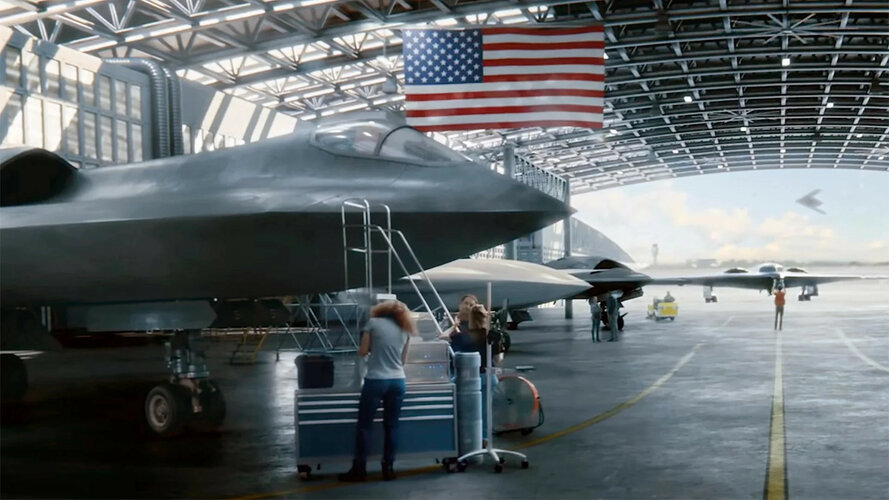
I think you hit the nail on the head with NG and F/A-XX, notice how beefy the gear looks (No launch bar though), I see dual nose wheels, a common carrier-based fighter characteristic.
 

Attachments

  • Northrop-Grumman-NGAD-concept.jpg
    Northrop-Grumman-NGAD-concept.jpg
    566.8 KB · Views: 132
  • Northrop-Grumman-NGAD-future-aircraft.jpeg
    Northrop-Grumman-NGAD-future-aircraft.jpeg
    354 KB · Views: 148
I think you hit the nail on the head with NG and F/A-XX, notice how beefy the gear looks (No launch bar though), I see dual nose wheels, a common carrier-based fighter characteristic.
You never know. The nose gear has the rotary steering actuator even though there is no launch bar. I think NG has been working the F/A-XX for a while. We'll see how things progress and see if the USAF NGAD announcement still occurs this year. It is amazing how the primes (and the USG) tease us with these little tidbits. Example, after Boeing was not selected for J-UCAS with their X-45C, all of a sudden and slowly we begin to see little bits of the MQ-25 being displayed, first the nose, then some fuselage then video of aircraft movement then we find out the MQ-25 had been in a hangar at Boeing St Louis since 2014 built completely with Boeing internal funds.

The saga continues, stay tuned.
 
Has it been determine what are "Variable Geometry Winglets" and what they do?
Commonly, winglets serve as a method to reduce inefficiencies associated with fuel economy for aircraft. Maybe a part of the whole "cruiser and fighter" mentality.
 
Last edited:
Commonly, winglets serve as a method to reduce inefficiencies associated with fuel economy for aircraft. Maybe a part of the whole "cruiser and fighter" mentality.
Yes, it is usually associated with reducing drag. But why would you need to retract it - going based on the variable geometry verbiage. Better maneuverability for ACM?
 
Yes, it is usually associated with reducing drag. But why would you need to retract it - going based on the variable geometry verbiage. Better maneuverability for ACM?
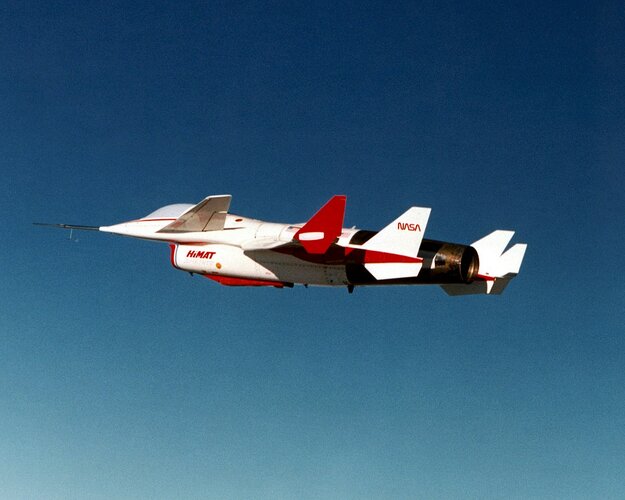
I feel if we want to know more as to why, we have to revisit the HiMAT program. The layout is very telling and I'm willing to bet this has something to do with it.
 

Attachments

  • HIMAT.jpg
    HIMAT.jpg
    211 KB · Views: 69
US leaders wants to let China dominate the sky.
More bad news:
 
Has it been determine what are "Variable Geometry Winglets" and what they do?
They reduce drag and improve yaw stability when deployed, and when laid flat they don't contribute much to RCS.

At least that's how I see Boeing using them.


Yes, it is usually associated with reducing drag. But why would you need to retract it - going based on the variable geometry verbiage. Better maneuverability for ACM?
I think it's to clean up RCS. Also, not retracted, but laid flat. Think more "folding wingtips" than "swing wings"
 
Not enough financial & technical development questions be asked. The need is for continual trump (PLEASE NO ALLUSIONS) cards to be created likely in the largely black world.

The usn has a long history of poor decisions on carrier aircraft. No spooky craft on carriers is a disadvantage to the usn.
 
This is interesting too. From www.airandspaceforces.com/cca-contract-expected-fall-first-version-under-construction/

" It may be that CCA is moving so rapidly that an autonomous version of NGAD—which would likely be far less costly than a piloted version—could be possible on the timelines required by the Air Force. "
I hope not, but IMO the Air Force might end up delaying the NGAD/PCA, without cancelling it outright...and then spend the next four years (25-28) developing the CCAs, F-35 block 4 and ECU, and the upgraded Raptors, but without much in the way of further investment in a crewed sixth gen fighter beyond NGAP, which might still be allowed to run to completion.

Then, with some of those costs in the rearview mirror, more info about both the domestic funding environment and Chinese plans, and finalized CCAs and NGAPs, the administration after next, starting in 2029 and definitely making its mark with the budget prepared in spring 2030, could make the final decusion.

Again, I hope not. But I feel like this idea fits the current trendlines uncomfortably closely...
With basic mission requirements (speed, radius, weapons, avionics/sensors, etc.) held constant, an unmanned aircraft typically sizes out at 20% to 30% lighter TOGW (takeoff gross weight).

Here's how it works: A sophisticated, multidisciplinary design sizing code is used to account for the iterative effect of removing the crew station and all it entails (controls & displays, seats(s), canopy, etc etc), and downsizing the attendant environmental control system. The volumetric and weight reductions due to these subsystem changes allow for less structural weight, which allows for a smaller propulsion subsystem, which then can be wrapped inside of a smaller OML. The smaller, lighter vehicle in this first pass of the iteration has less drag, and therefore uses less fuel, which allows for a smaller fuel subsystem and fuel load. This iterative process continues until the TOGW calculation converges. (In the old days, we did this using Fortran, but I digress).

A 20% to 30% reduction in a vehicle's size and weight is nothing to sneeze at. That translates directly into reduced unit cost.

A possible explanation of recent Air Force statements about looking to shrink the AETP-derived engines? A possible way to stay within the Air Force's fiscal reality? Keep in mind that NGAD is the name of a family of systems, not necessarily a PCA that is a manned 100,000-lb battlecruiser. We don't know anything about unmanned CCAs other than Increment 1 ...
 
Last edited:
Mind that suitable engines are not on a discretized curve but centered around design points that correspond to the needs and concerns expressed generally (for the larger system) a decade away. Hence, depending on the local variables, a 20 to 30% gain might be nullified by the lack of an available engine in that segment.
 
Mind that suitable engines are not on a discretized curve but centered around design points that correspond to the needs and concerns expressed generally (for the larger system) a decade away. Hence, depending on the local variables, a 20 to 30% gain might be nullified by the lack of an available engine in that segment.
Right. We used to refer to them as 'rubber engines'.
If you size the vehicle with a fixed propulsion system, then the manned vs. unmanned vehicle iterative weight difference would be appreciably less.

Your point is well taken -- one significant decision for the Air Force is finalizing the NGAP engine requirements. Putting a stake in the ground now for a 75,000-lb unmanned battlecruiser/C3 node, but wanting to leave the door open for a 100,000-lb manned battlecruiser/C3 quarterback, seems to be a bridge too far.

It's feasible to start with a baseline NGAP sized for the unmanned vehicle, and go on to develop a growth version of that NGAP engine for a manned vehicle 'some day'. But USAF would have to accept the fall-out performance of the manned vehicle, which is likely to include a reduction in mission radius compared to the unmanned vehicle. Any roadmap to 'insert' a crew station at a later date into the unmanned airframe configuration necessitates that structural and subsystem provisions are put in place, up front. I'm not sure where the program-wide cost savings are in this scenario, but I'm open to hear the case.

--------
Late Edit:
The converse is also feasible, and straighforward. Start with the manned PCA with NGAP engines sized appropriately, and then down the road develop an unmanned variant of that airframe. In this scenario, NGAP engine growth is not a requisite. The unmanned variant is lighter by stripping out the human-related subsystems and components, analogous to what Northrop did to the F/A-18A to create lighter-cheaper-quicker F/A-18L design. Why the NGAD program would take either a manned/unmanned (or vice versa) design leader/design follower approach is beyond me.
--------

From the outside, limited to dissecting public statements, it appears like an awful lot of balls are still in the air, especially for a program that released an RFP 14 months ago.

Hard to tell what's CCD (concealment, camouflage, and deception) and what's retrenching (in light of Air Force budget realities).

 
Last edited:
Mind that suitable engines are not on a discretized curve but centered around design points that correspond to the needs and concerns expressed generally (for the larger system) a decade away. Hence, depending on the local variables, a 20 to 30% gain might be nullified by the lack of an available engine in that segment.
If we expect a new CCA Increment every few years from a wide variety of suppliers, the major engine manufacturers and engine-manufacturing-adjacent startups like Hermeus and Ursa Major will need to begin offering multiple drone-sized engines to capture market share. Just look at China's mini-turbojet market, where the economies of scale and utility of drones in patrolling large areas of sea or land have driven the prices into the ground.
 
Right. We used to refer to them as 'rubber engines'.
If you size the vehicle with a fixed propulsion system, then the manned vs. unmanned vehicle iterative weight difference would be appreciably less.

Your point is well taken -- one significant decision for the Air Force is finalizing the NGAP engine requirements. Putting a stake in the ground now for a 75,000-lb unmanned battlecruiser/C3 node, but wanting to leave the door open for a 100,000-lb manned battlecruiser/C3 quarterback, seems to be a bridge too far.

It's feasible to start with a baseline NGAP sized for the unmanned vehicle, and go on to develop a growth version of that NGAP engine for a manned vehicle 'some day'. But USAF would have to accept the fall-out performance of the manned vehicle, which is likely to include a reduction in mission radius compared to the unmanned vehicle. Any roadmap to 'insert' a crew station at a later date into the unmanned airframe configuration necessitates that structural and subsystem provisions are put in place, up front. I'm not sure where the program-wide cost savings are in this scenario, but I'm open to hear the case.

From the outside, limited to dissecting public statements, it appears like an awful lot of balls are still in the air, especially for a program that released an RFP 14 months ago.

Hard to tell what's CCD (concealment, camouflage, and deception) and what's retrenching (in light of Air Force budget realities).
For instance the Unmanned are not supersonic and not the size enough to be a battlecruiser node, they are more like reusable cruise missile, there is a need to keep human in the loop, in battle if all is unmanned and the ennemy is allowed to hacked the fleet what you do ? Human in the fleet is a security and the better captor realy superior to the so famous IA , if it is like Chat GPT it is laughing :D Insteed there is a marvelous UCAV in the black , the NGAD fighter is vital for the fleet.
 
This is interesting too.

" It may be that CCA is moving so rapidly that an autonomous version of NGAD—which would likely be far less costly than a piloted version—could be possible on the timelines required by the Air Force. "
Not that much cheaper. You still need a sufficiently-big engine. You still need all the sensors. You still need weapons bays that will proportionally be a larger chunk of the airframe because the stuff that goes in the bays is of fixed size.

I wouldn't expect an "unmanned F-35" to cost more than $10mil less than the manned version.
 
Status
Not open for further replies.

Similar threads

Back
Top Bottom