dark sidius
ACCESS: Top Secret
- Joined
- 1 August 2008
- Messages
- 1,546
- Reaction score
- 1,609
???? What that mean ? there is one information behind what He say ? What is NGAD if not a F-22 replacement ?
Last edited by a moderator:


The cynic in me thinks it means the people in charge don't know what they want.Now what the heck does this mean
Remember that sustainability costs are a big part of this. AI doesn’t need to train, at least not on every airframe. Just focusing on fly away costs does not bring the whole picture. If you do not have to fly to train, you skip a lot of maintenance as well.
Or NGAD is a completly different aircraft than a F-22 more like a fighter with bomber style and size.The cynic in me thinks it means the people in charge don't know what they want.

 defensescoop.com

I see the Air Force is taking procurement lessons from the Navy.

Yes, I was thinking about the intermediate range or 'theatre' weapons such as Tomahawk and Pershing that were based in the UK and Europe in the 80s.As far as I know, tactical nukes were never regulated. Intermediate range missiles were, as a delivery system. Outside that delivery stipulation I do not they were regulated.
In any case, there’s no shortage of F-35s for that role.


 www.airandspaceforces.com
The ground crews still need to train on the CCAs.Remember that sustainability costs are a big part of this. AI doesn’t need to train, at least not on every airframe. Just focusing on fly away costs does not bring the whole picture. If you do not have to fly to train, you skip a lot of maintenance as well.
The ground crews still need to train on the CCAs.
Even if you make them as "wooden rounds" with the AAMs pre-loaded and somehow rated to sit in storage for however long, that's only good for their first launch. Afterwards they need to be refueled, reloaded, and have any maintenance done before their next flight.
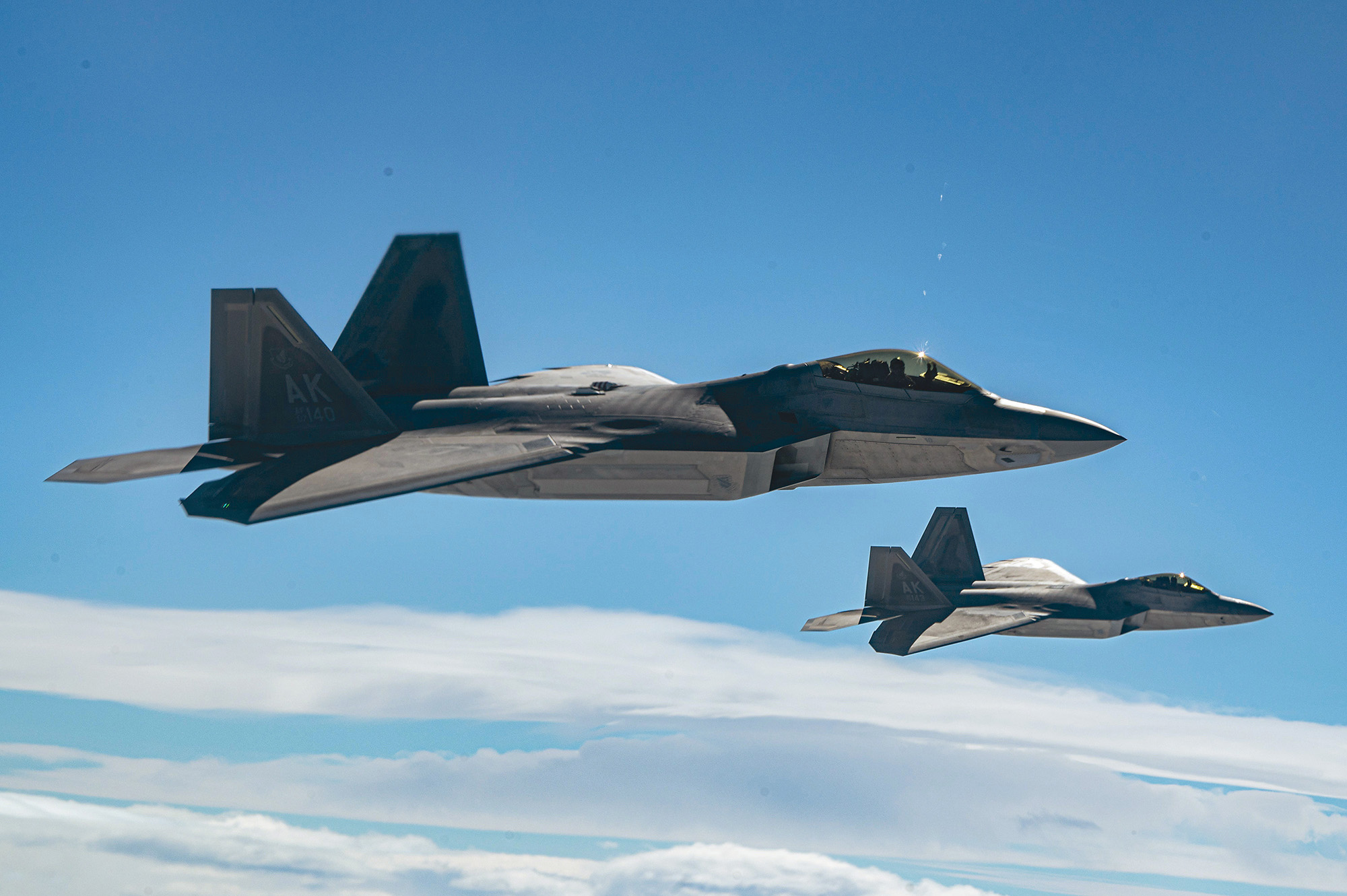
I think more and more than the NGAD is a supersonic command and control aircraft with the capacity of shooting long range AA missile, not maneuver or dog fighting like F-22 of today.Wilsbach: Air Force Should Keep, and Not Divest, Block 20 F-22s
The Air Force should keep the 32 F-22s it asked to retire, Gen. Kenneth Wilsbach, head of Air Combat Command, said.
I full realize that with a limited budget you need to make choices. But keeping the Block 20s was a no brainer when the F-22s are among the youngest and most capable fighters in service, especially when you have so few F-22s in the inventory. I'm surprised that it took so long for someone to say this. The campaign to retire the Block 20s reminds me of the messiness this last month with NGAD. AF leadership said the Block 20s were next to useless for training because they didn't represent operational F-22s. Then they ended up admitting that Block 30s would need to be pulled from operational squadrons to backfill Block 20s in training squadrons. Now they are signaling they would like to keep the Block 20s.Wilsbach: Air Force Should Keep, and Not Divest, Block 20 F-22s
The Air Force should keep the 32 F-22s it asked to retire, Gen. Kenneth Wilsbach, head of Air Combat Command, said.

The only thing that worries me is that it almost sounds like a repeat of Vietnam when the F-4's were fielded. When everyone's cards are all exhausted, I feel turn and burn will be the game again.I think more and more than the NGAD is a supersonic command and control aircraft with the capacity of shooting long range AA missile, not maneuver or dog fighting like F-22 of today.
Technically the statement that right now they have no F-22 replacement is true: This is correct until they sign an actual contract.https://www.twz.com/air/air-force-now-says-it-has-no-official-f-22-raptor-replacement
He still said that NGAD contract will be given this year.


 www.defensenews.com
The head of Air Combat Command on Wednesday said he expects the Air Force to choose which company will develop its sixth-generation fighter jet later this year.


 www.flightglobal.com
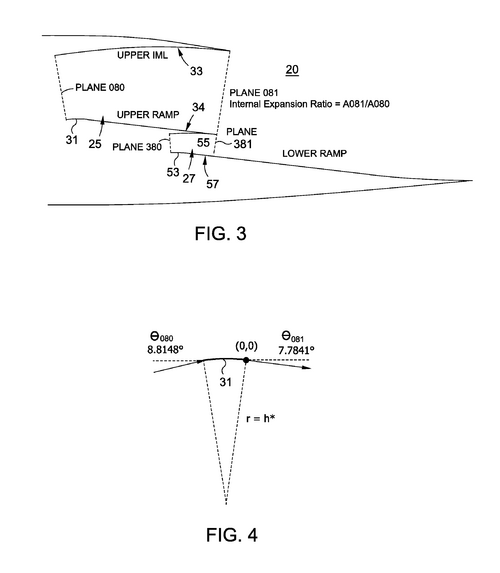
Perhaps this is how they incorporate NGAP into how the engine works? It's hard to tell but that would be extremely complex to make a series of separate exhaust systems off of one engine per power unit. It fits the bill of three stage adaptive cycle engines but this just leaves my head spinning on how to make it all work the right way.Among other things, how to make a thinner fixed geometry nozzle by putting another nozzle inside for the third stream cooling air? More generally a computational method better than guess and check...
Also:
"In the disclosed embodiment the initial criteria was selected based on notional mission profile containing a 60,000 feet, Mach 2.2 supercrusie segment and at 36,000 feet, Mach 0.08 loiter segment. However, the design process disclosed herein is applicable across the range of operating nozzle pressure ratios and flight conditions."
Perhaps this is how they incorporate NGAP into how the engine works? It's hard to tell but that would be extremely complex to make a series of separate exhaust systems off of one engine per power unit. It fits the bill of three stage adaptive cycle engines but this just leaves my head spinning on how to make it all work the right way.
That's an odd flight profile.Wanted to get your guys' thoughts on this. I was reading back into the Northrop Grumman Fixed supersonic nozzle patent from the first picture. Now I know that NG isn't in the race anymore, however, I read further into the description, (included the patent link) and it describes a mission profile of Mach 2.2 supercruise at FL600 and a subsequent loitering at Mach 0.8 at FL360. Maybe this was a design requirement for NGAD (or parent program)?
Patent Link:
US9009966B2 - Internal/external single expansion ramp nozzle with integrated third stream - Google Patents
The construction of an internal/external single expansion ramp nozzle (nxSERN), and method of designing the same, is provided. Initial design parameters for primary stream construction are selected and additional parameters are determined by isentropic relations using the selected design...patents.google.com
Not so odd if NGAD is a purported BVR beast command and control platform. But who knows! I'm ready to see this darn thing already. Better assumptions can be had once a real product is shown!That's an odd flight profile.
Blackbird and Valkyrie both prove that it's possible to optimize a design to cruise at high speed. Crud, the manual I have for the Boeing 2707 says that it has just the same range at Mach 2.7 as it does subsonic.
Granted, none of those planes could even politely be described as "aerobatic."
Why is it slowing down at all?Not so odd if NGAD is a purported BVR beast command and control platform. But who knows! I'm ready to see this darn thing already. Better assumptions can be had once a real product is shown!
I see no reason to honestly if it's designed to just hang out on top of a battlespace, lobbing missiles and sending it's minions to do low altitude bidding.Why is it slowing down at all?

The .8 could be for refueling periods.It would seem to suggest that some of the weapons it is intended to use have pretty constrained speed ranges for deployment.

I'm sure some people are thinking that, but when do the F-22s run out of service life? I'm assuming 16k hours total airframe life, with a major overhaul at 8k.Everyone feel free to laugh or roll your eyes but could a lot of this be some thinking “look at the F-15EX look at the new ultra long range AA missiles plus CCA/loyal wingman ConOps do we really [re: can we] spend $300 million on a 6G fighter?”
Something is going on with Boeing, we knew a lot of month before in 2015 that it was Northrop the winner of B-21, well before the official contract in my opinion it is the same with Boeing. And Lockheed is doing Zero communication about the NGAD, no promo video nothing..
Zero? Lolwhat. The problem with you that you are not tracking events or just not remember them.And Lockheed is doing Zero communication about the NGAD, no promo video nothing..
Yes, certainly interesting. Considering too Boeing's recent well-publicised troubles, this is significant; one doesn't make such investments based on a chance and hope. We often talk about whether a specific machine is better than another but a service has to consider the ability of a contractor to produce that machine too. It's interesting to link this with the rumours that Boeing's proposal was more radical compared to Lockheed's more evolutionary concept, and that while Boeing is in deep do-do, Lockheed has not covered itself in glory with the F-35 either, and overall it may show where doctrine on future air combat is tilting.Something is going on with Boeing, we knew a lot of month before in 2015 that it was Northrop the winner of B-21, well before the official contract in my opinion it is the same with Boeing. And Lockheed is doing Zero communication about the NGAD, no promo video nothing..