USAF/USN 6th Gen Fighters - F/A-XX, F-X, NGAD, PCA, ASFS News & Analysis [2008- 2025]

Status
Not open for further replies.
Interesting development La-Fuente Technologies, I would like to see the spending increased on the NGAD so that the USAF can order many more than there are F-22s at present.
Spending will definitely be increasing, if the article is right on the money. Or it may actually be increasing much more than what we're being told. Either way, it does seem that the NGAD and its CCAs are now being pushed up the USAF's priority list in terms of defense budget spending
 
Building the CCA will probably be much easier than any manned aircraft; there are already several promising starting points that would serve as decent baseline platforms. I suspect the harder part will be software development and integration with the manned platforms; I'd imagine the hardware is practically off the shelf and most of the producers of UAVs are generally smaller, more nimble companies that already iterate quite rapidly compared to the last three or so defense companies that produce manned military aircraft.
General Atomics did make a deal with some 3D Printing Car company that would help develop the technology to print UCAVs or UASs into completion in record time and be deployable in areas near their Area of Operations, so the part about using smaller and more nimble companies that specifically innovate in that department are right on the money.

Now just imagine taking that technology, and then making it even bigger so that it will make CCAs in record time! And in addition, it can be deployed much nearer to the battlefield so that they can reach it much sooner, and ensure that when any of them are lost, new ones don't have to be made much farther away. And thus, it will take a much shorter amount of time to send in the replacement to the Area of Operations.

 
Last edited:

And in addition, it can be deployed much nearer to the battlefield so that they can reach it much sooner, and ensure that when any of them are lost, new ones don't have to be made much farther away. And thus, it will take a much shorter amount of time to send in the replacement to the Area of Operations.
Don't get too excited - even 3D printers need access to input materials. they are not "replicators" from Star Trek making things out of thin air.
 

And in addition, it can be deployed much nearer to the battlefield so that they can reach it much sooner, and ensure that when any of them are lost, new ones don't have to be made much farther away. And thus, it will take a much shorter amount of time to send in the replacement to the Area of Operations.
Don't get too excited - even 3D printers need access to input materials. they are not "replicators" from Star Trek making things out of thin air.
And almost always require post processing.

1679769168757.png
 

And in addition, it can be deployed much nearer to the battlefield so that they can reach it much sooner, and ensure that when any of them are lost, new ones don't have to be made much farther away. And thus, it will take a much shorter amount of time to send in the replacement to the Area of Operations.
Don't get too excited - even 3D printers need access to input materials. they are not "replicators" from Star Trek making things out of thin air.
Give it enough time, and who knows what might happen. This is exactly why such deals are being made, so that research can happen so that it becomes reality, or much closer to it.
 
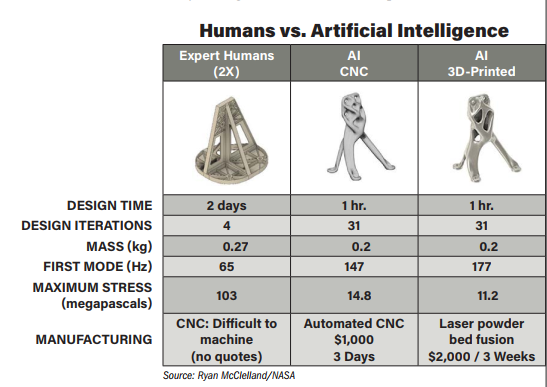
I am sorry but the "human designed" part is not a 1 block cnc. It can be manufactured in 3 parts, welded.
It's also a flat packaging.

Last but not least, 3d recursive structural automated optimization often leads to part unable to sustain real stress loads, too oftenly not taken into account by a more restrictive approach (see here the max sustained stress that leaves very few margins (this piece could have been made out of wood and have the same tolerance in stress...)).

Design margins, when appropriatly selected, are not waste but an optimization approach, also, but for time, cost and maintenance. (way more efficient).

Obviously, such arguments doen't fit inside a PowerPoint due to the amount of text needed to make the point...
 
Last edited:
Don't get too excited - even 3D printers need access to input materials. they are not "replicators" from Star Trek making things out of thin air.
Give it enough time, and who knows what might happen. This is exactly why such deals are being made, so that research can happen so that it becomes reality, or much closer to it.
Let's keep to reality here please.
 
Let's keep to reality here please.
Sure. I mean, that's what Research is for, right. To eventually make such things reality, so it should be at least ok to discuss things of the intermediate or expected future should such program actually come to fruition, as promised.
 
I am sorry but the "human designed" part is not a 1 block cnc. It can be manufactured in 3 parts, welded.
It's also a flat packaging.

Introducing the need for more time, tooling, and touch time. $$$

Last but not least, 3d recursive structural automated optimization often leads to part unable to sustain real stress loads, too oftenly not taken into account by a more restrictive approach (see here the max sustained stress that leaves very few margins (this piece could have been made out of wood and have the same tolerance in stress...)).

Sounds like a case of insufficient definition of the requirements of the part. It still requires iteration and real-world testing. For now.
 
What would you call it?

Depends on the method used to optimize. For example, using a genetic algorithm wouldn’t be AI.
 
Quite. We now just seem to be re-labelling various computational optimisation techniques as "AI" when they've been used for decades and there's nothing intelligent behind them.
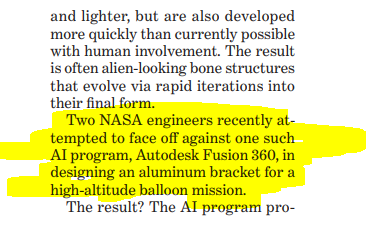
To be clear, I grabbed the shot from an article in AvWeek a few weeks old. Not sure why they slapped "AI" on the table. Could be something as simple as AI making use of common algorithms.

Looking at it again.

1679909668033.png

facepalm-worf.gif
 
To be clear, I grabbed the shot from an article in AvWeek a few weeks old. Not sure why they slapped "AI" on the table.
I had the same reaction to that AvWeek article. I can't wait till someone uses a quantum computer to do it too.
 
Let's keep to reality here please.
Sure. I mean, that's what Research is for, right. To eventually make such things reality, so it should be at least ok to discuss things of the intermediate or expected future should such program actually come to fruition, as promised.
Most likely though not in time for a 6G fighter, which is the topic of this thread.
 
Quite. We now just seem to be re-labelling various computational optimisation techniques as "AI" when they've been used for decades and there's nothing intelligent behind them.
To be clear, I grabbed the shot from an article in AvWeek a few weeks old. Not sure why they slapped "AI" on the table. Could be something as simple as AI making use of common algorithms.

Looking at it again.

View attachment 696499

View attachment 696500
Most likely though not in time for a 6G fighter, which is the topic of this thread.
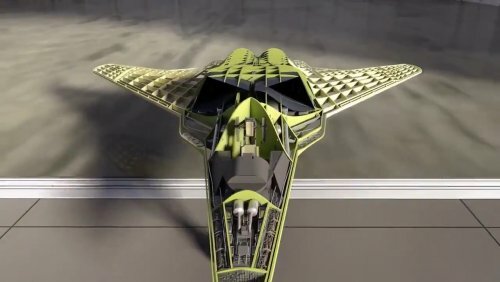
Too bad. When Roper back then said "several records were broken", i would have expected one of them to be related to weight reduction/optimization. Just like the J-20 empty weight is nearly the same as the F-22 despite it's size discrepancy after 20 years of advancement in materials (1990-2010), i imagined a SR-71 or FB-22 sized plane with an innovative parametric skeleton beyond the traditional spars and ribs coupled with advanced composites AND further improvements in electronics (https://www.sbir.gov/sbirsearch/detail/1413611) could set the bar even lower in the ballpark of the OG F-22 or F-35!
Sadly, that doesn't seem to be the case. A fantasy of mine.

(For reference)
View: https://www.youtube.com/watch?v=VdG4gUTowXc
 

Attachments

  • 149396-b08bd619a3aa717888e72891479bc60c.jpg
    149396-b08bd619a3aa717888e72891479bc60c.jpg
    23.5 KB · Views: 59
  • index5.jpg
    index5.jpg
    5.1 KB · Views: 61
Let's keep to reality here please.
Sure. I mean, that's what Research is for, right. To eventually make such things reality, so it should be at least ok to discuss things of the intermediate or expected future should such program actually come to fruition, as promised.
Most likely though not in time for a 6G fighter, which is the topic of this thread.
We still have yet to see whether that is the case. But if it should be, then it should come just in time for a Seventh-Generation Fighter, provided we don't blow ourselves up just yet.
 
Oh, something died here.
After decades of insisting that a good radar is good enough for detection, a good signature reduction is good enough for self-protection- first, it was ad-hoc IRSTs, and now we turn into Eurocanard/Su-57 styled array of arrays. Especially the latter - basically full match.
Irony.
 
Expecting to see an aircraft built against dominant USAF views.
Dominant over long, long time.
 
Last edited by a moderator:
I fear another JSF/F-35 style joint project.

Already separate projects, and I can't see Congress forcing the issue again. What the USN and USAF are probably collaborating on is underlying technologies like coatings, sensors, and propulsion.
 
Thanks Josh_TN, I thought that the US congress would force them to join together again, but that is certainly good news that there won't be another program like the JSF with all it's issues.
 
Thanks Josh_TN, I thought that the US congress would force them to join together again, but that is certainly good news that there won't be another program like the JSF with all it's issues.

I think the experience of the F-35 would prevent Congress from going down that path, and moreover it seems incredibly unlikely Congress will agree on anything for while. So I think there will be no involvement by them in either department's fighter development programs, outside perhaps approving or restricting budgets. But on that note there is wide bipartisan agreement on China being a competitor and potential threat, so I think both services will get everything they ask for in regards to these programs.
 
Thanks Josh_TN, I thought that the US congress would force them to join together again, but that is certainly good news that there won't be another program like the JSF with all it's issues.

I think the experience of the F-35 would prevent Congress from going down that path, and moreover it seems incredibly unlikely Congress will agree on anything for while. So I think there will be no involvement by them in either department's fighter development programs, outside perhaps approving or restricting budgets. But on that note there is wide bipartisan agreement on China being a competitor and potential threat, so I think both services will get everything they ask for in regards to these programs.
I think the overriding factor will be overall cost/ affordability and it appears extremely unlikely that both services will get “everything they ask for” unless they have very carefully calibrated what they ask for.

Re: design and the question of jointness I think it is a real shame that the USAF and US Navy couldn’t come together and agree a common approx. F-14 sized carrier compatible airframe (the only significant structural difference between their variants being one has the arrester hook fitted, the other does not). This would mean real cost efficiencies and avoid much of the issues of having multiple variants or designs.

I don’t quite get claims of the supposed cost advantages of so-called “common”engines and systems if the US airforce aircraft is going to be significantly larger, heavier etc than its US Navy equivalent. It’s not like the US Navy doesn’t have much the same requirements for longer range and better payload/ range characteristics, improved stealth characteristics etc. versus the current in service designs they will be replacing. And won’t you end up with one design having sub-optimal engines and systems etc. if their is really that much difference between the 2 designs? Or have to make enough changes to engines, systems that actual commonality and associated cost savings are rapidly reduced?

And ultimately I doubt the overall affordability of the simultaneous developments of a significantly larger US airforce airframe and a separate US Navy airframe. One could foresee potential scenarios like the US airforce later being forced to take the US Navy airframe after the cancellation of an over ambitious airforce-only design but after they can have that major impact on the US Navy airframe (not completely unlike what happens with the F-4 or A-7), or the US Navy having to take a F-35E instead because their Navy-only design is dropped (somewhat similar to what happened with the Super Hornet).

While some enthusiasts here will likely decry this and advocate for paying whatever the 2 separate airframes will cost the overall context (also paying for B-21s, new unmanned aircraft, probably ongoing F-35 deliveries, renewing the nuclear triad, new tankers, likely the start of a new airlifter program, new T-7s, etc.) demands a degree of realism, particularly if you want these new “6th” generation airframes fielded in significant numbers for both services (and not in having your favoured service being seen to have “won”).

And whatever way you spin it the new US airforce design is not some re-litigation of what some wanted the B-21 to be; the new airforce strike fighter design will unavoidably be substantially smaller, shorter range and have a very significantly lower payload than a B-21 (for the required much higher flight performance) and probably won’t end up that much larger or longer range than its US Navy equivalent anyway.
 
I think the two services have very different operating environments that make combining the two programs a recipe for disaster. USAF doesn't need the size and stall speed restrictions of the USN, as well as the dead weight of the structural enhancements needed for carrier arrested landing. The USN in turn probably doesn't need the USAF's extreme range requirements, because its home base is going to be mobile somewhere in the WestPac instead of Hawaii or Alaska. I think both services could better meet their needs and price goals by developing separate aircraft while sharing a lot of the avionics and coatings between aircraft. I suspect a lot of F-35 and "RQ-180" avionics and construction processes got rolled into the B-21, for instance. I personally would rather have two separate airframes that lowered the technical risk (and additionally split that risk among two programs) rather than yet another single program that was too big to fail, had cost and time overruns, and compromised the base requirements for everyone involved.
 
...because its home base is going to be mobile somewhere in the WestPac instead of Hawaii or Alaska...
Don't forget Guam and Diego Garcia. Not to mention, they are currently making a deal with the Philippines to establish 4 bases in there, so that's also another set of possible international airbases for the USAF to operate on. Whether those bases will station the NGAD or not, remains to be seen.
 
Oh, something died here.
After decades of insisting that a good radar is good enough for detection, a good signature reduction is good enough for self-protection- first, it was ad-hoc IRSTs, and now we turn into Eurocanard/Su-57 styled array of arrays. Especially the latter - basically full match.
Irony.
So, what does that mean for the NGAD now?
Expecting to see an aircraft built against dominant USAF views.
Dominant over long, long time.
Well, Modern Warfare is changing, so I expect that the traditional fighter thinking will be changed as a result. The F-35 might be the transitory fighter aircraft between these 2 thoughts of fighter warfare.
 
...because its home base is going to be mobile somewhere in the WestPac instead of Hawaii or Alaska...
Don't forget Guam and Diego Garcia. Not to mention, they are currently making a deal with the Philippines to establish 4 bases in there, so that's also another set of possible international airbases for the USAF to operate on. Whether those bases will station the NGAD or not, remains to be seen.

There’s a wealth of air bases in the WestPac, but the USAF in my estimation is trying to extend NGAD range (and therefore basing) beyond the second island chain. This isn’t something they have stated, but it does seem to be the direction they are moving in given the range of the B-21 and the way they are training B1 units: keep the most important aircraft completely outside effective PLA missile range. I don’t think NGADs manned component will have the same unrefueled radius, but I think USAF is going to attempt to base them outside the WestPac (I think Australia will be a major location in that regard).
 
...because its home base is going to be mobile somewhere in the WestPac instead of Hawaii or Alaska...
Don't forget Guam and Diego Garcia. Not to mention, they are currently making a deal with the Philippines to establish 4 bases in there, so that's also another set of possible international airbases for the USAF to operate on. Whether those bases will station the NGAD or not, remains to be seen.

There’s a wealth of air bases in the WestPac, but the USAF in my estimation is trying to extend NGAD range (and therefore basing) beyond the second island chain. This isn’t something they have stated, but it does seem to be the direction they are moving in given the range of the B-21 and the way they are training B1 units: keep the most important aircraft completely outside effective PLA missile range. I don’t think NGADs manned component will have the same unrefueled radius, but I think USAF is going to attempt to base them outside the WestPac (I think Australia will be a major location in that regard).
I wonder how it will work out.
Such ranges not only stretch basic fighter missions on the brink of feasibility (case point: IJN fighters operating over Guadalcanal/Darwin - length mission-wise, but also - difficulty of effective SAR for such missions). Also, basing fighters behind key US allies may be tricky. ROC has no voice, but Philippines, certainly - Korea/Japan, possibly - Singapore (who knows where it'll turn) - certainly do.
 
Oh, something died here.
After decades of insisting that a good radar is good enough for detection, a good signature reduction is good enough for self-protection- first, it was ad-hoc IRSTs, and now we turn into Eurocanard/Su-57 styled array of arrays. Especially the latter - basically full match.
Irony.
I don’t think this is an accurate characterization. The last US tactical aircraft that relied solely on stealth for survivability was the F-117. The F-22 and F-35 has always been designed with sensing capabilities and EW beyond just their radars, with the ALR-94 and ASQ-239 electronic warfare systems and all-aspect IR sensors for missile detection and situational awareness. See all the Band 2/3/4 antennas blended into their edges.

Where NGAD may take this further is perhaps the adoption of conformal arrays and even further integration of multifunction emitters/receivers, and additional methods of engagement beyond just missiles and guns.
 
...because its home base is going to be mobile somewhere in the WestPac instead of Hawaii or Alaska...
Don't forget Guam and Diego Garcia. Not to mention, they are currently making a deal with the Philippines to establish 4 bases in there, so that's also another set of possible international airbases for the USAF to operate on. Whether those bases will station the NGAD or not, remains to be seen.

There’s a wealth of air bases in the WestPac, but the USAF in my estimation is trying to extend NGAD range (and therefore basing) beyond the second island chain. This isn’t something they have stated, but it does seem to be the direction they are moving in given the range of the B-21 and the way they are training B1 units: keep the most important aircraft completely outside effective PLA missile range. I don’t think NGADs manned component will have the same unrefueled radius, but I think USAF is going to attempt to base them outside the WestPac (I think Australia will be a major location in that regard).
I wonder how it will work out.
Such ranges not only stretch basic fighter missions on the brink of feasibility (case point: IJN fighters operating over Guadalcanal/Darwin - length mission-wise, but also - difficulty of effective SAR for such missions). Also, basing fighters behind key US allies may be tricky. ROC has no voice, but Philippines, certainly - Korea/Japan, possibly - Singapore (who knows where it'll turn) - certainly do.

All of those places would be too close anyway. The idea is to be clear of DF-26 range, or more broadly anything sub ICBM. I doubt NGAD can completely achieve that kind of radius unrefueled, but from a place like Australia, tankers can top off in friendly airspace coming and going. Wake island is another location at roughly the same distance but obviously with a lot less capacity and more vulnerability. The tankers might also simply fly a couple thousand miles before offloading fuel - not great, but taking off from US states still removes the two island chains as a basing liability.

The B-1s are training for round trip strikes to the Pacific - missions as long as ~40 hours. The B-52s can already arguably do the round trip to the SCS well enough from Hawaii or Alaska to get into cruise missile range (and their range increases by 25-30% with new engines). And the B-21 is explicitly being sold as a platform that needs no basing or logistics in the WestPac, which giving the emphasis on range requirements for the NGB and LRS programs (along with the twin engine selection, modern structure and engine efficiencies, and likely downgrade of payload for additional fuel) make me think that it has an unrefueled radius that reaches out to HI/AK.

I think NGAD will follow in this trend of making the most important USAF aircraft based in the US itself either by extreme range or being supported by tankers in theater and accepting the risk to tankers (more disposable/less expensive) such that all of the most expensive/important aircraft never actually live in the Pacific theater. Or if they do, it is to land and hot pit refuel/reload with pre loaded rotary launchers and be out in a couple hours or less. I think NGAD will have a range around 2000mi/3000km. In even an F-111 sized airframe, that wouldn't really be that challenging if you didn't worry about maneuverability - the F111 got about half way there while managing to be supersonic capable half a century ago. With a more efficient shape, composites, and adaptive engines I don't think it is at all problematic to have a 2000mi/3000km combat radius in that weight class. Tank off wake or Australia, or off surviving KC-46s painted white operating from Japan's regional airports, and never ever be on a tarmac within IRBM range. Or do so only for a fast refuel/rearm, for a couple cycles only.

The USN is more size and weight limited and its airfields get to move around, so for them I think the threshold is "outside DF-21 range" and the objective is "outside DF-26 range". But they don't have to find a convenient land mass and then size their aircraft around that requirement like the USAF does - they can always chose their operating range from the enemy coast. So while they want to push their range out, they can always tailor the range of their airbases to meet the threat. And especially given the UAV tankers, they are likely not going to have combat radius requirements as extreme as the USAF (just my personal guess). And their space, weight, and stall requirements, as well as the structural requirements for aircraft recovery, make their aircraft a completely different beast than the USAF as well. Hence my belief in two separate programs and airframes for the manned component.

On top of that the USN is going to have a very different environment for UAVs - it seems likely to me the USAF might adopt something rocket launched/parachute recovered in theater, with perhaps a B-52 air launch option, rather than build a UAV with a range to match the manned NGAD component. The USN on the other hand almost certainly wants to colocate those two items and launch and recover them the same way, with all of the drastic differences that come with that.

That said, the avionics, basic airframe structures, coatings, and possibly to some degree engine tech easily could have a lot of cross platform utility. For engines, probably different models/manufacturers would be needed for different platform sizes, envelopes, and range considerations. But if you make a smart skin elements for ESM or a T/R AESA modules and just put more or less in a given radar for the size of the airframe, you can scale a lot of the avionics to the size of your platform. I suspect B-21 uses the same T/Rs as APG-85, just because Northrup makes both and why wouldn't you? Except in the B-21 they are probably arranged in a much larger pattern in cheek and tail mounts rather then a single nose array. But once you are cranking out T/Rs, why not use the same building blocks for other arrays as the SPY-6? Add more processing power as needed and build a different capability to suit the airframe and mission.

 
Last edited:
Last edited:
I find the recent shifts in NGAD (emphasize CCA, new idea of "full-spectrum-warfare") alarming. It appears that the Air Force is behind the curve and keeps throwing up new ideas to solve an environment changing beyond their control. Every few months, it seems, there's some new concept, new set of ideas, and a new buzz-word.

The program is trending in a strategically bad direction - pointing towards an unaffordable design that'll be purchased in too few numbers. A trans-Pacific fighter is only a stop-gap, as China will get trans-Pacific strike capability in the time it takes the US to make a NGAD. Something different is required.
 
I find the recent shifts in NGAD (emphasize CCA, new idea of "full-spectrum-warfare") alarming. It appears that the Air Force is behind the curve and keeps throwing up new ideas to solve an environment changing beyond their control. Every few months, it seems, there's some new concept, new set of ideas, and a new buzz-word.

The program is trending in a strategically bad direction - pointing towards an unaffordable design that'll be purchased in too few numbers. A trans-Pacific fighter is only a stop-gap, as China will get trans-Pacific strike capability in the time it takes the US to make a NGAD. Something different is required.

The CCA concept is as old as the program itself AFAIK. The name has changed, but NGAD was always going to be a system of systems including UAVs. As for "spectrum warfare", it just sounds like a buzzword for stating that signature reduction extends outside of just the RF spectrum. These buzz words seem to me to be meaningless rebrandings and not a change of direction in the program.

It seems unclear to me China can create an effective "trans-Pacific" strike capability short of ICBMs or similarly long ranged missile weapons. We haven't heard much about the H-20. It is possible that like the J-20, it will be unveiled and come out of nowhere, but I think the challenges of building their very first bomber from scratch (and a intercontinental stealth bomber at that) will delay its introduction. The current state of the art bomber in China is using a legacy airframe design with Russian turbofans.
 
Status
Not open for further replies.

Similar threads

Back
Top Bottom