
You are using an out of date browser. It may not display this or other websites correctly.
You should upgrade or use an alternative browser.
You should upgrade or use an alternative browser.
USAF/USN 6th Gen Fighters - F/A-XX, F-X, NGAD, PCA, ASFS News & Analysis [2008- 2025]
- Thread starter Matej
- Start date
- Status
- Not open for further replies.

dark sidius
ACCESS: Top Secret
- Joined
- 1 August 2008
- Messages
- 1,618
- Reaction score
- 1,709
SMG is not USAF or Lockheed Martin or Northrop , this is their opinion about NGAD not official USAF opinion.What do you mean "Threat"? Do you mean "Thread"? It was in relation to the NGAD post above, as they have recently started posting Infographics regarding the NGAD, and revealing some details regarding some of its specifics. If non-SMG sources regarding the NGAD do pop out and if I see them, I'll post it here all the same.Is this a threat about SMG?

La-Fuente Technologies
F-47 NEXT GENERATION AIR DOMINANCE
- Joined
- 21 November 2022
- Messages
- 371
- Reaction score
- 360
I'm fully aware of that, since someone in another thread pointed that out hours ago. In fact, I actually would agree with you on that, now that I knew. But even beforehand, I actually distrust all the information on their Infographics. (Primarily because I think the actual NGAD being worked on is truly beyond what the Infographic describes, in all terms and qualities, and everything else in between), as seen here:SMG is not USAF or Lockheed Martin or Northrop , this is their opinion about NGAD not official USAF opinion.What do you mean "Threat"? Do you mean "Thread"? It was in relation to the NGAD post above, as they have recently started posting Infographics regarding the NGAD, and revealing some details regarding some of its specifics. If non-SMG sources regarding the NGAD do pop out and if I see them, I'll post it here all the same.Is this a threat about SMG?
Thus, the true nature of it is not yet known, and hence I also disagree with the SMG Consulting Infographic to an extent, especially with regards to the NGAD's size, range and cost.
(This was back when I thought some parts of SMG's Infographics were partially correct to some degree, but now I think all of it is not accurate to the actual NGAD as a whole, but does create some interesting points for discussion)
Besides, I recall that in an earlier message in this thread, I said outright that I doubt and distrust the information presented on the infographic, so while I might not have known that SMG Consulting is no official aerospace partner of the US Air Force, I had already considered their information regarding the NGAD as of doubtful authenticity, if only because I always assume that there's something far greater in all ways when it comes to the actual project at hand. And I only shared them here because it's relevant to the topic of this thread at hand, and opened some discussion regarding the NGAD as a whole, not that I think that the information presented is fully accurate to the NGAD, and anyone else that doubts is wrong or whatnot.
At the end of the day, their post is speculation, same as ours, we all know what everyone else says (Apart from the USAF and the companies involved in the NGAD project) would be speculation at best, and heresay at worst. Regardless, it allows for us to discuss and theorize on what the NGAD might be capable of, what it might cost, how far can it go, and anything else that has to do with it.
That has been my aim when sharing these posts: to make this thread active, and allow us to share our thoughts and speculations regarding the NGAD as a whole. And so far, I enjoyed the discussions being made here and being shared regarding this upcoming aircraft that I know will amaze us when it comes, regardless of what we think of it initially. So if the next time I share something about the NGAD, know that I don't hold such information presented in the posts as gospel truth (Because I personally think there's more than meets the eye in the information regarding them), but rather as means to help incite further conversation and discussion that I would love to participate in. That's all I want to do in here (And some other threads too).
Last edited:
La-Fuente Technologies
F-47 NEXT GENERATION AIR DOMINANCE
- Joined
- 21 November 2022
- Messages
- 371
- Reaction score
- 360
I'll see if I could make one for NGAD designs soon enough, but I shared that image not to promote what the NGAD might look like, but as something to speculate and converse about the project as a whole, so to say. You can say that the Image is more or less, like a placeholder picture that gives you an idea of the actual thing, but is NOT what the full thing looks likeThere is much to none information in their pieces. Maybe this could be the subject of a dedicated thread.
We have had thread dedicated to speculative view of real design. Maybe this could be more appropriate.
Maybe next time I share such an image or any news and information regarding the project, I should add some warning label here and there that says "All Information is based from Speculation Only", though prior warnings in this thread have also made that notion clear enough, so I thought everyone here would at least know that.
La-Fuente Technologies
F-47 NEXT GENERATION AIR DOMINANCE
- Joined
- 21 November 2022
- Messages
- 371
- Reaction score
- 360
Or both. Multi-Role seems to be the name of the game now, and it seems like the USAF needs a fighter that can both dominate the skies AND the ground, as well as a variety of other roles.At $300million, the aircraft's primary role better be air-to-ground, not air-to-air.
I also won't be surprised if the NGAD might have the capacity to go to Near-Space and be able to shoot down satellites, as anti-satellite missiles are also a thing now.
martinbayer
ACCESS: Above Top Secret
- Joined
- 6 January 2009
- Messages
- 5,062
- Reaction score
- 6,967
Please define your near space speculation in terms of altitude and velocity envelope.
La-Fuente Technologies
F-47 NEXT GENERATION AIR DOMINANCE
- Joined
- 21 November 2022
- Messages
- 371
- Reaction score
- 360
Possibly at 80-120 km in altitude, near to beyond the Karman Line, velocity envelope I'm not familiar, but assuming that the aircraft might be equipped for Hypersonic flight, it may possibly reach that so-called velocity envelope. I might guess it can reach there at the same speed the fastest rockets does, while ensuring that the pilot will not die from the results, but anything is possible at this point.Please define your near space speculation in terms of altitude and velocity envelope.
Still, this is just speculation, and we obviously don't know what the NGAD's true capabilities are, so if I'm wrong, that's fine by me. Such a role might be reserved for a far future generation of fighter aircraft, or even the Space Force's possible future spacecraft anyways.

La-Fuente Technologies
F-47 NEXT GENERATION AIR DOMINANCE
- Joined
- 21 November 2022
- Messages
- 371
- Reaction score
- 360
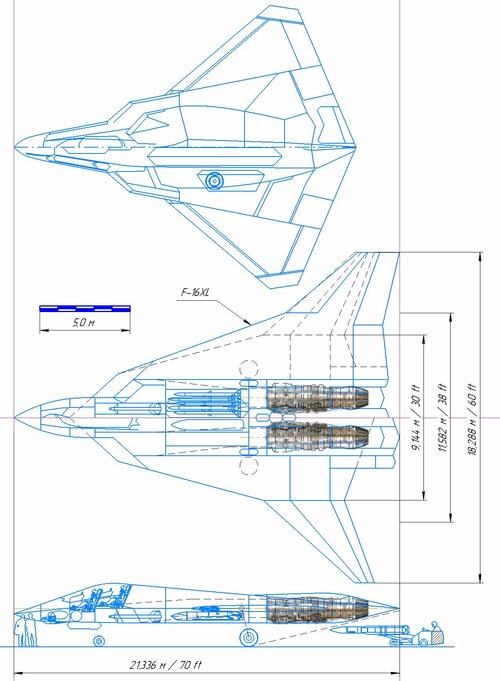
Maybe some of the Medium-Range Missiles can be replaced or upgraded with Extremely Long Range BVR ones at some point, possibly the Long Range Engagement Weapon (LREW) or the AIM-260 JATM or Joint Advanced Tactical Missile.In the air-to-air mode, there are 2 short-range missiles and 10 medium-range missiles in the weapon bays
Or some other missile that's being developed that we don't know yet.
Last edited:
And how are things with the deck version? Is this NGAD or another project?

F-2
ACCESS: Top Secret
- Joined
- 22 May 2020
- Messages
- 1,189
- Reaction score
- 2,570
Do you mean the Navy carrier version? They are different but relatedAnd how are things with the deck version? Is this NGAD or another project?
La-Fuente Technologies
F-47 NEXT GENERATION AIR DOMINANCE
- Joined
- 21 November 2022
- Messages
- 371
- Reaction score
- 360
They are related due to name and technology being used, as well as many of the requirements expected of Sixth-Generation Fighters, but in everything else, they are vastly different.Do you mean the Navy carrier version? They are different but relatedAnd how are things with the deck version? Is this NGAD or another project?
For one, while the USAF NGAD or PCA might be able to become as big as a bomber in order to further increase range, weapon load, fuel capacity, sensor and avionics technology, Direct-Energy Weapons and other technologies, the Navy's NGAD might only have half or less than half the tech and upgrades presented due to their requirement to be carrier-capable effectively stunting their size limits.
martinbayer
ACCESS: Above Top Secret
- Joined
- 6 January 2009
- Messages
- 5,062
- Reaction score
- 6,967
I have no idea what the "so-called velocity envelope" you refer to might be, but you appear to be postulating a suborbital to near SSTO capability air superiority craft. I honestly, truly wish I could see any TRL6+ technology combination on the horizon to credibly support such a notion, but sadly I do not.Possibly at 80-120 km in altitude, near to beyond the Karman Line, velocity envelope I'm not familiar, but assuming that the aircraft might be equipped for Hypersonic flight, it may possibly reach that so-called velocity envelope. I might guess it can reach there at the same speed the fastest rockets does, while ensuring that the pilot will not die from the results, but anything is possible at this point.Please define your near space speculation in terms of altitude and velocity envelope.
Still, this is just speculation, and we obviously don't know what the NGAD's true capabilities are, so if I'm wrong, that's fine by me. Such a role might be reserved for a far future generation of fighter aircraft, or even the Space Force's possible future spacecraft anyways.
La-Fuente Technologies
F-47 NEXT GENERATION AIR DOMINANCE
- Joined
- 21 November 2022
- Messages
- 371
- Reaction score
- 360
I see. Such a thing might be reserved for the far future then. We'll just have to wait and see what happens at this pointI have no idea what the "so-called velocity envelope" you refer to might be, but you appear to be postulating a suborbital to near SSTO capability air superiority craft. I honestly, truly wish I could see any TRL6+ technology combination on the horizon to credibly support such a notion, but sadly I do not.Possibly at 80-120 km in altitude, near to beyond the Karman Line, velocity envelope I'm not familiar, but assuming that the aircraft might be equipped for Hypersonic flight, it may possibly reach that so-called velocity envelope. I might guess it can reach there at the same speed the fastest rockets does, while ensuring that the pilot will not die from the results, but anything is possible at this point.Please define your near space speculation in terms of altitude and velocity envelope.
Still, this is just speculation, and we obviously don't know what the NGAD's true capabilities are, so if I'm wrong, that's fine by me. Such a role might be reserved for a far future generation of fighter aircraft, or even the Space Force's possible future spacecraft anyways.
Regardless, the NGAD might be able to fulfill an anti-satellite role, even if it can't exceed the Karman Line. The missile just needs enough boost to be able to reach even higher than Low Earth Orbit, or not, either way it can still fulfill its role.

Brett Davidson
ACCESS: Top Secret
- Joined
- 26 September 2006
- Messages
- 4,436
- Reaction score
- 12,819
Given the right missile, an F-15 could - and did.
Regardless, the NGAD might be able to fulfill an anti-satellite role, even if it can't exceed the Karman Line. The missile just needs enough boost to be able to reach even higher than Low Earth Orbit, or not, either way it can still fulfill its role.
If a laser is the weapon and not a missile, a high-altitude aircraft with abundant payload and generating power would serve, and it needn't be manned. Variants of the 'RQ-180' or B-21 could serve (or if someone wants to get SOFIA out of mothballs...).
I think it's a role that's going to be seriously considered after what we've seen with Ukraine. Now would it be the Air Force or Space Force that would be fielding these? The battles in the corridors of the Pentagon could be as fierce as those in the air.
https://en.wikipedia.org/wiki/ASM-135_ASAT
Last edited:
Brett Davidson
ACCESS: Top Secret
- Joined
- 26 September 2006
- Messages
- 4,436
- Reaction score
- 12,819
Someone correct me if I'm wrong please. The F-111 supposedly exceeded the length that could be easily handled on a carrier elevator and consequently the navalised F-111B had a shorter nose. However, a quick search shows that the A-5 Vigilante had a length of 76 ft 6 in (23.32 m), the F-111B had a length of 68 ft 10 in (20.98 m) and the standard F-111 measured 73 ft 6 in (22.4 m).Do you mean the Navy carrier version? They are different but relatedAnd how are things with the deck version? Is this NGAD or another project?
There is a lot of speculation that the NGAD will be approximately F-111-sized (reasonable in my opinion). Does anyone have any idea of the limits of a Ford-class CVN's elevators? That would be one factor determining the difference between the Air Force and Navy versions.
Consider the drastic redesigns of the baseline YF-22 and YF-23 for naval use.
Last edited:
martinbayer
ACCESS: Above Top Secret
- Joined
- 6 January 2009
- Messages
- 5,062
- Reaction score
- 6,967
Absolutely no argument whatsoever in that excellent real world example, but as a reusable launch vehicle conceptual design engineer for the first part of my career I am acutely sensitive against any claims that appear to conflate or obfuscate the capabilities of an air launched missile with those of the carrier aircraft - that's why I asked for clarification in the first place.Given the right missile, an F-15 could - and did.
Regardless, the NGAD might be able to fulfill an anti-satellite role, even if it can't exceed the Karman Line. The missile just needs enough boost to be able to reach even higher than Low Earth Orbit, or not, either way it can still fulfill its role.
https://en.wikipedia.org/wiki/ASM-135_ASAT
martinbayer
ACCESS: Above Top Secret
- Joined
- 6 January 2009
- Messages
- 5,062
- Reaction score
- 6,967
"Velocity envelope" (however you intend to define that - as an aerospace engineer I have no idea of what that might mean as a standalone term, because it is typically coupled to flight altitude [hence the envelope concept in the first place] due to aerodynamic pressure and heating limits) kind of goes hand in hand with the altitude ceiling of aerodynamic flight due to aerothermodynamic limitations, but the speed that the "fastest rockets" (i.e. to date deep space probe multistage launch vehicles) attain is simply waaaaaaay beyond anything any super duper winged airbreathing fighter can attain in the forseeable future, so I remain mystified about your musings, but I look forward to being enlightened.Possibly at 80-120 km in altitude, near to beyond the Karman Line, velocity envelope I'm not familiar, but assuming that the aircraft might be equipped for Hypersonic flight, it may possibly reach that so-called velocity envelope. I might guess it can reach there at the same speed the fastest rockets does, while ensuring that the pilot will not die from the results, but anything is possible at this point.Please define your near space speculation in terms of altitude and velocity envelope.
Still, this is just speculation, and we obviously don't know what the NGAD's true capabilities are, so if I'm wrong, that's fine by me. Such a role might be reserved for a far future generation of fighter aircraft, or even the Space Force's possible future spacecraft anyways.
Last edited:
La-Fuente Technologies
F-47 NEXT GENERATION AIR DOMINANCE
- Joined
- 21 November 2022
- Messages
- 371
- Reaction score
- 360
Well, what I say is also kinda off-putting so to speak. Nothing much but speculation, so whether it's sarcasm or not, no need to be mystified by it. I'm just a dumb, regular user who likes to talk about such things and make some idealizations. That's all"Velocity envelope" (however you intend to define that - as an aerospace engineer I have no idea of what that might mean as a standalone term, because it is typically coupled to flight altitude [hence the envelope concept in the first place] due to aerodynamic pressure and heating limits) kind of goes hand in hand with the altitude ceiling of aerodynamic flight due to aerothermodynamic limitations, but the speed that the "fastest rockets" (i.e. to date deep space probe multistage launch vehicles) attain is simply waaaaaaay beyond anything any super duper winged airbreathing fighter can attain in the forseeable future, so I remain mystified about your musings, but I look forward to being enlightened.Possibly at 80-120 km in altitude, near to beyond the Karman Line, velocity envelope I'm not familiar, but assuming that the aircraft might be equipped for Hypersonic flight, it may possibly reach that so-called velocity envelope. I might guess it can reach there at the same speed the fastest rockets does, while ensuring that the pilot will not die from the results, but anything is possible at this point.Please define your near space speculation in terms of altitude and velocity envelope.
Still, this is just speculation, and we obviously don't know what the NGAD's true capabilities are, so if I'm wrong, that's fine by me. Such a role might be reserved for a far future generation of fighter aircraft, or even the Space Force's possible future spacecraft anyways.
Obviously as an aerospace engineer, you guys hold more knowledge into this field than I am, so I'd rather hear more from you, to be honest, and see whether the way NGAD is moving forward is viable according to what you know or not.
La-Fuente Technologies
F-47 NEXT GENERATION AIR DOMINANCE
- Joined
- 21 November 2022
- Messages
- 371
- Reaction score
- 360
I think it might be both branches that will field anti-satellite weapons but primarily the stocks will be used by the Space Force abord possible mature versions of the X-37 Spaceplanes. As these weapons are not Nuclear Weapons or WMDs, they should theoretically not violate the Outer Space Treaty that was signed in 1966.Given the right missile, an F-15 could - and did.
Regardless, the NGAD might be able to fulfill an anti-satellite role, even if it can't exceed the Karman Line. The missile just needs enough boost to be able to reach even higher than Low Earth Orbit, or not, either way it can still fulfill its role.
If a laser is the weapon and not a missile, a high-altitude aircraft with abundant payload and generating power would serve, and it needn't be manned. Variants of the 'RQ-180' or B-21 could serve (or if someone wants to get SOFIA out of mothballs...).
I think it's a role that's going to be seriously considered after what we've seen with Ukraine. Now would it be the Air Force or Space Force that would be fielding these? The battles in the corridors of the Pentagon could be as fierce as those in the air.
https://en.wikipedia.org/wiki/ASM-135_ASAT
La-Fuente Technologies
F-47 NEXT GENERATION AIR DOMINANCE
- Joined
- 21 November 2022
- Messages
- 371
- Reaction score
- 360
Not sure if there is any difference between the Nimitz-Class and Gerald R. Ford-Class Elevators in terms of design (Other than the Gerald R. Ford-Class having 1 less elevator), but according HowStuffWorks' article on the Aircraft Carrier, a single Nimitz-Class Elevator is "big enough and powerful enough to lift two 74,000-pound (~34,000-kg) fighter jets." This means that theoretically, they can carry at most 148,000-150,000 pounds of jets, and if the Navy might aim for a large manned fighter component size for their F/A-XX, then perhaps 150,000 pounds might be their maximum weight classification for such aircraft. It could be even less so as to save on weight and allow other stuff to be carried up at the same time.Someone correct me if I'm wrong please. The F-111 supposedly exceeded the length that could be easily handled on a carrier elevator and consequently the navalised F-111B had a shorter nose. However, a quick search shows that the A-5 Vigilante had a length of 76 ft 6 in (23.32 m), the F-111B had a length of 68 ft 10 in (20.98 m) and the standard F-111 measured 73 ft 6 in (22.4 m).Do you mean the Navy carrier version? They are different but relatedAnd how are things with the deck version? Is this NGAD or another project?
There is a lot of speculation that the NGAD will be approximately F-111-sized (reasonable in my opinion). Does anyone have any idea of the limits of a Ford-class CVN's elevators? That would be one factor determining the difference between the Air Force and Navy versions.
Consider the drastic redesigns of the baseline YF-22 and YF-23 for naval use.
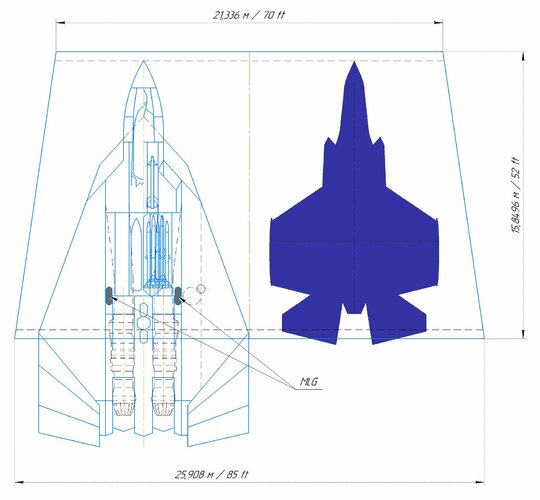
Update: I found an article by Huntington Ingalls Industries (Yes, the guys that made the Gerald R. Ford and the other Aircraft Carriers), and they have described the dimensions for the Gerald R. Ford's elevators:
Length: 85 Feet (25.908 Meters)
Width: 52 Feet (15.8496 Meters)
Weight: 120 Tons (108,862.2 Kilograms, 240,000 Pounds)
So assuming this information from the article is fully correct, maybe the 150,000 Pound estimate still stands, or it can be a bit more, as the rest of the weight goes to the Elevator itself and its entire systems. As such, an aircraft the length of the F-111 or more, and also at the same weight class, will definitely fit in the Gerald R. Ford's elevators.
Last edited:
La-Fuente Technologies
F-47 NEXT GENERATION AIR DOMINANCE
- Joined
- 21 November 2022
- Messages
- 371
- Reaction score
- 360
Gerald R. Ford-Class Elevators
Ok, turns out that it could fit in after all.
Last edited:

red admiral
ACCESS: Top Secret
- Joined
- 16 September 2006
- Messages
- 2,192
- Reaction score
- 3,446
Wasn't this about pilot view downwards over the nose? Hence if the cockpit is in the same place for structural commonality, then the noseneeds to be shorter?Someone correct me if I'm wrong please. The F-111 supposedly exceeded the length that could be easily handled on a carrier elevator and consequently the navalised F-111B had a shorter nose.

X-39
To post or not to post, that is the question
- Joined
- 20 February 2021
- Messages
- 382
- Reaction score
- 954
Nevermind.
Attachments
Last edited:
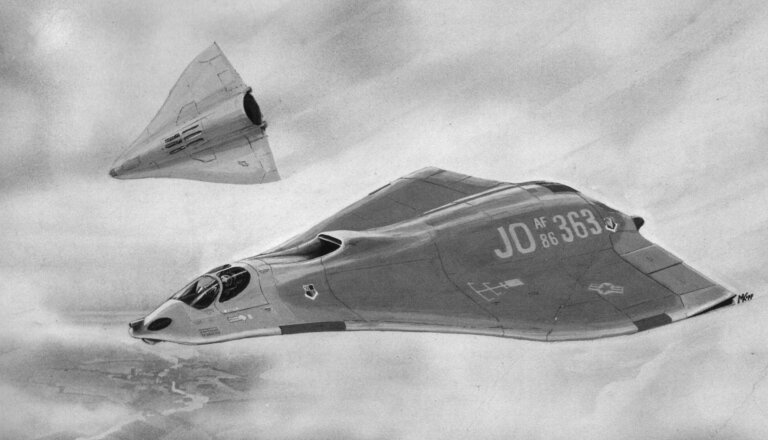
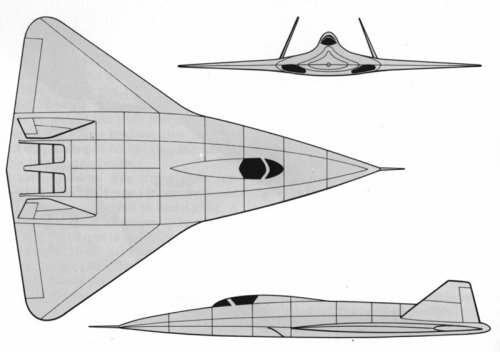
There were no official images for the F-117. Even the name was unknown. 

Dreamflyer
'Senior Something'
- Joined
- 13 July 2008
- Messages
- 555
- Reaction score
- 918
There were no official images for the F-117. Even the name was unknown.
I assume he is mostly referring to (or thinking about) all the concept-images about the ATF that floated around back then.
La-Fuente Technologies
F-47 NEXT GENERATION AIR DOMINANCE
- Joined
- 21 November 2022
- Messages
- 371
- Reaction score
- 360
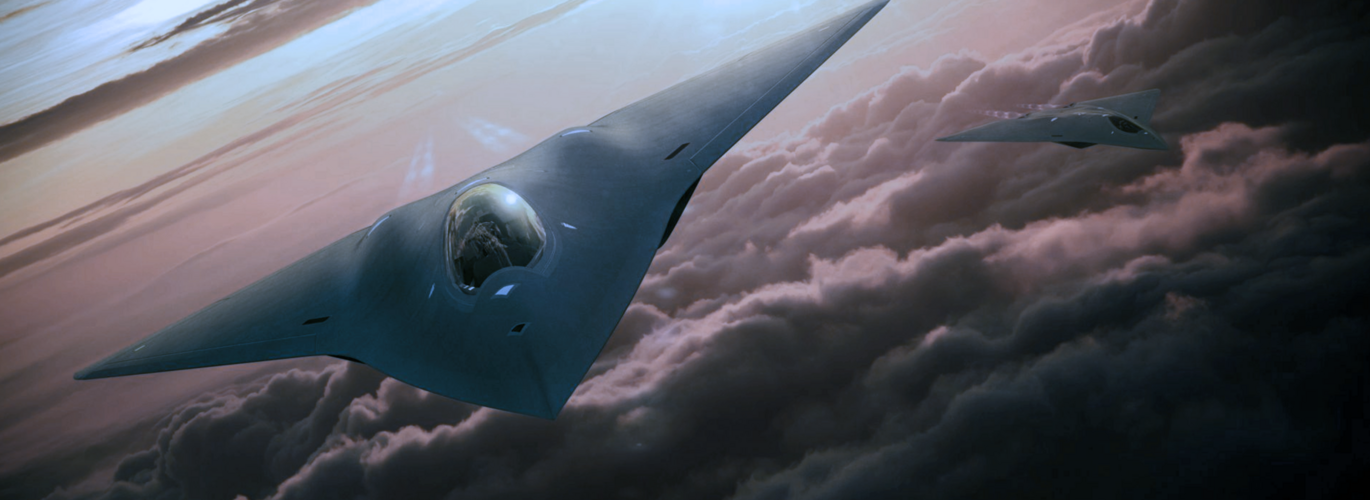
By extension, SMG also took much from Rodrigo Avella's work, the concept art they use resembles more his F-X design than any of Lockheed Martin's designs.Aaand... we're officially back in the 80s misinformation era (personally not me, i wasn't even born) I think we all can agree on that there is essentially ZERO chance the NGAD will approximate anything like this. If this LM model had any merit to begin with, they made sure to shine a light on it that strips it of any plausible credibility when seen from above, with a little help from SMG staff, (#1. Fattening the fuselage resulted in it resembling something else (see images below) #2 SMG staff also decided that funky teardrop canopy wasn't enough, so they added some serration shaping which would be an even more bizarre thing to do when (not that much of an issue apparently) #3 There is no planform alignment of any kind) instantly relegating it to the same internet section where all of his 95736123 Deviantart superfighter Sci-Fi cousins roam around. just like Loral's F-19 and other purely artistic otherwordly illustrations did back then in magazines, model kits & videogames.
Nevermind.
X-39
To post or not to post, that is the question
- Joined
- 20 February 2021
- Messages
- 382
- Reaction score
- 954
Not really: https://www.secretprojects.co.uk/th...ams-f-a-xx-f-x-ngad-pca-asfs.3536/post-559874By extension, SMG also took much from Rodrigo Avella's work, the concept art they use resembles more his F-X design than any of Lockheed Martin's designs.
La-Fuente Technologies
F-47 NEXT GENERATION AIR DOMINANCE
- Joined
- 21 November 2022
- Messages
- 371
- Reaction score
- 360
Just noticed that now. ThanksNot really: https://www.secretprojects.co.uk/th...ams-f-a-xx-f-x-ngad-pca-asfs.3536/post-559874By extension, SMG also took much from Rodrigo Avella's work, the concept art they use resembles more his F-X design than any of Lockheed Martin's designs.

La-Fuente Technologies
F-47 NEXT GENERATION AIR DOMINANCE
- Joined
- 21 November 2022
- Messages
- 371
- Reaction score
- 360
I suspected it was more based on Rodrigo Avella's design, so I doubted that part. But well, now I knowIt's literally pointed out on SMG chart.

FighterJock
ACCESS: Above Top Secret
- Joined
- 29 October 2007
- Messages
- 7,227
- Reaction score
- 8,538
but will NGAD still carry a cannon?
By the time NGAD enters service it may well be a laser.
but will NGAD still carry a cannon?
By the time NGAD enters service it may well be a laser.
Seems more likely than a canon anyway. It's not like NGAD will be handling air policing or ground attack, or at least ground attack below 30,000 feet, so I don't see anyway it has any kind of gun.
Tool_Shed_Toker
ACCESS: Restricted
- Joined
- 1 February 2022
- Messages
- 32
- Reaction score
- 44
I'm now convinced that the satellite image of the craft we saw on the tarmac at groom a few months ago was a NGAD prototype.
jsport
what do you know about surfing Major? you're from-
- Joined
- 27 July 2011
- Messages
- 8,596
- Reaction score
- 6,898
F-2
ACCESS: Top Secret
- Joined
- 22 May 2020
- Messages
- 1,189
- Reaction score
- 2,570
Which one?I'm now convinced that the satellite image of the craft we saw on the tarmac at groom a few months ago was a NGAD prototype.
- Status
- Not open for further replies.
Similar threads
-
 Japanese next generation fighter studies (aka i3, F-3)
- Started by bobbymike
- Replies: 588
-
 CNO Greenert Warns Congress of Fighter Shortfall, Hornet Line to Close 2017
- Started by Triton
- Replies: 1
-
-
-