
,
Last edited:



To all those points, you can go ask the US Air Force for that. They are the ones that desire a much larger Fighter that can carry much larger or more munitions, penetrate deep into enemy territory alongside the B-21s, and do all that it could without being detected. Given the current trends as we know, the US Air Force is not afraid of making very expensive but somewhat not-so-reliable aircraft that may or may not be really used to their full potential throughout their service life (The F-35 is an example, which although they have proven themselves a very capable aircraft, still leaves a lot to be desired to some buyers). The devil, however, is in the details, and how the exact process will come to be will not be known until it's announcedWhat's the point of having a highly expensive, deep stealth aircraft (i.e. huge investment into making a/c able to come closer) to carry inside large, long-range stand-off missiles(which can be launched from literally anything precisely because they're fast and standoff)?Yeah, that is also another good reason why the NGAD might be made bigger. And mind you, these missiles are gonna be so long, they're technically mini ballistic missiles, in the sense that they can reach extremely long distances, and pack an immensely powerful punch, whether it would have an explosive warhead, or just rely on kinetic force.
Anything=to the point of that new Turkish Akinci drone.
It's almost totally counterintuitive and against the whole point of either.
If you build a deep stealth platform - corresponding optimal choice is by definition larger number of shorter-ranged munitions, used from more decisive distances. It's just an optimal use of space and capabilities.
If you build a large weapon which will do penetration and dead time riddle for you - even your EX can do it for you, without any restrictions. Air under wing is free of charge.
Or you can do it like in that possible Air Force concept art of the NGAD: Have Vertical Stabilizers that can be folded into the wing for combat situations, and unfolded for speeding situations. As seen by the picture, there appears to be depression areas resembling the shape of the vertical stabilizer, where the stabilizer can fit into during stealth operations, which might be an innovative way to "eat your cake and have it too" as they say.I don't really agree with the notion that tail surfaces need to be abandoned. Just do it like the YF-23 or a myriad of other designs that minimize the RCS impact. In my opinion it's worth it for what will have to be a fighter first and foremost.
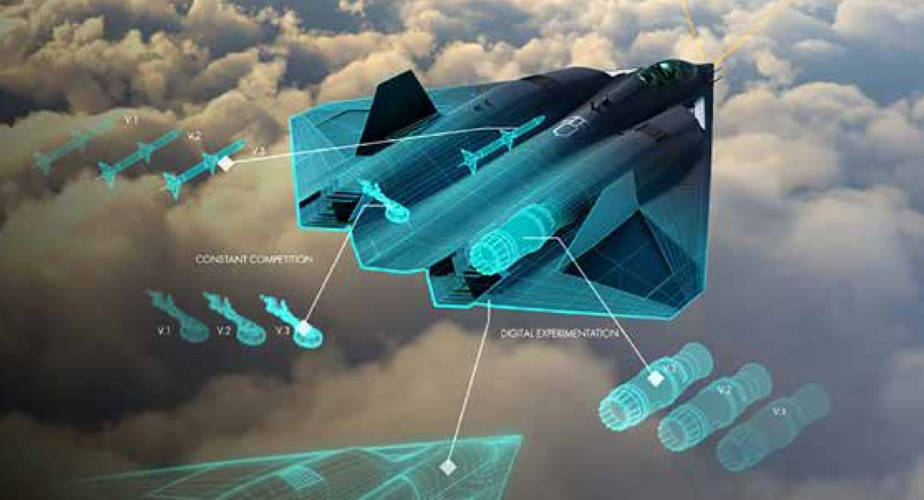

In order to lower the RSC below 0.3 m2
Sorry if I didn't see that one, but yeah, that'll be interesting as well. A much larger payload with smaller but immensely effective weapons would allow said aircraft to hold lots of them, and thus be all the more a deterrent to any country that would dare try to oppose it. Advances in material science and aviation technologies should call for miniaturization of weapons technology, while at the same time, for maximization of air platforms to allow for maximum range and fuel efficiency, and thus contribute to the deterrence mission that is required of the NGAD, and possibly future Seventh-Generation platformsYeah, that is also another good reason why the NGAD might be made bigger. And mind you, these missiles are gonna be so long, they're technically mini ballistic missiles, in the sense that they can reach extremely long distances, and pack an immensely powerful punch, whether it would have an explosive warhead, or just rely on kinetic force.I think they'd probably like the bays to be long enough to carry a hypersonic AGM or two.
An alternative would be to put it externally on a pylon, but that would immensely defeat the purpose of the NGAD's stealth capabilities, and knowing the USAF, they're NOT gonna go with that for the entire program.
I suspect HACM will be a 3000-3500lb store about the same dimensions as AGM-86. Even X-51 was 4000lbs and 24 feet long, and 4’ of that was flow through interstage. I think a 3D printed engine with a purpose built booster can shave a lot off that; supposedly HAWC’s combuster was half the weight of the X-51.
From the looks of it, it will not be the main fighter component, but the unmanned drones that will handle the maneuverability aspect, and thus, will be the components for dogfights should they ever occur. The main fighter itself, will just remain the quarterback that both commands the drones, and fires far more capable weaponry against enemies that the drones can't possibly handle. And drone control technologies, alongside its new role as quarterback, does necessitate an increase in the size of the airframe so as to handle such new technologies, even if at some later point in time, they eventually get far too miniaturized.In parallel, a super-maneuverable unmanned fighter is being created with an estimated operational overload of 15-18 g. One NGAD engine or a smaller dimension can be used. But a necessary condition is to provide a range of action like a heavy fighter

Fingers crossed !!I think they'd probably like the bays to be long enough to carry a hypersonic AGM or two.
I argued specifically against extra-large, long-range, internally-carried munitions as a design driver. NGAD itself makes perfect sense for US military.To all those points, you can go ask the US Air Force for that. They are the ones that desire a much larger Fighter that can carry much larger or more munitions, penetrate deep into enemy territory alongside the B-21s, and do all that it could without being detected.
Sorry for intruding, but per known LM infografic&some other materials, NGAD is intended to operate ahead of drone/aircraft formations.The main fighter itself, will just remain the quarterback that both commands the drones, and fires far more capable weaponry against enemies that the drones can't possibly handle.
But is that the arrangement when in battle, or when flying towards the battlefield? Because if that is so, then it doesn't make sense in many ways, firstly, putting the main fighter ahead of the drones just puts it right at the crosshairs of the enemy. Even if it may be very stealthy, have a much larger sensory range, and have longer-ranged BVR weapons that may be able to destroy the enemies before it detects the main fighter, the arrangement by itself is not reminiscent of a proper defensive formation (Unless the drones are to be protected). Besides, that move seems kinda suicidal, as the pilots should ideally assume that the enemy can detect them at any point, and that would be worsened if the main fighter component is right in front of the drones that could actually serve as the protective screen for the main fighter component.Sorry for intruding, but per known LM infografic&some other materials, NGAD is intended to operate ahead of drone/aircraft formations.The main fighter itself, will just remain the quarterback that both commands the drones, and fires far more capable weaponry against enemies that the drones can't possibly handle.
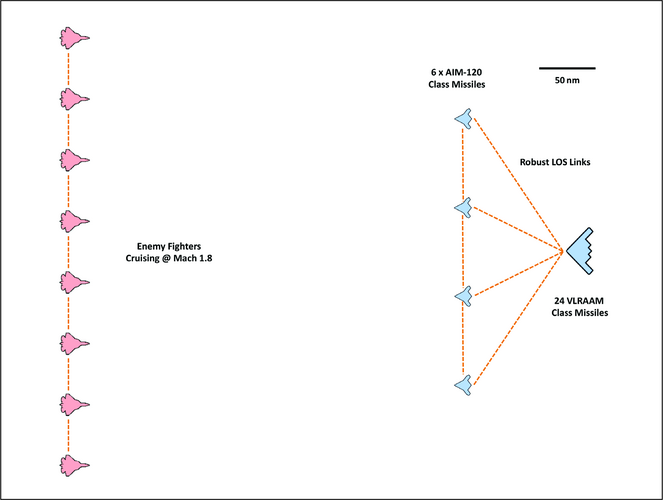
Unfortunately, the US Air Force also seems intent on making the NGAD all the more of an extremely long-ranged BVR missile truck, and as a result, they would want the NGAD to be able to house such weaponry for when the need arises. And that necessitates an increase in length of the internal weapon bays, and therefore, the fighter itself.I argued specifically against extra-large, long-range, internally-carried munitions as a design driver. NGAD itself makes perfect sense for US military.To all those points, you can go ask the US Air Force for that. They are the ones that desire a much larger Fighter that can carry much larger or more munitions, penetrate deep into enemy territory alongside the B-21s, and do all that it could without being detected.

X-51 Went Mach 5. Boost gliders are much faster than that. Totally possible.Hypersonic is not possible due to thermal management.

True but the X-51 was intended as the forerunner to a single use missile. An aircraft that will fly 100s to 1000s of sorties over decades, and take-off and land, is something else.X-51 Went Mach 5. Boost gliders are much faster than that. Totally possible.
Agreed. An aircraft is vastly different from a missile in terms of airframe and design purposes. Hence, if they are to be made capable of going hypersonic, their engine philosophy will be entirely different from those of missiles. Not to mention, if the aircraft will still have a pilot inside its cockpit, then the aircraft itself will have to be adjusted in order to keep the pilot safe throughout hypersonic flight. Or they could just simply put the Pilot in control of the aircraft from elsewhere via a robust connectionTrue but the X-51 was intended as the forerunner to a single use missile. An aircraft that will fly 100s to 1000s of sorties over decades, and take-off and land, is something else.X-51 Went Mach 5. Boost gliders are much faster than that. Totally possible.

I have been thinking about tailless aircraft like the X-44 manta as of late. They would also not have much in the way of drag

The EJ200 tvc nozzle only added 88lb per engine, it is possible to have light TavC nozzles.I have been thinking about tailless aircraft like the X-44 manta as of late. They would also not have much in the way of drag
There should be benefits for the lift to drag ratio (especially at supersonic speeds), and there are definite benefits to multispectrum stealth.
The one other feature I don't see noted much is that deleting the vertical stabilisers saves quite a bit of structural weight (as one doesn't have to deal with anchoring them to the fuselage or absorbing lateral forces). So there should be weight saving beyond those associated with the weight of the stabilisers themselves, with the result that the payload to empty weight ratio should be higher than in a conventional design.
The obvious downside to going tailless is that it is harder to maintain stability when manoeuvring, and one needs something like thrust vectoring to have take-off authority (...and including thrust vectoring increases weight/complexity).
Light folding vertical stabilizers can also be a good solution, during certain flight regimes, they can be unfolded so as to provide stability, while at other flight regimes, they can be folded into the wings to provide maximum stealth and RCS reduction. Preferably, vertical stabilizers should be unfolded for supersonic or hypersonic flight, and should be folded for subsonic flight and combat situations, and thankfully most combat situations happen at the subsonic range.I have been thinking about tailless aircraft like the X-44 manta as of late. They would also not have much in the way of drag
There should be benefits for the lift to drag ratio (especially at supersonic speeds), and there are definite benefits to multispectrum stealth.
The one other feature I don't see noted much is that deleting the vertical stabilisers saves quite a bit of structural weight (as one doesn't have to deal with anchoring them to the fuselage or absorbing lateral forces). So there should be weight saving beyond those associated with the weight of the stabilisers themselves, with the result that the payload to empty weight ratio should be higher than in a conventional design.
The obvious downside to going tailless is that it is harder to maintain stability when manoeuvring, and one needs something like thrust vectoring to have take-off authority (...and including thrust vectoring increases weight/complexity).
The EJ200 tvc nozzle only added 88lb per engine, it is possible to have light TavC nozzles.I have been thinking about tailless aircraft like the X-44 manta as of late. They would also not have much in the way of drag
There should be benefits for the lift to drag ratio (especially at supersonic speeds), and there are definite benefits to multispectrum stealth.
The one other feature I don't see noted much is that deleting the vertical stabilisers saves quite a bit of structural weight (as one doesn't have to deal with anchoring them to the fuselage or absorbing lateral forces). So there should be weight saving beyond those associated with the weight of the stabilisers themselves, with the result that the payload to empty weight ratio should be higher than in a conventional design.
The obvious downside to going tailless is that it is harder to maintain stability when manoeuvring, and one needs something like thrust vectoring to have take-off authority (...and including thrust vectoring increases weight/complexity).

The EJ200 tvc nozzle only added 88lb per engine, it is possible to have light TavC nozzles.
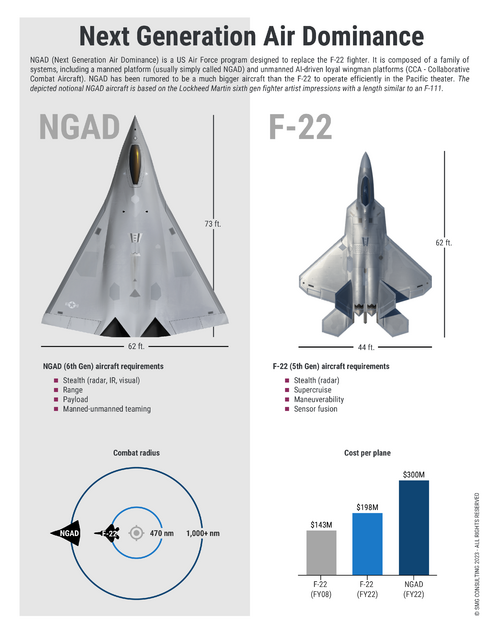
Or it has 2 engines, but each would be so large and so powerful that they operate equal to 2 engines, perhaps more than twice that of the P&W F135 engines, currently among the most powerful fighter engines made. After all, its engines will be designed to be both adaptive and variable, meaning it can adjust itself according to flight regime, which greatly increases its range, and its fuel efficiencyThe engine nacels are too big unless it's got 4 engines in their conceptual
Seems like it. Won't be surprised if it goes even higher as new innovations are made$300m per plane in today's prices?

Both design and price are still preliminary, the final product might look vastly different from the concept art, and possibly have a vastly different price tag tooI like the design but it's a big aircraft alright with a price to match ($300M, wow!).
Or the nature of the engine requires a bigger exhaust - some kind of bypass to mix cold air with the exhaust, multiple flow paths for an adaptive engine, multi-mode engine, etc.Or it has 2 engines, but each would be so large and so powerful that they operate equal to 2 engines, perhaps more than twice that of the P&W F135 engines, currently among the most powerful fighter engines made. After all, its engines will be designed to be both adaptive and variable, meaning it can adjust itself according to flight regime, which greatly increases its range, and its fuel efficiencyThe engine nacels are too big unless it's got 4 engines in their conceptual

I believe one of the spokespersons for the program that went before Congress intimated that they would larger than a traditional fighter and cost hundreds of millions per copy, so that seems to be the case. Presumably the CCAs / UAVs of the program will be dramatically cheaper than a traditional fighter and the hope being that a flight of UAVs + the manned component is more capable than an equivalent, or even larger number, of opponent fighters.$300m per plane in today's prices?

I like the design but it's a big aircraft alright with a price to match ($300M, wow!).
I can’t see the nacelles in that picture am I missing something? Or can’t gauge their size.Or it has 2 engines, but each would be so large and so powerful that they operate equal to 2 engines, perhaps more than twice that of the P&W F135 engines, currently among the most powerful fighter engines made. After all, its engines will be designed to be both adaptive and variable, meaning it can adjust itself according to flight regime, which greatly increases its range, and its fuel efficiencyThe engine nacels are too big unless it's got 4 engines in their conceptual
That is also possible too, might also help with reducing heat signatures for IR detection, otherwise it will also defeat the purpose of the NGAD being a new generation Stealth Fighter.Or the nature of the engine requires a bigger exhaust - some kind of bypass to mix cold air with the exhaust, multiple flow paths for an adaptive engine, multi-mode engine, etc.Or it has 2 engines, but each would be so large and so powerful that they operate equal to 2 engines, perhaps more than twice that of the P&W F135 engines, currently among the most powerful fighter engines made. After all, its engines will be designed to be both adaptive and variable, meaning it can adjust itself according to flight regime, which greatly increases its range, and its fuel efficiencyThe engine nacels are too big unless it's got 4 engines in their conceptual
Or more likely we're just staring way too much at an artist's rendering again.
Which is why the NGAD won't be replacing the F-22s on a one-for-one basis, instead, even fewer NGADs will be made, with the Drones compensating for the lack of numbers instead. It is designed that a single NGAD unit with its squadron of Loyal Wingmen drones will be equivalent to a dozen F-22s or a squadron of F-22s, regardless, they will be more effective in battle than several F-22s at once. Also, whether the price tag refers to only the NGAD manned fighter component or also includes the Loyal Wingmen drones is still up for debate.I believe one of the spokespersons for the program that went before Congress intimated that they would larger than a traditional fighter and cost hundreds of millions per copy, so that seems to be the case. Presumably the CCAs / UAVs of the program will be dramatically cheaper than a traditional fighter and the hope being that a flight of UAVs + the manned component is more capable than an equivalent, or even larger number, of opponent fighters.$300m per plane in today's prices?
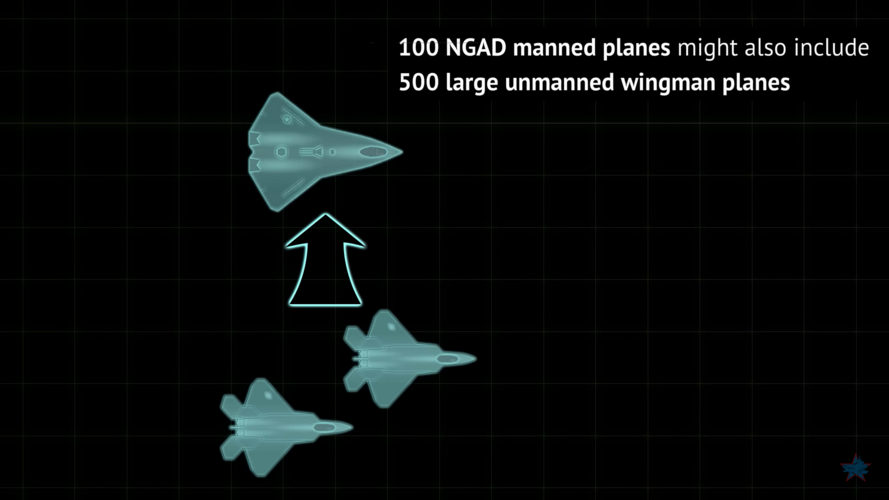
They probably regretted stopping Raptor Production the moment current world trends went where it went. After all, the reason why they did it at that time was because they were primarily focused on fighting insurgents and terrorists on the Middle East, and didn't fully see the bigger global picture, if they ever did see it. As such, they considered the Raptor's production as a waste of money, time and other resources that can go to far more important projects (At that time), and so stopped its production.I like the design but it's a big aircraft alright with a price to match ($300M, wow!).
Same thoughts here, $300M is a lot more than the F-22 Raptor. And they stopped the F-22's production because it was allegedly too expensive, makes me mad just thinking about it.
It's a concept art, based from what concept artists made, they would obviously miss a few technical parts, so don't worry about the design, it isn't final yet.I can’t see the nacelles in that picture am I missing something? Or can’t gauge their size.Or it has 2 engines, but each would be so large and so powerful that they operate equal to 2 engines, perhaps more than twice that of the P&W F135 engines, currently among the most powerful fighter engines made. After all, its engines will be designed to be both adaptive and variable, meaning it can adjust itself according to flight regime, which greatly increases its range, and its fuel efficiencyThe engine nacels are too big unless it's got 4 engines in their conceptual
I wonder if the $300mn price also includes 5 unmanned fighters, i.e. a system price for one NGAD.
I mentioned that possibility in one of my responses yesterday:I wonder if the $300mn price also includes 5 unmanned fighters, i.e. a system price for one NGAD.
Also, whether the price tag refers to only the NGAD manned fighter component or also includes the Loyal Wingmen drones is still up for debate.
Yeah, 2 million is way too cheap for all the technologies they might implement on the drones. Also, a much larger drone than the MQ-28 might possibly be needed to house some, if not all of the required technologies that the drones might use. I think ones the size of the MQ-25 Stingray should be enough, as it will also ensure that they can go almost the same range as the manned fighter component itself, assuming that the planned range for the NGAD is a 1000+ miles, or even more than that, possibly double, triple or quadruple the distance.It is all quite theoretical at the moment. Also there will likely be multiple CCA types, so cost per UAV could fluctuate rather wildly. as well as the total number assigned to a fighter in given a situation. The low end seems to be XQ-58 or even UTAP-22 sized; those smaller, more disposable drones would be getting down to the cost of some types of ordnance. Kratos claims they can stamp out Q58s for 2 million a pop if USAF is willing to fund a large production run (like a hundred or two a year); I don't believe them honestly but it does give a sense of the price point they are looking at. I assume something much larger and more capable, at least the size of MQ-28, would also be paired with the NGAD.
What do you mean "Threat"? Do you mean "Thread"? It was in relation to the NGAD post above, as they have recently started posting Infographics regarding the NGAD, and revealing some details regarding some of its specifics. If non-SMG sources regarding the NGAD do pop out and if I see them, I'll post it here all the same.Is this a threat about SMG?

