quellish

I don’t read The Drive. The Drive reads me.
Top Contributor
Senior Member
Joined
6 August 2007
Messages
4,539
Reaction score
10,261
This RFI, along with a bunch of other materials, was put out by AFRL in April/May as AFLCMC-EB-25-RFI01 . The Air Force has since pulled the files from SAM.gov , etc. but oh darn I happened to have the RFI saved.

The Armament Directorate is exploring industry potential for delivering a Low-Cost High-Speed
Air-to-Air Missile (referred to herein as “the missile”) to support Air Force needs around the globe.
The purpose of this Request for Information (RFI) is to identify industry partners with ability and
capacity to deliver a prototype with low Integration and Non-Recurring Engineering (NRE) costs
achieved by eliminating or limiting use of critical technology elements (CTE) and making use of
High Technical Readiness Level (High-TRL) and High Manufacturing Readiness Level (High-
MRL) weapon assemblies, subassemblies, and components in accordance with weapons
requirements as listed below. The desire is to maximize reuse of existing components.

Industry is encouraged to provide responses for the missile with a form fit factor similar to the
AIM-120 AMRAAM to provide a low-cost solution with maximum range. Industry is also
encouraged to provide low-cost solutions for the missile at half the size of an AMRAAM to double
aircraft loadout while maximizing range in the design.
 

Attachments

  • EB Low Cost Air-to-Air RFI FINAL.pdf
    423.3 KB · Views: 105

USAF’s New Low-Cost Anti-Air Missile Program Aims For $500K Target Price​

https://www.twz.com/air/usafs-new-low-cost-anti-air-missile-program-aims-for-500k-target-price
The U.S. Air Force has put out a new call for concepts for a future anti-air missile that costs no more than $500,000 and that could be built at a rate of at least 1,000 per year. The service says the planned Counter-Air Missile Program (CAMP) will build upon frameworks it has been using to develop cheaper cruise missiles for striking targets on land and at sea.
 
They are recognizing that they are going to need a sh**load - nay, a metric f***ton - of missiles for what's coming.

Speed of production should also be a factor.
 
They want a low cost missile and ask for a prototype. Total and utter failure to understand the problem.
The problem is not the design of the missile, or the creation of a prototype. The problem is the design of a factory that can efficiently produce said missile.
What they should ask for is "show us a design you can produce cheaply and the factory that will produce it and show us operating cost and capacity of that factory".
The missile prototype is totally and utterly irrelevant.

Turns out despite him repeating himself the lesson Musk is trying to teach the US still hasn't hit home after 2 decades of trying.

I think the best way the USAF is going to get their missile given their current twisted understanding of the world is to simply promise a bulk purchase of 100,000 missiles and asking for a really low unit price and letting the manufacturers worry about the factory.

The problem is they're deluded in thinking that the missile is the product, not the missile production line, and they're trying to buy a cheap missile design that could be mass produced, not actually asking for it to be mass produced, not an efficient production line, which is what they actually need and want.
 
they're trying to buy a cheap missile design that could be mass produced, not actually asking for it to be mass produced
Calling for production rates of 1,000 to 3,500 per annum is asking for it to be mass-producible. And they'll need to show that to get the funding. But they also need to show that the missile can perform the mission, because there's no point in building 1,000 to 3,500 missiles per year that can't do the job. Which means there will need to be prototypes.
 
The problem is they're deluded in thinking that the missile is the product, not the missile production line, and they're trying to buy a cheap missile design that could be mass produced, not actually asking for it to be mass produced, not an efficient production line, which is what they actually need and want.
They have specified a price and a yearly rate of production. What more do you want?

Details of the production line to achieve this are rightly the responsibility of whoever wins the tender. Operating cost is explicitly tied to per-round cost, and capacity has been specified.
 
You can ask for the theoretical capability of production rates, you can buy the promise of that ability, and you can also sell this promise. This does not manifest a production line into existence.

The failure of the current procurement model is universal, and it has fostered a mindset on both sides that still prevails, and while that prevails, the procurement process will be uncompetitive.

The missile here is not the product, the production line is the product, and not a "detail" but the very core of what you're buying.

That only shifts if, instead of giving someone a bit of money for a prototype and a promise, you give them a lot of money and ask for a lot of missiles at a guaranteed high delivery rate for the next couple of years, i.e. just buy it all upfront.
 
That only shifts if, instead of giving someone a bit of money for a prototype and a promise, you give them a lot of money and ask for a lot of missiles at a guaranteed high delivery rate for the next couple of years, i.e. just buy it all upfront.
And if the final product doesn't meet the requirements?
 
They want a low cost missile and ask for a prototype. Total and utter failure to understand the problem.
The problem is not the design of the missile, or the creation of a prototype. The problem is the design of a factory that can efficiently produce said missile.
This is exactly what they are doing. They are clear upfront. They want a missile that can be produced under a certain cost point at relatively modest volumes. So low cost, despite moderate volumes. Simplicity and 'producibility' is inherently important and an important component of what's being evaluated as part of the contract (Producibility is specifically called out as an attribute). Designs and submissions that can do this will succeed. Prototypes are going to be important because you still want to be able to see and touch something before you are ready to award a contract for the first thousand or so of these. The ERAM as an M-series program has shown the way and this is essentially the same approach adapted to air-to-air missiles.

That only shifts if, instead of giving someone a bit of money for a prototype and a promise, you give them a lot of money and ask for a lot of missiles at a guaranteed high delivery rate for the next couple of years, i.e. just buy it all upfront.
ERAM for reference. M-Series munition with modest requirements but low cost requirement. They evaluated and selected two products. The first thousand are being produced now and first few should be delivered to Ukraine by the end of the year. They can continue to ramp up one or both teams for follow on orders or re-compete now that a couple of other competitors have also quickly matured their candidate solutions.

1000 AUR/year is a lot for the US. Not for the pacing threat. Thats a laughable amount for China.
China may laugh with its 17,654 PL-15's a year, but that is not the point of stating volumes. It's a point of reference from the cost standpoint. Proposals should look at a very low NRE product, with M series attributes, and producibility that can deliver that cost at even modest production volumes. EOS gained from even higher volumes will be extra. 1,000 is just a nice round number and actually a few hundred less than what Raytheon is producing as far as AMRAAM is concerned (about 1,200 now).
 
Last edited:
Calling for production rates of 1,000 to 3,500 per annum is asking for it to be mass-producible. And they'll need to show that to get the funding. But they also need to show that the missile can perform the mission, because there's no point in building 1,000 to 3,500 missiles per year that can't do the job. Which means there will need to be prototypes.
I'd disagree. 1000 is 4 missiles per working day. So one person works this entire 'factory' which is the size of a double garage.

I'd agree with other posts, that this is a task for Elon, and the task is to build a munition factory, that can turn out 10 different missiles, all using as many common components as possible, and sized for 10x this production rate, with enough stock on hand to build 10x for at least 1 year.

Aim120 'like' probably best to just 'reverse engineer' the 120 then, what's the body made of? Milled aluminium? Can we mould it, or use fibreglass? Motor has 30 year shelf life, ok, but do we need this? How much for a 5 year shelf life? Or no motor, buy or make the motor when we need it.
 
I'd disagree. 1000 is 4 missiles per working day. So one person works this entire 'factory' which is the size of a double garage.

Are you shipping them out as they're completed? Are parts arriving just in time? Who's running testing, who's doing inventory, and so forth. Where do your development engineers sit? I interviewed with a really small aerospace company with a niche product line - airliner standby instruments, so physically much smaller products and low order numbers; and yes, their factory unit was small, by aerospace standards, but far bigger than a double garage. Employee numbers were somewhere around 20 to 30 IIRC.

I'd agree with other posts, that this is a task for Elon, and the task is to build a munition factory, that can turn out 10 different missiles, all using as many common components as possible, and sized for 10x this production rate, with enough stock on hand to build 10x for at least 1 year.

Remember, even Space X has to employ actual adults the customer can trust to run the company rather than relying on Elon. If you have 10x the components needed, and the space to house them, who's paying for them and that and what do your investors think? Assuming they haven't fired you already.

Aim120 'like' probably best to just 'reverse engineer' the 120 then, what's the body made of? Milled aluminium? Can we mould it, or use fibreglass? Motor has 30 year shelf life, ok, but do we need this? How much for a 5 year shelf life? Or no motor, buy or make the motor when we need it.
This is the kind of thing your customer's requirements will tell you, it's not a decision for you to make unless you're doing private venture work, and this isn't PV. No customer is going to be happy if he's buying stuff for a 30 year lifecycle and you tell them they'll have to rebuy it six times through the project's life. That's the kind of thing that messes up budgets and gets generals fired.

Tekever, the producers of the RAF's Stormshroud, are building a new factory in Swindon for AR3 Evo and AR5 production, it'll be 254,000 square feet, and employ 1,000, and the whole expansion programme is costing £400m.

https://ukdefencejournal.org.uk/britain-to-open-huge-400m-military-drone-factory/
 
Turns out despite him repeating himself the lesson Musk is trying to teach the US still hasn't hit home after 2 decades of trying.
I'll take him seriously when he makes a car that doesn't try to kill you. For manufacturing advice... well the Big 3 supply chain is still very impressive! We know how to make things, and at scale and cheaply! Just need to cross pollinate better and keep the tech idiots and VC grifters away.
 
The missile here is not the product, the production line is the produc
The service is not developing a production line. It is seeking a weapon that works.

The production line, process, or any vertical integration path, may end up being a key differentiator for one or more OEM eventually selected under this effort, but it is not what the service / operator is seeking directly.

AF wants a weapon that A) works, B) does not have proprietary vendor locked architecture and systems, and C) can be produced and offered to the USAF at a low cost of $500,000 or less per AUR even at modest volumes. It is specifically encouraging industry to follow processes and paths that lend to efficient, low cost manufacturing in order to deliver value and meet cost targets. They did the same on ERAM and its allied efforts, where one of the OEMs ultimately selected on the program by the directorate ended up heavily adopting additive manufacturing.

The 'factory as the product' approach is for industry to adopt and demonstrate not for the USAF to drive. If Anduril's version of this actually works than its Baracuda line of missiles should take CoAspire, Zone 5, Lockheed and others to the cleaners in terms of cost competitiveness. Let's actually see how cost effective weapons that come out of the Anduril 'arsenal' actually are vs their peers being developed by others adopting similar or different approaches.

That said, the AF has invested in maturing additive manufacturing and other allied activities that could lend themselves nicely to these efforts should one or more of the interested vendors adopt such approaches. Ultimately, its up to the industry to choose the path it wants to take to deliver the required capability at the required cost.

CoAspire, in close coordination with Divergent, developed an ambitious programme roadmap requiring delivery of first fuselages, wings and fins from Divergent within ten weeks, with fully integrated test rounds entering ground testing within fourteen weeks, culminating in a successful flight test that met customer and programmatic requirements. To deliver fuselages at speed, Divergent leveraged extensive in-house digital tools, enabling the team to rapidly align on a cost-effective, manufacturable version of CoAspire’s unique cruise missile design that optimised for fuel tank capacity while meeting all structural performance requirements.

The Divergent team seamlessly transitioned from digital design to Additive Manufacturing and automated assembly, with manufacturing instructions generated from the designs dynamically assigned to the company’s software-defined manufacturing assets. Following the first hardware deliveries in week ten, Divergent continued to support the CoAspire team by delivering digital design, analysis, and manufacturing artefacts required for the airworthiness approval process.

https://www.metal-am.com/divergent-...factured-raacm-cruise-missile-in-record-time/
 
Last edited:
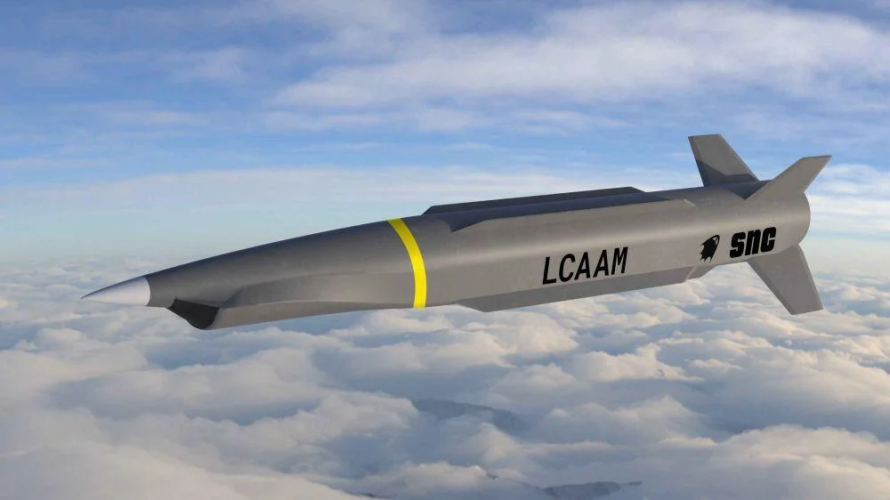
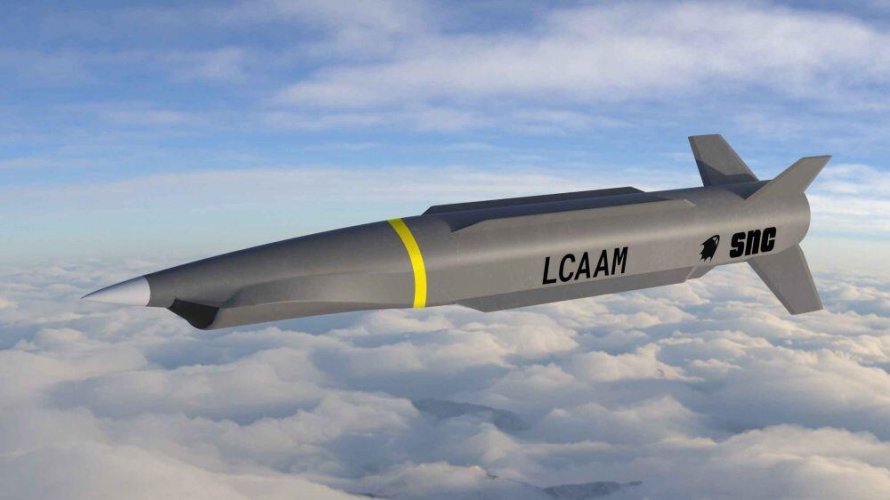
1772704090076.png
Credit: SNC
https://aviationweek.com/defense/mi...er-detail-low-cost-plasma-ramjet-missile-plan

COLORADO SPRINGS—Sierra Nevada Corporation (SNC) and startup Specter Aerospace plan to develop and flight test a supersonic ramjet-powered cruise missile under a collaborative agreement signed between the companies in February.

Flight tests of the low-cost, air-to-air missile (LCAAM) are scheduled for the third quarter of 2026, says SNC, which displayed a model of the weapon at the Air Force Association Air Warfare Symposium in Aurora, Colorado, on Feb 24.

The LCAAM will utilize Specter’s plasma-assisted combustion technology for both ignition and operability expansion and is expected to form the basis for a supersonic aerial effects product line. Specter has been working on the technology as part of a broader, Pentagon-supported company initiative to develop a family of low-cost, mass-producible plasma-assisted interceptors, targets, countermeasures, and missile systems.

SNC says the collaboration with the Boston-based company “brings together Specter Aerospace’s expertise in ram/scramjet propulsion, vehicle design and avionics with SNC’s proven expertise in mission integration, air vehicle development and air defense systems.”


Jon Piatt, executive vice president of SNC’s intelligence, surveillance and reconnaissance (ISR), Aviation and Security business area, adds that the collaboration targets low cost and mass production while maintaining high performance. “Together with Specter Aerospace, we are combining affordability with advanced propulsion and scalable manufacturing to create a solution that allows for widespread deployment without compromising on range, reliability or performance.”

Although the full LCAAM vehicle will be tested later this year, SNC says some air vehicle and propulsion testing is already underway. “The ongoing flight test program is validating novel air breathing engine technologies designed to significantly extend vehicle range and reliability when compared to industry,” it adds.

Initial tests are focused on 1,000-lb. or under air breathing supersonic air effects class vehicles, though SNC adds “these technologies apply to both ramjet (supersonic) and scramjet (hypersonic) applications.”

Separately, Specter says development of the company’s Nighthawc hypersonic vehicle will continue independently of the SNC collaboration. The dual-mode ramjet and scramjet-powered vehicle is expected to complete ground test qualification and wind tunnel testing this year, before entering flight testing in 2027.

— With Steve Trimble in Washington


norrisguysized.jpg

Guy Norris
Guy is a Senior Editor for Aviation Week, covering technology and propulsion. He is based in Colorado Springs.

Presumably intended to intercept supersonic cruise missiles?
 
Last edited by a moderator:
https://aviationweek.com/defense/mi.../new-low-cost-air-air-missile-program-emerges

A newly launched project expands the U.S. military’s months-old search for a low-cost counter-air missile and includes language that questions a global trend toward an exquisite class of very long-range air-to-air missiles (VLRAAMs).

The prototyping and experimentation arm of the Pentagon’s Research and Engineering directorate quietly called for proposals to rapidly build and demonstrate prototypes of a Medium-Range Affordable Mass Munition (MRAAM).

The new weapon should be designed for the new class of autonomous Collaborative Combat Aircraft (CCA). The solicitation specifically mentions compatibility with the Kratos XQ-58 Valkyrie, a CCA developed originally by the U.S. Air Force but selected to enter production by the Marine Corps.

The goal is to demonstrate missiles that are smaller than the current standard. The solicitation does not name the 12-ft.-long, 7-in.-dia. Raytheon AIM-120 Amraam, but it is the military’s only medium-range air-to-air missile still in production. In that sense, the MRAAM program recalls the objectives of past Air Force experimental projects. A decade ago, the Small Advanced Capabilities Missile (SACM) program, for example, sought to replace the Amraam with a missile around half the size but with similar range. A similarly reduced price tag for each missile, however, was not a goal for the SACM program.


The MRAAM solicitation, which was released on July 6, appears in parallel with a similar Air Force initiative—Counter-Air Missile Program (CAMP). The Air Force has released plans to first develop prototypes for a ground-launched counter-air missile, but an air-to-air variant could follow.

It is not clear if MRAAM and the Air Force’s CAMP are related. The funding for MRAAM comes from the Pentagon level, but the acquisition is being administered by the U.S. Army’s Rock Island arsenal.
 
The MRAAM program officials, however, are not as concerned about VLRAAMs as shorter-range options, like the radar-guided PL-12.
That lovely part that steve adds to this article despite the PL-15 being the standard AAM in service at this point...

What the actual solicitation says:

Existing weapons are physically too large and costly to support sufficient loadout density within fighter and collaborative combat aircraft weapons bays, limiting the number of available intercept opportunities during forward-flow intercepts and extended commitment scenarios where platforms cannot disengage without elevated operational risk.
This last piece is probably more relevant to what MRAAM is intended for than.... mostly all the other info in the actual article / solicitation.

Facing multiple waves of enemy aircraft in a target rich environment probably requires a cheap munition against targets inherently attritable while keeping full sized missiles reserved for targets of higher value.

Not that long range missiles arent useful...
 
Last edited:
China may laugh with its 17,654 PL-15's a year, but that is not the point of stating volumes. It's a point of reference from the cost standpoint. Proposals should look at a very low NRE product, with M series attributes, and producibility that can deliver that cost at even modest production volumes. EOS gained from even higher volumes will be extra. 1,000 is just a nice round number and actually a few hundred less than what Raytheon is producing as far as AMRAAM is concerned (about 1,200 now).
China is not producing 17 and a half thousand pl-15 in a year, were would they even store that many?
 

Similar threads

Back
Top Bottom