I think it's important who's making the statement. He's very much a biased party.
If anything, it would give him justification to beat the drums for more resources. It's not like he could single handedly hide procurement problems.
 
If anything, it would give him justification to beat the drums for more resources. It's not like he could single handedly hide procurement problems.
I was more along the lines he's a USAF F-47/B-21 guy.
 
I think it's important who's making the statement. He's very much a biased party.
True but Hegseth or Trump, among others, could overrule him if they felt it was critical. So tells me they must agree to some extent (Trump not being an SME in these matters would defer to Hegseth’s position).

I know if I was President atm, and my chief procurement officer expressed such concerns, I’d fix them asap and, given both Boeing and NG both expressed confidence they can build the Navy NGAD while the F47 is going together, I’d make them show me they can do so. If I am satisfied with what each had to show/tell, I direct the Navy to complete downselect and award the EMD contract to their preferred choice.

If a selection hasn’t been made yet, they would have to come up with the mother of all justifications as to why not and sell me like they’ve never sold anyone on anything before to get me to allow more time.

I don’t see China holding back or pausing anything. No one over there seems to have “industrial base” concerns, at least any I have heard.

How does the F18 SH and/or Growler fare in a live engagement against a J20 (or four-ship vs four ship)?

Maybe the Navy has reason to believe the Rhino/Growler pilots would not be out matched. Or they simply figure all such situations would be handled by the F35C or USMC F35B and that’s more than enough for the next 10 years if push comes to shove…
 
Okay, had a thought earlier today. Call it off-topic if you would, I cannot recall the exact reason NG isn't assisting SNC with the Freedom Trainer other than that Beechcraft-Leonardo have a naval trainer monopoly. Is it indicative that such a drop occurred after they said they made the selection but didnt tell us who? Something to think about. Wonder if it'll look like this from the NG slide.
 

Attachments

  • IMG-20251123-WA0001.jpg
    IMG-20251123-WA0001.jpg
    217.2 KB · Views: 116
but perhaps the concern isnt completely overblown.
Then the US aerospace industrial base is in worse shape than anyone of us has ever considered. If a handful of programs for each contractor already take up all their resources.

Meanwhile there is a certain east asian nation that has like twice of the amount of programs running concurrently with more and more things being spotted and and speculated upon each month, two next generation manned fighters in advanced stages of testing and like three dozen UAVs and UCAVs from the lowest to the highest end of the capability spectrum.

I wonder who'll Washington will blame, because they won't blame themselves.
 
Okay, had a thought earlier today. Call it off-topic if you would, I cannot recall the exact reason NG isn't assisting SNC with the Freedom Trainer other than that Beechcraft-Leonardo have a naval trainer monopoly. Is it indicative that such a drop occurred after they said they made the selection but didnt tell us who? Something to think about. Wonder if it'll look like this from the NG slide.
SNC does not have a reputation, Dreamchaser will probably go nowhere after how many years and they are having issues with the new E-4 aircraft they took from Boeing which is probably a wash as compared with Boeing's issues. NG not working with SNC, very good move.
 
Then the US aerospace industrial base is in worse shape than anyone of us has ever considered. If a handful of programs for each contractor already take up all their resources.

Meanwhile there is a certain east asian nation that has like twice of the amount of programs running concurrently with more and more things being spotted and and speculated upon each month, two next generation manned fighters in advanced stages of testing and like three dozen UAVs and UCAVs from the lowest to the highest end of the capability spectrum.

I wonder who'll Washington will blame, because they won't blame themselves.
Why don't you just say China?
 
Why don't you just say China?
Because I like ambiguity as a rhetorical tool. But yes I mean China and given that the US views them as the main adversary for the foreseeable future, it should be concerning for them to see such a widespread development offensive across multiple disciplines in aerospace and in many of those substantial progress.

And yes Europe isn't doing any better, and that's not good either and should be concerning to anyone who has an unfavorable view of the PRC (although I'd argue that's a minority in continental Europe compared to the US).
 
Then the US aerospace industrial base is in worse shape than anyone of us has ever considered. If a handful of programs for each contractor already take up all their resources.

Meanwhile there is a certain east asian nation that has like twice of the amount of programs running concurrently
That nation also has at least three times the population of the US. Maybe four times.

So I'd expect them to have at least twice the number of aircraft programs, if not three to four times the number of aircraft programs as the US.
 
I'm unsure if I would equal productivity in any given sector with outright population size. There are exceptionally productive countries with low populations and very populous countries that are not productive at all.
 
I'm unsure if I would equal productivity in any given sector with outright population size. There are exceptionally productive countries with low populations and very populous countries that are not productive at all.
Granted, but once you get to the levels of hundreds of millions of people in a country's population, it's not a completely unreasonable first-guess.
 
I'm unsure if I would equal productivity in any given sector with outright population size.
Ideally, you can but in reality you have to understand the society and its education ssystem in question and then look at the industrial fraction/work force capacity. Sadly, discrimination is a thing. In this case only the Han-chinese population demographics counts (91.11%).
The aerospace capacity looks to be ~3.5x but this is just a survey observation.
 
Then the US aerospace industrial base is in worse shape than anyone of us has ever considered.
Maybe. but perhaos its just me. Things looked easy for me on the outside but in practice, everything is far far more complex than one can imagine. Quite frankly, while having so many startups and companies competing is nice, the amount of work going into making all of it manageable and what not is going to be hard. And that could be part of the problem - many many companies in the race each with their own program and yet it seems like everyone is trying to solve the same problem whereas perhaps a few less of these competitors could squeeze out some more engineers for F/A-XX pr other big lifts.
 
Europe is not doing any better as well.
Europe is surely not doing something better than USA , France is glued with the forever Rafale with a economy in collapse unable to build a 6th gen Fighter and UK is in the Tempest who is a enormous program with high risks. USA is still the best on Earth with B-21 in time and number and the first F-47 in production , and surely 2 or 3 Black programs nobody know about
 
Europe is surely not doing something better than USA , France is glued with the forever Rafale with a economy in collapse unable to build a 6th gen Fighter and UK is in the Tempest who is a enormous program with high risks. USA is still the best on Earth with B-21 in time and number and the first F-47 in production , and surely 2 or 3 Black programs nobody know about
I hope Europe's fighter programs pan out and are successful.
 
Maybe. but perhaos its just me. Things looked easy for me on the outside but in practice, everything is far far more complex than one can imagine. Quite frankly, while having so many startups and companies competing is nice, the amount of work going into making all of it manageable and what not is going to be hard. And that could be part of the problem - many many companies in the race each with their own program and yet it seems like everyone is trying to solve the same problem whereas perhaps a few less of these competitors could squeeze out some more engineers for F/A-XX pr other big lifts.
Meh. Give it five years then revisit. (Sitting on one's laurels for three decades was never going to work out well. Who could have known?)
 
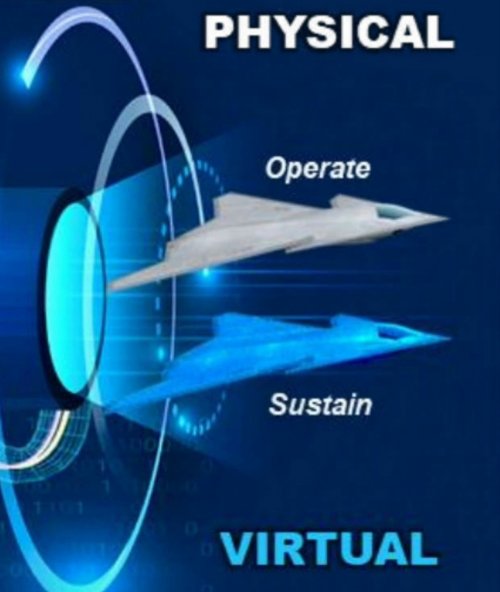
Back on the F/A-XX, I've been wondering if the concerns about the Navy project running in parallel with F-47 are mostly about software development.

In my opinion, some companies (NG) do appear to have the capacity to begin work on the EMD phase of a sixth gen fighter, yet there have been fears that this is not true. So I've been wondering why.

My basic assumptions are that NG is available (and qualified, competent, etc) to do the airframing and general systems integration, as well as stealth, that NAVAIR is available to do its supervisory part, and that the engines, being derivatives of an existing design, are likely very ready for EMD. Those things considered together pretty much mean that all components are "go" for designing and building flight test articles for much of the Developmental Testing. Sensors are really the only other thing I can think of, but they can appear later in DT, and then get particularly important in OT.

However, the big piece that that doesn't account for, again other than the sensors, is the software for tying everything together. As I understand it, USAF NGAD and Navy NGAD have together been pursuing a single unified software architecture that could be compared to operating systems such as Linux, Android, MacOS, IOS, Windows, etc. I assume that was a long running R&D program with lots of lab and contractor input, culminating in a competition for the NGAD software OS that would be broadly comparable to the way NGAP (and predecessor programs) has been run as a separate competition.

Unlike AETD/AETP/NGAP though, I suspect the software program picked a single contractor a few years ago, and will control costs via government ownership of IP rather than via competition between multiple different products. The gov't owned IP part has been widely reported for years and years, but it's just my conjecture that there will be only one fighter OS-- that is, only one for crewed fighters and their nice sensors, their high end computers, their sensor fusion needs, etc, but of course a different one for CCAs and their very different needs, a bit like desktops and laptops use one class of OS, while smartphones and tablets use another.

I do realize that areas like EW or AI for CCAs are using multiple competing softwares, but in my opinion there will probably nevertheless be only one "Windows" that all the high end sixth gen fighters run on -- infinite programs and apps, but just one OS. So, my theory is that LM is currently building Lindows, or Boeing is building Bindows, etc, and that that eventual operating system will be the software foundation for both the F-47 and the F/A-XX. Hence the entanglement of the two programs, even if NG were to win F/A-XX.

To circle back to sensors, IMO the Navy has probably specified a "value" approach that would essentially use COTS items like the APG-85 or the latest version of the JSF's EOTS, or else possibly the losing bidder's competitors to those, such as whatever Raytheon pitted against the APG-85. But I'd be surprised if they have paid or are paying for any original work on sensors, which in turn would likely make sensors not a developmental bottleneck, although manufacturing delays, spare parts shortages, and reliability issues would still be potential issues. If they have something innovative in the sensor realm, it's probably just easier plug & play for flexibility in the future.

 
Last edited:
However, the big piece that that doesn't account for, again other than the sensors, is the software for tying everything together. As I understand it, USAF NGAD and Navy NGAD have together been pursuing a single unified software architecture that could be compared to operating systems such as Linux, Android, MacOS, IOS, Windows, etc.


I assume that was a long running R&D program with lots of lab and contractor input culminating in a competition for the NGAD software OS that would be broadly comparable to the way NGAP (and predecessor programs) has been run as a separate competition.
I can't speak definitively about all software with regards to these two programs (as in I genuinely don't know anything), but it's less so like there is a single common architecture and more like abstract interface agreements across the MIC with regards to certain layers of software - and while many systems are speaking certain interface agreements, its certainly not uniform. There's also many parts of that shared middleware that requires constant maintenance across a number of different contractors as new systems are introduced.

Depending on which layer we are talking about, some layers of the software are still being developed by individual contractors while other parts of the software is a collaborative effort across multiple contractors. Its unlikely that the OS is going to be exactly the same for both aircraft. Different levels of software on them are going to be very different, but that's okay and it's probably better that way. What is certainly more important is that the interface agreements between these pieces are software are standardized and flexible. Hell - almost everything is a set of interfaces.

As for whether software is the stumbling block - I'm not sure. It's probably most likely that it's a combination of factors discussed in this thread rather than just one.

Could be that the navy's budget and manpower needs to focus on the fleets more.
Could be that the B-21 and F-47 programs are consuming most of the engineering teams.
Could also be that the CCA gold rush and modernization is also siphoning away manpower, as the military really has been trying to modernize almost everything.
 
Simple volume of software is potentially an issue. F-35 has around 25 million lines of code, so we're potentially looking at greater than that for F-47 and F/A-XX. Whilst there's a lot of effort on open architectures to identify the interfaces, this doesn't actually produce the software itself, and doesn't really relate to volume of code. Some software apps will be common, but lots will be very different e.g. aircraft-specific safety critical flight control systems

Software lines of code is not a good metric to use, but it does help to illustrate the scale of effort. The F-35 software enterprise is many thousands of people, and lots of this needs to be replicated across each different program. This adds up to a lot of people. You also want many of these people to be experienced.
 
Not on the front lines, no.

They'll be usable over North America for air patrolling by then.
I think this is a very ... futuristic notion, taking A2A warfare development way faster than it actually is.
Both faster and rather theoretical, as the practice of air warfare points in a very, very different direction.

They can't go into hostile airspace(when it's still hostile), but otherwise non-stealth sorties are not just viable; they're desperately needed, and there's never enough of them.

It's to the point that penetration-capable aircraft aren't particularly needed. They don't do normal work well, and for what they do, there's more aircraft than there are missions, even with their bad availability.
 
Last edited:
May get some flak for this but, if you look up "what proportion of the world's automotive passenger cars run on AUTOSAR" you'll see it's 80-90%.

Essentially OEMs (the Carmakers) recognised they were paying everyman and his dog to write new code for every generation of car and the IP was owned by the Tier-1s. We even have the term "Bosch Tokens", meaning around $1M, usually referring to the cost for even very minor software changes. Similarly for a very simple recalibration of existing software a large global (in my data points case German) transmission supplier might charge $15M (more than 2x what it cost our business to create new hardware and software from scratch (in that case, yes with Autosar base software).

These days the AUTOSAR software is created with all the functional safety for data integrity, memory verification, and cybersecurity baked in from the outset, and you can use a common platform which the vast majority of tier-1s are designing their code to operate in. Where very high speed, non standard processing is required, it's around the hardware embedded software and thats more analogous to the sensor/avionic model above (it's related to the supplier of the hardware kit and their embedded requirements specifically).

Long story short if the government wasn't implementing a standard OS and base software architecture by now I'd be amazed given how it has transformed automotive development.

(ps I look forward to any counter arguments raised by software diehards!)
 
They don't really have a choice, Rafales aren't going to be viable by the 2040s.
In the catastrophic economic state of the France now ( imagine the price of fuel 10 Euros by gallon economy start to collapse now) , impossible to have a 6th gen fighter for 2040, The worst too the UCAV flying with the futur Rafale have no budget to start, 500 CCA will flying in the USAF before France have one.
 
I can't speak definitively about all software with regards to these two programs (as in I genuinely don't know anything), but it's less so like there is a single common architecture and more like abstract interface agreements across the MIC with regards to certain layers of software - and while many systems are speaking certain interface agreements, its certainly not uniform. There's also many parts of that shared middleware that requires constant maintenance across a number of different contractors as new systems are introduced.

Depending on which layer we are talking about, some layers of the software are still being developed by individual contractors while other parts of the software is a collaborative effort across multiple contractors. Its unlikely that the OS is going to be exactly the same for both aircraft. Different levels of software on them are going to be very different, but that's okay and it's probably better that way. What is certainly more important is that the interface agreements between these pieces are software are standardized and flexible. Hell - almost everything is a set of interfaces.

As for whether software is the stumbling block - I'm not sure. It's probably most likely that it's a combination of factors discussed in this thread rather than just one.

Could be that the navy's budget and manpower needs to focus on the fleets more.
Could be that the B-21 and F-47 programs are consuming most of the engineering teams.
Could also be that the CCA gold rush and modernization is also siphoning away manpower, as the military really has been trying to modernize almost everything.
I think that B-21 and F-47 with surely classified programs are consuming most of the engineering teams and may be raw materials coul be the problem here.
 
These days the AUTOSAR software is created with all the functional safety for data integrity, memory verification, and cybersecurity baked in from the outset, and you can use a common platform which the vast majority of tier-1s are designing their code to operate in.
I dont know enough about OSs to say much. But even with a common OS, theres still a lot of work that needs to be built atop of that for any piece of hardware that goes into the plane.

Many new toys these days are introducing completely new functionality and behaviors (and so much of it is happening at the same time) that your shared application can lag behind months and years even before theres enough bandwidth to support said functionality thats already built into the hardware. In some cases there simply isnt enough funsjng / manpower to catch up immediately. Theres also the problem where supporting these new behaviors frequently requires large overhauls to avoid regression.

Even with a lot of these shared configurations of computer hardware and software, the coverage, distribution and standardization simply isnt uniform. The USAF has their own configurations while the USN has theirs. Some are shared some are not. Even the AI testing configs for CCAs that are used in the first incr1 CCAs dont run on the same standards / interfaces that DARPA's ACE / recent BVR testing runs on. Its going to take more manpower to even port that software from DARPA over into a incr1 CCA. I can even tell you that because of contracting differences, what ought to be shared software at certain layers of CCA autonomy are not. Each contractor is spending team and man power hours doing duplicate work with just about nothing in common code wise (at certain layers of the software stack). Perhaps that changes when certain CCAs are actually adopted by a service but - I wouldnt know.

So like red admiral said - its not necessarily that each of these software problems are hard. It could be the sheer amount of software work backlog and the amount of new software for upcoming stuff that needs support and maintenance. Its mind boggling in size, complexity and often times - stupidity - that is for someone not in the know like me. The good thing is that there are often workarounds to enavle functionality and things could be far far worse without the current shared platforms, frameworks and OS / software configurations.
 
Last edited:
The situation that Reddington is describing is just what I always used to assume software would be like in the generation after Pave Pillar style systems. That is, it's what I expected back when NGB was on the table, back when the Navy (as far as I was ever aware anyway) first started talking F/A-XX back in 2008/9, what I expected when greatly pissed off about the end of Raptor production but dreaming of Lockheed's ...what was it, Miss February or NGTF, a few years later in perhaps 2012 , and even what I would have expected the X-47B might have featured, if operationalized and fielded. In fact, back then I thought things might always remain that way, because unlike cars, the number of new high end fighter designs being made is always small, so the rationale for replacing the bespoke approach with a one-size-fits-all approach isn't as compelling.

But the situation jmspeedfreak described sounds much more like the way I interpreted (or overinterpreted if I’m wrong) things like Frank Kendall interviews or service chief testimonies were saying about the joint NGAD technologies. Had I never read/watched those statements (or, possibly, misread them), I would still be in the previous mode of thinking. And if I imagined an overly visionary, grandiose version of what were actually more prosaic statements, then it would be great to be corrected. But I really did think they were describing a radical break with the situation Reddington is describing, over and above the (I assume) separate issue of the software now, as I understand it, being gov't owned.

Or is that also something I'm possibly going too far with? Would most of you say it's just a smorgasbord of interface protocols the gov't now owns on F-47 and will soon on F/A-XX, and not essentially the entire fundamental software architecture?
 
Last edited:

Similar threads

Back
Top Bottom