

You are using an out of date browser. It may not display this or other websites correctly.
You should upgrade or use an alternative browser.
You should upgrade or use an alternative browser.
US AWACS recapitalization for the 21st century
There have been NGAD depictions of a RQ-170 looking platform depicted above the other UAVs that I assumed was a dedicated communications gateway. It would make sense to have a less expensive high altitude system with optical receivers talking to LEO constellations (and RF downlinks for legacy high altitude satellites as a fallback) then multiple communications arrays to retransmit into various formats/waveforms. Ideally the transmissions would be directional for lower probability of interception, with any Omni directional transmissions taking place at a lower tier.
zebra159357
I really should change my personal text
- Joined
- 30 November 2018
- Messages
- 155
- Reaction score
- 539

FighterJock
ACCESS: Above Top Secret
- Joined
- 29 October 2007
- Messages
- 7,227
- Reaction score
- 8,538
Too True Scott Kenny, I think that the Airbus A-320 would be a good platform for the Erieye radar, plus the fact that being a larger platform it would have a much longer range than the equivelant Embraer aircraft that currently carry it.
GA-ASI and Saab Will Demonstrate AEW&C on MQ-9B in 2026:

https://news.defcros.com/ga-asi-and-saab-to-showcase-aewc-capabilities-on-mq-9b-in-2026/
https://www.navalnews.com/naval-news/2025/11/ga-asi-and-saab-will-demonstrate-aewc-on-mq-9b-in-2026/
At the Dubai Airshow on November 17, 2025, General Atomics Aeronautical Systems, Inc. (GA-ASI) announced a strategic partnership with Saab, a renowned leader in Airborne Early Warning and Control (AEW&C) systems. This alliance aims to integrate AEW&C capabilities into the GA-ASI MQ-9B, the preeminent platform for Remotely Piloted Aircraft (RPA). A demonstration of this innovative capability is scheduled for the summer of 2026 at GA-ASI’s Desert Horizon flight operations facility in Southern California.
[...]
The collaboration between GA-ASI and Saab marks a pivotal step in enhancing aerial defense systems. By integrating advanced AEW&C capabilities into an established and reliable platform, this partnership not only addresses existing gaps in surveillance but also prepares global military forces for the evolving landscape of modern warfare. The fusion of high-end technology and unmanned systems signifies a profound shift towards more effective and efficient operational strategies in defense planning.
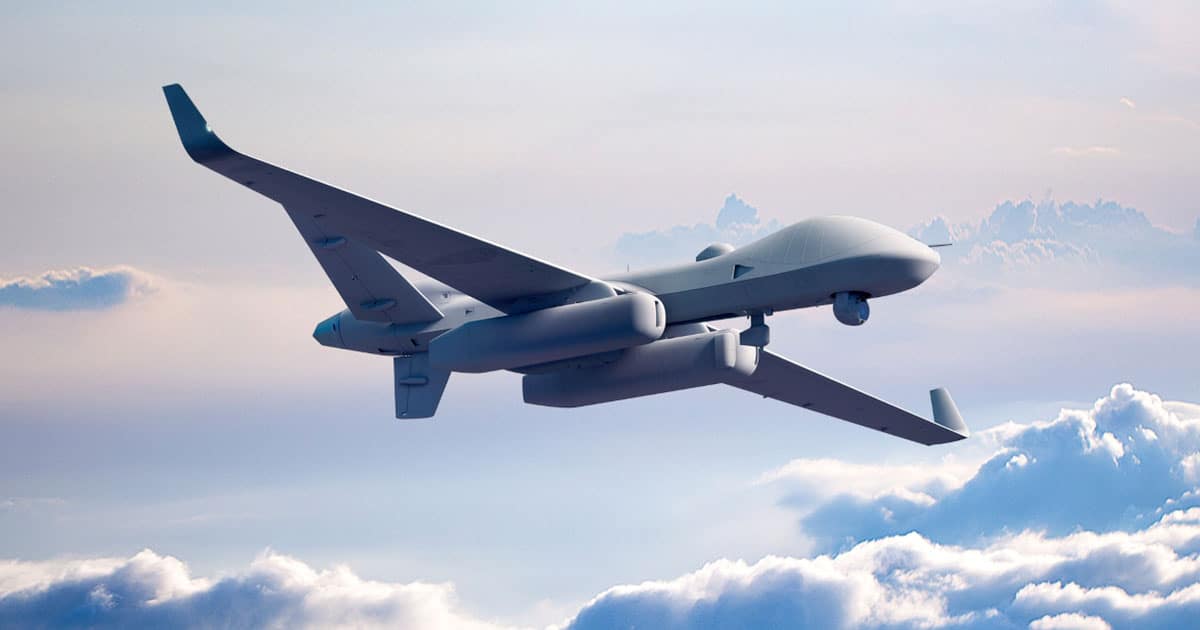
https://news.defcros.com/ga-asi-and-saab-to-showcase-aewc-capabilities-on-mq-9b-in-2026/
https://www.navalnews.com/naval-news/2025/11/ga-asi-and-saab-will-demonstrate-aewc-on-mq-9b-in-2026/
Last edited:
zebra159357
I really should change my personal text
- Joined
- 30 November 2018
- Messages
- 155
- Reaction score
- 539
https://breakingdefense.com/2026/04...program-with-competition-for-first-increment/
We’ve awarded the base contract for the new space-based airborne moving target indication capability, and are competing a contract for the first operational increment,” Meink said
“There’s not a question anymore about whether or not the technology works. We know it does. Now it’s just, how do we build it affordably and get it on orbit and make sure we have competition going forward.”
We’ve awarded the base contract for the new space-based airborne moving target indication capability, and are competing a contract for the first operational increment,” Meink said
“There’s not a question anymore about whether or not the technology works. We know it does. Now it’s just, how do we build it affordably and get it on orbit and make sure we have competition going forward.”

- Joined
- 29 November 2010
- Messages
- 2,275
- Reaction score
- 5,186
jsport
what do you know about surfing Major? you're from-
- Joined
- 27 July 2011
- Messages
- 8,596
- Reaction score
- 6,898
IMHO manned w analysts is a better option while uas based may have some used cases.GA-ASI and Saab Will Demonstrate AEW&C on MQ-9B in 2026:
https://news.defcros.com/ga-asi-and-saab-to-showcase-aewc-capabilities-on-mq-9b-in-2026/
https://www.navalnews.com/naval-news/2025/11/ga-asi-and-saab-will-demonstrate-aewc-on-mq-9b-in-2026/
https://aviationweek.com/defense/aircraft-propulsion/seven-e-7as-progress-amid-uncertainty-usaf-says
Maybe all we need to wait for is the midterm?
Maybe all we need to wait for is the midterm?
Midterms won't make much of a difference to the budget proposals. This defence budget was the first for Trump 2 where a FYDP was required to be submitted. Don't expect that to change too much. What is far more likely is a CR and that halts the defence budget and any money Congress tries to apply to the previous years allocations.https://aviationweek.com/defense/aircraft-propulsion/seven-e-7as-progress-amid-uncertainty-usaf-says
Maybe all we need to wait for is the midterm?

- Joined
- 19 July 2016
- Messages
- 4,814
- Reaction score
- 4,273
OK, Long story short.
On/off/on/off? Rainbow warrior versus the Magic roundabout?
On/off/on/off? Rainbow warrior versus the Magic roundabout?
zebra159357
I really should change my personal text
- Joined
- 30 November 2018
- Messages
- 155
- Reaction score
- 539
U.S. Space Force Accelerates Fielding Space Based Airborne Target Indicator Program
https://www.ssc.spaceforce.mil/News...g-space-based-airborne-target-indicator-progrhttps://breakingdefense.com/2026/05...e-contract-to-detect-airborne-moving-targets/
Last edited:
zebra159357
I really should change my personal text
- Joined
- 30 November 2018
- Messages
- 155
- Reaction score
- 539
Space Force Eyes ‘Usable’ Airborne Target Tracking by ’28, More Capability to Follow
Col. Ryan Frazier, the Space Force’s portfolio acquisition executive for space-based sensing and targeting, said in an interview with Air & Space Forces Magazine that the 2028 architecture will be a first step toward an on-orbit targeting capability but not a full solution.“Is it everything the joint force requires? I think that will probably extend beyond ‘28,” Frazier said. “But we are going to have capability they don’t have today. … We’ll be able to do things that are high-value or value-added. We won’t be able to do them everywhere all the time.”
“We’ll compete for different space sensors, different types of sensors,” Frazier said. “We’ll go buy and populate part of the space layer, and then we will do another competition and continue to build out the space layer and then add some complementary phenomenologies to it.”
His team is also working to mature the tasking, scheduling, and processing systems that will sift through data and deliver it to battle management systems. That requires close coordination between software developers and battle managers across the military services who will use the data and incorporate it in their own workflows.
These efforts, Frazier said, have a dual focus of fielding initial capability and overcoming some of the remaining technological hurdles to conducting airborne target tracking from space.
But as the service looks to field these systems more widely, Frazier said, there’s work to be done to improve some of the technology, particularly the ability to distinguish between different types of fast-moving targets and reduce the time it takes to process, analyze, and transmit data from space-based sensors.
“You don’t have a lot of time to be able to get that data to the decision maker or shooter,” he said. “Photons only go so fast.”
There’s also the orchestration challenge that comes with managing such a large fleet of sensors and prioritizing targeting needs across the combatant commands.
The program has efforts underway to work through some of these challenges, Frazier said, some of which focus on ground processing algorithms and building orchestration software.
“We have some good concepts,” he said. “We just have to build the software and the tools and the workflows and the concepts of operation to do that.”
The complexity of the architecture does introduce some schedule and development risk, but Frazier said he thinks the service’s approach—which is to focus on a smaller subset of capabilities, make sure they work, and then move on to the next area—will help it manage that risk.
“When you’re iteratively developing and you’re doing it in chunks, you also kind of manage the risk in smaller chunks,” he said.
Frazier noted that the Space-Based AMTI capability the Space Force is developing isn’t meant to replace other platforms. Instead, he said, the intent is to be additive, bringing a new, globally responsive architecture that’s different from what the department does today.
“That doesn’t mean it’s going to replace or be better than everything that we have today at particular use cases or missions,” he said. “I look at space-based sensing and airborne sensing as very complementary and layered. Working together will provide the joint force the most optimal warfighting effects.”
The UK's E-7 programme (production phase) is now complete.
View: https://x.com/i/status/2087463019370475760
View: https://x.com/i/status/2087463019370475760
Similar threads
-

-

-
 RAAF Wedgetail AEW&C proposals and early designs
- Started by Triton
- Replies: 2
-
 USAF rethinks future fleet, ponders clean-sheet 4.5-generation fighter
- Started by DWG
- Replies: 2
-