US Army - Lockheed Martin Long Range Precision Fires (LRPF)

I believe it had to do with the INF treaty at the time.

But, now we have the PrSM , so there's no demand to develop an ATACMS ER.

I don't have anything to cite, just my .02
They might consider it if they get serious about payloads as they grow into anti ship roles. PrSM is basically a 500 km ranged GMLRS. An ATACMS diameter, longer PrSM (using full length of the CAML Heavy launcher) might be a good idea if it can sling a 500 lb class anti-ship warhead.
 
They might consider it if they get serious about payloads as they grow into anti ship roles. PrSM is basically a 500 km ranged GMLRS. An ATACMS diameter, longer PrSM (using full length of the CAML Heavy launcher) might be a good idea if it can sling a 500 lb class anti-ship warhead.
The point of a lightweight warhead on a missile like PrSM is to get a firepower kill against radars or VLS. You can do that with very small warheads. The smaller warhead also allows the PrSM to double salvo size, which could more than double the chance of actually getting a hit. Unless you are counting on progressive flooding or fire, actually sinking a modern surface combatant is going to take multiple 2,000 lbs bombs.
 
The point of a lightweight warhead on a missile like PrSM is to get a firepower kill against radars or VLS. You can do that with very small warheads. The smaller warhead also allows the PrSM to double salvo size, which could more than double the chance of actually getting a hit. Unless you are counting on progressive flooding or fire, actually sinking a modern surface combatant is going to take multiple 2,000 lbs bombs.
That was when the only launchers you had were HIMARS and M270 with very specific/tight pod length and diameter requirements. With CAML and CAML H, not to mention the current MRC you no longer have that restriction. The standard CAML should be able to accomodate greater length, and already doubles the pod count, while the palletized CAML H should be able to absorb significantly larger payloads.

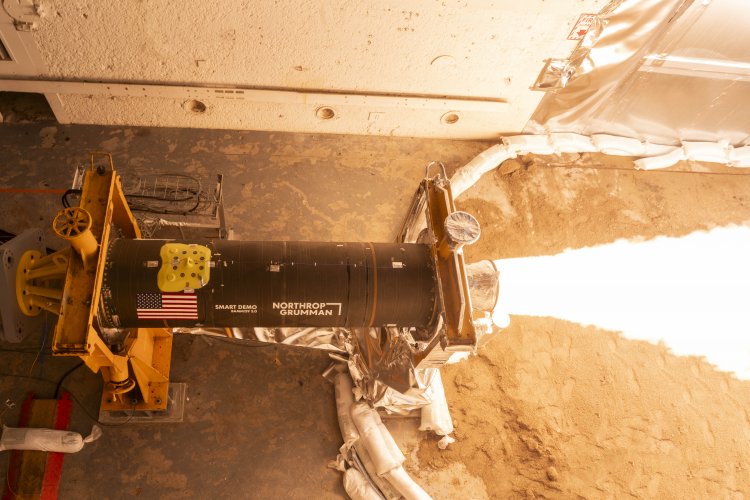
Makes you wonder what could be built around the 22 and 29" diameter SRM's NG/OATK has recently prototyped.
 

Attachments

  • Northrop Grumman’s SMART Demo Tests Second Advanced Solid Rocket Motor and Achieves Successful...jpg
    Northrop Grumman’s SMART Demo Tests Second Advanced Solid Rocket Motor and Achieves Successful...jpg
    3.1 MB · Views: 75
Last edited:
They might consider it if they get serious about payloads as they grow into anti ship roles. PrSM is basically a 500 km ranged GMLRS. An ATACMS diameter, longer PrSM (using full length of the CAML Heavy launcher) might be a good idea if it can sling a 500 lb class anti-ship warhead.
Personally I'd love to keep the ATACMS line going for an extended period.
 
View: https://x.com/LMNews/status/2086894153334493254?s=20


Lockheed Martin Announces Strigo™ and New Product Center of Missile Technology Solutions to Support the Arsenal of Freedom
https://news.lockheedmartin.com/202...y-Solutions-to-Support-the-Arsenal-of-Freedom
WHAT'S NEW

  • Established less than two years ago, the Strigo Product Center has already advanced multiple concepts from initial design through successful testing, demonstrating a faster path from innovation to operational capability.
  • Specifically, technologies developed through Lockheed Martin's Strigo family of solutions have informed aspects of the PrSM Increment 2 seeker package.
 
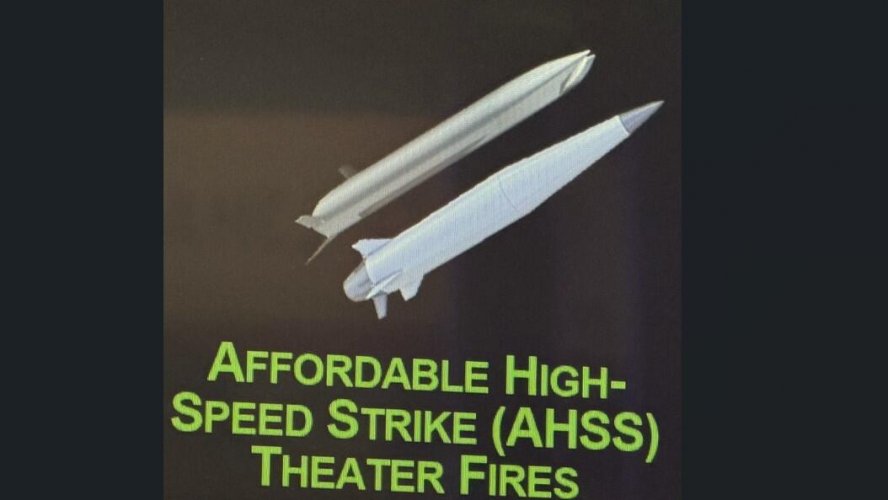
"“AHSS is an entirely new missile,” a spokesperson for the Army’s Combat Capabilities Development Command (DEVCOM) tells Aviation Week.

The Army wants the AHSS missile to offer more range than the 1,000-km-plus (621.3-mi.) reach of the Precision Strike Missile Increment 4, of which the contract was stripped from Lockheed and reopened to competitive bidding earlier this year.

Army officials in late 2024 revealed plans to develop a PRSM Increment 5 with greater range and the ability to launch from an autonomous vehicle. But the DEVCOM spokesperson clarified that AHSS represents a different concept, including a requirement to be launched from a crewed HIMARS."

Almost sounds like, "same requirement as PRSM Increment 5 but with a different name".

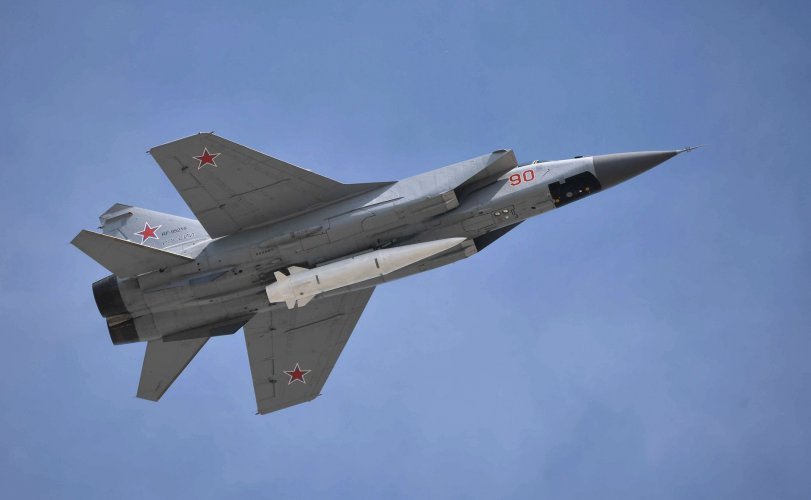
The bottom one could be mistaken for Kinzhal.
 

Attachments

  • ahss.jpg
    ahss.jpg
    39.6 KB · Views: 35
  • 2018_Moscow_Victory_Day_Parade_66.jpg
    2018_Moscow_Victory_Day_Parade_66.jpg
    164.9 KB · Views: 66
Going to need a longer missile for >1,000km, don't know how it's going to be launched from a crewed HIMARS unless the launch system is getting elongated, or they go back to 610mm missiles but with the same 200lb warhead.
 
Last edited:
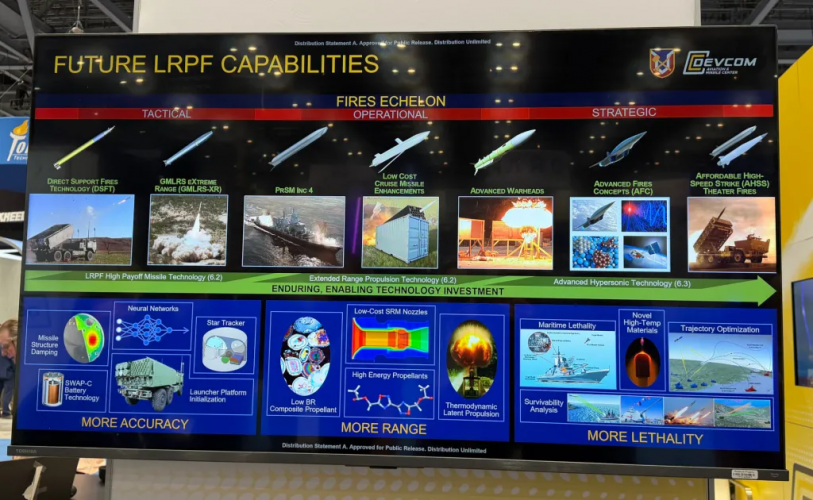
Interesting that the Kodiak container can fit a dozen PrSM sized missiles Z I assume it is a 40 foot TEU size.
 
I like the GMLRS-XR. If they can get a 50+% range increase over the GMLRS-ER in a 4 x pod configuration then that would still be a pretty neat capability for CAML that can house two pods. Especially if it is equipped with a seeker for moving or maritime targets.
 
I like the GMLRS-XR. If they can get a 50+% range increase over the GMLRS-ER in a 4 x pod configuration then that would still be a pretty neat capability for CAML that can house two pods. Especially if it is equipped with a seeker for moving or maritime targets.
They'd need to either go to 300mm rockets or VFDR for that though I suspect.
 
That graph, very nice btw, however, does not take into account Castelion's Blackbeard missile.
 
Seems to be a real diversity of new systems being developed I wonder if any are from shortcomings in the arsenal from the most recent ME conflict, “hey it would have been advantageous to hit that target 1500km away fast without needing a manned aircraft”
 
Seems to be a real diversity of new systems being developed I wonder if any are from shortcomings in the arsenal from the most recent ME conflict, “hey it would have been advantageous to hit that target 1500km away fast without needing a manned aircraft”

The LRPF portfolio has been evolving long before that. But range of options getting funding was rather limited by budget constraints and program timelines. With a major boost in weapon acuqisition portfolios promised (but not yet funded), the program offices are bringing out some of those things to industry to see if they can get ahead of formal efforts. But if the ramp on existing, known and funded efforts, becomes a fiscal imposibility like it is turning out to be based on how reconciliation 3/4 are going then I highly doubt the service will begin developing even more diverse weapons rather than consolidate funding towards buying what it already has in the fire.
 
Seems to be a real diversity of new systems being developed I wonder if any are from shortcomings in the arsenal from the most recent ME conflict, “hey it would have been advantageous to hit that target 1500km away fast without needing a manned aircraft”
And for less than the price of a Dark Eagle.
 
Yes cheaper but also not a completely different system. Some of these self claimed 'low cost hypersonics' are nothing more than GMLRS-ER class rockets stuffed with puny warheads (some in the sub 100 lbs class IIRC) to get the range and speed needed to justify that label. There are probably other, more smarter, ways to go after achieving affordability.
 
PrSM Incr1 is ~200 lbs /100 kg, which is pretty low already. On the other hand, if the primary target set is mobile and relocatable targets (TEL, radar, command vehicle/tent, etc), even 100# warheads will probably work given sufficient accuracy. Fixed hardened targets are more of an Air Force problem. What will cause issues will be high value targets that borrow some degree of hardening from local civilian structures, and I think this one reason ATACMs production is being expanded - because while the range is short, it is easily the biggest warhead of all the guided rocket/missile system the army is looking at.

I would expect a new longer ranged, large warhead system to be developed for CAML-H launchers eventually.
 
PrSM is optimized for its targets. It’s a 550 km ranged GMLRS. Not sure what other in development “hypersonic” missiles in the GMLRS-PrSM class but with 50 lbs warheads are optimized for.
 
PrSM is optimized for its targets. It’s a 550 km ranged GMLRS. Not sure what other in development “hypersonic” missiles in the GMLRS-PrSM class but with 50 lbs warheads are optimized for.
I think the AHSS will be an ATACMS-sized missile if it is to fit a manned-GMLRS launcher and do 1000+km. But it will still have a fairly limited warhead size (probably same as PrSM), unless they go with a VFDR design, or some kind of multi-pulse engine, and/or an MET-like trajectory, going exo-atmospheric for a range increase and maybe using a separate MaRV for re-entry. Then they could maybe manage 500-650lb of warhead.

I'd honestly prefer a bigger warhead for such a long-range missile because you can't always guarantee a direct hit with jamming unless they're using some kind of 100% jam-proof guidance, like an amazing INS, which doesn't sound cheap.
 
Who knows what the Army is thinking about here. The Army already has a 1,000 km ranged PrSM warhead equipped missile in the PrSM Inc 4. It also has a variant of that requirement in development under Blackbeard-GL that is expected to have similar range but with a 50 lbs warhead while slapping on a 'hypersonic' label. Not sure what need the AHSS is filling but a conventional, medium (500 lbs IMO) warhead MRBM would be nice to have. For both fixed and moving maritime targets. That could fill those CAML launchers nicely and be far more optimized than the Army buying $4+ Million SM-6 missiles.
 
Who knows what the Army is thinking about here. The Army already has a 1,000 km ranged PrSM warhead equipped missile in the PrSM Inc 4. It also has a variant of that requirement in development under Blackbeard-GL that is expected to have similar range but with a 50 lbs warhead while slapping on a 'hypersonic' label. Not sure what need the AHSS is filling but a conventional, medium (500 lbs IMO) warhead MRBM would be nice to have. For both fixed and moving maritime targets. That could fill those CAML launchers nicely and be far more optimized than the Army buying $4+ Million SM-6 missiles.
Just make a bigger version of GMLRS and resist the urge to add bells and whistles. Maybe make it 2-stage.
 
Just make a bigger version of GMLRS and resist the urge to add bells and whistles. Maybe make it 2-stage.
Don't think you need a two-stage booster, a single stage into an exo-atmospheric MET trajectory followed by an RV with some manoeuvring ability would make for a big increase in range. At the moment PrSM is making it to 650km inside the atmosphere, massive improvements in range to be had by going exo-atmospheric on the ascent.
 
PrSM Incr1 is ~200 lbs /100 kg, which is pretty low already. On the other hand, if the primary target set is mobile and relocatable targets (TEL, radar, command vehicle/tent, etc), even 100# warheads will probably work given sufficient accuracy.
Remember, SDB1 has a 100lb warhead. And it was used on a whole lot of relatively soft and low-mobility targets before SDB2 happened.


Don't think you need a two-stage booster, a single stage into an exo-atmospheric MET trajectory followed by an RV with some manoeuvring ability would make for a big increase in range. At the moment PrSM is making it to 650km inside the atmosphere, massive improvements in range to be had by going exo-atmospheric on the ascent.
That's a pretty big booster to exceed 100km altitude.
 
That's a pretty big booster to exceed 100km altitude.
The existing ATACMS reaches 50km on a semi-ballistic trajectory, meaning it could go higher. PrSM does much the same but with a 650km range and 457mm diameter. MET apogee for 650km is 150km, meaning that getting to 150km would actually be easier than what it does and MET range would be >650km. A modern 610mm (81% c/s area increase) missile should be able to get much higher. MET apogee for 1000km is 250km.
 
Last edited:
See above. PrSM is making 650km on a non-MET trajectory using a 457mm booster. The MET trajectory is the easiest remember.
You're not talking about MET flight. Not a more or less parabolic flight path.

You're talking about punching up out of the atmosphere and then flying downrange. Steep climb, relatively flat flight time above 100km, and then a slow drop as gravity takes over and you start gliding.
 
You're not talking about MET flight. Not a more or less parabolic flight path.
Err... I am though. If a missile (PrSM 457mm) is reaching 650km in atmosphere by not following an MET path (which for that range is a 150km apogee), then clearly it can go further with an MET trajectory, hence the definition of MET.
You're talking about punching up out of the atmosphere and then flying downrange. Steep climb, relatively flat flight time above 100km, and then a slow drop as gravity takes over and you start gliding.
Err... no. Was talking about MET, the rest you seem to have introduced from nowhere.
 
Where are we getting the 650 km range for PrSM Inc 1? It has not demonstrated anything like that as far as I'm aware.
 
I remember it being mentioned in some article.
Ignore that garbage. Ask/seek what's been demonstrated and where the program currently thinks it is. The last I heard from the LRPF head at the time (Rafferty) was that the Army estimates it around 550 km. I haven't seen a 100 km upward revision since. Threshold and objective range metrics apply to a program not the weapon system in production. There you have current estimates for the range and hard demonstrated performance which the program officially lists as '>500km'
 
Last edited:

Similar threads

Back
Top Bottom