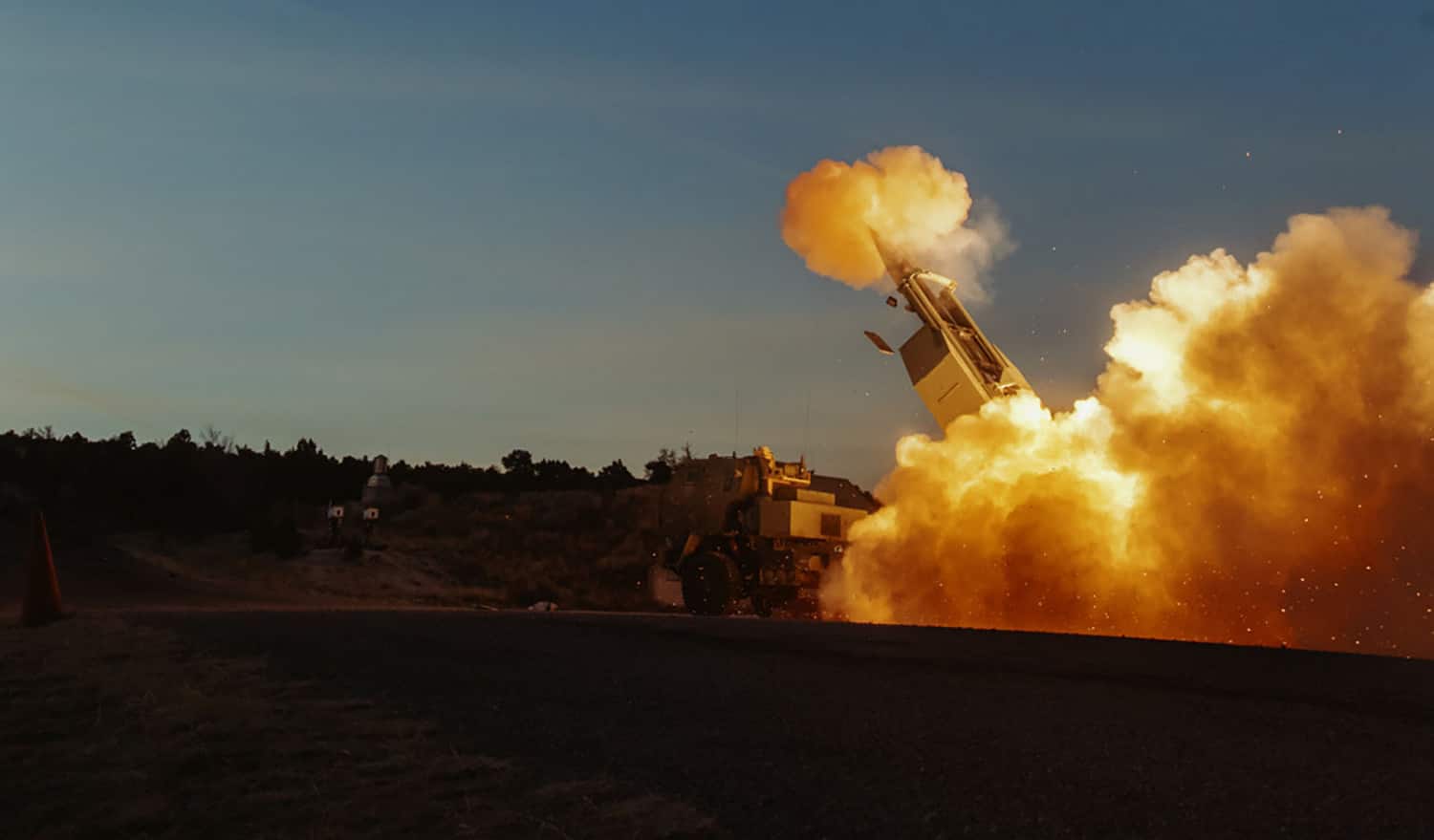
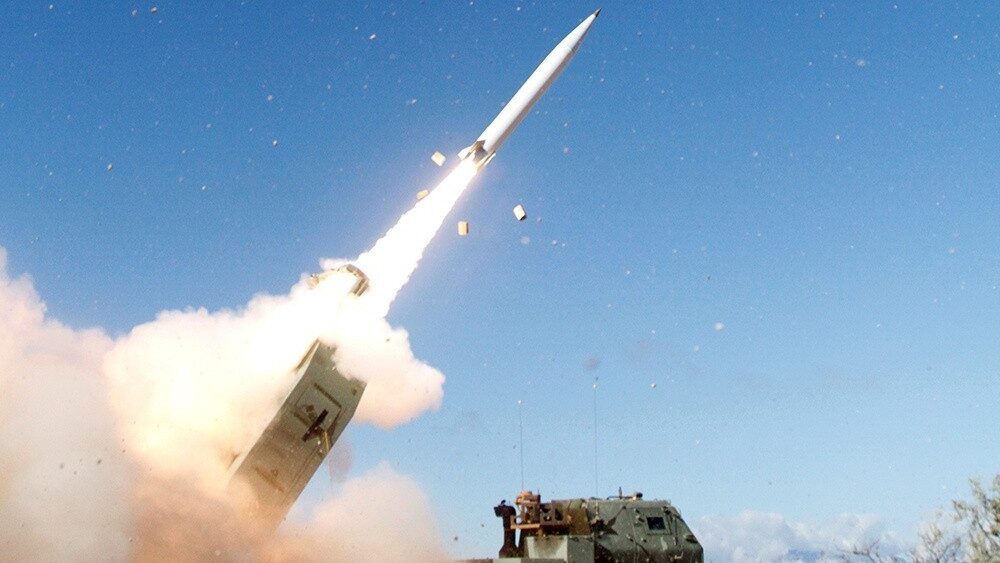
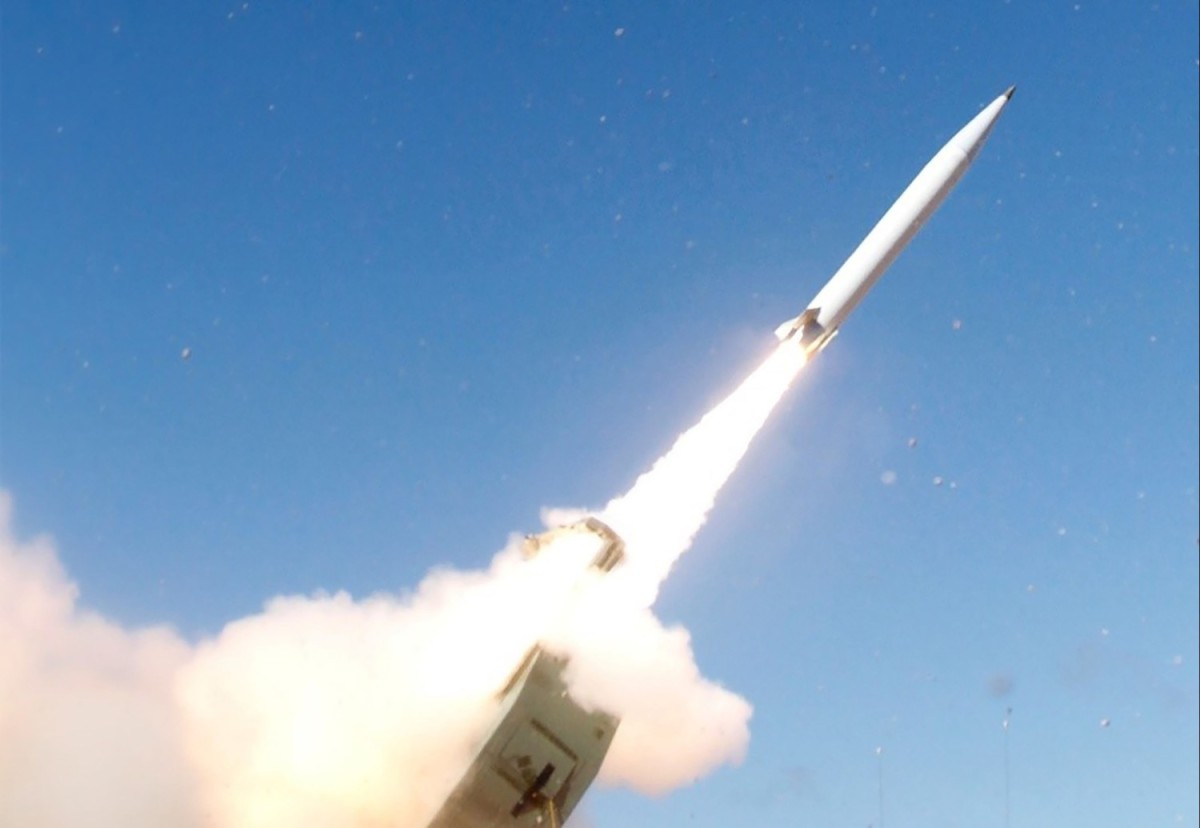
US Army - Lockheed Martin Long Range Precision Fires (LRPF)

I wonder how much of that $8 million is motor cost and if they could get the price down by lowering structural requirements because of the less demanding flight profile.

I would assume a lot of cost savings could be had by simply removing all the electronics required for SAM, ABM, and network NIFCA purposes. Using SM-6 for a ground target is kinda like using a Porche SUV for a demolition derby.
 
You could sacrifice range for payload depending on the purpose, targeted long range strike or assault breaking.

Sure, but at some point can’t you just individually target a 227mm rocket? Or the follow on? The PrSM platform seems geared for tactical ballistic missile delivery on a small delivery truck sized platform. But I do not think that scales well to sub munitions.
 
I wonder how much of that $8 million is motor cost and if they could get the price down by lowering structural requirements because of the less demanding flight profile.

I would think that the most expensive part of the SM-6 would be its' GCU electronics.
 
Last edited:
By rule of thumb for cost : missile > rocket > artillery shell.
It would be cheaper to mount a smart artillery shell on a rocket. Preferable a airbreathing hypersonic shell. That would cut cost a lot. The arty/cannon guys who need it the most would bnefit the most, too.
 
By rule of thumb for cost : missile > rocket > artillery shell.
It would be cheaper to mount a smart artillery shell on a rocket. Preferable a airbreathing hypersonic shell. That would cut cost a lot. The arty/cannon guys who need it the most would bnefit the most, too.
 

It would be interesting to see a variant of GLSDB that uses the rocket-motor and tail-control section of an Increment 1 PrSM as a launch booster for the SDB and at 17" in diameter you could probably pack four of them inside a clam-shell fairing that has the same profile as a norm PrSM.
 
It would be interesting to see a variant of GLSDB that uses the rocket-motor and tail-control section of an Increment 1 PrSM as a launch booster for the SDB and at 17" in diameter you could probably pack four of them inside a clam-shell fairing that has the same profile as a norm PrSM.
You could but it would weigh 1,000lb, which is 5x standard warhead size. Possible but with reduced range.
 
You could but it would weigh 1,000lb, which is 5x standard warhead size.

True, however:

Possible but with reduced range.

The PrSM Inc.1 has a range of 310 miles while the SDBI has a range 69 miles if air-launched 93 miles if launched as a GLSDB while the SDBII has an air launched range of 69 miles, I have no doubt that such a proposed load out would be of similar range. A single SDB as a payload would fly considerably further and I wonder if a GBU-62 JDAM-ER could be fitted onto a PrSM rocket-motor/tail-section assembly if encapsulated?
 
Last edited:
I wonder how much of that $8 million is motor cost and if they could get the price down by lowering structural requirements because of the less demanding flight profile.
From what I can tell, its due to the new rocket motor, faster speed pushing to newer materials etc. The baseline SM-6 is 3.5 Million or roughly double the cost of PrSM so if they took the expensive guidance section requirements out that would probably save some weight. Right now, the TLAM shooting MRIC offers very little in terms of survivable time sensitive strike capability and has a huge footprint that is going to be a problem in the Pacific (General Flynn highlighted this giving feedback from recent deployments last year). If it can launch a 1000-1500 km MRBM that might make it a lot more useful. Alternatively, they could also launch cheaper payloads from the LRHW launchers and cancel MRIC altogether.
 
Last edited:
The LTRs were always struck me as transparently intended as anti landing forces to deploy to the PI in general and Batanes in particular. Their equipment is lightweight but if they landed there before the PRC, the combination of NSM and MRIC along with ~9 very mobile, if lightly armed reinforced platoons would make an air mobile or amphibious landing almost impossible without a lot of preparation fires.
 
As this seems to be the primary thread for Typhon Mid-Range Capability System aka Smurf : there seems to be intentions with Tomahawks as armament. While this is good development i hope this does not stop the investment and in the end a buy of an european system.
View: https://x.com/Leopard24theWin/status/1944856456630854011
View: https://x.com/john_a_ridge/status/1944861421730427323
 
View: https://www.youtube.com/watch?v=_-wfo-TLzvU

 
From back in June:
LE BOURGET—Lockheed Martin’s efforts to expand munitions production into Europe may still take some time but are benefitting from a “sense of urgency” among governments that should help to bring about the necessary agreements, says Tim Cahill, president of the company’s Missiles and Fire Control unit.

The U.S. defense giant is in talks with Rheinmetall for a teaming arrangement that could see production and assembly of weapons such as the Guided Multiple Launch Rocket System in Europe.

Cahill said the recent disclosure of talks with Rheinmetall is not coming at the expense of a prior commitment to do weapons work in Poland. “There is enough demand that we can go out there and build partnerships in multiple places.”

Getting the agreements into place is not easy, since it involves multiple governments. But Cahill said the environment is supportive and the agreements could be locked in faster than normal.

As part of the deal with Rheinmetall, Lockheed Martin is exploring whether to transition production of the Army Tactical Missile System (Atacms) to Germany, as focus is directed in the U.S. more toward its Precision Strike Missile (PrSM) work.

“There still remains significant demand for Atacms. So yes, this would be a candidate for us to potentially take into Europe, set up a production line,” Cahill said. The product would be Europeanized and could evolve, he added, assuming the U.S. government supports the initiative. “They have not given us approval, but they have not said ‘no,'" he said.

Lockheed Martin is in low-rate production for the initial tranche of the PrSM Increment 1 and ramping up to an output of 400 units per year.

The company also is working with the U.S. Army to accelerate introduction of PrSM Increment 2, which features a seeker to engage ships and other moving targets, Cahill said. Test flights are due next year.

Talks also are taking place with the service to speed up flight testing of the roughly 1,000-km (620-mi.)-range PrSM 4 that remains in competition between Lockheed Martin and RTX teamed with Northrop Grumman.

The Army also has drawn up plans for a larger PrSM Increment 5, though development has not formally started.

 
The Australians have just sent a message to the PRC by firing a PrSM during the 2025 Talisman Sabre exercise, from Defense Updates:


In a historic first, the Australian Army test-fired a U.S.-made Precision Strike Missile (PrSM) during Exercise Talisman Sabre 2025—two years ahead of schedule. This powerful display of long-range strike capability isn't just a military milestone—it's a clear strategic signal to China as tensions rise in the Indo-Pacific.​
Conducted jointly with the U.S. Army, the test marks a major step in Australia's defense modernization and deepens AUKUS military cooperation. The PrSM, a next-generation replacement for ATACMS, offers faster, farther, and deadlier precision strikes—capable of hitting targets up to 499 km away.​
With China’s massive missile buildup and the collapse of the INF Treaty, the PrSM gives the U.S. and its allies a mobile, survivable, and credible counterstrike capability in the region.​
Chapters:
0:00 TITLE
00:11 INTRODUCTION
01:14 SPONSORSHIP - NordVPN
01:48 THE TEST
02:55 CAPABILITIES
06:07 ANALYSIS
 
WASHINGTON — The Army is finalizing the requirements and funding for taking over development of an air defense, hypervelocity cannon, according to a three-star general. And if plans come together, industry could have several opportunities to compete for a piece of the system.

After the Navy ended work on BAE Systems’s Hypervelocity Projectile in 2021, the Pentagon’s Strategic Capabilities Office (SCO) picked it up under the Multi-Domain Artillery Cannon System program — a 155mm self-propelled artillery system with the Hypervelocity Projectiles. The effort is in the process of being handed over to the Army where service officials are finalizing requirements and calling the weapon the Cannon-Based Air Defense initiative, according to Lt. Gen. Robert Rasch, who heads up the service’s Rapid Capabilities and Critical Technologies Office (RCCTO).
 
understand C-130 portability is an issue as the Multi-Domain Artillery Cannon System truck fits on a Herc while the other 155mm SPH program competitors are too heavy..
 

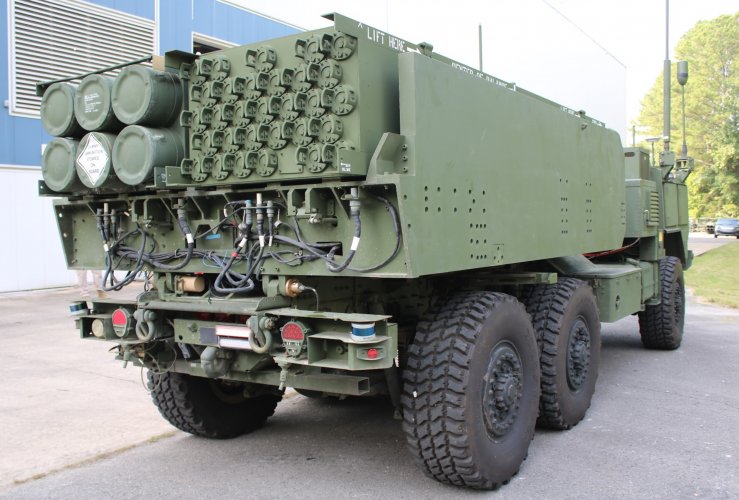
TLDR: Typhon is physically too large because of its dependence on the elevating Mk 41 cells, so the Army wants something it can fit on something the size of CAML-H, the M1075 Palletized Loading System, or similar, while still launching Tomahawk, PAC-3, and possibly Standard SM-6.
 

Similar threads

Back
Top Bottom