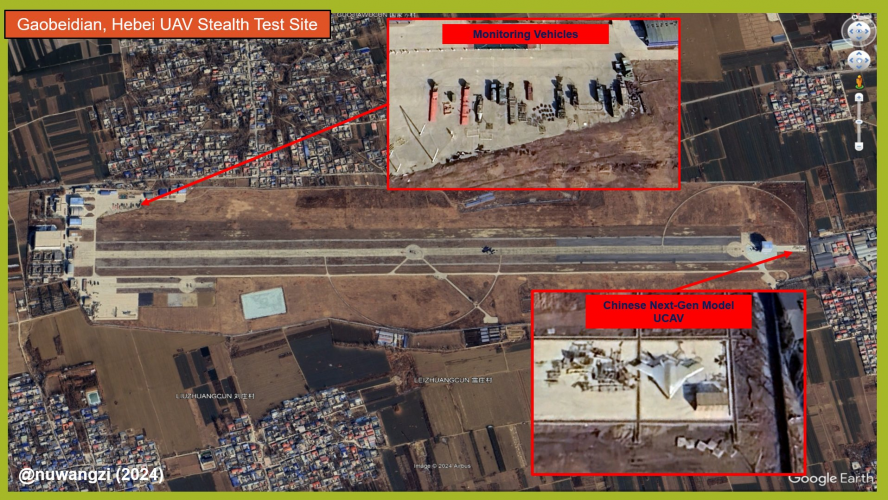
There is no need to make a VLO platform an awac that is built to provide persistent radar coverage in the sky.
And I think China has already an AWAC UAV with the WZ-9
It could be more survival tho, even if a missile is launched, once it detects the missile( even a completely passive ARM will be detected by a awacs radar at quite a distance away), it can shut off it's radar and other emissions and with it's vlo it will then be much harder for a missile to still target it compared to a large airliner/ transport aircraft based awacs whose rcs is big enough that you can track it at 400+kms away with modern and powerful radars and guide a missile towards it.
And all nations are working on providing increasingly longer range detection and tracking and making missiles with increasingly longer ranges to be guided to the target, Targeting awacs is becoming increasingly feasible.
 
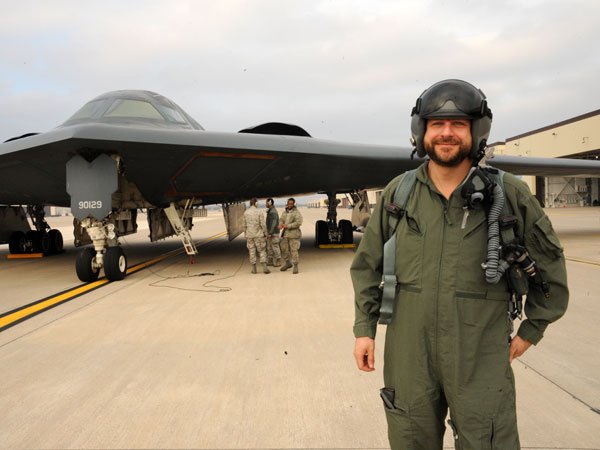
Indeed it's a big boy.

View attachment 774439
Tho a question, can we put a big or long enough radar in it to use it as an unmanned awacs?
I'd imagine it instead having a long side mounted radar for AEWC purposes instead could have a long belly mounted radar for ground surveillance like the E-8 JSTARS. It could however also have low band leading edge radars, a large nose radar and even a rear facing radar if they wanted this to also act as a sensor node. Micro self defense missile could also be used to increase survivability in contested airspace.
 
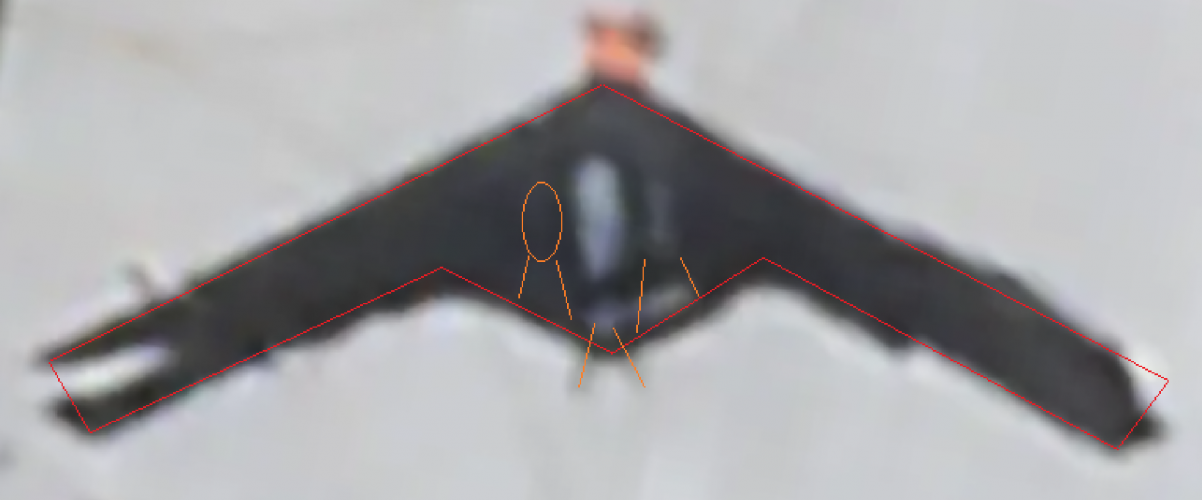
Frustrating thing about low quality satellite photo is that you can hardly tell which parts are the actual airframe and which are shadows…
... on the photo which is seen by the public.

The photo quality which is shown only behind closed doors ...?
 
I'd imagine it instead having a long side mounted radar for AEWC purposes instead could have a long belly mounted radar for ground surveillance like the E-8 JSTARS. It could however also have low band leading edge radars, a large nose radar and even a rear facing radar if they wanted this to also act as a sensor node. Micro self defense missile could also be used to increase survivability in contested airspace.
JSTARS role is almost confirmed to me, as it most likely will be used to target US carrier groups, Allied naval forces and US&allied ground forces, and provide targets just like JSTARS and ISR platforms , while also being multipurpose as a relay node, signit, probably comjam too like any other modern system.

Similar to what is envisioned with RQ-180.
 
Why uh are there tails
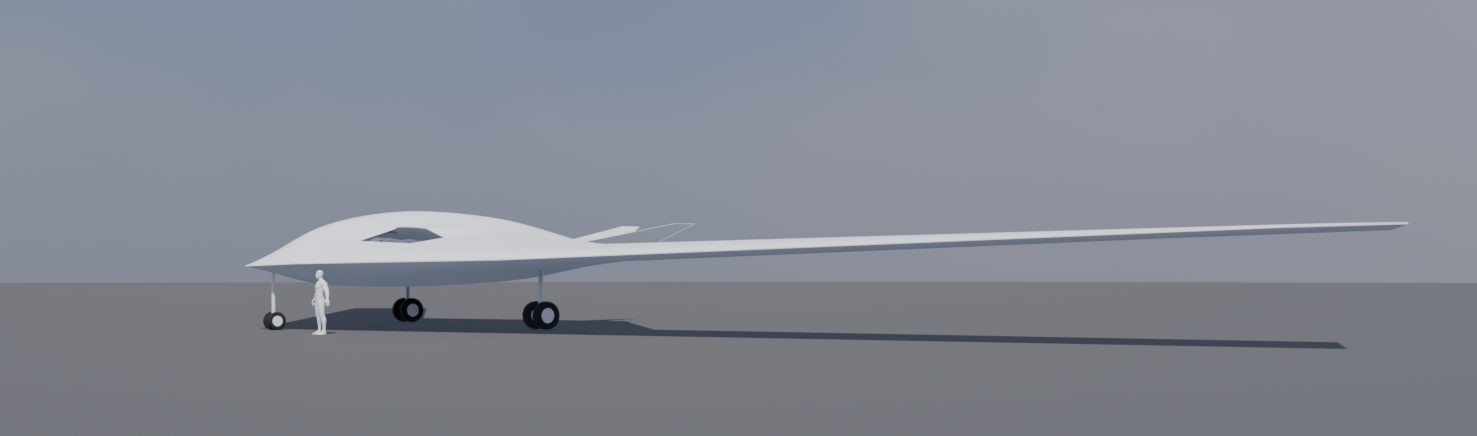
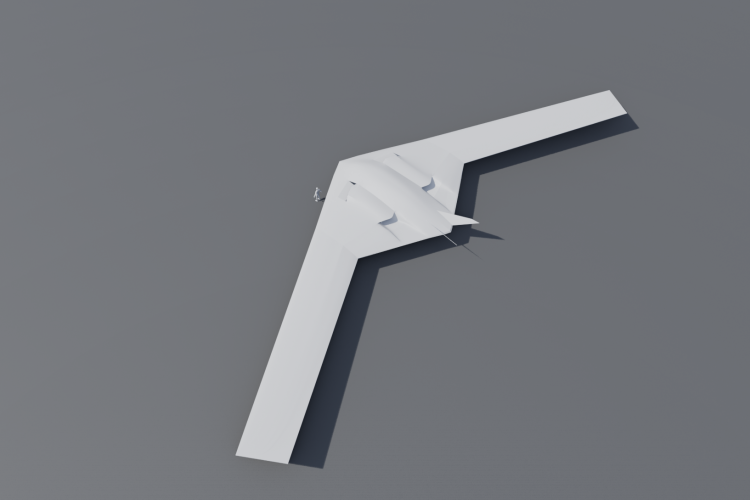
In the blurry satellite imagery you can see two things on the back sticking out from the rest of the aircraft. Tails have also been shown on a previous model spotted by satellites. I just modelled them in for good measure.
1750217019669.png
1750217057562.png
 
The Lockheed ATB proposal had tails. They make the flight control laws a lot simpler to work out.
It also ruins all aspect stealth, adds drag, complexity and weight. Also, that proposal was from the 80s, by this point there's absolutely no reason to add tails to flying wings unless you want high maneuverability like for UCAVs/loyal wingman which this thing is definitely not. It's likely it's something else under the aircraft cause there's no chance this thing has vertical tails.
 
It also ruins all aspect stealth, adds drag, complexity and weight. Also, that proposal was from the 80s, by this point there's absolutely no reason to add tails to flying wings unless you want high maneuverability like for UCAVs/loyal wingman which this thing is definitely not. It's likely it's something else under the aircraft cause there's no chance this thing has vertical tails.

For a huge flying wing like this, if it is flying very high, very small vertical tails could be a useful safeguard and offer a bit more control.
"Absolutely no reason except for high maneuverability" is a heck of a stretch.

At this stage I wouldn't rule it out as a possibility.
 

Similar threads

Back
Top Bottom