TSARb
ACCESS: Confidential
- Joined
- 8 March 2011
- Messages
- 122
- Reaction score
- 324
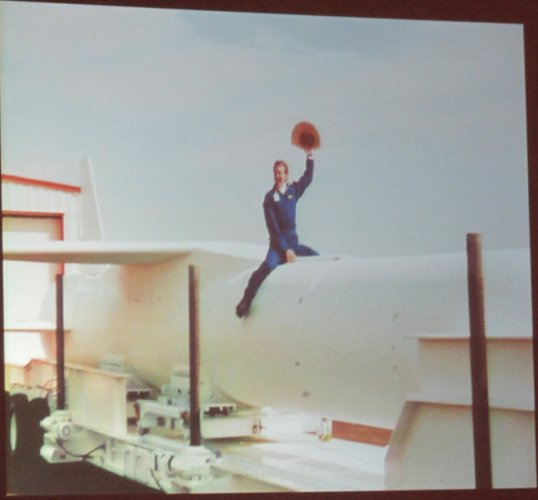
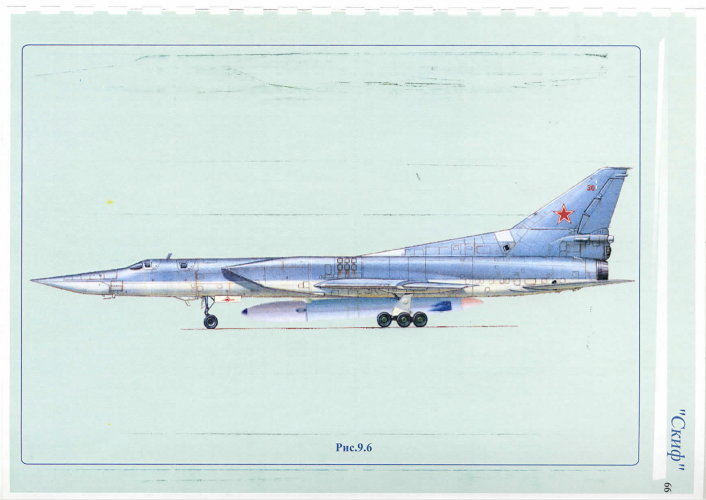
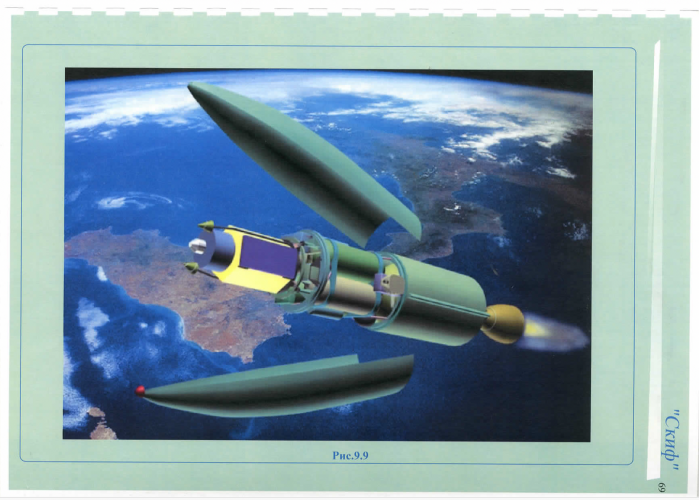
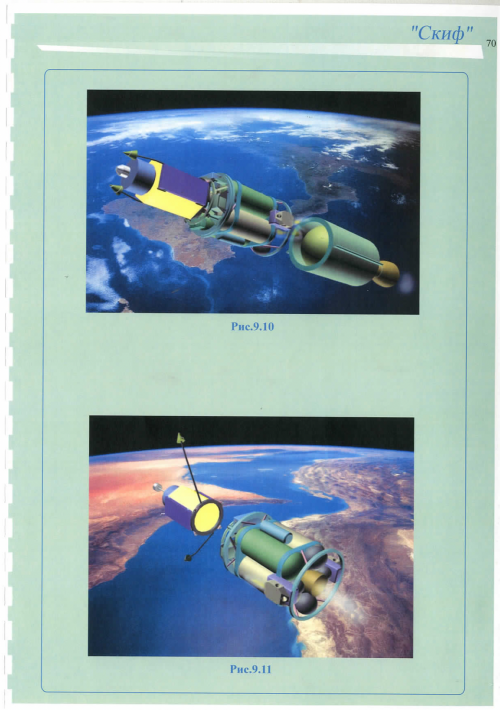
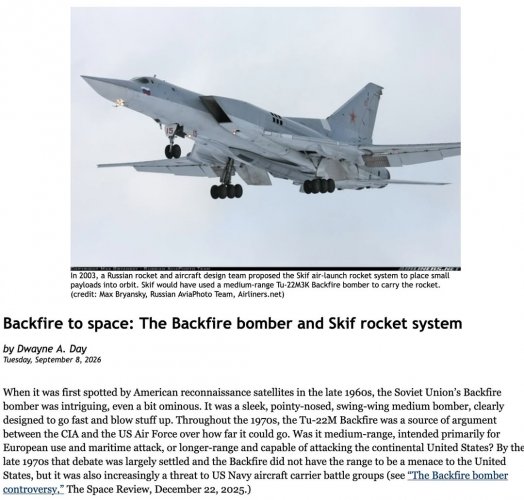
The Skif air-launched space system, based on the Tu-22M3 bomber, was conceived as a commercial launch vehicle for delivering payloads into low-Earth orbit.
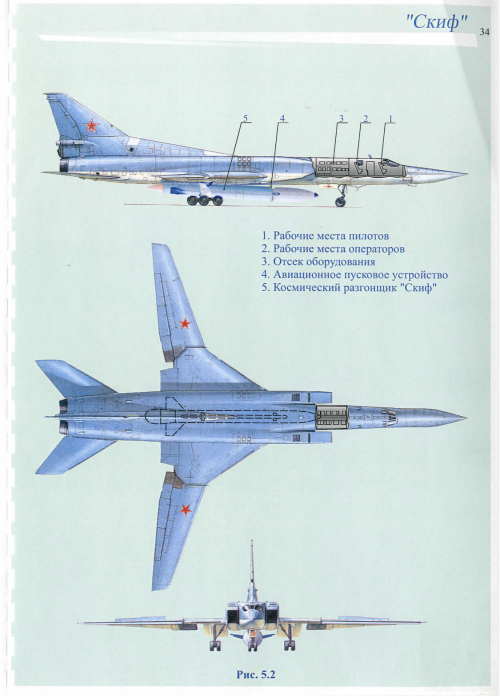
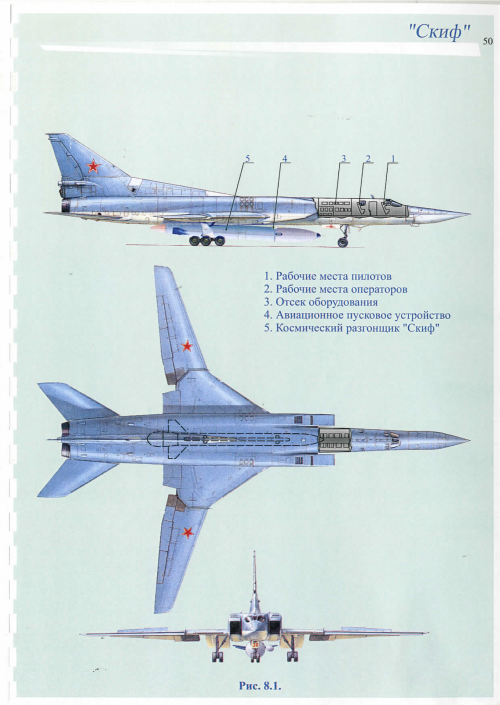
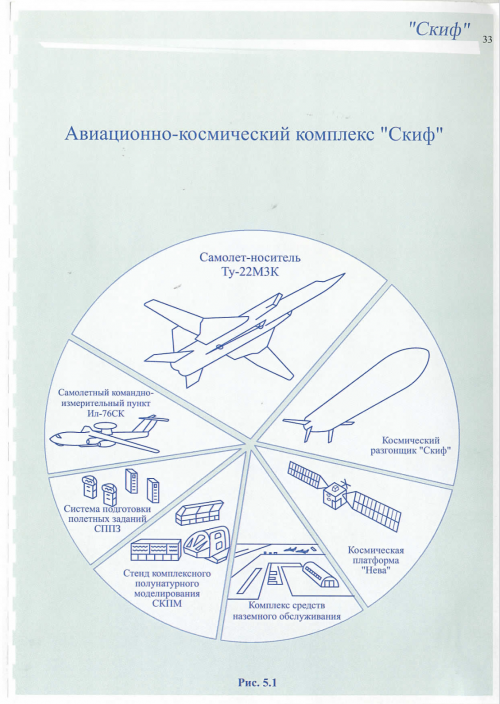
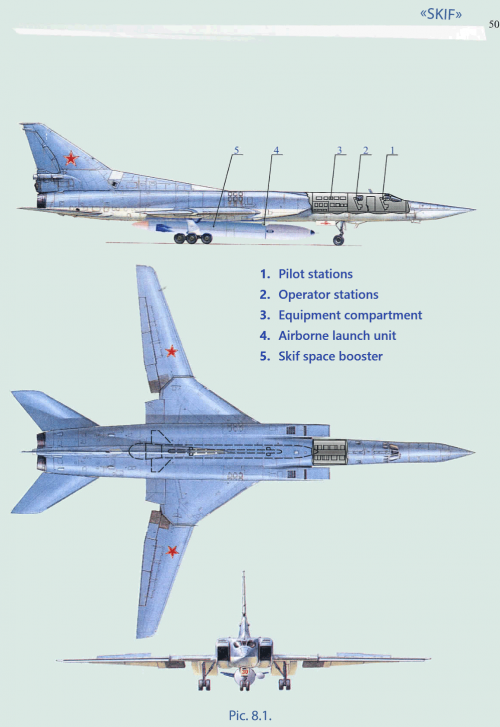
The project called for a specially modified Tu-22M3K carrier aircraft and the Skif space booster. K in M3K stands for the "Kosmos" (Russian for "space"); Skif means Scythian - an ancient nomad of Scyths people.
Tupolev was responsible for the overall system and the carrier aircraft, while the Raduga Design Bureau was the lead developer of the booster.
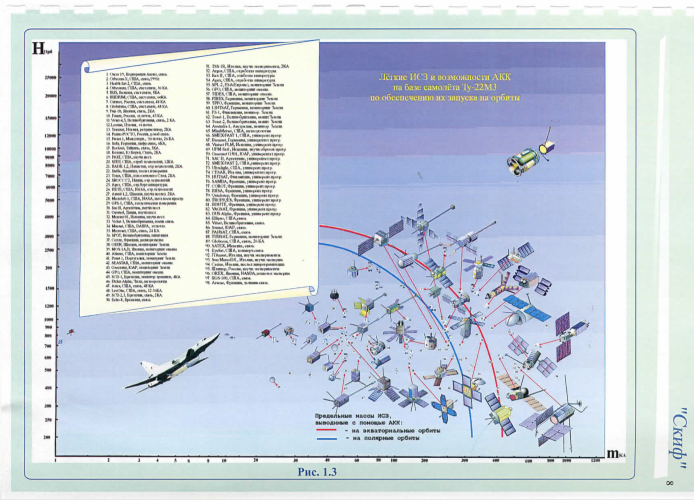
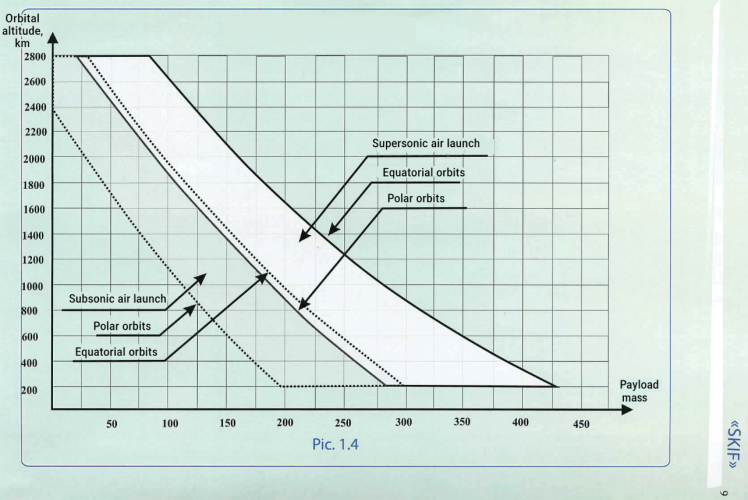
Skif system was designed to launch small satellites weighing up to 300 kg into Earth orbits ranging from 200 to 2,800 km in altitude. Its intended applications included satellite communications, Earth observation, and scientific research of the upper atmosphere and near-Earth space.
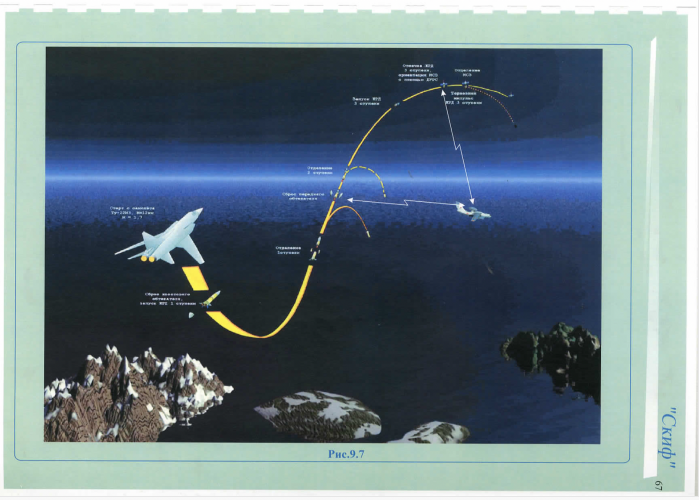
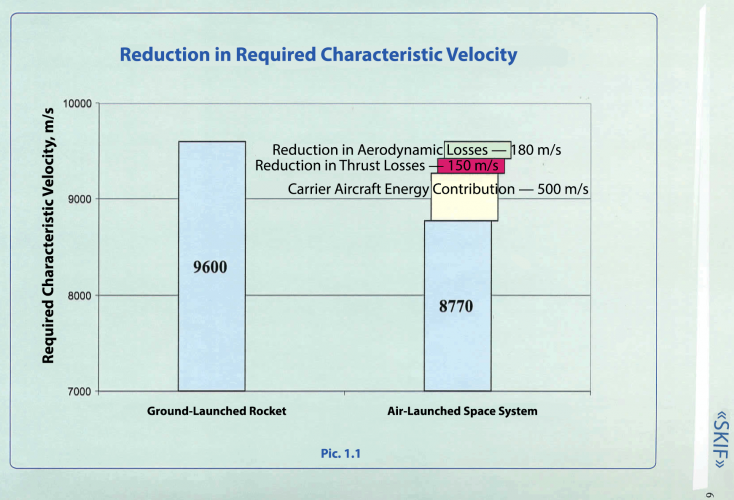
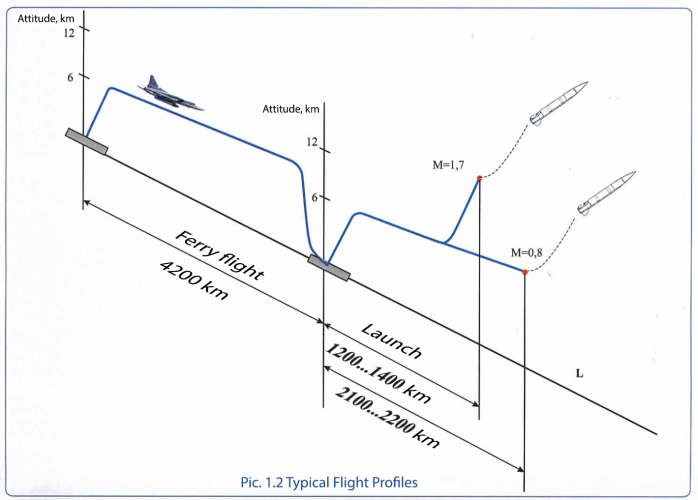
The air-launch concept offered several advantages over conventional ground-launched rockets. The carrier aircraft gave the rocket an initial boost in speed and altitude, reducing both the required delta-v and aerodynamic losses. It could also fly to a favorable launch latitude and take better advantage of the Earth’s rotation.
Another major advantage was orbital flexibility. Instead of being constrained by the launch azimuths available from a fixed spaceport, the Tu-22M3K could carry the rocket to a suitable launch point — potentially even over the ocean — and inject the payload into a much wider range of orbital inclinations.
The aircraft could also deliver the rocket directly into the plane of the desired orbit. This reduced the need for costly plane-change maneuvers after launch and allowed more of the satellite’s own propellant to be reserved for its mission.
The system was intended to be responsive and mobile: satellites could be launched on relatively short notice, making it possible to deploy or replenish a constellation quickly. The documentation even envisioned flying the entire system to airfields outside Russia, where the rocket could be integrated with its payload and launched for a foreign customer.
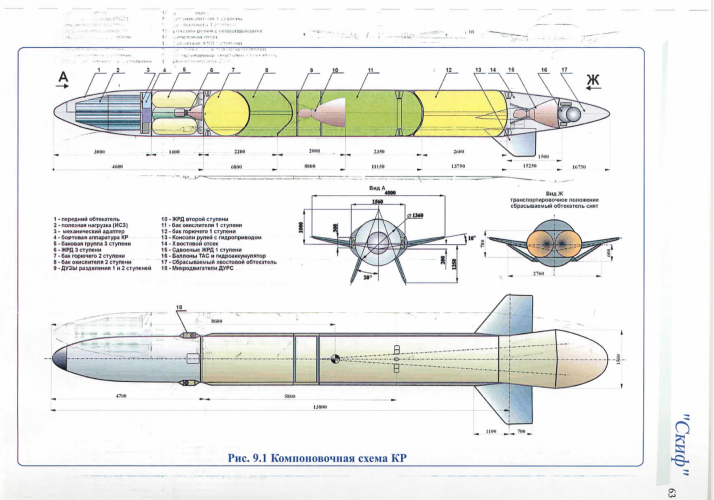
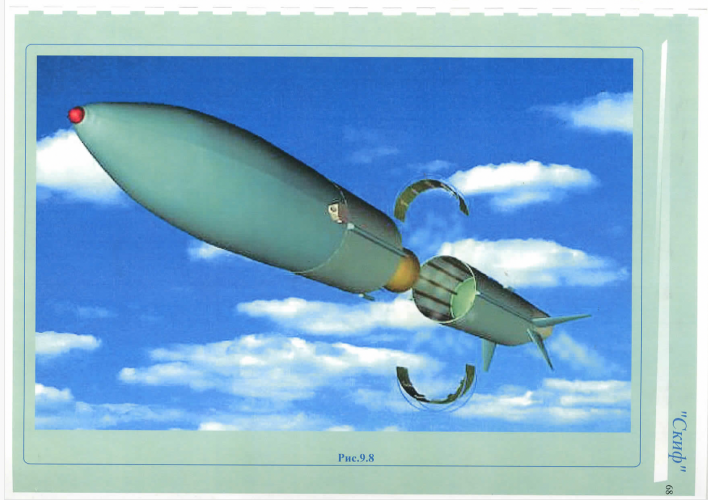
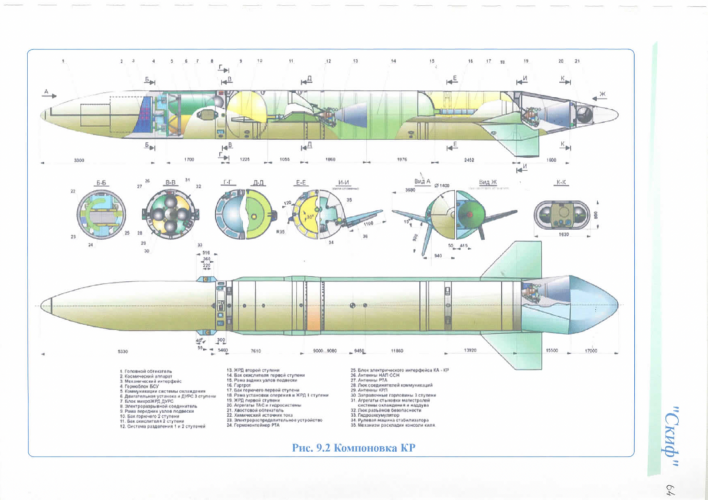
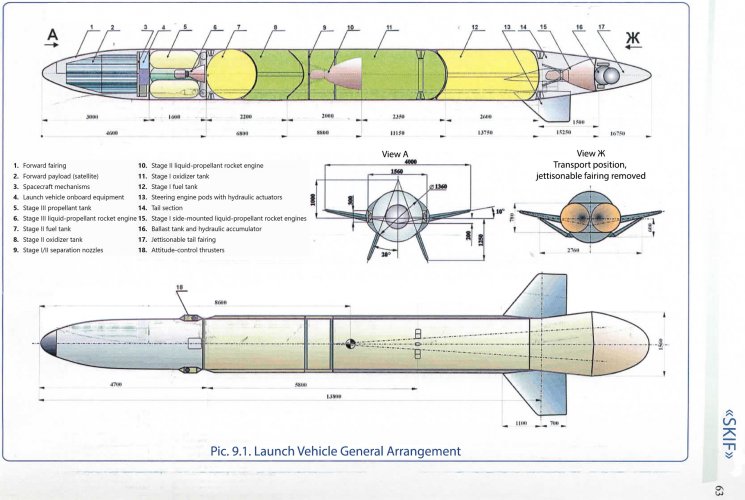
The concept of the Skif air-launched space system was based on extensive use of existing hardware. Its key element was the Tu-22M3 carrier aircraft, whose characteristics and technical capabilities largely determined the design parameters of the space booster. Since the booster was to be carried externally beneath the aircraft fuselage, its dimensions were limited to approximately:
— 17 m in length;
— 1.5 m in diameter.
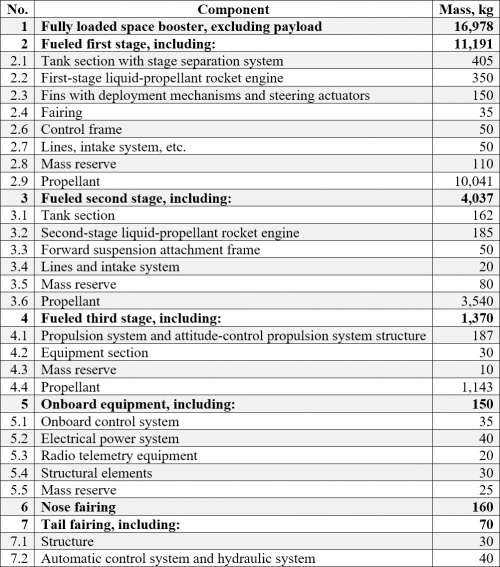
The aircraft’s payload capacity limited the combined mass of the space booster and the airborne launch unit to no more than 20 tonnes. According to the preliminary mass allocation, the booster itself was limited to 17.3 tonnes.
Ballistic design studies were used to determine the payload capability to the types of orbit considered most in demand on the commercial space-launch market. For polar and Sun-synchronous orbits, the Skif system could deliver 220–250 kg to a 600 km orbit, depending on the booster configuration. For medium-inclination orbits, payload capacity could reach 300 kg. These figures were adopted as design requirements for the payload compartment and the space platform.
The required thrust range of the booster’s first-stage propulsion system was 21–26 tonnes-force, based on a required initial thrust-to-weight ratio of 1.2–1.5. No series-produced liquid-propellant rocket engine was available in this thrust class. The required performance could, however, be achieved using a propulsion system consisting of two modified RD-0242 engines equipped for thrust-vector control. Their combined thrust would be about 25 tonnes-force.
The same engine, throttled to 8.5 tonnes-force, could be used on the second stage. In its original configuration, the RD-0242 used UDMH/N₂O₄ propellants, although variants using less toxic propellant combinations had also been studied.
The source:
A. Pukhov, Skif: An Air-Launched Space System Based on the Tu-22M3 Aircraft. Preliminary Design, Book 1. Moscow, 2003. (Пухов А.Л. "Скиф" Авиационно-космический комплекс на базе самолёта Ту-22М3 / Эскизный проект, книга 1, Москва, 2003)
The project called for a specially modified Tu-22M3K carrier aircraft and the Skif space booster. K in M3K stands for the "Kosmos" (Russian for "space"); Skif means Scythian - an ancient nomad of Scyths people.
Tupolev was responsible for the overall system and the carrier aircraft, while the Raduga Design Bureau was the lead developer of the booster.
Skif system was designed to launch small satellites weighing up to 300 kg into Earth orbits ranging from 200 to 2,800 km in altitude. Its intended applications included satellite communications, Earth observation, and scientific research of the upper atmosphere and near-Earth space.
The air-launch concept offered several advantages over conventional ground-launched rockets. The carrier aircraft gave the rocket an initial boost in speed and altitude, reducing both the required delta-v and aerodynamic losses. It could also fly to a favorable launch latitude and take better advantage of the Earth’s rotation.
Another major advantage was orbital flexibility. Instead of being constrained by the launch azimuths available from a fixed spaceport, the Tu-22M3K could carry the rocket to a suitable launch point — potentially even over the ocean — and inject the payload into a much wider range of orbital inclinations.
The aircraft could also deliver the rocket directly into the plane of the desired orbit. This reduced the need for costly plane-change maneuvers after launch and allowed more of the satellite’s own propellant to be reserved for its mission.
The system was intended to be responsive and mobile: satellites could be launched on relatively short notice, making it possible to deploy or replenish a constellation quickly. The documentation even envisioned flying the entire system to airfields outside Russia, where the rocket could be integrated with its payload and launched for a foreign customer.
The concept of the Skif air-launched space system was based on extensive use of existing hardware. Its key element was the Tu-22M3 carrier aircraft, whose characteristics and technical capabilities largely determined the design parameters of the space booster. Since the booster was to be carried externally beneath the aircraft fuselage, its dimensions were limited to approximately:
— 17 m in length;
— 1.5 m in diameter.
The aircraft’s payload capacity limited the combined mass of the space booster and the airborne launch unit to no more than 20 tonnes. According to the preliminary mass allocation, the booster itself was limited to 17.3 tonnes.
Ballistic design studies were used to determine the payload capability to the types of orbit considered most in demand on the commercial space-launch market. For polar and Sun-synchronous orbits, the Skif system could deliver 220–250 kg to a 600 km orbit, depending on the booster configuration. For medium-inclination orbits, payload capacity could reach 300 kg. These figures were adopted as design requirements for the payload compartment and the space platform.
The required thrust range of the booster’s first-stage propulsion system was 21–26 tonnes-force, based on a required initial thrust-to-weight ratio of 1.2–1.5. No series-produced liquid-propellant rocket engine was available in this thrust class. The required performance could, however, be achieved using a propulsion system consisting of two modified RD-0242 engines equipped for thrust-vector control. Their combined thrust would be about 25 tonnes-force.
The same engine, throttled to 8.5 tonnes-force, could be used on the second stage. In its original configuration, the RD-0242 used UDMH/N₂O₄ propellants, although variants using less toxic propellant combinations had also been studied.
The source:
A. Pukhov, Skif: An Air-Launched Space System Based on the Tu-22M3 Aircraft. Preliminary Design, Book 1. Moscow, 2003. (Пухов А.Л. "Скиф" Авиационно-космический комплекс на базе самолёта Ту-22М3 / Эскизный проект, книга 1, Москва, 2003)
Attachments
Last edited by a moderator: