
You are using an out of date browser. It may not display this or other websites correctly.
You should upgrade or use an alternative browser.
You should upgrade or use an alternative browser.
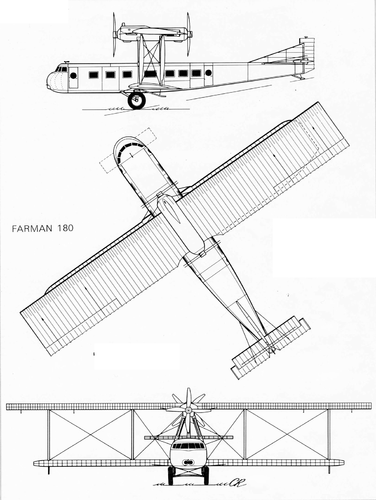
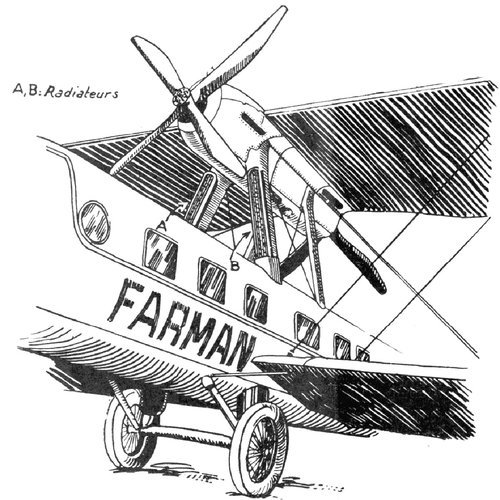
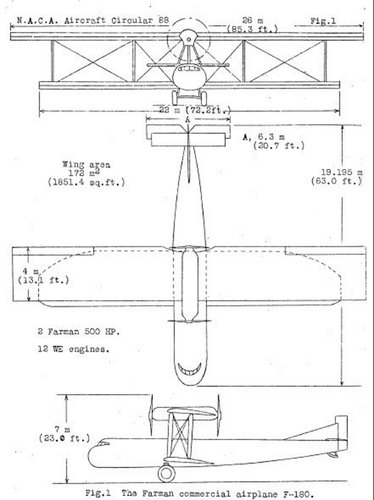
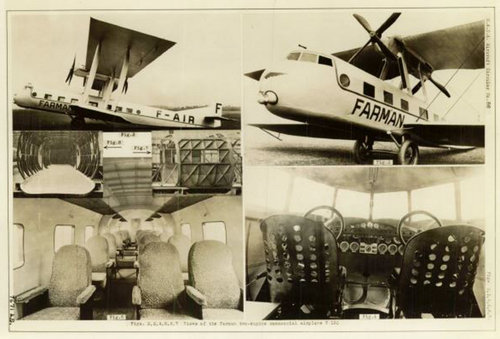
The Farman F.180 "Oiseau Bleu" push-pull transport
- Thread starter hesham
- Start date

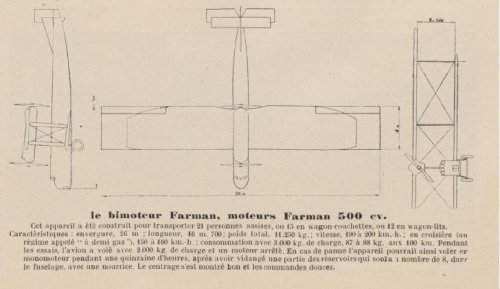


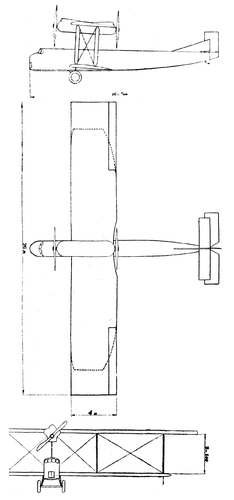
Just it : Farman F.180 with two Farman 12 of 500 Hp , so have seen length of 16 m instead 18 of the three prototypes then i suppose could be a variant .Maveric said:This is the Farman F.180 or a variant of this.
In this variant , probably, they supposed by calculations to increase the maximum speed between 190 and 200 km/h and cruise speed between 150 and 160 km/h.
http://en.wikipedia.org/wiki/Farman_F.180

blackkite
Don't laugh, don't cry, don't even curse, but.....
- Joined
- 31 May 2007
- Messages
- 9,515
- Reaction score
- 9,661
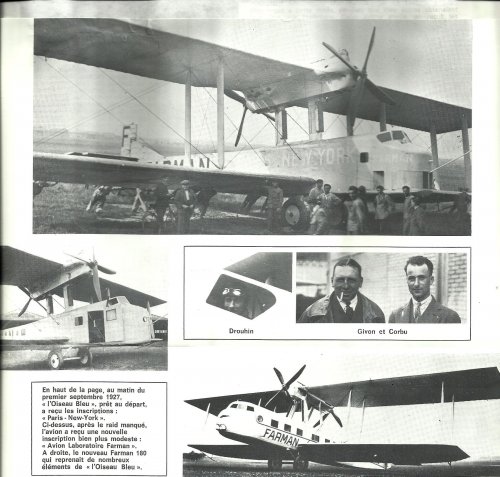
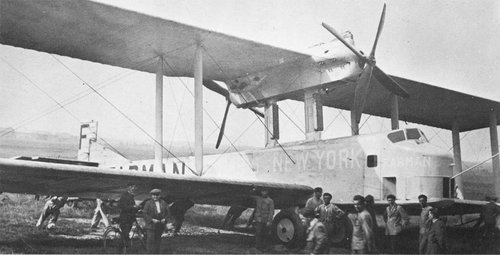
http://www.airwar.ru/enc/cw1/f180.htmlOn September 2, 1927, an attempt was made to fly on the Route Paris-New York, the shortest version of 5460km was chosen. On this occasion, the car was marked with large inscriptions "New-York," "Paris," "Farman." Weighing an empty 4400kg aircraft taking off weighing 11,500kg with 6,800kg (or 9,700 litres) of fuel, oil and water (another 185kg) on board after two hours of flight lands back at Le Bourget airfield. It was officially announced that the flight was prevented by weather conditions, but the main reasons were fuel overruns and long-term instability of the aircraft. There were no other attempts to fly - Farman was treated for bad weather conditions for the entire 27th year, and in 1928 the car was converted into a passenger car. Instead of fuel tanks in the fuselage installed 17 passenger seats and made additional portholes.
The fate of the first F.180 was not very rich. The vehicle received a flight certificate No.1788 and registration F-AIMX, nominally since February 1931 is listed in the SGTA (Soci't' g'n'rale des transports a'riens - the airline of the Farman brothers). But no flight with passengers the plane did not make, for a long time dusted in the hangar and, having flown only 87 hours was written off in 1934.
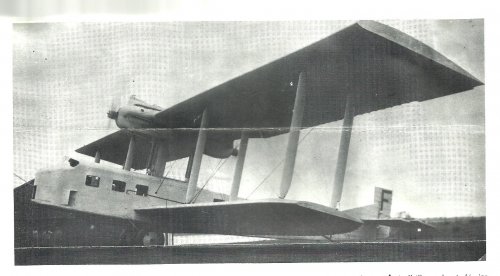
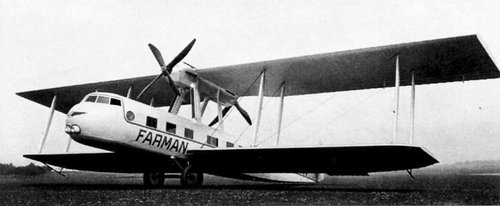
Despite the dubious success of the 180th, the French decided to develop the design further and build a replacement for Goliath on the basis of the first aircraft. The aircraft was designated Farman180T, the name Oiseau-Bleu belonged only to the first copy and its application to all Farman 180 is incorrect. For him, the fuselage was completely redesigned, it was lengthened by 1.3 meters and its section became in terms of elliptical rather than rectangular.
The Farman 180T was presented as a comfortable and safe aircraft for long-distance flights, including in difficult weather conditions. Safety was ensured: the location of the engines - when one car failed to maintain course stability, at the weight of 6750kg the car could fly on the same engine; and low load on the wing. Plus the Farman 12 We engine was considered quite reliable.
Comfort. The fuselage, lined with birch plywood, had no internal elements of the structure preventing the comfortable accommodation of passengers. Thanks to the elliptical section, the salon was very spacious - its height was 1.8m, width 2.35m, and length 8m. Passenger seats are arranged three in a row with a passage between them. The following cabin options were provided: 22 seats for a 500km flight, a maximum of 25; 1000km - 17 chairs, laid out in sofas (apparently just with sloping backs), it is possible to place a bar instead of a part of seats; for night flights of 1500 km - 12 sofas. The capacity of the luggage compartment in the front of the cabin is 5m2.
Despite such a number of advantages, only two Farman 180Ts were built - with registration numbers F-AIR and F-AIVR, both in 1928. The first was soon dismantled by getting rid of wings for display at various aviation exhibitions (to save space in the exhibition halls), the second was december 12, 1929 destroyed by a hurricane that swept over Paris. Despite the new fuselage, the plane was still longitudinally unstable. For parry ingestion tried to install additional horizontal planes in the bow of the fuselage, but they did not give the expected effect.
The fate of the first F.180 was not very rich. The vehicle received a flight certificate No.1788 and registration F-AIMX, nominally since February 1931 is listed in the SGTA (Soci't' g'n'rale des transports a'riens - the airline of the Farman brothers). But no flight with passengers the plane did not make, for a long time dusted in the hangar and, having flown only 87 hours was written off in 1934.
Despite the dubious success of the 180th, the French decided to develop the design further and build a replacement for Goliath on the basis of the first aircraft. The aircraft was designated Farman180T, the name Oiseau-Bleu belonged only to the first copy and its application to all Farman 180 is incorrect. For him, the fuselage was completely redesigned, it was lengthened by 1.3 meters and its section became in terms of elliptical rather than rectangular.
The Farman 180T was presented as a comfortable and safe aircraft for long-distance flights, including in difficult weather conditions. Safety was ensured: the location of the engines - when one car failed to maintain course stability, at the weight of 6750kg the car could fly on the same engine; and low load on the wing. Plus the Farman 12 We engine was considered quite reliable.
Comfort. The fuselage, lined with birch plywood, had no internal elements of the structure preventing the comfortable accommodation of passengers. Thanks to the elliptical section, the salon was very spacious - its height was 1.8m, width 2.35m, and length 8m. Passenger seats are arranged three in a row with a passage between them. The following cabin options were provided: 22 seats for a 500km flight, a maximum of 25; 1000km - 17 chairs, laid out in sofas (apparently just with sloping backs), it is possible to place a bar instead of a part of seats; for night flights of 1500 km - 12 sofas. The capacity of the luggage compartment in the front of the cabin is 5m2.
Despite such a number of advantages, only two Farman 180Ts were built - with registration numbers F-AIR and F-AIVR, both in 1928. The first was soon dismantled by getting rid of wings for display at various aviation exhibitions (to save space in the exhibition halls), the second was december 12, 1929 destroyed by a hurricane that swept over Paris. Despite the new fuselage, the plane was still longitudinally unstable. For parry ingestion tried to install additional horizontal planes in the bow of the fuselage, but they did not give the expected effect.
Last edited:
blackkite
Don't laugh, don't cry, don't even curse, but.....
- Joined
- 31 May 2007
- Messages
- 9,515
- Reaction score
- 9,661
I feel only tail stabilizers area were too small. Perhaps professional's thought was different or they did not want to change tail stabilizer design. But......I can't understand this countermeasure at all.

Perhaps professional's thought was different or they did not want to change tail stabilizer design. But......I can't understand this countermeasure at all.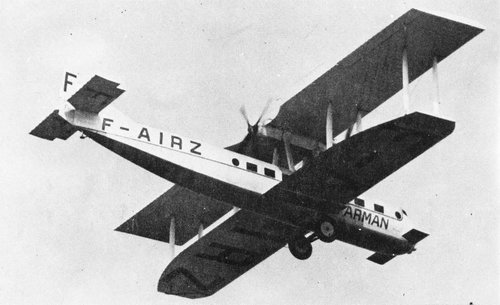
Last edited:
Similar threads
-

-
-
-
 The Farman "Moustique" lightplane series
- Started by cluttonfred
- Replies: 10
-