

- Joined
- 25 June 2009
- Messages
- 15,515
- Reaction score
- 9,447
Biblical lore has tiny David striking down the giant Goliath, resulting in victory for his camp. When they nicknamed his first dedicated postwar aircraft "David", to emphasize the dramatic different in size from the huge "Goliath", the Farman brothers may have envisioned that the small aircraft would conquer many civilian hearts and prove even more popular than their then-military giant. Unfortunately, it was not to be.
As we've seen in the topic dedicated to the Moustique, the Farman company was way ahead of most of the competition when it explored the possibility of marketing a very light monoplane for the civilian market, an affordable machine for everyone. That vision was eventually made successful through both the "Pou-du-Ciel" phenomenon (Henri Mignet's diminutive "flea" proving the ideal foolsafe and cost-friendly solution for a popular little plane is crisis years) and the decision from the French Government to acquire aircraft that it would then lease to flying clubs across France as part of its "Aviation Populaire" scheme (the updated Moustique being part of that, with about three dozen aircraft involved).
But even before the Moustique, as early as 1919, Farman had conceived a tiny tandem-cockpit biplane machine simply called the "Sport Farman" (usually just called the "Sport") that was aimed at the civilian market—a cheap, easy-to-fly and easy-to-land machine for the layman who could even park it in a regular car garage. Let us not forget that World War I was then variously known as "the last war of them all" or "the war to end all wars", and the prospect of building military machines was a remote notion in the aftermath of the "Great War" (to the extent that the FF.60 "Goliath" bomber was immediately repurposed as a civilian transport). The prospect of turning aviation, previously a sport for the rich or a tool for the military, into a popular occupation, was therefore very real to people such as Farman.


Farman company leaflets and brochures related to the "Sport Farman". Quite obviously the nickname "David" of the prototype was never made official.
The "Sport Farman", or Farman "David", as the prototype was nicknamed, was initially designated as the Farman Frères FF.65, but very soon, when the company changed names, it became plain F.65 just like the Goliath became just F 60. These numbers of course were carried over from the old numbering system, following up from the F.40 "Horace" recce/trainer and F.50 bomber series (many of which were also repurposed as civilian aircraft). However, the success of the Goliath soon led to a string of variants, and the designations F 61 to F 68 were subsequently added, resulting in duplication of the F 65 slot in 1926. Farman also used designations in the 200+ range to designated lightplane prototypes and specific test modifications, resulting in unofficial monickers such as "David 204", "205", "207", "F.209" or "F.210" for the "Sport" (the second version of the Moustique was the "HF.206"). Again, these are a source of confusion for historians since the same numbers were later used for variant of a totally different aircraft, the second F 200.


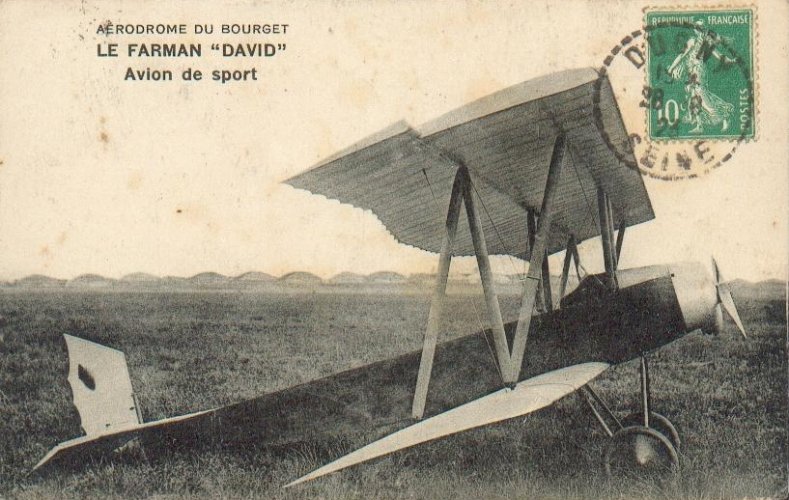
The 1919 prototype can easily be identified by its rounded-off tail fin painted in two-tone scheme. Note added headrest in last photo.
![cn 8 [G-AUBV] side view (A.J. Jackson collection).jpg](data:image/svg+xml;charset=utf-8,%3Csvg xmlns%3D'http%3A%2F%2Fwww.w3.org%2F2000%2Fsvg' width='700' height='438' viewBox%3D'0 0 700 438'%2F%3E "cn 8 [G-AUBV] side view (A.J. Jackson collection).jpg")
![cn 24 [G-AUDL] with [G-AUBV] flying (Kevin O'Reilly collection).jpg](data:image/svg+xml;charset=utf-8,%3Csvg xmlns%3D'http%3A%2F%2Fwww.w3.org%2F2000%2Fsvg' width='625' height='439' viewBox%3D'0 0 625 439'%2F%3E "cn 24 [G-AUDL] with [G-AUBV] flying (Kevin O'Reilly collection).jpg")
![cn 24 [G-AUDL] side view (Jim Sweeney collection).jpg](data:image/svg+xml;charset=utf-8,%3Csvg xmlns%3D'http%3A%2F%2Fwww.w3.org%2F2000%2Fsvg' width='625' height='383' viewBox%3D'0 0 625 383'%2F%3E "cn 24 [G-AUDL] side view (Jim Sweeney collection).jpg")

The 1920-1921 production version (variant with Le Rhône 9 Z seven-cylinder rotary engine engine). Note tail fin redesign.
Although its career was relatively short, the F.65 enjoyed great popularity through its various exploits: in 1919, famed pilot Edmond Pillon made 29 successive loops in five minutes, while preparing for a record flight, but it's in the hands of the equally famous pilot Lucien Bossoutrot that the tiny biplane won many distinctions: first place in L'Auto's "Prix du Grand Écart" in July 1920 (with Pillon winning second place, also on a "Sport"); a good performance by Pillon at the Buc air meet in October; second place in the Zenith safety aircraft competition that same year; Bossoutrot is forced to abandon at Pau during the Coupe Michelin, but Paulhan wins first place again in Brussels' Concours International d'Avions de Tourisme (Coupe Simonet) that same month on the Anzani-powered version; participation on June 18, 1922 in the Rallye des 104 of the Aéro-Club de France by Maurice and Dick Farman themselves on two Sport aircraft; excellent performance on the glider version by Bossoutrot again at Combegrasse in August 1922 (two "Sport" planes were flown there by Bossoutrot and Louis Paulhan, but only one got its engine removed and actually took part, being flown by both pilots; Bossoutrot also won an endurance record there on the Moustique). The "Sport" took part in many other competition in later years, such as the Rallye Aérien de l'Aéro-Club d'Auvergne, in 1925, flown by Aymar du Charmel and Lallouette, even if an engine mishap prevented it from shining.

![cn 2 [F-ADFZ].jpg](data:image/svg+xml;charset=utf-8,%3Csvg xmlns%3D'http%3A%2F%2Fwww.w3.org%2F2000%2Fsvg' width='600' height='357' viewBox%3D'0 0 600 357'%2F%3E "cn 2 [F-ADFZ].jpg")

![cn 30 [VH-UHL] in the 1930s.jpg](data:image/svg+xml;charset=utf-8,%3Csvg xmlns%3D'http%3A%2F%2Fwww.w3.org%2F2000%2Fsvg' width='813' height='500' viewBox%3D'0 0 813 500'%2F%3E "cn 30 [VH-UHL] in the 1930s.jpg")
The 1920-1921 production version (variant with the air-cooled Anzani two-row engine). Same tail fin redesign as above.
Most "Davids" had straight rectangular wings; however, the fourth aircraft was modified for the Zenith safety aircraft competition in 1920 by increasing the wing area; it can easily be recognized by its wider top wing with a curved trailing edge in its middle section. That same prototype (either the "204" or the "205") also participated in the Prix du Grand Écart that same year. Later on, it had its engine removed for the famous Combegrasse contest in 1922, with the forward cockpit moved to compensate the lack of engine.

 The one airplane modified with enlarged wing area for the Coupe Zenith; the same at the Prix du Grand Écart.


Although the "Sport" was conceived strictly as a civilian type, one derivative was actually submitted to a 1923 military tender for an "avion de premier apprentissage", or primary trainer, differing mainly by its much longer wings and more powerful 80-hp Le Rhône engine. No particular designation seems to have been associated with that airplane, which was not approved and was most likely returned to Farman and sold on the civilian market. Other special modifications included the "207" [F-AEAT] an Anzani-powered "David" with modified structure and landing gear, flown notably at the 1922 Nice air meet; the "F 209" [F-ADFM], a former F.65 modified as a single-seater with modified structure; and the "David Monoplane 210" [F-AIDJ], one of the two "Super-Sports" after modification as a parasol wing type, using a section of the Goliath's wing. That particular aircraft was nicknamed "La carte postale" (the postcard) because of its wide rectangular wing, and was flown in the 1926 Coupe Zenith by M. Coupet. It later had its landing gear moved forward, before reappearing in 1929 as a shoulder-wing type with trapezoidal wings. And if you wonder why the Moustique of 1919-1920 was designated "HF 206", simply look at its airframe: remove the wing and you simply have a "Sport-Farman" fuselage...

![[F-ESAM] enhanced.jpg](data:image/svg+xml;charset=utf-8,%3Csvg xmlns%3D'http%3A%2F%2Fwww.w3.org%2F2000%2Fsvg' width='384' height='319' viewBox%3D'0 0 384 319'%2F%3E "[F-ESAM] enhanced.jpg")

![cn 10 [F-AEAT] at the Nice air meet.jpg](data:image/svg+xml;charset=utf-8,%3Csvg xmlns%3D'http%3A%2F%2Fwww.w3.org%2F2000%2Fsvg' width='727' height='500' viewBox%3D'0 0 727 500'%2F%3E "cn 10 [F-AEAT] at the Nice air meet.jpg")
The 1922 version boasted a "clever" new landing gear with skids extending aft, acting as a brake and eliminating long rolling of the machine.
The career of the "Sport Farman" was not limited to France. A few examples were exported: five to Australia, one to Belgium, one to Canada and one to Spain. Also, the "Sport" almost had a career in Brazil when a newly licensed, 55-year-old pilot named Marusi (who allegedly already introduced bicycles and cars in his country) planned in 1921 to establish a flying school in Sao Paulo using the type, but the project went no further.


The sturdier look of this American import results from the fuselage being beefed up aft of the cockpit.
In 1922, C.T. Ludington and Wallace Kellett (later of autogyro fame) formed the Ludington Exhibition Company in Philadephia, Penn. as agents for Farman aircraft, and in 1923 imported two Sports, which were registered [C71] (c/n X-1) and [C72] (c/n 15). The two diminutive aircraft (appearing variously as the Farman Sport or the Ludington Sport) made quite an impression wherever they appeared, taking part in the 1923 Pulitzer Air Race, in St. Louis, Missouri, in the St. Louis Chamber of Commerce Trophy that same month, winning in November the first place of a major competition in Kansas City and also participating in the Saint-Louis air meet**. The latter aircraft also took part with the same aircraft in the Dayton air meet of July 1924, which involved flying over the treacherous Allegheny Mountains. It was the only French machine at the event. That aircraft has survived, and after restoration is now preserved and exhibited at the Udvar-Hazy Center in Chantilly, West Virginia. It is the only Farman Sport still in existence.


Farman's entry in the 1923 EP2 primary trainer competition was quite obviously based on the commercial Sport but with longer wings.
Other unusual Sport derivatives were the 1924 so-called "Carte Postale", and its later 1929 modification as a shoulder-wing type.
This research work by Stéphane Beaumort, a.k.a. Stargazer, exclusive for the Secret Projects Forum © 2025
As we've seen in the topic dedicated to the Moustique, the Farman company was way ahead of most of the competition when it explored the possibility of marketing a very light monoplane for the civilian market, an affordable machine for everyone. That vision was eventually made successful through both the "Pou-du-Ciel" phenomenon (Henri Mignet's diminutive "flea" proving the ideal foolsafe and cost-friendly solution for a popular little plane is crisis years) and the decision from the French Government to acquire aircraft that it would then lease to flying clubs across France as part of its "Aviation Populaire" scheme (the updated Moustique being part of that, with about three dozen aircraft involved).
But even before the Moustique, as early as 1919, Farman had conceived a tiny tandem-cockpit biplane machine simply called the "Sport Farman" (usually just called the "Sport") that was aimed at the civilian market—a cheap, easy-to-fly and easy-to-land machine for the layman who could even park it in a regular car garage. Let us not forget that World War I was then variously known as "the last war of them all" or "the war to end all wars", and the prospect of building military machines was a remote notion in the aftermath of the "Great War" (to the extent that the FF.60 "Goliath" bomber was immediately repurposed as a civilian transport). The prospect of turning aviation, previously a sport for the rich or a tool for the military, into a popular occupation, was therefore very real to people such as Farman.

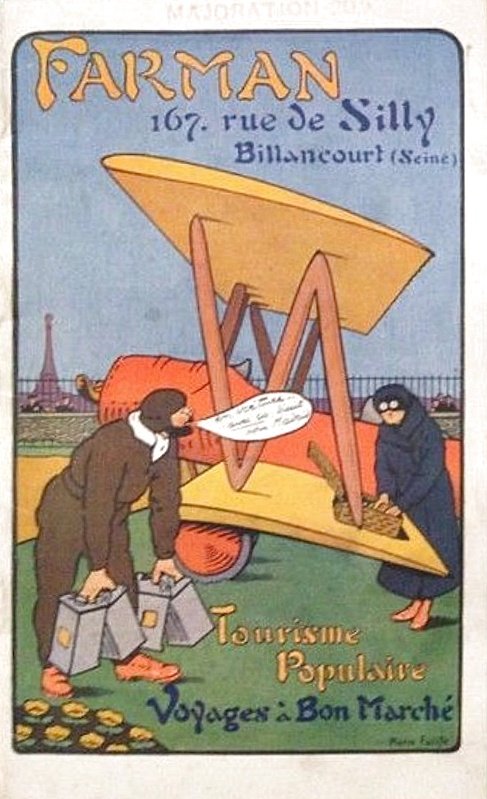
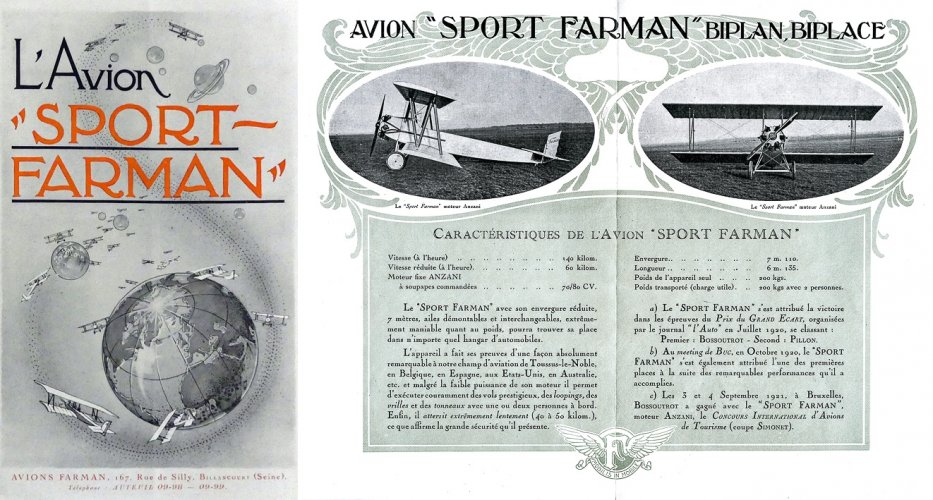
Farman company leaflets and brochures related to the "Sport Farman". Quite obviously the nickname "David" of the prototype was never made official.
The "Sport Farman", or Farman "David", as the prototype was nicknamed, was initially designated as the Farman Frères FF.65, but very soon, when the company changed names, it became plain F.65 just like the Goliath became just F 60. These numbers of course were carried over from the old numbering system, following up from the F.40 "Horace" recce/trainer and F.50 bomber series (many of which were also repurposed as civilian aircraft). However, the success of the Goliath soon led to a string of variants, and the designations F 61 to F 68 were subsequently added, resulting in duplication of the F 65 slot in 1926. Farman also used designations in the 200+ range to designated lightplane prototypes and specific test modifications, resulting in unofficial monickers such as "David 204", "205", "207", "F.209" or "F.210" for the "Sport" (the second version of the Moustique was the "HF.206"). Again, these are a source of confusion for historians since the same numbers were later used for variant of a totally different aircraft, the second F 200.
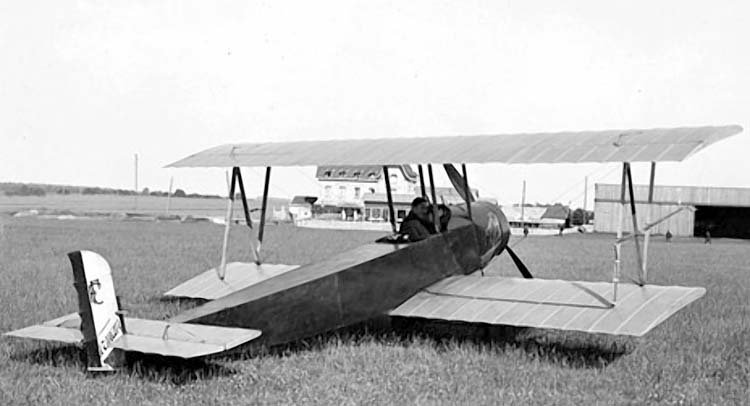

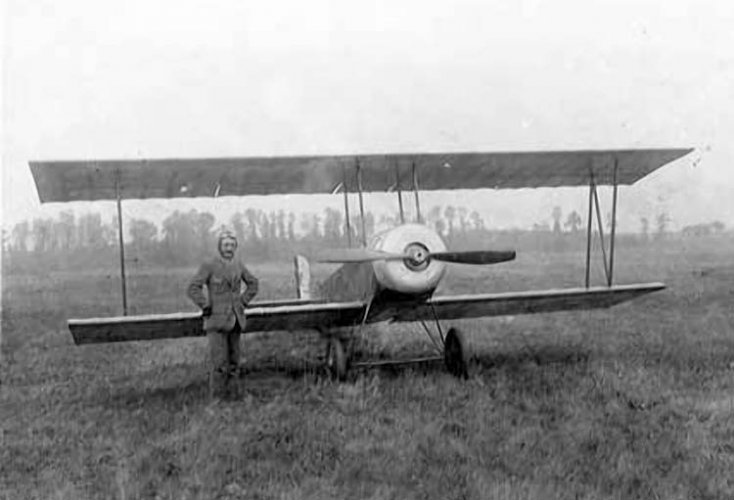
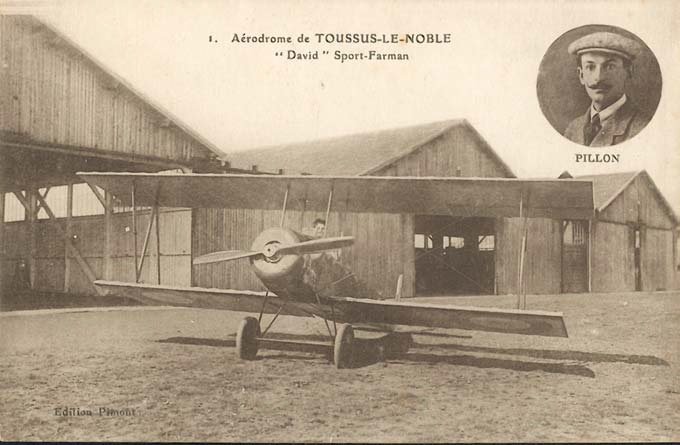
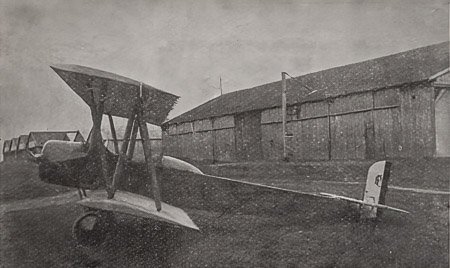
The 1919 prototype can easily be identified by its rounded-off tail fin painted in two-tone scheme. Note added headrest in last photo.
Altogether, Farman produced 34 examples of the diminutive sport biplane (some sources claim 36, perhaps including prototypes). It seems they were all built between 1919 and 1923, and despite the limited numbers, photos show considerable differences between the earlier and later examples, with a few variations in between. Very early prototypes had a rounded off tail fin, but subsequent models had an angular one; the landing gear was modified on the 1922 machines (and described as "clever" by L'Aéronautique). From the beginning, the little biplane was offered with a choice of either a 60-hp Le Rhône 9 Z seven-cylinder engine, an air-cooled 60-hp Anzani 6 B, or a less powerful 45-hp version of the latter. The final two examples (sometimes called the "Super-Sport" or F 210) used the more powerful 70/80-hp Anzani 6 A-2 version.
![cn 8 [G-AUBV] side view (A.J. Jackson collection).jpg](https://www.secretprojects.co.uk/data/attachments/321/321601-7c32db22eb7ab30c6efa83c3d63e457d.jpg "cn 8 [G-AUBV] side view (A.J. Jackson collection).jpg")
![cn 24 [G-AUDL] with [G-AUBV] flying (Kevin O'Reilly collection).jpg](https://www.secretprojects.co.uk/data/attachments/321/321602-e9d04fdef317e48fc078c0ce5244355f.jpg "cn 24 [G-AUDL] with [G-AUBV] flying (Kevin O'Reilly collection).jpg")
![cn 24 [G-AUDL] side view (Jim Sweeney collection).jpg](https://www.secretprojects.co.uk/data/attachments/321/321603-3d8ece8db8d85033721f136857fff218.jpg "cn 24 [G-AUDL] side view (Jim Sweeney collection).jpg")

The 1920-1921 production version (variant with Le Rhône 9 Z seven-cylinder rotary engine engine). Note tail fin redesign.
Although its career was relatively short, the F.65 enjoyed great popularity through its various exploits: in 1919, famed pilot Edmond Pillon made 29 successive loops in five minutes, while preparing for a record flight, but it's in the hands of the equally famous pilot Lucien Bossoutrot that the tiny biplane won many distinctions: first place in L'Auto's "Prix du Grand Écart" in July 1920 (with Pillon winning second place, also on a "Sport"); a good performance by Pillon at the Buc air meet in October; second place in the Zenith safety aircraft competition that same year; Bossoutrot is forced to abandon at Pau during the Coupe Michelin, but Paulhan wins first place again in Brussels' Concours International d'Avions de Tourisme (Coupe Simonet) that same month on the Anzani-powered version; participation on June 18, 1922 in the Rallye des 104 of the Aéro-Club de France by Maurice and Dick Farman themselves on two Sport aircraft; excellent performance on the glider version by Bossoutrot again at Combegrasse in August 1922 (two "Sport" planes were flown there by Bossoutrot and Louis Paulhan, but only one got its engine removed and actually took part, being flown by both pilots; Bossoutrot also won an endurance record there on the Moustique). The "Sport" took part in many other competition in later years, such as the Rallye Aérien de l'Aéro-Club d'Auvergne, in 1925, flown by Aymar du Charmel and Lallouette, even if an engine mishap prevented it from shining.
![cn 2 [F-ADFZ].jpg](https://www.secretprojects.co.uk/data/attachments/321/321606-691b641bf4ebba534aedcb329a771c58.jpg "cn 2 [F-ADFZ].jpg")
![cn 30 [VH-UHL] in the 1930s.jpg](https://www.secretprojects.co.uk/data/attachments/321/321609-9b0e698789ff728a1c867506d9cfebdb.jpg "cn 30 [VH-UHL] in the 1930s.jpg")
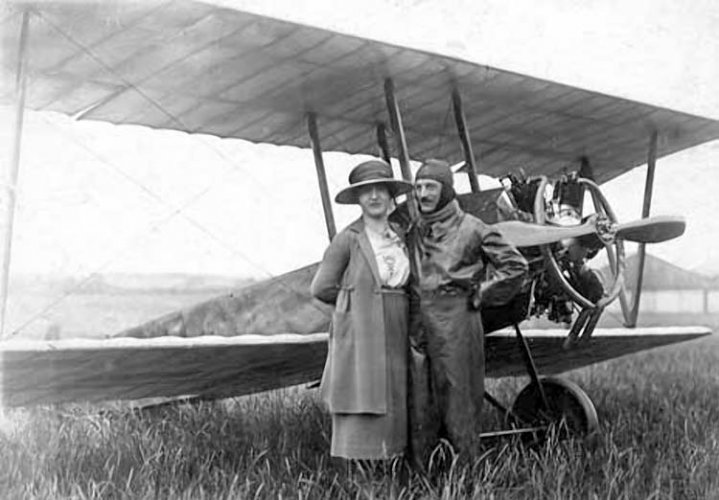
The 1920-1921 production version (variant with the air-cooled Anzani two-row engine). Same tail fin redesign as above.
Most "Davids" had straight rectangular wings; however, the fourth aircraft was modified for the Zenith safety aircraft competition in 1920 by increasing the wing area; it can easily be recognized by its wider top wing with a curved trailing edge in its middle section. That same prototype (either the "204" or the "205") also participated in the Prix du Grand Écart that same year. Later on, it had its engine removed for the famous Combegrasse contest in 1922, with the forward cockpit moved to compensate the lack of engine.
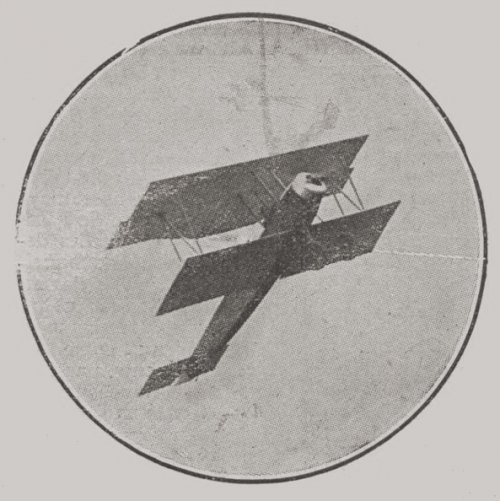
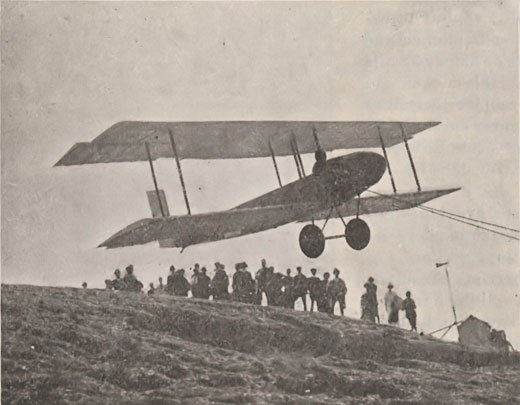
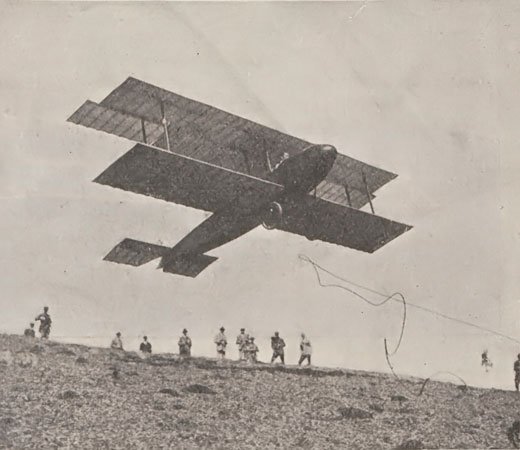
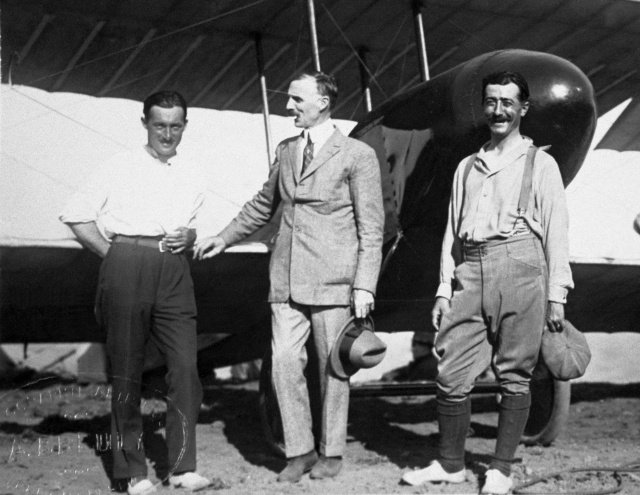
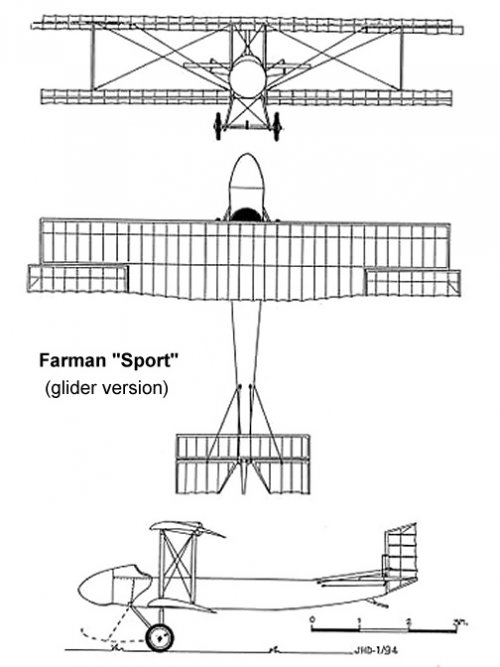
Still the same plane without its engine at Combegrass in 1922. Third photo shows L. Bossoutrot, H. Farman and L. Paulhan.
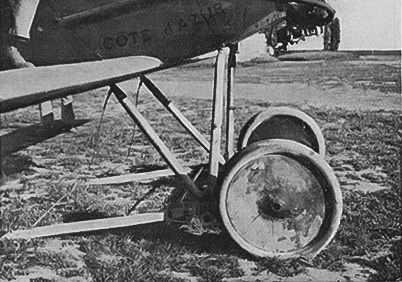
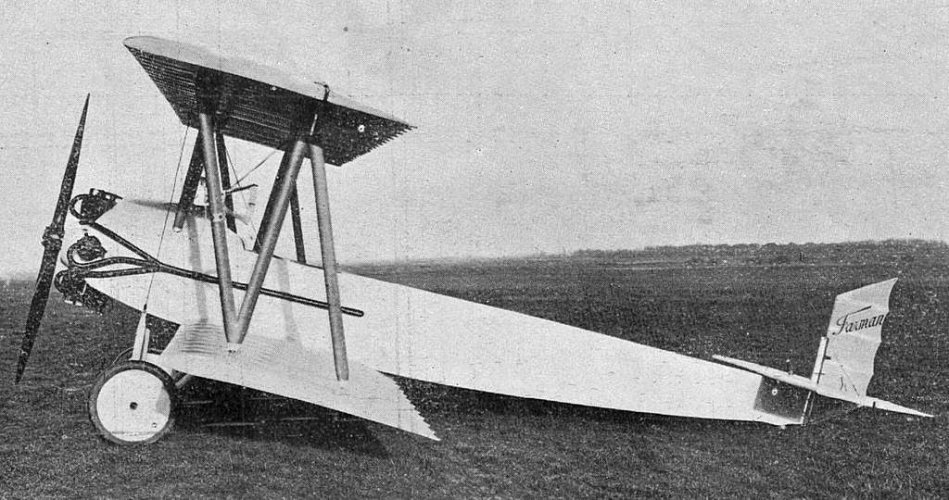
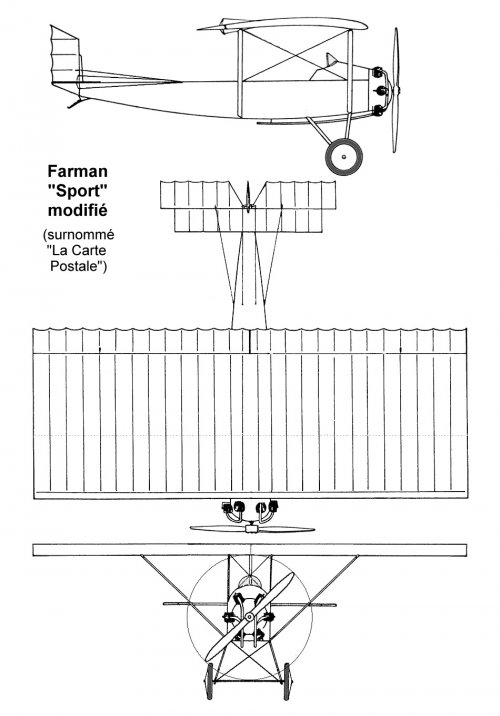
Although the "Sport" was conceived strictly as a civilian type, one derivative was actually submitted to a 1923 military tender for an "avion de premier apprentissage", or primary trainer, differing mainly by its much longer wings and more powerful 80-hp Le Rhône engine. No particular designation seems to have been associated with that airplane, which was not approved and was most likely returned to Farman and sold on the civilian market. Other special modifications included the "207" [F-AEAT] an Anzani-powered "David" with modified structure and landing gear, flown notably at the 1922 Nice air meet; the "F 209" [F-ADFM], a former F.65 modified as a single-seater with modified structure; and the "David Monoplane 210" [F-AIDJ], one of the two "Super-Sports" after modification as a parasol wing type, using a section of the Goliath's wing. That particular aircraft was nicknamed "La carte postale" (the postcard) because of its wide rectangular wing, and was flown in the 1926 Coupe Zenith by M. Coupet. It later had its landing gear moved forward, before reappearing in 1929 as a shoulder-wing type with trapezoidal wings. And if you wonder why the Moustique of 1919-1920 was designated "HF 206", simply look at its airframe: remove the wing and you simply have a "Sport-Farman" fuselage...
![[F-ESAM] enhanced.jpg](https://www.secretprojects.co.uk/data/attachments/321/321617-aaf4bfa196ed7658589b5c0f0ad5ba03.jpg "[F-ESAM] enhanced.jpg")
![cn 10 [F-AEAT] at the Nice air meet.jpg](https://www.secretprojects.co.uk/data/attachments/321/321622-4a647e4932752bc3e9f90513f57e51f1.jpg "cn 10 [F-AEAT] at the Nice air meet.jpg")
The 1922 version boasted a "clever" new landing gear with skids extending aft, acting as a brake and eliminating long rolling of the machine.
The career of the "Sport Farman" was not limited to France. A few examples were exported: five to Australia, one to Belgium, one to Canada and one to Spain. Also, the "Sport" almost had a career in Brazil when a newly licensed, 55-year-old pilot named Marusi (who allegedly already introduced bicycles and cars in his country) planned in 1921 to establish a flying school in Sao Paulo using the type, but the project went no further.
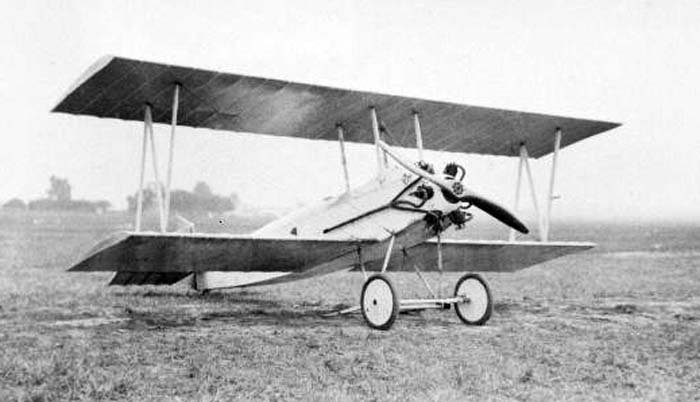

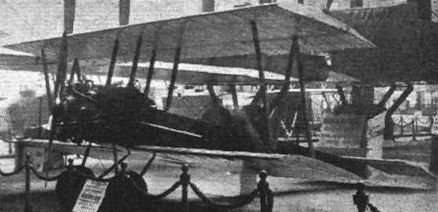
The sturdier look of this American import results from the fuselage being beefed up aft of the cockpit.
In 1922, C.T. Ludington and Wallace Kellett (later of autogyro fame) formed the Ludington Exhibition Company in Philadephia, Penn. as agents for Farman aircraft, and in 1923 imported two Sports, which were registered [C71] (c/n X-1) and [C72] (c/n 15). The two diminutive aircraft (appearing variously as the Farman Sport or the Ludington Sport) made quite an impression wherever they appeared, taking part in the 1923 Pulitzer Air Race, in St. Louis, Missouri, in the St. Louis Chamber of Commerce Trophy that same month, winning in November the first place of a major competition in Kansas City and also participating in the Saint-Louis air meet**. The latter aircraft also took part with the same aircraft in the Dayton air meet of July 1924, which involved flying over the treacherous Allegheny Mountains. It was the only French machine at the event. That aircraft has survived, and after restoration is now preserved and exhibited at the Udvar-Hazy Center in Chantilly, West Virginia. It is the only Farman Sport still in existence.
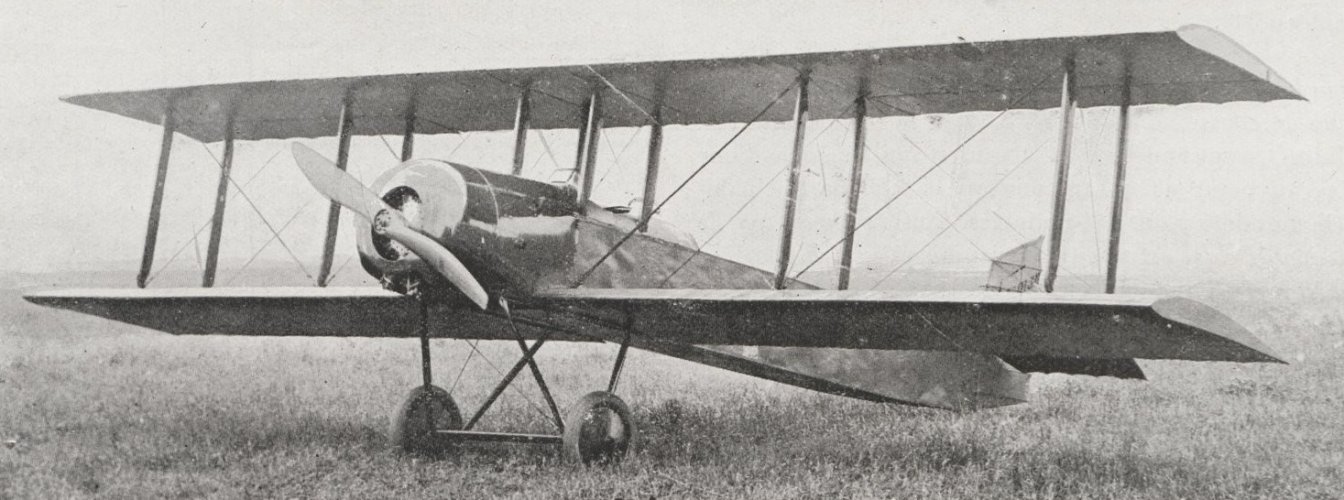
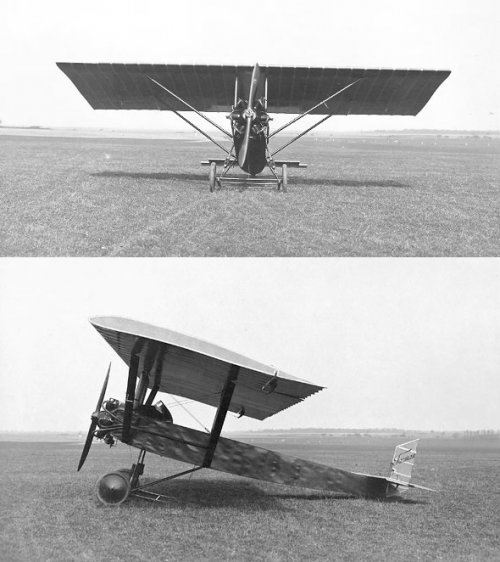
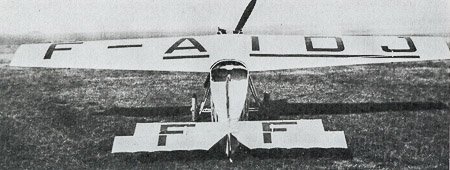
Farman's entry in the 1923 EP2 primary trainer competition was quite obviously based on the commercial Sport but with longer wings.
Other unusual Sport derivatives were the 1924 so-called "Carte Postale", and its later 1929 modification as a shoulder-wing type.
NOTES:
* The Ludington company also produced a few examples of their own derivative, the Ludington "Lizette", or "Miller Lizette" of 1926, a parasol-wing type with a round-section fuselage and side-by-side seating, which only vaguely resembled its forerunner. Only [C30N] (c/n L-1) is properly identified but others seem to have been built.
** Company pilot Robert P. Hewitt allegedly took two passengers in Dayton, though given the size of the rear cockpit they must have been pretty lightweight!
This research work by Stéphane Beaumort, a.k.a. Stargazer, exclusive for the Secret Projects Forum © 2025
Last edited:

