This whole thing starts with Hun Sen (apparently) provoking a diplomatic spat with Bangkok, and then releasing a call with Thaksin which makes her look bad.
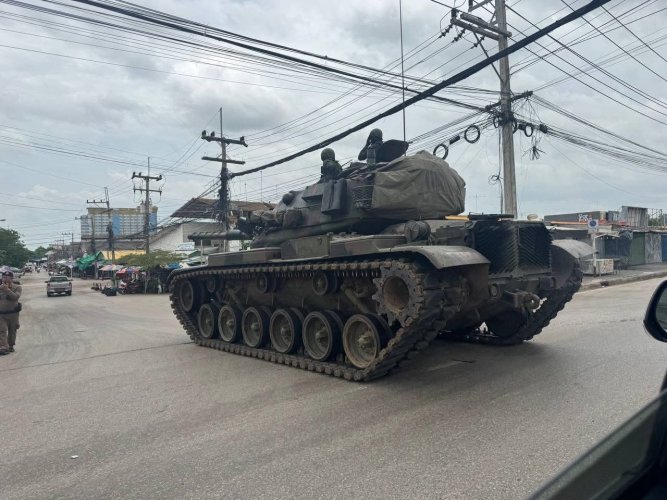
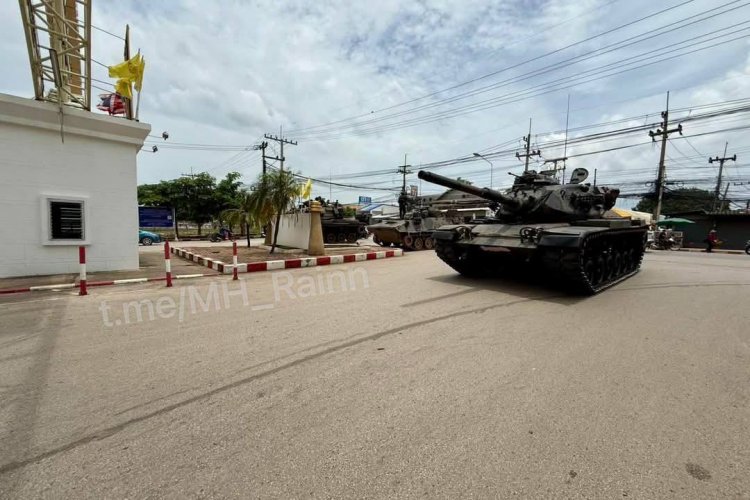
Then the Thai Army decides to act, removing Thaksin and conducting maneuvers, citing Thai troops tripping on mines reportedly intentionally laid by the Cambodians.
Now the Thai Army is conducting large scale operations in response to Cambodian artillery fire.
But the Thai Army is much bigger and more well equipped than the Cambodian Army, and everyone knows it. The Cambodians have no incentive to escalate militarily, because they are bound to lose any major war. Even at the present time, in a pretty bad information environment, it seems quite clear that the Royal Thai Army is dictating the pace of events.
There seem to be only a limited family of possibilities
- Hun Sen is an idiot / Phnom Penh is entirely composed of idiots, who have no sense and charged headlong into a lost war out of unbridled enthusiasm
- Hun Sen made a diplomatic misstep / overplayed his hand while hoping for greater leverage over Bangkok, and the Thai Army seized on the opportunity to teach Pnom Penh a lesson while making themselves look good and getting rid of a Thaksin dynasty girl
- Conspiracy theory territory - Hun Sen did not make a misstep and someone hacked his Facebook but he hasn't gone public with this (highly improbable, they'd be screaming this to the rooftops if it were true).
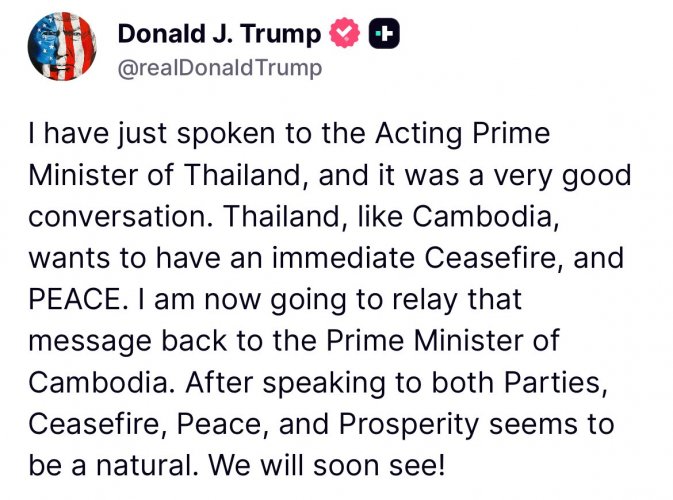
It is not entirely certain where Washington and Beijing stand on all this, but just based on the military equipment it seems more likely than not that Washington has a chip on the Royal Thai Army. Given Beijing's close economic and political ties with both Bangkok and Phnom Penh, it is difficult for Beijing to choose among them; alienating either would be an unmitigated disaster that would throw Beijing's entire SEA posture (i.e. keeping ASEAN neutralized/economically pliant) into jeopardy, while remaining completely neutral leaves Beijing exposed to events outside its control that may not be in its favor and gives other parties more options.
It has been said that ASEAN nations do not wish to have to choose between Washington and Beijing; as it turns out, it is also difficult for Beijing to choose between ASEAN nations. A trial, if you will, for vague concepts of "soft" regional hegemony reportedly based solely on economic power with professed principles of non-interference.